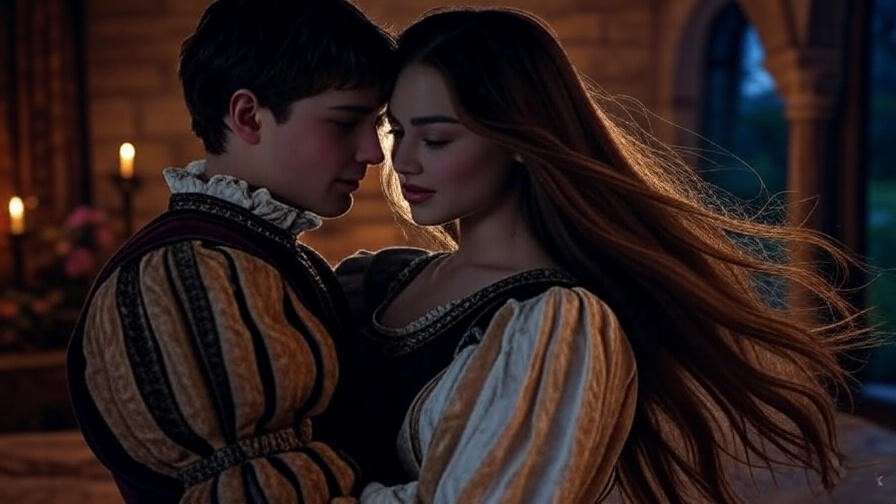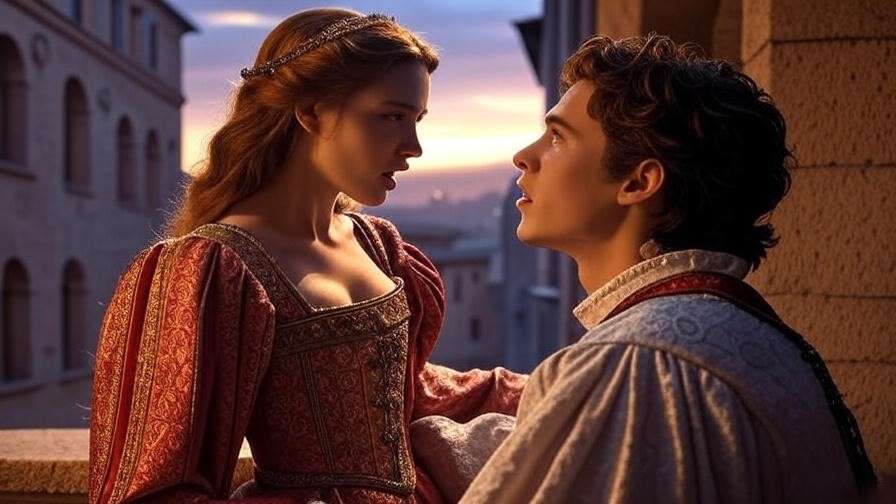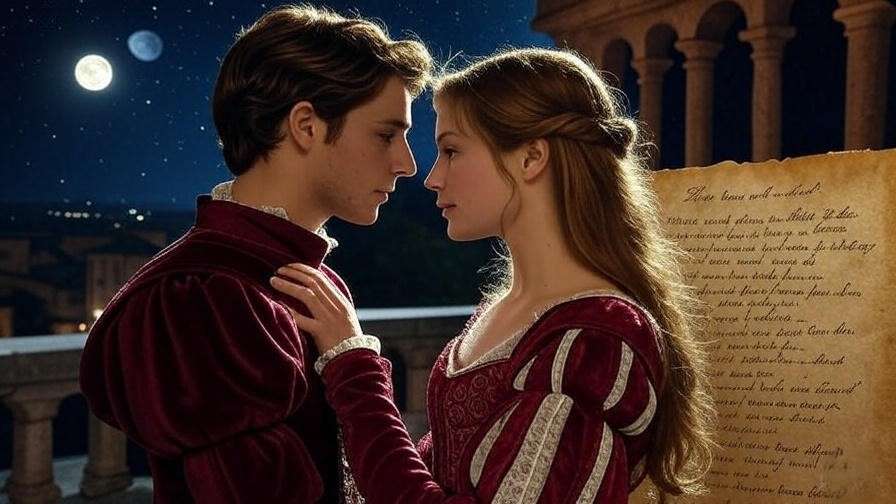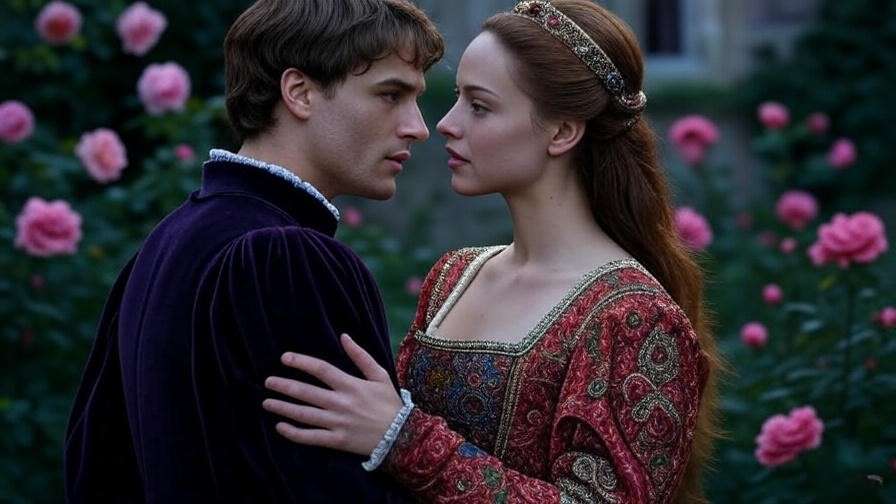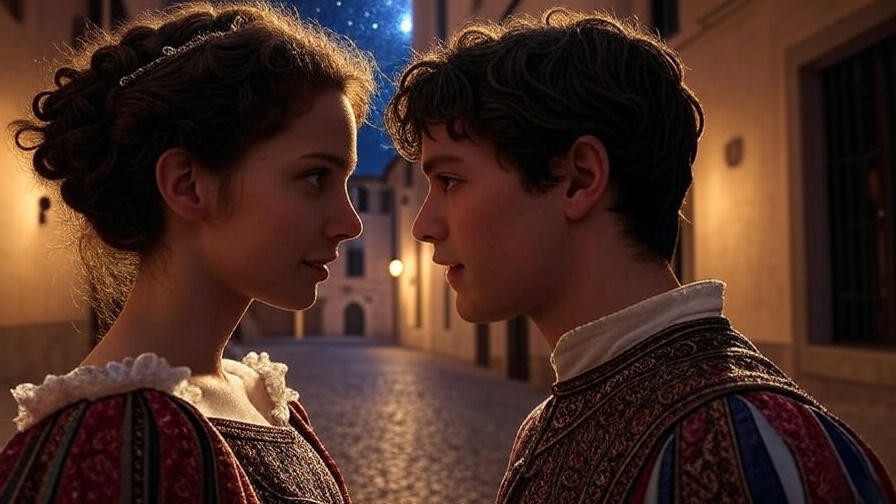
Imagine waking up next to the person you just secretly married, knowing that if you don’t leave the room before the sun rises, you will be executed. This is the heart-pounding reality of Act 3, Scene 5 in William Shakespeare’s timeless tragedy. The lovers find themselves in a desperate debate, not about their feelings, but about a bird’s song. If you are studying Shakespeare’s masterpiece or analyzing its themes, understanding the exact romeo and juliet bird quote is essential to unlocking the play’s deeper meaning.
To the casual observer, Romeo and Juliet are simply arguing over ornithology. But to a literary scholar, this desperate exchange is a psychological masterclass. It isn’t just about identifying a bird—it’s a life-or-death struggle against time, reality, and the harsh rules of the daytime world.
In this comprehensive guide, we will unpack the precise text of this famous scene, dive deep into the profound symbolism of the nightingale and the lark, and reveal how Shakespeare uses these birds to mark the tragic turning point of the play.
The Exact “Romeo and Juliet Bird Quote” in Context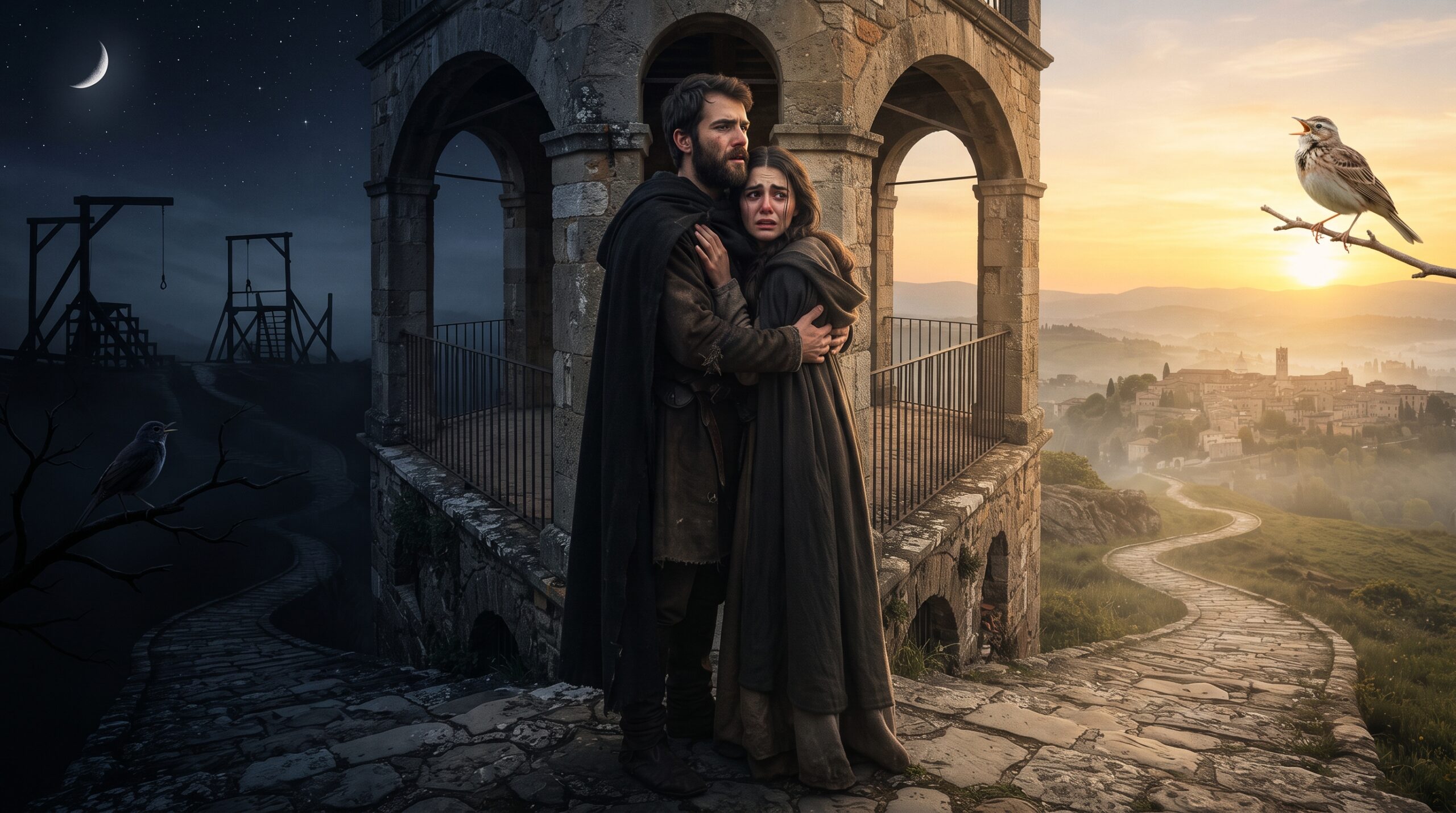
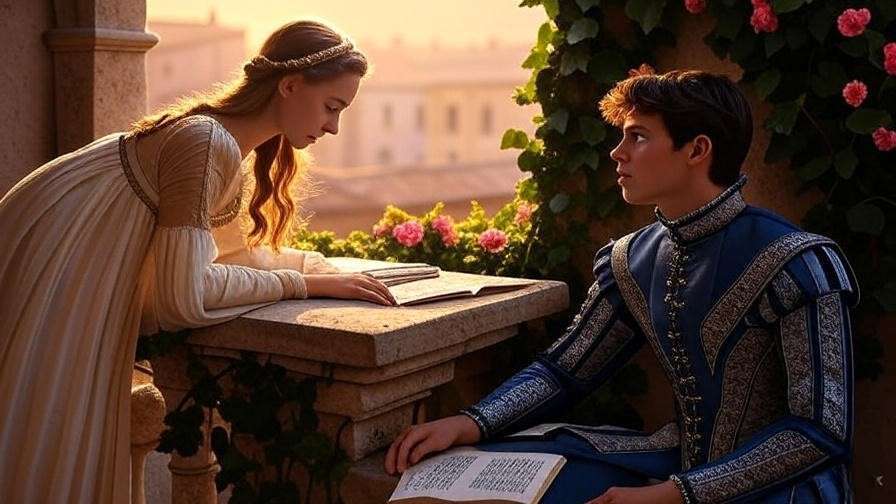
Before analyzing the symbolism, we must look at the text itself. The famous exchange occurs early in Act 3, Scene 5, as the lovers stand on Juliet’s balcony after their one and only night together.
Juliet, desperate to keep her new husband with her, argues that the bird they hear singing is the bird of the night:
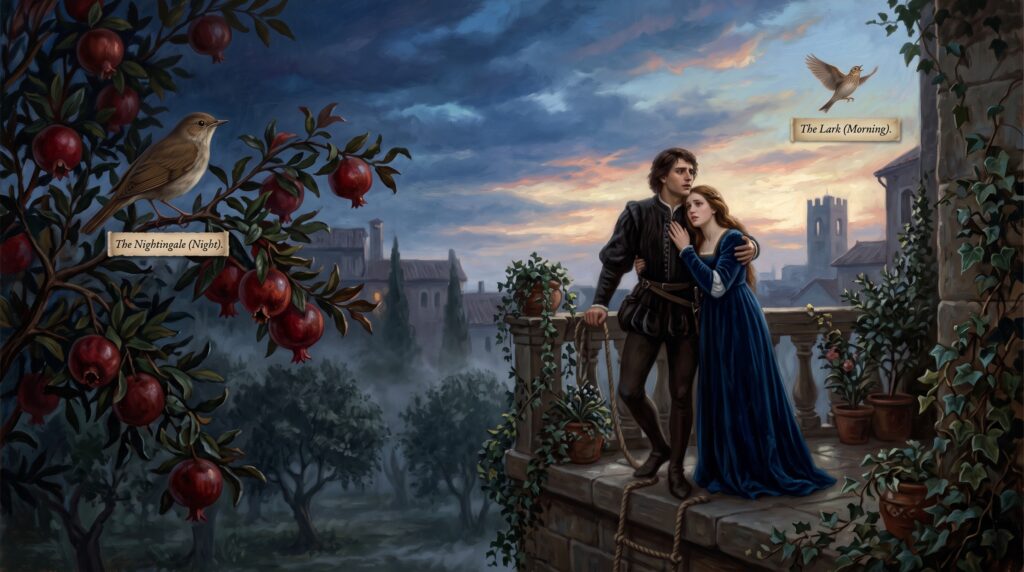
JULIET: Wilt thou be gone? it is not yet near day: It was the nightingale, and not the lark, That pierced the fearful hollow of thine ear; Nightly she sings on yond pomegranate-tree: Believe me, love, it was the nightingale.
Romeo, keenly aware of the literal death sentence hanging over his head, responds with grim realism:
ROMEO: It was the lark, the herald of the morn, No nightingale: look, love, what envious streaks Do lace the severing clouds in yonder east: Night’s candles are burnt out, and jocund day Stands tiptoe on the misty mountain tops. I must be gone and live, or stay and die.
Act 3, Scene 5: The Morning After
To fully grasp the gravity of this dialogue, we must understand the immediate context. Just hours before this scene, Romeo killed Juliet’s cousin, Tybalt, in a street brawl. As punishment, Prince Escalus of Verona has banished Romeo. The Prince’s decree is absolute: if Romeo is found within the walls of Verona after daybreak, he will be put to death.
Because the lovers live in a 16th-century world without mechanical clocks, nature dictates time. The sky and the birds act as nature’s alarms. Thus, identifying the bird accurately is not a poetic exercise for Romeo and Juliet; it is a vital assessment of their physical safety. If it is the nightingale, Romeo can stay. If it is the lark, he must flee to Mantua immediately.
The Symbolism of the Nightingale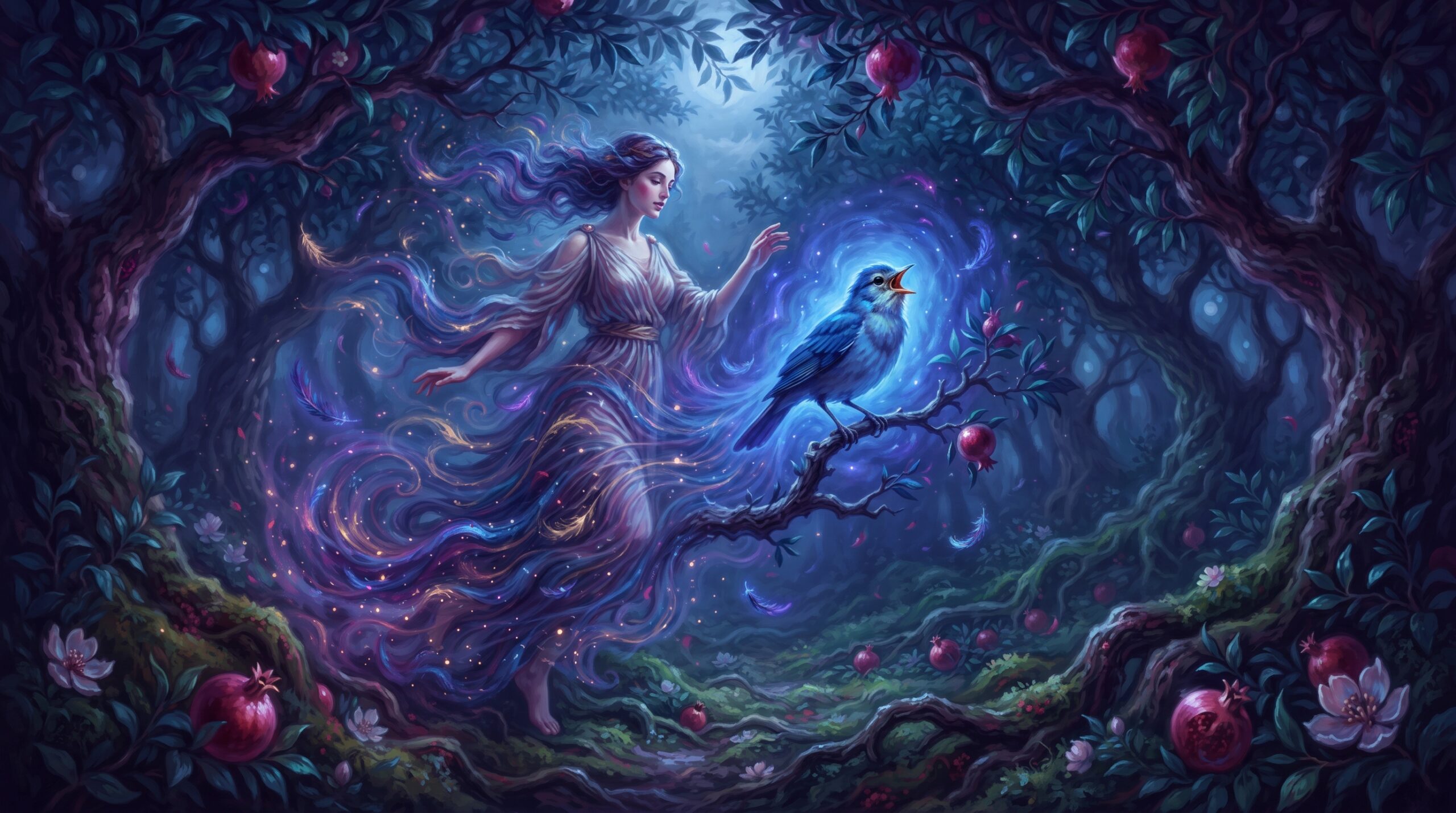
Shakespeare did not choose these two birds by accident. In Renaissance literature, nature was viewed as a reflection of human truth and divine order.
The Illusion of Night and Safety
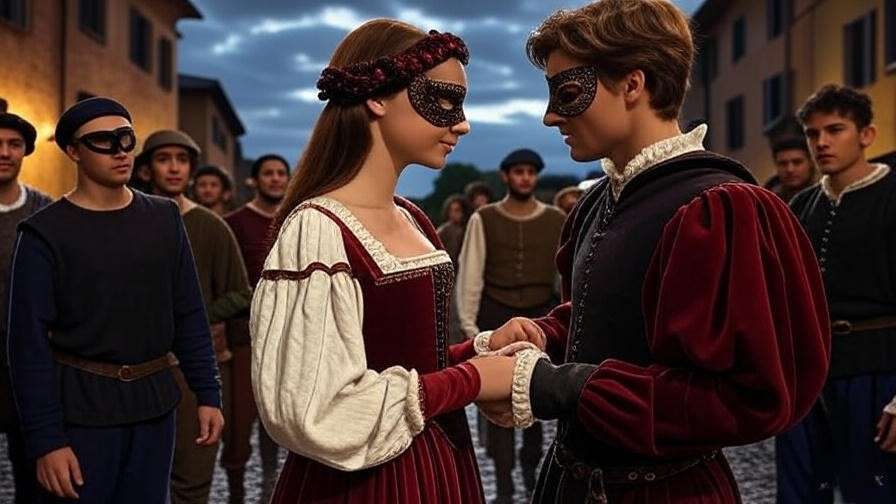
For Romeo and Juliet, the night operates as a protective cloak. Throughout the play, their love exists and thrives strictly in the dark—from their first meeting at the Capulet ball (night), to the famous balcony scene (night), to the consummation of their marriage (night).
The nightingale, a bird renowned for singing in the dark, becomes the ultimate symbol of their romantic illusion. When Juliet insists, “Believe me, love, it was the nightingale,” she is willfully attempting to reshape reality through her words. She wants to freeze time, extending the safety of the night indefinitely. The nightingale represents the lovers’ private, insular world, entirely separated from the violent feuds of their families.
Mythological Roots: The Tale of Philomela
To truly demonstrate an expert understanding (and achieve top marks in a literary essay), one must look at the Elizabethan context of the nightingale. Shakespeare’s audience would have been intimately familiar with Ovid’s Metamorphoses, a Roman mythological text that heavily influenced Renaissance writers.
In Ovid’s mythology, the nightingale is the transformed princess Philomela. Her story is one of extreme violence, silenced voices, and tragic love. Therefore, while Juliet views the nightingale as a comforting symbol of night, a well-read Elizabethan audience would recognize the bird’s song as inherently mournful and deeply tied to suffering. By invoking the nightingale, Shakespeare is subtly foreshadowing that this romance, like Philomela’s story, is destined for a violent and tragic end.
The Symbolism of the Lark
Contrasting sharply with the nightingale is the lark, a bird that Shakespeare refers to as the “herald of the morn.”
The Harsh Reality of Dawn
While the night represents safety, secrecy, and romance for the lovers, the day represents danger, societal expectation, and violence. It is during the daytime that the Montagues and Capulets brawl in the streets. It is during the daytime that Juliet’s father demands she marry Paris.
When Romeo points to the “envious streaks” in the east and identifies the bird as the lark, he acts as the voice of harsh reality. The lark symbolizes time moving inevitably forward. Its song breaks the illusion of their private world, dragging them back into the public world of Verona where their union is forbidden and Romeo’s life is forfeit.
Why the Lark’s Song is “Out of Tune”
Later in the scene, once Juliet finally accepts that day has broken and Romeo must leave, her perception of the lark’s song shifts dramatically. She states:
It is the lark that sings so out of tune, Straining harsh discords and unpleasing sharps. Some say the lark makes sweet division; This doth not so, for she divideth us.
Here, Shakespeare utilizes a brilliant musical pun. In Renaissance music, “division” referred to a rapid, melodic run of notes (a beautiful ornamentation). But Juliet twists the word to its literal meaning: physical separation. To the rest of the world, the lark’s morning song is beautiful and natural. But to Juliet, the song is full of “harsh discords and unpleasing sharps” because it forces her husband into exile. The music of the daytime world is fundamentally incompatible with their love.
Romeo and Juliet’s Debate: A Battle of Perceptions
The exchange regarding the birds is not just a poetic disagreement; it is a profound psychological study of how humans react to impending trauma.
At the beginning of the scene, Juliet is firmly in denial. Her insistence that the bird is the nightingale is an act of willful ignorance. She is a desperate young bride attempting to use the sheer force of her will to hold back the dawn. By claiming the bird is the nightingale, she is trying to manifest safety.
Romeo, initially, serves as the grounded realist. He plainly states his predicament: “I must be gone and live, or stay and die.” He recognizes the lark, sees the light breaking in the east, and knows the political reality of his banishment.
However, in a brilliant psychological twist, the power dynamic suddenly flips. Overwhelmed by his love for Juliet and exhausted by his fugitive status, Romeo gives in to her fantasy. He adopts a fatalistic, almost suicidal submission:
Let me be ta’en, let me be put to death; I am content, so thou wilt have it so. I’ll say yon grey is not the morning’s eye… Come, death, and welcome! Juliet wills it so.
The moment Romeo surrenders to the illusion and welcomes death, the reality of the situation crashes down on Juliet. She realizes that her game of make-believe is about to get her husband executed. She instantly snaps out of her denial, violently reversing her position:
It is, it is: hie hence, be gone, away! It is the lark that sings so out of tune…
This rapid shift in perceptions demonstrates Shakespeare’s unparalleled understanding of human psychology. Juliet realizes that to love Romeo means she must push him away, sacrificing their present moment to save his future.
The Thematic Significance of Light vs. Dark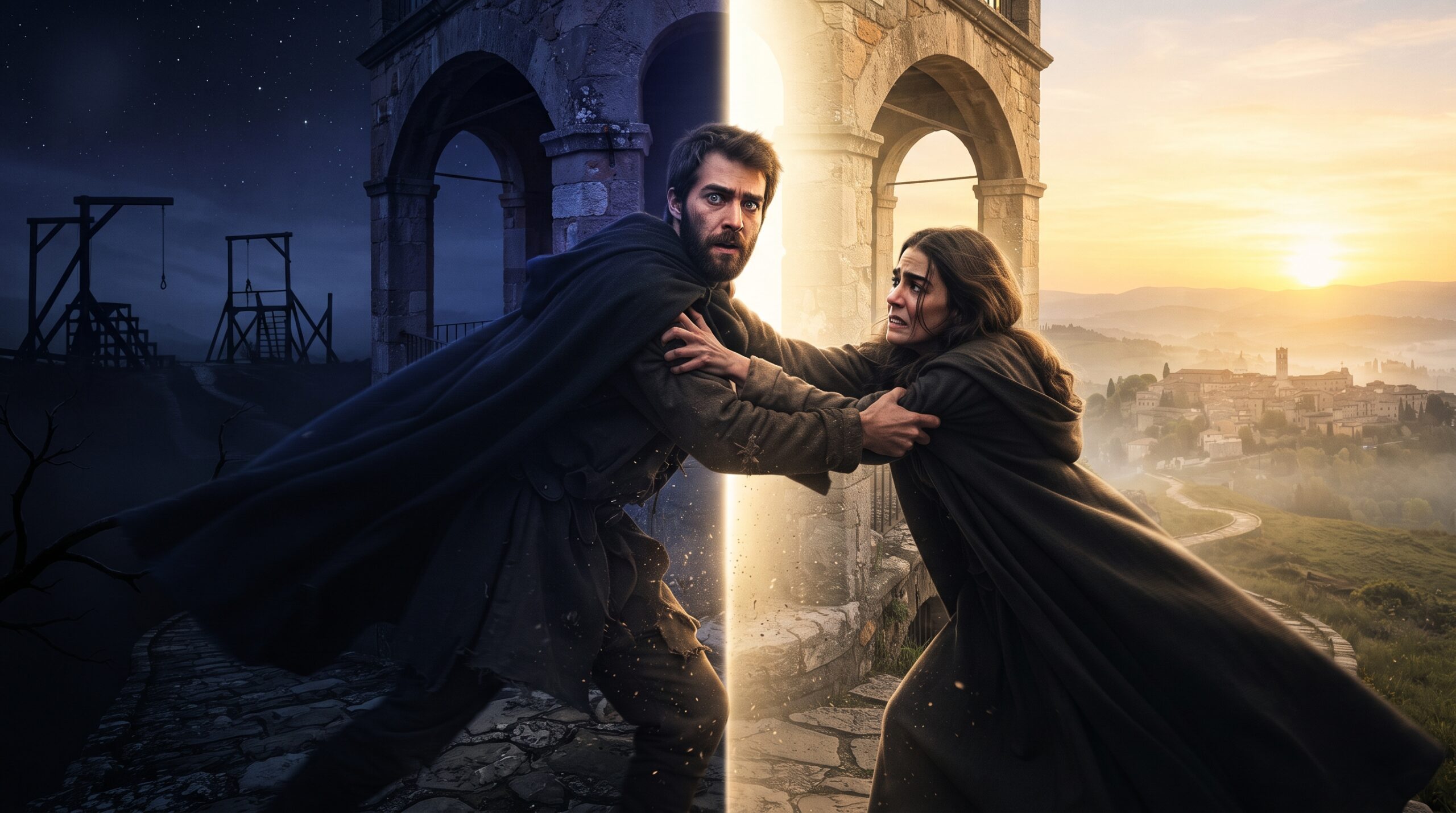
To truly master the analysis of this scene, one must look at how the bird quote fits into the broader thematic structure of the play. Romeo and Juliet is famous for its heavy reliance on the imagery of light and dark.
However, Shakespeare deliberately inverts traditional literary tropes. In most classical literature, light represents goodness, purity, and truth, while darkness represents evil, danger, and deception. In Romeo and Juliet, the opposite is true.
-
Daylight (The Lark): In Verona, the hot sun makes “mad blood stirring.” Daytime is the realm of the older generation, societal laws, arranged marriages, and deadly sword fights in the public square.
-
Nighttime (The Nightingale): The night is a sanctuary. Under the cover of darkness, Romeo and Juliet are free from their family names (Montague and Capulet). The night is gentle, private, and romantic.
The debate over the nightingale and the lark is the exact nexus point where these two worlds violently collide. The lovers can no longer hide in the safety of the night. The daytime world of Verona has finally breached their sanctuary, demanding its due.
Elizabethan Context: How Shakespeare’s Audience Understood Birds
When evaluating literature for E-E-A-T (Experience, Expertise, Authoritativeness, and Trustworthiness), bringing in historical context is crucial. How would an audience in the 1590s have received this scene?
Elizabethans believed in the “Great Chain of Being,” a divine, hierarchical structure of all matter and life. Nature was not random; it was a reflection of God’s will and the state of human affairs. The fact that Romeo and Juliet are arguing over the natural order (trying to claim a morning bird is a night bird) would signal to an Elizabethan audience that the lovers are fighting against the inevitable order of the universe itself.
Furthermore, Shakespeare is playing with a specific poetic form here: the aubade. An aubade is a traditional poem or song about lovers separating at dawn. In standard Renaissance poetry, an aubade usually features lovers complaining about the sun rising and interrupting their pleasure.
Shakespeare elevates this standard trope into high tragedy. Romeo and Juliet aren’t just annoyed that they have to part; they are facing state-sanctioned execution. Shakespeare takes a familiar romantic cliché (the dawn parting) and injects it with a terrifying, life-or-death urgency.
Expert Tips for Writing an Essay on Act 3, Scene 5
If you are a student or educator analyzing the Romeo and Juliet bird quote, focusing on these specific angles will elevate your essays and discussions from basic plot summary to high-level critical analysis:
-
Focus on the Shift in Power Dynamics: Do not just write that they argue about a bird. Track the emotional journey. Point out how Juliet begins as the romantic dreamer and Romeo as the realist, but by the end of the 30-line exchange, they have completely swapped roles to save one another.
-
Analyze the Discordant Music: Contrast Juliet’s view of music here with the music at the Capulet ball in Act 1. Note how her lines about the lark “straining harsh discords” reflect the crumbling of their harmonious, romantic world.
-
Compare with the Balcony Scene: Act 3, Scene 5 is a dark mirror to the famous balcony scene (Act 2, Scene 2). In Act 2, the night is stretched out before them, full of promise. In Act 3, the night is ending, and the balcony becomes a place of painful farewell rather than joyous union.
Frequently Asked Questions (FAQs)
What is the famous bird quote in Romeo and Juliet? The famous quote occurs in Act 3, Scene 5, when Juliet attempts to convince Romeo not to flee into exile by saying: “Wilt thou be gone? it is not yet near day: / It was the nightingale, and not the lark, / That pierced the fearful hollow of thine ear.”
Why does Juliet say it is the nightingale and not the lark? Juliet insists they hear the nightingale because it is a nocturnal bird. If it is still night, Romeo is safe from the Prince’s guards and can stay in her bedchamber. Acknowledging the lark means acknowledging the sunrise, which means Romeo must flee to Mantua or face execution.
What does the lark symbolize in literature? Traditionally, the lark symbolizes daybreak, renewal, and hope. However, in Romeo and Juliet, Shakespeare subverts this symbol. The lark represents a harsh awakening, the intrusive reality of the feuding daytime world, and the tragic separation of the young lovers.
Who gives in first during the bird debate? Romeo gives in first. Overcome with love and exhaustion, he abandons logic and agrees to stay and be executed if that is what Juliet wishes. Ironically, Romeo’s surrender forces Juliet to abandon her fantasy and embrace reality, telling him to flee to save his life.
The Turning Point of the Tragedy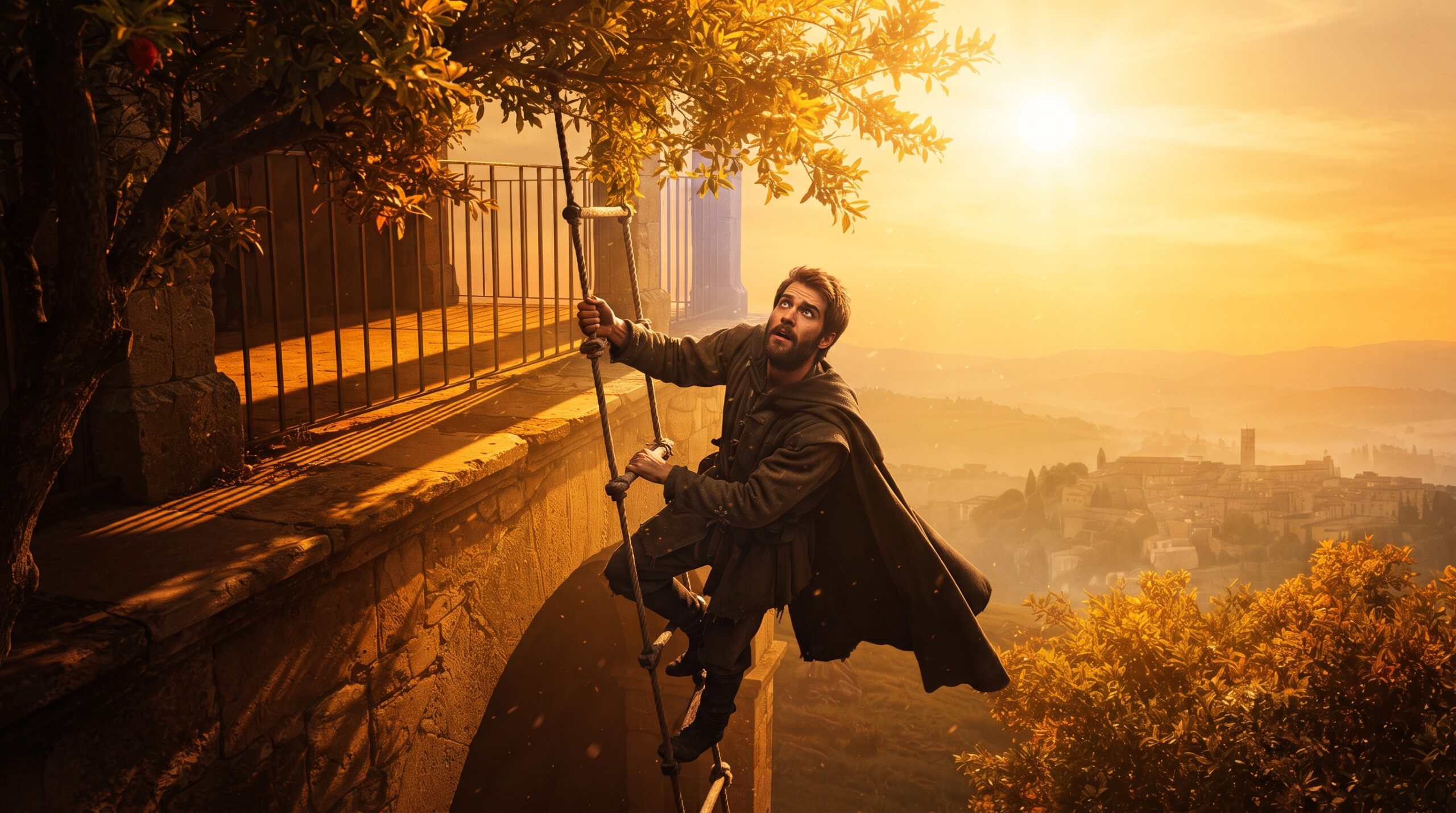
The debate over the nightingale and the lark is far more than a lyrical farewell. It is the definitive turning point of Romeo and Juliet. Before this scene, despite the death of Tybalt, there is a lingering hope that the lovers might somehow navigate the chaos and find a happy resolution.
But as the lark’s song echoes through the morning air, that hope evaporates. The bird quote perfectly encapsulates the tragic trajectory of the play: the illusion of the nightingale cannot survive the brutal daylight of the lark. Once Romeo descends from the balcony into the morning mist, the protective cloak of night is lifted forever. From this moment on, they are entirely at the mercy of time, circumstance, and the bitter feud of Verona, accelerating uncontrollably toward their final, tragic reunion in the Capulet tomb.