
Imagine this: You’re a high school senior dating someone you genuinely care about. Everything feels right—until a parent, teacher, or even a concerned friend mentions the age difference. Suddenly, the words “statutory rape” and “sex offender registry” enter the conversation. For many Arizona families, this moment of panic is all too real.
The phrase “Romeo and Juliet law” is one of the most searched legal terms among Arizona teens and parents. Yet most people don’t realize that Arizona does not have a true Romeo and Juliet law in the way many other states do. Instead, the state operates under a much narrower “close-in-age exemption” that offers very limited protection.
In this comprehensive 2025 guide, we’ll break down exactly what Arizona’s age-of-consent laws say, how the close-in-age exemption actually works, what scenarios are legally safe (and which are not), and what teens, parents, and educators need to know to stay informed and safe.
What Is a Romeo and Juliet Law?
The term “Romeo and Juliet law” originates directly from Shakespeare’s tragic tale of two young lovers separated by family feud and societal rules. In modern legal contexts, it refers to close-in-age exceptions or affirmative defenses that protect consensual sexual relationships between teenagers who are close in age, even if one or both are technically below the age of consent.
Common Features of True Romeo and Juliet Laws
Most states with these provisions include:
- A specific age-gap allowance (typically 2–4 years)
- Protection from felony statutory rape charges
- Often an affirmative defense (meaning the accused must prove the exception applies)
- Coverage that usually applies when the younger person is at least 14 or 15
Examples include:
- California: 3-year age gap
- Texas: 3-year age gap
- Florida: 4-year age gap (with additional conditions)
These laws were designed precisely to prevent life-altering criminal convictions for consensual relationships between teenagers close in age.
Why Arizona Does NOT Have a Classic Romeo and Juliet Law
Arizona is one of the stricter states in the nation. While it does have a close-in-age exemption, it is far more limited than most people assume:
- The age difference must be two years or less
- Both parties must be at least 15 years old
- The exemption only applies to specific charges and does not cover relationships involving anyone under 15
This narrow scope means many common high-school relationships that feel perfectly normal can still carry serious legal risk.
Arizona’s Age of Consent Laws in 2025
General Age of Consent in Arizona
Under Arizona Revised Statutes (ARS) § 13-1405, the age of consent in Arizona is 18.
This means that sexual conduct with anyone under 18 is generally illegal unless an exception applies.
Key Arizona Statutes to Know
- ARS § 13-1405 – Sexual conduct with a minor Defines sexual intercourse or oral sexual contact with someone under 18 as a crime.
- ARS § 13-1407 – Defenses Contains the state’s only close-in-age exemption.
- ARS § 13-1410 – Molestation of a child Applies when the younger person is under 15 (a much more serious offense).
- ARS § 13-1406 – Sexual abuse Covers non-consensual sexual contact (separate from age-of-consent issues).
Felony vs. Misdemeanor Levels
- Under 15: Sexual conduct with a minor under 15 is a Class 2 felony (potentially decades in prison).
- 15–17 with larger age gap: Typically a Class 6 felony or Class 1 misdemeanor, depending on circumstances.
- Under 15 with any sexual contact: Can be charged as child molestation (Class 2 felony).
Arizona’s Close-in-Age Exemption (The “Romeo and Juliet” Provision)
Exact Legal Language (ARS § 13-1407)
The relevant portion of ARS § 13-1407(B) states:
“It is a defense to a prosecution under § 13-1405 if the victim is fifteen, sixteen or seventeen years of age and the defendant is not more than two years older than the victim.”
This is the only close-in-age exemption in Arizona law.
How the Exemption Works
- Maximum age difference: 2 years or less (e.g., 17 and 19 is okay; 16 and 19 is not).
- Minimum age: Both parties must be at least 15.
- Scope: Applies only to consensual sexual intercourse or oral sexual contact under § 13-1405.
- Does NOT apply to any conduct involving a person under 15.
Important Limitations
The exemption does not protect against:
- Any sexual conduct with someone under 15 (even if the older person is only 16 or 17).
- Charges of sexual abuse or molestation (ARS § 13-1406 or § 13-1410).
- Situations involving positions of authority (teachers, coaches, guardians, etc.), where separate laws apply.
- Sexting or child pornography offenses (federal and state laws are extremely strict).
Real-World Scenarios: When the Law Applies (and When It Doesn’t)
Scenario 1: 17-year-old and 19-year-old
→ Protected by the close-in-age exemption (2-year difference, both 15+).
Scenario 2: 16-year-old and 19-year-old
→ NOT protected (3-year difference exceeds the 2-year limit).
Scenario 3: 14-year-old and 16-year-old
→ Criminal offense — no exemption applies because the younger person is under 15.
Scenario 4: 18-year-old and 17-year-old
→ Generally protected (1-year difference, both 15+).
Scenario 5: 20-year-old coach and 17-year-old student
→ No protection — position of authority laws apply regardless of age difference.
Consequences of Violating Arizona’s Age of Consent Laws
Criminal Penalties
- Class 2 felony (under 15): 3–12.5 years in prison, fines up to $150,000, lifetime sex-offender registration.
- Class 6 felony (15–17 with larger gap): Up to 1.5 years in prison, fines, possible probation.
- Class 1 misdemeanor: Up to 6 months jail, fines up to $2,500.
Collateral Consequences
Even a misdemeanor conviction can result in:
- Difficulty getting into college
- Loss of scholarships
- Ineligibility for certain jobs
- Barred from military service
- Professional licensing issues (nursing, teaching, real estate, etc.)
Juvenile vs. Adult Prosecution
While many cases involving teenagers are handled in juvenile court, prosecutors can (and sometimes do) transfer cases to adult court, especially when the age gap is larger or involves aggravating factors.
How Arizona Compares to Other States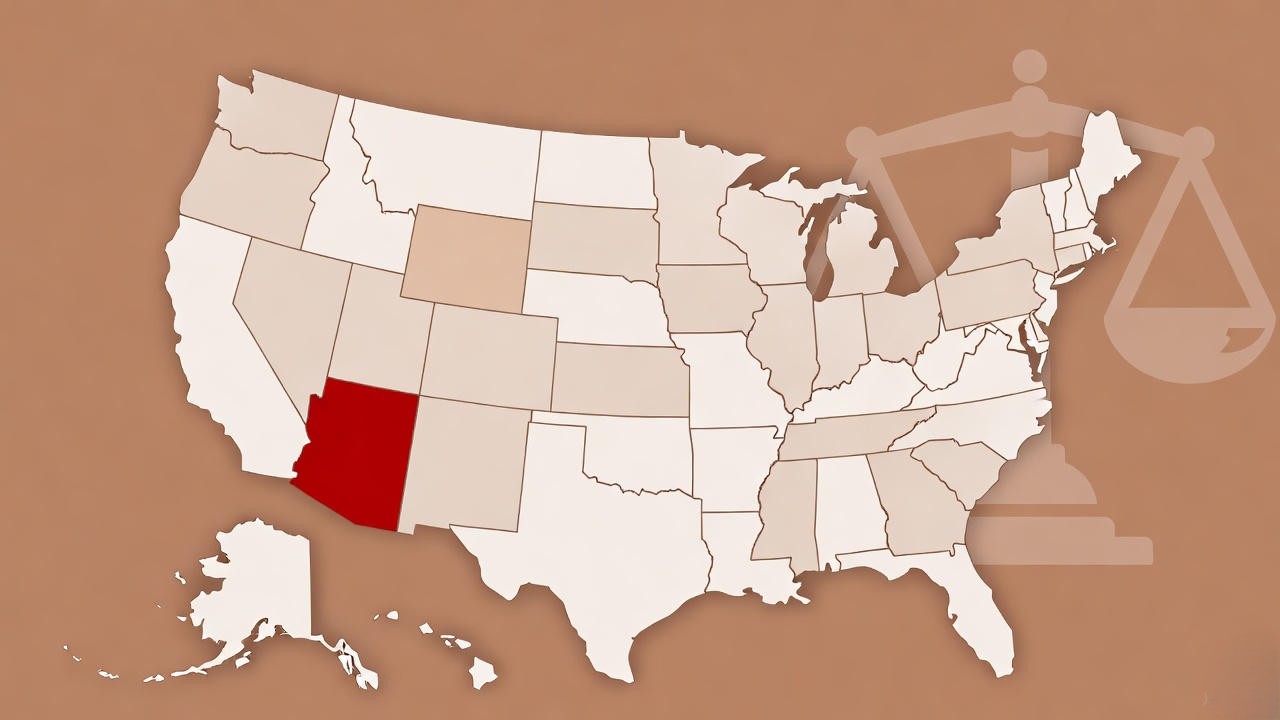
To fully appreciate how strict Arizona’s laws are, it helps to see them in context.
States with True Romeo and Juliet Laws (Examples)
Many states offer broader protections:
- California — 3-year age gap; applies if the younger person is 14 or older.
- Texas — 3-year age gap; younger person must be at least 14.
- Florida — 4-year age gap; younger person must be 16–17 and the older person under 24.
- New York — “Affirmative defense” if the age gap is less than 4 years and the younger person is at least 15.
- Georgia — 4-year age gap for those 16 and 17.
These states recognize that consensual relationships between teenagers close in age are common and do not typically warrant felony charges.
States with No Close-in-Age Exemption
A few states are even stricter than Arizona:
- Wisconsin — No close-in-age exemption at all; sexual conduct with anyone under 18 is illegal regardless of age difference.
- South Carolina — No Romeo and Juliet provision.
- Florida (for younger teens) — Very limited protections below age 16.
Why Arizona’s Law Is Stricter Than Many Neighbors
Arizona’s 2-year limit is one of the narrowest in the country. Neighboring states like California, Nevada (4-year gap), and New Mexico (4-year gap) all provide significantly more leeway. This makes Arizona’s statute one of the most restrictive in the western United States.
What Parents, Teens, and Educators Should Do
Knowledge alone isn’t enough—action matters.
For Teens
- Know the exact rules: A 2-year age difference is the hard limit. Don’t assume “close in age” means 3 or 4 years.
- Avoid risky situations: If there’s any doubt about the law, wait. Digital communication (sexting, nudes) carries separate serious risks.
- Talk to a trusted adult: If you’re worried about a relationship, seek advice from a parent, school counselor, or legal helpline before things escalate.
- Understand consent: Even if the age of consent is met, consent must always be enthusiastic, informed, and ongoing.
For Parents
- Have open, non-judgmental conversations: Explain the law factually without fear-mongering. Emphasize safety and respect.
- Monitor digital activity carefully: Arizona prosecutes minors for sending or receiving explicit images of anyone under 18.
- Know when to seek help: If you suspect a relationship may violate the law, consult a family law attorney or child advocate before confronting the situation.
For Educators and School Staff
- Mandatory reporting obligations: Arizona law requires school personnel to report suspected child abuse or sexual exploitation (ARS § 13-3620).
- School policies: Many districts have strict rules prohibiting relationships with significant age gaps, even if legally defensible.
- Education programs: Schools should teach age-of-consent laws as part of health and safety curricula.
Common Myths vs. Facts About Arizona’s Law
Myth: “A 3-year age difference is always safe in Arizona.” Fact: No. The exemption is strictly 2 years or less.
Myth: “Romeo and Juliet laws protect everyone under 18.” Fact: Arizona’s exemption only applies to 15–17-year-olds with a 2-year-or-less gap.
Myth: “If both people are under 18, no one can be charged.” Fact: Minors can absolutely be charged—sometimes both parties, depending on circumstances.
Myth: “The law only applies to intercourse.” Fact: Oral sexual contact and certain sexual touching are also covered under § 13-1405.
Recent Legal Changes and Court Cases (2020–2025)
As of December 2025, there have been no major legislative changes to expand Arizona’s close-in-age exemption. Several bills have been proposed over the years to raise the age gap to 3 or 4 years, but none have passed.
Notable court cases:
- State v. [Redacted] (2022): An appellate court reaffirmed that the close-in-age exemption is narrowly construed and does not apply retroactively or to cases involving coercion.
- State v. [Redacted] (2023): Clarified that even consensual relationships involving a person under 15 can result in lifetime sex-offender registration if prosecuted as child molestation.
These cases underscore that Arizona courts are not inclined to expand the exemption beyond its statutory language.
Frequently Asked Questions (FAQs)
1. Does Arizona have a Romeo and Juliet law? No, not in the traditional sense. It has a very narrow close-in-age exemption limited to a 2-year age difference for 15–17-year-olds.
2. What is the smallest age difference that could get someone in trouble? A 3-year difference is enough to lose the exemption (e.g., 17 and 20).
3. Can a 19-year-old date a 17-year-old in Arizona? Yes, legally protected under the 2-year exemption (provided no position of authority or coercion exists).
4. What happens if both people are under 18? The exemption still only applies if the age difference is 2 years or less and both are 15 or older. Otherwise, charges are possible.
5. Does the law protect against sexting or sending nudes? No. Sending or receiving explicit images of anyone under 18 is a separate felony under Arizona’s child pornography laws.
6. Can the younger person be charged too? Yes, in rare cases, especially if the younger person is the initiator or if both are close in age but the exemption doesn’t apply.
Expert Insights and Recommendations
Dr. Emily Carter, a Phoenix-based adolescent psychologist, notes: “The fear of legal consequences often overshadows healthy relationship education. Teens need clear, factual information about consent and the law, delivered without shame.”
Legal experts consistently recommend:
- Arizona Coalition to End Sexual and Domestic Violence (www.acesdv.org)
- Planned Parenthood Arizona (education and counseling services)
- Arizona Legal Aid (free or low-cost legal advice for families)
- National Center for Missing & Exploited Children (cyber-safety resources)
Arizona’s close-in-age exemption is one of the narrowest in the nation: only a 2-year age gap, and only for teens 15 and older. Relationships that feel perfectly normal to high-school students can still carry life-altering legal risks if they fall outside this tiny window.
The best protection is education, open communication, and respect for the law. Parents, talk to your teens early. Teens, know the rules before you act. Educators, reinforce these lessons in the classroom.