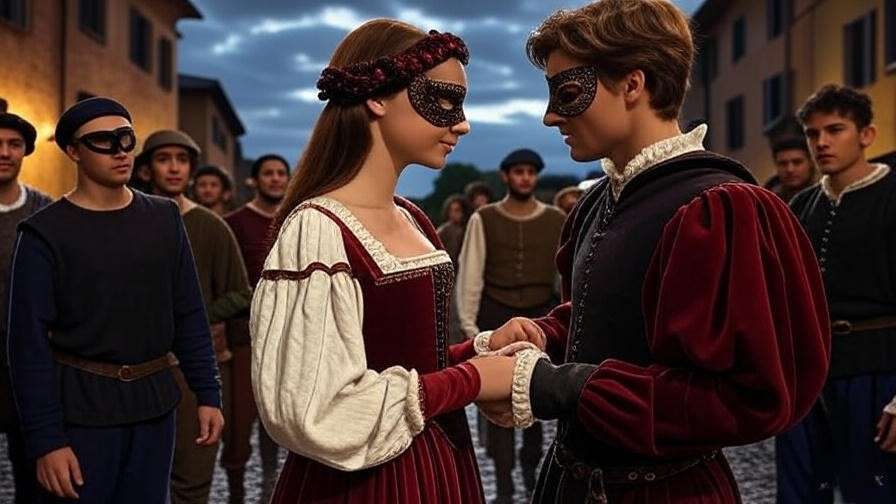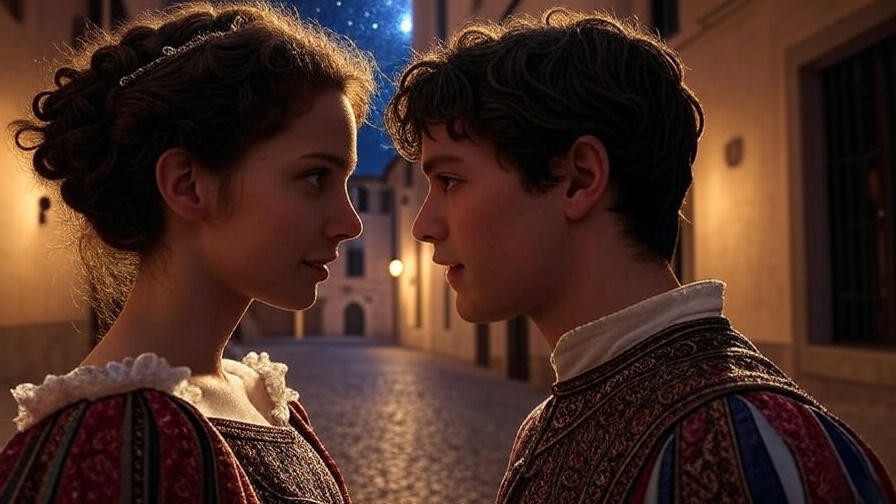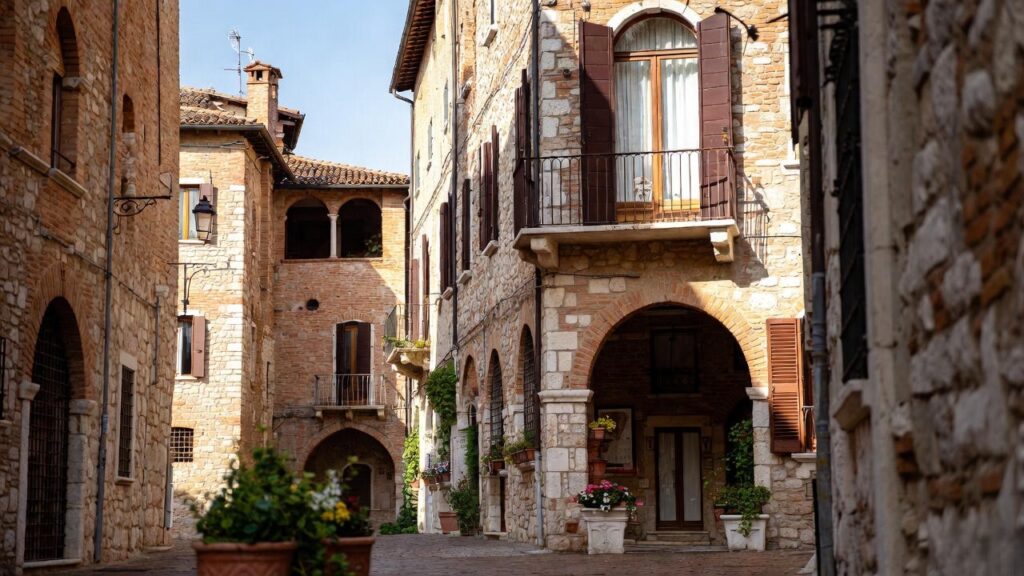
In the opening moments of Romeo and Juliet, two households, both alike in dignity, clash violently in the sunlit streets of Verona. Swords flash, insults fly, and blood is shed—all before the audience has even met the lovers. This explosive scene immediately establishes the setting not as a mere backdrop, but as a living, breathing force that shapes the tragedy. Romeo and Juliet setting is one of the most vivid and evocative in all of Shakespeare’s works, yet it remains shrouded in a fascinating blend of historical fact, literary invention, and dramatic necessity.
Shakespeare never set foot in Italy. He likely never even saw a detailed map of Verona. Yet he transformed the city into one of the most recognizable and romanticized locations in world literature. Why Verona? Why this particular moment in time? And how much of the Verona we imagine when we read or watch the play is Shakespeare’s creation rather than historical reality?
In this comprehensive guide, we will explore the literal setting of Romeo and Juliet as described in the text, examine the historical city of Verona during the late Middle Ages and Renaissance, contrast the real city with Shakespeare’s dramatic version, and analyze how the setting actively drives the play’s central themes of love, hate, fate, and generational conflict.
Whether you’re a student preparing for an exam, a teacher seeking deeper context for your classroom, or simply a lover of Shakespeare who wants to understand the world that birthed one of literature’s greatest tragedies, this article will provide the clearest, most authoritative picture of the Romeo and Juliet setting available anywhere.
1. The Literal Setting: When and Where Does Romeo and Juliet Take Place?
1.1 The Time Period Indicated in the Play
Shakespeare deliberately leaves the exact year ambiguous, but the text offers several clues that point toward the late 14th or early 15th century.
- “Ancient grudge” (Prologue): The feud is described as ancient, suggesting it has lasted several generations.
- No firearms: Duels are fought with swords and rapiers, consistent with pre-gunpowder culture.
- “Fourteen years ago” (Capulet’s reference to his last masque): This places the action in a relatively recent past from the speaker’s perspective.
- Absence of printing press references: While books exist (Romeo reads), the world feels pre-Gutenberg in its oral and manuscript culture.
Most scholars place the play’s implied time around 1300–1400, though Shakespeare clearly draws on his own late-16th-century knowledge for details of dress, behavior, and social customs.
1.2 The Geographical Setting: Verona and Its Environs
Shakespeare locates the action almost entirely within the walls of Verona and its immediate surroundings:
- Verona’s streets and public squares — the site of the opening brawl and later the fatal duel between Tybalt and Mercutio.
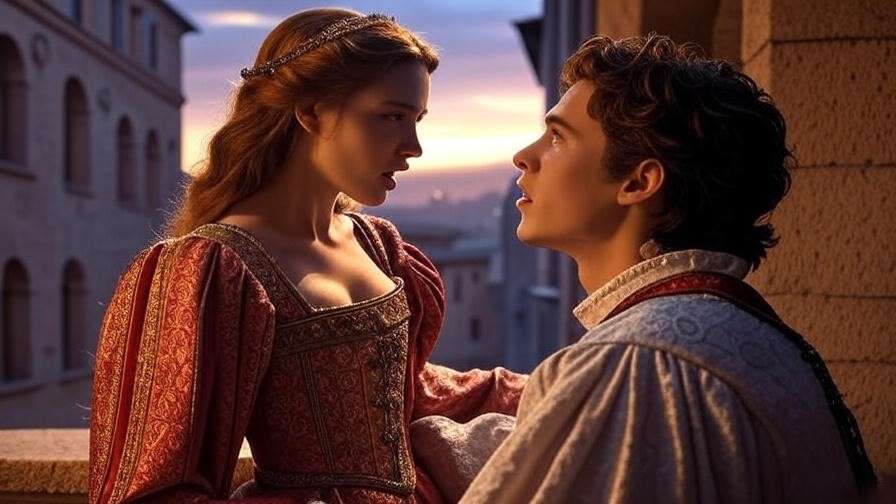
- The Capulet house — where the feast takes place and Juliet’s famous “balcony” scene occurs.
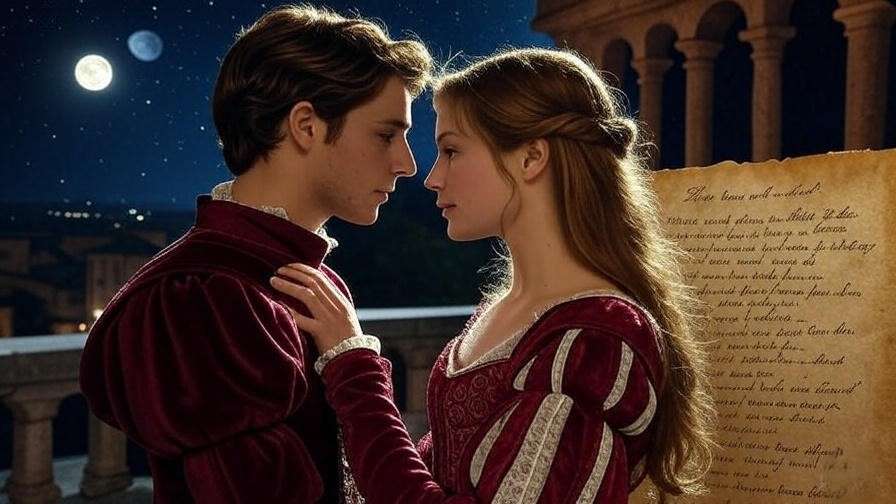
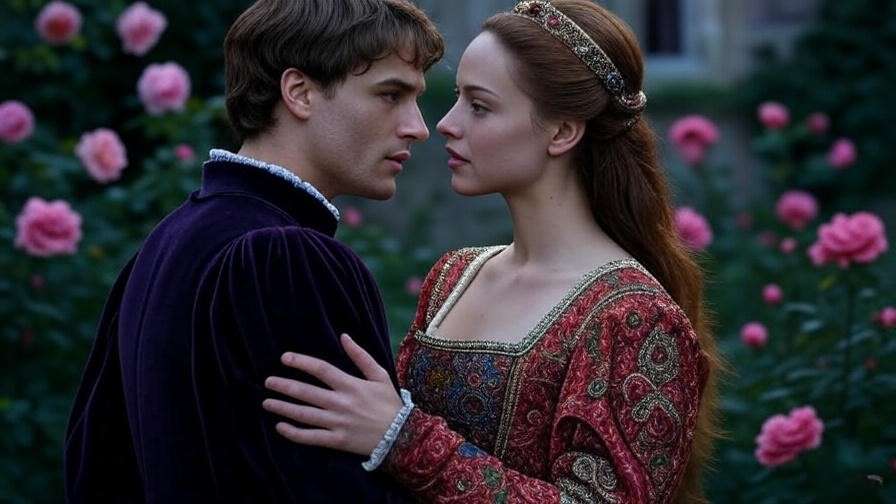
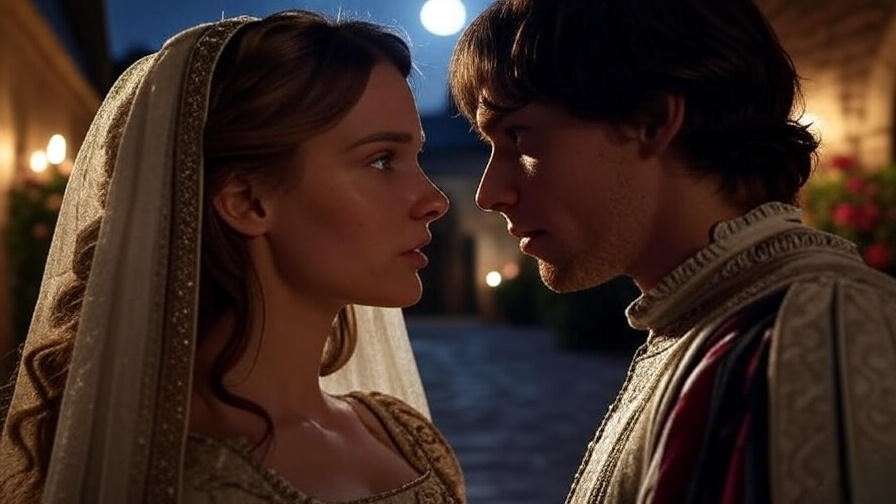
- The orchard beneath Juliet’s window — a private, moonlit space of secret love.
- Friar Laurence’s cell — a place of counsel, marriage, and desperate planning.
- Mantua — Romeo’s place of exile, a city a day’s ride away.
- The Capulet vault — the final, claustrophobic tomb where the tragedy concludes.
These locations create a tightly confined world in which escape is impossible, reinforcing the sense of fate closing in on the young lovers.
2. Historical Verona: What Was the Real City Like?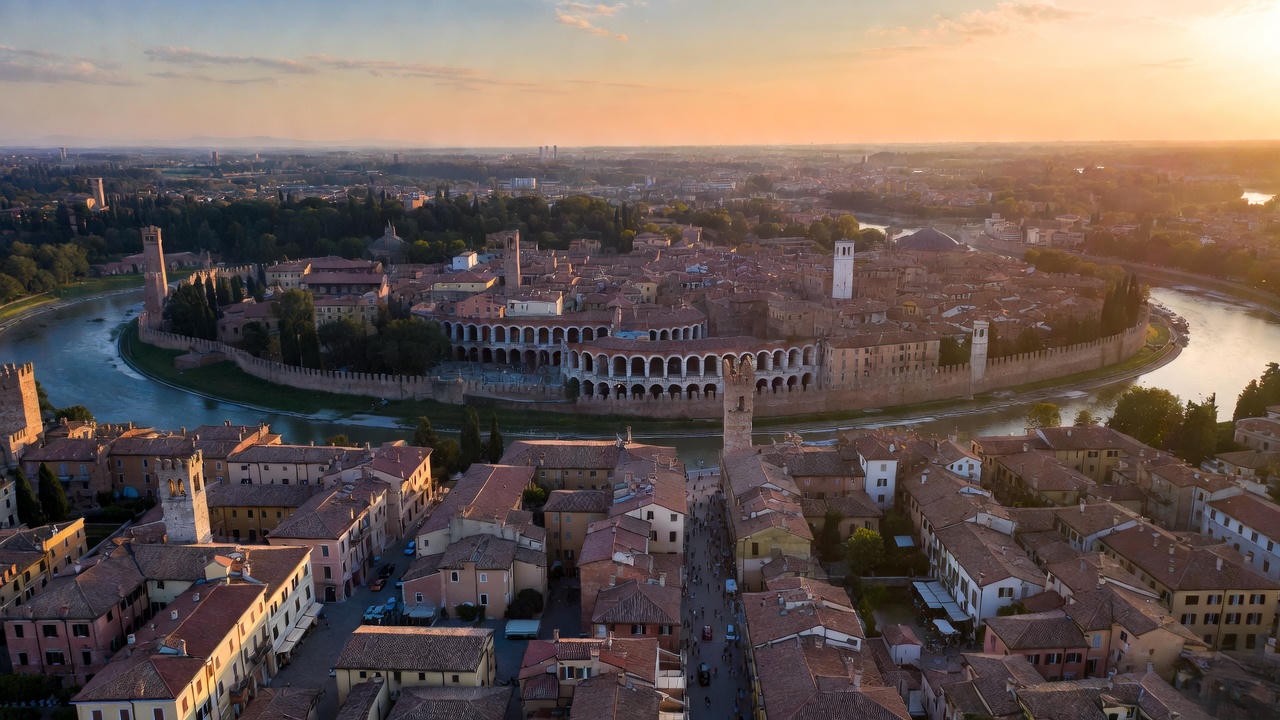
2.1 Verona in the Late Middle Ages and Renaissance
Verona has a rich history stretching back to Roman times. By the period most associated with Romeo and Juliet (late 13th to early 15th century), the city had transitioned from a Roman colony to a powerful medieval commune, and then, in 1405, came under the control of the Republic of Venice.
- Roman legacy: The Arena di Verona (still standing today) was one of the largest amphitheaters in the Roman Empire.
- Medieval growth: The city was a prosperous trading center on the Adige River, with fortified walls and numerous towers.
- Venetian rule (1405–1797): During this period Verona enjoyed relative peace and economic stability, though it remained subject to Venice’s political dominance.
2.2 Real Feuds and Family Rivalries in Verona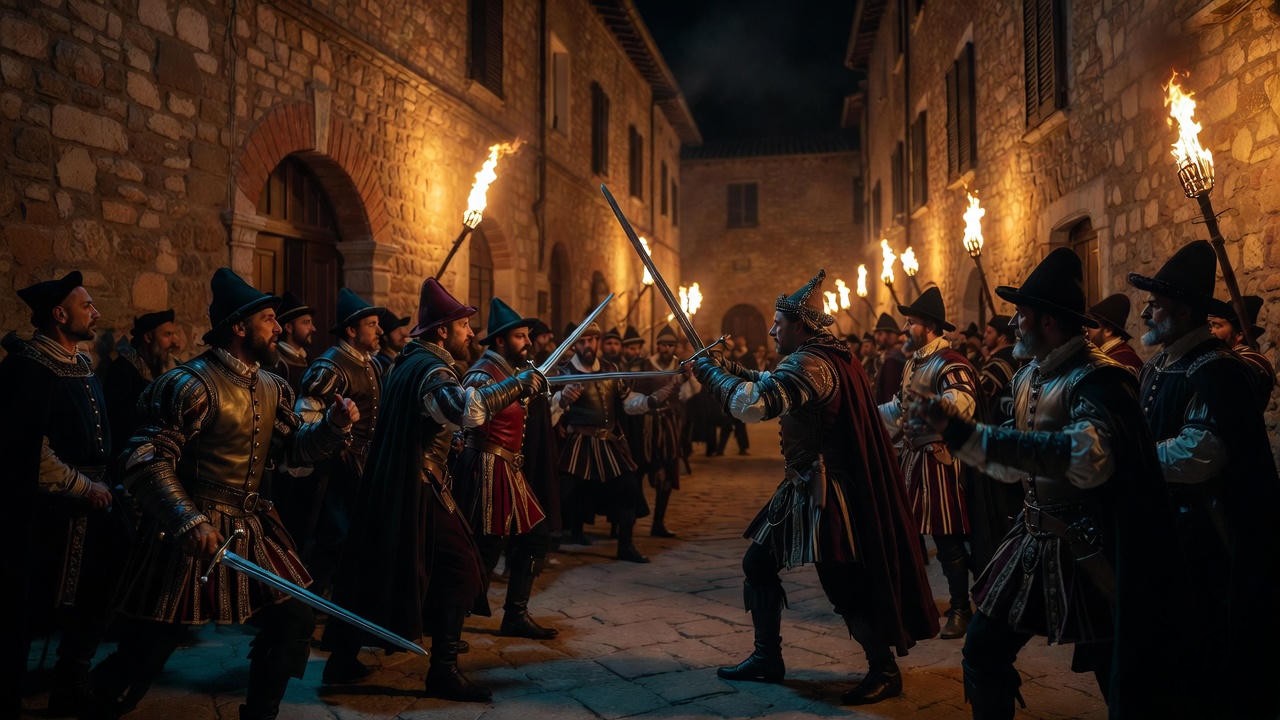
While there is no historical evidence of a Montague-Capulet feud exactly as Shakespeare describes, the city did experience intense family rivalries and factional violence.
- The Della Scala (Scaligeri) family: Verona’s most famous medieval lords, who ruled the city from 1262 to 1387. Their emblem was a ladder (scala), and their power struggles involved bloody conflicts with rival families.
- Historical records: Documents from the 13th and 14th centuries mention families named Montecchi and Cappelletti (close to Montague and Capulet), though no evidence links them romantically or violently.
- Italian vendettas: The real-life culture of vendetta was widespread in northern Italy. Feuds often lasted generations and frequently ended in exile, murder, or papal intervention—parallels Shakespeare clearly exploited.
2.3 Daily Life, Architecture, and Society in Renaissance Verona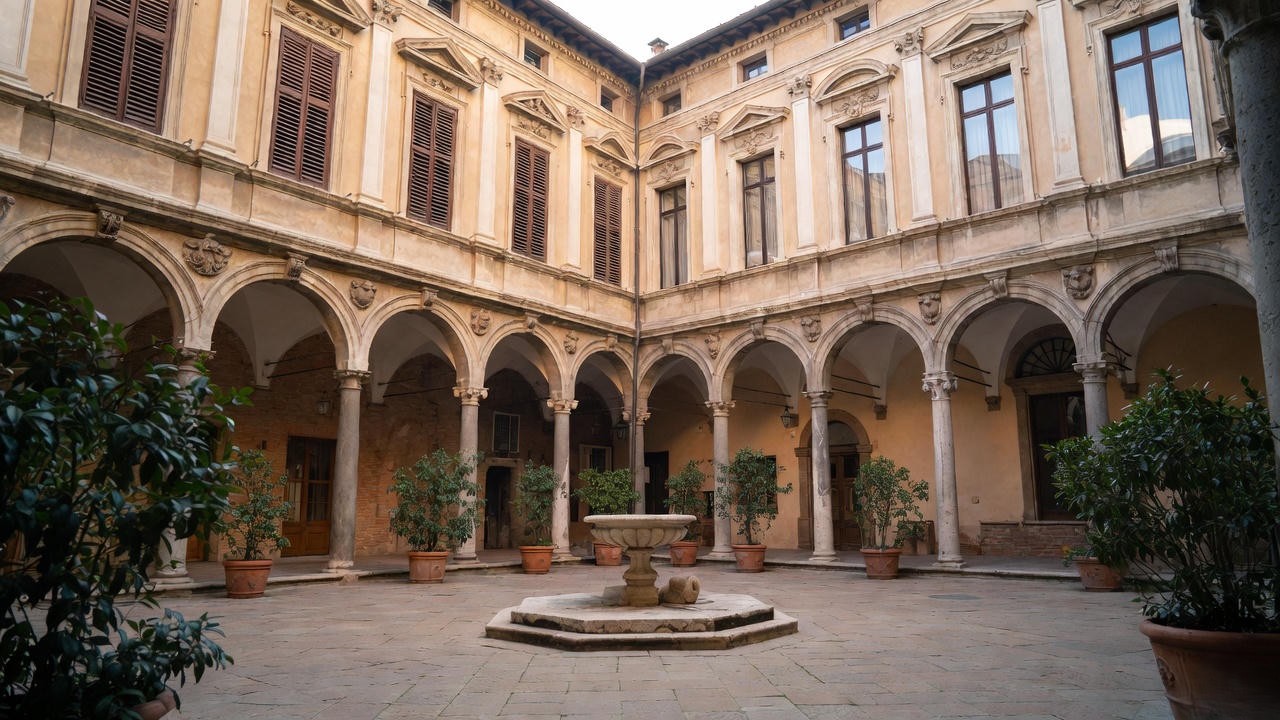
Renaissance Verona was a bustling, sophisticated city:
- Social hierarchy: Nobility (like the Capulets and Montagues), wealthy merchants, artisans, and a large servant class.
- Architecture: Narrow medieval streets, elegant palazzi with courtyards, Romanesque and Gothic churches, and the famous Ponte Pietra bridge.
- Religious life: Franciscan friars were prominent (like Friar Laurence), and the Church wielded considerable social and political influence.
3. Shakespeare’s Verona: Invention, Adaptation, and Dramatic Purpose
3.1 Why Shakespeare Chose Verona (Not London or Stratford)
In Elizabethan England, Italy was synonymous with passion, danger, romance, and political intrigue. Setting the play in Verona allowed Shakespeare to:
- Tap into Italian exoticism: Italian settings were fashionable in the Elizabethan theater (e.g., The Merchant of Venice, The Taming of the Shrew).
- Draw on popular sources: The story originated in Matteo Bandello’s 1554 novella and Arthur Brooke’s 1562 poem The Tragical History of Romeus and Juliet, both set in Verona.
- Create distance: An Italian setting distanced the play from English politics and religious tensions, allowing bolder exploration of taboo subjects like teenage passion and suicide.
3.2 Key Differences Between Historical Verona and Shakespeare’s Version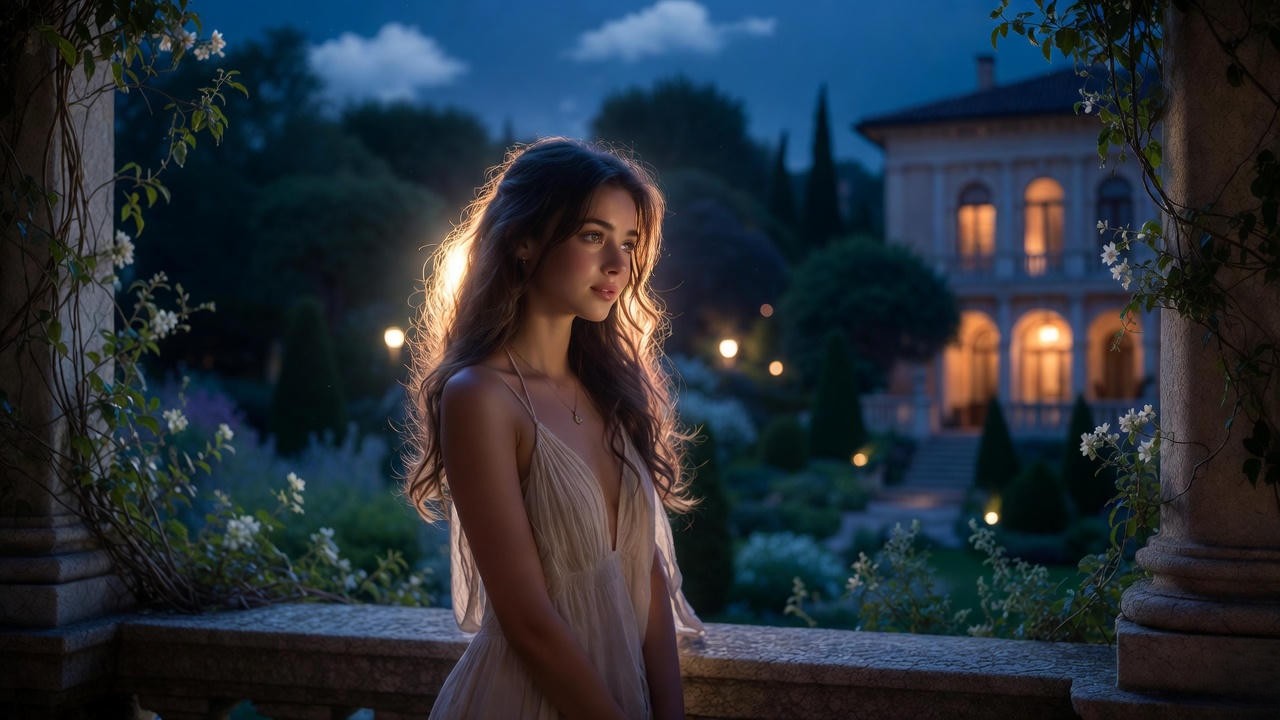
Shakespeare’s Verona is a highly stylized, dramatized place:
- The feud: Far more violent and all-consuming than any historical record suggests.
- Juliet’s balcony: The famous balcony scene is entirely Shakespeare’s invention; no such balcony existed in 14th-century Verona.
- Anachronisms: Clocks strike hours (they didn’t exist in the 1300s), dueling etiquette follows late-16th-century rules, and references to “the Prince” reflect a more centralized authority than Verona actually had.
- Atmosphere: Shakespeare paints Verona as a city of constant sunshine, moonlight, and passion, contrasting sharply with the damp, crowded reality of medieval towns.
3.3 The Role of Setting in Driving the Tragedy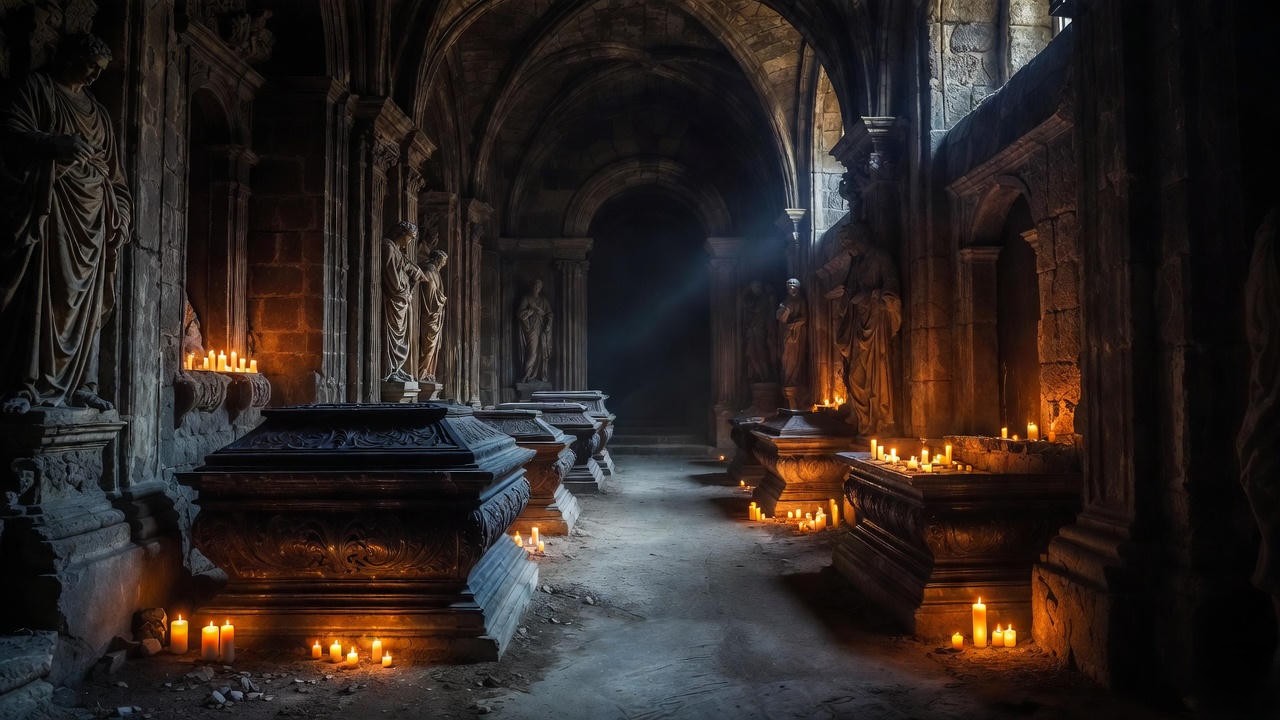
The setting is not passive:
- Public vs. private spaces: The streets belong to the feud; the orchard and bedroom belong to love. This spatial division makes the lovers’ relationship inherently transgressive.
- Mantua as exile: Romeo’s banishment to a nearby city is close enough to seem survivable, yet far enough to make communication difficult—crucial to the tragic misunderstanding.
- The tomb: The final scene in the Capulet vault is the ultimate confinement, symbolizing the lovers’ entrapment by fate, family, and society.
4. Literary and Theatrical Significance of the Setting
4.1 How the Setting Reinforces Major Themes
The Verona of Romeo and Juliet is far more than a picturesque Italian city: it functions almost as a character in its own right, amplifying the play’s central conflicts and philosophical questions.
- Fate vs. free will Verona is repeatedly described as a city of destiny. The Chorus opens the play by calling the lovers “star-crossed,” and the setting itself feels predestined to produce tragedy. The narrow streets, the inescapable family compounds, and the short distance to Mantua all conspire to limit the characters’ choices, making fate appear almost tangible.
- Love vs. hate The contrast between the public spaces of violence (streets, market squares) and the private spaces of intimacy (the orchard, Juliet’s bedroom) is stark. The lovers must literally cross the city’s boundaries—both literal and social—to meet, emphasizing how their love is an act of rebellion against the city’s dominant values.
- Youth vs. age Verona’s rigid social hierarchy, dominated by the older generation, leaves little room for the young to assert their desires. The city’s architecture—high walls, locked gates, guarded houses—mirrors the generational barriers that Romeo and Juliet must overcome.
4.2 Stage Directions and Performance Implications
Shakespeare wrote for the Elizabethan bare stage, where location was evoked through language rather than scenery.
- Verona on the Elizabethan stage The same wooden platform served as Verona’s streets, Capulet’s hall, the orchard, Friar Laurence’s cell, and the tomb. Shakespeare relied on rich descriptive language (“the orchard walls are high and hard to climb”) and audience imagination to create the city.
- Modern productions Directors have taken very different approaches:
- Zeffirelli (1968) used lush, historically inspired visuals of Renaissance Italy.
- Baz Luhrmann (1996) transposed the action to a fictional “Verona Beach,” blending Latin American and modern American aesthetics while retaining the original text.
- Many contemporary stagings use minimalist or abstract sets, forcing audiences to focus on language and performance rather than literal location.
5. Cultural Impact and Modern Legacy of Verona as “Romeo and Juliet’s City”
5.1 Verona Today: Tourism and “Juliet’s House”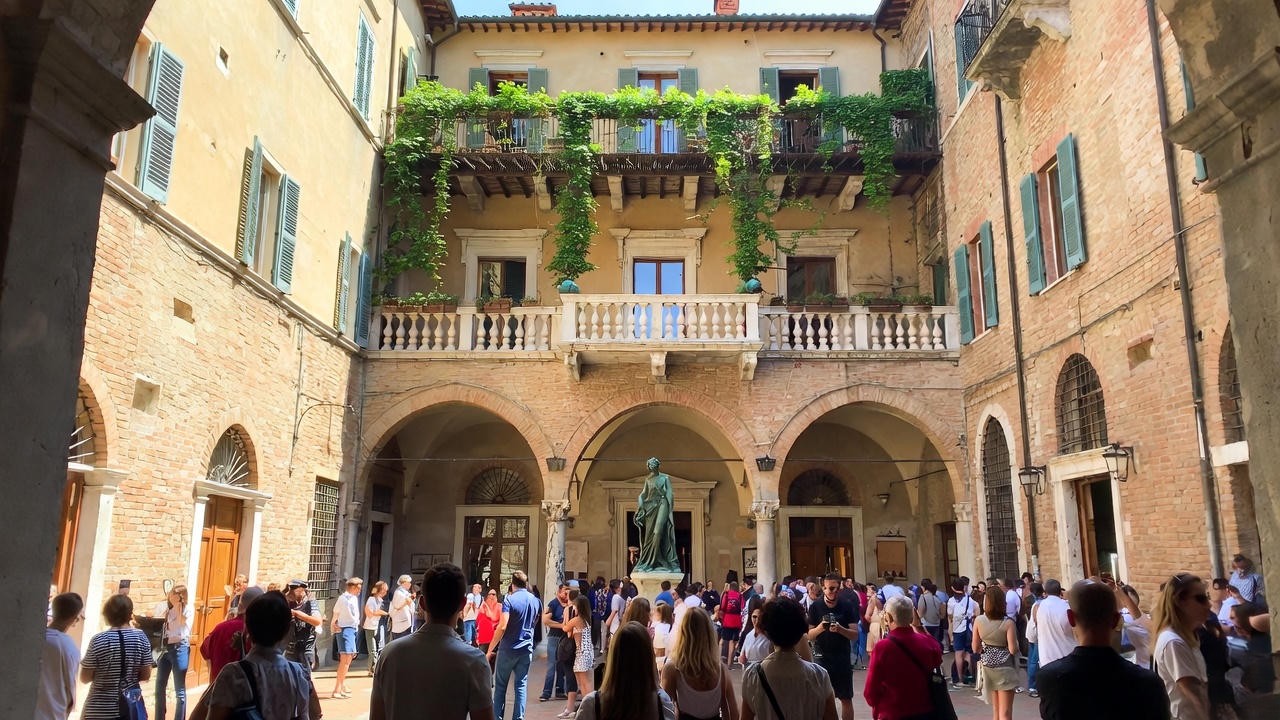
Thanks to Shakespeare, Verona has become one of Italy’s most visited literary destinations.
- Casa di Giulietta (Juliet’s House) A 13th-century palazzo with a famous balcony (added in the 1930s) and a bronze statue of Juliet. Thousands of visitors each year leave letters to Juliet in the courtyard—many of which are answered by a team of volunteers.
- Other landmarks The Arena di Verona hosts an annual Shakespeare festival, while the Scaliger Tombs and Ponte Pietra bridge are often photographed as “Romeo and Juliet” locations.
5.2 Why the Setting Still Resonates Globally
Shakespeare’s Verona transcends its historical origins to become a universal symbol of passionate, doomed love. The city’s name alone evokes images of star-crossed romance, youthful rebellion, and tragic inevitability—meanings that have been reinforced by centuries of adaptations in film, opera, ballet, and literature.
6. Expert Insights & Scholarly Perspectives
Leading Shakespeare scholars have long emphasized the importance of setting in Romeo and Juliet.
- Stephen Greenblatt (Will in the World): Notes that Shakespeare’s Italian settings allowed him to explore dangerous social and erotic territory that would have been riskier in an English context.
- Stanley Wells (Shakespeare: A Life in Drama): Argues that the play’s geographical confinement heightens the sense of claustrophobia and inevitability.
- René Weis (editor of the Arden Third Series Romeo and Juliet): Points out that the Q1 (1597) text contains slightly different spatial details than the Q2 (1599) text, suggesting Shakespeare refined the setting during revision.
These scholarly perspectives reinforce that the Romeo and Juliet setting is no accident: it is a carefully crafted dramatic device.
7. FAQs About the Romeo and Juliet Setting
Q: Is Romeo and Juliet based on a true story? A: No. While there were real Montague- and Capulet-like families in Verona, the love story and feud are literary inventions, drawing from Italian novellas.
Q: Did Shakespeare ever visit Italy? A: There is no evidence he did. His knowledge of Italy came from books, travelers’ tales, and the Italian novellas he adapted.
Q: What is the exact year Romeo and Juliet is set in? A: Shakespeare never specifies. Most scholars place it loosely in the late 14th or early 15th century.
Q: Why does Shakespeare set the play in Verona instead of England? A: Italian settings were exotic and fashionable in Elizabethan theater, and allowed bolder exploration of controversial themes.
Q: Is Juliet’s balcony real? A: No. The balcony scene is entirely Shakespeare’s invention; the famous balcony in Verona was added centuries later for tourists.
Q: How does the setting differ in different film adaptations? A: Zeffirelli (1968) used a historically inspired Renaissance Verona; Luhrmann (1996) created a modern “Verona Beach”; other versions have set it in contemporary India, Africa, or even outer space.
Shakespeare’s Verona is both a real place and a mythic one. The historical city—ancient Roman roots, medieval feuds, Renaissance prosperity—provided the raw material. But Shakespeare reshaped that material into a dramatic world where every street, every wall, every moonlit garden serves the tragedy.
The Romeo and Juliet setting is not just a location: it is the crucible in which love and hate, youth and age, fate and choice collide with devastating force. Understanding the interplay between historical Verona and Shakespeare’s invented one deepens our appreciation of the play’s power and its enduring appeal.