Imagine holding a centuries-old page from the 1623 First Folio, where Shakespeare’s words appear in their rawest form: sparse punctuation, erratic capitalization, occasional misprints, and no modern stage directions cluttering the margins. The text feels alive, almost breathing—full of ambiguities that force you to pause, question, and interpret. This is the essence of Script P—the foundational pages of Shakespeare’s original dramatic scripts, preserved in early Quartos and the monumental First Folio. These pages hold hidden insights that modern editions often smooth over for clarity, yet they reveal the playwright’s genius in unexpected ways: subtle wordplay lost to contemporary punctuation, variant readings that shift character motivation, and textual choices that reflect collaborative theater practices of the Elizabethan and Jacobean eras.
For students grappling with dense soliloquies, actors seeking authentic delivery cues, teachers aiming to spark deeper classroom discussions, or enthusiasts craving more than surface-level summaries, returning to these original texts solves a persistent problem. Modern Shakespeare editions—while invaluable—add layers of editorial interpretation that can obscure Shakespeare’s intentions. By exploring Script P, we unlock nuances that enrich understanding, performance, and appreciation, offering fresh perspectives on familiar lines and scenes.
As a lifelong scholar of Renaissance drama, drawing from primary sources like the Folger Shakespeare Library’s digital facsimiles, the Internet Shakespeare Editions, and textual criticism from experts such as those behind the Arden and Oxford series, this guide delves comprehensively into these original play texts. We’ll examine why they matter, how variants create interpretive richness, and practical ways to engage with them today—going beyond typical study guides to provide skyscraper-level depth.
Understanding “Script P”: What Are Shakespeare’s Original Play Texts?
Script P refers to the page-level reality of Shakespeare’s plays as they first appeared in print: the early Quartos (small, inexpensive books published during or shortly after his lifetime) and the 1623 First Folio, the landmark collection compiled by his fellow actors John Heminges and Henry Condell. These documents represent the closest we get to Shakespeare’s dramatic words as performed and preserved in the early 17th century.
The journey from stage to page was complex. Shakespeare’s company used “parts” or cue-scripts—actors received only their lines and brief cues, not full texts—to maintain secrecy and prevent rival troupes from stealing material. Printed versions emerged sporadically: “good” Quartos likely derived from authorial manuscripts or prompt-books, while “bad” Quartos (such as the 1603 Hamlet) resulted from memorial reconstructions, often abbreviated or garbled.
The First Folio changed everything. Published seven years after Shakespeare’s death, it gathered 36 plays (18 never before printed), organized into Comedies, Histories, and Tragedies. Its large folio format—sheets folded once to create four pages—signaled prestige, akin to works of theology or law rather than ephemeral playbooks. Page references (“p.” or signature marks like “sig. Hh3r”) in scholarly discussions often point to specific Folio pages, where layout, spelling, and variants offer clues unavailable elsewhere.
Modern editions contrast sharply. Editors like those in the Folger or Arden series introduce consistent punctuation, standardized spelling, act/scene divisions (mostly absent in originals), and added stage directions. These interventions clarify but sometimes alter meaning. For instance, Hamlet’s famous line “O that this too too sallied flesh would melt” appears in early Quartos as “sallied” (suggesting assaulted or sullied), while the Folio reads “solid”—a variant that shifts the imagery from corruption to corporeal weight.
| Edition Type | Key Features | Strengths | Limitations |
|---|---|---|---|
| Early Quartos | Small format, variable quality | Closer to performance texts | Some “bad” texts corrupted |
| First Folio (1623) | Double-column pages, portrait title | Preserved 18 unique plays | Printing inconsistencies, no punctuation standardization |
| Modern (e.g., Folger, Arden) | Edited for readability, notes | Accessible, scholarly apparatus | Editorial choices can obscure originals |
Understanding these differences empowers readers to appreciate Shakespeare’s texts as dynamic artifacts rather than fixed monuments.
Why Hidden Insights Matter – The Problems Readers and Performers Face
Many encounter Shakespeare through sanitized modern versions, missing the interpretive freedom—and occasional frustration—built into the originals. Punctuation absence creates ambiguity: a line without commas might flow differently in performance, altering emphasis or emotion. Added directions in modern texts dictate blocking or tone that Shakespeare left open, limiting creative choices.
Performers face challenges too. Original minimalism (few explicit entrances/exits) demands collaboration with directors and cast, mirroring the collaborative nature of Shakespeare’s theater. Variants reveal revisions: Folio cuts or additions suggest theatrical adjustments post-composition, perhaps for censorship or pacing.
These “hidden” elements address real needs: students gain analytical depth, actors discover authentic vocal rhythms (e.g., Folio spellings hint at pronunciation), and readers uncover layers of meaning lost to standardization. Ignoring them risks superficial engagement; embracing them transforms appreciation.
Unlocking Layer 1 – Textual Variants and What They Reveal
Textual variants—differences between Quartos and Folio—aren’t mere errors but windows into Shakespeare’s world. Compositors set type by hand, sometimes misreading manuscripts or altering for space. Yet many variants enrich interpretation.
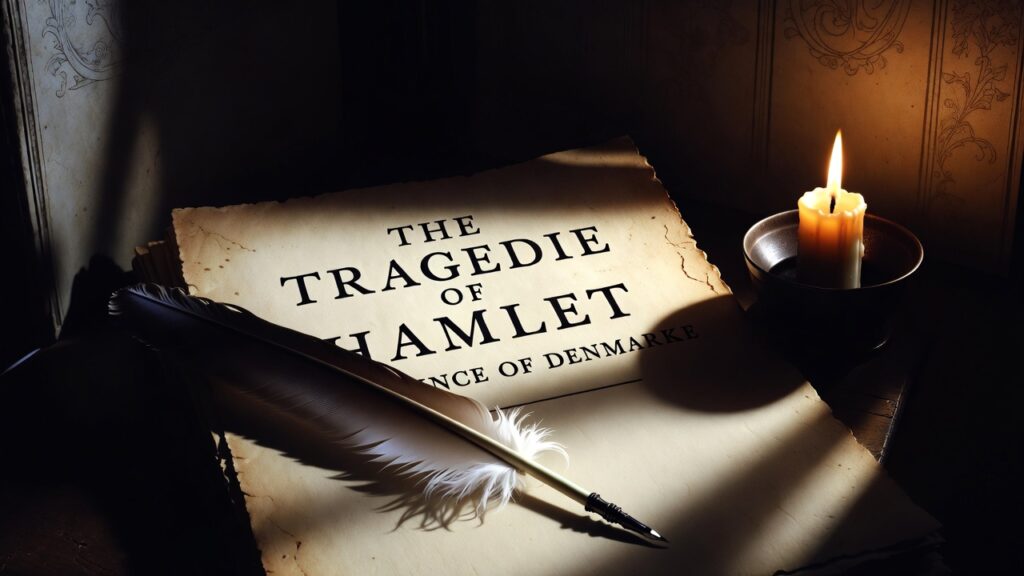
A classic: Hamlet’s “solid” vs. “sullied” flesh in “O that this too too [solid/sallied/sullied] flesh would melt.” Quartos favor “sallied/sullied” (implying tainted), Folio “solid” (physical dissolution). Scholars debate: does Hamlet lament moral corruption or bodily burden? The variant invites philosophical depth.
In King Lear, Folio omits passages in Quartos (e.g., mock trial scene), possibly cuts for performance or revision. These changes alter tone: Quartos emphasize madness’s chaos, Folio a tighter tragedy.
Page-specific insights emerge in Folio layout. Double columns force line breaks affecting rhythm; compositor spellings (e.g., “doe” vs. “do”) aid attribution studies, revealing workshop practices.
Experts like those in New Bibliography emphasize variants as intentional or collaborative, not flaws—offering evidence of Shakespeare’s revisions or company input.
Unlocking Layer 2 – Language, Wordplay, and Ambiguities in Original Scripts
Shakespeare’s language thrives on ambiguity, amplified in originals. Minimal punctuation allows multiple readings: in Much Ado About Nothing, Beatrice’s banter gains innuendo without commas separating meanings.
Archaic spellings provide clues. Folio “sonne” (son/sun) exploits homophones in puns. Pronunciation shifts (e.g., “wherefore” as “where-for” meaning “why”) alter delivery.
Lack of stage directions forces imagination: entrances mid-speech suggest fluidity, encouraging dynamic staging.
Side-by-side comparison (original vs. modern):
Original Folio (example from Hamlet): “To be or not to be that is the question”
Modern: “To be, or not to be—that is the question:”
The dash adds pause, intensifying introspection—but original flow mirrors racing thought.
Such details reveal wordplay, rhetorical devices, and Elizabethan English vibrancy often muted today.
Practical Applications – How to Use These Insights Today
The true value of returning to Script P lies in application. Whether you’re preparing for an exam, rehearsing a scene, teaching a class, or simply reading for pleasure, these original texts offer tools that modern editions alone cannot provide. Here are practical, actionable ways to engage with them.
For Students and Teachers Start with accessible digital resources that preserve original page layouts while offering guidance:
- Visit the Internet Shakespeare Editions (internetshakespeare.uvic.ca) for side-by-side modernized and old-spelling versions, plus facsimiles of key pages.
- Use the Folger Digital Texts (folgerpedia.folger.edu) and their free digital facsimiles of the First Folio—zoom in on specific pages to see compositor quirks and layout.
- Adopt the “original spelling close reading” method: Pick one speech, read it first in modernized form, then in the Folio/Quarto version. Note every difference in spelling, punctuation, and line breaks. Ask: How does this change rhythm, tone, or possible meaning?
Example exercise for classroom use: Assign students to compare the Folio and Quarto versions of the balcony scene in Romeo and Juliet. The Quarto’s more expansive stage directions and variant wording can spark debate about Juliet’s agency and Romeo’s impulsiveness.
For Actors and Directors The original texts are performance documents first. Shakespeare’s minimal stage directions and cue-based writing reward actors who trust the language.
- Experiment with cue-scripts: Modern companies (e.g., the Original Practices productions at Shakespeare’s Globe) recreate Elizabethan rehearsal methods using only personal lines and cues. This forces listening and spontaneity.
- Pay attention to Folio lineation and spelling for delivery clues. The spelling “wherefore” (why) rather than modern “wherefore art thou” changes stress and intonation.
- Use variants to inform character choices. In Othello, Folio cuts some of Iago’s lines present in Quartos—directors can choose which version heightens suspicion or reveals calculation.
Practical tip: When memorizing, learn from a Folio-based edition first, then consult modern punctuation only after internalizing the raw rhythm.
For General Readers and Enthusiasts You don’t need a PhD to benefit. Recommended starting points:
- The Norton Shakespeare (based on Oxford, with old-spelling appendices)
- The Folger Shakespeare Library editions (parallel modern and facing-page original excerpts in some volumes)
- Free tools: Shakespeare’s Words (shakespeareswords.com) glossary for archaic terms, and the Open Source Shakespeare searchable database
Seven-step starter guide to exploring Script P:
- Choose one play you’re familiar with.
- Find a free Folio facsimile page online (e.g., via British Library or Meisei University digital collection).
- Read a famous passage in original spelling and layout.
- Compare it to your usual modern edition.
- List three differences (spelling, punctuation, line breaks).
- Research one variant using scholarly commentary (Arden footnotes or Folger notes).
- Reflect: How does the original version change your emotional or intellectual response?
These steps turn passive reading into active discovery.
Case Study: Hidden Insights in a Signature Play – Hamlet’s “To Be or Not to Be”
Few passages in world literature rival Hamlet’s soliloquy for fame and interpretive weight. Yet the original texts reveal layers modern readers rarely encounter.
The First Folio page (roughly sig. pp4v–pp5r in the Tragedies section) presents the speech with minimal punctuation:
“To be, or not to be, that is the Question: Whether ’tis Nobler in the minde to suffer The Slings and Arrowes of outragious Fortune, Or to take Armes against a Sea of troubles, And by opposing end them: to dye, to sleepe No more; and by a sleepe, to say we end The Heart-ake, and the thousand Naturall shockes That Flesh is heyre too? ‘Tis a consummation Deuoutly to be wish’d.”
Compare this to the Second Quarto (1604/5), widely considered closer to Shakespeare’s manuscript:
“To be, or not to be, that is the question, Whether ’tis nobler in the mind to suffer The slings and arrows of outrageous fortune, Or to take arms against a sea of troubles And by opposing end them. To die, to sleep— No more—and by a sleep to say we end The heartache and the thousand natural shocks That flesh is heir to: ’tis a consummation Devoutly to be wished.”
Key differences emerge:
- Folio capitalizes abstract nouns (“Question,” “Naturall,” “Heart-ake”)—a common printing convention that may emphasize philosophical weight.
- Quarto uses more dashes and colons, creating a halting, introspective rhythm; Folio flows more continuously.
- The famous crux “solid/sallied/sullied flesh” appears earlier in the scene, but the soliloquy itself shows punctuation variance affecting pace: Folio’s lighter pointing allows the actor to decide where breath and emphasis fall.
Interpretive impact: The Folio version can feel more meditative and resigned, while the Quarto’s punctuation heightens existential anguish. Actors often prefer one over the other depending on whether they want to portray Hamlet as contemplative philosopher or tormented soul.
This single passage demonstrates why Script P matters: the same words, arranged slightly differently on the page, invite radically different performances and understandings.
Common Myths and Misconceptions About Shakespeare’s Scripts
- Myth: Shakespeare wrote perfectly and never revised. Reality: Variants and Folio cuts show he (and his company) revised for performance, audience, or censorship.
- Myth: The First Folio is the single authoritative text. Reality: It contains errors and omissions; Quartos sometimes preserve earlier or alternative versions.
- Myth: Original spelling and punctuation are irrelevant to meaning. Reality: They carry clues to pronunciation, emphasis, and wordplay lost in modernization.
- Myth: Modern editions are always inferior. Reality: They clarify while originals challenge—both are valuable when used together.
Debunking these myths frees readers from rigid notions of “correct” Shakespeare and opens the door to pluralistic interpretation.
Returning to Script P—the raw, page-specific reality of Shakespeare’s original play texts—transforms how we experience his work. What once seemed fixed and distant becomes dynamic, collaborative, and profoundly human. The ambiguities, variants, and minimalism that frustrate at first become sources of endless fascination and insight.
Whether you’re a student seeking analytical depth, an actor hunting authentic cues, a teacher inspiring curiosity, or a lifelong reader hungry for new discoveries, the original pages await. Tonight, open a Folio facsimile online. Zoom in on a single page. Read a familiar speech in its earliest printed form. Let Shakespeare’s words, unfiltered by centuries of editing, speak directly to you once more.
His genius endures not despite the imperfections of Script P, but because of them.
Frequently Asked Questions
What exactly does “Script P” mean in this context? It refers to the literal pages (“p.” for page) of Shakespeare’s early printed play texts—Quartos and especially the 1623 First Folio—where original wording, layout, and variants reside.
Where can I view the First Folio for free? Excellent digital facsimiles are available at the Folger Shakespeare Library (folger.edu), British Library, and Meisei University’s collection.
Why do original texts have so little punctuation? Punctuation was not standardized in the early 17th century; it was often added by compositors or left minimal so actors could shape delivery.
Are “bad Quartos” worthless? No—they often preserve unique stage versions or earlier drafts, offering valuable performance history even if textually corrupt.
Which modern edition best balances accessibility and fidelity to originals? The Folger Shakespeare Library editions are excellent for general readers; the Arden Shakespeare series provides the deepest scholarly apparatus.
How do textual variants affect modern adaptations? Film and stage directors often choose variants to suit their vision—e.g., using Folio cuts in King Lear for tighter pacing.
Can beginners really understand old spelling? Yes—after a few pages, patterns become familiar. Online glossaries and parallel texts make it manageable.
Does Shakespeare authorship debate affect Script P study? Minimally. The focus here is on the texts as preserved by his company and contemporaries, regardless of authorship theories.1