

Ever wondered how Shakespeare crafted stories that still captivate us centuries later? 🎭 His genius lies in Shakespeare’s technique for soliloquy and plot development—a masterful blend of raw emotion, poetic language, and gripping narratives that pull readers in. Whether you’re a budding writer or a seasoned storyteller, mastering these techniques can transform your work, making it unforgettable. Struggling to create deep characters or compelling plots? This article breaks down Shakespeare’s methods into practical steps, showing you how to weave emotional depth and dynamic storytelling into your writing. Ready to elevate your craft? Keep reading! 😊
1: Understanding Shakespeare’s Soliloquy Technique

What Makes a Shakespearean Soliloquy So Powerful?
Imagine a character baring their soul, alone on stage, sharing their deepest fears or dreams. That’s a soliloquy—a monologue where a character reveals their inner thoughts without another character responding. Shakespeare’s technique for soliloquy and plot development shines here, creating moments that grip audiences. 😊 Soliloquies build empathy by letting us into a character’s mind, expose their true motivations, and push the story forward. Think of Hamlet’s “To be or not to be” speech, wrestling with life and death, or Macbeth’s “Tomorrow, and tomorrow, and tomorrow,” filled with despair. These moments make characters feel real and unforgettable.
Key Elements of a Shakespearean Soliloquy
So, what gives these soliloquies their magic? Let’s break it down:
- Emotional Depth: Characters pour out raw feelings like doubt, ambition, or grief. Hamlet’s indecision or Lady Macbeth’s guilt hits hard because it’s honest.
- Poetic Language: Shakespeare uses iambic pentameter (a rhythmic beat like a heartbeat), vivid metaphors, and rich imagery to make words sing. For example, Macbeth’s “life’s but a walking shadow” paints a haunting picture.
- Direct Audience Engagement: Soliloquies often break the “fourth wall,” speaking directly to us. This creates an intimate bond, like a friend sharing a secret.
- Plot Progression: These speeches reveal key decisions or hint at what’s coming. Hamlet’s soliloquy foreshadows his tragic path, keeping us hooked.
Why It Matters for Your Writing
Understanding Shakespeare’s soliloquy technique helps you craft characters that leap off the page. By tapping into their inner world, you create stories that resonate deeply. Want to make your characters feel alive? Use soliloquies to show their struggles and dreams. Ready to try it? Start small—write a short monologue for a character facing a tough choice. 😊
2: Breaking Down Shakespeare’s Plot Development
Technique
The Blueprint of Shakespeare’s Storytelling
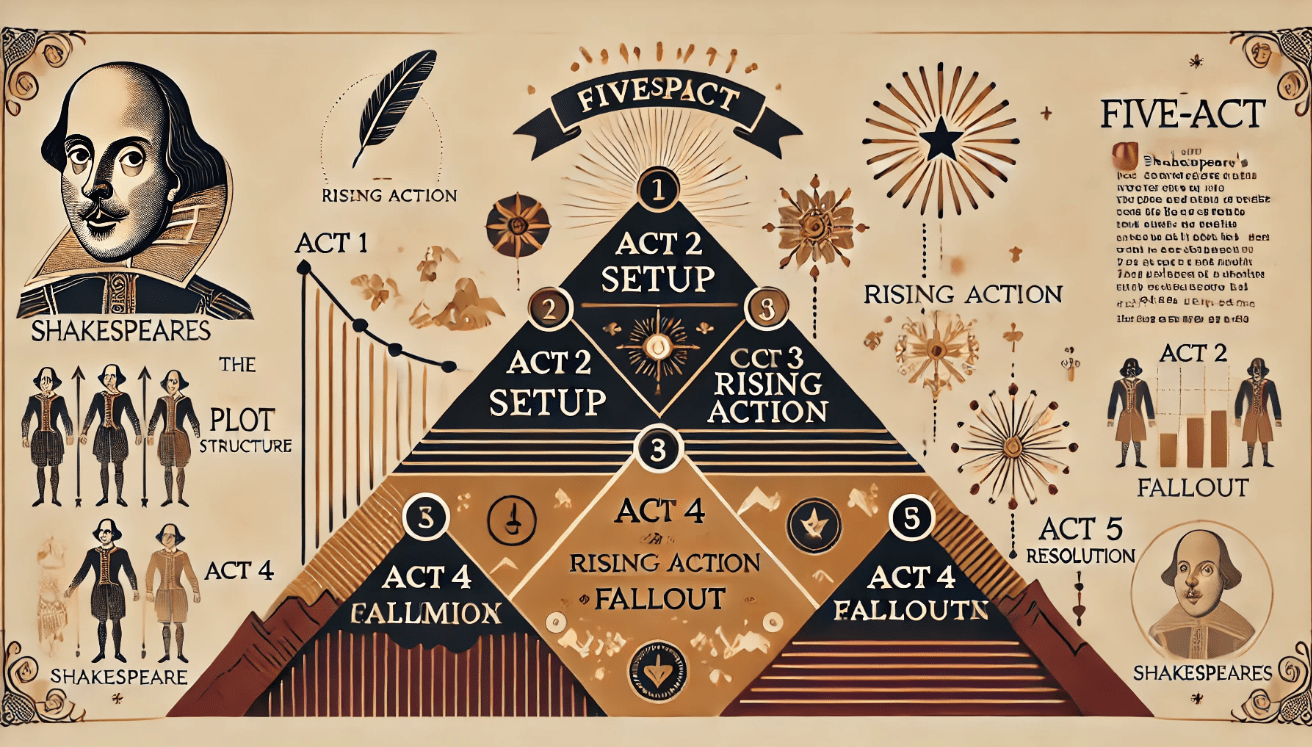
Shakespeare’s stories captivate because they follow a clear, powerful structure. His five-act model—exposition, rising action, climax, falling action, and resolution—creates a rollercoaster of emotions that keeps audiences hooked. 😊 In Shakespeare’s technique for soliloquy and plot development, this structure shines. Act 1 introduces characters and conflicts, like the feud in Romeo and Juliet. Act 2 escalates tension with new obstacles. Act 3 hits the climax, such as Othello’s jealousy peaking. Act 4 shows consequences, and Act 5 ties up loose ends. Conflict, both internal (like Hamlet’s doubt) and external (like Macbeth’s battles), drives the drama forward.
Tools Shakespeare Used for Plot Development
How did Shakespeare make his plots so gripping? Here are his key tools:
- Foreshadowing: He drops hints of what’s to come, like the witches’ prophecies in Macbeth, building anticipation.
- Subplots: Side stories, like Gloucester’s arc in King Lear, mirror or contrast the main plot, adding depth.
- Character Arcs: Characters evolve through their choices, like Romeo’s shift from lovesick youth to tragic hero.
- Pacing: Shakespeare balances action, dialogue, and reflection to keep the story moving without feeling rushed.
3: Practical Steps to Apply Soliloquy in Your Writing
Crafting Soliloquies for Modern Audiences
Want to bring Shakespeare’s soliloquy magic to your writing? A soliloquy lets your character spill their innermost thoughts, creating a deep connection with readers. In Shakespeare’s technique for soliloquy and plot development, this tool shines. Here’s how to craft one that feels fresh and impactful:
- Pinpoint the Core Conflict: Start with your character’s central struggle, like fear of failure or a moral dilemma. This gives the soliloquy purpose.
- Use First-Person Voice: Write as if the character is thinking aloud to capture authentic emotions. Let their personality shine through.
- Add Vivid Imagery: Use metaphors or descriptive language to make the monologue pop. For example, “My dreams are a crumbling castle” feels powerful.
- Keep It Short: Modern audiences prefer concise monologues—aim for 100-200 words to maintain impact.
Try This Exercise: Write a 100-word soliloquy for a character facing a tough career choice, like quitting a stable job to chase a passion. 😊

Adapting Soliloquies for Different Formats
Soliloquies work across various mediums with a few tweaks:
- Novels: Use internal monologues to mimic soliloquies, letting readers dive into a character’s mind during a quiet moment.
- Screenplays: Incorporate voiceovers or reflective dialogue for a cinematic effect, like a character narrating their fears while staring out a window.
- Plays: Stage your character alone to emphasize isolation, amplifying the emotional weight of their words.
4: How to Build Plots Like Shakespeare
Structuring Your Story with Shakespeare’s Five-Act Model
Shakespeare’s stories grip us because of their clear, dynamic structure. His five-act model is a blueprint you can use to craft compelling narratives. In Shakespeare’s technique for soliloquy and plot development, this structure is key. Here’s how it works:
- Act 1: Set the Stage Introduce your characters, setting, and main conflict. Think of a family drama where a secret sparks tension.
- Act 2: Raise the Stakes Add complications, like new obstacles or rivalries, to escalate the conflict.
- Act 3: Hit the Climax Create a turning point, like a major confrontation, that shifts the story’s direction.
- Act 4: Show Consequences Explore the fallout from the climax, building toward resolution.
- Act 5: Wrap It Up Resolve conflicts and tie up loose ends for a satisfying close.
Try This Exercise: Map a modern story, like a workplace rivalry, to this five-act structure to plan your plot. 😊
Adding Shakespearean Depth to Your Plot
To make your story as rich as Shakespeare’s, use these tools:
- Layered Conflicts Combine personal struggles (like self-doubt) with societal issues (like class divides) to add depth.
- Subplots Create side stories that mirror or contrast the main plot, like a friend’s betrayal echoing the hero’s journey.
- Foreshadowing Drop hints through dialogue or symbols, like a storm signaling trouble ahead, to build suspense.
- Character Development Show characters evolving through their choices, like a timid hero becoming bold.
5: Common Mistakes to Avoid When Emulating Shakespeare
Pitfalls in Soliloquy Writing
Trying to write like Shakespeare can be exciting, but it’s easy to stumble. When using Shakespeare’s technique for soliloquy and plot development, avoid these common soliloquy mistakes to keep your writing authentic and engaging:
- Overusing Archaic Language: Words like “thou” or “hath” can feel forced and alienate modern readers. Stick to natural, clear language that fits your character’s voice.
- Overlong or Unfocused Soliloquies: Long, rambling monologues lose impact. Keep them concise—100-200 words—and focused on a single emotion or conflict.
- Ignoring the Character’s Voice: A soliloquy should sound like your character, not a Shakespeare clone. Ensure their unique perspective shines through.
Quick Tip: Read your soliloquy aloud to check if it feels natural and true to the character. 😊
Plot Development Errors
Plotting like Shakespeare is tricky, too. Avoid these mistakes to keep your story compelling:
- Rushing the Climax: Skipping the buildup to the big moment makes it feel flat. Let tension grow through conflicts and obstacles first.
- Neglecting Subplots: Without side stories, your plot can feel one-dimensional. Add a subplot, like a friend’s betrayal, to enrich the narrative.
- Predictable Resolutions: Endings that feel too neat or expected disappoint readers. Craft resolutions that surprise yet feel earned.
6: Real-World Applications of Shakespeare’s Techniques 🔍✨
Mastering Shakespeare’s approach to soliloquy and plot development isn’t just for literary scholars or playwrights — it’s a powerful tool for any writer who wants to connect deeply with readers and craft compelling stories. Let’s explore how you can apply these timeless techniques in your own writing projects, no matter the genre. ✍️📚
🎭 Use Soliloquies to Deepen Character Voice
What to do: Give your characters moments of raw, internal reflection — their “soliloquy moments.”
Why it works: Soliloquies give readers a front-row seat to a character’s fears, hopes, and moral struggles. Whether you’re writing a novel, short story, or screenplay, inserting inner monologues at key moments can make your characters feel real and relatable.
How to apply it:
- Add journal entries, voiceovers, or internal dialogue
- Use them during pivotal decision-making scenes
- Keep the tone honest, vulnerable, and uniquely “them”
🧠 Pro Tip: Use soliloquies to show emotional growth. Start with confusion or conflict, and end with clarity or a deeper question.
🧩 Strengthen Plot Arcs with Shakespearean Structure
What to do: Structure your plot with rising tension, strategic turning points, and a powerful climax — just like Shakespeare.
Why it works: Shakespeare’s plays follow a 5-act structure that keeps the audience engaged. You don’t need to follow it exactly, but borrowing key elements can make your story more dynamic and emotionally satisfying.
How to apply it:
- Act 1 (Setup): Introduce characters + conflict
- Act 2 (Rising Action): Build tension and stakes
- Act 3 (Turning Point): Deliver a game-changing event
- Act 4 (Fallout): Let the consequences play out
- Act 5 (Resolution): Tie it all together with impact
🎯 Modern twist: Use this framework for blog storytelling, email sequences, or video scripts to make your content more engaging.
💬 Make Dialogue Do Double Duty
What to do: Let your characters’ words carry both surface meaning and hidden intent.
Why it works: Shakespeare was a master at writing layered dialogue. By doing the same, you can create tension, mystery, or irony — keeping readers hooked.
How to apply it:
- Add subtext: What is the character really thinking?
- Use contradictions to reveal inner conflict
- Let dialogue hint at upcoming twists or secrets
Bring Shakespeare’s Brilliance Into Your Writing 🎉✍️

Mastering Shakespeare’s techniques doesn’t mean writing in old English or crafting five-act tragedies. It means learning how to make your characters feel real, your plots grip attention, and your words stick with readers.
By using soliloquies to dive into your characters’ inner worlds and applying structured plot development to guide your story’s momentum, you can create writing that’s not only powerful but unforgettable. 💡