

Ever wondered how playwrights let you peek inside a character’s mind—without them saying a word to anyone else? 🎭 That’s the magic of soliloquies, a powerful tool used to reveal a character’s deepest thoughts, motives, and secrets. But here’s what most people miss: soliloquies and their function in dramatic exposition go far beyond poetic monologues—they’re essential to how a story unfolds on stage. If you’ve ever struggled to understand a play’s hidden layers or analyze dramatic techniques with confidence, you’re not alone. This article breaks it all down in a clear, practical way—so you can finally make sense of it all. 👇
1. Why Soliloquies Still Matter Today 🎭

In a world filled with fast-paced dialogue and action-packed plots, you might wonder—do soliloquies still have a place in modern storytelling? The answer is a resounding yes.
Soliloquies aren’t just old-fashioned speeches from Shakespearean times. They’re a timeless dramatic technique that helps us get closer to characters in a way no other method can. Whether it’s Hamlet questioning life or a modern TV character breaking the fourth wall, soliloquies let the audience hear what no one else can: raw, unfiltered thoughts.
🎯 Why this matters: If you’re a student analyzing a play, a writer crafting a script, or just someone who loves theatre, understanding soliloquies gives you a backstage pass to what’s really going on in a story. These moments often hold the key to character development, hidden motives, and emotional turning points.
Even in today’s media—TV shows, films, and even video games—writers still use soliloquy-like techniques (think voiceovers or direct-to-camera monologues) to build intimacy and reveal exposition creatively.
So no, soliloquies aren’t outdated—they’ve evolved. And learning how they function can make you a smarter reader, a better writer, and a more insightful viewer. 💡
2. What Is Dramatic Exposition—and Why Does It Matter? 🎬
Dramatic exposition is one of the most important tools in a playwright’s toolkit—but it’s also one of the most misunderstood.
👉 So, what is it exactly?
Dramatic exposition is the part of a play that reveals background information the audience needs to understand the story. This includes a character’s past, setting details, key relationships, and the events that happened before the play begins.
Unlike action or dialogue that moves the plot forward, exposition sets the stage. It answers questions like:
- Who are these characters?
- Why are they here?
- What’s already happened before the curtain rises?
🎯 Why it matters: Without clear exposition, audiences can feel lost. Characters may seem flat or confusing, and important story details can go unnoticed. A strong dose of exposition early on helps the audience connect emotionally and intellectually with what’s happening.
That’s where soliloquies come in. They allow characters to explain their thoughts, emotions, and histories directly—without needing another person on stage. Instead of a clunky info-dump, exposition through soliloquy feels natural, personal, and emotionally charged.
✅ Whether you’re analyzing a play, writing one, or teaching dramatic structure, understanding how exposition works (and how soliloquies support it) will help you unlock the deeper meaning behind every scene.
3. How Soliloquies Function in Dramatic Exposition

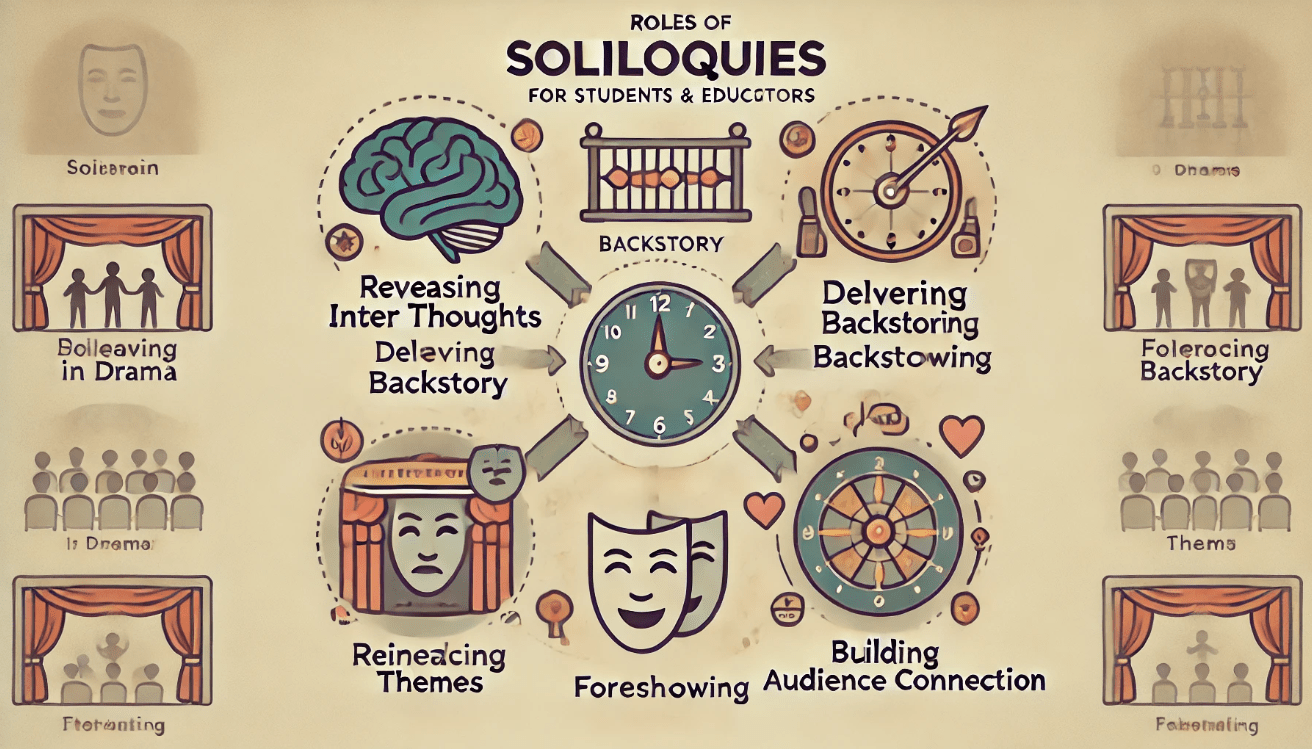
Soliloquies do more than fill time on stage—they play a crucial role in dramatic exposition, helping both writers and audiences connect deeply with the story. Here’s how they work behind the scenes to reveal what really matters.
🎯 1. They Reveal a Character’s Inner World
Unlike dialogue, which involves other characters, soliloquies are private thoughts spoken aloud. This gives the audience direct access to a character’s emotions, fears, desires, and motivations—things that might otherwise stay hidden.
📌 Example: In Shakespeare’s Hamlet, the famous “To be or not to be” soliloquy dives into Hamlet’s internal struggle with life and death—without him saying a word to anyone else.
🎯 2. They Deliver Key Backstory
Sometimes, a character uses a soliloquy to explain past events or unspoken history that’s essential to understanding the present action. This is exposition in its most natural form—wrapped in emotion and perspective.
📌 Why it works: Instead of having someone else “tell” us what happened, the character shares their personal version of events, making the story feel more human and relatable.
🎯 3. They Foreshadow Future Actions
Soliloquies often contain hints about what’s coming next, giving the audience insight into a character’s plans or moral dilemmas. This builds suspense and helps the viewer understand the logic behind a character’s choices later on.
📌 Think of it like a roadmap: We don’t just see what a character does—we understand why they do it.
🎯 4. They Reinforce Themes and Conflict
Soliloquies often touch on a play’s deeper messages—like power, identity, guilt, or freedom. This helps the audience grasp the emotional and philosophical layers of the story, not just the plot.
🧠 Tip for students and readers: When analyzing a soliloquy, ask: What is this really about beneath the surface?
🎯 5. They Build a Bond with the Audience
By speaking directly to the audience (even if not literally), characters form a unique emotional connection. We’re not just watching—we’re being confided in.
😊 That intimacy makes the story more powerful, relatable, and unforgettable.
✅ Bottom Line
Soliloquies are more than speeches—they’re storytelling shortcuts.
They deliver dramatic exposition in a way that’s emotional, effective, and deeply personal. For playwrights, they’re a tool. For audiences, they’re a window. And for students and writers, they’re a masterclass in revealing plot and character through voice alone.
4. Classic and Contemporary Examples of Soliloquies 🎬

One of the best ways to understand soliloquies and their function in dramatic exposition is to see them in action. From Shakespeare’s stage to today’s screen, soliloquies have helped characters reveal what they can’t say out loud—and helped audiences make sense of the story.
Here are some standout examples that show how powerful soliloquies can be:
🏛️ Classic Soliloquies: Shakespeare’s Greatest Hits
1. Hamlet – “To be or not to be”
Perhaps the most famous soliloquy in all of drama. Hamlet debates life, death, and the weight of existence. It reveals:
- His emotional state 🧠
- His inner conflict
- The theme of mortality
✅ Why it matters: It gives us deep insight into Hamlet’s mindset and prepares us for the choices he’ll make later.
2. Macbeth – “Is this a dagger which I see before me?”
Macbeth hallucinates before murdering the king. This soliloquy:
- Exposes his guilt and ambition
- Builds suspense
- Moves the plot forward
✅ Why it works: The audience sees Macbeth’s mental unraveling in real time, making the act of murder more personal—and more tragic.
3. Juliet – “Gallop apace, you fiery-footed steeds” (Romeo and Juliet)
Juliet eagerly awaits nightfall so she can be with Romeo. This soliloquy:
- Shows her emotional intensity ❤️
- Foreshadows the tension to come
- Highlights themes of love vs. fate
🎭 Contemporary Soliloquies: New Voices, Same Impact
1. Walter White – Breaking Bad
Walter often reflects on his transformation through voiceovers and internal monologues, especially in scenes where:
- He justifies his actions
- Shares his fear or ego
- Hints at future choices
✅ Real-world function: These moments act like modern soliloquies, giving us psychological depth without dialogue.
2. Fleabag – Fleabag (TV Series)
The main character frequently breaks the fourth wall, turning directly to the camera to share her thoughts. This technique:
- Builds a personal connection 😊
- Provides instant exposition
- Offers emotional context without stopping the story
3. The Glass Menagerie – Tom’s Opening and Closing Monologues (Tennessee Williams)
These are technically monologues, but they function like soliloquies:
- Framing the story with personal insight
- Giving us key backstory
- Explaining character motives and regrets
✨ Why These Examples Matter
Whether it’s a classic tragedy or a modern TV show, soliloquies give us a front-row seat to a character’s private world. They:
- Clarify motivations
- Reveal hidden truths
- Create emotional depth
💡 Use these examples as models—whether you’re analyzing literature, performing a role, or writing your own script.
Soliloquies may look different today, but their dramatic power is just as strong.
5. Writing or Analyzing a Soliloquy: A Practical Guide ✍️🎭

Whether you’re a student breaking down a classic scene or a writer creating your own character, understanding how to write or analyze a soliloquy is a valuable skill. Here’s a simple, step-by-step guide to help you do both with confidence.
✏️ If You’re Writing a Soliloquy
Soliloquies let your character speak directly to the audience—and reveal what’s really going on inside. Here’s how to craft one effectively:
✅ 1. Know the Character’s Goal
Ask: What is this character struggling with right now? A soliloquy should reveal a decision, desire, or dilemma.
✅ 2. Start with Honest Emotion
Soliloquies feel powerful because they’re raw and real. Tap into fear, hope, regret, love, or conflict—whatever drives the moment.
✅ 3. Use a Clear Structure
- Beginning: What triggered the thought?
- Middle: Explore the emotion or conflict
- End: Show change—have the character lean toward a decision, realization, or deeper confusion
✅ 4. Keep It Focused
Don’t ramble. Even in poetic language, soliloquies work best when they stick to one emotional journey or key issue.
🧠 If You’re Analyzing a Soliloquy
Analyzing a soliloquy helps you uncover what’s really happening beneath the surface. Try this practical breakdown:
🔍 1. Who Is Speaking—and Why Now?
Identify the character and what’s happening in the plot. Soliloquies often come at turning points.
🔍 2. What Is Being Revealed?
Look for clues about:
- Inner conflict or motivation
- Past experiences or fears
- Hopes, regrets, or plans
🔍 3. How Does It Affect the Story?
Ask: Does this soliloquy move the plot forward? Shift our understanding of the character? It usually does both.
🔍 4. What Themes Are Present?
Soliloquies often reflect bigger ideas—like fate, power, love, or identity. Make note of those connections.
🎓 Bonus Tips for Teachers & Students
- ✨ Activity idea: Have students write their own soliloquy from a character’s perspective
- 🎭 Performance tip: Focus on emotional delivery—not just memorization
- 🧩 Group discussion: Break down famous soliloquies and debate their meaning
6. Common Misconceptions About Soliloquies ❌🎭

Soliloquies are powerful storytelling tools—but they’re often misunderstood. Clearing up these common myths can help you better analyze, write, or teach soliloquies with confidence.
1: A Soliloquy Is Just a Long Monologue
➡️ Truth: While all soliloquies are monologues, not all monologues are soliloquies.
A monologue can be spoken to other characters. A soliloquy, by definition, is spoken alone—or as if alone—to reveal inner thoughts the audience wouldn’t otherwise hear.
2: Soliloquies Only Exist in Shakespeare
➡️ Truth: Soliloquies appear in many forms of drama—not just in Elizabethan plays.
From classic tragedies to modern TV shows like Fleabag or Breaking Bad, writers still use soliloquy-style techniques (like voiceovers or direct address) to deliver dramatic exposition today.
3: Soliloquies Are Outdated or Boring
➡️ Truth: When written well, soliloquies are some of the most emotionally engaging moments in a play or performance. They give the audience something no other technique can: intimate access to the character’s mind.
🎯 Modern writers and actors still rely on this technique to add depth, tension, and connection.
4: Soliloquies Explain Everything
➡️ Truth: A soliloquy doesn’t need to spell out every detail. The best soliloquies show emotional conflict, leaving space for the audience to interpret meaning and read between the lines.
✅ Takeaway:
Don’t let myths get in the way of your understanding. Soliloquies are still alive, evolving, and incredibly effective—not just in old plays, but across modern storytelling too. Knowing what they really are (and what they aren’t) will help you use and appreciate them like a pro. 💡
7. Benefits of Mastering Soliloquies in Drama and Literature 🎓✨

Understanding soliloquies and their function in dramatic exposition isn’t just about passing a test or analyzing Shakespeare. It’s a skill that offers lasting value for students, writers, performers, and anyone who loves storytelling.
Here’s why mastering soliloquies is so beneficial 👇
✅ 1. Stronger Literary Analysis Skills
Soliloquies help you dig beneath the surface of a character’s actions.
When you know how to read them, you’ll:
- Spot key themes and turning points
- Understand character motivation
- Analyze deeper layers of meaning
💡 Tip: Soliloquies often reveal the “why” behind the plot.
✅ 2. Improved Creative Writing and Scriptwriting
Want to write better dialogue or develop richer characters?
Learning how soliloquies work teaches you how to:
- Show internal conflict without clunky narration
- Deliver backstory naturally
- Create emotionally engaging moments
✍️ Writers: Use soliloquies or internal monologues to let your characters speak directly to the reader or audience.
✅ 3. Better Acting and Performance Interpretation
For actors, soliloquies are gold.
They allow you to:
- Explore a full emotional arc
- Build a direct connection with the audience
- Showcase range and vulnerability
🎭 Actors: Think of a soliloquy as your moment to tell the truth—without interruption.
✅ 4. Deeper Appreciation for Theatre and Storytelling
Once you understand how soliloquies work, you’ll never watch a play or film the same way again.
You’ll start to recognize:
- Subtle exposition techniques
- Emotional layers in performance
- The craft behind powerful storytelling
😊 It makes watching or reading drama more meaningful and engaging.
✅ 5. Confidence in Classrooms and Conversations
Soliloquies often feel intimidating—especially Shakespeare’s. But once you break them down, they become surprisingly clear and relatable.
🎯 Mastering soliloquies gives you the confidence to:
- Speak up in discussions
- Write stronger essays
- Connect more deeply with dramatic texts
Soliloquies aren’t just a dramatic device—they’re a window into the heart of storytelling.
Whether you’re analyzing, performing, or writing, learning how to understand and use them gives you a creative edge—and a deeper connection to the characters and ideas that shape great drama.
Soliloquies and Their Function in Dramatic Exposition

In conclusion, soliloquies serve as a vital narrative and psychological device within dramatic exposition, offering audiences intimate access to a character’s inner thoughts, motivations, and moral dilemmas. By momentarily suspending the action of the plot, soliloquies create a reflective space that deepens characterization and clarifies thematic intent. They allow playwrights, especially in classical and Elizabethan drama, to unfold complex emotional and intellectual landscapes that might otherwise remain hidden behind dialogue and action. As such, soliloquies are not merely theatrical flourishes but essential tools in the architecture of drama, enriching the audience’s understanding and engagement with the narrative.