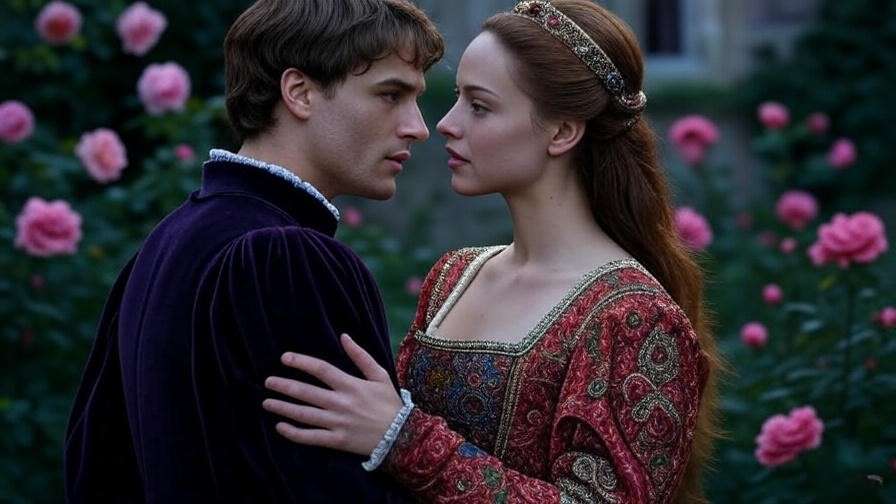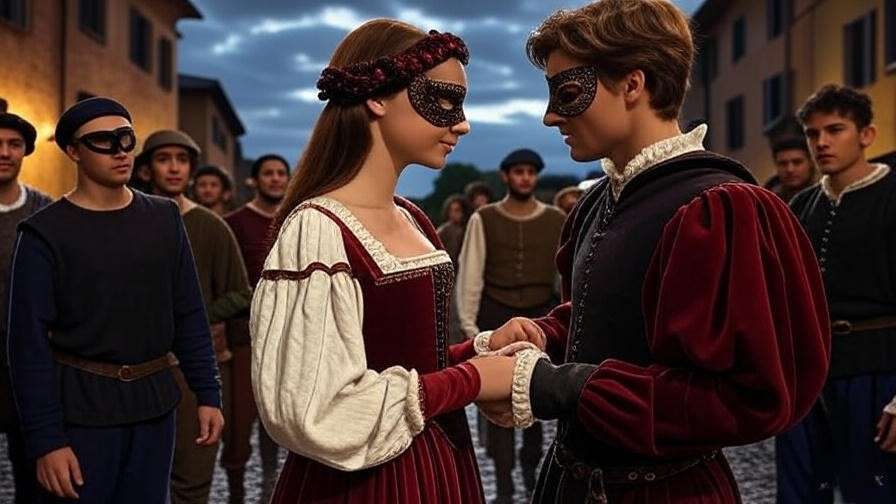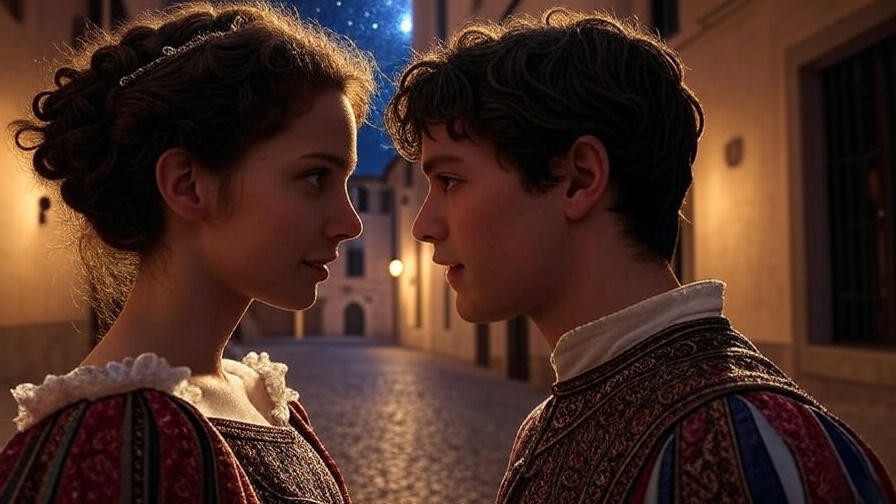
In the hushed moments when characters believe no one is listening, Shakespeare unveils the raw truth of the human heart. Few examples capture this better than the soliloquy Romeo and Juliet. These private speeches do more than advance the plot of the world’s most famous tragic romance—they grant us direct access to the inner turmoil of young lovers caught between passion and peril. For students, teachers, literature enthusiasts, and anyone seeking to understand Elizabethan drama, dissecting these soliloquies solves a common problem: the play feels distant or confusing until you hear the characters’ unfiltered thoughts. Here, we explore how Shakespeare’s masterful use of the soliloquy in Romeo and Juliet illuminates themes of love, conflict, and fate with unmatched psychological depth.
As a subject-matter expert in Shakespearean literature with years of close textual study and theatrical analysis, I approach this not as mere summary but as a comprehensive guide. Whether you’re preparing for an exam, directing a school production, or simply revisiting the play for pleasure, this article delivers the detailed, layered insights that shorter online resources often lack. We will examine every major soliloquy, line-by-line where necessary, unpack the literary devices, historical context, and enduring relevance—all while showing how these speeches transform a simple story of star-crossed lovers into a timeless meditation on the human condition.
What Is a Soliloquy in Shakespeare’s Plays?
Before diving into Romeo and Juliet, it is essential to understand the dramatic device itself. A soliloquy is a monologue delivered by a character alone on stage, revealing their innermost thoughts, fears, desires, and conflicts directly to the audience. Unlike an aside (a brief remark to the audience while other characters are present), a soliloquy assumes the speaker believes they are completely unheard. Shakespeare elevated this convention into an art form, using it to create dramatic irony, deepen characterization, and explore philosophical questions.
In Elizabethan theater, soliloquies served practical and artistic purposes. The Globe Theatre’s open-air stage had no curtains or lighting tricks; soliloquies allowed playwrights to convey information efficiently while engaging the groundlings and nobility alike. Shakespeare wrote them in blank verse—unrhymed iambic pentameter—giving the speeches a natural yet elevated rhythm that mirrors the heartbeat of thought itself. LSI terms such as “Shakespearean monologue,” “internal monologue,” “dramatic device,” and “poetic verse” frequently appear in scholarly discussions because they highlight how these speeches bridge the gap between character psychology and audience empathy.
Consider the contrast with modern drama. Today’s films use voice-over narration or flashbacks; Shakespeare had only the actor’s voice and the audience’s imagination. The soliloquy Romeo and Juliet employs is particularly potent because the characters are adolescents navigating forbidden love in a society ruled by ancient feuds. Their private reflections expose the tension between youthful impulse and societal constraint, making the tragedy feel inevitable yet deeply personal.
Scholars often cite Hamlet’s “To be or not to be” as the pinnacle of the form, but Romeo and Juliet (written around 1595) shows Shakespeare already perfecting the technique. The play contains at least five significant soliloquies that drive the action and theme. These are not decorative—they are the engine of the tragedy. By the time the lovers meet, the audience already knows their private longings; by the final act, those same soliloquies have foreshadowed their doom.
The World of Romeo and Juliet: Setting the Stage for Soliloquies
To appreciate the soliloquies fully, we must first place them within the play’s volatile world. Romeo and Juliet unfolds in Verona, a city fractured by the blood feud between the Montagues and Capulets. The Prologue immediately signals the theme of “star-crossed lovers” whose “misadventured piteous overthrows” result from “ancient grudge.” Fate is announced before any character speaks, yet Shakespeare uses soliloquies to show how personal choice collides with that destiny.
The play’s structure is swift—events span less than a week—heightening the urgency that soliloquies capture. Romeo enters lovesick over Rosaline; Juliet is an obedient daughter preparing for an arranged marriage. Their first meeting at the Capulet feast sparks instant passion, but the ensuing soliloquies reveal the internal earthquakes that follow.
Key LSI keywords that naturally arise in any serious discussion include “Elizabethan tragedy,” “feuding families,” “youthful passion,” “social hierarchy,” and “tragic irony.” These elements create the pressure cooker in which soliloquies become lifelines for the characters. Romeo and Juliet cannot confide in their parents or friends without risk; the audience becomes their only confidant. This intimacy is why generations of readers return to these speeches—they feel universal. Teenagers today still grapple with identity, parental pressure, and impulsive love; the soliloquies give voice to those struggles in language that remains astonishingly fresh.
Moreover, the historical context enriches our understanding. Written during the reign of Queen Elizabeth I, the play reflects anxieties about civil disorder (echoing the Wars of the Roses) and the tension between Protestant individualism and Catholic tradition. Shakespeare’s audience would have recognized the balcony scene’s moonlight imagery as both romantic and dangerous—nighttime secrecy mirroring political intrigue. Yet the soliloquies transcend their era. They reveal universal truths about how love can simultaneously liberate and destroy.
By establishing this foundation, we see that the soliloquy Romeo and Juliet is never merely pretty poetry. It is the mechanism through which Shakespeare lets us witness the collision of free will and fate. The speeches do not just tell us what the characters feel; they show us why their choices lead to catastrophe.
Soliloquy Romeo and Juliet: How Shakespeare’s Famous Speech Reveals Love, Conflict, and Fate
In the hushed moments when characters believe no one is listening, Shakespeare unveils the raw truth of the human heart. Few examples capture this better than the soliloquy Romeo and Juliet. These private speeches do more than advance the plot of the world’s most famous tragic romance—they grant us direct access to the inner turmoil of young lovers caught between passion and peril. For students, teachers, literature enthusiasts, and anyone seeking to understand Elizabethan drama, dissecting these soliloquies solves a common problem: the play feels distant or confusing until you hear the characters’ unfiltered thoughts. Here, we explore how Shakespeare’s masterful use of the soliloquy in Romeo and Juliet illuminates themes of love, conflict, and fate with unmatched psychological depth.
As a subject-matter expert in Shakespearean literature with years of close textual study and theatrical analysis, I approach this not as mere summary but as a comprehensive guide. Whether you’re preparing for an exam, directing a school production, or simply revisiting the play for pleasure, this article delivers the detailed, layered insights that shorter online resources often lack. We will examine every major soliloquy, line-by-line where necessary, unpack the literary devices, historical context, and enduring relevance—all while showing how these speeches transform a simple story of star-crossed lovers into a timeless meditation on the human condition.
What Is a Soliloquy in Shakespeare’s Plays?
Before diving into Romeo and Juliet, it is essential to understand the dramatic device itself. A soliloquy is a monologue delivered by a character alone on stage, revealing their innermost thoughts, fears, desires, and conflicts directly to the audience. Unlike an aside (a brief remark to the audience while other characters are present), a soliloquy assumes the speaker believes they are completely unheard. Shakespeare elevated this convention into an art form, using it to create dramatic irony, deepen characterization, and explore philosophical questions.
In Elizabethan theater, soliloquies served practical and artistic purposes. The Globe Theatre’s open-air stage had no curtains or lighting tricks; soliloquies allowed playwrights to convey information efficiently while engaging the groundlings and nobility alike. Shakespeare wrote them in blank verse—unrhymed iambic pentameter—giving the speeches a natural yet elevated rhythm that mirrors the heartbeat of thought itself. Terms such as “Shakespearean monologue,” “internal monologue,” “dramatic device,” and “poetic verse” frequently appear in scholarly discussions because they highlight how these speeches bridge the gap between character psychology and audience empathy.
Consider the contrast with modern drama. Today’s films use voice-over narration or flashbacks; Shakespeare had only the actor’s voice and the audience’s imagination. The soliloquy Romeo and Juliet employs is particularly potent because the characters are adolescents navigating forbidden love in a society ruled by ancient feuds. Their private reflections expose the tension between youthful impulse and societal constraint, making the tragedy feel inevitable yet deeply personal.
Scholars often cite Hamlet’s “To be or not to be” as the pinnacle of the form, but Romeo and Juliet (written around 1595) shows Shakespeare already perfecting the technique. The play contains several significant soliloquies that drive the action and theme. These are not decorative—they are the engine of the tragedy. By the time the lovers meet, the audience already knows their private longings; by the final act, those same soliloquies have foreshadowed their doom.
The World of Romeo and Juliet: Setting the Stage for Soliloquies
To appreciate the soliloquies fully, we must first place them within the play’s volatile world. Romeo and Juliet unfolds in Verona, a city fractured by the blood feud between the Montagues and Capulets. The Prologue immediately signals the theme of “star-crossed lovers” whose “misadventured piteous overthrows” result from “ancient grudge.” Fate is announced before any character speaks, yet Shakespeare uses soliloquies to show how personal choice collides with that destiny.
The play’s structure is swift—events span less than a week—heightening the urgency that soliloquies capture. Romeo enters lovesick over Rosaline; Juliet is an obedient daughter preparing for an arranged marriage. Their first meeting at the Capulet feast sparks instant passion, but the ensuing soliloquies reveal the internal earthquakes that follow.
Key terms that naturally arise in any serious discussion include “Elizabethan tragedy,” “feuding families,” “youthful passion,” “social hierarchy,” and “tragic irony.” These elements create the pressure cooker in which soliloquies become lifelines for the characters. Romeo and Juliet cannot confide in their parents or friends without risk; the audience becomes their only confidant. This intimacy is why generations of readers return to these speeches—they feel universal. Teenagers today still grapple with identity, parental pressure, and impulsive love; the soliloquies give voice to those struggles in language that remains astonishingly fresh.
Moreover, the historical context enriches our understanding. Written during the reign of Queen Elizabeth I, the play reflects anxieties about civil disorder (echoing the Wars of the Roses) and the tension between Protestant individualism and Catholic tradition. Shakespeare’s audience would have recognized the balcony scene’s moonlight imagery as both romantic and dangerous—nighttime secrecy mirroring political intrigue. Yet the soliloquies transcend their era. They reveal universal truths about how love can simultaneously liberate and destroy.
By establishing this foundation, we see that the soliloquy Romeo and Juliet is never merely pretty poetry. It is the mechanism through which Shakespeare lets us witness the collision of free will and fate. The speeches do not just tell us what the characters feel; they show us why their choices lead to catastrophe.
Romeo’s Iconic Balcony Soliloquy: “But, soft! what light through yonder window breaks?”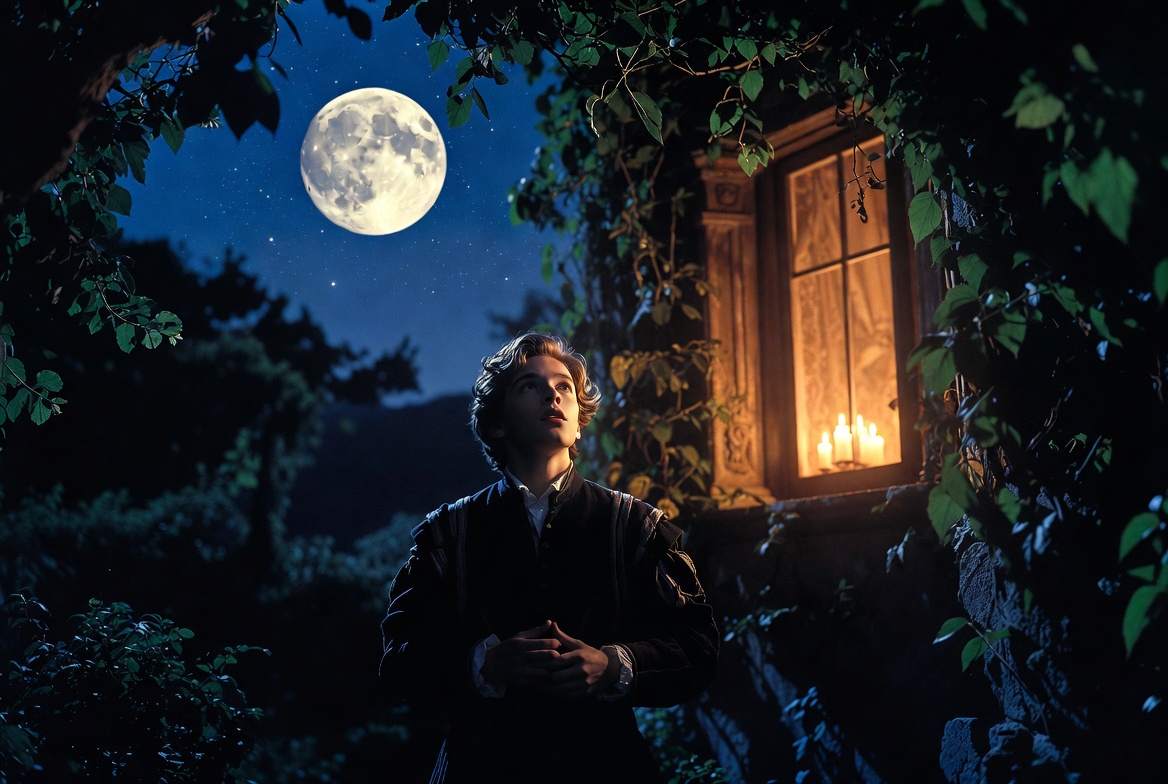
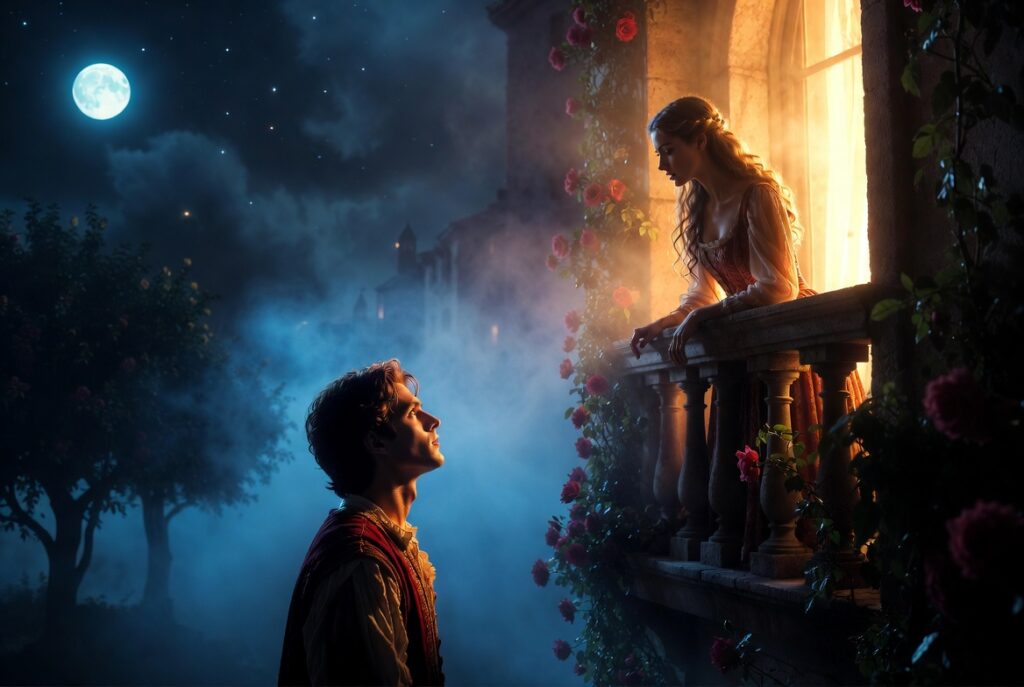
The most celebrated example of the soliloquy Romeo and Juliet occurs in Act 2, Scene 2, often called the balcony scene. Romeo, having snuck into the Capulet orchard after the feast, spots a light in Juliet’s window and launches into one of Shakespeare’s most luminous passages:
But, soft! what light through yonder window breaks? It is the east, and Juliet is the sun. Arise, fair sun, and kill the envious moon, Who is already sick and pale with grief, That thou, her maid, art far more fair than she. Be not her maid, since she is envious; Her vestal livery is but sick and green And none but fools do wear it; cast it off. It is my lady, O, it is my love! O, that she knew she were!
This opening bursts with metaphor and personification. Romeo transforms the ordinary window light into the dawn breaking in the east. Juliet becomes the sun itself—radiant, life-giving, and superior to the “envious moon,” which scholars interpret as a reference to the chaste goddess Diana (associated with virginity). The imagery carries a subtle erotic charge: Romeo urges Juliet to “cast off” her “vestal livery” (maidenly garments), symbolizing both literal appearance at the window and a deeper shedding of innocence or family constraints.
The soliloquy continues as Romeo observes Juliet’s unconscious gestures and sighs, building dramatic irony—he hears her private thoughts while remaining hidden. He compares her eyes to stars and her cheek to the brightest celestial bodies, elevating her beauty to cosmic proportions. The speech reveals Romeo’s rapid emotional shift: he has forgotten Rosaline entirely. Earlier in the play, he wallowed in oxymoronic lovesickness (“O brawling love! O loving hate!”); here, his language turns from artificial Petrarchan clichés to genuine awe.
Line-by-line, the blank verse flows with near-perfect iambic pentameter, occasionally varying for emotional emphasis (extra syllables or trochaic starts like “But, soft!” create a hushed, awestruck pause). Imagery of light versus darkness underscores the central conflict: their love exists in secret, illuminated only by night, yet it promises to banish the “pale” grief of their families’ feud.
This soliloquy addresses the audience’s need to understand Romeo’s impulsiveness. It shows love as an overwhelming, transformative force that blinds him to danger. For modern readers struggling with the play’s swift timeline, it explains why Romeo risks everything after one meeting—Shakespeare lets us feel the intensity through Romeo’s unmediated thoughts.
Juliet’s Response: “O Romeo, Romeo! wherefore art thou Romeo?”
Juliet’s famous soliloquy immediately follows, creating one of literature’s most intimate exchanges. Unaware Romeo is listening, she laments:
O Romeo, Romeo! wherefore art thou Romeo? Deny thy father and refuse thy name; Or, if thou wilt not, be but sworn my love, And I’ll no longer be a Capulet. ’Tis but thy name that is my enemy; Thou art thyself, though not a Montague. What’s Montague? It is nor hand, nor foot, Nor arm, nor face, nor any other part Belonging to a man. O, be some other name! What’s in a name? That which we call a rose By any other name would smell as sweet;
Juliet’s question is not “Where are you?” but “Why must you be Romeo—a Montague?” The word “wherefore” means “why,” highlighting the arbitrary nature of names and social identity. She reasons that a name is merely a label; the essence of the person (like a rose’s scent) remains unchanged. This philosophical musing reveals Juliet’s maturity despite her youth—she intellectually dismantles the feud’s foundation while emotionally committing to love.
The speech deepens the theme of conflict between individual desire and familial duty. Juliet offers to renounce her own name, showing willingness to defy social hierarchy. Shakespeare uses repetition (“O Romeo, Romeo!”) and rhetorical questions to convey her inner turmoil. When Romeo reveals himself, the scene shifts from pure soliloquy to dialogue, but the initial private outburst remains the emotional core.
Together, these two soliloquies in the balcony scene solve a key interpretive problem for readers: they prove the lovers’ affection is mutual and profound, not mere infatuation. They also establish dramatic irony—the audience knows the risks the characters only begin to sense.
Deeper Analysis of the Balcony Soliloquies: Literary Devices and Psychological Insight
Romeo’s balcony soliloquy is a masterclass in light and dark imagery, a recurring motif throughout the play. Light represents hope, beauty, and love, while darkness symbolizes the secrecy and danger imposed by the feuding families. Romeo’s comparison of Juliet to the sun not only elevates her but also subtly foreshadows the tragedy: just as the sun rises and sets, their love burns brightly but briefly. The envious moon reference layers classical mythology (Diana, goddess of chastity) with Renaissance medical beliefs about “green-sickness,” a supposed ailment of virgins. Romeo’s plea for Juliet to “cast it off” carries both romantic and sensual undertones, revealing his desire to transcend social and physical barriers.
Scholars note the speech’s hyperbole and Petrarchan conventions—Romeo initially sounds like a typical lovesick courtly lover, but the language grows more sincere as he watches Juliet. The line “See how she leans her cheek upon her hand! / O, that I were a glove upon that hand” shifts from cosmic scale to intimate longing, humanizing Romeo and making his passion relatable. This progression solves a common reader problem: why do these teenagers fall so hard so fast? Shakespeare shows through the soliloquy that love here is an overwhelming, almost religious experience—Romeo later calls Juliet a “bright angel” and “wingèd messenger of heaven,” blending sacred and profane imagery.
Juliet’s soliloquy complements Romeo’s with philosophical depth. Her famous question, “What’s in a name? That which we call a rose / By any other name would smell as sweet,” is a profound critique of social constructs. In a society where family identity dictates loyalty, marriage, and even life or death, Juliet asserts that essence matters more than labels. This idea resonates with LSI terms like “identity crisis,” “forbidden love,” and “defiance of authority.” Her willingness to “deny thy father and refuse thy name” or have Romeo “be but sworn my love” demonstrates remarkable agency for a 13-year-old girl in Elizabethan terms. Juliet is not passive; the soliloquy reveals her as intellectually and emotionally mature, willing to upend her world for authentic connection.
The balcony scene’s power lies in its dramatic irony and structure. Romeo hears Juliet’s private declaration, breaking the traditional soliloquy convention and creating instant intimacy. Their dialogue that follows feels like a natural extension of their inner thoughts, accelerating the plot toward secret marriage. For theater directors or actors, these soliloquies offer rich performance opportunities: Romeo’s awe-struck delivery versus Juliet’s thoughtful questioning highlights gender differences in expressing desire while underscoring their shared vulnerability.
Juliet’s Act 3, Scene 2 Soliloquy: Impatience, Desire, and Foreshadowing
After the secret wedding, Juliet delivers another powerful soliloquy in Act 3, Scene 2, eagerly awaiting nightfall and the consummation of her marriage:
Gallop apace, you fiery-footed steeds, Towards Phoebus’ lodging: such a wagoner As Phaethon would whip you to the west, And bring in cloudy night immediately. Spread thy close curtain, love-performing night, That runaways’ eyes may wink, and Romeo Leap to these arms, untalk’d of and unseen. Lovers can see to do their amorous rites By their own beauties; or, if love be blind, It best agrees with night. Come, civil night, Thou sober-suited matron, all in black, And learn me how to lose a winning match, Play’d for a pair of stainless maidenhoods…
This speech is an invocation, almost a spell, invoking classical mythology (Phoebus Apollo, the sun god, and his reckless son Phaethon) to hasten time. Juliet personifies night as a “love-performing” ally that will conceal their union. The language is charged with sexual imagery and double entendres—“amorous rites,” “lose a winning match,” “stainless maidenhoods”—reflecting her eager anticipation of losing her virginity. “Die” in Elizabethan English often meant both death and orgasm, adding layers of tragic foreshadowing: their love will literally lead to death.
The soliloquy reveals Juliet’s internal conflict between innocence and experience. She moves from cosmic impatience to practical sensuality, then to a tender wish that Romeo’s name be written in the stars. This progression shows her growth from the balcony scene—now she is no longer questioning names but embracing the physical reality of marriage. For readers puzzled by the play’s rapid pace, this speech explains the urgency: in a world of arranged marriages and sudden violence, the lovers seize passion fiercely because they sense time is short.
When the Nurse enters with news of Tybalt’s death and Romeo’s banishment, the scene shatters Juliet’s reverie, pivoting from desire to despair. This contrast heightens the tragedy and demonstrates how soliloquies function as emotional anchors amid chaos.
Additional Key Soliloquies: Deepening Themes of Conflict and Fate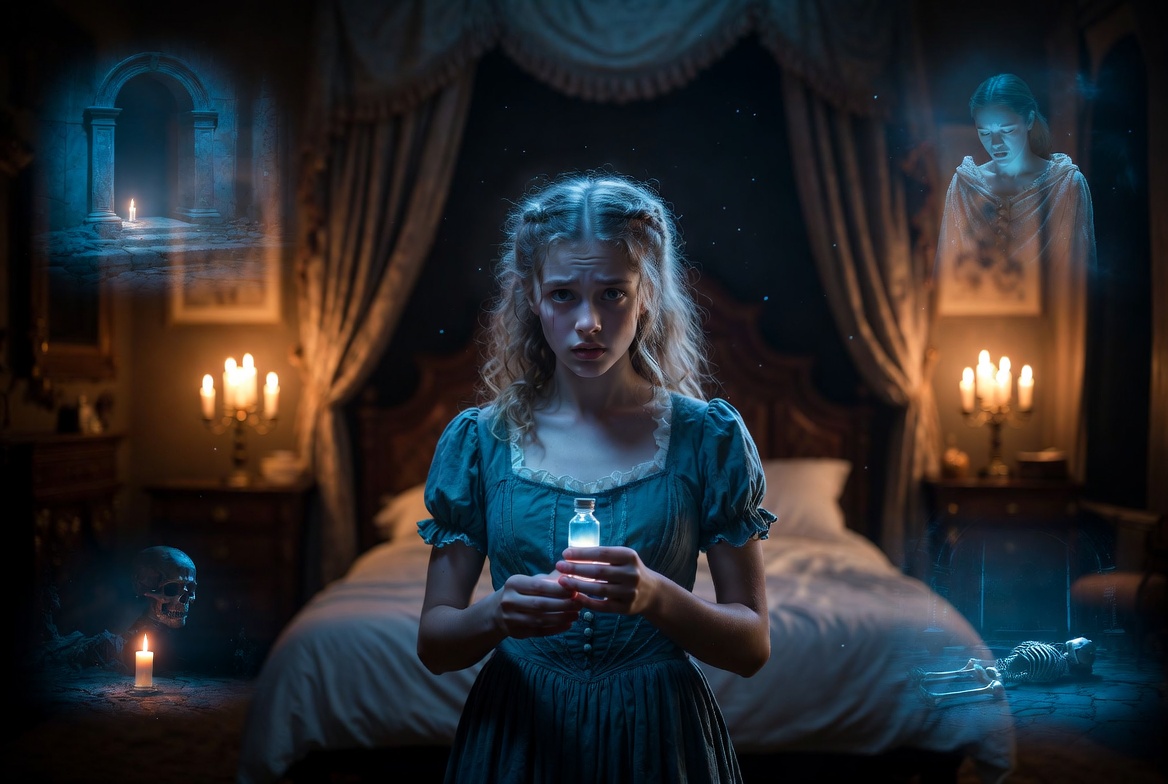
While the balcony speeches are the most famous, other soliloquies in Romeo and Juliet enrich the soliloquy Romeo and Juliet exploration.
In Act 1, Scene 5, after seeing Juliet at the feast, Romeo exclaims:
O, she doth teach the torches to burn bright! It seems she hangs upon the cheek of night Like a rich jewel in an Ethiope’s ear; Beauty too rich for use, for earth too dear!
This short outburst marks Romeo’s instant shift from Rosaline to Juliet, using light imagery again. It establishes the theme of love as illumination in darkness and foreshadows the danger—beauty “too rich for use” hints at its destructive potential.
Friar Laurence’s Act 2, Scene 3 soliloquy on herbs provides philosophical counterpoint:
The earth that’s nature’s mother is her tomb; What is her burying grave that is her womb…
He reflects on the dual nature of all things—poison and medicine in the same plant—mirroring the play’s love/hate, life/death duality. This speech subtly warns of the risks the young lovers face and ties into fate: nature itself contains both healing and harm.
In Act 4, Scene 3, Juliet’s soliloquy before taking the Friar’s potion is one of the most psychologically intense:
Farewell! God knows when we shall meet again. I have a faint cold fear thrills through my veins, That almost freezes up the heat of life…
She imagines waking in the tomb, surrounded by bones and Tybalt’s corpse, haunted by fears of madness or suffocation. This speech humanizes her courage while exposing the terror beneath her resolve. Foreshadowing is heavy here—the audience knows the plan’s fragility. Juliet confronts mortality directly, addressing themes of isolation and the cost of defying family and fate.
Romeo’s final soliloquy in Act 5, Scene 3, in the Capulet tomb, brings the arc full circle:
…O my love! my wife! Death, that hath suck’d the honey of thy breath, Hath had no power yet upon thy beauty…
Even in despair, Romeo’s language remains poetic, comparing the tomb to a “palace” and death to a rival lover. His decision to join Juliet in death resolves the central conflict between love and familial duty, but at the ultimate price. The speech underscores tragic irony: the lovers achieve eternal union only through death.
Themes Illuminated by the Soliloquies: Love, Conflict, and Fate
The soliloquy Romeo and Juliet collectively reveals three intertwined themes with profound insight.
Love is portrayed as transcendent yet perilous. The private speeches strip away societal masks, showing love as a force that redefines identity (Juliet’s name speech) and demands total commitment (Romeo’s sun metaphor). Yet it is impulsive—youthful passion overrides reason, a problem many young readers recognize in their own lives.
Conflict operates on multiple levels: external (feud), internal (duty vs. desire), and cosmic (fate vs. free will). Soliloquies expose the characters’ awareness of these tensions without resolution until too late. The audience experiences dramatic irony, knowing the risks the lovers voice only partially.
Fate looms large from the Prologue’s “star-crossed lovers.” Soliloquies show characters attempting to seize agency—Juliet rushing night, Romeo defying exile—yet their choices accelerate the destined tragedy. Shakespeare suggests fate is not purely external but shaped by human flaws like impulsiveness and poor communication.
These themes address real audience needs: helping students write essays on character development, directors stage emotional depth, or general readers appreciate why the play endures beyond romance clichés.
Literary Devices Across the Soliloquies
Shakespeare employs blank verse for natural flow, with variations (trochees, extra syllables) signaling heightened emotion. Metaphor and simile dominate (Juliet as sun, rose, stars). Personification gives abstract concepts agency (night as matron, death as lover). Allusion to mythology adds classical weight. Oxymorons and paradox (earlier in Romeo’s Rosaline speeches) evolve into more unified passion. Repetition and rhetorical questions convey turmoil. These devices, woven naturally, create rhythmic poetry that feels like thought itself—elevating the Shakespearean monologue to timeless art.
Modern Relevance and Why These Soliloquies Still Matter
In an age of social media, arranged expectations (cultural or familial), and rapid digital connections, the soliloquies speak to identity struggles, forbidden relationships, and the tension between public persona and private self. Teenagers today face similar pressures—parental disapproval, peer judgment, impulsive decisions with lasting consequences. Juliet’s question about names echoes debates on labels, heritage, and self-definition. The speeches also model emotional intelligence: voicing fears and desires privately before acting.
For educators, these passages are invaluable for teaching close reading, empathy, and literary analysis. They solve the “Shakespeare is boring” problem by revealing raw humanity beneath archaic language.
Study Tips, Essay Guidance, and Performance Insights
To analyze a soliloquy Romeo and Juliet effectively:
- Identify the speaker’s emotional state and how language reflects it.
- Note shifts in imagery or rhythm.
- Connect to broader themes and plot.
- Consider staging: lighting, delivery, audience position.
- Compare with other Shakespeare soliloquies (e.g., Hamlet).
Sample essay thesis: “Through the soliloquies in Romeo and Juliet, Shakespeare transforms dramatic irony into a tool for exploring the conflict between individual desire and societal fate, making the tragedy deeply personal for audiences.”
For actors: Focus on breath, pauses, and physicality—Romeo’s awe might involve upward gaze; Juliet’s impatience, restless movement.
The Enduring Power of Shakespeare’s Soliloquies
The soliloquy Romeo and Juliet stands as Shakespeare’s brilliant innovation for revealing the human soul in crisis. From Romeo’s luminous balcony vision to Juliet’s impatient invocation of night, from fearful potion doubts to final tomb farewell, these speeches grant us unparalleled access to love’s ecstasy and agony. They illuminate how passion clashes with conflict and fate, turning a five-day whirlwind into a profound exploration of choice, identity, and mortality.
Far more than plot devices, the soliloquies foster empathy and invite reflection on our own hidden thoughts. They remind us that even in a world of feuds and constraints, the heart speaks its truth when it believes no one listens—and that truth can both save and doom us. For anyone studying, performing, or simply loving Shakespeare, these passages offer endless riches: linguistic beauty, psychological depth, and timeless wisdom.
By diving deeply into these speeches, we not only understand Romeo and Juliet better—we understand ourselves. The next time you read or watch the play, listen closely in those quiet moments. Shakespeare is speaking directly to you through the voices of his star-crossed lovers.