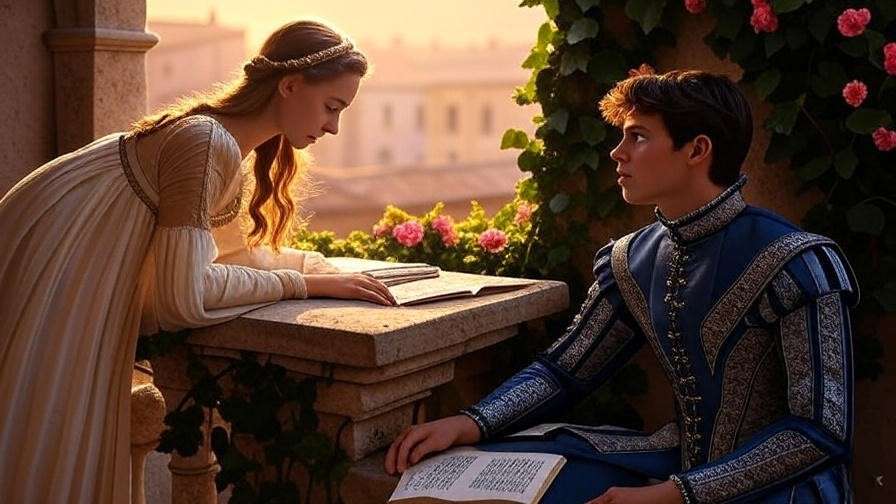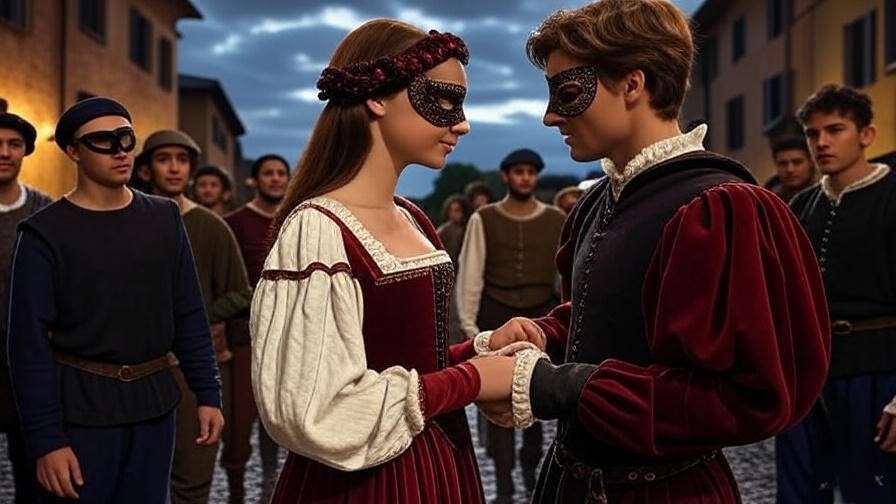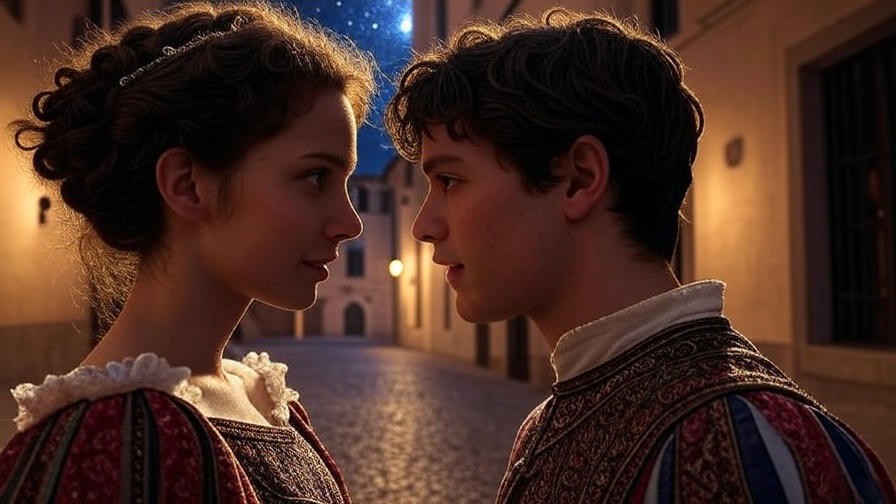
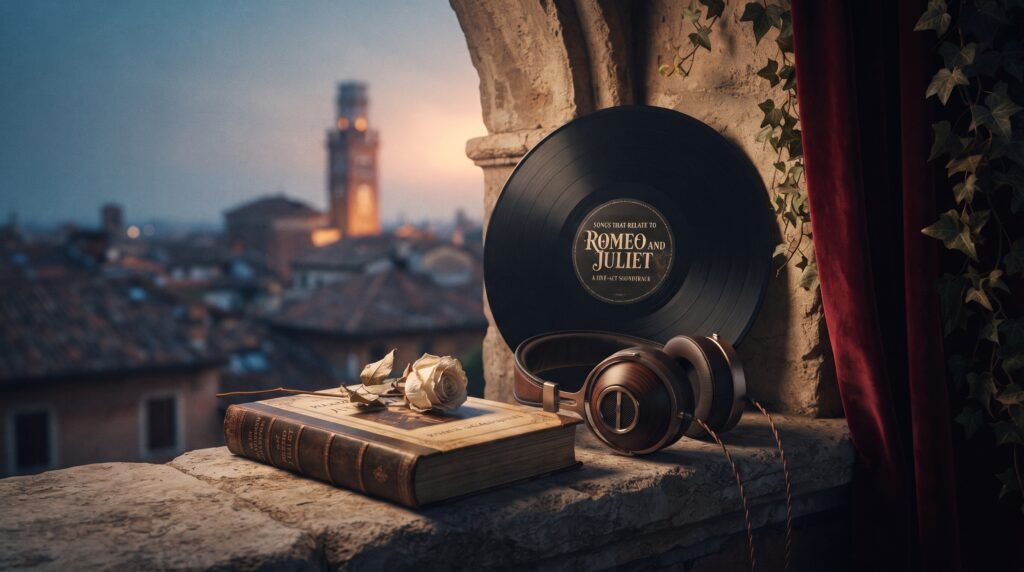
More than four centuries after William Shakespeare first staged his tragedy in Elizabethan London, modern songwriters still reach for Verona whenever they want to capture reckless devotion, bitter family feuds, or tragic inevitability. Whether it is a stadium-filling pop anthem, a smoky jazz standard, or a brooding alternative rock ballad, the story of two doomed teenagers remains music’s ultimate shorthand for forbidden love.
Yet if you search online for songs that relate to Romeo and Juliet, most lists you encounter merely scrape the surface. They tend to lump together any track that casually drops the names “Romeo” or “Juliet” without examining how the music actually mirrors Shakespeare’s dramatic structure, imagery, or emotional arc.
To build a truly useful resource—whether you are an educator, a student tackling a Romeo and Juliet soundtrack project, or a literature lover curating a themed playlist—we have mapped 15 essential tracks chronologically across the play’s five-act structure. By pairing each song with its corresponding scene, core thematic parallel, and textual context (while summarizing song themes without reproducing copyrighted lyrics), this guide reveals how musicians across genres have interpreted—and occasionally rewritten—Shakespeare’s most famous tragedy.
Quick-Reference Guide: Romeo and Juliet Playlist by Act & Theme
If you are building a playlist or outlining an essay, use this master table to match each musical track to its exact dramatic moment in the play.
Act I — Star-Crossed Fate & Love at First Sight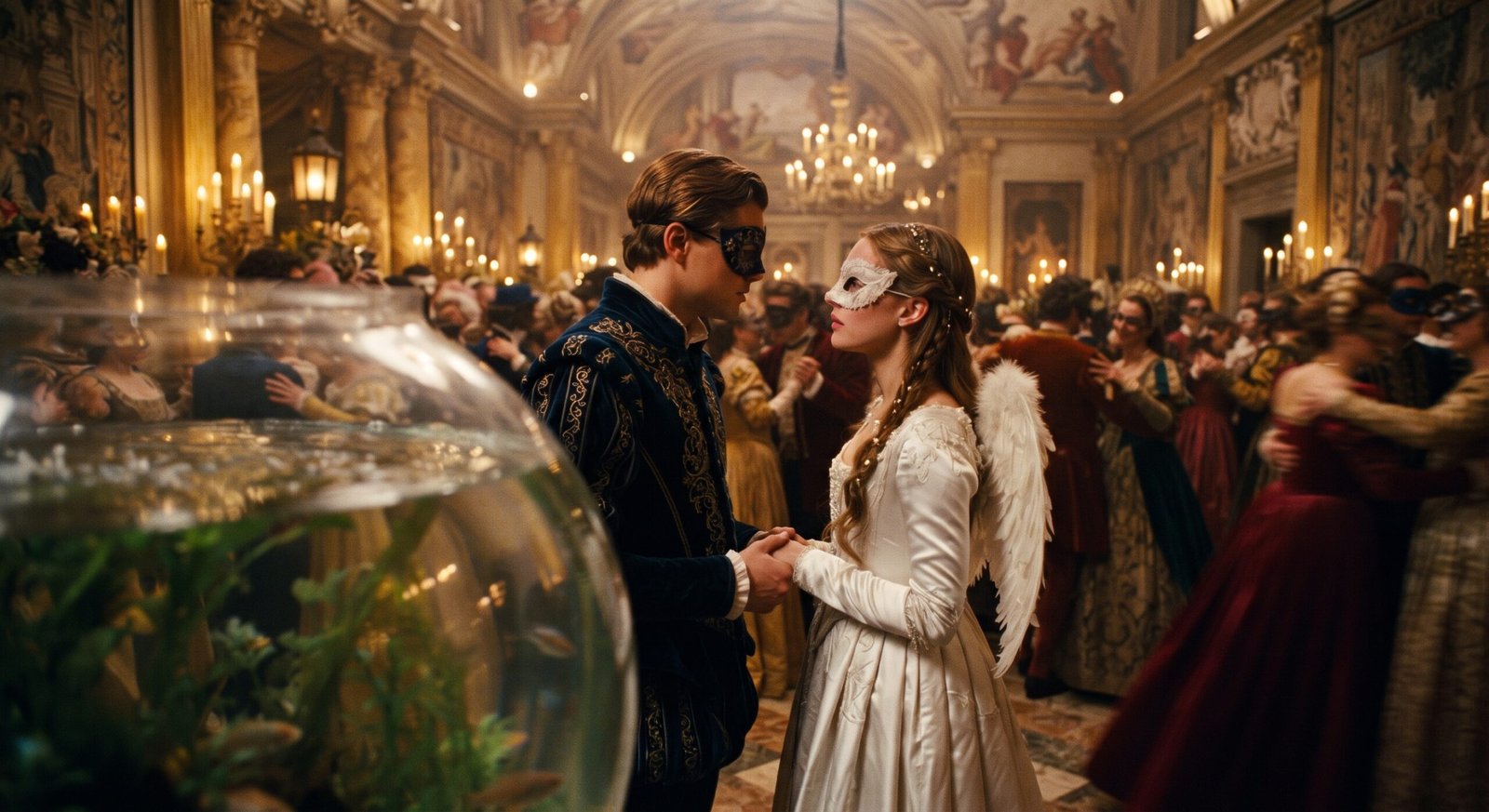
Shakespeare opens Romeo and Juliet with a radical structural choice: he gives away the ending in the very first fourteen lines. Act I establishes a world governed by ancient grudges and celestial fate, right up until the moment Romeo and Juliet lock eyes across the Capulet masquerade ball and everything changes.
1. “The Star-Crossed Lovers” – Duke Ellington & Billy Strayhorn (1957)
-
Matching Scene: The Prologue (“A pair of star-cross’d lovers take their life”)
-
The Connection: Composed for Such Sweet Thunder, Ellington and Strayhorn’s celebrated twelve-part jazz suite dedicated to the Shakespearean Festival in Stratford, Ontario, this instrumental piece translates the Prologue’s fatalism into pure sound. Rather than relying on words, Johnny Hodges’s sweeping, melancholic alto saxophone solo captures the tenderness of young romance shadowed by an inescapable, brooding brass undercurrent.
-
Literary Insight: In Elizabethan England, astrology was taken seriously; calling the protagonists “star-cross’d” meant the heavens themselves were aligned against them. Ellington’s arrangement mirrors that dramatic irony—the melody sounds achingly romantic, yet the harmonic tension reminds the listener that the tragedy is already sealed.
2. “Kissing You” – Des’ree (1996)
-
Matching Scene: Act 1, Scene 5 (The Capulet Ball)
-
The Connection: Written specifically for Baz Luhrmann’s 1996 film adaptation Romeo + Juliet, Des’ree’s minimalist piano-and-strings ballad accompanies the iconic moment when Romeo and Juliet first see each other through an aquarium. The song reflects on how pride can withstand endless trials, yet true vulnerability strips away all defenses in an instant.
-
Literary Insight: When Romeo spots Juliet across the crowded hall, he famously wonders whether his heart had ever truly loved before this moment, declaring that he never saw true beauty until that night. “Kissing You” slows down the frantic, noisy party atmosphere of Act 1, Scene 5, replicating the sudden stillness that overtakes both characters when the outside feud briefly disappears.
3. “Cosmic Love” – Florence + The Machine (2009)
-
Matching Scene: Act 1, Scene 5 (The Shared Sonnet Exchange)
-
The Connection: Even though Florence Welch never mentions Shakespeare by name, “Cosmic Love” is built on the exact poetic vocabulary that defines Act I. The song describes a love so overwhelming that the stars, moon, and sun seem to go dark, leaving the narrator joyfully stumbling in the shadows.
-
Literary Insight: Throughout Act I and early Act II, Shakespeare saturates Romeo and Juliet’s dialogue with celestial metaphors—comparing Juliet to the sun, bright angels, and stars that outshine the night sky. Welch’s harp-driven arrangement captures that intoxicating, slightly terrifying sensation of falling into a romance so bright it blinds you to real-world danger.
Act II — Forbidden Love & Secret Vows
Once Romeo leaps over the orchard wall in Act II, the play shifts from public spectacle to whispered intimacy. Here, two teenagers attempt to separate their private identities from their warring family names—a conflict that has inspired some of pop music’s biggest hits.
4. “Love Story” – Taylor Swift (2008)
-
Matching Scene: Act 2, Scene 2 (The Balcony Scene)
-
The Connection: As the most commercially successful pop song inspired by the play, “Love Story” explicitly casts its narrator as Juliet waiting on a balcony while Romeo sneaks through the garden against her father’s wishes. Swift captures the breathless secrecy of young lovers trying to navigate parental disapproval and social isolation.
-
Literary Insight: Notice the pivotal divergence at the song’s climax: where Shakespeare’s lovers rush toward a secret marriage that ends in the Capulet vault, Swift rewrites the final act into a triumphant proposal with her father’s blessing. Comparing the two highlights how modern pop culture frequently “corrects” Shakespeare’s tragic ending to satisfy contemporary audiences’ desire for romantic agency over fate.
5. “Check Yes, Juliet” – We The Kings (2007)
-
Matching Scene: Act 2, Scene 2 & Scene 6 (The Secret Elopement)
-
The Connection: This late-2000s pop-punk staple distills the sheer adolescent urgency of Act II. Addressing Juliet directly, the song urges her to sneak out of her window, ignore the judgment of the town, and run away together before anyone can stop them.
-
Literary Insight: Critics often point out that the entire plot of Romeo and Juliet unfolds in less than five days. In Act 2, Scene 2, Juliet urges Romeo to abandon his family name and swear his love, while Friar Laurence warns in Act 2, Scene 6 that violent delights have violent ends. “Check Yes, Juliet” embodies that exact reckless velocity—the feeling that tomorrow does not exist and hesitation means losing everything.
6. “Romeo and Juliet” – Dire Straits (1980)
-
Matching Scene: Act 2, Scene 2 (Reimagined through disillusionment)
-
The Connection: Mark Knopfler’s classic rock masterpiece turns the balcony scene upside down. Instead of mutual devotion, the song depicts a streetwise, lovestruck Romeo standing beneath a window serenading a cynical Juliet who treats their past romance as a fleeting game.
-
Literary Insight: While the title invokes the famous couple, Knopfler’s portrait of a heartbroken young man pining for someone who refuses to return his affection actually mirrors Romeo in Act 1, Scene 1—when he is hopelessly obsessed with Rosaline, locking himself in his room and writing melancholic verse before he ever meets Juliet.
Act III — Feuds, Violence & Sudden Exile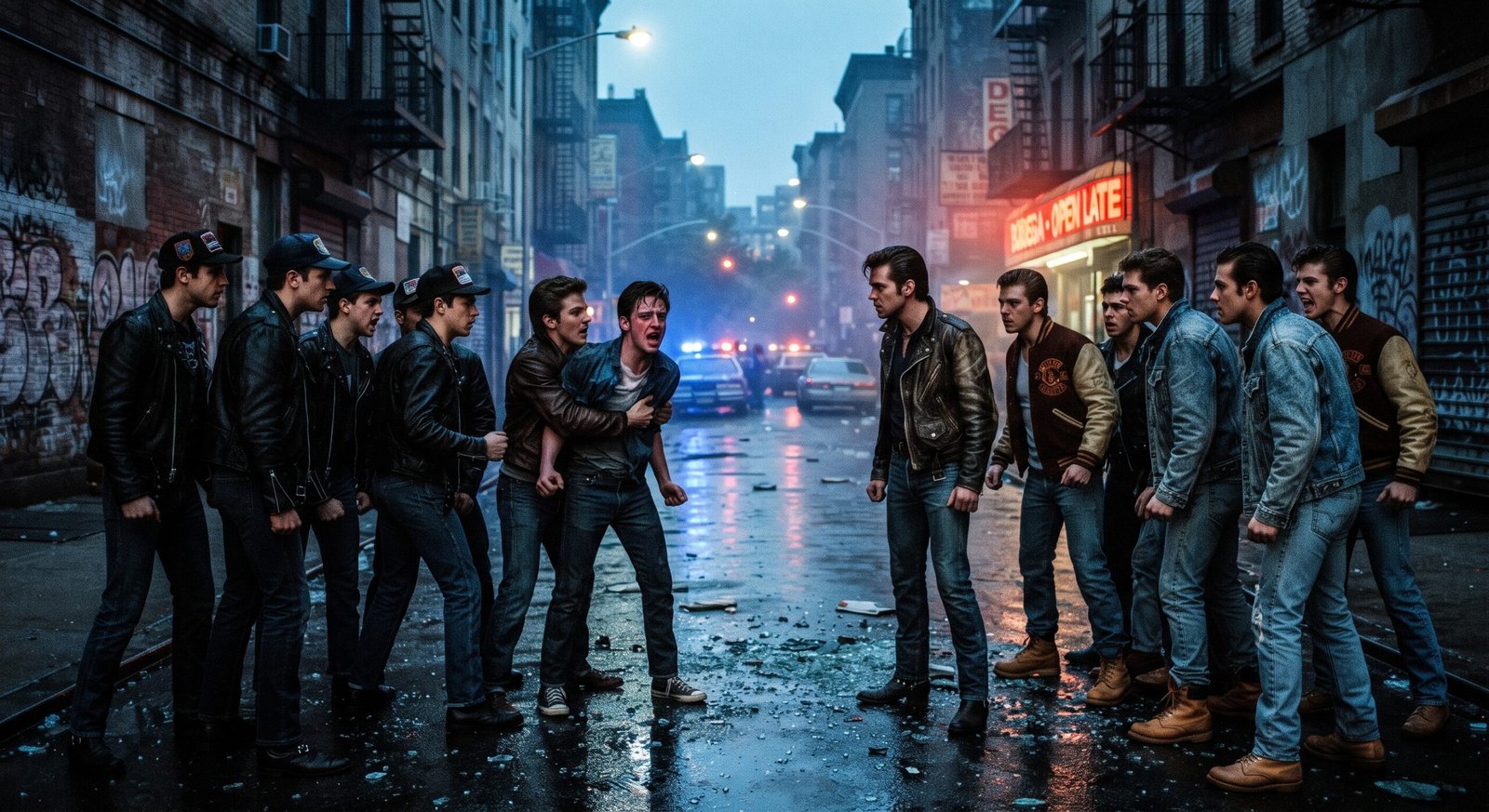
Act III is the structural hinge of the play. What begins in the hot midday streets of Verona as witty banter rapidly escalates into the deaths of Mercutio and Tybalt, turning a promising romance into an irreversible tragedy.
7. “I Bet You Look Good on the Dancefloor” – Arctic Monkeys (2005)
-
Matching Scene: Act 3, Scene 1 (The Brawl in Verona)
-
The Connection: Frontman Alex Turner drops a sharp, ironic nod to Shakespeare’s feuding families amidst a frantic post-punk guitar riff, contrasting a sweaty modern nightclub with the ancient rivalry of the Montagues and Capulets.
-
Literary Insight: In Act 3, Scene 1, Benvolio warns that the hot weather stirs up “mad blood,” setting the stage for an explosive confrontation fueled by youthful pride and peer pressure. Arctic Monkeys tap into that same combustible energy—where music, adrenaline, and crowded rooms can turn attraction or rivalry into chaos in seconds.
8. “Romeo Had Juliette” – Lou Reed (1989)
-
Matching Scene: Act 3, Scene 1 (Street Violence & Tribalism)
-
The Connection: From his acclaimed album New York, Lou Reed transplants Shakespeare’s characters into the gritty, racially and economically divided streets of late-1980s Manhattan. Set against jagged, driving guitars, the song portrays two young lovers trying to hold onto each other amid systemic urban violence and territorial hostility.
-
Literary Insight: Reed strips away all Renaissance romanticism to expose the ugly social reality at the heart of Shakespeare’s play: young people rarely invent the feuds that destroy them; they inherit them. The song echoes Mercutio’s dying curse upon both houses, showing how tribal hatred infects every corner of a city.
9. “Lovefool” – The Cardigans (1996)
-
Matching Scene: Act 3, Scene 2 & Scene 5 (Juliet’s Grief After Romeo’s Banishment)
-
The Connection: Featured prominently on the 1996 Romeo + Juliet soundtrack, “Lovefool” pairs a deceptively cheerful disco-pop melody with lyrics about desperate, irrational devotion—pleading to be loved even if that love is built on illusion.
-
Literary Insight: In Act 3, Scene 2, Juliet learns that her new husband has just killed her cousin Tybalt and been banished from Verona. After a brief moment of shock, she fiercely defends Romeo over her own bloodline. “Lovefool” captures that exact psychological turning point, where love ceases to be lighthearted and becomes an all-consuming fixation that overrides reason and self-preservation.
Act IV — Desperation, Deception & Isolation
By Act IV, Romeo is exiled in Mantua, Juliet’s parents are forcing her into an arranged marriage with Count Paris, and even the Nurse abandons her. Left completely alone, Juliet turns to Friar Laurence’s risky sleeping-potion scheme.
10. “Exit Music (For a Film)” – Radiohead (1997)
-
Matching Scene: Act 4, Scene 3 (Juliet’s Potion Soliloquy) & Act 5
-
The Connection: Commissioned specifically for the closing credits of Baz Luhrmann’s Romeo + Juliet (and later released on OK Computer), Radiohead’s slow-building masterpiece begins with a lone acoustic guitar and Thom Yorke’s fragile falsetto before erupting into a wall of distorted bass and choir harmonies. The song speaks of sneaking out before dawn, escaping suffocating control, and hoping those left behind choke on their own rules.
-
Literary Insight: In Act 4, Scene 3, Juliet stands alone in her bedchamber holding a vial of distilled liquor, terrified that the Friar might have given her actual poison or that she will wake up suffocating inside the Capulet tomb. “Exit Music” encapsulates both her claustrophobic panic and her fierce determination to escape her family’s grip at any cost.
11. “The Mask I Wear” – Cast of Juliet & Romeo (2025)
-
Matching Scene: Act 4, Scenes 1 & 2 (Juliet’s Feigned Obedience)
-
The Connection: Drawn from the 2025 pop-musical film adaptation Juliet & Romeo (featuring original songs by Evan Kidd Bogart), this track explores the emotional toll of hiding one’s true self behind a polite, compliant facade to survive family expectations.
-
Literary Insight: Throughout Act IV, Juliet transforms into a master of double-speak. She tells Paris and her father exactly what they want to hear—feigning remorse and agreeing to marry—while secretly plotting her own staged death. The motif of masks, which begins playfully at the Capulet masquerade in Act I, becomes a survival mechanism in Act IV.
12. “Juliet” – Cavetown (2018)
-
Matching Scene: Act 4, Scene 3 (Isolation and Identity)
-
The Connection: Robin Skinner (Cavetown) uses the figure of Juliet as a metaphor for emotional alienation, vulnerability, and feeling misunderstood by the world around you. The gentle, introspective indie-pop arrangement feels like a late-night diary entry written behind a locked bedroom door.
-
Literary Insight: Modern readers and students often connect deeply with Juliet’s total isolation in the second half of the play. Stripped of allies and trapped in a patriarchal household that treats her as property, she has no one left to confide in—a quiet loneliness that Cavetown translates for a contemporary audience.
Act V — Death, Eternity & The Tragic Ending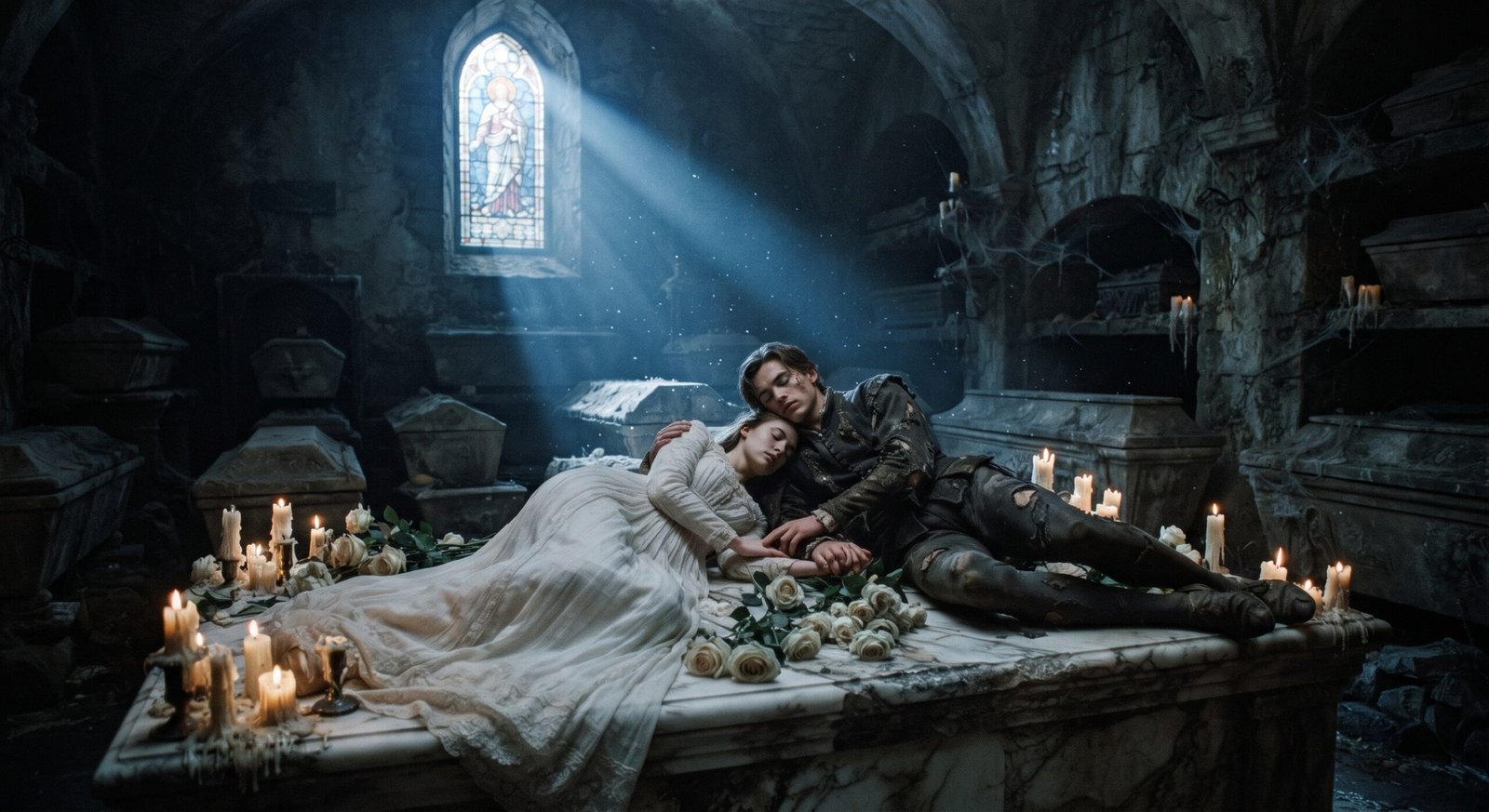
In the final act, a delayed letter from Friar Laurence triggers a catastrophic chain of miscommunication. Believing Juliet is dead, Romeo returns to Verona to die beside her, and Juliet awakens moments too late.
13. “(Don’t Fear) The Reaper” – Blue Öyster Cult (1976)
-
Matching Scene: Act 5, Scene 3 (The Capulet Tomb)
-
The Connection: One of classic rock’s most famous tracks explicitly invokes Romeo and Juliet as a couple united in eternity, framing death not as an end to love, but as a threshold where mortal boundaries dissolve.
-
Literary Insight: Standing beside Juliet’s bier in Act 5, Scene 3, Romeo speaks of shaking off the yoke of inauspicious stars and sealing a dateless bargain with engrossing death. Blue Öyster Cult taps directly into that romantic mythos—the idea that a love too intense for the living world can only find peace outside of time.
14. “Always” – Bon Jovi (1994)
-
Matching Scene: Act 5, Scene 1 & Scene 3 (Romeo’s Grief)
-
The Connection: In this soaring 1990s power ballad, Jon Bon Jovi sings of a wounded Romeo bleeding unseen, swearing eternal devotion even after everything has fallen apart.
-
Literary Insight: When Romeo’s servant Balthasar arrives in Mantua with false news of Juliet’s funeral in Act 5, Scene 1, Romeo does not erupt in noisy rage like he did in Act III. Instead, he becomes eerily calm, quietly resolving to defy the stars and buy poison from an apothecary. “Always” mirrors that somber, unwavering resolve.
15. “Romeo and Juliet Fantasy Overture (Love Theme)” – Pyotr Ilyich Tchaikovsky (1880)
-
Matching Scene: Act 5, Scene 3 (The Final Resolution & Reconciliation)
-
The Connection: No list of music related to the play is complete without the classical overture that taught modern cinema how to score romance and tragedy. Tchaikovsky condenses the entire five-act drama into roughly twenty minutes: opening with a solemn, church-like woodwind chorale representing Friar Laurence, erupting into violent percussion and slashing strings for the street duels, and soaring into one of the most recognizable romantic melodies ever written.
-
Literary Insight: In the overture’s final moments, Tchaikovsky brings back the sweeping love theme in a tragic, shattered minor-key variation, punctuated by funeral drumbeats before resolving into luminous harp chords. It mirrors the Prince’s final speech in Act 5, Scene 3—where the Montagues and Capulets finally bury their ancient feud over the bodies of their children, achieving peace at an unimaginable price.
Why Songwriters Are Still Obsessed with Romeo and Juliet
Why does a play written in the 1590s continue to inspire musicians across hip-hop, country, metal, jazz, and indie pop? From a literary and cultural standpoint, three factors explain its staying power:
-
Instant Emotional Shorthand: A songwriter has roughly three minutes to tell a complete story. Dropping the names “Romeo” or “Juliet” immediately communicates youth, passion, external opposition, and high stakes without needing two verses of backstory.
-
Shakespeare’s Inherent Musicality: Romeo and Juliet is one of Shakespeare’s most lyrical plays. The protagonists’ first conversation is literally structured as a shared 14-line Shakespearean sonnet, and Act 3, Scene 5 is modeled after a traditional medieval aubade (a dawn song where lovers lament the morning light that forces them apart). Musicians recognize a fellow lyricist in Shakespeare’s rhythm and imagery.
-
The Urge to Rewrite Tragedy: Because the play’s ending hinges on a cruel coincidence—Friar John being quarantined and unable to deliver a letter—songwriters constantly revisit the story to ask “What if?” Whether Taylor Swift gives them a wedding or Dire Straits gives them a breakup, modern musicians use Shakespeare’s framework to test how romance survives in their own era.
How to Build a “Romeo and Juliet Soundtrack” for School Projects
If you are a high school or college student assigned to create a Romeo and Juliet soundtrack or multimedia presentation, here is how to turn this list into an A-grade literary analysis:
-
Prioritize Thematic Depth Over Name-Dropping: Anyone can pick a song with “Romeo” in the title. Teachers and professors reward selections like Radiohead’s “Exit Music” or Florence + The Machine’s “Cosmic Love” because you have to prove why the imagery, mood, and character psychology match the text.
-
Use the “Text + Track” Connection Formula: When writing your liner notes, structure every paragraph in three steps: (1) identify the specific Act and Scene, (2) cite a specific line or literary device from Shakespeare (such as light/dark imagery, dramatic irony, or foreshadowing), and (3) explain how the song’s tempo, instrumentation, or lyrical theme mirrors that exact moment.
-
Show the Tonal Shift Across Acts: Make sure your tracklist evolves. Acts I and II should sound bright, sweeping, or urgent; Act III should introduce tension or rhythmic aggression; and Acts IV and V should feel sparse, haunting, or elegiac.
Frequently Asked Questions (FAQs)
What is the most famous song about Romeo and Juliet?
In modern pop music, Taylor Swift’s “Love Story” (2008) is the most globally recognized song inspired by the play, while Dire Straits’ “Romeo and Juliet” (1980) holds that title in classic rock. In the classical world, Tchaikovsky’s Romeo and Juliet Fantasy Overture and Sergei Prokofiev’s “Dance of the Knights” are the most famous musical interpretations.
What songs were in the 1996 Romeo + Juliet movie soundtrack?
Baz Luhrmann’s 1996 film produced one of the best-selling soundtracks of the 1990s. Key tracks include Des’ree’s “Kissing You,” The Cardigans’ “Lovefool,” Garbage’s “#1 Crush,” Radiohead’s “Talk Show Host” and “Exit Music (For a Film),” and Kym Mazelle’s cover of “Young Hearts Run Free.”
Are there any classical or jazz pieces inspired by Romeo and Juliet?
Yes. Beyond Tchaikovsky’s overture and Prokofiev’s 1935 ballet, Hector Berlioz composed a massive dramatic symphony (Roméo et Juliette) in 1839, and Leonard Bernstein adapted the story into the iconic Broadway musical West Side Story (1957). In jazz, Duke Ellington and Billy Strayhorn’s “The Star-Crossed Lovers” (1957) remains a landmark interpretation.
What modern songs relate to Romeo and Juliet without mentioning their names?
Several acclaimed songs capture the play’s themes without ever using the characters’ names, including “Cosmic Love” by Florence + The Machine, “Exit Music (For a Film)” by Radiohead, “Kissing You” by Des’ree, and “Young and Beautiful” by Lana Del Rey.
From Tchaikovsky’s sweeping orchestral strings to Radiohead’s haunting acoustic chords, music continues to keep Shakespeare’s Verona alive for every new generation. Whether you are studying the play’s imagery for class or simply looking for songs that capture the intensity of star-crossed devotion, these fifteen tracks prove that the music of Romeo and Juliet is far from finished. Which song do you think captures Shakespeare’s tragedy best?