
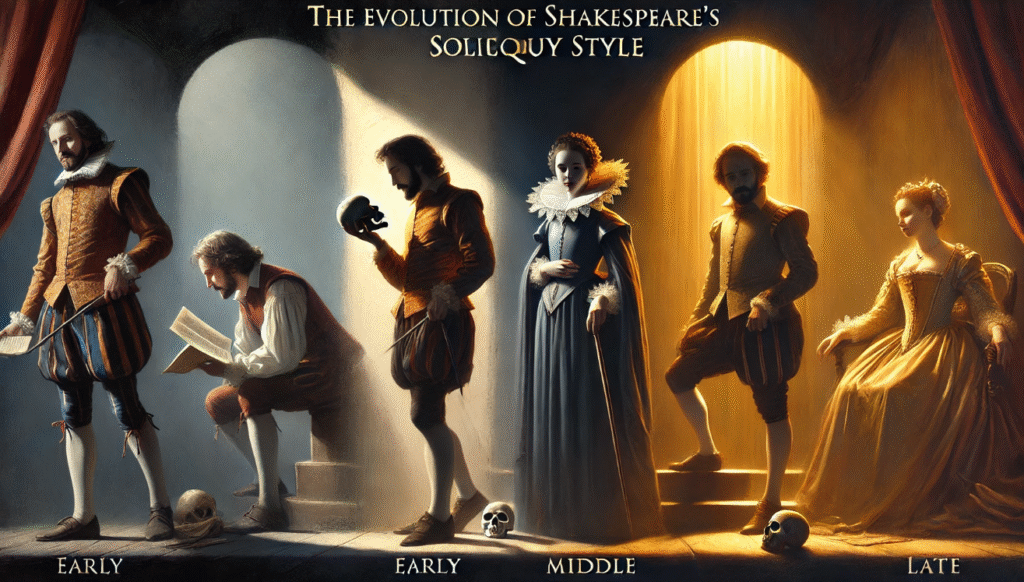
Ever wondered why Hamlet’s “To be, or not to be” feels so emotionally raw, while earlier Shakespeare characters sound more like they’re giving speeches? 🎭 That shift isn’t accidental—it’s part of the evolution of Shakespeare’s soliloquy style, a transformation that changed how characters reveal their deepest thoughts on stage. Whether you’re a student, actor, or curious reader, understanding this evolution can unlock powerful insights into Shakespeare’s storytelling genius. In this guide, we’ll break it down in simple terms—no degree in literature needed. Ready to explore how soliloquies grew from structured rhetoric to soul-baring introspection? Let’s dive in. 👇
1. What Is a Soliloquy? A Beginner’s Guide
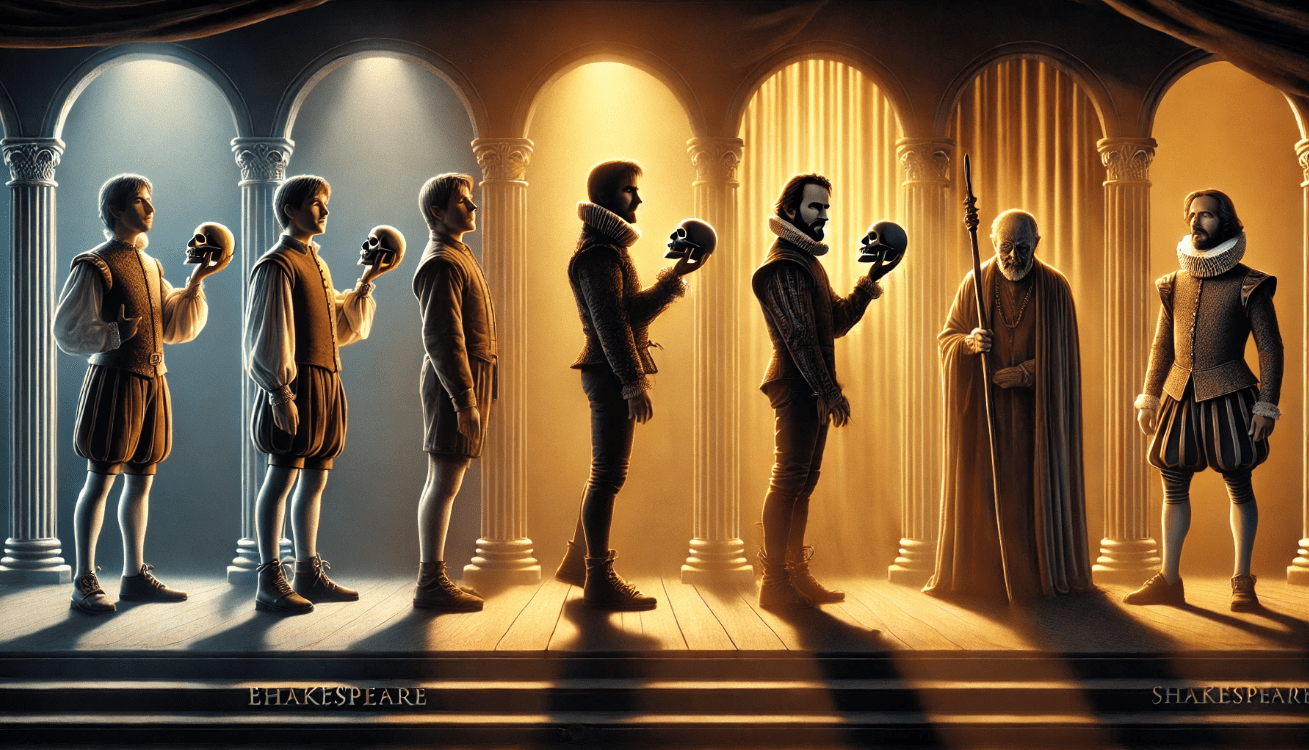
If you’ve ever seen a character step forward on stage and speak their thoughts aloud—while no one else seems to hear—that’s a soliloquy.
In simple terms, a soliloquy is a dramatic speech where a character speaks to themselves, revealing inner thoughts, emotions, fears, or plans. It’s a powerful storytelling tool, especially in Shakespeare’s plays, where it lets the audience peek into a character’s soul.
🎯 Key Features of a Soliloquy:
- The character is alone (or believes they are alone)
- Spoken directly to the audience or as internal reflection
- Expresses inner conflict, emotion, or decision-making
- Often includes rhetorical questions, metaphors, and repetition
🧠 Soliloquy vs. Monologue vs. Aside – What’s the Difference?
Term | Who’s Listening? | Purpose |
Soliloquy | No one (audience only) | Inner thoughts or emotions |
Monologue | Other characters are present | Public speech or storytelling |
Aside | Directed to the audience briefly | Quick comment or secret reaction |
👉 Example: In Hamlet, when he says “To be, or not to be…”, he’s not talking to anyone else—just wrestling with life and death in his own mind.
💡 Why Does This Matter?

Understanding what a soliloquy is—and how it works—helps you:
- Analyze characters more deeply in essays or class discussions
- Perform Shakespeare with emotion and clarity if you’re an actor
- Appreciate the artistry behind Shakespeare’s writing as he develops complex characters
Soliloquies aren’t just speeches—they’re windows into the heart of a play.
2: The Early Soliloquies – Simplicity and Structure 🏛️
When Shakespeare first began writing plays in the 1590s, his soliloquies were straightforward, structured, and easier to follow. They served clear purposes: explain what a character is thinking, reveal motives, or guide the plot. These early soliloquies are a great starting point for beginners learning to understand Shakespeare’s language.

🎯 Key Traits of Early Soliloquies
- Clear and direct language
- Linear thinking (step-by-step logic)
- Strong moral stance (good vs. evil often obvious)
- Less emotional depth compared to later works
Early soliloquies were more like stage directions in poetic form—not yet the deep psychological portraits we see later.
🧪 Example: Richard III’s Opening Speech
“Now is the winter of our discontent / Made glorious summer by this sun of York…”
In Richard III, Shakespeare opens the play with Richard’s soliloquy. It’s bold, clear, and sets the tone. Richard tells us exactly what he’s thinking—and what he plans to do.
✅ Why it works:
- It lays out the character’s ambition
- It prepares the audience for conflict
- It’s easy to follow, even for beginners
📘 Other Early Examples:
- Titus Andronicus – Characters often explain their revenge motives plainly
- The Two Gentlemen of Verona – Lighter tone, more about love than inner conflict
💡 Why This Matters
If you’re new to Shakespeare, early soliloquies are the best entry point. They help you:
- Get used to the rhythm and style of Shakespearean English
- Understand how characters explain themselves
- Build confidence before tackling complex speeches like those in Hamlet or Macbeth
3: The Mature Soliloquies – Depth and Complexity 🎭

By the early 1600s, Shakespeare’s soliloquies had grown into something far richer and more emotionally layered. In this mature phase of his writing—seen in plays like Hamlet, Macbeth, Othello, and King Lear—soliloquies became complex windows into the human soul.
These aren’t just speeches. They’re internal battles, moral debates, and moments of raw vulnerability.
🔍 Key Features of Mature Soliloquies
- Emotional depth and psychological realism
- Conflicted thoughts and moral uncertainty
- Rich imagery and metaphor
- Exploration of identity, fate, and fear
Characters no longer just tell us their plans—they wrestle with their thoughts, and often leave us unsure of what’s right or wrong.
🎓 Example: Hamlet’s “To Be, or Not to Be”
“To be, or not to be: that is the question…”
In this iconic soliloquy, Hamlet isn’t revealing a decision—he’s drowning in indecision. Shakespeare uses rhetorical questions, metaphors of death and sleep, and contrasting ideas to show Hamlet’s inner turmoil.
✅ Practical Tip:
Break down the soliloquy line by line. Try rewriting it in your own words. What is Hamlet really afraid of?
💔 Other Mature Examples:
- Macbeth: “Is this a dagger…” – hallucination vs. ambition
- Othello: “It is the cause…” – tragedy of misguided justice
- King Lear: “Blow, winds, and crack your cheeks…” – rage, madness, and loss
💡 Why This Matters
Understanding these soliloquies helps you:
- Appreciate Shakespeare’s dramatic genius
- Analyze characters on a deeper level in essays or discussions
- Connect emotionally with performances if you’re a viewer or actor
They show us that even kings and heroes are full of doubt, fear, and pain—just like us.
4: Late-Period Soliloquies – Reflection and Resolution 🌅🕊️

In Shakespeare’s final plays, his soliloquies take on a new tone—calmer, wiser, and more philosophical. These late-period works, like The Tempest, The Winter’s Tale, and Cymbeline, show a playwright reflecting on life, aging, forgiveness, and the power of storytelling itself.
Here, the drama shifts from inner conflict to inner peace.
🧘 Key Features of Late Soliloquies
- Gentle, reflective tone
- Focus on forgiveness, healing, and closure
- Emphasis on reconciliation rather than revenge
- Soliloquies often feel like final thoughts or epilogues
These are less about action and more about meaning—perfect for readers looking to explore Shakespeare’s spiritual and emotional growth as a writer.
✨ Example: Prospero in The Tempest
“Now my charms are all o’erthrown…”
In this farewell soliloquy, Prospero gives up his magical powers, breaks the fourth wall, and essentially says goodbye to the audience—and to the stage. Many scholars see it as Shakespeare’s own farewell to theatre.
✅ Why it matters:
This soliloquy teaches us that even powerful figures must learn to let go. It’s rich with metaphor, but grounded in human truth.
📘 Other Late-Period Highlights:
- Leontes in The Winter’s Tale shows regret and redemption
- Posthumus in Cymbeline wrestles with guilt, then finds peace
- These speeches focus less on drama and more on transformation
5: How to Analyze a Shakespearean Soliloquy 🧐📖
Analyzing a Shakespearean soliloquy might seem intimidating—but it doesn’t have to be. Whether you’re a student, teacher, actor, or just curious, this simple, step-by-step approach will help you break down any soliloquy with confidence and clarity.
🛠️ Step-by-Step Guide to Soliloquy Analysis
✅ Step 1: Read It Aloud
Shakespeare’s words are meant to be heard, not just read.
- Listen for rhythm, emotion, and pauses
- Feel where the character’s voice rises or falls
🎭 Tip: Try reading it with different emotions—anger, fear, sadness—to discover hidden meanings.
✅ Step 2: Summarize the Main Idea
Ask yourself:
- What is the character thinking about?
- Are they making a decision, expressing regret, or revealing fear?
Write a 1–2 sentence summary in your own words. This helps ground the speech in clear meaning.
✅ Step 3: Break It Into Thought Units
Soliloquies often move from one idea to another.
- Use punctuation and changes in tone to identify “mini-paragraphs”
- Look for shifts in mood or logic
📌 Example: Hamlet’s “To be, or not to be” moves from life vs. death → fear of the unknown → moral hesitation.
✅ Step 4: Translate Into Modern English
Use resources like No Fear Shakespeare or try rewriting each line in simpler language.
🧠 This helps you:
- Catch the tone and emotional weight
- Understand confusing metaphors or references
✅ Step 5: Ask What’s at Stake
Every soliloquy has a purpose. Ask:
- What is the character struggling with?
- What decision or truth are they facing?
- How does this moment affect the rest of the play?
This turns your analysis from summary into insight.
6: Why Soliloquies Still Matter Today 🎬💬
You might wonder: What do centuries-old soliloquies have to do with modern life? The answer is—a lot. Shakespeare’s soliloquies aren’t just relics of the past. They’re tools that still shape how we tell stories, express emotion, and understand human nature today.
🎭 In Theater and Film
Modern characters often “break the fourth wall” to speak directly to the audience—just like Shakespeare’s soliloquies.
- Think of TV shows like Fleabag, House of Cards, or films where a character narrates their inner thoughts.
- These moments draw us in, create intimacy, and reveal the character’s true self.
✅ Practical Takeaway:
Understanding soliloquies helps actors and writers build more emotionally honest performances and scripts.
📚 In Education and Personal Growth
Soliloquies are perfect for:
- Practicing close reading and critical thinking
- Exploring themes like identity, morality, love, and power
- Building empathy through deep character analysis
They teach us to pause, reflect, and express—skills that matter beyond the classroom.
🤖 In AI, Media & Storytelling
Even AI-generated content and virtual characters are starting to mimic soliloquy-like moments to appear more human.
Shakespeare paved the way for:
- Narrative introspection in storytelling
- Character-driven experiences in games, apps, and digital media
💡 The power of an “inner voice” is timeless—even when used in futuristic tech.
❤️ Why It Still Resonates
Soliloquies remind us that:
- Everyone has an inner world
- Honest self-reflection creates connection
- Good storytelling shows what’s going on inside, not just outside
Whether you’re on stage, in a classroom, or writing your own story—Shakespeare’s soliloquies still show us how to speak from the soul.
From simple declarations to profound introspection, the evolution of Shakespeare’s soliloquy style offers more than just literary insight—it’s a journey through the human mind. These speeches have helped generations of readers, students, and performers explore timeless questions about life, identity, fear, and hope.
Whether you’re analyzing Hamlet for class, performing Macbeth on stage, or just curious about what makes Shakespeare so enduring, understanding his soliloquies is a powerful tool. They teach us how to think deeply, express honestly, and connect emotionally—skills that matter as much today as they did 400 years ago.
So the next time you read a soliloquy, don’t just study the words—listen for the voice behind them. It might be Shakespeare’s. It might be his character’s. Or it might just be your own. 💬🧠