

Ever wondered what your favorite Shakespearean characters are really thinking? 🤔 The secret often lies in their soliloquies—those raw, unfiltered inner monologues that expose their deepest fears, desires, and turning points. Yet, many readers struggle to connect these moments to the character’s overall journey. That’s where this article comes in. By exploring the role of soliloquies in Shakespearean character arcs, you’ll learn how these intimate speeches reveal personal transformation and motive—helping you analyze plays with greater clarity and confidence. Whether you’re a student, teacher, or theater fan, understanding this link will completely change the way you read Shakespeare. 🎭
1. Why Soliloquies Matter in Shakespeare 🎭
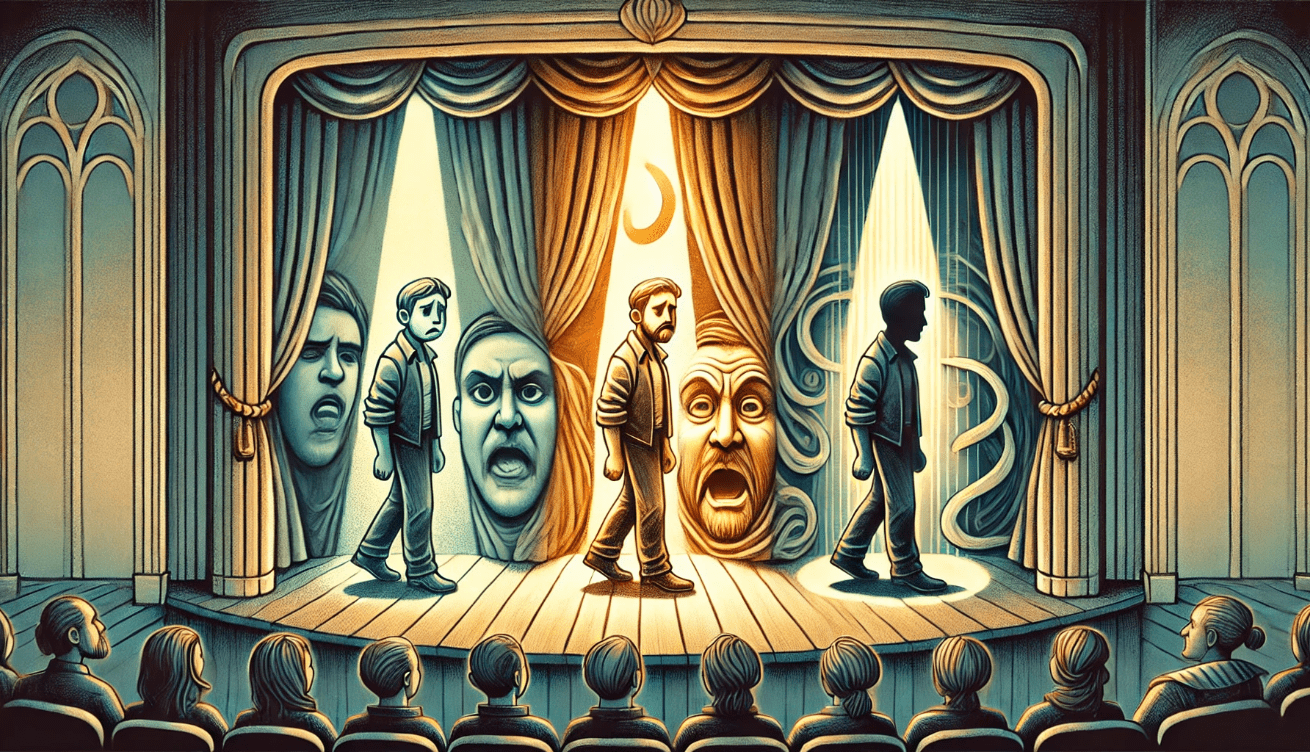
Soliloquies are one of the most powerful tools Shakespeare used to bring his characters to life. Unlike regular dialogue, a soliloquy is a private moment—a speech delivered by a character who is usually alone on stage, speaking directly to themselves or the audience. It’s like pressing pause on the action to hear what the character is really thinking.
🎯 The Real Purpose of a Soliloquy
At first glance, a soliloquy might seem like just another dramatic speech. But it serves a deeper purpose:
- It reveals a character’s inner thoughts, fears, hopes, and motives.
- It shows emotional and psychological shifts that might not be obvious through actions alone.
- It allows the audience to track a character’s transformation throughout the play.
Soliloquies act as emotional checkpoints. They give us access to a character’s internal journey—which is exactly what makes them essential to understanding Shakespearean character arcs.
✅ Why It’s a Game-Changer for Readers and Students
Many people struggle to follow Shakespeare’s language or figure out why a character behaves a certain way. Soliloquies solve that problem by offering clarity.
When you focus on soliloquies, you begin to:
- Understand the motives behind key decisions
- See how characters change over time
- Identify the emotional turning points in the story
Suddenly, Shakespeare’s characters stop feeling distant—and start feeling real.
2. How Soliloquies Shape Character Arcs 🔄

Soliloquies aren’t just poetic flourishes—they’re key turning points in a character’s development. In Shakespeare’s plays, characters don’t change by chance. Their growth (or downfall) is often mapped out through their inner thoughts, and soliloquies give us direct access to that transformation.
🎬 From Thought to Action
Most Shakespearean characters don’t suddenly act—they reflect first. Soliloquies capture that moment of hesitation, decision-making, or emotional shift.
For example:
- Hamlet debates life and death long before he takes action.
- Macbeth struggles with guilt and ambition before choosing murder.
- Lady Macbeth moves from ruthless to remorseful in just a few key speeches.
By watching these moments unfold, we see how internal conflict leads to external consequences—a core part of any character arc.
🧭 Tracking Transformation Step-by-Step
Soliloquies help you follow the evolution of a character in real time:
- Early soliloquies show uncertainty, desire, or frustration.
- Middle soliloquies reveal emotional tension or moral conflict.
- Final soliloquies often reflect acceptance, madness, regret, or resolution.
This creates a clear arc—a journey from one emotional or psychological state to another. Soliloquies are like checkpoints in that journey, giving readers direct insight into where the character stands at each stage.
🔍 Why This Matters
If you’re trying to understand why a character acts the way they do—or how they change throughout a play—soliloquies are your best guide.
They:
- Show the cause behind each major decision
- Reveal emotions characters hide from others
- Make complex characters feel relatable and real
3. Famous Examples: Character Arcs Unfolded Through Soliloquies 🎭
One of the best ways to understand the role of soliloquies in Shakespearean character arcs is to see them in action. Let’s explore how Shakespeare used soliloquies to reveal key transformations in some of his most iconic characters. These examples make it easy to spot how inner thoughts guide outward actions—and help you apply the same approach to any play.
🧠 Hamlet – From Doubt to Determination
Famous soliloquy: “To be, or not to be…” (Act 3, Scene 1)
- Before: Hamlet is paralyzed by indecision and overwhelmed by grief.
- During: He questions life, death, and the morality of revenge.
- After: This soliloquy marks a turning point—Hamlet begins to move toward action, even if he’s still uncertain.
✅ Takeaway: Hamlet’s soliloquies let us trace his emotional journey from confusion to resolve, revealing the layers of his internal conflict.
🗡️ Macbeth – From Reluctance to Ruthlessness
Famous soliloquy: “Is this a dagger which I see before me…” (Act 2, Scene 1)
- Before: Macbeth is torn between ambition and morality.
- During: He imagines the murder weapon, revealing his inner turmoil and growing obsession.
- After: He commits the murder and begins his descent into paranoia and tyranny.
✅ Takeaway: Macbeth’s soliloquies show his psychological unraveling—each one pushes him deeper into moral darkness.
👑 Lady Macbeth – From Control to Collapse
Famous soliloquy: “Out, damned spot! Out, I say…” (Act 5, Scene 1)
- Before: She’s bold and manipulative, urging Macbeth to seize power.
- During: Alone and sleepwalking, she reveals guilt and mental breakdown.
- After: Her arc ends in tragedy, consumed by the consequences she once ignored.
✅ Takeaway: Soliloquies expose Lady Macbeth’s transformation from calculated confidence to emotional collapse.
💔 Othello – From Trust to Tragedy
Famous soliloquy: “It is the cause, it is the cause, my soul…” (Act 5, Scene 2)
- Before: Othello is honorable and in love with Desdemona.
- During: He convinces himself that killing her is justice, not jealousy.
- After: He learns the truth too late, devastated by manipulation and guilt.
✅ Takeaway: Othello’s final soliloquy shows a man blinded by deception—his inner reasoning is tragic and heartbreaking.
👴 King Lear – From Arrogance to Awareness
Famous soliloquy: “Blow, winds, and crack your cheeks!” (Act 3, Scene 2)
- Before: Lear is proud and dismissive, blind to who truly loves him.
- During: Alone in the storm, he reflects on power, justice, and his mistakes.
- After: He begins to see the world—and himself—more clearly.
✅ Takeaway: Lear’s soliloquies chart his painful journey toward humility and human understanding.
📚 How to Use These Examples
These soliloquies aren’t just famous—they’re blueprints for character arcs. When analyzing a play:
- Look for early, middle, and late soliloquies
- Ask: What’s changing in the character’s mindset?
- Connect each soliloquy to a key decision or event
4. Practical Guide: Analyzing a Shakespearean Soliloquy Step-by-Step 📝

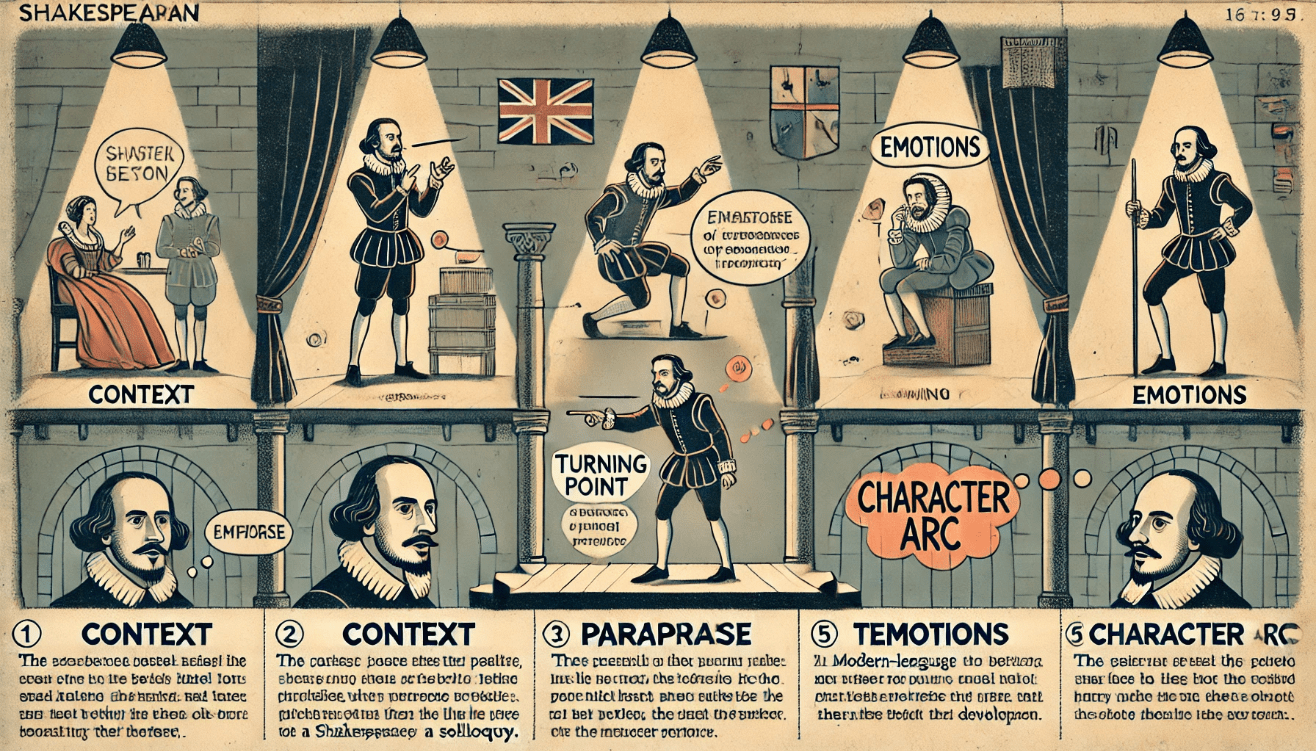
Analyzing a soliloquy can feel overwhelming—especially with Shakespeare’s language. But with the right approach, you can break it down and uncover deep insights about the character’s thoughts, motives, and emotional journey. Here’s a simple, step-by-step method to help you do just that.
🔍 Step 1: Understand the Context
Before diving into the soliloquy itself, figure out what’s happening in the play at that moment. Ask:
- What just happened?
- Who else was in the previous scene?
- Why is the character alone now?
✅ Knowing the setup helps you see what’s triggering the soliloquy.
🗣️ Step 2: Paraphrase in Your Own Words
Shakespeare’s language can be tricky. Start by rewriting the soliloquy line by line in modern English. Don’t worry about perfect translation—just aim to understand the main ideas and emotions.
💡 Tip: Use tools like No Fear Shakespeare or trusted annotations to help clarify meaning.
🎭 Step 3: Identify the Emotions
What is the character feeling in this moment? Look for:
- Words that express fear, anger, sadness, or hope
- Emotional shifts (e.g., from calm to panicked)
- Repetition or rhetorical questions that show inner conflict
✅ This tells you where the character is in their emotional journey.
🔁 Step 4: Spot the Turning Point
Most soliloquies contain some kind of internal shift—a decision, realization, or moment of clarity. Ask:
- Did the character make a decision?
- Do they change their mind?
- What do they discover about themselves?
🌱 This is often where the character arc moves forward.
🔗 Step 5: Connect to the Bigger Arc
Now, zoom out and ask:
- How does this soliloquy relate to what came before?
- What impact will it have on the character’s next actions?
- How does it reflect their personal growth or decline?
✅ This step links the soliloquy to the character’s overall transformation.
🧠 Quick Example (Macbeth’s “Is this a dagger…”)
- Context: Macbeth is about to kill King Duncan.
- Paraphrase: He imagines a floating dagger leading him toward murder.
- Emotion: He’s anxious, tempted, and unstable.
- Turning point: He decides to go through with the murder.
- Character arc: This moment shifts him from hesitant to deadly, pushing him further into darkness.
5. Common Misunderstandings About Soliloquies ❌

Soliloquies are powerful tools in Shakespeare’s plays—but they’re often misunderstood. These misconceptions can lead to missed meaning, shallow analysis, or even incorrect interpretations in essays or discussions. Let’s clear up some of the most common myths so you can read soliloquies with confidence. 😊
❗ Misunderstanding #1: “A soliloquy is just a long speech.”
Reality: Not every long speech is a soliloquy.
A soliloquy is a speech delivered when a character is alone on stage, revealing their private thoughts. In contrast, a monologue might be spoken to other characters.
✅ Soliloquies give access to what the character wouldn’t say out loud to anyone else—making them key to tracking emotional and psychological change.
❗ Misunderstanding #2: “Soliloquies always tell the truth.”
Reality: Soliloquies reflect what the character believes—but that doesn’t always mean it’s true.
Characters can be confused, in denial, or even lying to themselves.
🎭 Example: Macbeth tries to justify murder; Othello convinces himself Desdemona is unfaithful. They both believe their thoughts, but we can see the flaws.
✅ Reading between the lines helps uncover internal conflict and self-deception—key insights for analyzing character arcs.
❗ Misunderstanding #3: “Soliloquies aren’t important to the plot.”
Reality: Many major turning points in Shakespeare’s plays begin in soliloquies.
These moments often mark:
- A decision that leads to action
- A shift in the character’s values or mindset
- A new understanding that changes everything
💡 If you skip the soliloquy, you might miss the “why” behind the “what.”
❗ Misunderstanding #4: “Soliloquies are outdated and hard to relate to.”
Reality: Soliloquies are incredibly relatable—they’re the original inner monologues.
Think of them like a character’s personal journal or a voiceover in a movie. We all have moments of self-reflection, doubt, or decision. Shakespeare just puts those moments on stage.
✅ Understanding soliloquies can make even 400-year-old characters feel fresh and relevant.
6. Classroom and Study Tips: Making Soliloquies Work for You 🎭✨

Soliloquies can seem intimidating at first — all those old words and dramatic speeches! But when you know how to approach them, they become powerful tools for understanding characters, themes, and Shakespeare’s storytelling magic. Here are some practical, beginner-friendly tips to help you master soliloquies in your studies and classroom discussions 📚:
📖 Read It Aloud — Always
Soliloquies were written to be spoken. Reading them silently can make the language feel heavy, but speaking them out loud helps reveal the rhythm, emotion, and meaning behind the words. Don’t worry about perfect pronunciation — focus on the feeling behind the lines.
Pro tip: Try different tones or emotions each time you read a soliloquy. Is Hamlet confused or furious? Is Lady Macbeth desperate or determined? Experimenting can unlock new insights.
✏️ Break It Down Line by Line
Shakespeare’s language can be dense, so tackle soliloquies in small pieces:
- Read one line.
- Paraphrase it in your own words.
- Ask yourself what the character is feeling or deciding.
This makes even the trickiest speeches much more manageable and meaningful.
📌 Look for Clues About Character Transformation
Soliloquies often capture a turning point in a character’s journey. Pay attention to:
- Shifts in emotion (hopeful to hopeless, angry to guilty)
- Decisions being made
- Confessions the character wouldn’t say to others
These moments reveal character motives and inner conflict like nothing else in the play.
📝 Use Soliloquies in Essays and Exams
Quoting or referencing a soliloquy can instantly strengthen your essay. Examiners love when students show how a speech reflects a character’s transformation or motives.
- Choose a key quote.
- Explain what it shows about the character’s mindset.
- Link it to the play’s themes (like ambition, revenge, or guilt).
Example:
“Is this a dagger which I see before me…” reveals Macbeth’s wavering sanity and foreshadows his bloody path ahead.
🎥 Watch Stage and Film Performances
Different actors bring soliloquies to life in unique ways. Watching performances can help you:
- Understand difficult lines through tone and body language
- See how soliloquies connect to a character’s emotions and decisions
- Discover interpretations you might not have considered
YouTube and streaming services are full of great Shakespeare clips!
📚 Create a Soliloquy Journal
Start a simple notebook or digital doc where you:
- Write down memorable soliloquy quotes
- Summarize what’s happening in your own words
- Note any new thoughts or feelings each time you read it
Over time, you’ll build a valuable study resource and deepen your understanding.
Why Soliloquies Still Matter Today 🎭✨
Soliloquies are more than just dramatic speeches in old plays — they’re windows into the minds of Shakespeare’s characters at their most honest and vulnerable. Through these inner monologues, we get to witness transformation, inner conflict, and the true motives that drive the story forward.

Whether you’re studying for an exam, writing an essay, or simply trying to understand Shakespeare better, soliloquies offer some of the richest material to explore. By reading them aloud, breaking them down, and connecting them to a character’s journey, you’ll uncover insights that can completely change how you see a scene or a character’s fate.
Remember: every soliloquy is a private moment meant to pull the audience in. Once you start listening closely, you’ll realize these speeches still speak to timeless human emotions — ambition, fear, love, guilt, and hope. That’s what makes Shakespeare’s work so powerful and enduring, even centuries later.