Imagine a sultry summer night in an Italian city: the air thick with the scent of jasmine, a young man whispering ardent vows beneath a stone balcony, and the distant clamor of a street brawl echoing through narrow cobblestone alleys. This vivid world feels utterly real—yet William Shakespeare, who crafted it, never set foot in Italy. How, then, does the setting of Romeo and Juliet pulse with such authenticity and dramatic power? The answer lies in Shakespeare’s masterful use of Renaissance Verona and the broader cultural landscape of Italy as more than mere backdrop. The setting of Romeo and Juliet actively drives the tragedy, intensifying themes of passionate love, intractable hate, impulsive youth, and inescapable fate.
For students writing essays, teachers preparing lessons, or lifelong readers seeking deeper appreciation, understanding the play’s setting is essential. It unlocks symbolism, explains character motivations, and reveals why the lovers’ doom feels inevitable. In this comprehensive exploration, we will examine the historical and geographical context, dissect key locations within the play, analyze how the Italian Renaissance environment shapes themes and characters, consider Shakespeare’s creative liberties, and trace the setting’s enduring legacy—from modern tourism to cinematic adaptations.
The Historical and Geographical Setting of Romeo and Juliet
When Is Romeo and Juliet Set? The Renaissance Time Period
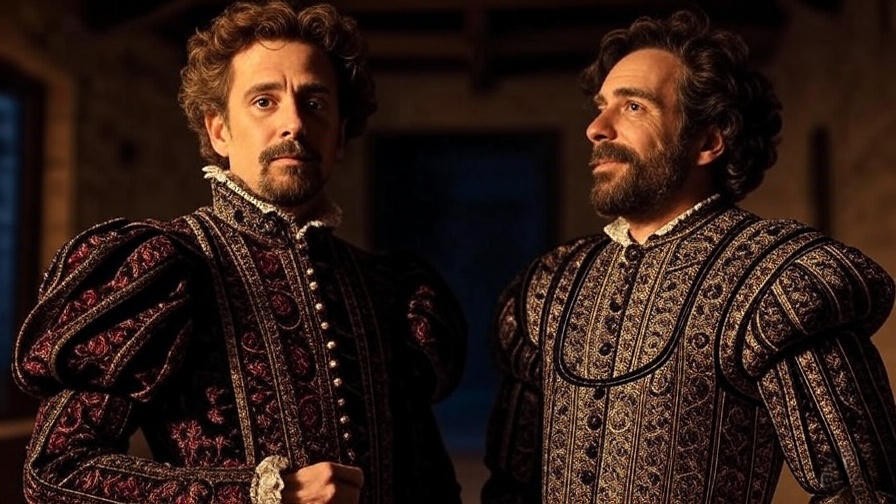
Shakespeare’s Romeo and Juliet, written around 1594–1596, is set in the Renaissance period, roughly spanning the late 14th to early 16th century. The play never specifies an exact year, but textual clues point firmly to this era. References to sword duels rather than firearms, the prevalence of arranged marriages among noble families, and the ever-present threat of plague all align with Renaissance Italy.
The Prologue mentions an “ancient grudge” between the Montagues and Capulets, evoking the long-standing vendettas that plagued Italian city-states. Historical records show that Verona, under the rule of the Della Scala (or Scaliger) family in the 13th and 14th centuries, was indeed a hotbed of factional strife—much like the Guelph and Ghibelline conflicts that divided much of Italy. Shakespeare drew heavily from Arthur Brooke’s 1562 poem The Tragicall Historye of Romeus and Juliet, which itself traced back to Italian novellas by authors such as Matteo Bandello and Luigi da Porto. These sources placed the story in Verona during the Renaissance, a time of cultural rebirth, artistic flourishing, and—paradoxically—persistent violence.
Shakespeare wrote during England’s own Elizabethan Renaissance, yet he deliberately transplanted the story to Italy. Elizabethan audiences viewed Italy as exotic, sophisticated, and dangerously passionate—a reputation fueled by travel writings and translated Italian literature. By choosing this setting, Shakespeare could explore intense emotions and moral ambiguities with greater freedom than if he had placed the feud in contemporary England.
Where Is Romeo and Juliet Set? Verona and Mantua
The primary location is Verona, a prosperous city in northern Italy’s Veneto region. Today a UNESCO World Heritage site, Renaissance Verona was a thriving commercial hub positioned along important trade routes. Its medieval walls, Roman arena, and Renaissance palaces provided a picturesque yet volatile stage for Shakespeare’s drama.
The only other named location is Mantua, a nearby city to which Romeo flees in exile. In reality, Mantua lies about 25 miles west of Verona—a journey of a day or two on horseback in the Renaissance era. Shakespeare uses this proximity to heighten tension: Romeo is close enough to return secretly, yet far enough that communication breakdowns prove fatal.
Although the feud is fictional, Verona’s history of noble family rivalries lent credibility. The city’s real-life factions, such as the Montecchi (Montagues) and Capuleti (Capulets), are mentioned in Dante’s Purgatorio (early 14th century), suggesting Shakespeare or his sources borrowed authentic-sounding names to ground the fiction in plausible history.
Key Locations in the Play and Their Dramatic Significance
Shakespeare transforms Verona’s geography into a dramatic architecture that mirrors the characters’ emotional journeys. Public spaces breed violence, private spaces nurture forbidden love, and sacred spaces offer false hope—each location reinforcing the tragedy’s inexorable momentum.
The Streets of Verona – A Stage for Public Conflict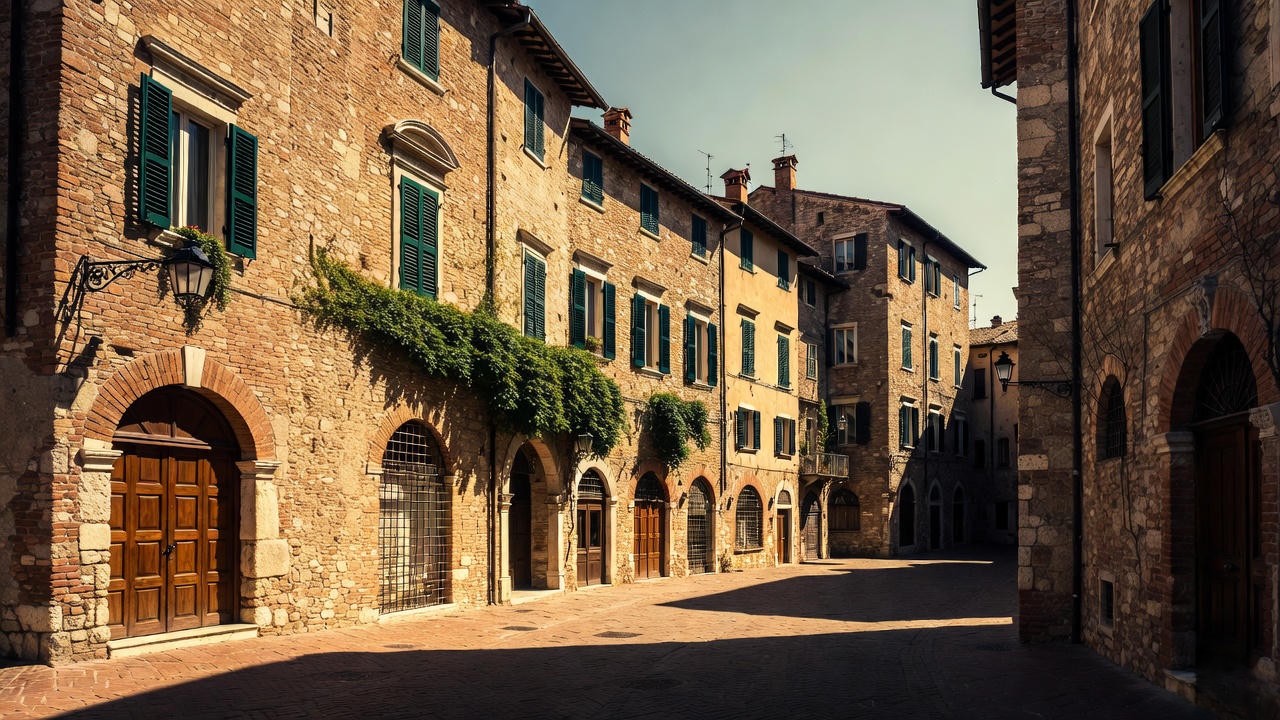
The play opens explosively in “a public place” with servants of the rival houses brawling (Act 1, Scene 1). The streets of Verona are chaotic, sunlit arenas where honor is defended with swords and words alike. Prince Escalus’s repeated attempts to quell violence—“If ever you disturb our streets again”—underscore how the feud permeates public life.
Later, the fatal duel between Mercutio and Tybalt erupts in the open, under the scorching afternoon heat. Shakespeare emphasizes the public nature of the killings: witnesses abound, consequences are immediate, and Romeo’s banishment follows swiftly. The streets symbolize society’s inability to contain private hatred, making individual passions dangerously communal.
The Capulet Household and Orchard – Private Love vs. Family Duty
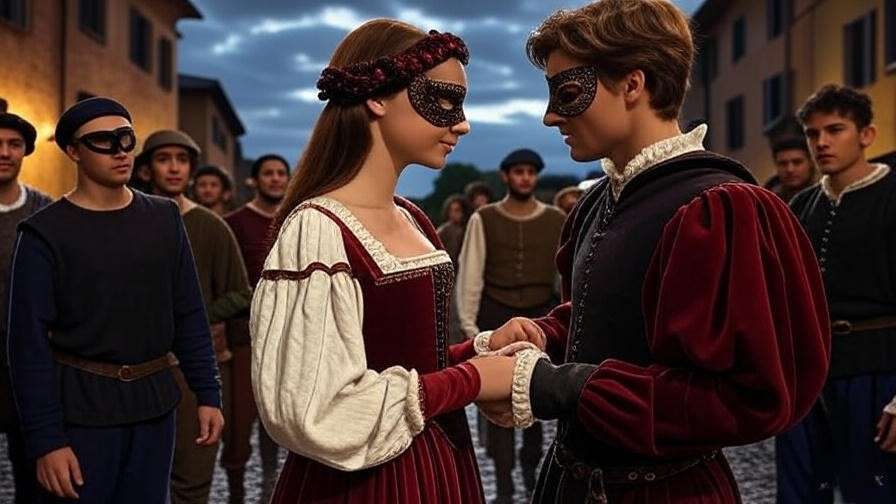
In stark contrast stand the private spaces of the Capulet domain. The lavish feast in Act 1, Scene 5 takes place inside the Capulet mansion, a realm of patriarchal authority where Lord Capulet arranges Juliet’s marriage to Paris. The grandeur masks oppression: Juliet has little agency within these walls.
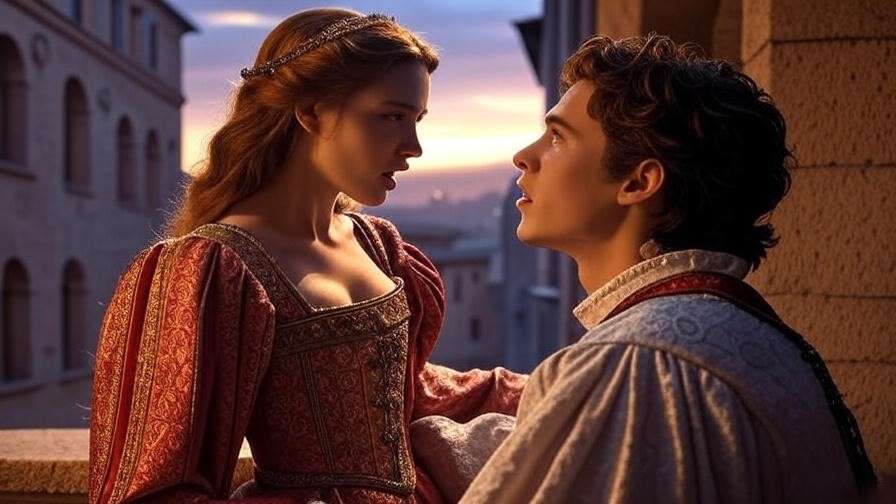
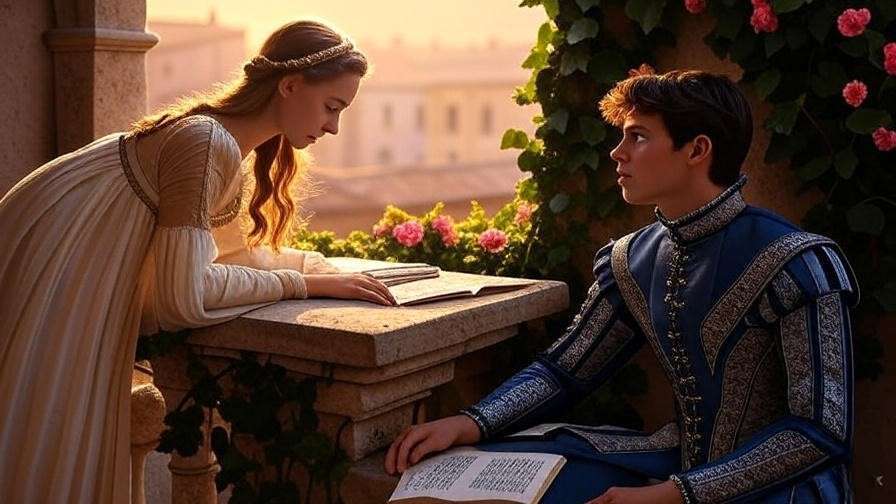
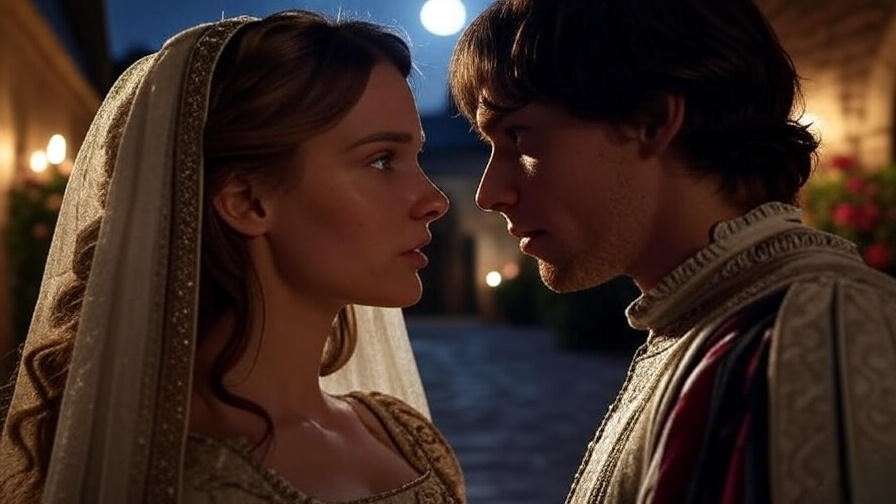
The iconic balcony scene (Act 2, Scene 2) occurs in the Capulet orchard at night. Although often staged with a literal balcony, the First Folio describes Juliet appearing “above” at a window. This elevated, secluded garden—filled with night-blooming flowers and moonlight—becomes a temporary sanctuary for transcendent love. Yet even here, danger lurks: Romeo risks death by trespassing. The contrast between the warm, fragrant privacy of the orchard and the harsh public streets highlights the lovers’ isolation and the impossibility of their union in broader society.
Friar Laurence’s Cell – Sanctuary and Dangerous Solutions
Friar Laurence’s humble cell offers another private retreat, associated with religion, herbs, and scholarly wisdom. Located outside the city bustle, it represents a neutral space where the Friar hopes to reconcile the feuding families through the secret marriage.
The cell’s natural elements—medicinal and poisonous plants—foreshadow the tragic potion plot. The Friar’s well-intentioned but flawed interventions illustrate the limits of human ingenuity against fate. This monastic setting also reflects Catholic Italy’s deep integration of church and daily life, where friars served as counselors, pharmacists, and confidants.
The Tomb in the Churchyard – Death and Reunion
The play’s climax unfolds in the Capulet family monument within a churchyard. This cold, subterranean vault contrasts sharply with the vibrant streets and gardens above. Darkness, stone, and decay dominate, symbolizing the ultimate triumph of death over life.
Yet paradoxically, the tomb is where love achieves permanence. Romeo and Juliet die embracing, and their sacrifice finally ends the feud. The underground setting evokes classical myths (Orpheus and Eurydice) and Christian resurrection imagery, lending the tragedy a timeless, archetypal quality.
How the Italian Renaissance Setting Shapes Themes and Characters
The Italian Renaissance setting is not incidental—it is integral to the play’s emotional intensity and thematic depth. Elizabethan audiences associated Italy with heightened passion, artistic splendor, and moral volatility. Shakespeare exploits these stereotypes masterfully, using the cultural and historical context of Renaissance Italy to make the characters’ extreme actions feel plausible and inevitable.
Love and Passion in a Hot-Blooded Culture
In Elizabethan England, Italy was stereotyped as a land of fiery temperament, sensual excess, and swift romance. Travel writers and translators frequently described Italians as “hot-blooded,” quick to love and quicker to anger. Shakespeare leans into this perception to explain the breathtaking speed of Romeo and Juliet’s courtship.
From their first meeting at the Capulet feast to their secret marriage the very next day, the lovers move with an urgency that might strain credulity in a cooler cultural climate. Yet in the imagined Verona of scorching summers and passionate dispositions, such impulsiveness feels authentic. Romeo’s hyperbolic language—“But soft, what light through yonder window breaks? / It is the east, and Juliet is the sun”—echoes the extravagant Petrarchan sonnets that flooded England from Italy during the Renaissance. The setting thus provides a cultural permission structure for love that burns brightly and consumes quickly.
Honor, Feuding, and Patriarchy
Renaissance Italian city-states were notorious for bloody family vendettas. Historical records document dozens of noble clans in Verona, Florence, and Siena locked in cycles of revenge that lasted generations. The Montague-Capulet feud mirrors these real conflicts, complete with street brawls involving servants and kinsmen.
Within this culture of honor, masculine reputation is upheld through public displays of courage. Tybalt’s rage at Romeo’s presence at the Capulet feast and Mercutio’s refusal to back down stem directly from this code. The Prince’s edicts against fighting carry the weight of real Renaissance signori attempting to impose order on fractious nobles.
Patriarchy, too, is amplified by the Italian setting. Arranged marriages were standard among the nobility, and daughters were expected to obey. Lord Capulet’s transformation from indulgent father to tyrannical enforcer—“Hang, beg, starve, die in the streets” if Juliet refuses Paris—reflects the absolute paternal authority (patria potestas) embedded in Renaissance Italian law and custom. Juliet’s rebellion, though courageous, is culturally catastrophic, making her tragedy all the more poignant.
Fate, Religion, and Superstition
Catholic Italy provides a rich religious texture absent in Protestant England. The presence of Friar Laurence as confidant, pharmacist, and clandestine officiant reflects the real role of Franciscan and Dominican friars in Renaissance society. Confession, holy marriage, and the Church’s mediation in daily life are taken for granted.
Yet religion coexists with superstition and classical notions of fate. Romeo’s premonition—“Some consequence yet hanging in the stars”—and Juliet’s fear of the tomb evoke a world where divine providence, astrological influence, and human will uneasily intersect. The plague that seals the lovers’ doom is no mere plot device: bubonic outbreaks ravaged Italian cities throughout the 14th–16th centuries, killing thousands and disrupting communication. Shakespeare uses this historical reality to underscore life’s fragility and the capriciousness of fate in a pre-modern world.
Youth vs. Age in a Hierarchical Society
Verona’s rigid social hierarchy magnifies the generational conflict central to the play. Elders—Lord Capulet, Lord Montague, the Prince—hold institutional power yet fail to resolve the feud or guide the young. Youthful characters, driven by passion and idealism, repeatedly outpace the cautious wisdom of age.
This tension reflects Renaissance humanist debates about education, emotion, and governance, but it is sharpened by the Italian context of powerful patriarchs and obedient (or rebellious) youth. Juliet, at just thirteen, navigates adult decisions with astonishing maturity, while Romeo oscillates between melancholy and reckless action—both hallmarks of the passionate Italian youth stereotype.
Shakespeare’s Creative Liberties: Fact vs. Dramatic Fiction
For all its vivid realism, Shakespeare’s Verona contains deliberate inaccuracies that serve dramatic purposes. The city is landlocked, yet Romeo laments under “sycamore” trees west of the city (a detail borrowed from Brooke). Travel between Verona and Mantua is compressed; messages and journeys occur with improbable speed.
Anachronisms abound: characters use coins not minted until later centuries, and dueling customs blend Italian and English practices. Even the famous balcony is likely Shakespeare’s invention—Italian sources describe a ground-level garden meeting.
These liberties are not errors but enhancements. By blending eras and geographies, Shakespeare creates a timeless, archetypal Italy rather than a historically precise one. The result is a setting that feels authentically exotic to his audience while remaining dramatically flexible.
The Enduring Appeal of Verona as a Literary and Tourist Destination
Today, Verona fully embraces its Shakespearean heritage. The 14th-century Casa di Giulietta (Juliet’s House) features a stone balcony added in the 20th century to match theatrical tradition. Tourists flock to touch the bronze statue of Juliet, leave letters in the courtyard, and visit the so-called Tomb of Juliet in a former convent.
Annual festivals, opera performances in the ancient Roman arena, and Valentine’s Day celebrations keep the myth alive. The city’s tourism board estimates that Romeo and Juliet attracts over two million visitors yearly, making it one of Italy’s most potent literary brands.
Film adaptations have further reimagined the setting. Franco Zeffirelli’s 1968 version luxuriates in sun-drenched Renaissance Verona, while Baz Luhrmann’s 1996 Romeo + Juliet transplants the feud to a modern, violent “Verona Beach.” Each interpretation proves the setting’s adaptability and enduring resonance.
Expert Insights and Analysis Tips for Students and Readers
To deepen your understanding or strengthen an academic essay, consider this quick reference table of key locations and their symbolic meanings:
| Location | Key Scenes | Symbolic Meaning |
|---|---|---|
| Public streets | Act 1 brawl, Mercutio/Tybalt duel | Uncontrollable hatred, societal chaos |
| Capulet orchard/garden | Balcony scene (Act 2, Scene 2) | Secret love, nature, fleeting sanctuary |
| Friar Laurence’s cell | Marriage, potion plan | Hope, human intervention, herbal duality |
| Capulet tomb | Final scene (Act 5) | Death, reconciliation, permanence in loss |
Essay tips from a Shakespeare scholar:
- Always link setting to theme with textual evidence (e.g., how heat imagery in Act 3, Scene 1 mirrors characters’ “hot” tempers).
- Compare Shakespeare’s Verona to his sources (Brooke, Bandello) to highlight original contributions.
- Discuss how the Italian setting allowed Shakespeare to critique English society indirectly.
Recommended further reading:
- Jill L. Levenson’s Oxford Shakespeare edition of Romeo and Juliet (2000) – excellent historical notes.
- Stephen Greenblatt, Will in the World (2004) – chapter on Shakespeare’s Italian imagination.
- Robert Henke, Shakespeare and the Italian Renaissance (2014).
Frequently Asked Questions
What is the setting of Romeo and Juliet?
The play is set primarily in Verona, Italy, with brief scenes in Mantua, during the Renaissance period (approximately late 14th to early 16th century).
Why did Shakespeare set Romeo and Juliet in Italy?
Shakespeare chose Italy for its reputation in Elizabethan England as a place of passion, culture, and danger. The exotic setting gave him freedom to explore intense emotions and offered audiences an escape from everyday English life.
Is Verona a real place in Romeo and Juliet?
Yes—Verona is a real city in northern Italy. While the Montague-Capulet feud is fictional, the city’s history of noble rivalries lent authenticity.
What time period is Romeo and Juliet set in?
The play is set in the Renaissance era, with customs, clothing, and social structures reflecting 14th–16th century Italy.
How does the setting influence the plot of Romeo and Juliet?
The public streets enable violence, private gardens nurture secret love, religious spaces facilitate risky plans, and the plague disrupts communication—all making the tragic outcome feel inevitable.
Did the real events of Romeo and Juliet happen in Verona?
No—the story is fictional, derived from Italian novellas. However, Verona did have feuding families, and names similar to Montague and Capulet appear in historical records.
The streets, gardens, cells, and tombs of Shakespeare’s Verona are far more than scenic backdrop. They form a dramatic crucible in which love and hate, youth and age, human will and cruel fate collide with devastating force. By rooting his tragedy in the vibrant, volatile world of Renaissance Italy, Shakespeare ensures that Romeo and Juliet speaks across centuries.