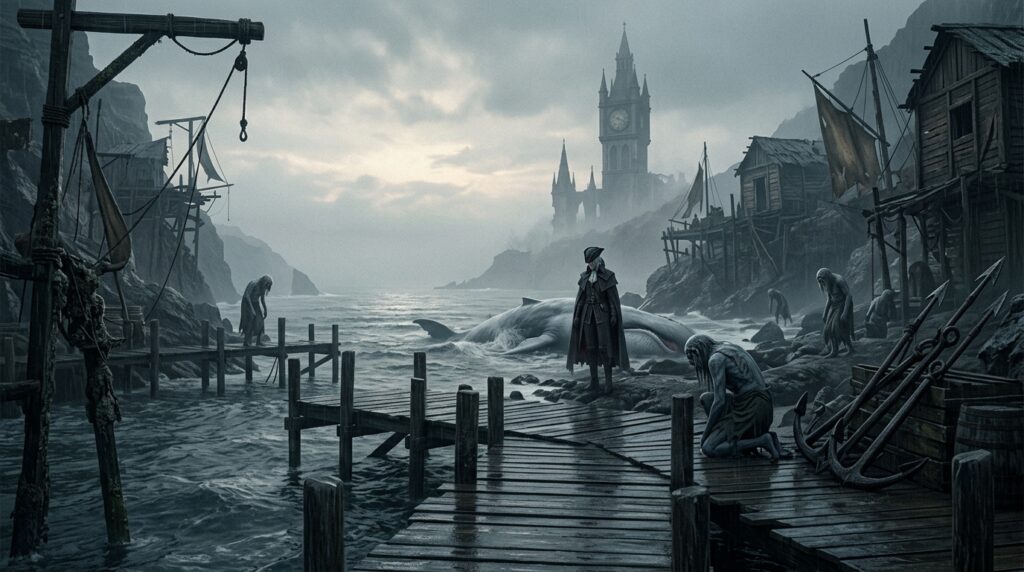
Rain slants across rotting wood, falling on barnacle-encrusted corpses and the silent, kneeling figure of a grieving mother whose corpse sits hollowed by the shore. The atmosphere of the bloodborne fishing hamlet immediately strikes players with a visceral sense of foreboding. At first glance, this damp, subterranean coastal village—hidden within the depths of the Hunter’s Nightmare—appears to be a direct tribute to H.P. Lovecraft’s iconic short story The Shadow Over Innsmouth. The fish-like mutations of the villagers, the dark worship of an abyssal sea deity, and the damp, decaying docks leave little doubt as to its aesthetic roots.
Yet, as players venture deeper into its fog-laden alleys, standard cosmic horror begins to fracture. Lovecraft’s tales are defined by human insignificance—a universe cold, indifferent, and fundamentally unbothered by human morality or guilt. But the nightmare of the Fishing Hamlet is not indifferent. It is obsessively, violently personal. It is a domain built on a singular, horrifying act of human cruelty, sustained by a generational curse, and populated by figures tormented by their own unbearable guilt.
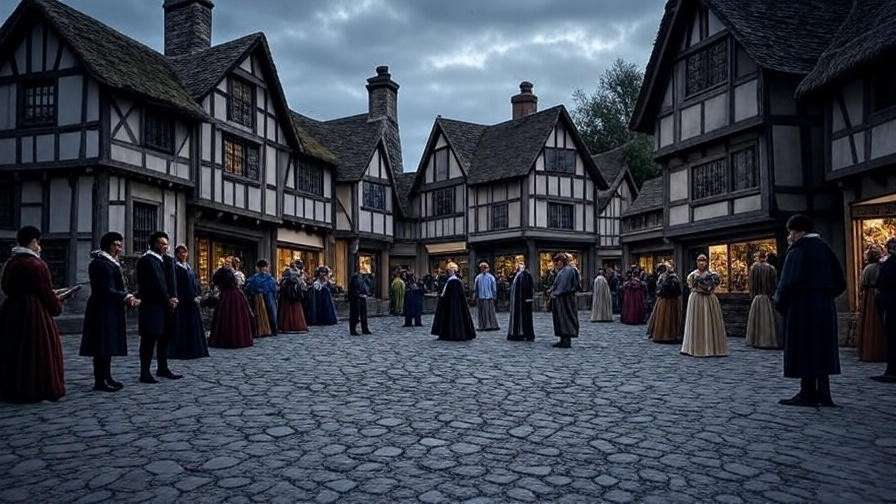
While cosmic horror gives the Fishing Hamlet its scales and tentacles, its narrative engine is undeniably Shakespearean.
By examining the narrative architecture of Bloodborne: The Old Hunters, we discover that Miyazaki’s masterpiece uses the foundational conventions of Elizabethan drama—specifically the frameworks of Hamlet, Macbeth, and The Tempest—to ground its eldritch terror in human morality. The Fishing Hamlet is not merely a tale of cosmic madness; it is a high Elizabethan tragedy played out across rain-slicked docks, where hubris disrupts the cosmic order, ghosts demand blood, and no amount of water can wash away the stain of original sin.
The Dual Influences: Lovecraftian Visuals vs. Shakespearean Dramaturgy
To understand the narrative weight of the Fishing Hamlet, one must first disentangle visual inspiration from structural storytelling. Modern gaming criticism frequently labels Bloodborne as pure “Lovecraftian horror.” While accurate regarding its iconography—eyeballs, tentacles, radial symmetry, and alien geometries—this label fails to explain the game’s emotional resonance.
+-----------------------------------------------------------------------+
|                        THE DUAL NARRATIVE ENGINE                      |
+-----------------------------------------------------------------------+
|  LOVECRAFTIAN SURFACE                 SHAKESPEAREAN DRAMATURGY        |
|  - Fish-like villager mutations       - Human agency and moral choice  |
|  - Eldritch sea deities (Kos)         - "Hubris" disrupting cosmic order|
|  - Architectural decay                - Psychological guilt & remorse  |
|  - Alien, indifferent universe        - Retributive ancestral curses   |
+-----------------------------------------------------------------------+
Beyond the Cosmic Horror Surface
In traditional cosmic horror, humanity’s plight is accidental. A protagonist stumbles upon an ancient truth, realizes their utter insignificance in the cosmos, and descends into madness. The Great Ones or Outer Gods do not hate humanity; they simply do not notice us, much as a scholar stepping on an ant is unaware of its destruction.
In the Fishing Hamlet, however, the conflict begins entirely with human agency. The scholars of Byrgenwerth and the early Hunters did not accidentally stumble into madness—they made a deliberate, calculated choice to invade, butcher, and desecrate a peaceful community in their quest for ascension. The horror does not stem from human insignificance, but from human capacity for monstrous ambition.
The Drama of Guilt and Retribution
Shakespearean tragedy relies on a moral universe. When Macbeth murders King Duncan, nature itself rebels: horses eat each other, the sun is obscured, and the land turns barren. The act of regicide breaks the Lex Naturalis (Natural Law), triggering an inevitable, catastrophic response from the cosmos until balance is restored.
The Fishing Hamlet operates under this exact dramaturgy. The transgression at the village was a violation of the sacred natural order—the slaughter of a Great One (Kos) and her unborn child, paired with the brutal trepanning of the local inhabitants to harvest “eyes on the brain.“
The resulting Hunter’s Nightmare is not an arbitrary curse; it is a morally responsive purgatory. The curse explicitly targets Hunters—those who inherited the blood-stained legacy of that original crime:
“Curse the fiends, their children too. Their children, forever true…”
This is the language of classical tragic retribution. It echoes the curse on the House of Atreus or the divine judgment that haunts Shakespeare’s historical kings. The universe of Bloodborne does not crush humanity because it is indifferent; it punishes humanity because humanity broke the moral fabric of reality.
The Sins of Byrgenwerth: Hubris and the Violation of Natural Order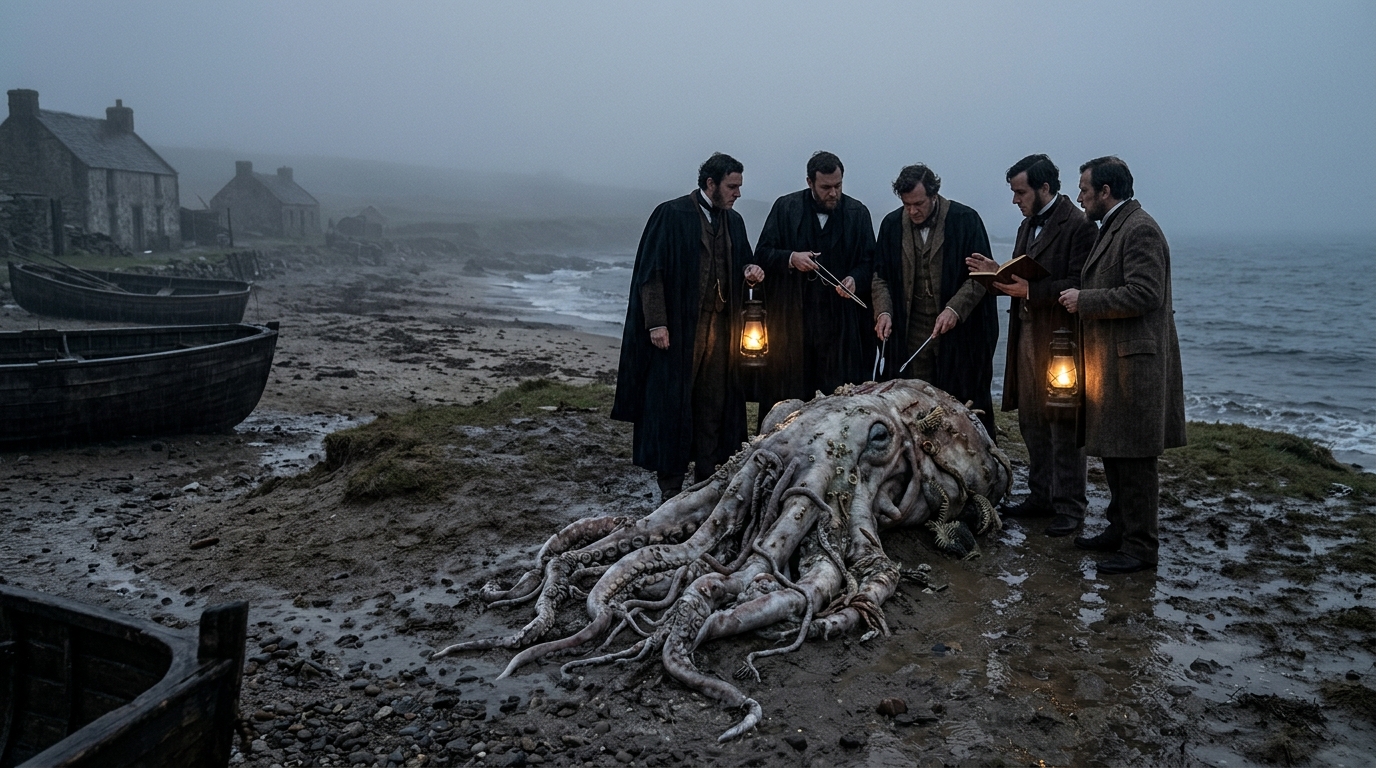
Every great tragedy requires a catalyst—an act of supreme arrogance known in Greek and Elizabethan drama as hubris. In Bloodborne, this hubris is embodied by Master Willem and the scholars of Byrgenwerth, whose relentless pursuit of evolution mirrors the destructive ambition seen throughout classical literature.
         [ BYRGENWERTH HUBRIS: "Grant Us Eyes" ]
                           │
                           ▼
     [ Violation of Natural Law: Slaughter of Kos ]
                           │
                           ▼
     [ Moral Retribution: The Hunter's Nightmare ]
                           │
                           ▼
     [ Generational Curse: Inescapable Purgatory ]
Master Willem and the “Vaulting Ambition” of Macbeth
In Shakespeare’s Macbeth, the protagonist acknowledges the single flaw driving him toward damnation:
“I have no spur / To prick the sides of my intent, but only / Vaulting ambition, which o’erleaps itself / And falls on the other.” (Macbeth, 1.7.25-28)
Byrgenwerth’s motto, “Grant us eyes, grant us eyes,” is the intellectual equivalent of Macbeth’s vaulting ambition. Master Willem sought to force human evolution, transcending mortal limitations by lining the brain with eyes. When rumors reached the academy of a stranded Great One washed ashore at a remote fishing village, Willem sent his scholars and hunters—including Gehrman and Lady Maria—to investigate.
What followed was not scientific discovery, but atrocity. The scholars mutilated the corpse of Kos, harvested the Parasites inside her, and slaughtered the mutated villagers to examine their skulls. This violent overreaching mirrors the ultimate tragic error: stepping outside the bounds of human mortality and violating the sacred to claim divine knowledge.
Mutilation of the Sacred
In Elizabethan theater, the king’s body represented the state and the physical manifestation of divine order. To harm the sovereign was to invite cosmic chaos. In Bloodborne, the Great Ones hold this exact metaphysical position. They are sympathetic in nature, answering the cries of humans seeking children, yet they operate as the highest living manifestations of the cosmos.
By slaughtering Kos and her unborn infant, Byrgenwerth committed ultimate sacrilege. Nature responded in kind: the sky turned crimson, the sea turned to bile, and the blood of Yharnam became tainted with the beastly curse. The decay of the Fishing Hamlet—with its washed-up aquatic leviathans and weeping, misshapen worshipers—stands as a physical testament to a broken world, echoing the unnatural storms and omens that preface the downfall of Shakespeare’s tragic figures.
Lady Maria of the Astral Clocktower: The Tragic Heroine Bound by Guilt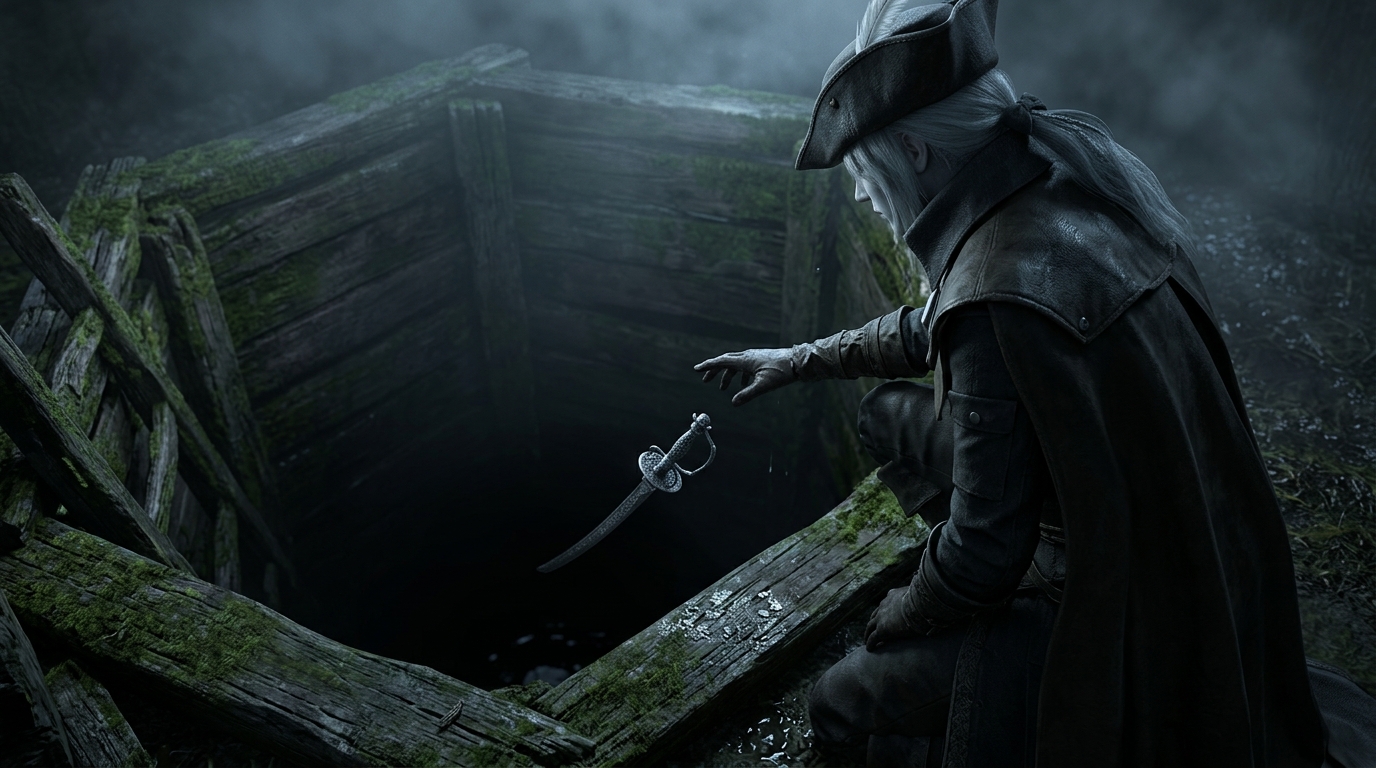
If Master Willem represents the cold, calculating ambition behind the crime, Lady Maria of the Astral Clocktower represents its human tragedy. She stands as one of FromSoftware’s most compelling figures, serving as the literal gatekeeper to the Fishing Hamlet and the emotional anchor of The Old Hunters expansion.
+-----------------------------------------------------------------------+
|              LADY MARIA vs. LADY MACBETH: A STUDY IN REMORSE          |
+-----------------------------------------------------------------------+
|  CHARACTER     | TRANSGRESSION          | MANIFESTATION OF GUILT      |
|  --------------+------------------------+---------------------------- |
|  Lady Macbeth  | Complicity in Duncan's | Somnambulism; obsession with|
|                | murder                 | washing blood from hands    |
|                |                        |                             |
|  Lady Maria    | Participation in the   | Discards weapon down well;  |
|                | Fishing Hamlet raid    | suicide; guards the secret  |
|                |                        | in an eternal nightmare     |
+-----------------------------------------------------------------------+
“Out, Damned Spot!” – The Psychological Weight of Crime
Lady Maria, a Cainhurst noble and student of Gehrman, participated directly in the massacre at the Fishing Hamlet. Though she sought honor and mastery of the blade, the atrocities committed there shattered her moral framework.
Her reaction to this guilt directly parallels Lady Macbeth’s famous descent into psychological torment. In Act V of Macbeth, Lady Macbeth walks in her sleep, endlessly wringing her hands:
“Out, damned spot! out, I say! … Will all great Neptune’s ocean wash this blood / Clean from my hand?” (Macbeth, 5.1.31-43)
Maria experienced an identical crisis of conscience. Disgusted by what she had done, she cast her beloved weapon—the Rakuyo—down a dark well in the heart of the Fishing Hamlet. The weapon, forged with exquisite Cainhurst skill, became a physical symbol of her blood-stained past. She could no longer bear to wield a blade that had participated in the desecration of Kos and her child.
The Self-Imposed Purgatory
Unable to live with the weight of her actions, Maria took her own life. Yet in the world of Bloodborne, death offers no clean escape from tragic guilt. Her spirit became trapped inside the Hunter’s Nightmare, where she voluntarily sealed herself away in the Astral Clocktower.
Maria’s posture when the player enters her boss arena—sitting motionless in a high-backed chair, seemingly dead until touched—evokes the tragic quietude of Ophelia (Hamlet). However, unlike Ophelia, whose madness drove her to accidental drowning, Maria’s death is an act of deliberate, punitive self-sacrifice.
She does not guard the path to the Fishing Hamlet to protect its power or keep its secrets for Byrgenwerth; she guards it to protect the world from Byrgenwerth’s sins, and to protect the nightmare’s victims from further intrusion. She acts as a eternal sentinel over a corpse, choosing unending isolation as penance for her role in the tragedy.
When she fights the player, her progression through three phases mirrors her descent into deeper levels of corruption:
-
Phase 1 (Pure Skill): She uses her traditional Cainhurst fencing technique.
-
Phase 2 (Blood Magic): She reluctantly slashes her own chest, utilizing the blood art of Cainhurst she once despised.
-
Phase 3 (Blood and Fire): Her blood erupts in hellish flames, representing the full manifestation of her internal torment and damnation.
Maria’s fight is not an act of aggression, but a desperate desperate attempt to prevent another hunter from repeating the past.
Gehrman and the Ghost of the Hamlet: A Tale of Ghosts and Madness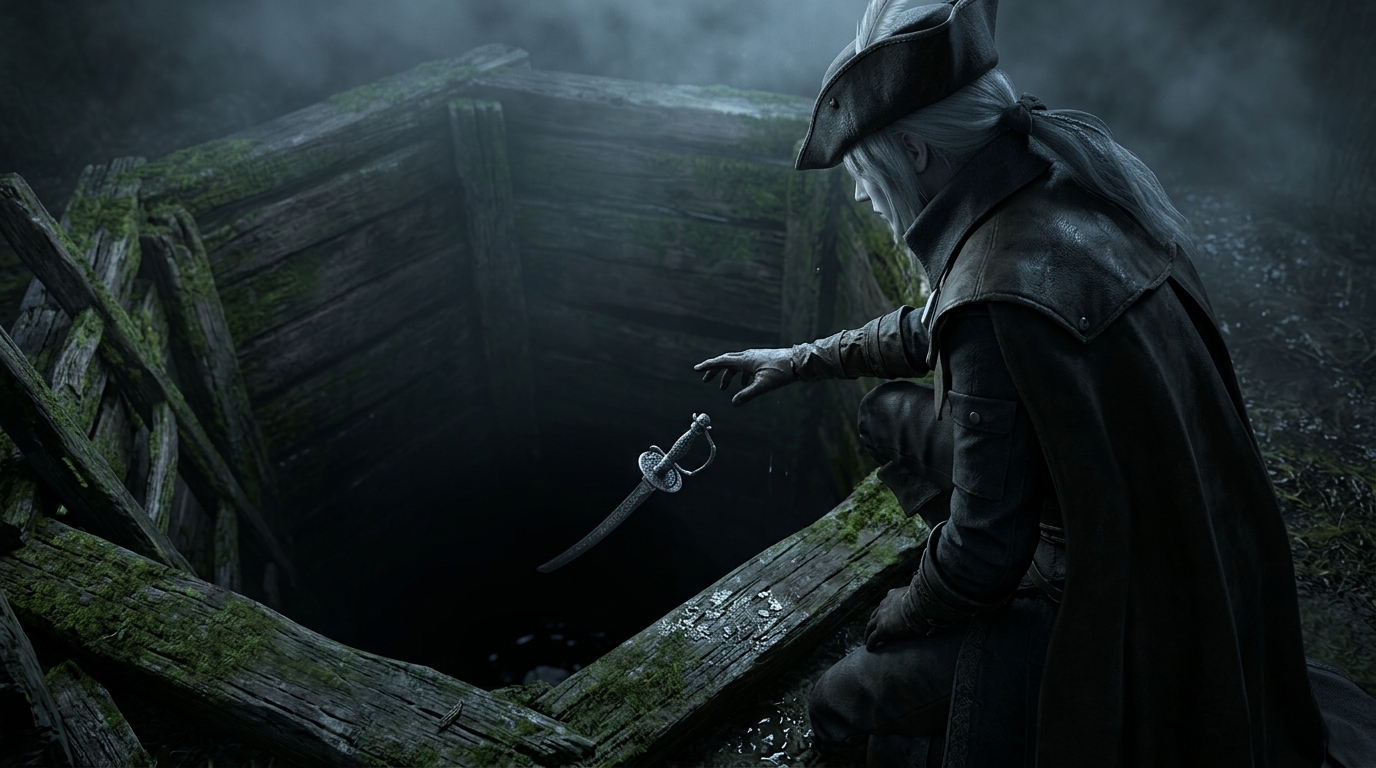
Central to Shakespeare’s revenge tragedies—most notably Hamlet and Julius Caesar—is the presence of the spectral visitor. The ghost in Elizabethan theater is rarely a simple monster; it is an embodiment of an unpunished crime, returning from beyond the grave to disrupt the false peace of the living world.
+-----------------------------------------------------------------------+
|                  THE SPECTRAL ENGINE OF VENGEANCE                     |
+-----------------------------------------------------------------------+
|  SHAKESPEARE'S HAMLET                 BLOODBORNE'S FISHING HAMLET     |
|  - Murder of King Hamlet hidden       - Massacre of Hamlet hidden     |
|  - Ghost appears to reveal crime      - Orphan of Kos embodies curse  |
|  - Demands revenge on perpetrator     - Traps hunters in nightmare    |
|  - Prince Hamlet paralyzed by grief   - Gehrman trapped in dream      |
+-----------------------------------------------------------------------+
The Ghostly Demand for Vengeance (Hamlet’s Legacy)
In Hamlet, the ghost of the dead king appears on the ramparts of Elsinore to reveal a hidden murder:
“Doom’d for a certain term to walk the night… Revenge his foul and most unnatural murder.” (Hamlet, 1.5.10-25)
In Bloodborne, the entire Fishing Hamlet is wrapped around a similar, unavenged murder. The inhabitants of Yharnam live in total ignorance of how their city’s beastly curse began. The Healing Church fabricated a glorious mythology surrounding the Old Hunters, hiding the unspeakable act that took place at the coast.
The Orphan of Kos serves as the ultimate spectral figure in this tragedy. Crawling from the womb of his dead mother’s corpse, the Orphan stands on the beach, weeping as he gazes up at the pale moon before turning his fury upon the player. He is not a malicious entity by nature; he is a newborn god whose first experience of existence was the slaughter of his mother and the desecration of his home.
The Orphan’s cry is the echo of the Hamlet’s tragedy. He acts as both victim and executioner, holding the souls of all hunters captive within the Hunter’s Nightmare. Until the Orphan’s spectral form is defeated and his dark spirit returned to the ocean—represented by the message “Nightmare Slain”—the lingering ghost of the Hamlet cannot rest.
Gehrman as the Melancholic Tragic Figure
While the Orphan embodies the vengeful ghost, First Hunter Gehrman embodies the melancholy of Prince Hamlet. Trapped in the Hunter’s Dream by his contract with the Moon Presence, Gehrman sits in his wheelchair, waiting for an end that never comes.
If the player listens closely in the Hunter’s Dream, they can occasionally hear Gehrman weeping in his sleep:
“Oh, Laurence… Master Willem… Somebody help me… Unshackle me, please, I’ve had enough… I can’t see it anymore…”
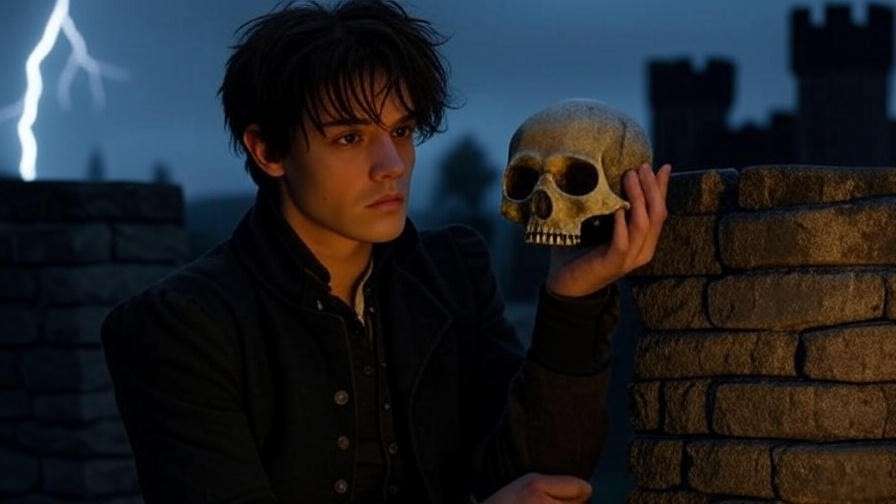
This grief-stricken paralysis is deeply Hamletian. Gehrman is haunted by what he created alongside Willem. His fixation on Lady Maria—manifested in the lifeless doll he crafted in her exact image—is a tragic attempt to reconstruct the innocence lost before the Fishing Hamlet raid. Like Hamlet contemplating his own mortality in the graveyard of Elsinore, Gehrman is a man crushed beneath the weight of historical memory, unable to move forward, yet unable to die.
Prospero’s Island Turned Nightmare: The Tempest and the Fishing Hamlet
To fully appreciate the thematic scope of the Fishing Hamlet, one must look beyond Shakespeare’s tragedies to his late romance, The Tempest. Both works center on a isolated coastal environment where magic, nature, and human civilization collide—with radically different outcomes.
+-----------------------------------------------------------------------+
|               THE TEMPEST vs. THE FISHING HAMLET                      |
+-----------------------------------------------------------------------+
|  ELEMENT            | THE TEMPEST            | THE FISHING HAMLET     |
|  -------------------+------------------------+----------------------- |
|  Setting            | Enchanted Island       | Cursed Coastal Village |
|  Ruler/Scholar      | Prospero (Benign)      | Willem/Laurence (Toxic)|
|  Native Inhabitants | Caliban (Sympathized)  | Fish-folk (Victimized) |
|  Moral Outcome      | Reconciliation/Forgive | Eternal Damnation      |
+-----------------------------------------------------------------------+
Sea Images, Storms, and Isolation
In The Tempest, a remote island surrounded by tempestuous seas serves as a stage where Prospero uses his art to manipulate the natural world and confront those who wronged him. The ocean represents both a barrier and a mirror reflecting human morality.
The Fishing Hamlet uses identical spatial dynamics. It sits at the absolute edge of the Hunter’s Nightmare, literally suspended above the sunken ruins of Yharnam (as revealed when a player looks down through the dark, translucent water beneath the docks). The constant rain, fog, and crashing waves create an atmosphere of total isolation from the rest of the world.
However, where Prospero ultimately uses his magic to bring about reconciliation and surrenders his “rough magic” (“I’ll break my staff… I’ll drown my book”), Byrgenwerth did the exact opposite. Willem and his followers refused to surrender their intellectual arrogance. They doubled down on their experiments, transforming the coastal paradise into a rotting purgatory.
Caliban vs. The Villagers: Monsters Made by Men
One of Shakespeare’s most complex creations in The Tempest is Caliban, the deformed native of the island who is enslaved by Prospero. While Prospero views Caliban as a hopeless monster (“A devil, a born devil, on whose nature / Nurture can never stick”), modern scholarship recognizes Caliban as a tragic victim of colonial violence and exploitation.
The transformed villagers of the Fishing Hamlet occupy this precise role. With their elongated skulls, fish-like scales, and raspy murmuring, they initially appear as classic video game enemies. Yet their behavior reveals profound tragedy:
-
They are non-hostile unless provoked: Many villagers kneel in prayer, weeping beside the corpse of Kos or wandering aimlessly through the mud.
-
They carry tools of labor, not war: They fight with harpoons, fish hooks, and anchor blades—the mundane tools of their former peaceful lives as fishermen.
-
They curse their abusers, not humanity: Their chant, spoken by the priest at the entrance of the village, is a plea for justice against Byrgenwerth:
“Byrgenwerth… Byrgenwerth… Blasphemous murderers… Blood-drunk fiends…”
Like Caliban, who learned his master’s language only to curse him (“You taught me language, and my profit on’t / Is, I know how to curse”), the villagers of the Hamlet were given elevated consciousness and “eyes” by Byrgenwerth, only to use that new awareness to voice their eternal anguish. They are not naturally occurring monsters; they are monsters made by the cruelty of men who viewed themselves as civilized scholars.
Comparative Analysis: Shakespearean Tragic Elements in the Fishing Hamlet
To synthesize these thematic connections, the following breakdown illustrates how specific narrative components of the Fishing Hamlet align with classical Shakespearean archetypes and dramatic structures:
| Structural Element | Shakespearean Archetype / Play | Bloodborne Fishing Hamlet Equivalent | Narrative & Moral Significance |
| The Hubristic Sin | Macbeth’s Regicide (Macbeth) | Byrgenwerth’s Raid on the Hamlet | Violates the natural and cosmic order in pursuit of unearned power/knowledge. |
| Inescapable Remorse | Lady Macbeth’s Sleepwalking (Macbeth) | Lady Maria discarding Rakuyo into the well | Demonstrates that physical action cannot cleanse psychological guilt; leads to self-destruction. |
| The Vengeful Spectre | King Hamlet’s Ghost (Hamlet) | The Orphan of Kos / The Hunter’s Curse | Functions as a moral force demanding justice for an unpunished, covered-up atrocity. |
| Exploited “Monsters” | Caliban (The Tempest) | Transformed Fishing Hamlet Villagers | Reframes apparent “monsters” as victims of civilized human cruelty and intellectual arrogance. |
| The Melancholic Captive | Prince Hamlet (Hamlet) | First Hunter Gehrman in the Dream | Captures the existential paralysis of living in the shadow of a historical crime one cannot undo. |
| The Tragic Purgatory | Macbeth’s Falling World / Dunsinane | The Hunter’s Nightmare | Constructs a setting that physically bends to reflect the moral decay of its inhabitants. |
Expert Insights & Lore Breakdown: Why This Matters for Modern Narrative Design
The alignment between Bloodborne’s Fishing Hamlet and Elizabethan drama highlights an important evolution in video game narrative design. For decades, interactive media relied on explicit, exposition-heavy storytelling to convey emotional stakes. FromSoftware inverted this model by utilizing environmental dramaturgy.
+-----------------------------------------------------------------------+
|                   ENVIRONMENTAL DRAMATURGY IN GAME DESIGN            |
+-----------------------------------------------------------------------+
|  TRADITIONAL GAME NARRATIVE         FROMSOFTWARE SHAKESPEAREAN MODEL  |
|  - Dialogue heavy                   - Environmental architecture      |
|  - Direct exposition                - Item descriptions as soliloquies|
|  - Passive consumption              - Active player interpretation    |
|  - Linear plot progression          - Spatialized moral history       |
+-----------------------------------------------------------------------+
Interactivity Meets Literature
In a Shakespearean play, a character’s internal mental state is communicated through the soliloquy—a speech delivered directly to the audience when the character is alone on stage. In Bloodborne, item descriptions and spatial design function as environmental soliloquies:
-
The Rakuyo: Found at the bottom of a dark well guarded by two terrifying Shark-giants, its placement alone communicates Maria’s complete rejection of her Cainhurst heritage and her intense self-loathing.
-
The Astral Clocktower: Positioned immediately before the Hamlet, the clocktower requires the player to manipulate an astronomical dial to step through a mirror-like portal. This physical transition represents stepping out of historical time and into the repressed memory of the Church’s original sin.
By requiring the player to physically traverse these spaces, FromSoftware allows us to experience the geography of guilt. You do not merely read about Lady Maria’s remorse; you climb through the monument she built to hide it, defeat her in battle, and walk through the threshold into the damp, ruined reality she died trying to conceal.
The Evolution of Dark Fantasy
By fusing Lovecraftian horror with Shakespearean moral gravity, Hidetaka Miyazaki solved a fundamental problem inherent to pure cosmic horror: the loss of human stakes.
If the universe is entirely cold, meaningless, and indifferent, then human choices ultimately do not matter. But by embedding Shakespearean concepts of tragic flaw, guilt, and retribution into the Fishing Hamlet, Bloodborne restores weight to every action. The monsters of Yharnam are terrifying not because they come from distant stars, but because they are the physical realization of human arrogance and moral failure.
Frequently Asked Questions (FAQ)
Q1: Is Bloodborne explicitly confirmed to be based on Shakespeare?
Answer: While Hidetaka Miyazaki has not explicitly cited individual Shakespearean plays in interviews—frequently pointing instead to Western dark fantasy, Lovecraft, and Bram Stoker—the structural and thematic frameworks used throughout Bloodborne draw heavily upon classical Western dramatic traditions. The core narrative devices of the Fishing Hamlet (ancestral curses, tragic hubris, suicidal remorse, and vengeful spectres) match the core conventions of Elizabethan revenge tragedy popularized by Shakespeare.
Q2: What is the significance of the name “Hamlet” in the Fishing Hamlet?
Answer: In archaic English, the word “hamlet” simply refers to a small, unfortified human settlement or village without its own church. However, within the context of Bloodborne, the name carries a double resonance. It simultaneously describes the humble, isolated nature of the coastal village before Byrgenwerth’s arrival and serves as an intentional literary nod to Shakespeare’s Hamlet, reflecting shared themes of parental murder, spectral vengeance, and a kingdom corrupted by hidden sin.
Q3: Why did Lady Maria throw her weapon down the well in the Fishing Hamlet?
Answer: Lady Maria threw her signature weapon, the Rakuyo, down the well out of profound disgust and remorse over her role in the Byrgenwerth raid on the Fishing Hamlet. Unlike other Hunters who succumbed to blood-lust, Maria was overcome with guilt after witnessing and participating in the slaughter of the villagers and the desecration of the Great One Kos. Casting away her blade was her symbolic rejection of the Hunter’s path and her first step toward total self-isolation in the Astral Clocktower.
Q4: Who or what is the Orphan of Kos?
Answer: The Orphan of Kos is the physical and spectral manifestation of the unborn Great One child whose mother (Kos) was killed and desecrated by Byrgenwerth scholars and early Hunters. Within the Hunter’s Nightmare, the Orphan exists as both a weeping child grieving its dead mother and the supreme executioner of the nightmare’s curse. Defeating the Orphan and freeing its dark spirit (“returning it to the ocean”) breaks the immediate hold of the Hunter’s Nightmare, providing a moment of bittersweet peace to the cursed realm.
The Unending Nightmare and the Eternal Echo of Tragedy
When players finally reach the edge of the bloodborne fishing hamlet, stand over the slain form of the Orphan of Kos, and watch its dark spirit dissolve into the misty sea, there is no grand triumph. No fanfare plays, and no heroic victory is proclaimed. Instead, a quiet fog rolls over the water, accompanied by a final, somber narration:
“Sweet child of Kos, returned to the ocean… A bottomless curse, a bottomless sea. Accepting of all that there is, and can be.”
This quiet ending reinforces the true nature of Bloodborne’s narrative achievement. The Fishing Hamlet presents a masterclass in dark fantasy storytelling precisely because it understands that true horror requires a human heart.
The barnacle-covered huts and mutated fish-folk give the Hamlet its striking visual identity, but its true power lies in its deep thematic kinship with Shakespearean tragedy. It is a story about the devastating cost of unbridled ambition, the illusion that knowledge can be decoupled from morality, and the inescapable reality that our sins will always follow us—staining our hands long after the tide comes in.