
Have you ever been captivated by a character’s inner monologue, where their deepest thoughts, fears, or desires are laid bare?  That’s the power of soliloquies—a dramatic technique that reveals a character’s most intimate struggles and emotions. But did you know that the use of soliloquies to highlight thematic elements in literature goes far beyond just personal reflection?
Soliloquies are not only powerful tools for character development but also serve as gateways to the themes that shape entire stories. Whether it’s Hamlet’s existential pondering or Macbeth’s descent into guilt and ambition, soliloquies help audiences grasp deeper philosophical and moral questions. In this comprehensive guide, we’ll explore how these dramatic speeches are used to illuminate the central themes of a work and why understanding them is crucial for both readers and writers alike.
1: The Role of Soliloquies in Literature

Soliloquies are more than just dramatic speeches—they’re a window into a character’s soul. In literature, they serve as an essential storytelling device, offering valuable insights into a character’s inner thoughts and emotions. By examining the role of soliloquies, you’ll see how they play a crucial part in revealing thematic elements that shape a story.
What Makes Soliloquies Unique? 
Unlike regular dialogue, soliloquies occur when a character speaks aloud to themselves, often without the awareness of others. This unique format gives the audience or reader an intimate view of what’s going on inside the character’s mind. Soliloquies allow characters to express emotions, ponder choices, or reveal conflicts they might not otherwise share.
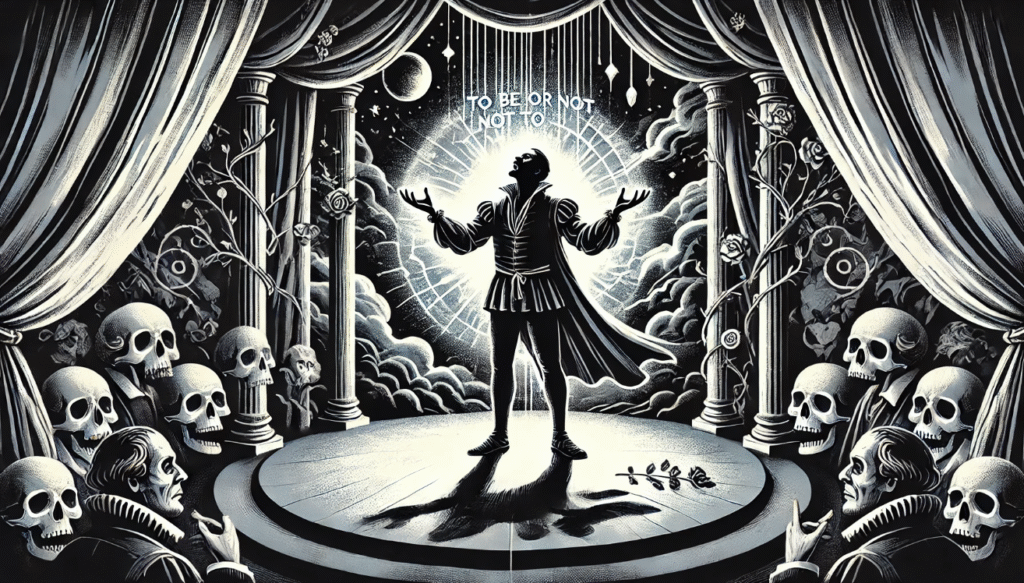
Think of Hamlet’s famous “To be or not to be” soliloquy—here, Hamlet reflects on life, death, and his own existential crisis. This is a perfect example of how a soliloquy directly addresses deep philosophical themes.
Soliloquies and Thematic Development 
So, why are soliloquies so important for highlighting thematic elements? Here’s the key: these moments of introspection often reveal the underlying themes of a narrative. Whether a character is grappling with guilt, ambition, or love, a soliloquy can express these abstract concepts in a personal, direct way. This enables readers to engage with themes on a deeper, more emotional level.
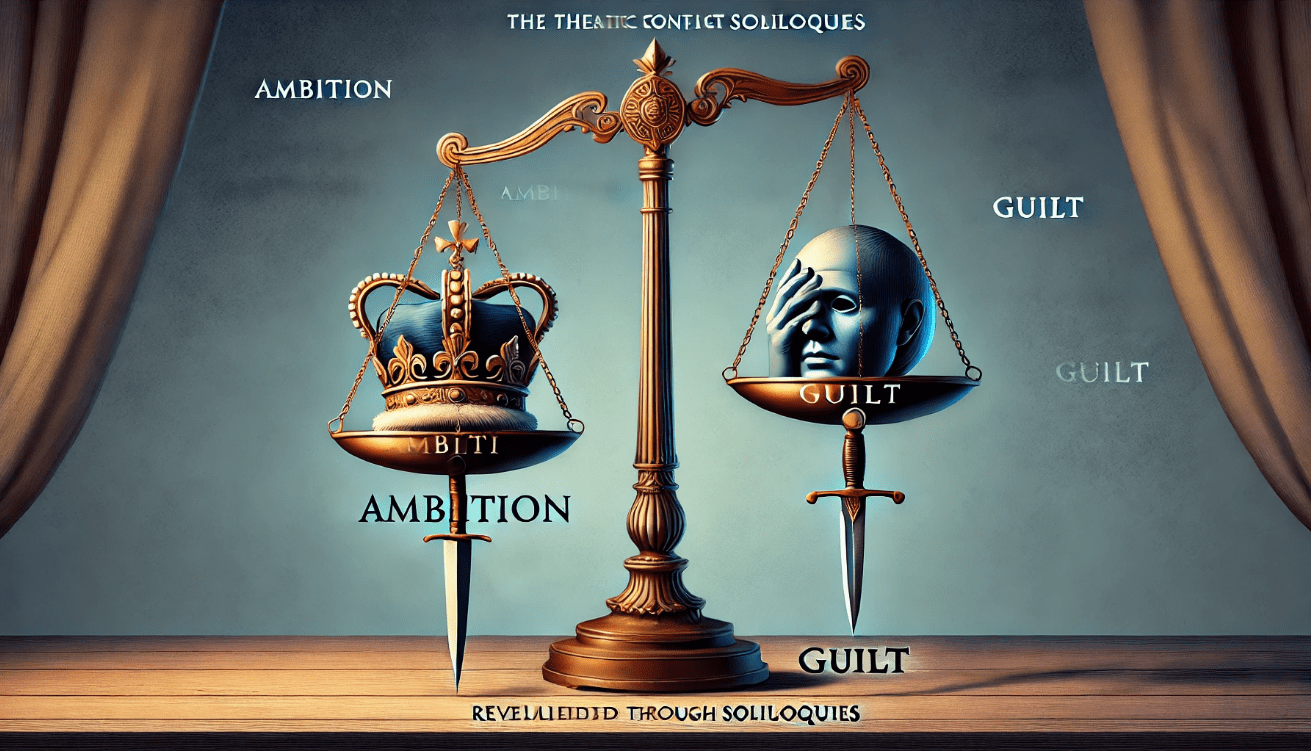
For example, in Macbeth, soliloquies are used to expose Macbeth’s inner turmoil and his growing obsession with power. Through these speeches, Shakespeare explores themes of ambition, fate, and guilt—ideas that drive the entire play’s conflict.
Why Soliloquies Matter for Readers and Writers 
For readers, soliloquies provide crucial context, allowing a clearer understanding of a character’s motivations and the larger messages of the story. By paying attention to a character’s soliloquy, readers can unlock complex themes that might not be immediately obvious through dialogue alone.
For writers, understanding how to use soliloquies effectively is key to creating more profound, layered characters. A well-crafted soliloquy doesn’t just move the plot forward—it deepens the audience’s connection to the themes and offers insight into a character’s journey.
2: How Soliloquies Highlight Thematic Elements
Soliloquies are a powerful tool for emphasizing the deeper themes of a story. They don’t just show what a character is thinking—they bring to light the core ideas that drive the entire plot. In this section, we’ll explore how soliloquies help highlight thematic elements such as inner conflict, societal issues, and moral dilemmas.
1. Revealing Inner Conflict and Emotional Struggles 
One of the most significant ways soliloquies highlight thematic elements is by exposing a character’s inner conflict. These moments allow characters to express doubts, fears, desires, and moral dilemmas that might not be shared with others. This creates a strong emotional connection with the audience, as we witness a character wrestling with their thoughts.
For instance, in Hamlet, his soliloquy “To be or not to be” explores the theme of existentialism—pondering life, death, and the meaning of suffering. His internal battle between action and inaction becomes a key thematic element that shapes the entire play.
2. Exploring Themes of Power and Ambition 
Soliloquies also serve as an excellent way to explore power dynamics and ambition, especially in tragedies or political dramas. When a character desires something—whether it’s power, revenge, or recognition—the soliloquy often acts as a confession of those ambitions, laying bare their motivations.
Take Macbeth, for example. In his soliloquy, “Is this a dagger which I see before me?”, he reveals his ambition and guilt. His soliloquy directly reflects his internal struggle with the theme of unchecked ambition, as he contemplates the murder of King Duncan to fulfill his desire for the throne. The themes of power and corruption are thus laid bare for the audience.
3. Conveying Social and Philosophical Themes 
Beyond personal conflicts, soliloquies often reflect societal and philosophical themes. They can expose a character’s view of the world, highlighting issues such as social injustice, morality, or existential questions. These themes aren’t just abstract ideas—they’re reflected in how the character perceives and interacts with the world.
In Richard III, Richard’s soliloquy “Now is the winter of our discontent” reveals his manipulative nature and his perception of power. The soliloquy touches on the theme of political corruption and sets the stage for his rise to the throne, showing how his worldview is centered on power, manipulation, and betrayal.
4. Foreshadowing Future Events 
Another crucial role of soliloquies is foreshadowing. A character’s reflections in a soliloquy often hint at what’s to come in the narrative, offering clues about the plot’s direction. By revealing a character’s hidden thoughts, soliloquies can subtly guide the audience to anticipate future events or conflicts.
For example, in Macbeth, when Macbeth reflects on his vision of the dagger, it foreshadows his future actions—murdering King Duncan. The soliloquy foreshadows the eventual descent into madness and regret, making it a pivotal thematic moment in the play.
5. Creating Dramatic Tension 
Soliloquies often heighten dramatic tension by giving the audience a closer look at the character’s emotional state. This tension can enhance the thematic elements by making the audience more invested in the outcome of the character’s internal struggle.
In King Lear, Lear’s soliloquy when he realizes his daughter’s betrayal highlights the theme of family and loyalty. The emotional turmoil in his speech creates a sense of impending doom, adding to the tragedy of the play.
6. Balancing Internal and External Themes 
A well-written soliloquy can balance the internal themes (e.g., guilt, fear, and desire) with the external themes (e.g., politics, morality, and fate). This creates a well-rounded exploration of the character’s personal world, making the broader themes of the story feel more grounded and relatable.
For example, in Macbeth, the soliloquy about the dagger not only reflects Macbeth’s ambition but also intertwines with the theme of fate vs. free will. Macbeth wonders if the dagger is leading him toward his destiny or if his actions will ultimately change his fate. This dual focus helps reinforce the complex thematic elements at play.
3:Key Soliloquy Examples and Their Thematic Significance
In literature, some soliloquies stand out as powerful reflections of key themes. These speeches don’t just help us understand characters—they shed light on central ideas that shape the entire narrative. In this section, we’ll explore some of the most iconic soliloquies in literary history and their thematic significance.
1. Hamlet – “To Be, or Not to Be”
One of the most famous soliloquies of all time, Hamlet’s “To be, or not to be” is a deep reflection on life, death, and the meaning of existence. Here, Hamlet grapples with the idea of suicide as a response to the suffering in life. His soliloquy reveals the theme of existentialism and the human struggle with suffering, fate, and choice.
Thematic Significance:
- Existential crisis: Hamlet’s inner turmoil revolves around the question of whether life is worth living in a world filled with suffering.
- Philosophical pondering: His speech introduces the audience to themes of mortality and the human condition, making it a profound reflection on life and death.
2. Macbeth – “Is This a Dagger Which I See Before Me?”
In this pivotal soliloquy, Macbeth contemplates his decision to murder King Duncan, driven by his unchecked ambition. The appearance of the dagger is a symbol of Macbeth’s internal conflict between his moral compass and his overwhelming desire for power. The speech reveals the theme of ambition, as well as the corruption that ambition brings.
Thematic Significance:
- Ambition and guilt: Macbeth’s desire to seize the throne leads him to question his own morality.
- Fate vs. free will: The soliloquy raises questions about whether his actions are the result of his own choices or a predetermined fate.
3. Richard III – “Now is the Winter of Our Discontent” 
Richard III opens his soliloquy by reflecting on the political landscape and his personal ambitions. He speaks of his dissatisfaction with his current position and reveals his intent to manipulate those around him to claim the throne. This speech highlights the theme of political manipulation and the corrupting nature of power.
Thematic Significance:
- Power and manipulation: Richard’s speech underscores his Machiavellian nature, showing how ambition can lead to manipulation and betrayal.
- The desire for control: Richard’s soliloquy reflects his obsessive quest for power, which leads to his eventual downfall.
4. Macbeth – “Out, Out, Brief Candle” 
Later in the play, after the death of his wife, Macbeth delivers a soliloquy reflecting on the futility of life. His famous line, “Out, out, brief candle,” symbolizes the fleeting nature of existence. This speech is filled with despair as Macbeth realizes the emptiness of his power and accomplishments.
Thematic Significance:
- Futility of life: Macbeth recognizes that all of his ambitions and actions have led to nothing, reinforcing the theme of the meaninglessness of life.
- Death and time: His reflection on the brevity of life echoes the larger theme of mortality that runs throughout the play.
5. The Great Gatsby – Nick’s Reflection on Gatsby’s Dreams
In The Great Gatsby, Nick Carraway reflects on Gatsby’s undying hope and dream of a better life. While not a traditional soliloquy, Nick’s introspection at the novel’s end serves a similar function, shedding light on the central themes of the American Dream and the disillusionment that often accompanies it.
Thematic Significance:
- The American Dream: Nick’s soliloquy highlights Gatsby’s relentless pursuit of an unattainable ideal, which ultimately leads to his downfall.
- Hope and disillusionment: The speech reinforces the theme that dreams, while powerful, can be destructive if they are not grounded in reality.
6. Fight Club – Tyler Durden’s Philosophical Reflections 
In Fight Club, Tyler Durden’s soliloquies often focus on modern disillusionment, consumerism, and the search for identity. His speeches challenge the status quo, encouraging rebellion against societal norms. This leads to the theme of self-destruction and the need to find meaning outside materialism.
Thematic Significance:
- Anti-consumerism: Tyler’s soliloquies highlight the theme of rejecting societal expectations and the superficiality of consumer culture.
- Identity and rebellion: His speeches reflect the quest for self-identity through destruction and chaos.
4: Common Misunderstandings and Misinterpretations of Soliloquies

While soliloquies are powerful tools for revealing a character’s inner world and highlighting thematic elements, they are often misunderstood or misinterpreted. In this section, we’ll address some of the most common misconceptions about soliloquies and help you avoid them, making sure you can fully appreciate their importance in literature.
1. Soliloquies Are Just Monologues 
One of the biggest misunderstandings is confusing soliloquies with monologues. While both are extended speeches, the key difference lies in the audience. A monologue is spoken to other characters, while a soliloquy is delivered when a character is alone, revealing their inner thoughts and feelings.
Why this matters:
Soliloquies allow the audience to hear a character’s private, unfiltered thoughts, which is crucial for understanding internal conflicts and thematic elements. A monologue, on the other hand, might convey the same ideas, but it’s meant for public consumption, meaning it can’t explore a character’s psyche in the same intimate way.
2. Soliloquies Are Always Long or Complex 
Not all soliloquies need to be long or filled with complex language. Some of the most impactful soliloquies are brief but deeply meaningful. For instance, in Macbeth, the “Out, out, brief candle” soliloquy is short, but it captures the profound theme of life’s fleeting nature.
Why this matters:
A shorter soliloquy can be just as thematically rich as a longer one. Don’t be misled into thinking that the length or complexity of the speech directly correlates to its thematic significance. Sometimes, the simplest lines carry the heaviest weight.
3. Soliloquies Only Reflect Personal Emotions 
Another misconception is that soliloquies are merely vehicles for expressing personal emotions, like sorrow or frustration. While soliloquies often reveal emotional turmoil, they also serve to explore broader themes such as morality, power, identity, and society.
Why this matters:
Soliloquies can expose deep philosophical or existential ideas, not just character emotions. For example, Hamlet’s “To be or not to be” isn’t just about his sadness or indecision; it’s a profound meditation on life, death, and human existence.
4. Soliloquies Should Be Taken Literally 
Sometimes, readers take soliloquies literally, assuming that every word spoken by the character must reflect their true feelings or intentions. However, soliloquies often use metaphor, symbolism, and irony to express complex ideas.
Why this matters:
Understanding that soliloquies may not always be literal helps you interpret the deeper, symbolic meanings behind a character’s words. Macbeth’s vision of the dagger, for instance, is not just about a real object; it’s a symbol of his desire for power and his internal conflict.
5. Soliloquies Are Only Used in Classic Works 
Many people associate soliloquies with Shakespeare and other classic works, but they are still prevalent in modern literature and media. Films and books continue to use soliloquies to convey complex ideas and emotional depth.
Why this matters:
By recognizing soliloquies in modern contexts, you can gain a deeper appreciation for how this technique has evolved. For example, in Fight Club, Tyler Durden’s philosophical reflections echo the same dramatic purpose as Shakespeare’s soliloquies, even though the context is vastly different.
6. Soliloquies Are Just Exposition 
Some readers mistakenly believe that soliloquies are merely an exposition tool—just a way to inform the audience of backstory or plot details. While they can serve this purpose, soliloquies do much more than that. They offer insight into a character’s mindset, explore conflicts, and advance themes in subtle, often complex ways.
Why this matters:
Soliloquies should not be viewed simply as plot devices but as narrative tools that deepen your understanding of characters and themes. They offer a unique space for reflection and self-exploration that dialogue alone cannot provide.
5: How to Analyze and Appreciate Soliloquies in Literature
Soliloquies are powerful tools for understanding characters and themes, but analyzing them can feel tricky at first. Don’t worry—by breaking down a soliloquy step-by-step, you can unlock its deeper meaning and better appreciate how it highlights the thematic elements of a story. In this section, we’ll give you practical tips for analyzing soliloquies effectively, so you can fully appreciate their impact.

1. Identify the Character’s Emotional State
The first step in analyzing a soliloquy is to figure out what the character is feeling. Soliloquies often reflect a character’s inner turmoil or complex emotions. Is the character angry, fearful, hopeful, or uncertain? Identifying their emotional state can help you understand the themes they are grappling with.
For example:
In Macbeth, when Macbeth speaks about the dagger, he’s clearly experiencing anxiety and obsession, indicating his growing guilt and ambition. This emotional state is key to understanding his character’s internal conflict.
2. Look for Key Thematic Phrases 
Pay attention to the specific phrases or words that stand out. Soliloquies are often packed with symbolism, metaphor, and philosophical ideas. Highlight or note down any phrases that seem to reflect larger themes, like mortality, power, revenge, or identity.
For example:
In Hamlet’s “To be or not to be” soliloquy, the phrases “to be” and “not to be” clearly center around the theme of existentialism, questioning the value of life and death.
3. Understand the Context Within the Story
A soliloquy doesn’t exist in a vacuum. Consider where the soliloquy falls in the story and how it fits into the larger narrative. Is the character contemplating a major decision? Are they at a moment of crisis? The soliloquy will often reflect their current emotional journey or reveal an important turning point in the plot.
For example:
In Macbeth, the soliloquy where Macbeth envisions the dagger occurs just before he commits murder. This moment shows his inner struggle and foreshadows the moral consequences of his actions.
4. Analyze the Structure and Language 
Examine the structure and language used in the soliloquy. Is it a short, intense burst of emotion, or a longer, more reflective piece? How does the tone shift throughout? The way the soliloquy is structured can offer insight into the character’s psychological state or their changing perspective on the themes.
For example:
In Macbeth, the vision of the dagger is vivid and full of dramatic imagery, which emphasizes the psychological pressure he’s under. The shift from doubt to determination mirrors the growing intensity of his internal conflict.
5. Consider the Symbolism 
Soliloquies are often rich in symbolism. Look for objects, images, or actions mentioned in the speech that could carry a deeper meaning. These symbols often connect to the larger themes of the work. For instance, the dagger in Macbeth symbolizes Macbeth’s ambition and his descent into moral corruption.
For example:
In Hamlet, the mention of “a sea of troubles” symbolizes the overwhelming and inescapable nature of Hamlet’s dilemma—this metaphor highlights the theme of despair.
6. Examine the Character’s Relationship to Thematic Ideas
Next, consider how the character’s soliloquy reflects their relationship to the larger themes of the work. Does the character seem to be grappling with concepts like fate, love, or revenge? Soliloquies often serve as a direct exploration of these themes, so it’s essential to tie the character’s internal thoughts to the overarching ideas in the narrative.
For example:
In Richard III, Richard’s soliloquy about the “winter of our discontent” shows his manipulative nature and his relationship to power. This reflects the themes of ambition and betrayal throughout the play.
7. Look for Foreshadowing
Soliloquies can often foreshadow future events or conflicts in the story. Pay attention to any hints or predictions made by the character, as they may signal important plot developments. This adds another layer to your understanding of the soliloquy, as it connects internal thoughts to external events.
For example:
In Macbeth, when Macbeth speaks about seeing the dagger, it not only symbolizes his ambition but also foreshadows the murder and his eventual moral collapse.
8. Reflect on the Overall Message 
Finally, after analyzing the emotional tone, themes, structure, and symbols, take a moment to think about the larger message the soliloquy communicates. What is the character ultimately trying to convey about the human experience, or the story’s central themes? This final reflection will help you appreciate the soliloquy’s importance in the narrative.
For example:
In Hamlet, Hamlet’s soliloquy on death reveals the play’s central philosophical theme of mortality, suggesting that the meaning of life is uncertain and often filled with suffering.
Final Thoughts 
By following these steps to analyze and appreciate soliloquies, you can gain a deeper understanding of the thematic elements that drive a work of literature. Soliloquies are much more than dramatic speeches—they offer crucial insights into characters and the themes that shape the entire story.
Soliloquies are much more than dramatic speeches—they are windows into a character’s soul and the thematic heart of a story. By revealing a character’s inner thoughts and struggles, soliloquies allow us to explore deep philosophical questions, emotional conflicts, and complex themes like power, identity, guilt, and existentialism. When used effectively, they enrich the narrative, giving us a clearer understanding of both the characters and the central ideas of the work.
Throughout this guide, we’ve examined how soliloquies highlight thematic elements, from revealing inner conflict and ambition to exploring societal issues and foreshadowing events. We’ve also tackled common misunderstandings and provided actionable tips for analyzing and appreciating these powerful literary tools.
Whether you’re reading Shakespeare or modern literature, understanding the role of soliloquies can significantly deepen your appreciation of a story. So next time you encounter a soliloquy, remember to look beyond the words—consider the emotional tone, the symbolism, and how it connects to the bigger themes at play.
By doing so, you’ll unlock a richer, more nuanced understanding of the text and the timeless ideas it explores. Happy reading, and may your journey into the world of soliloquies be filled with discovery and insight! 