

Ever wondered why Shakespeare’s characters feel so real, even centuries later? 🎭 The secret often lies in their inner monologues—those raw, revealing moments known as soliloquies. For students and scholars alike, thematic exploration through Shakespearean soliloquies offers a powerful lens to uncover the emotional depth, moral conflict, and philosophical insight embedded in his plays. But while these iconic speeches are frequently quoted and analyzed, many still struggle to connect them with broader literary themes in a meaningful, practical way.
1: What Are Shakespearean Soliloquies and Why Do They Matter?
Shakespearean soliloquies are some of the most powerful and revealing passages in all of literature. But what exactly are they? A soliloquy is a speech delivered by a character alone on stage, speaking their thoughts aloud. Unlike a monologue addressed to others, a soliloquy offers direct access to a character’s private emotions, fears, motivations, and inner conflicts.
Think of it as a window into the character’s soul. 🪟

From Hamlet’s “To be or not to be” to Macbeth’s tortured reflections on ambition and guilt, these speeches help us understand not just what a character is doing, but why they’re doing it. And that’s where the real magic lies—thematic exploration through Shakespearean soliloquies allows readers and performers to uncover deeper meanings about power, identity, morality, fate, and human nature.
Why They Matter (Especially for You)
For students, soliloquies are goldmines for essays, class discussions, and exam prep. They provide direct evidence of theme development and character evolution—all in a few emotionally charged lines.
For scholars and educators, soliloquies offer a focused lens for analyzing dramatic structure, language use, and historical context. 🎓 They’re also incredibly useful for drawing connections between Shakespeare’s plays and timeless themes that still resonate today.
Real-World Relevance
Understanding soliloquies helps unlock Shakespeare’s work in a way that’s practical, not just poetic. Whether you’re aiming to boost your grades, deepen your literary analysis, or teach with more impact, mastering soliloquies will elevate your approach.
Simply put, if you want to go beyond surface-level readings and truly grasp what drives Shakespeare’s characters—and how those inner struggles connect to larger themes—start with the soliloquy.
2: Common Challenges in Analyzing Soliloquies for Themes
Analyzing Shakespeare’s soliloquies can be incredibly rewarding—but also a bit overwhelming, especially when you’re trying to uncover deeper themes. 😅 Whether you’re a student writing a paper or a scholar preparing a lecture, these are some of the most common roadblocks you might face.
🧩 1. Complex Language and Archaic Vocabulary
Shakespeare didn’t write in modern English, and that can be a huge barrier. Words may look familiar but carry different meanings, or they may be completely unfamiliar. This makes it hard to understand what the character is truly saying—let alone the theme behind their words.
Quick Tip: Use a side-by-side modern translation or trusted annotations to decode tricky passages without losing the original tone.
🎭 2. Interpreting Emotion and Tone
Soliloquies are emotional by nature—but reading the emotion between the lines can be tough. Is the character angry, confused, desperate, hopeful? Misreading tone can lead to misinterpreting the theme altogether.
Action Step: Try reading the soliloquy aloud or watching it performed. Hearing the emotion helps bring out the underlying message.
🕵️ 3. Distinguishing Personal Conflict from Universal Theme
It’s easy to focus only on what the character is going through personally. But Shakespeare’s genius lies in using individual struggles to reflect bigger ideas—like fate, power, betrayal, or morality.
Solution: Ask yourself: What bigger question is this soliloquy trying to explore? That’s usually where the theme lives.
🔁 4. Overlooking Repetition and Symbolism
Students often skip over repeated words or images, thinking they’re just stylistic. But in soliloquies, repetition and symbols usually point straight to key themes.
Tip: Highlight recurring words or metaphors—they’re not random. They’re thematic breadcrumbs. 🍞
⏳ 5. Rushing the Analysis
Let’s be honest—time is tight, and it’s tempting to just skim a soliloquy and pull out a theme quickly. But without context and close reading, the analysis can fall flat or miss the mark.
Best Practice: Slow down. Even spending 10 extra minutes can make your insights deeper and more meaningful.
3: Thematic Exploration Through Soliloquies
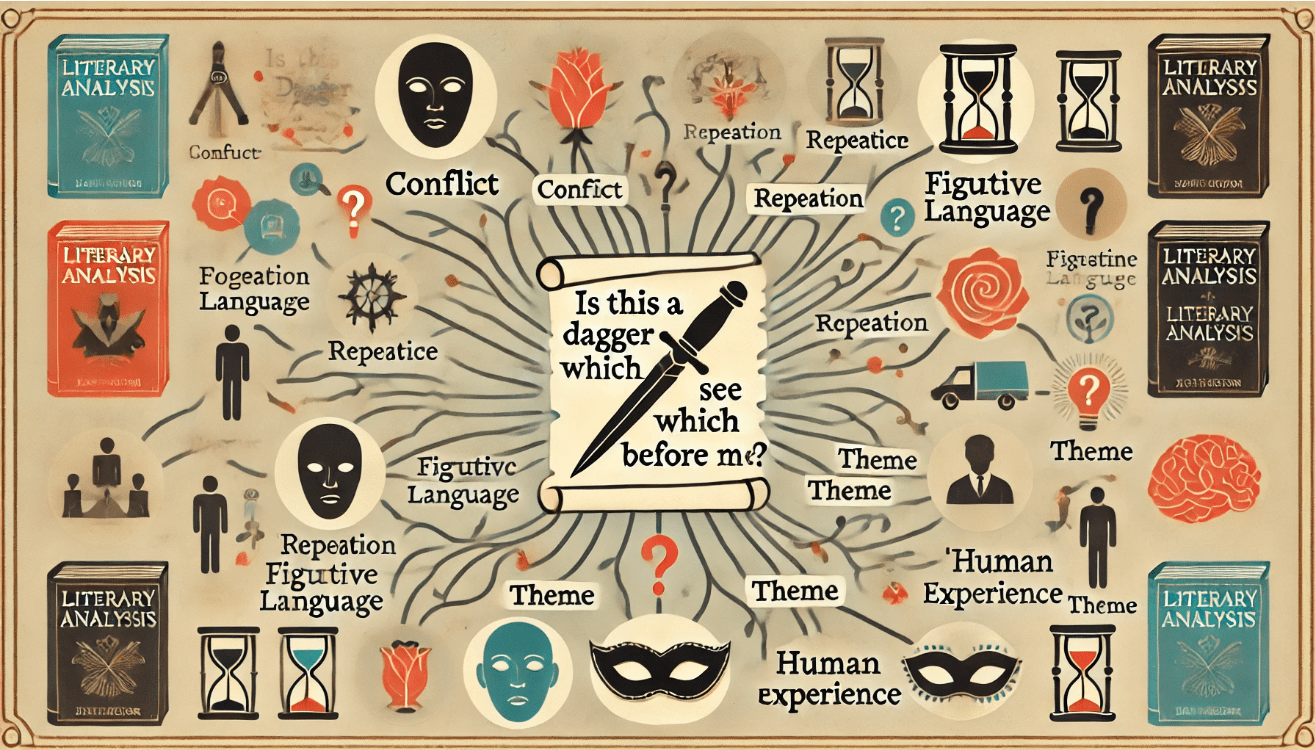
Soliloquies are more than dramatic pauses—they’re powerful tools for uncovering key themes in Shakespeare’s plays. When a character speaks their thoughts aloud, they reveal not just their personal dilemmas but the big ideas driving the story. Understanding how to explore these themes through soliloquies can transform your analysis from surface-level to truly insightful. 💡
1: Identify the Central Conflict
Start by asking: What is the character struggling with in this moment? Soliloquies often appear at turning points—when a character is torn between choices, confronting guilt, or questioning fate. These internal conflicts are your entry point into the theme.
Example: In Macbeth’s “Is this a dagger” soliloquy, the conflict isn’t just about murder—it’s about ambition, morality, and the cost of power.
2: Spot Repetition and Figurative Language
Shakespeare uses imagery, metaphors, and repeated words to hammer home a theme. Look for references to nature, time, fate, darkness, or the supernatural—these often signal deeper meanings.
Pro Tip: Circle or highlight repeated ideas. They usually point straight to the core theme Shakespeare wants you to notice. 🔁
3: Ask the “So What?” Question
Once you’ve identified the conflict and language patterns, dig deeper: What does this reveal about the human experience? Themes in soliloquies are rarely just personal—they explore universal ideas like identity, guilt, revenge, and love.
Think like this:
- What is Shakespeare saying about ambition through this soliloquy?
- How does this internal debate reflect fear or uncertainty in a broader sense?
4: Connect Theme to the Play as a Whole
A soliloquy doesn’t stand alone. Strong analysis links the soliloquy’s theme to the character’s overall arc and the play’s bigger message.
4: Top 5 Shakespearean Soliloquies for Thematic Exploration
Some of Shakespeare’s most iconic soliloquies aren’t just dramatic—they’re loaded with complex themes that still resonate today. If you’re looking to sharpen your analysis skills, these five soliloquies are perfect starting points. Each one offers a clear window into the character’s inner world and invites deep thematic exploration. 🎭✨
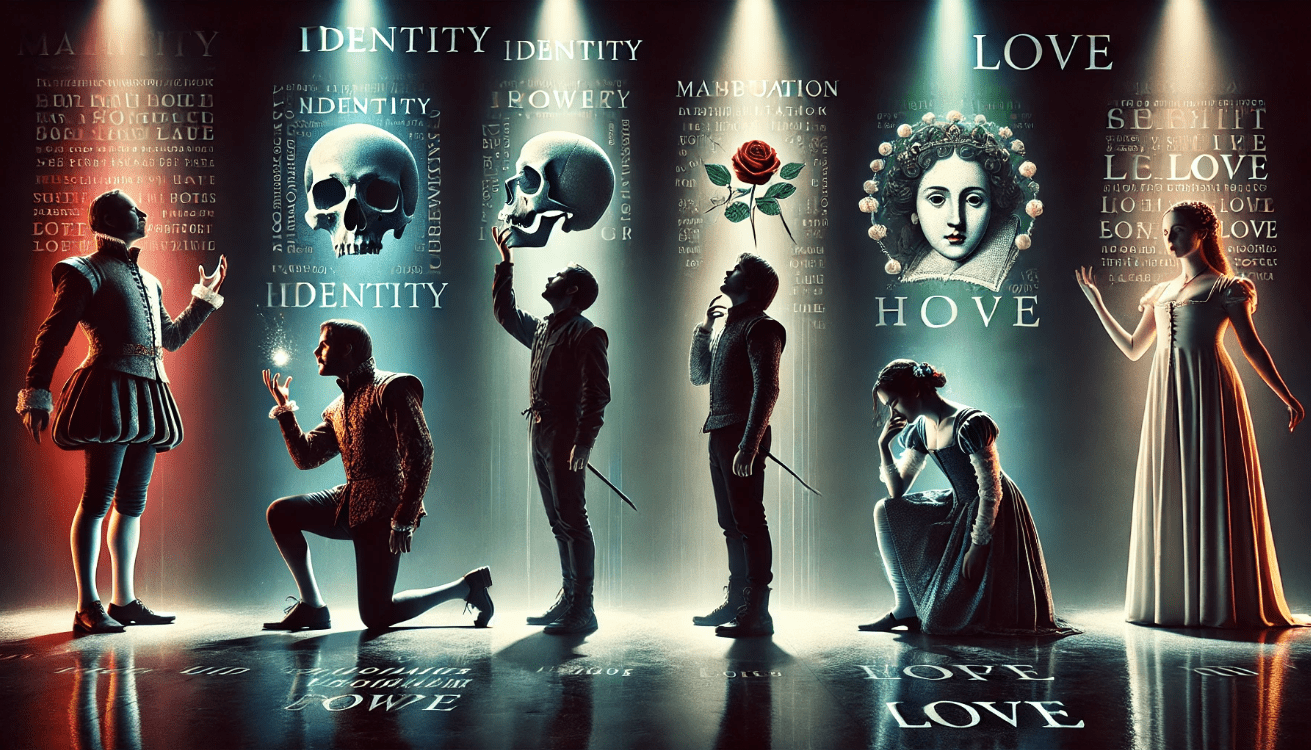
1. “To be, or not to be” – Hamlet (Act 3, Scene 1)
🧠 Theme: Mortality, Existentialism, Fear of the Unknown
Perhaps the most famous soliloquy in all of literature, this speech explores Hamlet’s inner debate about life and death. It’s ideal for analyzing themes of identity, purpose, and the paralyzing effect of overthinking.
Why it matters: This soliloquy captures the universal human fear of uncertainty and the weight of moral decision-making.
2. “Is this a dagger which I see before me” – Macbeth (Act 2, Scene 1)
⚔️ Theme: Ambition, Fate vs. Free Will, Guilt
Macbeth hallucinates a dagger leading him to murder Duncan, showing his psychological unraveling. The soliloquy blends supernatural imagery with personal ambition, making it a goldmine for thematic analysis.
Pro Tip: Look closely at Macbeth’s shifting tone—it’s key to understanding how guilt and desire collide.
3. “Now is the winter of our discontent” – Richard III (Act 1, Scene 1)
🎭 Theme: Power, Manipulation, Identity
Richard reveals his plan to manipulate those around him to seize the throne. This soliloquy is perfect for exploring themes of political ambition, deception, and the performance of identity.
Bonus Insight: The contrast between Richard’s outer persona and inner thoughts sets the stage for a powerful discussion on duplicity.
4. “O, she doth teach the torches to burn bright” – Romeo and Juliet (Act 1, Scene 5)
❤️ Theme: Love at First Sight, Idealism, Desire
Romeo’s poetic reflection when he first sees Juliet is filled with romantic imagery and youthful passion. While shorter than others, it reveals key themes about impulsive love and idealization.
Try this: Analyze how Shakespeare uses light/dark imagery to explore the theme of love versus reality.
5. “What light through yonder window breaks?” – Romeo and Juliet (Act 2, Scene 2)
🌙 Theme: Love, Hope, Risk
In the famous balcony scene, Romeo expresses his awe and desire for Juliet. This soliloquy reflects on the intensity of love and the risks that come with it, set against societal and family conflict.
Why it’s useful: It’s a great example of how Shakespeare contrasts personal emotion with external pressures—a recurring theme in many plays.
5: Practical Tools and Resources for Thematic Analysis
Mastering thematic exploration through Shakespearean soliloquies becomes much easier when you have the right tools by your side. Whether you’re a student writing essays or a scholar preparing lectures, the resources below will help you analyze soliloquies with more clarity, confidence, and depth. 💼✨
📚 1. Annotated Editions of Shakespeare’s Plays
Choose versions that include side-by-side modern translations, footnotes, and expert commentary. These editions explain unfamiliar language, highlight literary devices, and point out key themes.
Recommended:
- No Fear Shakespeare (SparkNotes)
- Folger Shakespeare Library Editions
- Arden Shakespeare Series (for deeper academic analysis)
🖊️ 2. Thematic Graphic Organizers
Organizers like T-charts, theme webs, and character-to-theme maps can help you visually connect quotes, emotions, and ideas.
Use these for:
- Essay planning
- Class presentations
- Breaking down complex soliloquies into manageable parts
🔍 3. Digital Tools for Close Reading
Digital platforms and AI-powered tools make close reading easier and faster. These can highlight patterns, suggest meanings, and support theme identification.
Top picks:
- LitCharts: Theme breakdowns and detailed scene-by-scene analysis
- Shmoop: Student-friendly summaries with theme explanations
- Quillbot or ChatGPT: Use for paraphrasing or guided interpretation (be sure to think critically and compare with original text)
🎓 4. Online Video Performances
Watching live performances can bring a soliloquy’s emotion and theme to life in a way reading alone can’t. Seeing tone, pacing, and body language adds another layer to your analysis.
Try these sources:
- YouTube (Royal Shakespeare Company, Globe Theatre clips)
- National Theatre at Home
- Digital Theatre+ (great for educators and schools)
📑 5. Theme Tracking Sheets
Create or download a simple spreadsheet or tracker to log key soliloquies, quotes, and their related themes across a play.
Benefits:
- Helps you spot recurring themes
- Makes writing essays or revising for exams much easier
- Encourages critical comparison between characters and scenes
6: Applying Soliloquy Analysis to Academic and Real-Life Scenarios

So, you’ve learned how to break down a soliloquy and uncover deep themes—now what? 🤔 The next step is learning how to apply that analysis in real-world and academic contexts. Whether you’re writing essays, leading classroom discussions, or building critical thinking skills, thematic exploration through Shakespearean soliloquies can serve you well beyond the stage. 🎓📖
📝 For Essays and Exams
Soliloquy analysis is perfect for supporting literary arguments. Because these speeches reveal a character’s inner conflict, they’re packed with quotable material for theme-based essays.
How to apply it:
- Use a soliloquy as your central evidence when answering theme-related questions.
- Break the soliloquy into 2–3 key lines and explain how each one supports your thesis.
- Link it back to the character’s arc and the play’s broader message.
Example Prompt: “How does Shakespeare explore the theme of ambition in Macbeth?”
→ Use “Is this a dagger…” as your anchor quote.
🧑🏫 For Class Discussions and Presentations
Soliloquies give you rich material to contribute thoughtful insights. Teachers love when students can move beyond plot and speak to why a character’s words matter.
Presentation Tip: Highlight one soliloquy, explain the emotion behind it, and connect it to a universal theme (e.g., fear of failure, search for identity). 🎤
🧠 For Building Critical Thinking
Analyzing soliloquies sharpens your ability to infer meaning, recognize symbolism, and think beyond the text. These are transferable skills that apply in everything from literature to life.
Real-life connection: Ever had to make a difficult decision or questioned your own motives? Soliloquy analysis teaches you to reflect deeply—just like Shakespeare’s characters.
💼 For Job Interviews and Communication
Yes, really! Being able to analyze tone, emotion, and intent in a soliloquy builds emotional intelligence and verbal reasoning—skills employers value.
Bonus Insight: Mention your experience analyzing literature in interviews to highlight your communication and critical thinking skills. It’s more relevant than you might think! 😉
Bringing It All Together 🎭📚
Mastering thematic exploration through Shakespearean soliloquies isn’t just about understanding a few famous speeches—it’s about unlocking a deeper connection to literature, language, and human emotion. Whether you’re a student aiming for top marks or a scholar seeking richer insights, soliloquies give you direct access to the emotional and thematic core of Shakespeare’s plays.