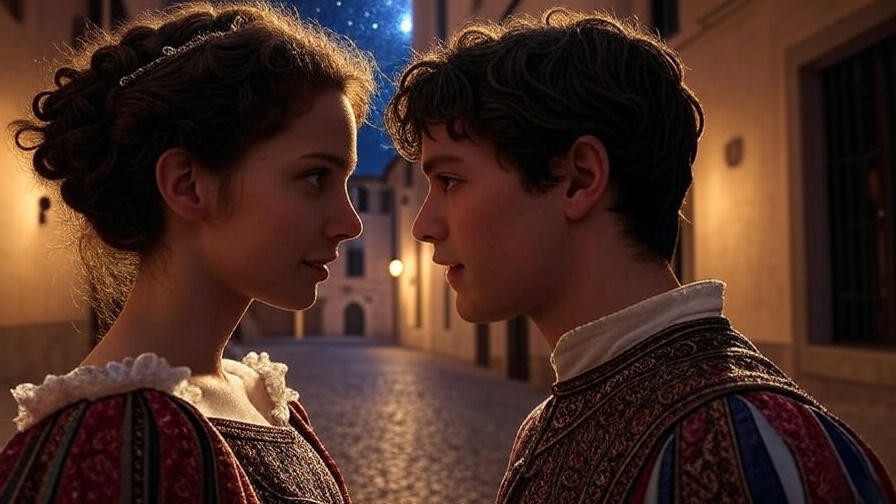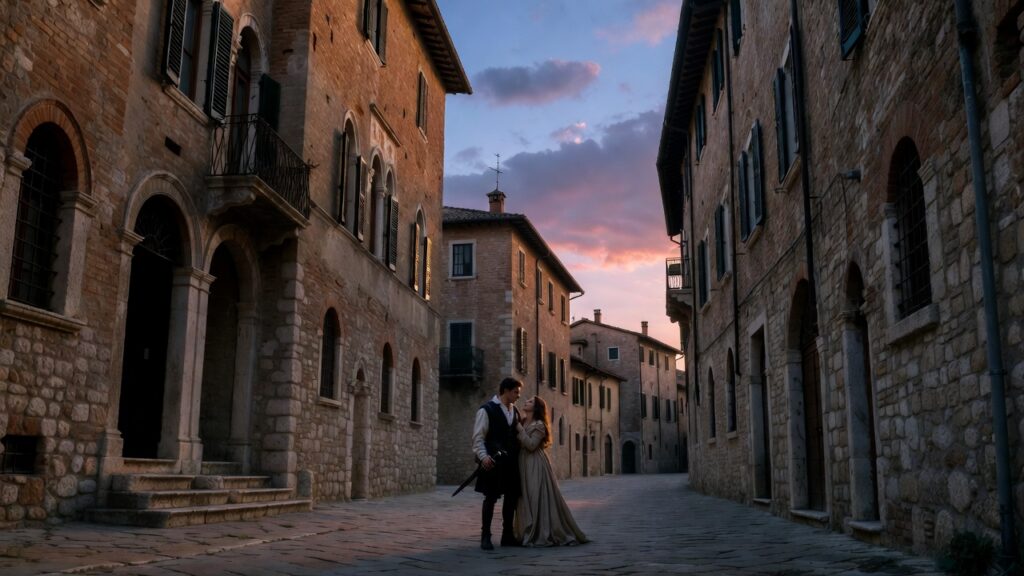
In William Shakespeare’s Romeo and Juliet, the immortal line from the Chorus—”A pair of star-cross’d lovers take their life”—sets the stage for one of literature’s most heartbreaking tales. Yet what often shocks first-time readers, students preparing for exams, and even longtime admirers is how astonishingly compressed the entire tragedy is: the whirlwind romance, secret marriage, violent clashes, desperate schemes, and devastating deaths all unfold in just 4 to 5 days (Sunday through Thursday dawn, or into early Friday in some readings). This timeline for Romeo and Juliet reveals the play’s relentless pace, transforming what could have been a drawn-out romance into a pulse-pounding tragedy driven by haste, youthful passion, and cruel fate.
Many readers assume the lovers know each other for weeks or months, given the depth of their devotion. In reality, Romeo and Juliet meet, fall in love, marry, consummate their union, face banishment, concoct a risky plan, and die—all within less than a week. This rapid timeline for Romeo and Juliet heightens the sense of inevitability and underscores Shakespeare’s genius in amplifying urgency. As students tackling essays, teachers designing lessons, or literature enthusiasts seeking deeper insight often struggle with tracking the chronology amid the emotional intensity, this comprehensive day-by-day breakdown solves that problem. Drawing on textual cues, scholarly chronologies (such as those from the Shakespeare Navigators at Eastern Washington University), and comparisons to Shakespeare’s sources, we’ll map every major event, include key quotes, and explore why the accelerated timeframe makes the tragedy more poignant.
Why the Timeline Matters in Romeo and Juliet
Shakespeare’s decision to condense the action was deliberate and transformative. In his primary source, Arthur Brooke’s 1562 poem The Tragical Historye of Romeus and Juliet, the events stretch over nine months, allowing time for courtship, reflection, and moralizing. Shakespeare slashes this to mere days, creating a sense of breathless momentum that mirrors the lovers’ impulsive nature and the play’s central theme: how “violent delights have violent ends” (Friar Laurence, Act 2, Scene 6).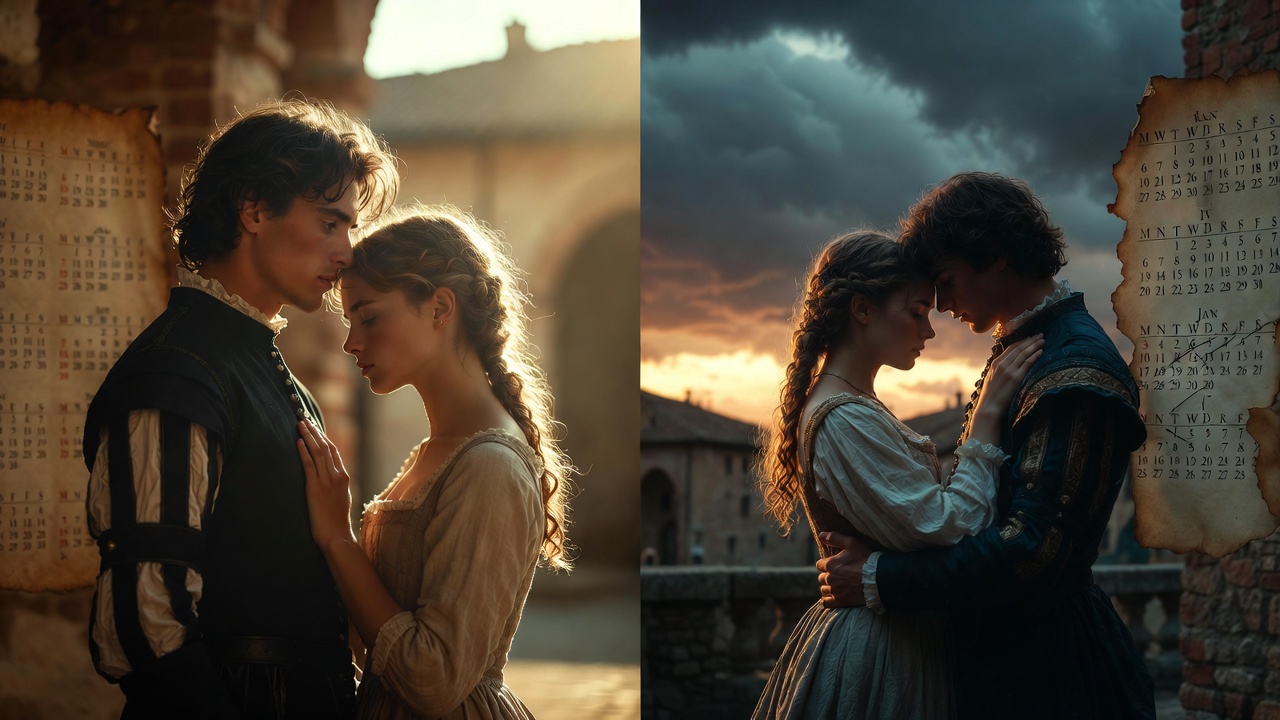
The Compression of Time: From Months to Days
Brooke’s narrative gives Romeus and Juliet weeks to develop their relationship, with extended periods of separation and planning. Shakespeare compresses everything into a feverish sequence, making every decision feel irrevocable. This shift emphasizes youthful recklessness—Romeo shifts from lovesick pining for Rosaline to instant devotion for Juliet—and the destructive power of haste. As scholar analysis often notes, the play becomes a “tragedy of time,” where mistimed messages, delayed arrivals, and rushed judgments seal the doom.
Key Evidence from the Text
Textual clues firmly establish the short span:
- In Act 1, Scene 3, the Nurse and Lady Capulet discuss Juliet’s age: “Come Lammas-eve at night shall she be fourteen” (a fortnight and odd days from Lammas-tide, around August 1). This places the action in mid-to-late July.
- Time references abound: “good morrow” greetings, “tonight” plans, “tomorrow” promises, and “this afternoon” meetings.
- The play opens on a Sunday morning brawl and ends at dawn after Juliet’s suicide, with explicit cues like the delayed Friar’s letter due to plague quarantine (Act 5, Scene 2).
Scholars generally agree on 4–5 days: Sunday (Day 1) to Thursday/Friday dawn (Day 5), with some interpreting the final events as spilling into Friday morning.
Thematic Impact: Haste, Fate, and Impulsivity
The compressed timeline for Romeo and Juliet intensifies every theme. Romeo’s shift from melancholy to ecstasy happens in hours, Juliet’s defiance escalates overnight, and Friar Laurence’s “too swift arrives as tardy as too slow” warning (Act 2, Scene 6) proves prophetic. Fate intervenes through chance (the servant’s invitation, the plague), but human impulsivity—duels, secret vows, poison—drives the catastrophe. This structure makes the play feel like “the worst week ever,” a phrase modern readers often use to capture its tragic velocity.
The Complete Day-by-Day Timeline for Romeo and Juliet
The action unfolds in Verona during mid-July, roughly late July (around July 31 to August 4 in some dated interpretations tied to Lammas). Here’s a precise, scene-referenced breakdown with major quotes and analysis.
Day 1 – Sunday: Sparks Ignite Amid Feud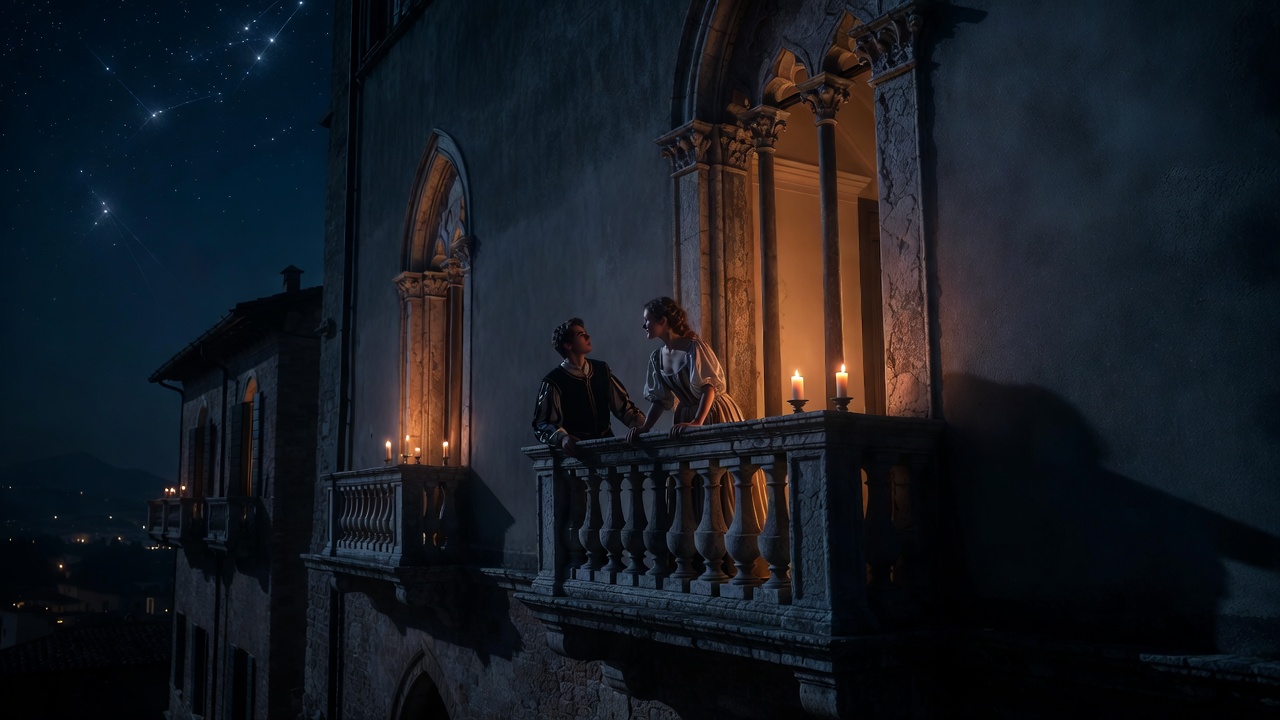
- Morning: A street brawl erupts between Montague and Capulet servants (Act 1, Scene 1). Prince Escalus intervenes, threatening death for further violence: “If ever you disturb our streets again, / Your lives shall pay the forfeit of the peace.”
- Romeo, lovesick over Rosaline (who rejects him), is counseled by Benvolio.
- Afternoon/Evening: Capulet plans a masked ball and invites guests (including Montagues via a servant who can’t read). Romeo, persuaded by friends, attends in disguise hoping to see Rosaline.
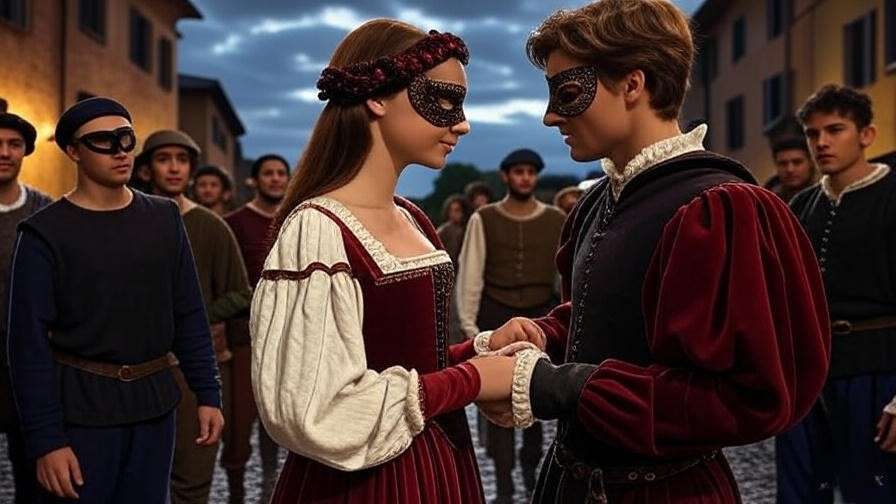
- Evening: At the Capulet ball (Act 1, Scene 5), Romeo spots Juliet: “Did my heart love till now? Forswear it, sight! / For I ne’er saw true beauty till this night.” They share a sonnet-like exchange and kiss. Tybalt recognizes Romeo but is restrained by Capulet.
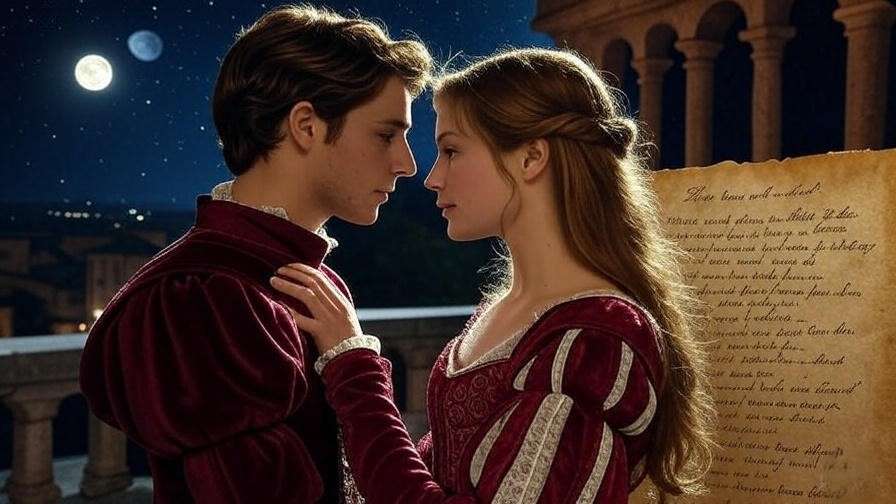
- Late Night: The famous balcony scene (Act 2, Scene 2). Romeo overhears Juliet’s confession (“O Romeo, Romeo! wherefore art thou Romeo?”), they declare love, and agree to marry: “If that thy bent of love be honourable, / Thy purpose marriage, send me word tomorrow.”
Analysis: In one day, Romeo forgets Rosaline entirely, and the lovers pledge eternal devotion—setting the impulsive tone.
Day 2 – Monday: Secret Marriage and Sudden Violence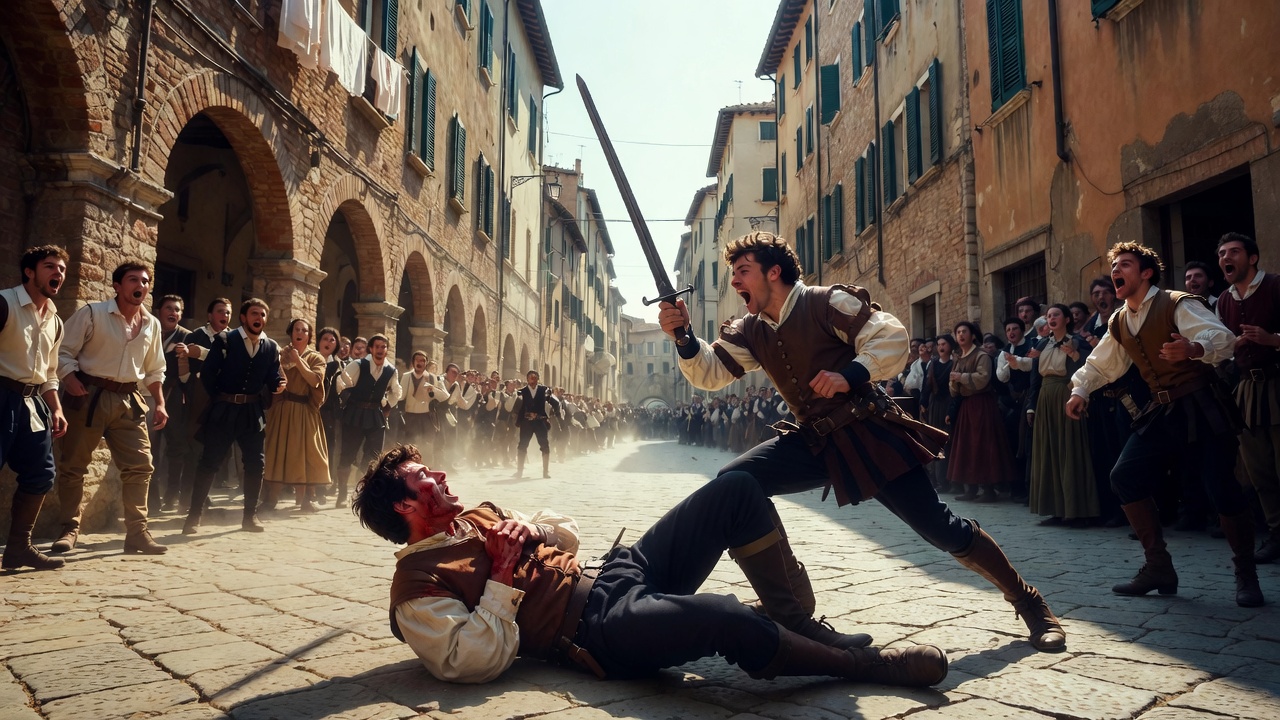
- Morning: Romeo visits Friar Laurence (Act 2, Scene 3), who marvels at the sudden change but agrees to marry them to end the feud: “For doting, not for loving, pupil mine.”
- Midday: Mercutio and Benvolio encounter Tybalt (Act 3, Scene 1). Romeo arrives; Tybalt challenges him, but Romeo refuses (due to secret kinship via Juliet). Mercutio fights Tybalt instead, is slain. Enraged, Romeo kills Tybalt and flees. Prince banishes Romeo: “Immediately we do exile him hence.”
- Afternoon: Romeo and Juliet marry secretly at Friar Laurence’s cell (Act 2, Scene 6).
- Evening/Night: The lovers consummate their marriage (implied in Act 3, Scene 2). Juliet awaits Romeo eagerly, but the Nurse brings news of Tybalt’s death and Romeo’s banishment. Juliet grieves but affirms her love for Romeo.
Day 3 – Tuesday: Farewell, Betrayal, and Desperate Plan
- Dawn / Early Morning: Romeo and Juliet share their final moments together in her chamber (Act 3, Scene 5). The famous “lark or nightingale” exchange captures their desperate wish to prolong the night: Juliet pleads, “It was the nightingale, and not the lark,” but Romeo must flee before daybreak to avoid capture. He departs for Mantua, promising to return.
- Morning: Lady Capulet enters Juliet’s room and announces that Juliet will marry Count Paris on Thursday (Act 3, Scene 5 continued). Juliet refuses outright: “I will not marry yet; and when I do, I swear / It shall be Romeo—whom you know I hate— / Rather than Paris.”
- Capulet explodes in rage, calling her a “green-sickness carrion,” “tetchy baggage,” and “hilding.” He threatens to disown her and force the marriage. Lady Capulet sides with her husband.
- The Nurse, previously supportive, now advises Juliet to marry Paris: “Romeo’s a dishclout to him… I think it best you married with the county.” This betrayal devastates Juliet, who feels utterly alone.
- Afternoon: Juliet rushes to Friar Laurence’s cell in despair (Act 4, Scene 1). She threatens suicide rather than marry Paris. The Friar devises a desperate plan: a sleeping potion that will make Juliet appear dead for 42 hours. She will be placed in the Capulet tomb; Friar Laurence will send a letter to Romeo in Mantua instructing him to rescue her when she awakens.
Analysis: In less than 24 hours after their wedding night, the lovers are separated, Juliet is betrayed by her closest confidante, and a high-risk scheme is born—one that hinges entirely on perfect timing and reliable communication.
Day 4 – Wednesday: The Potion and Miscommunication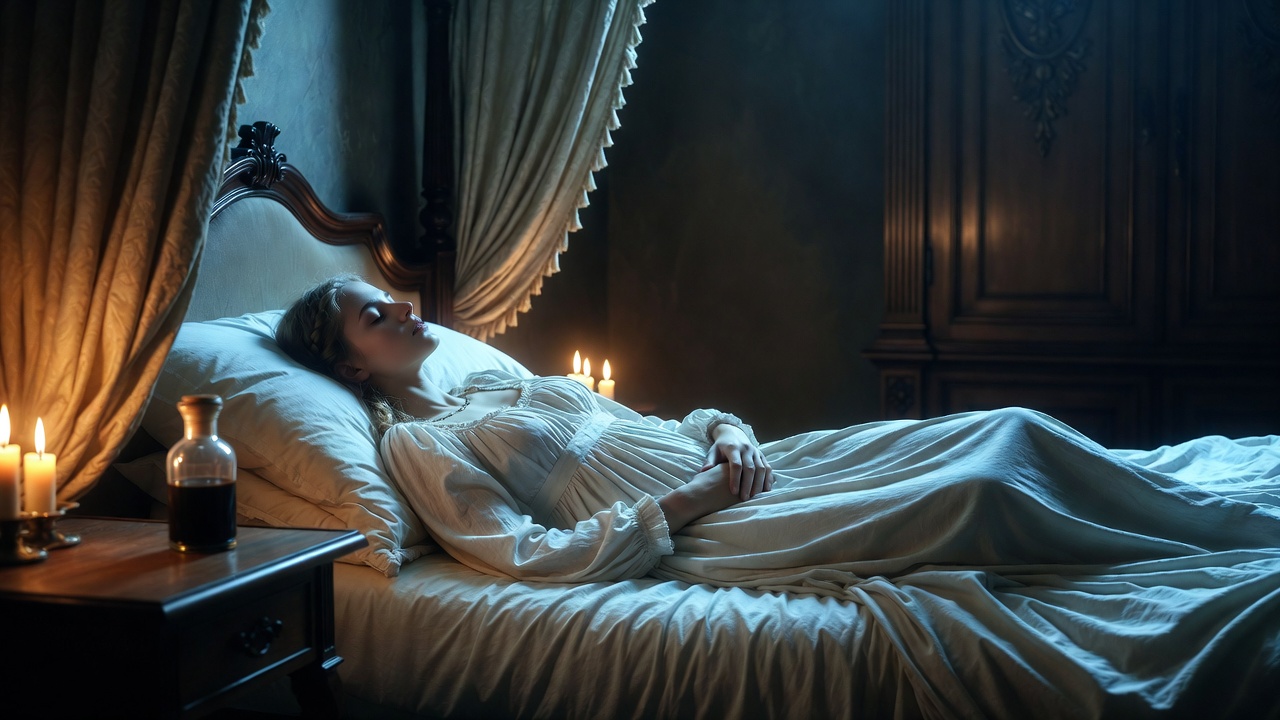
- Morning / Daytime: Juliet returns home and pretends to accept the marriage to Paris to placate her father (Act 4, Scene 2). Capulet, overjoyed, advances the wedding to Wednesday night (shifting the timeline even further and increasing pressure).
- Evening / Night: Alone in her chamber, Juliet delivers her terrifying soliloquy, confronting fears of madness, suffocation, and the charnel smell of the tomb (Act 4, Scene 3): “What if this mixture do not work at all? … What if I wake before Romeo comes?” She drinks the potion and falls into a death-like sleep.
- Servants and the Nurse discover her “corpse” the next morning (Thursday), leading to widespread mourning (Act 4, Scene 5).
- Friar Laurence sends a Franciscan brother, Friar John, with the crucial letter to Romeo explaining the plan. Tragically, Friar John is quarantined in a plague-stricken house and cannot deliver the message (Act 5, Scene 2): “I could not send it… Here it is again.”
Analysis: The potion works perfectly—but the letter fails. This single point of failure, caused by an uncontrollable external event (the plague), underscores the play’s relentless theme of fate overriding human intention.
Day 5 – Thursday Night / Friday Dawn: Tragic Climax and Resolution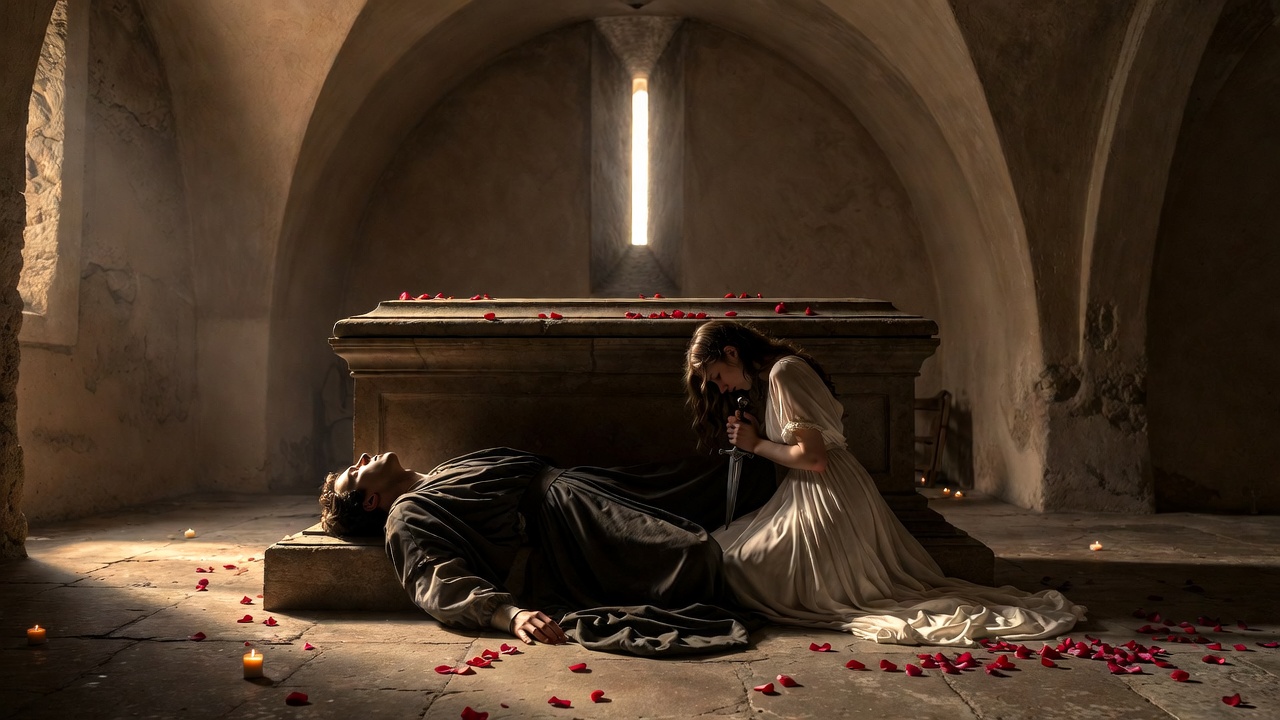
- Thursday Evening / Night: Paris arrives at the Capulet tomb to mourn Juliet, accompanied by a page (Act 5, Scene 3). Romeo, having heard only of Juliet’s death (via Balthasar), purchases poison from an apothecary in Mantua and rides to Verona.
- Romeo confronts Paris at the tomb entrance. Paris challenges him; Romeo kills Paris in the ensuing fight.
- Romeo enters the tomb, finds Juliet “dead,” delivers a final speech of grief and love (“O true apothecary, / Thy drugs are quick”), and drinks the poison, dying beside her.
- Friday Dawn: Friar Laurence arrives to find the scene of carnage. Juliet awakens moments later. Seeing Romeo dead, she kisses him, then stabs herself with his dagger: “O happy dagger, / This is thy sheath.”
- The watch arrives, followed by the Prince, Montagues, and Capulets. Friar Laurence explains the entire sequence of events. The grieving families finally reconcile, and the Prince delivers the closing judgment: “For never was a story of more woe / Than this of Juliet and her Romeo.”
Analysis: The final day compresses multiple deaths, revelations, and reconciliations into hours. The sunrise that Romeo feared now illuminates the full cost of haste and misunderstanding.
Visualizing the Timeline: Key Events at a Glance
Here is a concise summary table for quick reference:
| Day | Approximate Time | Key Events | Act / Scene(s) | Major Outcome / Turning Point |
|---|---|---|---|---|
| Day 1 | Sunday morning–night | Street brawl → Ball → Romeo meets Juliet → Balcony scene | 1.1–2.2 | Instant love and secret marriage vow |
| Day 2 | Monday morning–night | Friar agrees to marry → Tybalt kills Mercutio → Romeo kills Tybalt → Banishment → Secret wedding & consummation | 2.3–3.2 | Joy turns to violence and exile |
| Day 3 | Tuesday dawn–afternoon | Lovers part → Juliet refuses Paris → Nurse betrays → Potion plan devised | 3.5–4.1 | Separation and desperate scheme |
| Day 4 | Wednesday evening | Juliet takes potion → Appears dead → Letter to Romeo delayed by plague | 4.2–5.2 | Perfect plan undermined by miscommunication |
| Day 5 | Thursday night–Friday dawn | Romeo arrives, kills Paris, poisons himself → Juliet awakens, suicides → Reconciliation | 5.3 | Total tragedy and belated peace |
Common Misconceptions and Expert Insights
Despite the play’s fame, the timeline for Romeo and Juliet remains one of the most frequently misunderstood elements. Here are the most common misconceptions, corrected with textual and scholarly evidence, along with deeper expert-level observations.
Misconception 1: The lovers know each other for weeks or months. Many casual readers and even some film adaptations give the impression of a longer courtship. In truth, Romeo and Juliet meet for the first time on Sunday evening at the Capulet ball and are dead by Friday dawn—less than five full days. The emotional intensity creates an illusion of extended time, but Shakespeare’s text is unambiguous.
Misconception 2: The play takes place over a full week or longer. Some summaries stretch events to seven days by miscounting the final sequence. Scholarly chronologies (e.g., the detailed day-by-day mapping in the Shakespeare Navigators project at Eastern Washington University and analyses by scholars like Gary Taylor and Stanley Wells) consistently place the action between Sunday morning and Friday sunrise, totaling four to five calendar days depending on how one counts the overlapping night-to-dawn transitions.
Misconception 3: The short timeline is accidental or a flaw. Far from a mistake, the compression is Shakespeare’s masterstroke. By accelerating the plot far beyond his source material, he turns a moralistic Elizabethan poem into a visceral tragedy of youth, passion, and missed chances. As literary critic Northrop Frye observed, the play becomes “a study in the pathology of time”—every delay or haste is fatal.
Expert Insight: The Role of Fate vs. Human Agency While fate (the “star-cross’d” element) is invoked in the Prologue, the compressed timeline reveals how much of the tragedy stems from human choices made under pressure: Romeo’s impulsive killing of Tybalt, Juliet’s refusal to wait, the Friar’s risky potion scheme, the apothecary’s illegal sale of poison. The plague quarantine that blocks Friar John is the only purely external catastrophe—everything else could have been avoided with a single pause or clearer communication.
Expert Insight: Performance Implications In modern stagings and films (Baz Luhrmann’s 1996 adaptation being a prime example), directors often preserve or even emphasize the breakneck pace. Actors report that performing the roles demands extraordinary emotional stamina precisely because the characters experience years’ worth of love, grief, and despair in mere days.
How Understanding the Timeline Enhances Your Reading or Watching
Grasping the exact chronology transforms how you experience Romeo and Juliet:
- For students writing essays or preparing for exams: Use the timeline to support arguments about themes of haste and impetuosity. Phrases like “violent delights have violent ends,” “these violent delights have violent ends,” and Friar Laurence’s warnings about “too swift arrives as tardy as too slow” gain greater weight when tied to the actual 4–5 day span.
- For teachers and educators: Create classroom activities such as timeline mapping exercises, “what if” discussions (e.g., “What if the letter had arrived on time?”), or comparative analyses with longer source texts.
- For general readers and theatergoers: The rapid pace explains why the lovers feel so believable in their desperation. Their love is not mature and tested—it is incandescent, all-consuming, and tragically brief, mirroring the intensity of first love.
- Connections to adaptations: Nearly every major film version (Franco Zeffirelli 1968, Baz Luhrmann 1996, Carlo Carlei 2013) retains the compressed timeframe, using quick cuts, music, and visual rhythm to convey the same urgency Shakespeare built into the language.
Frequently Asked Questions (FAQ)
How many days does Romeo and Juliet take place over? The entire action spans 4 to 5 days, from Sunday morning (the opening brawl) to Friday dawn (the final deaths and reconciliation). Most scholars settle on five calendar days when counting partial days.
What day do Romeo and Juliet first meet? They meet on Sunday evening at the Capulet masked ball (Act 1, Scene 5).
Why did Shakespeare make the timeline so short? To intensify the tragedy. By compressing months of action (from his source, Brooke’s poem) into days, Shakespeare heightens urgency, underscores youthful impulsivity, and makes every decision feel irreversible.
Is the timeline exactly 4 days or 5 days? It depends on interpretation: Sunday to Thursday night is four full days plus nights; including Friday dawn brings it to five. The key point is its extreme brevity compared to earlier versions.
How does the plague affect the timeline? The plague quarantine prevents Friar John from delivering the explanatory letter to Romeo (Act 5, Scene 2). This single external event turns a workable plan into catastrophe.
Did Romeo and Juliet consummate their marriage? Yes—textual evidence in Act 3, Scene 2 (Juliet’s anticipation) and Act 3, Scene 5 (their dawn parting after a night together) strongly implies they spent their wedding night together.
The timeline for Romeo and Juliet is not a mere plot detail—it is the engine of the tragedy. In less than five days, two young people fall deeply in love, marry in secret, face separation and betrayal, risk everything on a dangerous ruse, and lose their lives in a cascade of mistimed messages and rash actions. Shakespeare’s radical compression turns a conventional love-and-death story into an unforgettable portrait of how passion, when untempered by patience, can destroy everything it touches.
Re-reading or re-watching the play with this day-by-day clarity in mind reveals new layers: the irony of every “tomorrow” promise, the terror behind Juliet’s potion speech, the unbearable weight of Romeo’s final “Thus with a kiss I die.” For never was a story of more woe than this of Juliet and her Romeo—and never has time itself played so cruel and central a role.
If you’re studying Shakespeare, teaching his works, or simply rediscovering this masterpiece, let this detailed timeline guide deepen your appreciation of one of literature’s greatest tragedies.