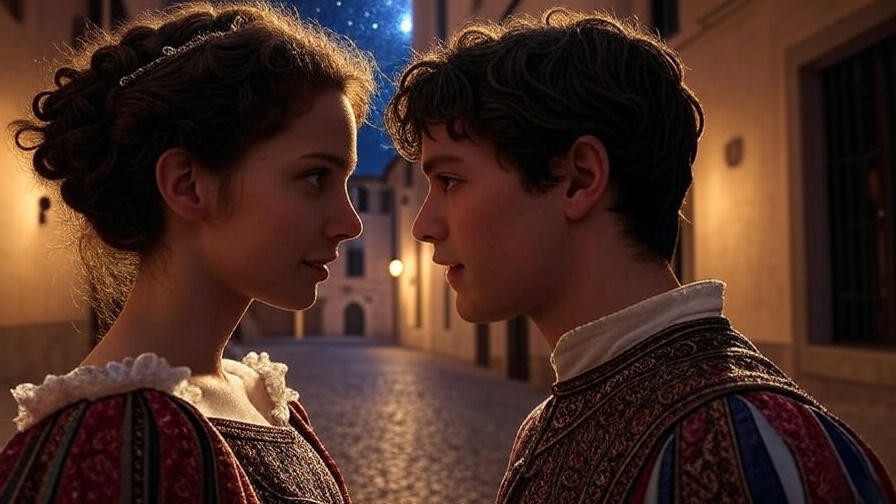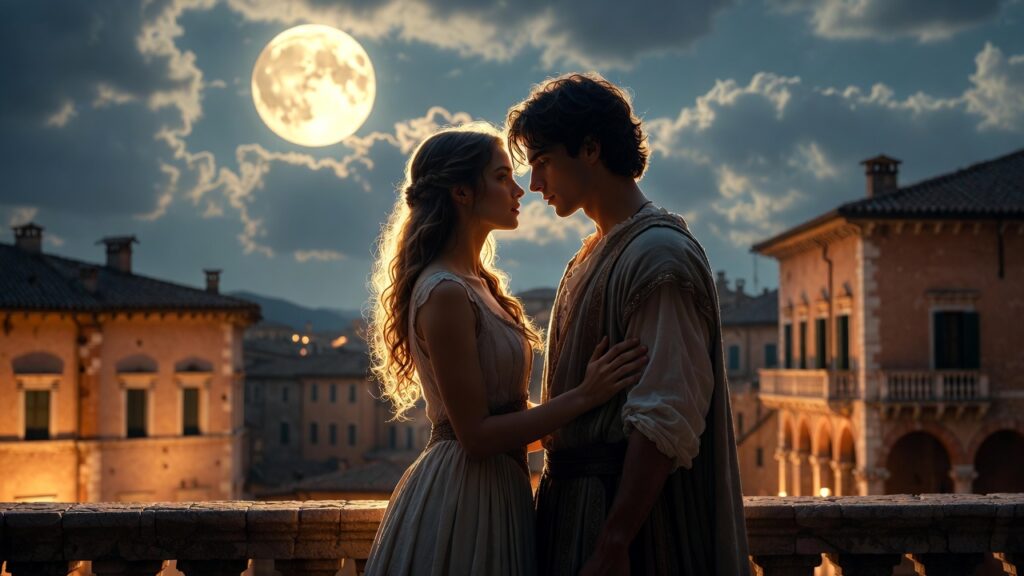
Few literary works capture the intensity of young love quite like William Shakespeare’s Romeo and Juliet. What makes this tragedy so devastating—and so timeless—is its breathtaking pace: the entire story of these star-crossed lovers unfolds in just five days. From the moment Romeo and Juliet first lay eyes on each other to their heartbreaking deaths, events cascade with relentless speed, mirroring the impulsiveness of youth and the cruel hand of fate.
The timeline of Romeo and Juliet is one of the play’s most powerful dramatic devices. Shakespeare deliberately compresses what could have been months (as in his source, Arthur Brooke’s 1562 poem The Tragicall Historye of Romeus and Juliet, which spans nine months) into a whirlwind of passion, violence, and misunderstanding. This rapid progression heightens the emotional stakes, making every decision feel urgent and irreversible.
In this comprehensive guide, we provide the complete day-by-day timeline of Romeo and Juliet, complete with key events, exact textual time references, important quotes, character motivations, and thematic insights. Whether you’re a student preparing for exams, a teacher seeking classroom resources, or a Shakespeare enthusiast wanting deeper appreciation, this detailed breakdown solves the common problem of losing track of the plot’s breakneck speed. By mapping the action hour by hour where possible, you’ll see exactly how haste, miscommunication, and fate seal the lovers’ doom.
Why the Timeline Matters: Shakespeare’s Mastery of Compressed Time
Shakespeare’s choice to confine the action to five days (Sunday through Thursday) is no accident. It serves multiple purposes, enhancing both the tragedy’s emotional impact and its thematic depth.
The Historical Context of the 5-Day Structure
In Arthur Brooke’s poem, the lovers’ romance develops gradually over months, allowing time for courtship, reflection, and planning. Shakespeare, however, accelerates everything. Scholars widely agree that the play spans exactly five days, supported by clear textual clues:
- The Nurse mentions Juliet’s upcoming birthday on “Lammas-eve” (July 31), placing the story in mid-July.
- Time markers like “new struck nine” (Sunday morning), “the prick of noon” (Monday), and references to “three days hence” (Thursday wedding) anchor the chronology.
- Most experts, including those from the Royal Shakespeare Company and Eastern Washington University’s Shakespeare Navigator, confirm the Sunday-to-Thursday span, with some minor debate over whether the final events stretch into early Friday morning.
This compression transforms a romantic tale into a tragedy of inevitability—events move too quickly for reason to intervene.
Thematic Significance of Haste
The accelerated timeline underscores central themes:
- Youthful impulsiveness — Romeo and Juliet fall in love instantly, marry the next day, and make life-or-death decisions without pause.
- Fate vs. free will — The Prologue calls them “star-cross’d lovers,” and the rapid pace suggests destiny is at work, outrunning human control.
- The destructive power of feuds — The ancient grudge between Montagues and Capulets explodes in violence within hours, showing how long-simmering hatred can ignite catastrophe in moments.
Friar Laurence warns of this danger: “These violent delights have violent ends / And in their triumph die, like fire and powder” (Act 2, Scene 6). The five-day structure makes his prophecy tragically literal.
The Complete Day-by-Day Timeline of Romeo and Juliet
Day 1 – Sunday: Love at First Sight Amid Feuding
The tragedy begins on a Sunday in mid-July, with Verona simmering under summer heat.
- Morning: A street brawl erupts between Montague and Capulet servants. Benvolio notes the time: “But new struck nine” (1.1.161). Romeo, melancholic over his unrequited love for Rosaline, laments his fate.
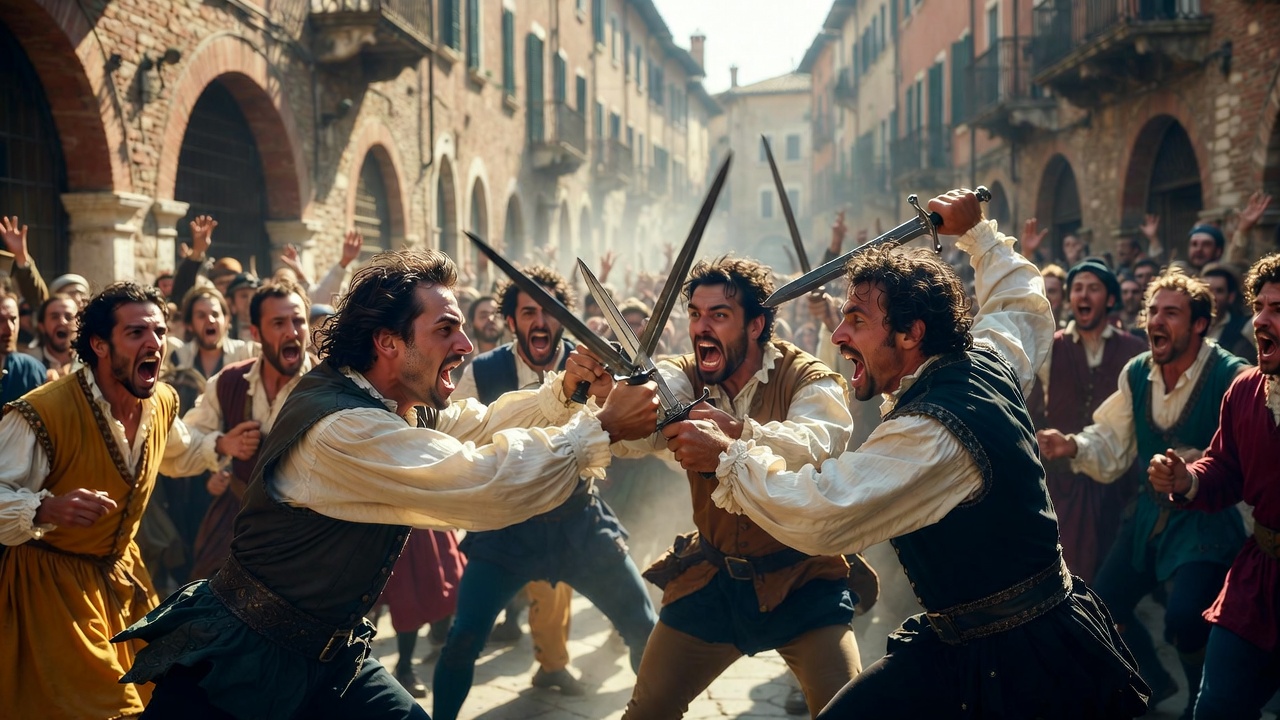
- Afternoon: Paris asks Capulet for Juliet’s hand in marriage. Capulet invites him to that evening’s masked feast, sending a servant with invitations. The illiterate servant asks Romeo and Benvolio for help, inadvertently inviting them to the party.
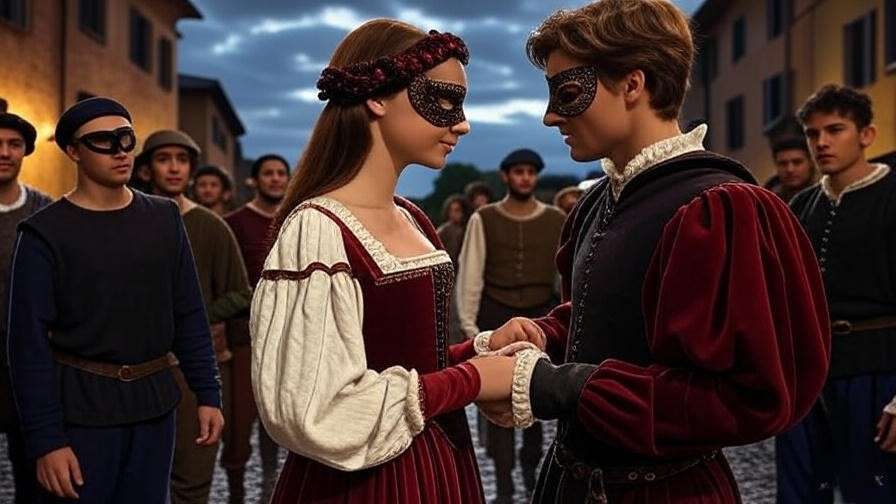
- Evening: At the Capulet ball, Romeo (masked) sees Juliet for the first time. Their sonnet-like exchange (“If I profane with my unworthiest hand…”) leads to a kiss. They discover each other’s identities—Romeo is a Montague, Juliet a Capulet.
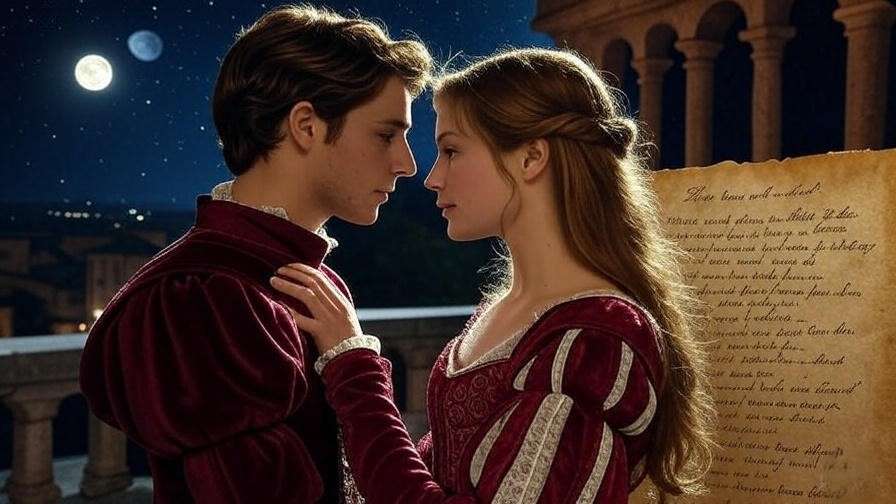
- Night: The famous balcony scene follows. Romeo climbs into the Capulet orchard; Juliet appears above, unaware of him. They declare eternal love and agree to marry the next day. Juliet: “My bounty is as boundless as the sea, / My love as deep” (2.2.133–134).
This day establishes instant attraction, the obstacle of the feud, and the lovers’ determination to defy it.
Day 2 – Monday: Secret Marriage and Sudden Violence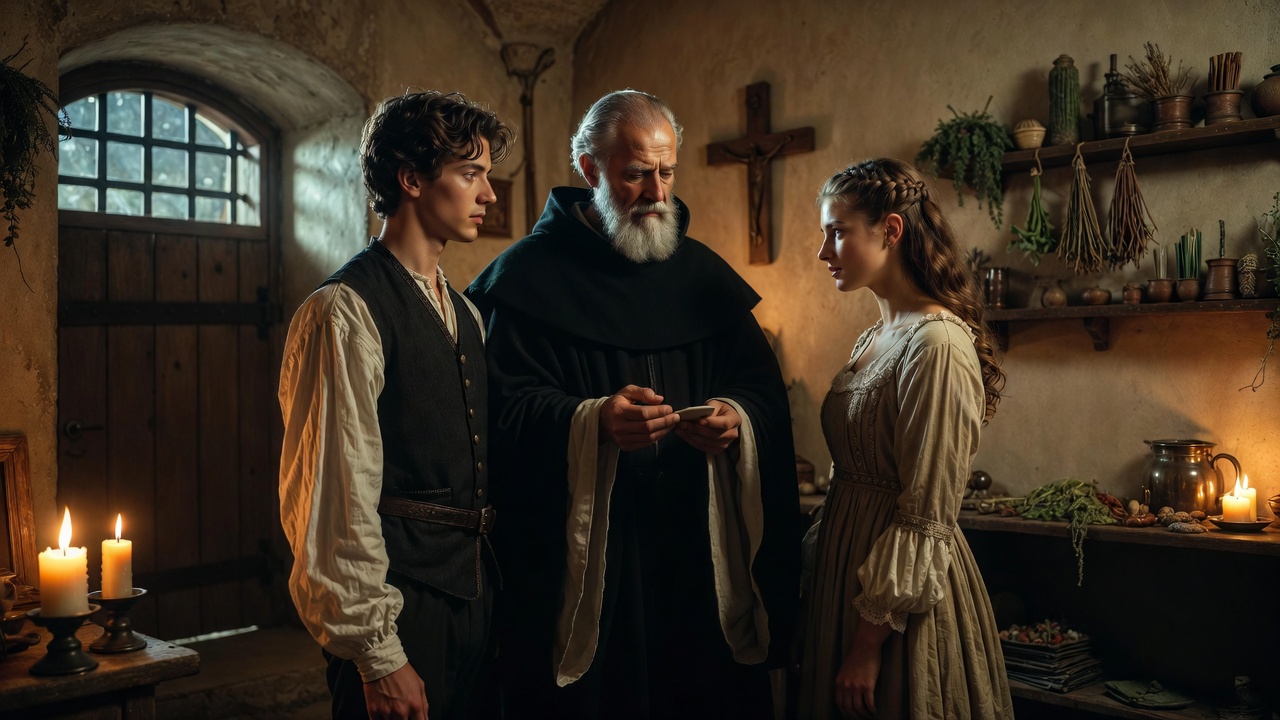
The momentum builds as love collides with vengeance.
- Dawn: Friar Laurence gathers herbs. Romeo arrives, begging him to marry them secretly. The Friar agrees, hoping the union will end the feud: “For this alliance may so happy prove / To turn your households’ rancour to pure love” (2.3.91–92).
- Morning/Noon: The Nurse meets Romeo (with Mercutio and Benvolio) and delivers Juliet’s message. Romeo arranges for the wedding at Friar Laurence’s cell that afternoon.
- Afternoon: Romeo and Juliet marry in secret at the Friar’s cell—a moment of pure joy.
- Late Afternoon: Tybalt challenges Romeo to a duel. Romeo, now kin to Tybalt through marriage, refuses. Mercutio fights Tybalt instead and is fatally wounded. Romeo, enraged, kills Tybalt in revenge.
- Evening: Prince Escalus banishes Romeo from Verona on pain of death. Romeo spends his wedding night with Juliet, consummating their marriage.
- Night: The Capulets plan Juliet’s wedding to Paris for Thursday (three days hence).
Day 3 – Tuesday: Despair, Deception, and a Desperate Plan
The third day dawns with Romeo already banished and the lovers separated after only one night together. The sense of urgency intensifies as the characters attempt to salvage their happiness.
- Early Morning: Romeo and Juliet share their final moments together in her chamber. The lark signals dawn, and Romeo reluctantly leaves for Mantua: “It was the lark, the herald of the morn, / No nightingale” (3.5.6–7). Juliet’s foreboding is palpable: “O God, I have an ill-divining soul! / Methinks I see thee, now thou art so low, / As one dead in the bottom of a tomb” (3.5.54–56).
- Late Morning: Lady Capulet informs Juliet of the arranged marriage to Paris on Thursday. Juliet refuses outright: “I will not marry yet; and when I do, I swear / It shall be Romeo—whom you know I hate— / Rather than Paris” (3.5.121–123). This defiance shocks her parents.
- Midday: Capulet, enraged by Juliet’s refusal, threatens to disown her and advances the wedding to Wednesday (though most productions and scholarly timelines keep it Thursday for consistency with the “three days hence” promise).
- Afternoon: Juliet seeks help from the Nurse, who shockingly advises her to marry Paris and forget Romeo: “Romeo’s a dishclout to him” (3.5.219). Devastated by this betrayal, Juliet turns to Friar Laurence.
- Late Afternoon/Evening: At the Friar’s cell, Juliet threatens suicide if forced to marry Paris. Friar Laurence devises the desperate potion plan: Juliet will take a drug that simulates death for 42 hours. She will be placed in the Capulet tomb, and Romeo (informed by letter) will rescue her when she awakens. The Friar sends Friar John to deliver the message to Romeo in Mantua.
This day is the emotional low point: Juliet loses her nurse’s support, her family’s affection, and places her life in the hands of a risky scheme.
Day 4 – Wednesday: The Faked Death and Failed Communication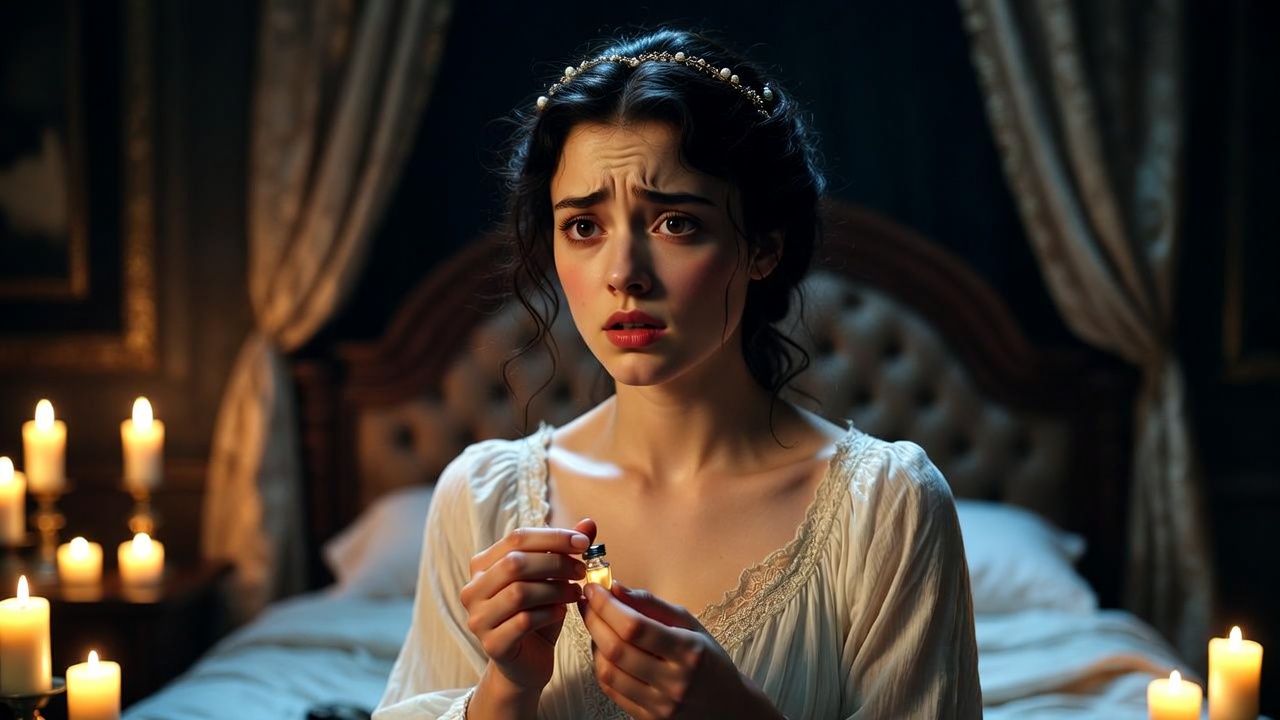
The plan begins to unravel almost immediately due to the play’s most famous stroke of dramatic irony—miscommunication.
- Morning/Early Afternoon: Juliet returns home, pretends to accept the marriage, and is praised by her family. That night she takes the potion alone in her chamber, terrified of the possible side effects: “What if it be a poison…?” (4.3.24). She falls into a death-like sleep.
- Late Morning/Thursday Dawn: The Nurse discovers Juliet “dead.” The household erupts in grief. The wedding preparations turn into funeral arrangements. Paris mourns deeply, and Capulet declares: “Death lies on her like an untimely frost / Upon the sweetest flower of all the field” (4.5.28–29).
- Throughout the Day: Friar John is quarantined in a plague house and cannot deliver the letter to Romeo. The critical message never reaches Mantua.
This day demonstrates how chance and external forces (the plague, poor planning) conspire against the lovers, reinforcing the theme of fate.
Day 5 – Thursday: The Tragic Finale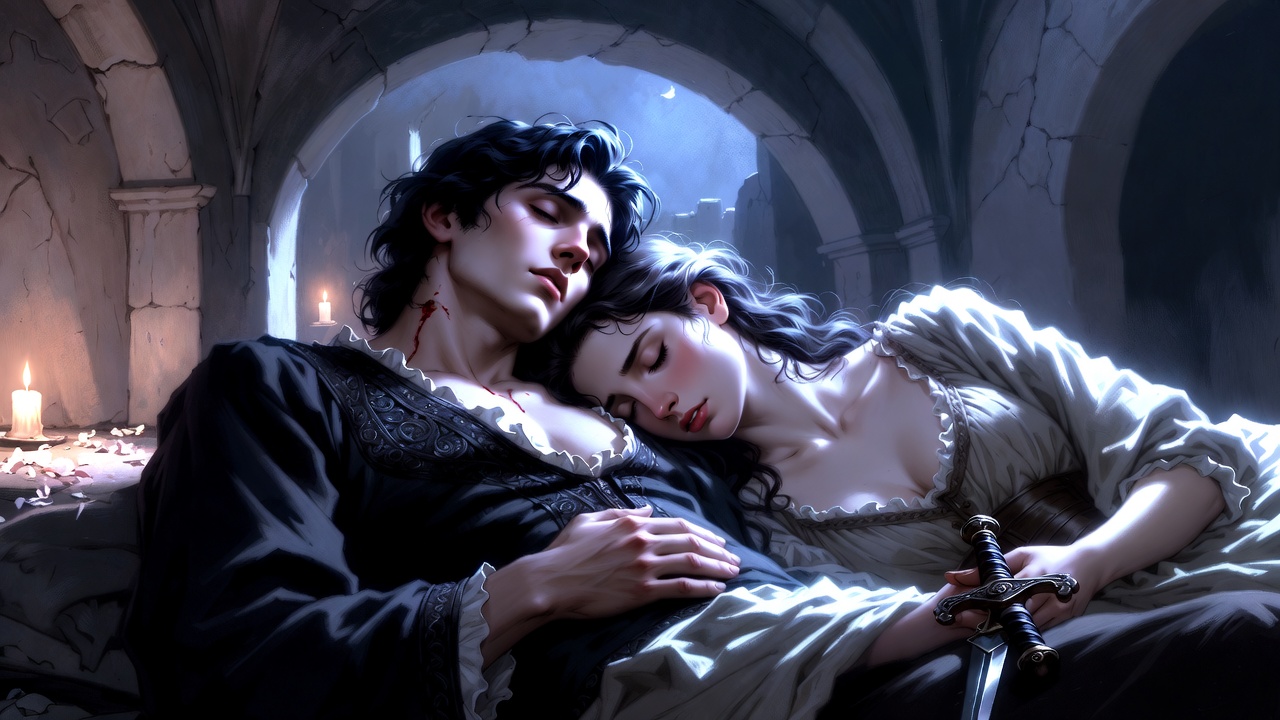
The final day brings the catastrophic convergence of all previous actions.
- Early Morning: Balthasar (Romeo’s servant) witnesses Juliet’s funeral and races to Mantua to inform Romeo.
- Midday: In Mantua, Romeo receives Balthasar’s news that Juliet is dead. Devastated, he buys poison from an apothecary and decides to die beside her: “Well, Juliet, I will lie with thee tonight” (5.1.34).
- Evening: Romeo arrives at the Capulet tomb. He encounters Paris, who is mourning at Juliet’s resting place. Paris challenges Romeo; Romeo kills him in the ensuing fight. Romeo then opens the tomb, kisses Juliet one last time, drinks the poison, and dies.
- Moments Later: Juliet awakens to find Romeo dead beside her. She kisses him, takes his dagger, and stabs herself: “O happy dagger, / This is thy sheath” (5.3.169–170).
- Night: The Prince, Montagues, and Capulets arrive. Friar Laurence explains the entire sequence. The families, confronted with their children’s bodies, finally reconcile. Prince Escalus delivers the final judgment: “A glooming peace this morning with it brings. / The sun for sorrow will not show his head” (5.3.304–305).
The play ends with the tolling of funeral bells and the promise of golden statues in memory of the lovers.
Common Misconceptions and Expert Clarifications
Despite being one of the most performed and studied plays in the world, several persistent misconceptions surround the timeline of Romeo and Juliet. Clearing these up helps readers appreciate Shakespeare’s craftsmanship even more.
Does It Really Happen in Just 5 Days?
Yes — definitively. The textual evidence is overwhelming. Key time references include:
- Sunday morning: “new struck nine” (1.1.161)
- Sunday night: the ball and balcony scene
- Monday: the marriage and Tybalt’s death
- Tuesday: Juliet’s defiance and the potion plan (“tomorrow night” she must take it)
- Wednesday: Juliet takes the potion
- Thursday: the double suicide
Most major Shakespeare editions (Arden Third Series, Folger, Oxford) and theatre companies (Royal Shakespeare Company, Globe Theatre) present the action as spanning five days, from Sunday to Thursday evening/night. The occasional scholarly suggestion of a six-day span usually stems from misreading the Capulets’ wedding-date adjustments, but the dominant consensus remains five days.
Why Does the Timeline Feel So Rushed? Dramatic vs. Realistic Time
The compression is intentional and brilliant. Shakespeare uses “dramatic time” rather than realistic chronology to create urgency. Elizabethan audiences accepted this convention readily — plays often covered years in hours. In Romeo and Juliet, the accelerated pace serves three major purposes:
- It mirrors the lovers’ youthful impatience and passion
- It prevents any realistic chance of adult intervention or reconciliation
- It makes the tragedy feel inevitable — events happen too fast for reflection or escape
Modern audiences sometimes feel the pace is “unrealistic,” but that reaction actually proves Shakespeare’s success: the haste is meant to feel breathless and tragic.
Character Arcs Through the Timeline
The five-day structure reveals remarkable character development in an extraordinarily short period.
Romeo’s Transformation
- Sunday: Melancholic, lovesick over Rosaline — a conventional Petrarchan lover
- Monday: Suddenly passionate and decisive; marries Juliet and then kills Tybalt in rage
- Tuesday–Thursday: Banished, despairing, and finally fatalistic (“Then I defy you, stars!” 5.1.24) Romeo evolves from a dreamy romantic to a man driven by violent emotion to someone who embraces death.
Juliet’s Growth
- Sunday: Obedient 13-year-old daughter (“It is an honour that I dream not of” 1.3.66)
- Monday–Tuesday: Assertive lover, defies parents, takes control of her fate
- Wednesday–Thursday: Displays extraordinary courage — drinks the potion alone and ultimately chooses death over dishonor Juliet matures from child to tragic heroine in days.
Supporting Characters’ Pivotal Roles
- Friar Laurence: Well-meaning but disastrously overconfident in his schemes
- The Nurse: Shifts from romantic confidante to pragmatic betrayer
- Mercutio & Tybalt: Their deaths on Day 2 ignite the irreversible chain of tragedy
Themes Reinforced by the Compressed Timeline
The five-day structure powerfully amplifies the play’s major themes:
- Fate vs. Free Will — The Prologue announces “star-cross’d lovers”; the rapid events suggest destiny overrides choice
- Youthful Passion and Impulsivity — Love, marriage, revenge, suicide — all occur without pause for reflection
- The Destructive Power of Feuds — Generations of hatred explode into violence within hours, destroying the young before reason can prevail
Shakespeare shows that when passion and ancient grudges collide at breakneck speed, tragedy becomes almost mathematically inevitable.
Study Tips and Educational Resources
This timeline is an invaluable tool for students and teachers. Here’s how to make the most of it:
How to Use This Timeline for Exams and Essays
- Map quotes to specific days/hours for stronger textual evidence
- Compare the pace of the play with film adaptations (Zefferelli 1968 vs. Luhrmann 1996)
- Essay prompt ideas: “How does Shakespeare use time to heighten the tragic effect in Romeo and Juliet?”
Visual Aids and Interactive Ideas
- Create a physical or digital timeline (Canva, TimelineJS)
- Color-code events: red for violence, pink for romance, blue for planning
- Role-play key scenes with strict time constraints to experience the pressure
Recommended Further Reading & Viewing
- Arden Shakespeare Third Series edition (edited by René Weis)
- Royal Shakespeare Company’s timeline and performance notes
- Shakespeare: The Invention of the Human by Harold Bloom (chapter on Romeo and Juliet)
- Films: Zeffirelli (1968), Luhrmann (1996), and the 2013 theatrical version for comparative study
Frequently Asked Questions (FAQs)
How many days does Romeo and Juliet take place? Five days — from Sunday to Thursday.
What day do Romeo and Juliet first meet? Sunday evening, at the Capulet masked ball.
How old is Juliet during the play? She is almost 14 (her birthday is on Lammas-eve, July 31).
Why does the Nurse betray Juliet? Pragmatism — she believes Romeo is banished forever and Paris is a better practical match.
Does the play really happen in only five days? Yes, according to the vast majority of scholars and productions.
What is the most important day in the timeline? Monday (Day 2) — the marriage and Tybalt’s death create the irreversible turning point.
Why does Shakespeare make everything happen so quickly? To heighten passion, remove time for reflection, and emphasize the destructive power of haste.
What time of year is the play set? Mid-July (references to summer heat, Lammas-eve, and the “hot blood” of youth).
Is there a sixth day? No — most authorities agree the action concludes Thursday night, though some productions stretch the final scene into early Friday for dramatic effect.
How does the timeline affect the theme of fate? The breakneck pace makes the tragedy feel predestined — events move too fast for anyone to escape fate.
The timeline of Romeo and Juliet is far more than a plot summary — it is the engine of the tragedy itself. By compressing a lifetime of love, hate, joy, and despair into five breathless days, Shakespeare creates an overwhelming sense of inevitability. The lovers have no time to grow cautious, no opportunity for cooler heads to prevail, no chance to outrun their fate.
This deliberate compression is what makes Romeo and Juliet not merely a love story, but a profound meditation on passion, youth, time, and tragedy. When you next read or watch the play, keep this five-day whirlwind in mind. You’ll feel the heartbeat of Verona racing toward its devastating conclusion — and you’ll understand why, after more than 400 years, these star-crossed lovers still break hearts around the world.