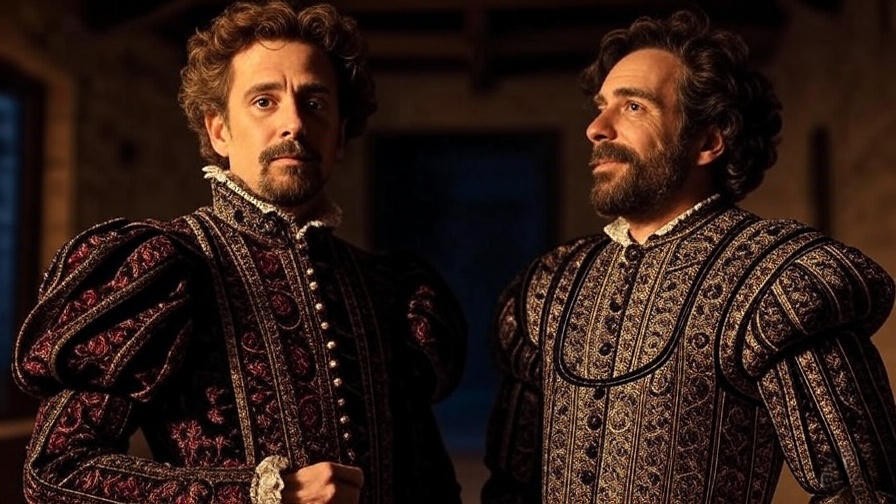
Imagine a young man scaling a high orchard wall in the dead of night, fully aware that if the Capulet guards spot him, he will be killed on sight. No weapon, no backup, no hesitation. He risks everything—not for glory, wealth, or revenge—but for a fleeting moment with the woman he loves. This is Romeo Montague in Act 2, Scene 2, the famous balcony scene. For centuries, readers and audiences have debated his character: impulsive teenager? Lovesick fool? Tragic victim of fate? Yet beneath these surface judgments lies a profound question that often goes unexplored: what is Romeo’s biggest strength?
The answer, when examined closely through Shakespeare’s text, is clear and powerful: Romeo’s greatest strength is his unwavering capacity for passionate commitment. This is not mere infatuation or reckless impulse—it is a fearless, all-consuming devotion that blends intense emotional authenticity, courageous defiance of social norms, absolute loyalty, and poetic idealism. Far from weakness, this quality elevates Romeo into one of Shakespeare’s most compelling romantic heroes and drives the emotional engine of Romeo and Juliet.
In this in-depth character analysis, we will challenge common misconceptions, examine key textual evidence, compare Romeo to other Shakespearean protagonists, draw on scholarly perspectives, and explore why this strength remains profoundly relevant today. By the end, you’ll see Romeo not as a flawed youth undone by rashness, but as a figure whose greatest virtue—his ability to love wholly and fearlessly—is also the source of his tragedy.
Common Misconceptions About Romeo’s Character
Why Romeo Is Often Labeled “Weak” or “Impulsive”
Modern readers, students, and even some critics frequently reduce Romeo to a caricature: the moody teenager who falls in love at the drop of a hat. He pines dramatically for Rosaline in Act 1, only to transfer his affections to Juliet hours later. He kills Tybalt in a fit of rage, sparking the chain of events that leads to exile. He buys poison and takes his own life upon believing Juliet dead. On the surface, these actions scream impulsivity.
Popular adaptations reinforce this view. Baz Luhrmann’s 1996 film portrays Romeo (Leonardo DiCaprio) as a dreamy, emotionally volatile young man. High school essays often echo this sentiment, labeling him “weak-willed” compared to the supposedly stronger Juliet. Even some teachers introduce the play by warning students about Romeo’s “foolish passion.”
Moving Beyond Surface-Level Readings
These interpretations, while containing elements of truth, miss the deeper craftsmanship of Shakespeare’s characterization. Every major tragic hero in Shakespeare has a fatal flaw—Hamlet’s indecision, Othello’s jealousy, Macbeth’s ambition—but flaws do not erase virtues. Romeo’s passionate commitment is a double-edged sword: it propels him to extraordinary acts of courage and loyalty, even as it blinds him to consequence.
A closer reading reveals that what appears as weakness is often strength taken to its extreme. Shakespeare deliberately contrasts Romeo’s intensity with the cynicism and restraint of characters like Mercutio and Friar Laurence, highlighting how Romeo’s devotion stands apart in a feuding, hypocritical Verona.
Defining Romeo’s Biggest Strength: Unwavering Passionate Commitment
What “Passionate Commitment” Really Means in Shakespeare’s Context
In late 16th-century England, love was often treated with suspicion in drama. Comedies mocked Petrarchan lovers who sighed over unattainable mistresses; tragedies showed how desire could destroy order. Yet Shakespeare, drawing on the sonnet tradition and Ovidian metamorphosis myths, presents passionate love as potentially transformative.
Romeo’s commitment is not modern “toxic obsession.” It is rooted in Renaissance ideals of courtly love and Platonic ascent: true love elevates the soul, demands sacrifice, and defies worldly obstacles. When Romeo declares, “With love’s light wings did I o’erperch these walls / For stony limits cannot hold love out” (2.2.66–67), he articulates a philosophy in which love transcends feud, family, and even death.
Core Components of This Strength
Romeo’s passionate commitment manifests in four intertwined qualities:
- Intense Emotional Authenticity: Romeo feels deeply and expresses those feelings without shame or irony. In an age when men were expected to suppress vulnerability, his openness is radical.
- Courage to Defy Social Norms: He rejects the Montague-Capulet hatred, risks his life repeatedly, and secretly marries Juliet within a day of meeting her.
- Absolute Loyalty Once Committed: Unlike his superficial sighs for Rosaline, his bond with Juliet is total and irrevocable. He never wavers, even in exile or despair.
- Poetic Eloquence as Inner Depth: Romeo’s language—rich in metaphor and cosmic imagery—reflects the magnitude of his inner experience. His words are not empty rhetoric but the outward sign of profound commitment.
These traits combine to form a strength that is rare in literature: the ability to love completely in a world that punishes such love.
Textual Evidence: Key Moments That Reveal Romeo’s Strength
Shakespeare builds Romeo’s character through a series of escalating demonstrations of commitment. Let us examine the most pivotal scenes.
The Orchard Wall Scene (Act 2, Scene 2)
The balcony scene is often celebrated for its poetry, but its dramatic context reveals extraordinary courage. Romeo has just met Juliet at the Capulet feast. He could return home safely. Instead, he leaps into enemy territory.
When Juliet warns him of the danger—“If they do see thee, they will murder thee” (2.2.70)—Romeo responds:
“Alack, there lies more peril in thine eye Than twenty of their swords. Look thou but sweet, And I am proof against their enmity.” (2.2.71–73)
This is not bravado. Romeo genuinely places Juliet’s love above his life. Mercutio, by contrast, mocks love as mere physical desire. Romeo’s willingness to die for a moment of connection showcases fearless devotion.
The Marriage Decision (Act 2, Scenes 3–6)
Within hours of the balcony encounter, Romeo seeks Friar Laurence to arrange immediate marriage. Critics call this hasty. Yet the speed reflects decisive commitment rather than indecision.
Friar Laurence initially resists, recalling Romeo’s recent obsession with Rosaline. But he quickly recognizes sincerity: “In one respect I’ll thy assistant be / For this alliance may so happy prove / To turn your households’ rancor to pure love” (2.3.90–92). The Friar consents because he senses Romeo’s authentic transformation.
Romeo’s reply to the Friar’s caution—“O, let us hence. I stand on sudden haste” (2.3.93)—is not impatience but the urgency of true commitment. He will not delay formalizing his bond.
Exile and Despair (Act 3, Scene 3)
After killing Tybalt, Romeo collapses in the Friar’s cell, wailing that exile from Juliet is worse than death. Many readers find this melodramatic. Yet it demonstrates emotional honesty and the depth of his attachment.
Friar Laurence lectures him on stoic philosophy: “Thou fond mad man, hear me a little speak” (3.3.53). Romeo refuses consolation that diminishes his love. His raw grief is the flip side of his capacity for joy with Juliet—a testament to living fully in his emotions rather than suppressing them.
The Tomb Scene (Act 5, Scene 3)
The play’s climax provides the ultimate proof of Romeo’s strength. Learning of Juliet’s “death,” he immediately procures poison and travels to her tomb. Facing Paris, he pleads for peace but fights when challenged, then kills himself beside Juliet.
His final speech is serene, not frantic:
“Thou detestable maw, thou womb of death… Thus I defy thee with a kiss.” (5.3.45–112, paraphrase)
By choosing death over a world without Juliet, Romeo completes the arc of absolute loyalty. Paris, by contrast, dies conventionally defending honor. Romeo dies for love.
Comparative Analysis: Romeo vs. Other Shakespearean Heroes
To fully appreciate Romeo’s strength, it is illuminating to place him alongside other major Shakespearean protagonists. These comparisons highlight how his passionate commitment stands in sharp relief against different forms of heroic temperament.
Romeo vs. Hamlet (Passion vs. Paralysis)
Hamlet and Romeo are often taught together as Shakespeare’s most famous young tragic heroes, yet their responses to crisis could not be more different. Where Hamlet is paralyzed by overthinking—“Thus conscience does make cowards of us all” (Hamlet 3.1.83)—Romeo acts decisively once his heart is engaged.
Hamlet delays revenge for months, tormented by doubt and philosophical speculation. Romeo, upon falling in love with Juliet, moves from confession to secret marriage in less than twenty-four hours. When exiled, he attempts suicide immediately rather than endure separation. This contrast is deliberate: Shakespeare shows us two extremes of youthful intellect and emotion. Hamlet’s strength lies in introspection; Romeo’s lies in fearless forward momentum driven by love. In a world that demands action against feud or tyranny, Romeo’s capacity to commit without endless hesitation emerges as a rare and powerful virtue.
Romeo vs. Othello (Loyalty and Trust)
Othello, like Romeo, is destroyed by intense passion, but the nature of that passion differs profoundly. Othello’s love for Desdemona begins with deep commitment—he defies Venice to marry her—but it is undermined by jealousy and susceptibility to manipulation. Iago needs only a handkerchief to unravel Othello’s trust.
Romeo’s commitment, by contrast, is pure and self-generated. No external force tricks him into doubting Juliet; his despair in the tomb stems from mistaken fact (her apparent death), not mistrust of her character. Even when Balthasar brings news of Juliet’s death, Romeo never questions her fidelity. His final act is one of joining her in death, not punishing her. This unwavering trust and loyalty—untouched by jealousy—marks Romeo’s passion as nobler and more resilient than Othello’s.
Romeo vs. Juliet
A common classroom debate asks: Who is the stronger character, Romeo or Juliet? Many argue Juliet, citing her pragmatism, wit, and willingness to fake death. Yet this view often diminishes Romeo unfairly.
Juliet’s strength is strategic and resilient; Romeo’s is initiatory and sacrificial. He takes the first risk by entering the Capulet orchard. He arranges the marriage. He accepts exile rather than reveal Juliet’s secret. In the tomb, he dies first, sparing Juliet the sight of his body (though fate intervenes). Their strengths are complementary: Romeo provides the daring leap of faith; Juliet supplies the cunning to sustain it. Together, they form a perfect unit of young love defying the world. Recognizing Romeo’s contribution prevents the reductive narrative that paints him as the “weaker” partner.
Scholarly Perspectives and Expert Insights
Generations of critics have wrestled with Romeo’s character, and their evolving interpretations lend weight to the argument that passionate commitment is his defining strength.
What Literary Critics Say
Northrop Frye, in his archetypal criticism, places Romeo and Juliet in the tradition of romantic comedy turned tragedy, with Romeo as the classic lover-hero whose intensity drives the green world of love against the rigid social order. Harold Bloom celebrates Romeo’s linguistic vitality, arguing that his poetic imagination—evident in the aubade (dawn song) of Act 3, Scene 5—reflects a profound inner life that lesser characters lack.
Modern scholars offer fresh perspectives. Jill L. Levenson, editor of the Oxford Shakespeare edition, emphasizes how Shakespeare uses Romeo’s sincerity to critique Verona’s toxic masculinity. Feminist critics such as Coppélia Kahn note that Romeo rejects the performative violence expected of young Montague men, choosing vulnerability instead. Queer theory readings (e.g., Jonathan Goldberg) highlight Romeo’s fluid emotional expression as a subversive strength in a patriarchal context.
Even critics who acknowledge Romeo’s flaws rarely deny his capacity for total devotion. As G. Blakemore Evans wrote in the Riverside Shakespeare, “Romeo’s love for Juliet is the one unquestionably sincere and ennobling emotion in the play.”
Teaching Romeo’s Strengths in the Classroom
For educators and students, reframing Romeo around his strengths transforms the play from a cautionary tale about teenage recklessness into a profound exploration of authentic love. Practical tips include:
- Assign close readings of Romeo’s soliloquies to trace his emotional authenticity.
- Compare his language before and after meeting Juliet to show genuine transformation (Rosaline speeches are conventional; Juliet speeches are original and cosmic).
- Stage debates: “Resolved: Romeo’s commitment is admirable rather than foolish.”
- Encourage creative projects where students re-imagine Romeo with modern emotional intelligence—he would likely be celebrated for emotional openness.
Why This Strength Matters Today
Shakespeare’s characters endure because their struggles mirror timeless human concerns. Romeo’s passionate commitment speaks powerfully to contemporary readers.
Lessons in Authentic Love and Commitment
In an era of dating apps and situational relationships, Romeo models what it means to love without reservation. He does not ghost Juliet, play games, or hedge his commitment. Once decided, he is all in. While we rightly caution against unchecked intensity, Romeo reminds us that half-hearted love rarely produces great art, literature, or personal growth.
Romeo as a Role Model for Emotional Courage
Modern discussions of masculinity increasingly value emotional vulnerability. Romeo embodies this centuries ahead of schedule: he weeps openly, speaks poetry to his beloved, and prioritizes connection over aggression. In a culture that still sometimes equates male stoicism with strength, Romeo offers an alternative vision—strength through feeling deeply and acting on those feelings with integrity.
Cultural Legacy
Romeo’s archetype lives on in countless romantic heroes: from Heathcliff in Wuthering Heights to Jack Dawson in Titanic, from Tony in West Side Story to countless YA protagonists. Whenever a character risks everything for love, Romeo’s shadow is present. His strength—committing wholly despite overwhelming odds—continues to resonate because it taps into a universal desire: to love and be loved without compromise.
Potential Counterarguments and Rebuttals
No character analysis is complete without addressing opposing views.
Some critics insist Romeo’s impulsivity fatally outweighs any positive traits. They point to the rapid shift from Rosaline to Juliet as evidence of shallow emotion. Yet Shakespeare deliberately contrasts the two: Romeo’s speeches about Rosaline are clichéd Petrarchan tropes (“Love is a smoke raised with the fume of sighs,” 1.1.190). His language for Juliet is fresh, astronomical, and mutual. The speed reflects awakening to true love, not fickleness.
Others argue his suicide is cowardly. But in the context of Elizabethan honor and romantic ideology, choosing death to join one’s beloved was seen as the ultimate loyalty (witness the real-life popularity of Ovid’s Pyramus and Thisbe story). Romeo does not flee life; he embraces eternity with Juliet.
These counterpoints, while valid concerns, ultimately reinforce rather than undermine the thesis: Romeo’s flaws are excesses of his greatest strength—passionate commitment taken to tragic extremes.
What is Romeo’s biggest strength? It is his extraordinary capacity for passionate commitment—an unwavering devotion that manifests as courage, loyalty, emotional authenticity, and poetic depth. This quality propels him to defy a hateful society, risk death repeatedly, and ultimately sacrifice his life rather than live without Juliet.
Far from a weak or merely impulsive youth, Romeo emerges as one of Shakespeare’s most courageous lovers: a young man who feels everything intensely and acts on those feelings without reservation. His tragedy is not that he loves too little, but that he loves too much in a world too cruel to accommodate such love.
Next time you read or watch Romeo and Juliet, look past the familiar labels. See the quiet power in Romeo’s willingness to scale walls, marry in secret, endure exile, and die beside his beloved. In doing so, you’ll discover why, four centuries later, his story still breaks hearts and inspires dreams of love worth any risk.
FAQ
What is Romeo’s greatest strength in Romeo and Juliet? Romeo’s greatest strength is his unwavering passionate commitment—his ability to love fearlessly, loyally, and completely despite mortal danger and social opposition.
Is Romeo a strong or weak character? Romeo is a strong character whose primary virtue is intense emotional commitment and courage in love. His tragic flaws (impulsivity, despair) are extensions of this same strength.
How does Romeo show courage? He demonstrates courage by entering Capulet territory unarmed, secretly marrying Juliet, accepting exile to protect her secret, and ultimately choosing death over life without her.
Why do people think Romeo is impulsive rather than committed? Surface-level readings focus on the speed of his actions (quick marriage, suicide) without recognizing that this decisiveness stems from sincere, total devotion rather than mere whim.
Does Juliet have the same strength as Romeo? Juliet shares passionate commitment but expresses it through strategic resilience and pragmatism. Their strengths complement each other perfectly.