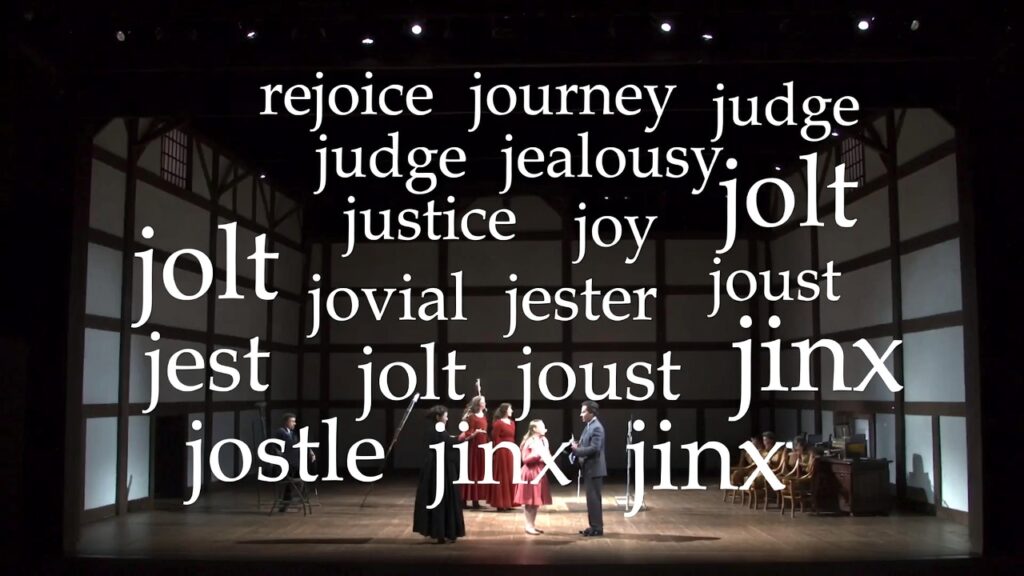
Imagine standing in the Globe Theatre in 1600, the air thick with anticipation as an actor delivers a line that turns sorrow into sudden hope or judgment into mercy. A single word—containing both the rolling “r” and the emerging “j”—carries the weight of emotion, theme, and dramatic tension. Words like “rejoice,” “journey,” “judge,” and “jealousy” aren’t mere vocabulary; they are Shakespeare’s tools for painting the human soul.
In today’s world, many people search for words with r and j to solve word puzzles, dominate in Scrabble, or expand their game lexicon. Yet Shakespeare’s vast canon offers something far richer: a curated selection of such words, some common in modern English, others archaic or dramatically potent, that reveal his mastery of language. The letter “j” was still relatively new in English during Shakespeare’s time (often printed as “i” in early editions), making its combination with “r” particularly striking in his poetry and prose.
This in-depth guide dives into words with r and j as they appear in Shakespeare’s works. We’ll explore their meanings, contexts, frequencies, and thematic power—drawing from reliable sources like Open Source Shakespeare concordances and ShakespearesWords.com glossaries. Whether you’re a student analyzing plays, an actor preparing lines, a writer seeking eloquent inspiration, or a literature lover deepening appreciation, these linguistic gems will enhance your engagement with the Bard. By the end, you’ll not only know these words but understand how they unlock deeper insights into love, justice, transformation, and human frailty.
Why “Words with R and J” Stand Out in Shakespeare’s Works
Shakespeare wrote during a transitional period for English orthography. The letter “j” originated as a variant of “i” and only gradually became distinct, often representing the consonant sound in words borrowed from Latin or French. In Shakespeare’s First Folio (1623), many “j” sounds appear as “i” (e.g., “iudge” for “judge”), but modern editions standardize them for clarity.
This rarity adds intrigue: “j” appears less frequently than more common letters, so words combining “r” and “j” often carry heightened dramatic or emotional weight. Shakespeare, credited with introducing or popularizing over 1,700 words into English, frequently used such terms to convey nuance—rejoicing amid tragedy, journeys as metaphors for life, or judgment in moral dilemmas.
These words bridge everyday language and poetic invention. They help modern readers appreciate Shakespeare’s wordplay, where sound (the trilled “r” contrasting the soft “j”) mirrors meaning. For scholars and enthusiasts, studying them reveals patterns in themes across comedies, tragedies, and histories.
Common and Iconic Words with R and J in Shakespeare
Shakespeare employs certain words with r and j repeatedly, making them iconic pillars of his language.
Rejoice and Rejoicing
“Rejoice” appears over 30 times across the canon, often signaling emotional peaks. In Romeo and Juliet, the Nurse urges joy despite obstacles: contexts of reunion or hope contrast tragedy. In The Tempest, Prospero’s “rejoice” marks forgiveness and restoration. In As You Like It, it underscores pastoral happiness.
The word evokes triumphant uplift, its “r-j” blend rolling into celebration. Frequency highlights Shakespeare’s use for dramatic reversal—from despair to delight.
Journey and Journeys
“Journey” (around 27 occurrences, plus variants) symbolizes physical and metaphorical travel. In Othello, characters embark on literal sea voyages; in Macbeth, life’s “journey” reflects ambition’s toll. The Winter’s Tale uses it for exile and redemption.
As a motif, it represents character arcs—transformation through trials—echoing Elizabethan fascination with exploration.
Judge, Judgment, and Judgment
“Judge” (91 times) and “judgment” (over 110) dominate themes of justice. In Measure for Measure, “judgment” probes mercy vs. strict law. The Merchant of Venice features Portia’s famous “quality of mercy” speech amid judgment. Hamlet wrestles with moral judgment in soliloquies.
These words underscore ethical complexity, with “r-j” evoking deliberate, weighty decisions.
Jealous / Jealousy
“Jealous” (51 times) and “jealousy” (39) famously drive tragedy. Othello’s “green-eyed monster” speech defines destructive envy. In The Winter’s Tale, Leontes’ jealousy destroys his family.
Shakespeare explores psychological depth here, showing jealousy as corrosive force.
| Word | Approximate Frequency | Key Plays | Example Quote / Context | Modern Relevance |
|---|---|---|---|---|
| Rejoice | 30+ | Romeo and Juliet, The Tempest | “Rejoice with them that do rejoice” (echoing biblical tone in reunions) | Emotional highs |
| Journey | 27+ | Othello, Macbeth, The Winter’s Tale | “Life’s but a walking shadow… signifying nothing” tied to journey motifs | Metaphor for life |
| Judge/Judgment | 200+ combined | Measure for Measure, Merchant of Venice | “The quality of mercy is not strained” in judgment scenes | Moral dilemmas |
| Jealousy | 39 | Othello, The Winter’s Tale | “O, beware, my lord, of jealousy; It is the green-eyed monster” | Human flaws |
These examples show how words with r and j anchor Shakespeare’s exploration of human experience.
Rare and Archaic Gems: Lesser-Known Words with R and J
Beyond icons, Shakespeare uses rarer words with r and j for specialized effect, often archaic today.
Perjured and Forperjured
“Perjured” (oath-breaking) appears in Love’s Labour’s Lost and sonnets, tied to broken vows. “Forperjured” intensifies betrayal. These highlight honor’s fragility in Elizabethan society.
Abjured / Forjure
“Abjured” (renounced solemnly) occurs in vow-breaking contexts, like The Tempest‘s magical renunciations. Rare usage adds gravity to dramatic turning points.
Major (as in military rank)
In All’s Well That Ends Well and Antony and Cleopatra, “major” denotes rank, showing Shakespeare’s military borrowings.
Other gems
- “Ajar” (discord, as in “set ajar”): suggests imbalance.
- “Jeer” (mock): sharp ridicule.
- Variants like “rejoin” derivatives appear sparingly.
Etymologically, many derive from Latin/French (“judex” for judge, “gaudere” for rejoice), reflecting Renaissance influences. Rarity amplifies impact—Shakespeare deploys them for precision in emotion or status.
Thematic Power of R-and-J Words Across Shakespeare’s Plays
These words cluster thematically.
Love and Rejoicing in Romeo and Juliet
“Rejoice,” “journey,” and “jealous” intertwine in passion and tragedy. Romeo’s journey to Juliet sparks rejoicing, but jealousy (family feud) destroys it.
Justice and Judgment in the Problem Plays
Measure for Measure and The Merchant of Venice center on “judge/judgment,” questioning fair application of law.
Travel, Exile, and Transformation
In romances like The Tempest and Pericles, “journey” symbolizes renewal.
Shakespeare uses these to bridge genres, showing rejoicing after judgment or journeys through jealousy.
How to Use These Words Today: Practical Tips for Readers, Writers, and Performers
- Readers/Analysts: Note patterns— “rejoice” signals hope, “judge” moral tension.
- Writers: Borrow for elegance (e.g., “rejoice in small victories”).
- Actors/Directors: Emphasize “r” roll for passion; Elizabethan pronunciation softens “j.”
- Exercise: Craft a paragraph using five: “In judgment’s harsh journey, perjured hearts cannot rejoice, yet jealousy yields to merciful abjuration.”
Frequently Asked Questions (FAQs)
What are the most common words with r and j in Shakespeare? Rejoice, journey, judge, judgment, jealous/jealousy top the list.
Did Shakespeare invent any words with r and j? He popularized many (e.g., compounds), but core terms like “judge” predate him; he innovated usage.
Why do some Shakespeare texts use “i” instead of “j”? Early printing conventions; “j” standardized later.
How can I find more words with r and j in specific plays? Use Open Source Shakespeare concordance or ShakespearesWords.com search.
Are there “words with r and j” unique to Shakespeare? Few truly unique, but his dramatic application is unparalleled.
Words with r and j in Shakespeare’s language are more than curiosities—they unlock emotional and thematic depths. From rejoicing in reunion to judging moral quandaries, they reflect his genius.
Revisit a play with this lens; explore concordances; let these gems enrich your vocabulary and insight. As Shakespeare might say, rejoice in the journey of discovery.