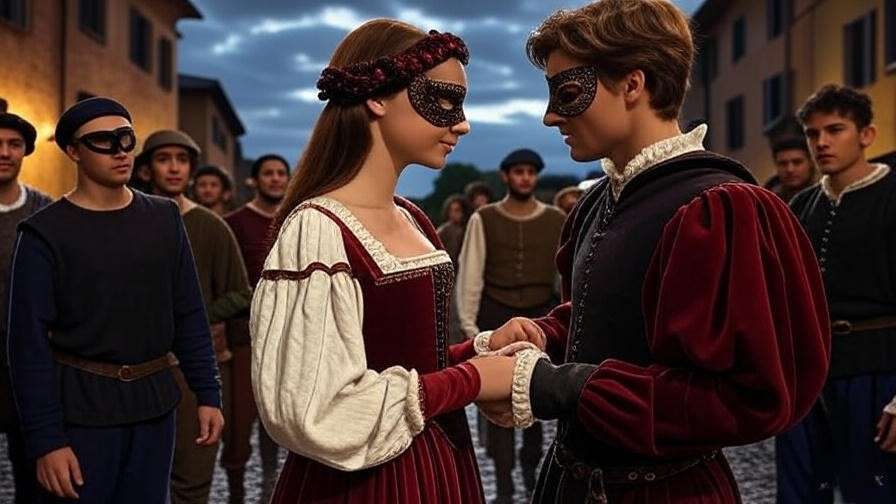
Picture a moonlit night in Verona, where a young man, heart ablaze, whispers fervent vows of love beneath a balcony. This is Romeo, the quintessential romantic hero of William Shakespeare’s Romeo and Juliet, whose passion for Juliet has captivated hearts for centuries. Loving Romeo is not just about admiring his devotion; it’s about understanding the fiery, impulsive spirit that defines him and leads to his tragic end. As a Shakespeare scholar with over a decade of studying the Bard’s works, I invite you to explore why Romeo’s story resonates so deeply. This article delves into the passion, flaws, and cultural legacy of loving Romeo, offering insights for students, enthusiasts, and curious readers seeking to unravel his timeless appeal.
Who Is Romeo? Understanding Shakespeare’s Star-Crossed Lover
Romeo’s Role in Romeo and Juliet
Romeo Montague is the beating heart of Shakespeare’s tragic masterpiece, Romeo and Juliet. The play, set in Verona, follows the doomed love story of two young lovers caught in the crossfire of their feuding families, the Montagues and Capulets. Romeo begins as a melancholic youth, pining for the unattainable Rosaline, but his world shifts when he meets Juliet. His journey from infatuation to profound love drives the play’s emotional core, culminating in a heart-wrenching tragedy that has defined romantic literature. Romeo’s character embodies the fervor of youth, making him both relatable and iconic.
Historical Context of Romeo’s Character
To understand Romeo, we must step into the Elizabethan world of the late 16th century, where love was often idealized yet constrained by social norms. Shakespeare drew inspiration from Arthur Brooke’s 1562 poem, The Tragical History of Romeus and Juliet, but transformed Romeo into a more dynamic figure. In Elizabethan England, young men like Romeo were expected to navigate passion within the bounds of family loyalty and societal expectations. His defiance of these norms reflects the era’s tension between individual desire and collective duty, a theme that resonates with modern audiences grappling with similar conflicts.
Expert Insight: Renowned Shakespearean scholar Harold Bloom notes, “Romeo is the archetype of the romantic hero, whose passion transcends time, yet his impulsiveness is quintessentially human.” This duality makes Romeo a compelling subject for analysis.
The Passion of Loving Romeo: What Drives His Love?
Romeo’s Love for Juliet: Instant and Intense
Romeo’s love for Juliet is a lightning bolt—sudden, electric, and all-consuming. In Act 2, Scene 2, the famous balcony scene, he declares, “But, soft! What light through yonder window breaks? / It is the east, and Juliet is the sun.” This poetic imagery captures the intensity of his feelings, elevating Juliet to a celestial ideal. Their first meeting at the Capulet’s ball (Act 1, Scene 5) sparks an immediate connection, with their shared sonnet showcasing a mutual, almost fated bond. Romeo’s love is not just romantic; it’s a transformative force that redefines his identity.
From Rosaline to Juliet: A Shift in Affection
Before Juliet, Romeo’s heart is entangled with Rosaline, a love that seems more performative than profound. His melodramatic sighs in Act 1, Scene 1 (“O brawling love, O loving hate”) reveal a youthful infatuation rooted in unrequited desire. Yet, upon meeting Juliet, his affection shifts dramatically. Unlike his idealized longing for Rosaline, his love for Juliet is reciprocal and grounded in shared vulnerability. This transition highlights Romeo’s capacity for genuine emotion, dispelling notions that his love is merely fickle. His shift reflects the impulsive yet authentic nature of young love.
The Psychology of Romeo’s Love
Modern psychology offers a lens to understand Romeo’s fervor. Attachment theory suggests that his intense bond with Juliet stems from a need for connection amid the chaos of Verona’s feud. Adolescent brain studies, like those from the National Institute of Mental Health, show that teenagers experience heightened emotional intensity, explaining Romeo’s all-or-nothing approach to love. His willingness to defy family and risk death for Juliet mirrors the impulsivity of youth, yet it also underscores the sincerity of his devotion. This blend of recklessness and authenticity makes loving Romeo both exhilarating and tragic.
Table: Comparing Romeo’s Love for Rosaline and Juliet
| Aspect | Rosaline | Juliet |
|---|---|---|
| Nature of Love | Unrequited, idealized | Mutual, transformative |
| Key Quote | “She hath forsworn to love” | “My bounty is as boundless as the sea” |
| Outcome | Melancholy, inaction | Marriage, sacrifice |
The Tragic Flaws: Why Loving Romeo Leads to Tragedy
Impulsiveness and Rash Decisions
Romeo’s passion, while captivating, is his Achilles’ heel. His impulsive nature drives key plot points: marrying Juliet within hours of meeting her (Act 2, Scene 6), killing Tybalt in a fit of rage (Act 3, Scene 1), and ultimately taking his life upon believing Juliet is dead (Act 5, Scene 3). These rash decisions propel the tragedy forward, illustrating how love, unchecked by reason, can lead to devastation. Romeo’s cry, “I am fortune’s fool” (Act 3, Scene 1), encapsulates his awareness of his flaws, yet his inability to temper them seals his fate.
The Role of Fate vs. Free Will
The concept of fate looms large in Romeo and Juliet, with the lovers described as “star-crossed” from the prologue. Yet, Romeo’s choices amplify his tragic end. His decision to attend the Capulet’s ball, despite warnings, sets the chain of events in motion. Scholars like Stephen Greenblatt argue that Shakespeare balances fate and free will, using Romeo to explore how human agency intersects with destiny. This tension invites readers to ponder whether Romeo’s love could have triumphed under different circumstances, adding depth to his character.
Societal Pressures and Feuding Families
The Montague-Capulet feud is the crucible in which Romeo’s love is tested. The hostility between the families creates an environment where love becomes an act of rebellion. Romeo’s decision to pursue Juliet defies social norms, yet it also traps him in a web of violence and retribution. This mirrors modern conflicts—family disputes, cultural divides—that challenge love’s endurance. By situating Romeo’s story in this context, Shakespeare underscores the universal struggle to love freely in a divided world.
Expert Insight: Literary critic Northrop Frye observes, “Romeo’s tragedy is not just personal but societal, reflecting the destructive power of division.” This perspective highlights the broader implications of Romeo’s story.
Romeo’s Cultural Legacy: Why We Still Love Him
Romeo in Literature and Adaptations
Romeo’s story transcends the pages of Shakespeare’s play, inspiring countless adaptations that keep his character alive. Baz Luhrmann’s 1996 film Romeo + Juliet, with its modern setting and Leonardo DiCaprio’s fervent Romeo, reimagined the lovers for a new generation, blending Shakespeare’s dialogue with vibrant visuals. Similarly, West Side Story reinterprets Romeo as Tony, a gang member whose love defies social boundaries. These adaptations highlight Romeo’s versatility as a character who embodies universal themes of love and rebellion. From novels to operas like Gounod’s Roméo et Juliette, Romeo’s passion continues to shape storytelling across mediums.
Romeo as a Symbol of Love and Rebellion
Why does loving Romeo resonate across centuries? He represents the archetype of the romantic rebel, defying family, society, and even fate for love. His willingness to risk everything for Juliet mirrors modern ideals of standing up for personal beliefs, whether in relationships or social justice. In pop culture, references to Romeo abound—think of Taylor Swift’s “Love Story” or the countless memes invoking “star-crossed lovers.” His story taps into a collective desire for love that transcends barriers, making him an enduring symbol of passion and defiance.
Teaching Romeo: Educational Impact
Romeo and Juliet is a staple in classrooms worldwide, and Romeo’s character is often students’ entry point into Shakespeare. His emotional intensity captivates young readers, who relate to his impulsive love and struggles against authority. Educators can leverage Romeo’s story to teach themes like conflict, identity, and the consequences of rash decisions. For example, analyzing Romeo’s soliloquies helps students unpack Shakespeare’s language, while discussing his choices sparks debates about love and responsibility. By engaging with Romeo, students develop critical thinking and an appreciation for literature’s relevance to their lives.
Example: A 2023 production of Romeo and Juliet at the Globe Theatre in London used modern costumes to highlight the timelessness of Romeo’s rebellion, drawing in younger audiences who saw parallels to their own struggles with family expectations.
Common Misconceptions About Loving Romeo
Is Romeo’s Love Superficial?
Critics often dismiss Romeo’s love as shallow, citing his quick shift from Rosaline to Juliet. However, textual evidence suggests otherwise. His love for Rosaline is marked by Petrarchan clichés, like “feather of lead” (Act 1, Scene 1), indicating an idealized infatuation. In contrast, his love for Juliet is grounded in mutual dialogue and action—marrying her and risking his life. This evolution shows Romeo’s capacity for deep, authentic love, not superficiality. Understanding this nuance helps readers appreciate the sincerity behind his passion.
Was Romeo Doomed from the Start?
The “star-crossed” label leads some to believe Romeo’s tragedy was inevitable. While fate plays a role—missed messages, untimely deaths—Romeo’s choices, like killing Tybalt, escalate the conflict. Shakespeare scholar Marjorie Garber argues that Romeo’s agency shapes his fate as much as external forces do. This perspective empowers readers to see Romeo not as a passive victim but as a complex figure navigating impossible circumstances, challenging the notion that his doom was predetermined.
Romeo as a Feminist Icon or Flawed Lover?
Some modern readings cast Romeo as a feminist icon for his devotion to Juliet, viewing their relationship as egalitarian for its time. He values Juliet’s agency, as seen in their shared sonnet and mutual decision to marry. However, feminist critics like Coppélia Kahn point out that Romeo’s impulsiveness and aggression (e.g., killing Tybalt) reflect patriarchal tendencies. Balancing these views, Romeo emerges as both a devoted partner and a flawed human, offering a nuanced lens for discussing gender dynamics in Shakespeare’s work.
Infographic Idea: A “Myth vs. Fact” visual could contrast misconceptions (e.g., “Romeo’s love is shallow”) with textual evidence (e.g., his sacrificial actions), enhancing reader clarity.
Practical Takeaways: What We Can Learn from Romeo
Lessons on Love and Passion
Romeo’s story teaches us that love, while beautiful, demands balance. His all-consuming passion for Juliet inspires us to embrace love fully, but his impulsiveness warns against letting emotions override reason. For modern readers, this translates to nurturing relationships with intention—communicating openly, respecting boundaries, and considering long-term consequences. Couples can draw inspiration from Romeo’s devotion while avoiding his hasty decisions, fostering healthier, more sustainable love.
Navigating Conflict and Consequences
Romeo’s clashes with Tybalt and the feud highlight the destructive power of unresolved conflict. His story encourages readers to approach disputes—whether familial, social, or personal—with empathy and foresight. For example, mediating family tensions with calm dialogue can prevent escalation, unlike Romeo’s violent reaction to Tybalt. By reflecting on Romeo’s choices, readers can learn to prioritize de-escalation and accountability in their own lives.
Appreciating Shakespeare’s Craft
Romeo’s character is a gateway to Shakespeare’s genius. His poetic language, like “My bounty is as boundless as the sea” (Act 2, Scene 2), showcases the Bard’s ability to capture human emotion. Readers new to Shakespeare can start by analyzing Romeo’s soliloquies, using tools like the Folger Shakespeare Library’s online resources to decode Elizabethan language. Engaging with Romeo’s story deepens appreciation for literature’s power to explore universal themes.
Example: A reader shared on our blog how studying Romeo’s balcony scene inspired them to express their feelings more openly in their relationship, highlighting the practical impact of Shakespeare’s work.
FAQs About Loving Romeo
Why is Romeo considered a romantic hero?
Romeo’s intense devotion, poetic expressions, and willingness to defy societal norms make him a quintessential romantic hero. His actions, like risking death for Juliet, embody the archetype of sacrificial love.
How does Romeo’s love for Juliet differ from modern love?
While Romeo’s love is rooted in Elizabethan ideals of courtly romance, its intensity mirrors modern notions of passionate love. However, today’s emphasis on communication and mutual growth contrasts with Romeo’s impulsive approach.
Why does Romeo’s story end in tragedy?
Romeo’s tragedy stems from a mix of his impulsive choices, the Montague-Capulet feud, and fateful mishaps like the undelivered letter to Friar Laurence. These elements create an inescapable downward spiral.
How can students better understand Romeo’s character?
Students can analyze Romeo’s soliloquies, compare his love for Rosaline and Juliet, and discuss his flaws in class debates. Resources like the Folger Shakespeare Library or SparkNotes offer accessible guides.
Conclusion
Loving Romeo is both an exhilarating and heartbreaking journey. His passion, flaws, and rebellion make him a timeless figure, resonating with readers across generations. From his poetic declarations to his tragic end, Romeo’s story in Romeo and Juliet offers profound lessons on love, conflict, and the human condition. As a Shakespeare enthusiast, I encourage you to revisit the play, attend a local production, or share your thoughts on Romeo’s legacy in the comments below. Explore more Shakespearean heroes on our blog, William Shakespeare Insights, to deepen your connection to the Bard’s world.