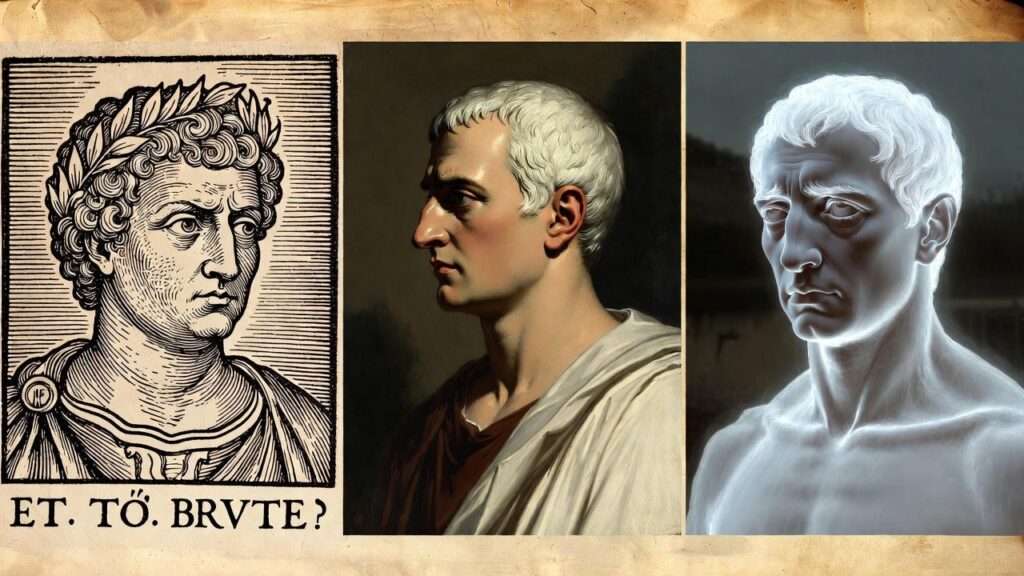
Picture the Roman Forum, 44 BCE: a crowd roars as Julius Caesar, draped in imperial purple, is struck down by those he trusted most. The Ides of March echo with betrayal, ambition, and the shattering of a republic. At the heart of William Shakespeare’s Julius Caesar lies the “Julius Caesar strain”—a profound tension between loyalty, power, and moral conflict that drives the tragedy. Why does this strain captivate readers centuries later? In this comprehensive analysis, we unravel Shakespeare’s masterpiece, exploring its themes, characters, and enduring relevance. From students seeking deeper understanding to leaders navigating modern politics, this article offers fresh insights into the play’s timeless lessons on power and betrayal.
Julius Caesar is more than a historical drama; it’s a mirror reflecting human nature’s complexities. Whether you’re analyzing the play for an essay or seeking wisdom for today’s world, understanding the Julius Caesar strain unlocks Shakespeare’s genius. Join us as we delve into the heart of this tragedy, revealing why its lessons resonate in classrooms, boardrooms, and beyond.
1. What Is the “Julius Caesar Strain”? Defining the Core Tension
1.1 The Concept of “Strain” in Shakespeare’s Work
The “Julius Caesar strain” is a metaphorical lens for the psychological and moral conflicts that propel Shakespeare’s tragedy. It encapsulates the tension between competing forces: ambition versus loyalty, individual desire versus collective good, and personal honor versus political necessity. In Julius Caesar, this strain manifests most vividly in Brutus, whose internal struggle—whether to betray his friend Caesar to save Rome—forms the play’s emotional core. As literary critic Harold Bloom notes, “Brutus is Shakespeare’s first great study of a divided self,” embodying the strain that tears at the fabric of human conscience.
Shakespeare frequently uses such tensions to drive his tragedies. In Macbeth, ambition clashes with morality; in Hamlet, duty battles indecision. In Julius Caesar, the strain is both personal and political, reflecting the fragility of trust in a world driven by power. By framing the play’s conflicts as a “strain,” we gain a deeper appreciation of its universal resonance.
1.2 Historical and Literary Context
Set in the waning days of the Roman Republic, Julius Caesar draws on Plutarch’s Lives to dramatize the assassination of Caesar and its aftermath. Written around 1599, the play reflects Elizabethan England’s anxieties about political stability and succession, as Queen Elizabeth I’s reign neared its end. Shakespeare’s audience would have recognized parallels between Rome’s turmoil and their own fears of civil unrest.
The historical Caesar was a polarizing figure: a military genius who expanded Rome’s empire but whose consolidation of power threatened republican ideals. Shakespeare adapts this history to explore broader questions of governance and morality. As scholar Stephen Greenblatt observes, “Shakespeare’s Rome is a stage for timeless debates about authority and rebellion.” Understanding this context illuminates the Julius Caesar strain, revealing how Shakespeare wove historical events into a tapestry of human conflict.
2. The Anatomy of Power in Julius Caesar
2.1 Caesar’s Rise and the Allure of Absolute Power
Julius Caesar’s character is a study in paradox: a leader revered for his triumphs yet suspected of tyrannical ambitions. Is he a benevolent ruler or a despot in waiting? The play offers no easy answers. Caesar’s rise—marked by military victories and public adoration—creates a strain with Rome’s republican values, which prize shared governance over monarchy. His refusal of the crown in the Lupercal scene (Act 1, Scene 2) is a calculated performance, fueling suspicions among the conspirators.
This tension reflects the seductive nature of power. Caesar’s charisma and authority inspire loyalty, yet they also provoke fear. As Cassius laments, “Why, man, he doth bestride the narrow world / Like a Colossus” (Act 1, Scene 2). Shakespeare invites us to question whether Caesar’s ambition justifies his assassination or whether the conspirators’ fears exaggerate his threat. This ambiguity lies at the heart of the Julius Caesar strain.
2.2 The Role of Rhetoric and Manipulation
Power in Julius Caesar is not won through force alone but through the art of persuasion. Rhetoric becomes a weapon, wielded masterfully by characters like Antony and Cassius. Antony’s funeral oration (Act 3, Scene 2) is a pinnacle of manipulative eloquence, turning the crowd against Brutus with subtle irony and emotional appeals. In contrast, Brutus’s speech, though logical, fails to sway the masses, highlighting his misjudgment of human nature.
| Speaker | Style | Effect |
|---|---|---|
| Brutus | Logical, principled | Fails to connect emotionally |
| Antony | Emotional, ironic | Incites the crowd to rebellion |
Cassius, meanwhile, uses flattery and insinuation to draw Brutus into the conspiracy, exploiting his sense of honor. These rhetorical battles underscore the strain between truth and deception, showing how language shapes power dynamics in Rome—and beyond.
2.3 Power’s Cost: Betrayal and Consequences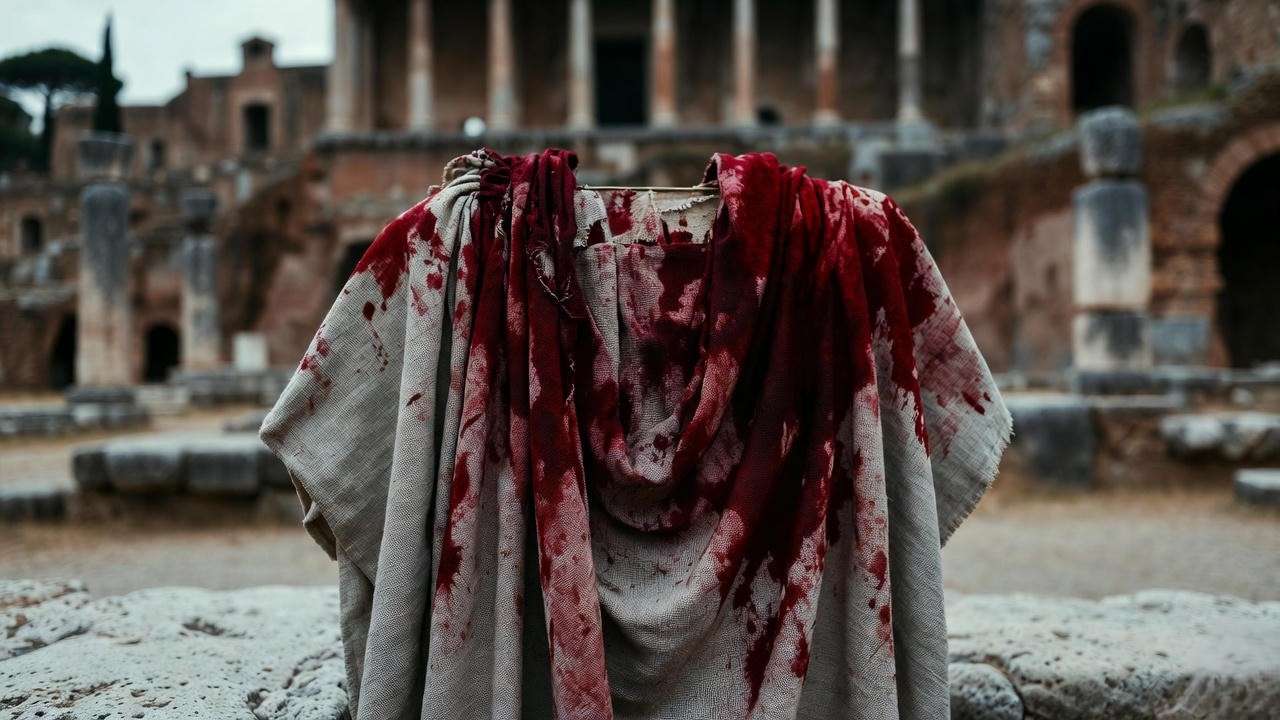
The pursuit of power in Julius Caesar leads inexorably to betrayal and chaos. Cassius’s manipulation of Brutus, the conspirators’ assassination of Caesar, and Antony’s subsequent betrayal of the republic’s ideals all spiral into civil war. The play’s tragic arc reveals power’s double-edged nature: it elevates individuals but destroys relationships and societies.
The consequences are stark. Brutus, hoping to preserve Rome, becomes its unwitting destroyer. Antony, cloaked in loyalty to Caesar, pursues his own ambitions, paving the way for Octavius’s rise. As historian Mary Beard notes, “Rome’s republic fell not from one act but from a cascade of betrayals.” Shakespeare’s portrayal of this fallout invites reflection on the fragility of political systems, making the Julius Caesar strain a cautionary tale for any era.
3. Betrayal as the Heart of the Julius Caesar Strain
3.1 Brutus: The Honorable Traitor
Brutus is the play’s tragic heart, embodying the Julius Caesar strain in his torn loyalties. A man of principle, he loves Caesar yet fears his potential tyranny. His soliloquy in Act 2, Scene 1—“It must be by his death”—reveals a tortured rationalization: to save Rome, he must betray his friend. This internal conflict makes Brutus a quintessential tragic hero, noble yet flawed.
Shakespeare crafts Brutus with psychological depth, showing how honor can lead to ruin. His decision to join the conspiracy is not driven by envy, like Cassius, but by a misguided sense of duty. As critic A.C. Bradley writes, “Brutus’s tragedy lies in his trust in his own rectitude.” His betrayal of Caesar, though well-intentioned, sets the stage for Rome’s collapse, highlighting the strain between personal loyalty and public responsibility.
3.2 The Betrayal of Friendship
The Julius Caesar strain is deeply personal, rooted in the fractured relationships between Caesar, Brutus, and Cassius. Caesar’s trust in Brutus makes his assassination all the more poignant, encapsulated in his dying words, “Et tu, Brute?” (Act 3, Scene 1). Similarly, the deteriorating bond between Brutus and Cassius—marked by quarrels over strategy and trust—mirrors the play’s broader theme of betrayal.
Shakespeare humanizes these political betrayals by emphasizing their emotional toll. Brutus’s grief after Caesar’s death and his later remorse underscore the cost of his actions. This focus on friendship elevates Julius Caesar beyond a mere political thriller, offering a meditation on the human cost of ambition and mistrust.
3.3 Modern Parallels: Betrayal in Leadership
The Julius Caesar strain resonates in today’s world, where betrayals in politics and business abound. From corporate power struggles to political scandals, the tension between loyalty and ambition remains a constant. A 2020 Harvard Business Review study on leadership found that trust is the cornerstone of effective teams, yet it’s often undermined by competing agendas—much like in Shakespeare’s Rome.
Consider modern examples: a CEO ousted by their board, or a politician betrayed by allies for personal gain. These scenarios echo the play’s themes, showing how the strain of power and betrayal transcends time. By studying Julius Caesar, readers gain insights into navigating trust and integrity in their own lives, whether in leadership roles or personal relationships.
4. Shakespeare’s Craft: Literary Devices Amplifying the Strain
4.1 Symbolism and Imagery
Shakespeare’s use of symbolism and imagery in Julius Caesar intensifies the Julius Caesar strain, giving tangible form to its themes of power and betrayal. The storm in Act 1, Scene 3, with its “tempest dropping fire,” serves as a potent symbol of political and moral chaos. It foreshadows the upheaval of Caesar’s assassination, reflecting the strain between order and disorder. Similarly, blood imagery—vivid in the conspirators’ ritual bathing in Caesar’s blood (Act 3, Scene 1)—underscores the violent cost of betrayal, staining both the actors and Rome itself.
The Ides of March, a recurring motif, carries ominous weight. Mentioned by the Soothsayer (Act 1, Scene 2), it symbolizes fate’s inexorable pull, amplifying the tension between free will and destiny. These symbols weave a rich tapestry, inviting readers to explore the play’s deeper meanings. As scholar Marjorie Garber notes, “Shakespeare’s imagery turns abstract conflicts into visceral experiences,” making the strain palpable for audiences.
4.2 Irony and Foreshadowing
Dramatic irony and foreshadowing are central to Shakespeare’s craft, heightening the Julius Caesar strain by aligning the audience’s knowledge with the characters’ ignorance. Caesar’s trust in Brutus, despite warnings from the Soothsayer and Calpurnia, is steeped in irony. His declaration, “I am constant as the northern star” (Act 3, Scene 1), moments before his death, underscores his hubris, making his betrayal all the more tragic.
Foreshadowing, too, permeates the play. Calpurnia’s dream of Caesar’s statue spouting blood (Act 2, Scene 2) eerily predicts his assassination, while omens like the lioness and “men all in fire” (Act 1, Scene 3) signal Rome’s impending collapse. These devices create a sense of inevitability, intensifying the strain as characters grapple with choices that seem both free and fated. For students, analyzing these elements reveals Shakespeare’s mastery in building suspense and emotional depth.
4.3 Language and Soliloquies
Shakespeare’s language—particularly his use of blank verse and soliloquies—brings the Julius Caesar strain to life. The play’s iambic pentameter mirrors the rhythm of human thought, lending authenticity to characters’ conflicts. Brutus’s soliloquy in Act 2, Scene 1, is a masterclass in psychological complexity: “It must be by his death: and for my part, / I know no personal cause to spurn at him, / But for the general.” Here, Shakespeare lays bare Brutus’s rationalization, letting readers witness the strain of his moral dilemma.
Rhetorical flourishes, like Antony’s funeral oration, showcase language as a tool of power. His repeated use of “honourable men” to describe the conspirators drips with irony, subtly dismantling their credibility. These linguistic choices not only drive the plot but also invite readers to dissect the interplay of truth and deception. For educators, this section of the play offers rich material for teaching rhetorical analysis.
5. Why the Julius Caesar Strain Matters Today
5.1 Lessons for Modern Leadership
The Julius Caesar strain offers timeless lessons for today’s leaders, whether in politics, business, or community roles. The play warns of the dangers of unchecked ambition, as seen in Caesar’s rise and Antony’s opportunism. It also highlights the fragility of trust, as Brutus’s betrayal of Caesar and Cassius’s manipulation erode Rome’s stability. A 2021 study in Harvard Business Review found that 70% of leadership failures stem from breaches of trust, echoing the play’s insights.
Modern leaders can learn from Brutus’s missteps: his failure to anticipate the consequences of his actions and his reliance on idealized principles over pragmatic realities. Similarly, Antony’s rhetorical skill underscores the power of communication in shaping narratives. By studying Julius Caesar, leaders gain tools to navigate ambition, build trust, and avoid the pitfalls of betrayal—making the strain a vital lens for professional growth.
5.2 Educational Value for Students and Scholars
For students, understanding the Julius Caesar strain unlocks deeper engagement with Shakespeare’s text. Analyzing the play’s themes of power and betrayal sharpens critical thinking and essay-writing skills. For example, exploring Brutus’s motivations can lead to nuanced arguments about ethics and leadership. The play’s rich language and literary devices also provide fertile ground for rhetorical and textual analysis.
Tip: Follow this step-by-step guide to analyze Julius Caesar for essays:
- Identify a Theme: Focus on power, betrayal, or loyalty.
- Select Evidence: Choose quotes (e.g., Brutus’s soliloquy, Antony’s speech).
- Analyze Context: Consider historical and character motivations.
- Connect to Today: Link themes to modern issues.
- Conclude Strongly: Summarize how the strain shapes the play’s impact.
Scholars, too, find value in the play’s complexity, as it invites ongoing debate about Shakespeare’s political views and moral philosophy. Resources like the Folger Shakespeare Library offer further reading for academic exploration.
5.3 Cultural Impact and Adaptations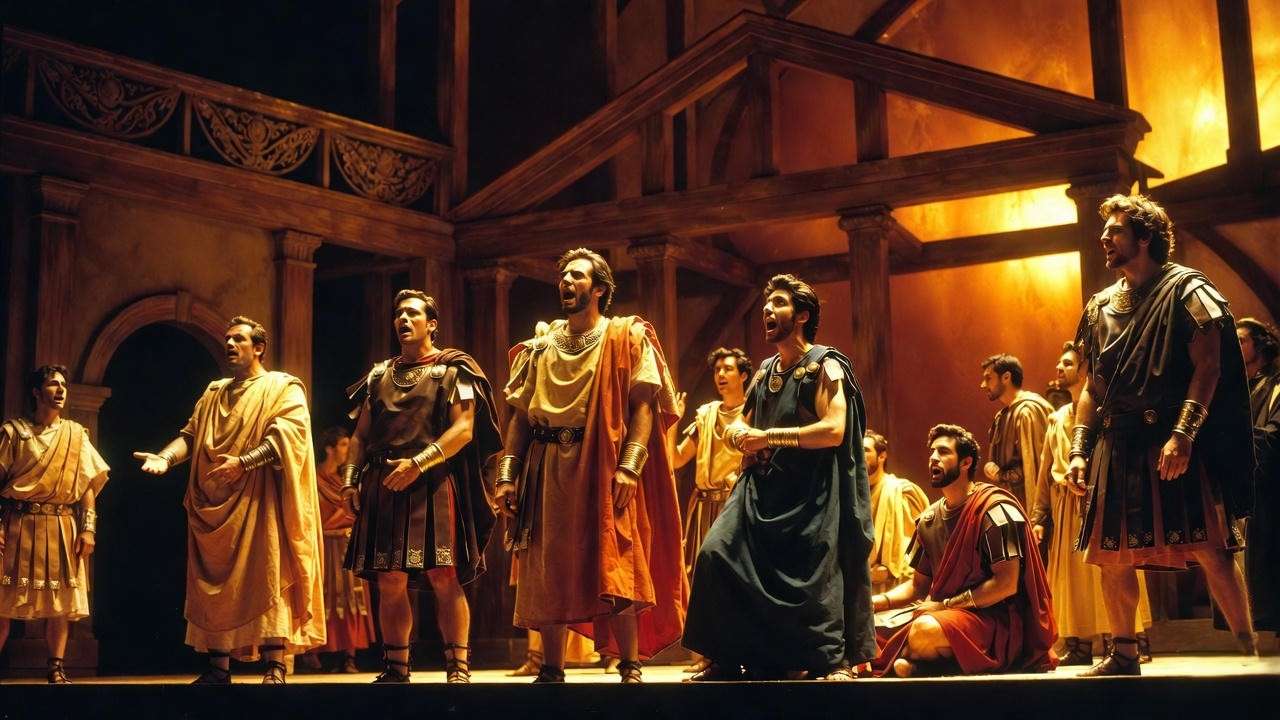
The Julius Caesar strain resonates in modern culture through adaptations that reinterpret its themes. The 2017 Public Theater production in New York, which portrayed Caesar as a Trump-like figure, sparked controversy for its bold commentary on authoritarianism. Films like Joseph L. Mankiewicz’s 1953 adaptation, starring Marlon Brando as Antony, emphasize the play’s emotional depth, while modern stagings often explore gender and diversity in casting.
These adaptations highlight the play’s flexibility, allowing directors to address contemporary issues like populism, division, and betrayal. For audiences, they make the Julius Caesar strain accessible, proving Shakespeare’s relevance in an ever-changing world. Exploring these productions—available through platforms like the Globe Theatre’s archives—enriches readers’ understanding of the play’s enduring legacy.
6. FAQs: Addressing Common Questions About Julius Caesar
Question 1: What is the main theme of Julius Caesar? Answer: The main theme is the interplay of power and betrayal, with the Julius Caesar strain—moral and political tension—driving the tragedy. Shakespeare explores how ambition fractures trust, leading to societal collapse.
Question 2: Why is Brutus considered a tragic hero? Answer: Brutus’s noble intentions to save Rome are undermined by flawed decisions, like trusting Antony and underestimating the mob. His downfall, rooted in honor, makes him a classic tragic hero.
Question 3: How does Julius Caesar reflect Shakespeare’s views on politics? Answer: The play critiques absolute power and the fragility of republics, reflecting Elizabethan fears of instability. Shakespeare remains ambiguous, inviting debate about authority and rebellion.
Question 4: How can students analyze the play for essays? Answer: Focus on themes (power, betrayal), character motivations (Brutus’s dilemma), and literary devices (irony, symbolism). Use quotes and connect to modern parallels for a compelling argument.
SEO Value: These FAQs target long-tail queries like “Julius Caesar themes essay” and “Brutus tragic hero,” boosting search visibility and user engagement.
The Julius Caesar strain—Shakespeare’s profound exploration of power, betrayal, and moral conflict—lies at the heart of Julius Caesar. Through characters like Brutus, Caesar, and Antony, the play reveals the tensions that shape human nature and societies. Its symbols, irony, and language amplify these themes, while its lessons resonate in modern leadership, education, and culture. By unpacking this strain, readers gain not only a deeper appreciation of Shakespeare’s genius but also insights into navigating trust and ambition today.
Revisit Julius Caesar with fresh eyes, and let its wisdom guide your understanding of the world. Join the conversation on our blog, explore related articles on Macbeth or Hamlet, or share your thoughts on the play’s timeless relevance. Shakespeare’s Rome is our world—a stage where the strain of human conflict continues to unfold.