Imagine London in the summer of 1902: streets draped in patriotic bunting, crowds buzzing with anticipation, and every vantage point along Pall Mall commanding premium prices for a glimpse of history. Then, just days before the grand event, disaster strikes—the King’s sudden illness forces the postponement of Edward VII’s coronation procession. Contracts signed in excitement suddenly hang in limbo. This real-life drama gave rise to one of contract law’s most enduring landmarks: Krell v Henry [1903] 2 KB 740, the quintessential “coronation case” that crystallized the doctrine of frustration of purpose.
In Krell v Henry, a landlord sued a tenant who refused to pay the balance for renting rooms specifically to view a coronation that never happened. The Court of Appeal’s decision not only excused the tenant but established that unforeseen events can discharge contractual obligations when they destroy the very foundation of the agreement. Yet this legal principle finds uncanny parallels in William Shakespeare’s royal dramas, where thwarted coronations, shattered expectations, and the whims of fate unravel the bonds of loyalty and power.
This article explores the historical and legal depths of Krell v Henry, its foundational role in the doctrine of frustration, and—uniquely—its thematic resonances with Shakespeare’s explorations of disrupted ceremony in plays like Henry IV and Henry VIII. Whether you’re a law student grappling with contract principles, a Shakespeare enthusiast, or an interdisciplinary reader seeking fresh connections between law and literature, you’ll gain fresh insights into how a 1903 courtroom battle echoes the contingencies of Tudor tragedy.
The Historical Context of the 1902 Coronation Crisis
To fully understand Krell v Henry, we must immerse ourselves in the atmosphere of Edwardian England. Edward VII had ascended the throne in January 1901 after Queen Victoria’s death, but his official coronation was fixed for 26 June 1902, followed by grand processions through London on 26 and 27 June.
The capital was transformed into a festival of imperial pride. Miles of streets were decorated with flags and garlands; temporary stands lined the procession route; hotels and private residences overlooking Pall Mall, the Mall, and Constitution Hill advertised rooms at astronomical day rates. Businesses flourished on coronation souvenirs, catering, and transport.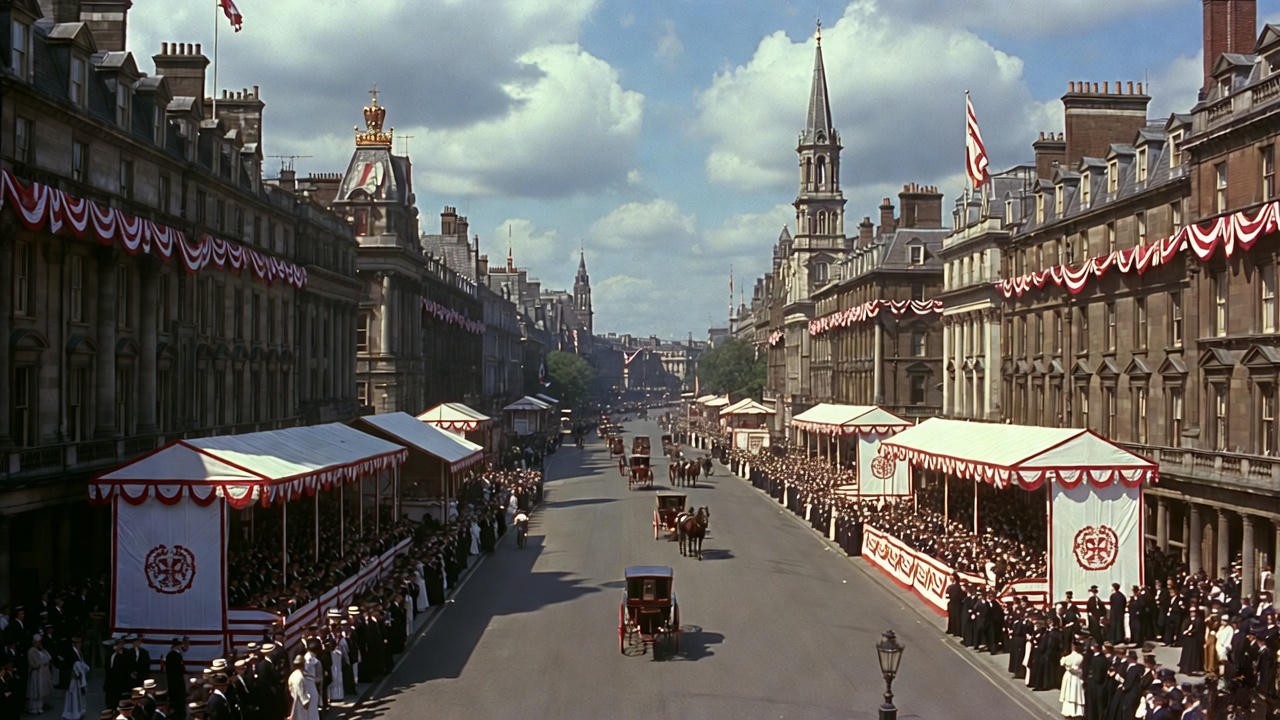
Then, on 24 June 1902, catastrophe struck. The King developed acute appendicitis (then called perityphlitis) and required immediate surgery. Surgeon Sir Frederick Treves performed the operation just 48 hours before the scheduled ceremony, draining an abscess and saving the King’s life. The coronation was postponed indefinitely.
The rescheduled event took place on 9 August 1902, but the original processions were abandoned. The sudden cancellation created commercial chaos: tickets, boat hires, seat rentals, and catering contracts all became worthless. A wave of litigation followed—the so-called “coronation cases”—of which Krell v Henry became the leading authority on frustration of purpose.
The Facts and Procedural History of Krell v Henry
Paul Krell owned a suite of rooms on the first floor of 56A Pall Mall, perfectly positioned to overlook the forthcoming royal processions. On 17 June 1902, he placed an advertisement in the window stating that the rooms were “to be let for the day” during the coronation period.
Defendant C.S. Henry noticed the sign and initiated correspondence. Through an exchange of letters, Henry agreed to take the rooms for daytime use only on 26 and 27 June for a total of £75. He paid a deposit of £25, with the remaining £50 due shortly before the dates.
Crucially, the written agreement made no express mention of the coronation or the processions. The letters simply confirmed the dates, the price, and that the rooms were for “daylight use.”
When the processions were cancelled, Henry informed Krell he would not proceed and refused to pay the balance. Krell sued for the £50; Henry counterclaimed for repayment of his deposit (though this was later abandoned).
At first instance, Darling J held that there was an implied term that the contract was conditional upon the coronation processions taking place. Krell appealed to the Court of Appeal.
The Court of Appeal’s Landmark Judgment
The Court of Appeal—comprising Vaughan Williams LJ, Romer LJ, and Stirling LJ—delivered judgment on 11 August 1903, unanimously dismissing the appeal and affirming the doctrine of frustration.
Vaughan Williams LJ’s Leading Judgment
Vaughan Williams LJ provided the most detailed reasoning, building upon the earlier case of Taylor v Caldwell (1863), where physical destruction of a music hall excused both parties.
He examined the surrounding circumstances: the advertisement, the location of the rooms, the specific dates coinciding exactly with the proclaimed processions, and the exceptionally high price for mere daytime use. From these, he inferred that both parties contemplated one overriding purpose—viewing the royal processions.
His Lordship’s famous passage remains a cornerstone of contract textbooks:
“I quite think there may be many cases in which the use of a room on a particular day named would be let and taken without any reference to the purpose for which the hirer proposed to use the room… But in this case… the rooms were offered and taken for the purpose of seeing the procession, and for no other purpose… In my judgment the taking place of those processions on the days proclaimed… was regarded by both contracting parties as the foundation of the contract.”
Thus, when the foundation ceased to exist without fault of either party, the contract was discharged.
Romer LJ and Stirling LJ Concurring
Romer LJ agreed, emphasizing the implied condition approach from Taylor v Caldwell. Stirling LJ concurred without adding substantial separate reasoning.
Distinction from Earlier Cases
The court carefully distinguished the contemporaneous case of Herne Bay Steam Boat Co v Hutton [1903] 2 KB 683. There, a boat was hired to take passengers to view the naval review and cruise around the fleet. Although the review was cancelled, the fleet remained assembled and the cruise could still occur. The purpose was not wholly frustrated—hence the contract remained enforceable.
In Krell v Henry, by contrast, the sole commercial purpose was rendered impossible.
The Doctrine of Frustration – Core Principles Established by Krell v Henry
Krell v Henry elevated frustration of purpose to a distinct category alongside impossibility, establishing key principles that remain authoritative in English law and throughout the Commonwealth.
What Constitutes Frustration of Purpose?
A contract is frustrated when a supervening event, not contemplated or provided for by the parties and not caused by either, renders performance radically different from that undertaken. The event must strike at the root of the contract.
Key requirements:
- The event must be unforeseen and beyond the control of both parties.
- It must destroy the fundamental assumption or “foundation” upon which the contract was based.
- Mere increased difficulty, expense, or inconvenience is insufficient.
- The risk must not have been allocated by the contract itself (e.g., via force majeure clause).
| Element of Frustration | Krell v Henry Example | Herne Bay Counter-Example |
|---|---|---|
| Common contemplated purpose | Viewing specific coronation processions | General cruise + possible naval review |
| Effect of supervening event | Entire purpose destroyed | Partial purpose remained possible |
| Radical change in obligation | Rooms worthless for agreed purpose | Boat could still be used for cruise |
| Outcome | Contract discharged | Contract enforceable |
No Self-Induced Frustration
The doctrine does not apply if the frustrating event results from the electing party’s own conduct.
Modern Application and Statutory Developments
The common law doctrine was modified by the Law Reform (Frustrated Contracts) Act 1943, which provides for adjustment of losses (recovery of money paid, valuation of benefits conferred). Krell v Henry itself remains the leading illustration of frustration of purpose.
Echoes in Shakespeare’s Royal Dramas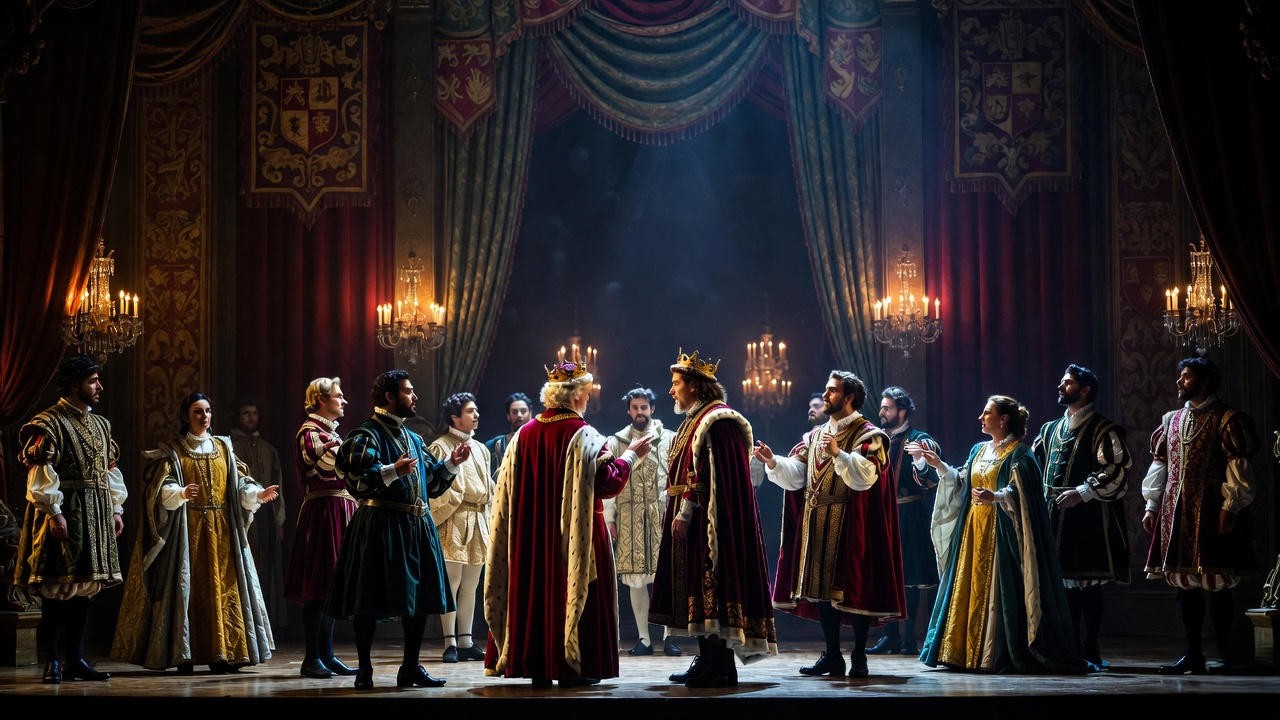
The most original and illuminating aspect of Krell v Henry lies in its thematic parallels with Shakespeare’s royal plays. Shakespeare repeatedly dramatizes the fragility of ceremony, the contingency of power, and the sudden dissolution of obligations when their “foundation” vanishes—mirroring exactly the legal reasoning of 1903.
Disrupted Coronations and Processions in the History Plays
In Henry IV, Part 2, the dying Henry IV prepares for his own coronation procession to give thanks at Westminster after crushing rebellion. He tells Prince Hal:
“Therefore, my Harry, Be it thy course to busy giddy minds With foreign quarrels, that action, hence borne out, May waste the memory of the former days.”
Yet the procession never occurs. Henry IV dies before completing the ritual, and Hal ascends unexpectedly as Henry V. The anticipated public spectacle—the foundation of the old king’s final legitimacy—disappears, much like Edward VII’s cancelled route past Pall Mall.
Even more strikingly, Henry VIII (or All Is True) opens with lavish description of the Field of the Cloth of Gold and later stages Anne Boleyn’s coronation procession in Act IV. The Prologue warns that audiences may weep, and the play ends with the christening of Elizabeth—but Anne’s own triumphant procession proves fleeting, as her later fall demonstrates the radical change in circumstances that frustrates earlier assumptions.
Thwarted Expectations and Contingent Obligations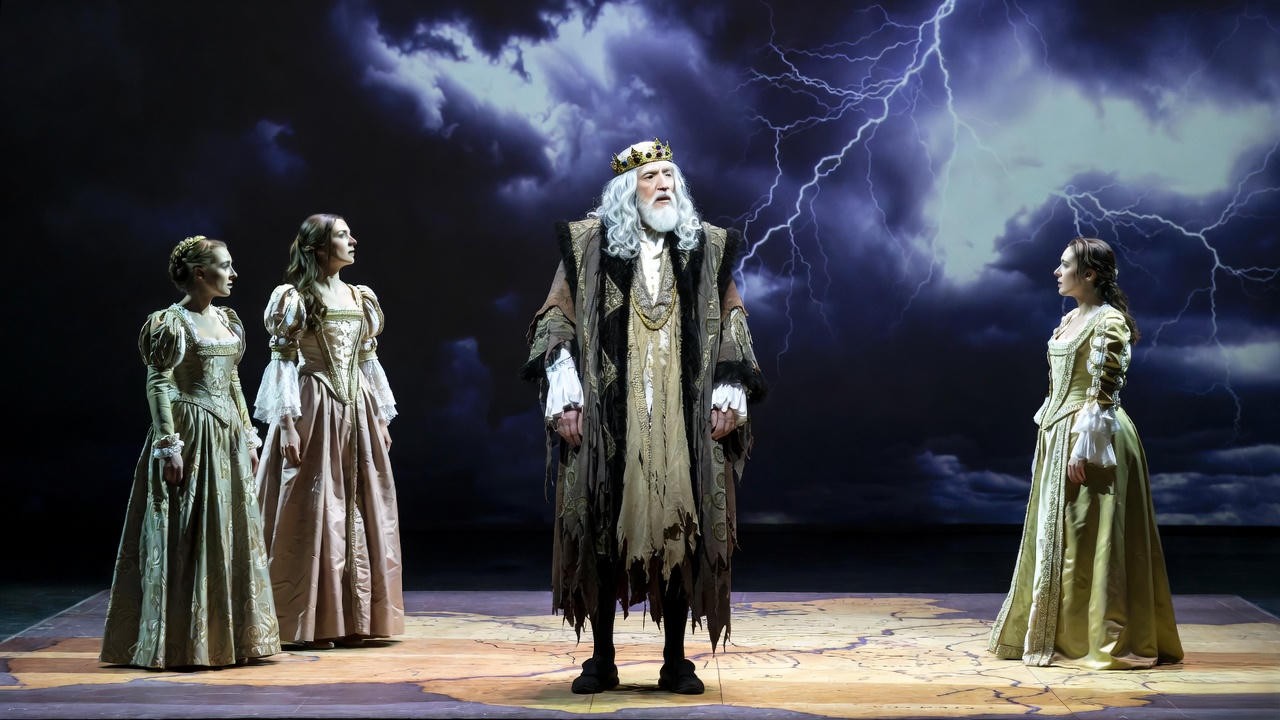
In Richard II, the entire political order rests on an implied foundation of divine right and ceremonial continuity. Bolingbroke’s return disrupts the expected coronation cycle, and Richard’s deposition speech laments the vanishing of his assumed obligations:
“For God’s sake let us sit upon the ground And tell sad stories of the death of kings…”
The “foundation” of Richard’s contract with his subjects—mutual loyalty underpinned by ceremony—ceases to exist without fault on either side, discharging the obligations.
King Lear offers perhaps the closest parallel. Lear’s division of the kingdom rests on an implied condition: his daughters’ professed love will translate into continued care and respect. When Cordelia refuses flattery and Goneril/Regan later betray him, the foundation of the “contract” (love for land) is destroyed. The radical change frustrates the entire arrangement, leaving Lear destitute—echoing how the cancellation frustrated Henry’s obligation to pay.
Fate, Fortune, and the “Foundation” of Power
Shakespeare frequently invokes Fortune’s wheel to illustrate how quickly foundations can shift. In Henry V, the Chorus describes the public’s expectation of the returning king’s triumph, yet the play constantly reminds us of contingency (the tennis balls insult, the traitors). Vaughan Williams LJ’s “foundation of the contract” finds poetic expression in Shakespeare’s recurrent motif that even the most solemn bonds dissolve when their underlying assumption fails.
Why Shakespeare Readers Should Care About Krell v Henry
Studying Krell v Henry alongside Shakespeare enriches both disciplines:
- It reveals how literature anticipates sophisticated legal concepts centuries in advance.
- It deepens appreciation of dramatic irony: audiences watch characters build obligations on foundations they (and we) know will collapse.
- It provides interdisciplinary bridges for students of law and literature, showing how contract law and tragedy both grapple with human planning in an unpredictable world.
Legacy and Modern Relevance of Krell v Henry
More than 120 years later, Krell v Henry remains good law and is regularly cited.
Influence on Commonwealth Jurisdictions
The decision binds courts in Australia, Canada, New Zealand, and other common law countries. It influenced the development of similar doctrines in civilian systems.
COVID-19 Pandemic Applications
During the pandemic, courts worldwide applied frustration principles to cancelled events, leases, and supply contracts—directly invoking the coronation cases. For example, event venue disputes often cited Krell v Henry when government restrictions destroyed the commercial purpose.
Criticisms and Limits of the Doctrine
Critics argue the test is too vague (“radical change,” “foundation”). Some jurisdictions prefer stricter construction or rely more on force majeure clauses. Nonetheless, Krell v Henry endures as the classic statement.
Notable subsequent cases citing Krell:
- Fibrosa Spolka Akcyjna v Fairbairn Lawson [1943] AC 32 (leading to the 1943 Act)
- Davis Contractors Ltd v Fareham UDC [1956] AC 696
- National Carriers Ltd v Panalpina [1981] AC 675
- The Sea Angel [2007] EWCA Civ 547 (modern multi-factorial approach)
Frequently Asked Questions
What is Krell v Henry in simple terms? A tenant rented rooms to watch Edward VII’s coronation procession. When the King fell ill and the procession was cancelled, the court held the tenant did not have to pay because the whole purpose of the contract had disappeared.
Is Krell v Henry still good law? Yes. It remains the leading authority on frustration of purpose in English and Commonwealth law.
How does Krell v Henry differ from force majeure clauses? Force majeure is a contractual term specifying events that excuse performance. Frustration is a common law doctrine that applies when no such clause exists and the foundation of the contract vanishes.
Are there Shakespeare plays directly about contract frustration? No play is explicitly about contracts, but King Lear, Richard II, and the Henry IV–Henry VIII cycle dramatize analogous situations where obligations dissolve due to radical unforeseen change.
Can frustration apply to consumer contracts today? Yes, though courts apply it narrowly. Consumer rights legislation and express terms often provide alternative remedies.
The coronation that never happened in June 1902 produced one of contract law’s most elegant doctrines—and an unexpected lens through which to view Shakespeare’s royal dramas. Both the Court of Appeal in 1903 and the Globe stage four centuries earlier understood a profound truth: even the most binding obligations rest on implied foundations that fate or fortune can suddenly remove.
Krell v Henry reminds us that contracts, like crowns, are contingent. When the procession fails to pass, neither payment nor loyalty need follow. Shakespeare’s kings and judges alike confront the same human reality: we plan ceremoniously, but the world often frustrates our purposes.