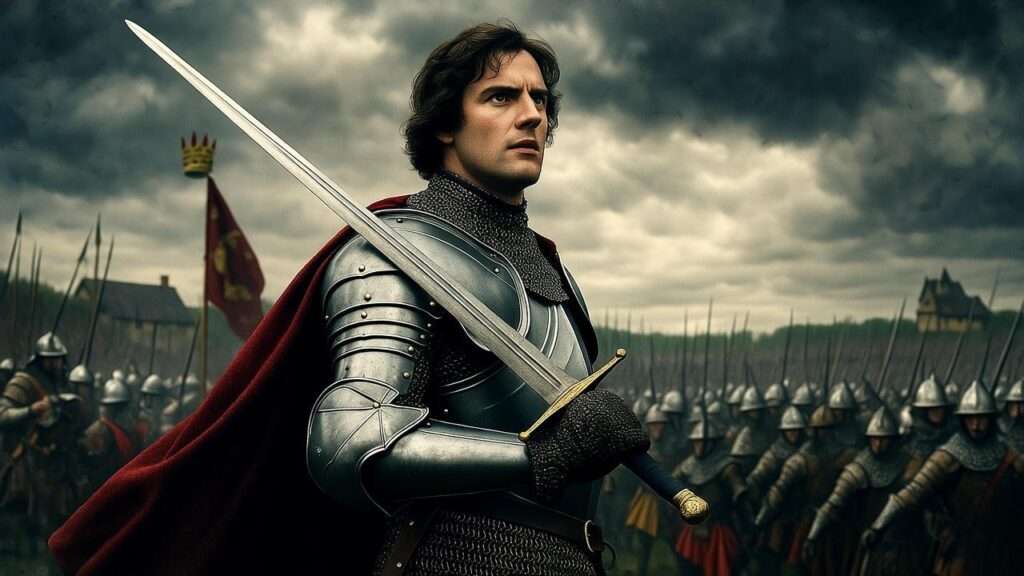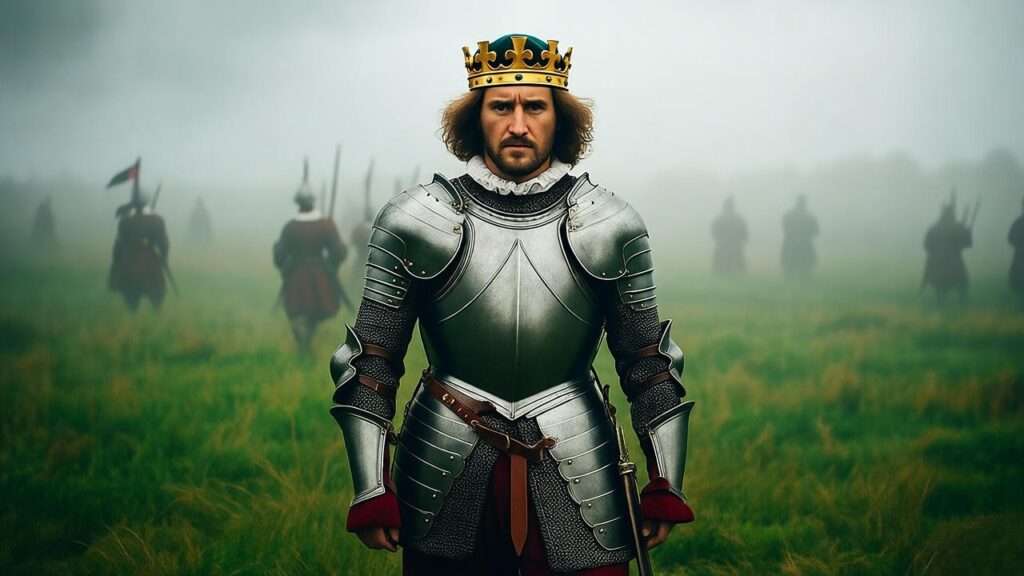
“We few, we happy few, we band of brothers; For he to-day that sheds his blood with me Shall be my brother…”
These immortal words from William Shakespeare’s Henry V (Act 4, Scene 3) capture the essence of King Henry V’s legendary leadership on the eve of the Battle of Agincourt. The speech not only rallies his outnumbered troops to victory but also underscores themes of brotherhood, loyalty, and shared legacy—themes deeply intertwined with Henry’s own royal bloodline. Yet, for many readers, students, and theater enthusiasts, the Henry V family tree remains a confusing tangle of Plantagenets, Lancasters, and French alliances. Recurring names like Henry, John, and Humphrey across Shakespeare’s history plays—Richard II, Henry IV Parts 1 and 2, and Henry V—often leave audiences wondering: Who exactly were Henry’s parents? His siblings? How did his marriage shape the future of England?
This comprehensive guide solves that problem. Drawing on historical records, Shakespeare’s dramatic interpretations, and scholarly sources like the Folger Shakespeare Library, Internet Shakespeare Editions, and Holinshed’s Chronicles, we’ll untangle the Henry V family tree with clear explanations, detailed textual diagrams, and insightful comparisons. Whether you’re preparing for a performance, studying the Wars of the Roses, or simply deepening your appreciation of Shakespeare’s Henriad tetralogy, this article provides the clarity and context you need.
Historical Context – The House of Lancaster and the Plantagenet Roots
To fully grasp the Henry V family tree, we must start with its foundations in the broader Plantagenet dynasty. The Plantagenets ruled England from 1154 to 1485, but by the late 14th century, the line had splintered into competing branches: Lancaster and York. Henry V belonged to the House of Lancaster, a cadet branch descended from one of Edward III’s sons.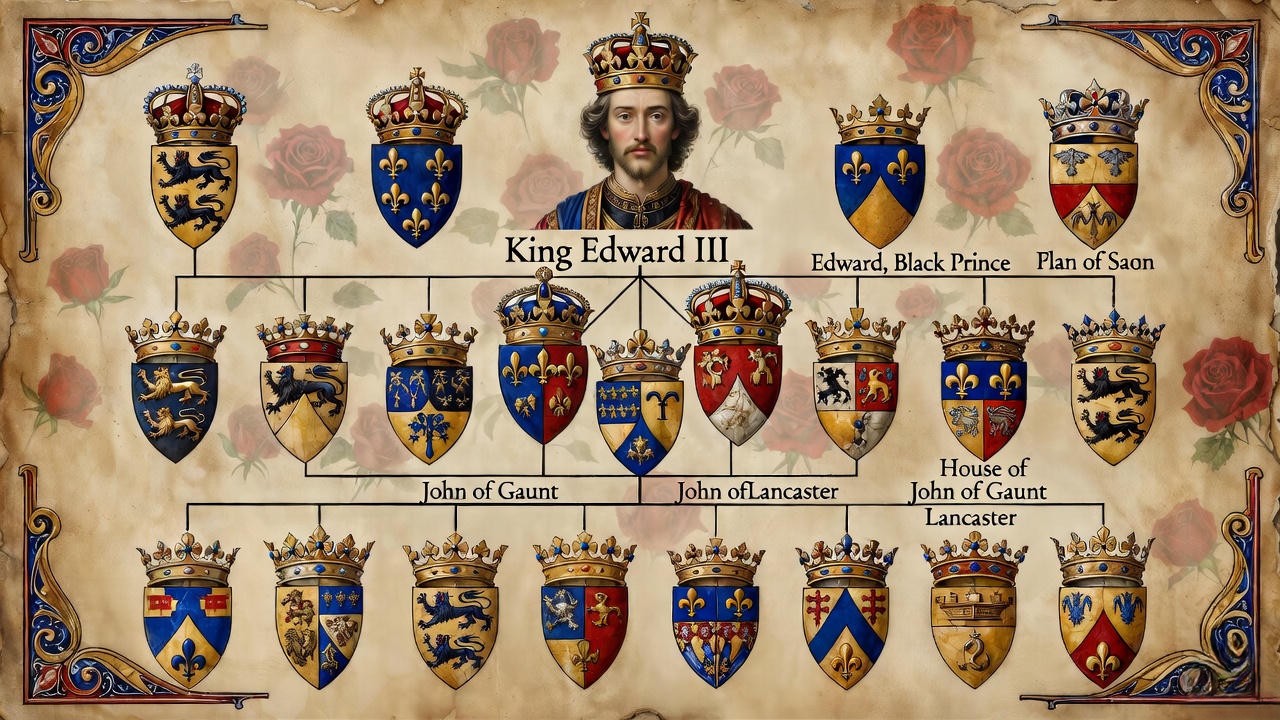
Edward III and the Origins of the Lancastrian Line
King Edward III (r. 1327–1377) is the pivotal ancestor in any Plantagenet family tree, including that of Henry V. Edward had several sons who survived to adulthood, creating multiple lines of succession:
- Lionel of Antwerp, Duke of Clarence (senior line through female descent, later Yorkist claim).
- John of Gaunt, 1st Duke of Lancaster (founder of the Lancastrian line).
- Edmund of Langley, 1st Duke of York (progenitor of the Yorkist branch).
- Thomas of Woodstock, Duke of Gloucester.
The Lancastrian branch stems directly from John of Gaunt (1340–1399), Edward III’s third surviving son. Gaunt’s vast wealth and lands (including the Duchy of Lancaster) made his descendants powerful players in English politics. His legitimate son by his first wife Blanche of Lancaster, Henry Bolingbroke, would seize the throne as Henry IV in 1399.
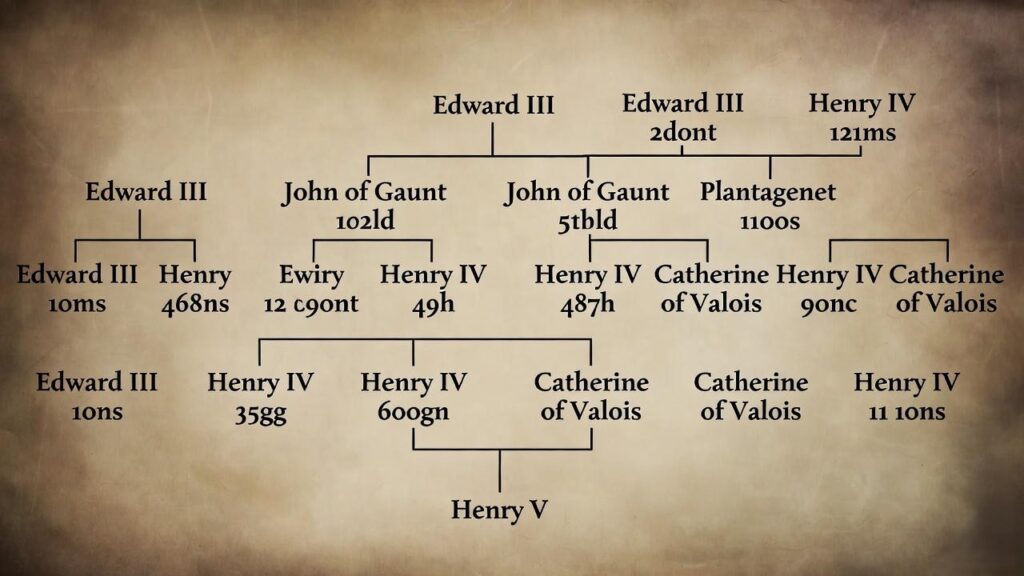
Here is a simplified textual overview of the core descent leading to Henry V:
Edward III (1312–1377) = Joan of Kent (descendants not relevant here)
└── John of Gaunt, 1st Duke of Lancaster (1340–1399) = Blanche of Lancaster
    └── Henry Bolingbroke (Henry IV) (1367–1413) = Mary de Bohun
        └── Henry V (1386–1422)
This lineage foreshadowed the Wars of the Roses (1455–1487), as rival Yorkist descendants challenged Lancastrian rule on the grounds of stronger primogeniture through Lionel of Antwerp’s line.
Henry IV’s Usurpation and the Legitimacy Question
Henry IV’s accession was controversial. Exiled by Richard II in 1398, Henry Bolingbroke returned in 1399 to reclaim his Lancastrian inheritance after Richard seized Gaunt’s estates upon his death. Bolingbroke rapidly gained support, deposed the childless Richard II, and was crowned Henry IV—establishing the Lancastrian dynasty.
This usurpation cast a long shadow. Shakespeare dramatizes it extensively in Richard II and the Henry IV plays, portraying Henry IV’s reign as plagued by rebellion (Percy rebellions, Welsh uprisings) and guilt over the “stolen crown.” For Henry V, it meant inheriting a throne whose legitimacy was perpetually questioned—a motivation Shakespeare uses to explain Henry’s aggressive campaign in France as a quest for divine redemption and national unity.
Historical insight: While Henry IV’s claim rested on male-line descent from Edward III, Yorkist propagandists later emphasized descent from Lionel of Antwerp through his daughter Philippa. This dynastic fragility adds profound depth to Shakespeare’s portrayal of Henry V’s heroic redemption arc.
The Core Family of Henry V – Parents, Siblings, and Immediate Relations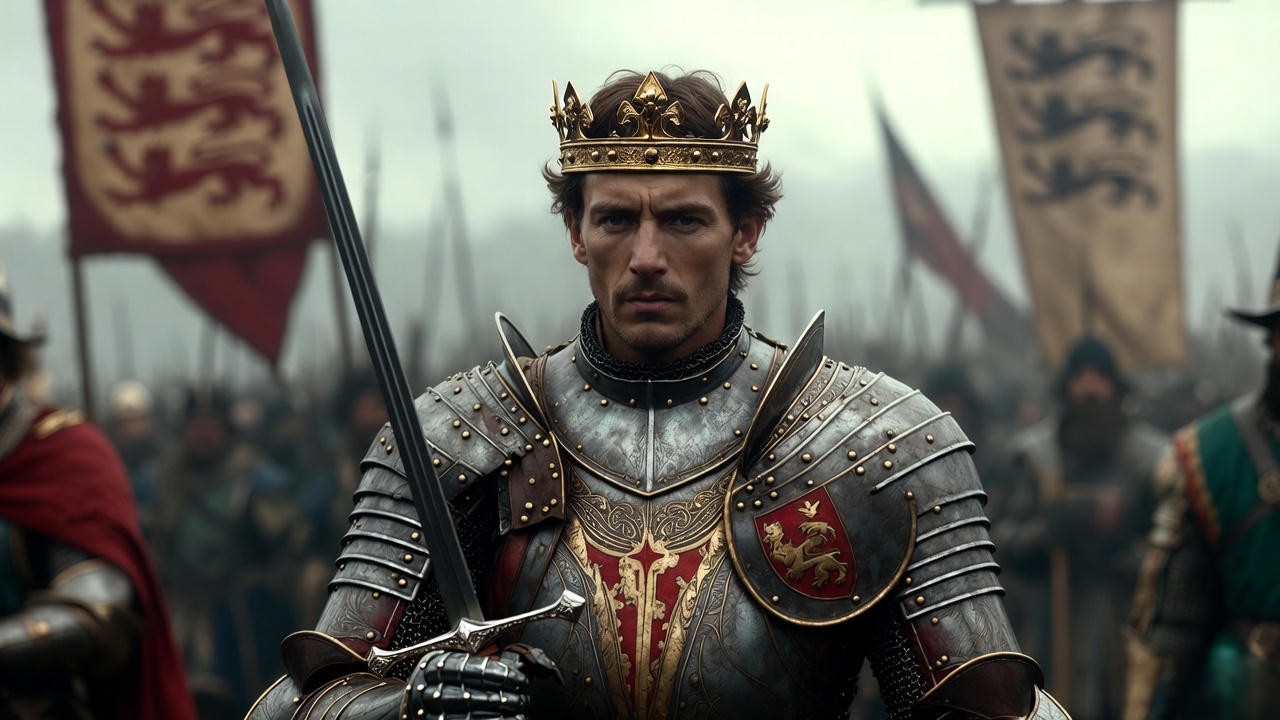
Henry V was born Henry of Monmouth on 16 September 1386 (or possibly 1387) at Monmouth Castle in Wales. His immediate family shaped both his historical career and Shakespeare’s dramatic characterization.
Henry V’s Parents: Henry IV and Mary de Bohun
Henry IV (1367–1413), originally Henry Bolingbroke, married Mary de Bohun (c. 1368–1394) in 1380. Mary was co-heiress to the vast Bohun estates, bringing significant wealth and land to the Lancastrian cause. She gave birth to six children before dying in childbirth in 1394 at age 25—Henry IV never remarried.
Shakespeare’s Henry IV plays focus intensely on the father-son relationship. The young Prince Hal (Henry V) is depicted as wayward and dissolute, frequenting taverns with Falstaff, much to his father’s despair. The reconciliation scene in Henry IV, Part 2 (Act 4, Scene 5) is one of Shakespeare’s most moving: the dying king believes Hal is eager for his death, only to be reassured of his son’s love and readiness to rule.
Historically, relations were likely warmer, though Henry V did spend much of his youth leading campaigns against Welsh rebels under Owen Glendower.
Henry V’s Siblings – The Brothers Who Shaped the Play
Henry V was the eldest of six surviving children—four sons and two daughters. His brothers play important supporting roles both in history and in Shakespeare’s Henry V.
- Thomas of Lancaster, Duke of Clarence (1387–1421) Second son. Historically bold and impulsive, he served as lieutenant in France but was killed at the Battle of Baugé in 1421 through reckless tactics. In Shakespeare’s play, Clarence appears briefly as a loyal brother at Agincourt.
- John of Lancaster, Duke of Bedford (1389–1435) Third son. A capable administrator and soldier, he became regent of France after Henry V’s death and defended English gains until his own death. Shakespeare portrays Bedford as steadfast and honorable.
- Humphrey, Duke of Gloucester (1390–1447) Fourth son. Known as “Good Duke Humphrey,” he served as Protector of England during Henry VI’s minority. His political rivalries contributed to later Lancastrian collapse. In Henry V, Gloucester is a loyal supporter; Shakespeare develops his character more fully (and critically) in the Henry VI plays.
The two daughters were:
- Blanche (1392–1409), married Louis III, Elector Palatine.
- Philippa (1394–1430), married Eric of Pomerania, King of Denmark, Sweden, and Norway.
Textual family tree of Henry IV’s immediate family:
Henry IV (1367–1413) = Mary de Bohun (c.1368–1394)
├── Henry V (1386–1422)
├── Thomas, Duke of Clarence (1387–1421)
├── John, Duke of Bedford (1389–1435)
├── Humphrey, Duke of Gloucester (1390–1447)
├── Blanche (1392–1409)
└── Philippa (1394–1430)
Marriage and Descendants – Catherine of Valois and the Tragic Legacy
The French Alliance: Marriage to Catherine of Valois
Henry V’s greatest diplomatic triumph was the Treaty of Troyes (1420), which recognized him as heir to the French throne and arranged his marriage to Catherine of Valois (1401–1437), daughter of King Charles VI of France and Isabeau of Bavaria.
Shakespeare’s famous wooing scene (Act 5, Scene 2) is one of the few light-hearted moments in the history plays: Henry, awkward in love, speaks plainly to Catherine through a language barrier. Historically, the marriage was purely political, designed to seal English claims in France.
Henry VI – The Only Child and the End of the Direct Line
Henry and Catherine had one son:
- Henry VI (1421–1471) Born at Windsor on 6 December 1421. Henry V died of dysentery in August 1422 when his son was only nine months old, leaving the infant king of both England and France.
The epilogue to Shakespeare’s Henry V ominously foreshadows the future:
“Henry the Sixth, in infant bands crown’d King Of France and England, did this king succeed; Whose state so many had the managing, That they lost France and made his England bleed.”
This prophecy is fulfilled in the Henry VI trilogy and Richard III. Henry VI’s weak rule, mental instability, and the rivalries among his uncles and nobles sparked the Wars of the Roses.
Extended line:
Henry V (1386–1422) = Catherine of Valois (1401–1437)
└── Henry VI (1421–1471) = Margaret of Anjou
    └── Edward of Westminster (1453–1471)
(Note: After Henry V’s death, Catherine secretly married Owen Tudor, producing the Tudor line that eventually claimed the throne through Henry VII.)
Shakespeare’s Henry V Family Tree – Dramatic Adaptations and Key Characters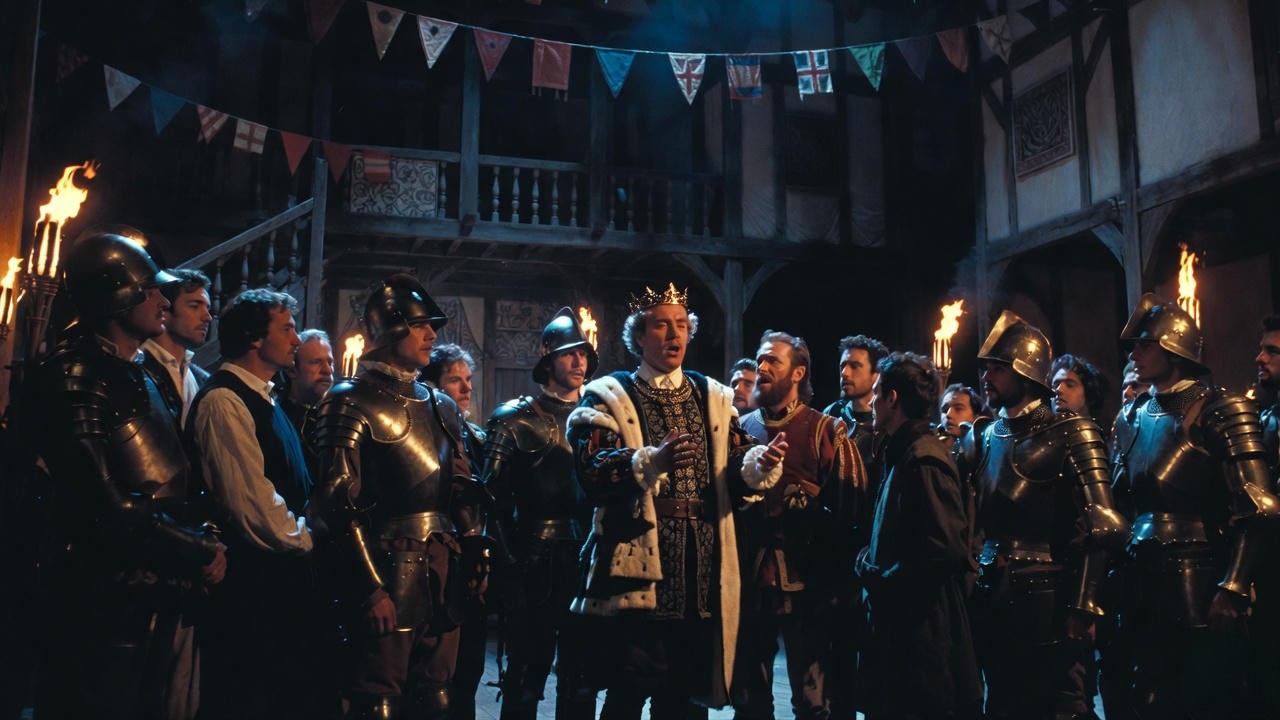
Shakespeare compresses and adapts historical relationships for dramatic effect.
The Genealogy in Shakespeare’s Play
The main familial relationships onstage in Henry V are:
- Henry V and his brothers (Clarence, Bedford, Gloucester).
- Uncle: Thomas Beaufort, Duke of Exeter (half-brother to Henry IV, loyal advisor).
- French royal family: Charles VI (father-in-law), Queen Isabeau, Princess Katherine (wife), the Dauphin (brother-in-law).
Shakespeare omits Henry’s sisters and many historical cousins to focus on military unity.
Key onstage relations (textual chart):
English Side:
Henry IV (mentioned, deceased)
└── Henry V
    ├── Clarence
    ├── Bedford
    ├── Gloucester
    └── Exeter (uncle)

French Side:
Charles VI = Isabeau of Bavaria
├── Katherine (marries Henry V)
└── Dauphin Louis
Major Characters and Their Familial Ties
- Duke of Exeter: Great-uncle to Henry V; trusted counselor.
- Duke of York: Cousin (descendant of Edmund of Langley); leads the vanguard at Agincourt and dies heroically.
- Traitors (Scroop, Cambridge, Grey): Cambridge was married to a Yorkist heiress, loosely tying the treason plot to dynastic rivalry.
Expert insight: Shakespeare uses family ties to reinforce the “band of brothers” motif—nobles and commoners united under Henry—while subtly reminding audiences of the fragility beneath.
Historical vs. Shakespearean Differences – Accuracy and Dramatic License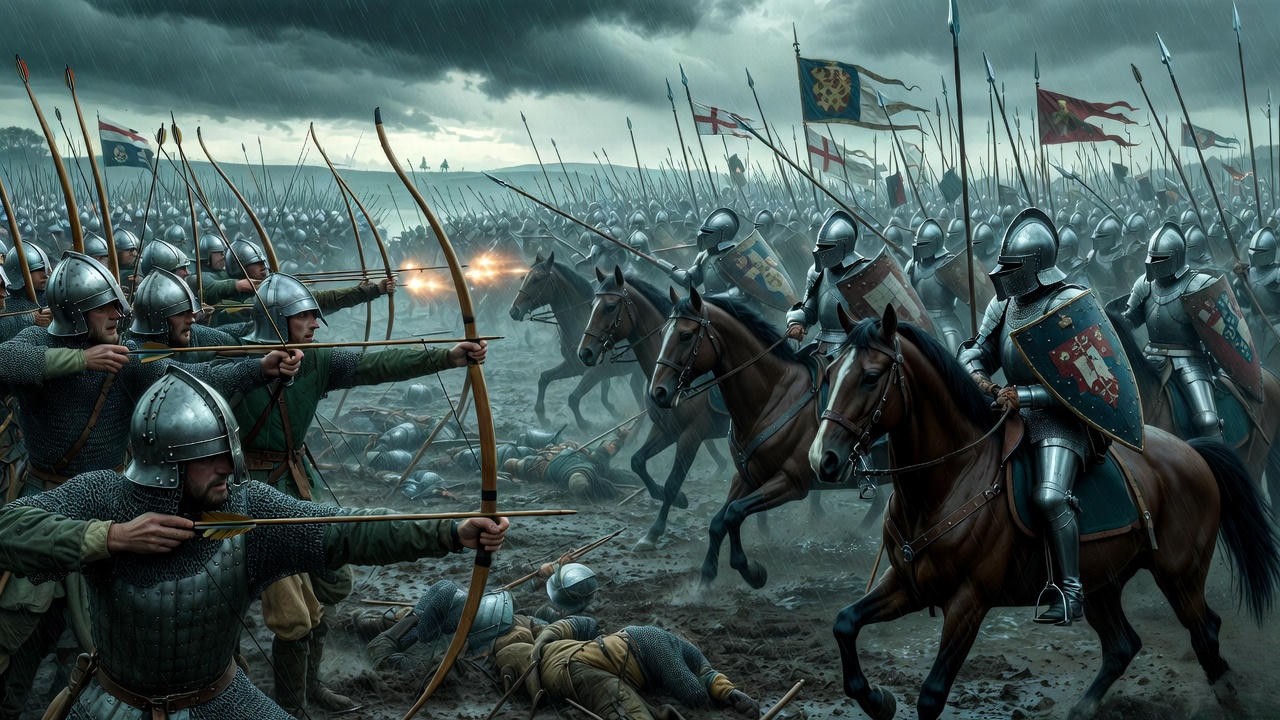
Key Inaccuracies for Dramatic Effect
- Ages: Henry V was 28 at Agincourt; Shakespeare presents him as a young mature king. The Dauphin was not present at the battle.
- Siblings: All brothers appear together at Agincourt for unity; historically, schedules varied.
- French portrayal: The Dauphin is comic and arrogant in the play; historically more competent.
Where Shakespeare Stays Faithful
The core lineage, the victory at Agincourt, the Treaty of Troyes, and the marriage to Catherine are accurate. Shakespeare drew heavily from Holinshed’s Chronicles (1577) and Hall’s Union (1548).
Scholarly consensus: Shakespeare’s alterations serve Elizabethan propaganda—presenting Henry V as an ideal Protestant warrior-king while glossing over the Lancastrian legitimacy issue.
Broader Impact – Family Ties and the Wars of the Roses
Henry V’s premature death unraveled his achievements. The minority of Henry VI allowed factionalism among his uncles (Bedford, Gloucester) and Beaufort relatives to grow. Yorkist claims through both Lionel and Edmund lines gained traction, culminating in civil war.
The Lancastrian direct male line ended with the death of Edward of Westminster at Tewkesbury (1471). The crown eventually passed to the Tudors via Henry V’s widow Catherine’s second marriage.
Understanding the Henry V family tree illuminates both Shakespeare’s dramatic genius and the real historical forces that shaped late medieval England. From Edward III’s prolific sons to the fragile union with France, every branch reveals themes of legitimacy, brotherhood, ambition, and loss that resonate through the plays.
Next time you read or watch Henry V, you’ll see the St. Crispin’s Day speech not just as battlefield rhetoric, but as a king’s attempt to forge a new family of loyal subjects to replace the fractured one he inherited.
FAQs
Who were Henry V’s brothers in Shakespeare’s play? Clarence, Bedford, and Gloucester appear as loyal supporters. Exeter is his great-uncle.
Is Shakespeare’s Henry V family tree historically accurate? Broadly yes for core lineage and marriage, but compressed and altered for dramatic unity.
How is Henry V related to Richard II? First cousins: both grandsons of Edward III (Richard through the senior Black Prince line, Henry through John of Gaunt).
What happened to Henry V’s son? Henry VI inherited both crowns as an infant, lost France, and was deposed twice during the Wars of the Roses, eventually murdered in 1471.
Why is the Lancastrian line important in Shakespeare? It provides the backbone of the Henriad and the first tetralogy, exploring themes of kingship, legitimacy, and civil strife.