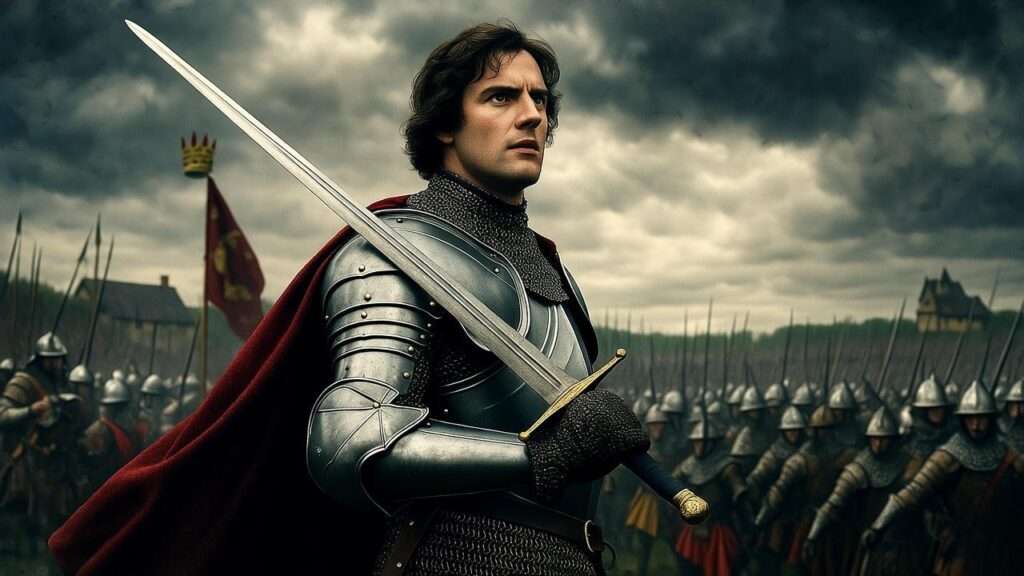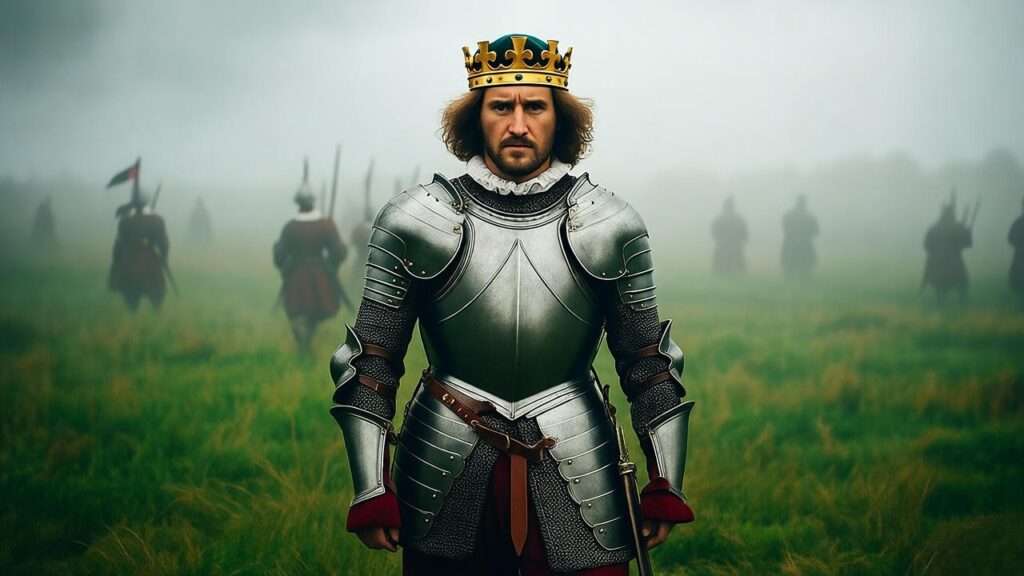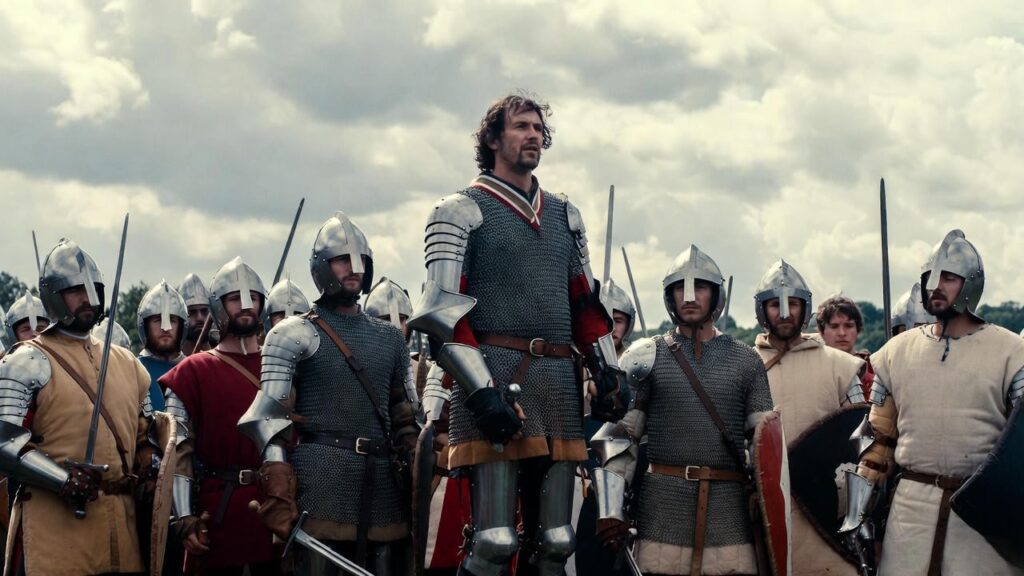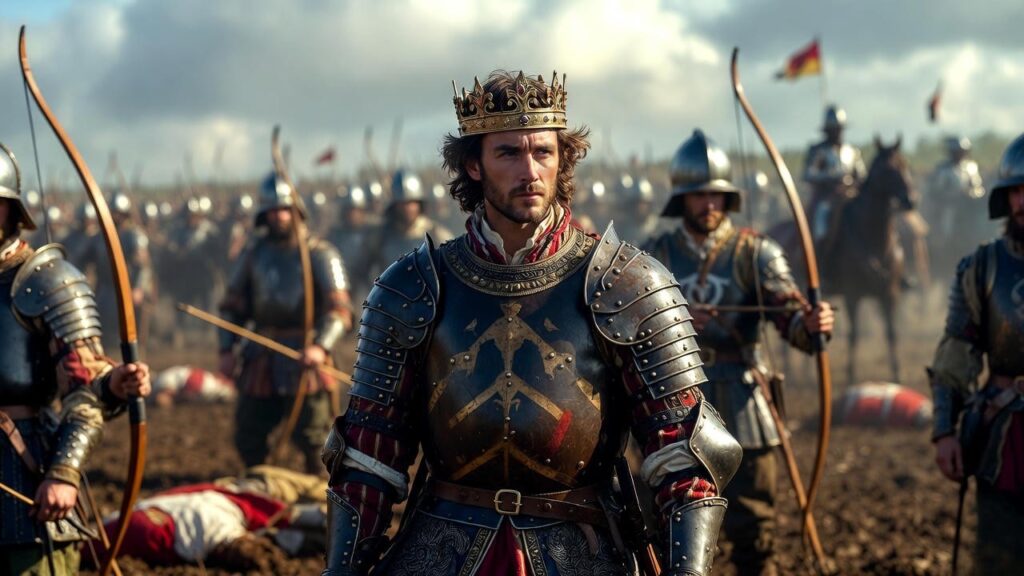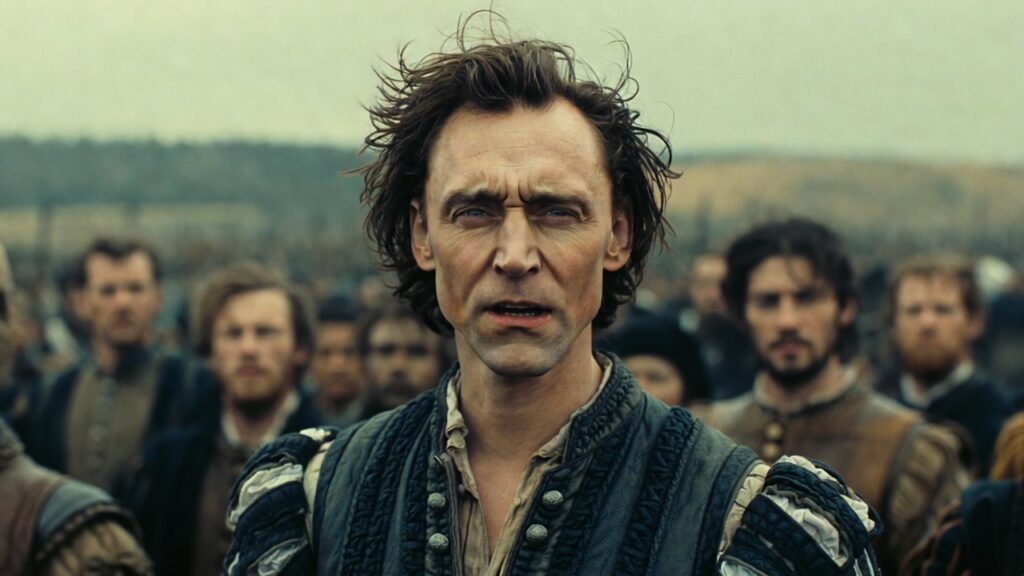
Imagine a young king standing before his outnumbered troops on a rain-soaked field in France, not shouting heroic platitudes from a mountaintop, but speaking quietly, intimately, to a handful of captains—his voice carrying both iron resolve and genuine sorrow for the lives about to be lost. In the 2012 BBC production The Hollow Crown: Henry V, Tom Hiddleston delivers one of the great performances in the entire series, transforming Shakespeare’s most famous warrior-king into a deeply human, morally complex figure. His portrayal builds directly on the two previous episodes he starred in as Prince Hal, giving viewers the rare gift of witnessing a complete character arc across three plays.
Critics and audiences have long praised this interpretation for its nuance, introspection, and emotional authenticity. Many place it alongside—or even above—the legendary screen versions by Laurence Olivier (1944) and Kenneth Branagh (1989). Whether you’re revisiting the Henriad, discovering Shakespeare through modern adaptations, or simply drawn by Hiddleston’s commanding screen presence, this article explores exactly why his Henry V remains one of the finest Shakespearean performances on film or television.
The Context: The Hollow Crown Series and Henry V’s Place in It
The Hollow Crown (2012) is widely regarded as one of the most successful modern screen adaptations of Shakespeare’s history plays. Executive produced by Sam Mendes and directed by a different acclaimed filmmaker for each installment, the first series adapts the second tetralogy (the “Henriad”): Richard II, Henry IV Part 1, Henry IV Part 2, and Henry V.
Tom Hiddleston appears in the last three episodes, first as the rebellious, tavern-loving Prince Hal and then as the newly crowned Henry V. This continuity is crucial. Unlike standalone films, we see the full psychological journey—from the wayward prince learning about people and power in the company of Sir John Falstaff, to the burdened king who must prove he deserves the crown he has inherited.
The Henry V episode, directed by Thea Sharrock, aired on BBC Two in July 2012 and was later broadcast on PBS’s Great Performances strand in the United States. It received widespread critical acclaim, contributing to the series’ overall Rotten Tomatoes score of 96% and strong praise for its “exemplary acting talent and gorgeously crafted production values.” John Hurt’s measured, almost elegiac narration as the Chorus adds a poignant framing device that reminds viewers of the theatricality of the enterprise.
Tom Hiddleston’s Transformative Performance: From Prince to King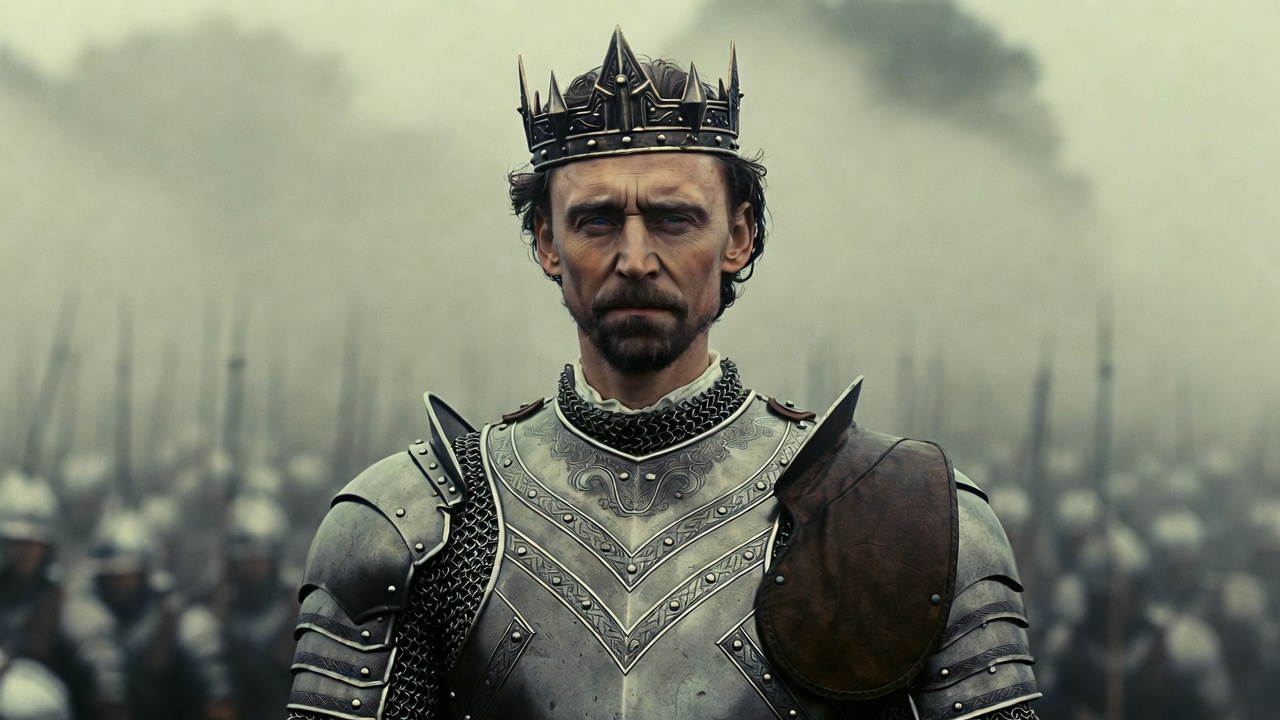
The Evolution of a Leader – How Hal Becomes Henry
Hiddleston’s greatest strength is the seamless continuity he brings across the three plays. In Henry IV Part 1 and Part 2, we watched Hal deliberately playing the wastrel, testing limits and learning about human nature from the bottom up. When he finally accepts the crown in Henry IV Part 2, the transformation feels earned.
In Henry V, that groundwork pays off dramatically. Hiddleston shows us a king who applies the empathy, street wisdom, and understanding of ordinary people he gained in the Eastcheap taverns. Yet he never lets us forget the cost: Henry is constantly “acting” the role of king, aware that every decision he makes is under intense scrutiny. This creates a layered, introspective performance that feels remarkably modern.
Key Traits That Make It Stand Out
Several elements distinguish Hiddleston’s interpretation:
- Vulnerability beneath the crown Unlike the almost superhuman confidence of earlier screen Henrys, Hiddleston’s king is visibly burdened. His eyes frequently betray melancholy, doubt, and even guilt—especially after morally difficult orders.
- Intimate leadership He speaks to soldiers as individuals, not as a faceless army. This personal touch, rooted in Hal’s past, makes his famous speeches feel like genuine attempts to inspire rather than theatrical grandstanding.
- Moral complexity Hiddleston never shies away from the darker aspects of Henry’s character—ordering the execution of French prisoners, threatening the sack of Harfleur, using religion to justify war—while still allowing us to understand the desperate circumstances that drive these choices.
The result is a Henry who is inspiring yet recognizably human, a leader wrestling with the weight of power in ways that resonate strongly with contemporary audiences.
Breaking Down the Great Performances: Iconic Scenes and Moments
The Tennis Balls Rebuke
Early in the play, the French Dauphin sends Henry a mocking gift of tennis balls. In most adaptations this moment is played for bombast. Hiddleston chooses restraint: his voice remains low, controlled, almost polite—yet the fury is unmistakable. The quiet menace makes the threat of invasion feel far more chilling than any shouted declaration could.
“Once More Unto the Breach”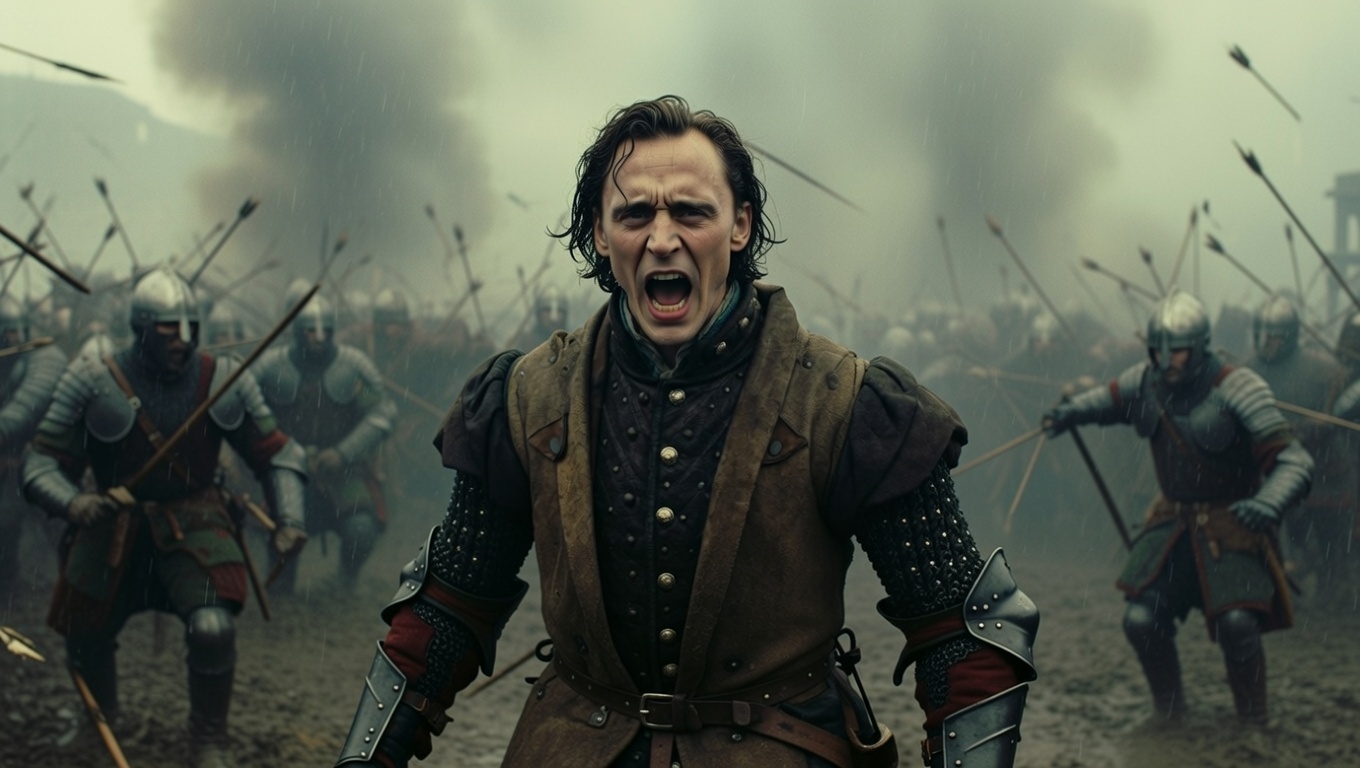
The famous Harfleur speech is staged amid the chaos of battle, with cannon smoke, mud, and falling bodies. Hiddleston delivers the lines not as a grand oration but as an urgent, almost desperate plea from a commander who knows how close they are to defeat. The physicality—dodging projectiles, shouting over the din—grounds the poetry in gritty reality.
St. Crispin’s Day – “We Few, We Happy Few”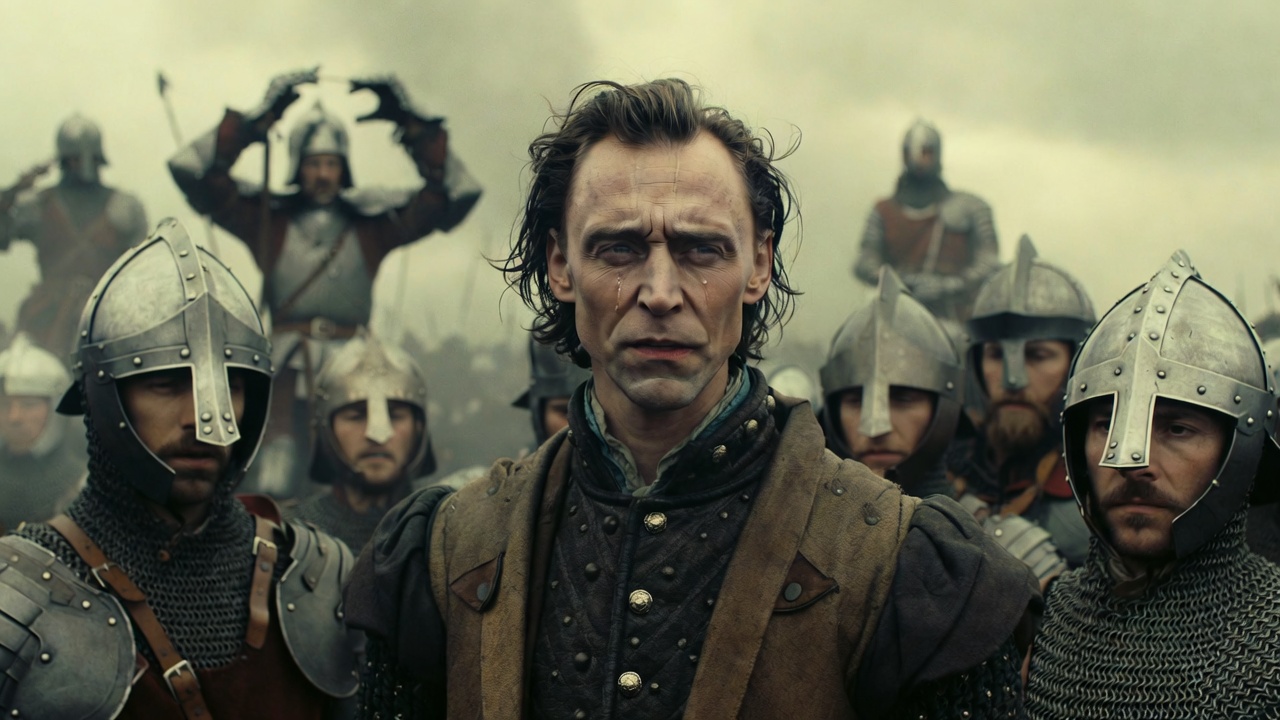
Perhaps the most celebrated moment. Rather than addressing the entire army from horseback, Hiddleston speaks quietly to a small circle of captains on the eve of Agincourt. The intimate setting transforms the speech into a private vow of brotherhood. His pauses, the slight misting of his eyes, the understated certainty—all combine to make this one of the most moving renditions ever filmed. Many viewers report tears at this scene, even on repeat viewings.
The Wooing of Katherine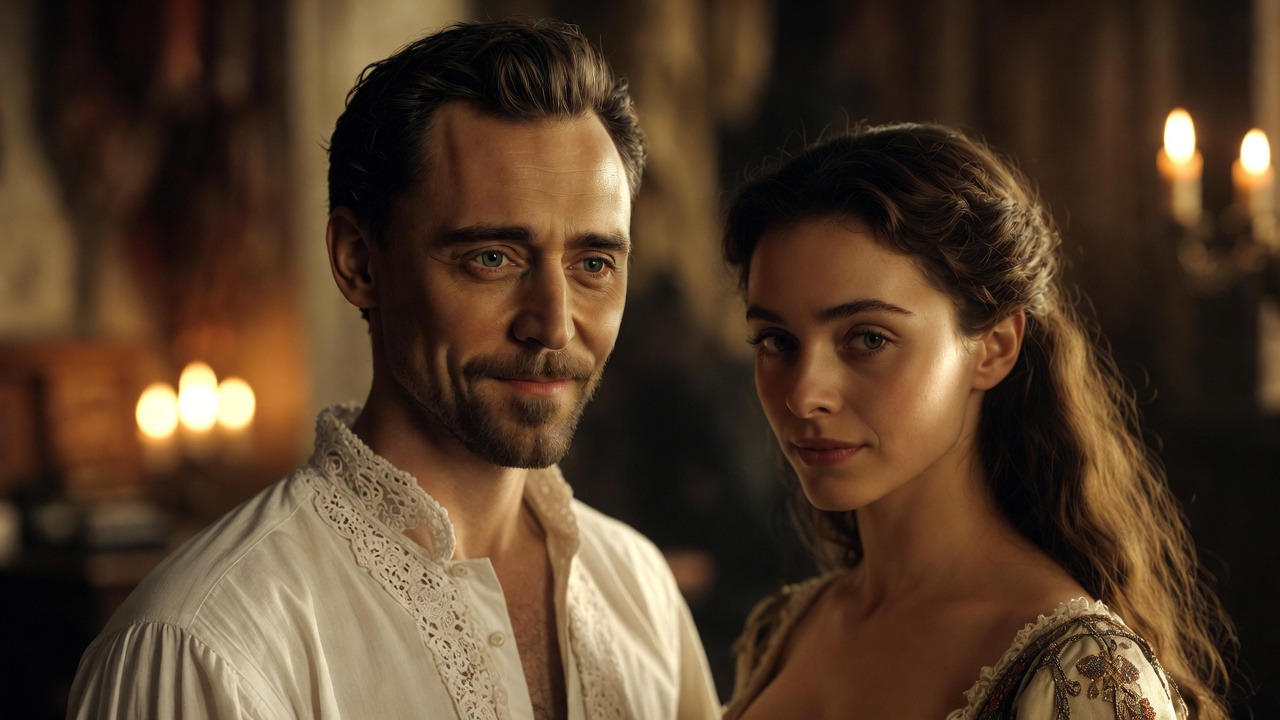
The final scene, often treated as an afterthought in other productions, becomes genuinely romantic and charming here. Hiddleston’s Henry is awkward, self-deprecating, and sincerely trying to win Katherine’s affection despite the language barrier and the political reality of their union. The humor and tenderness make the ending feel earned rather than tacked-on.
Darker Moments
Hiddleston does not soften the play’s moral ambiguities. When Henry orders the killing of the French prisoners, his delivery conveys both necessity and regret. These moments add depth and prevent the character from becoming a simple hero.
Comparisons to Legendary Henrys: Olivier, Branagh, and Beyond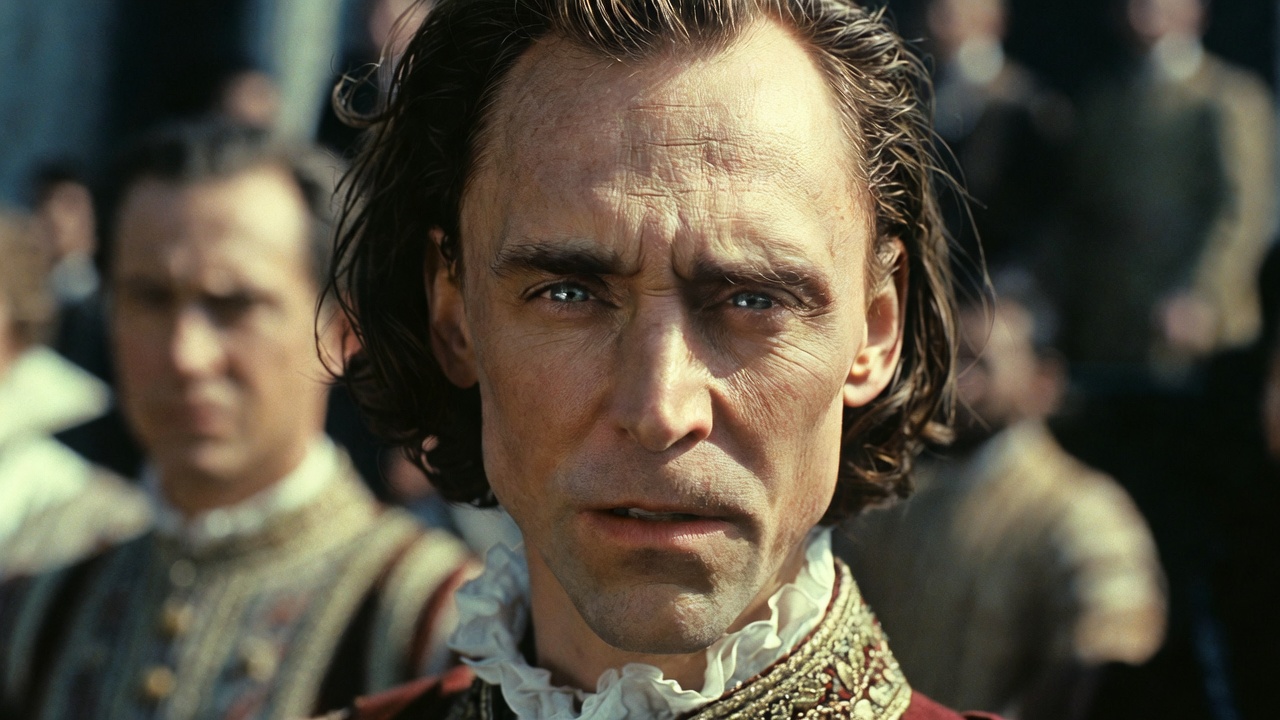
Laurence Olivier’s 1944 film was a wartime morale booster—bright, theatrical, and unabashedly heroic. Kenneth Branagh’s 1989 version offered a darker, more anti-war reading with visceral battle sequences and passionate oratory.
Hiddleston’s performance sits somewhere in between, yet feels distinctly modern. It is less epic in scale but more psychologically rich. The continuity with the previous two plays gives it a depth neither standalone film can match. Many contemporary critics and viewers consider it the most complete and human interpretation of the role on screen.
The Supporting Cast: Enhancing the Great Performance
No great performance exists in isolation. Anton Lesser brings gravitas and loyalty as Exeter, Owen Teale delivers a wonderfully comic yet touching Fluellen, Mélanie Thierry is affecting as Katherine, and John Hurt’s Chorus provides a quietly devastating counterpoint to the action. The ensemble chemistry—particularly between Hiddleston and the common soldiers—makes the king’s leadership feel authentic and hard-won.
Why This Performance Still Matters Today
In an era when leadership is constantly scrutinized and war remains a tragic reality, Hiddleston’s Henry speaks directly to modern anxieties. He shows us a ruler who is intelligent, pious, ruthless when necessary, yet deeply aware of the human cost of his decisions. The performance invites us to ask difficult questions about power, responsibility, and the personal toll of public duty—questions that never lose their relevance.
Tom Hiddleston’s portrayal of Henry V in The Hollow Crown is widely regarded as one of the great Shakespearean performances of the 21st century. It combines emotional depth, technical mastery, and a rare sense of continuity across the Henriad to create a king who is inspiring, flawed, and profoundly human. Whether you are a lifelong Shakespeare scholar or someone encountering the play for the first time, this production offers one of the most rewarding and moving experiences available on screen.
If you haven’t seen it yet, do yourself a favor: watch Henry IV Parts 1 and 2 first, then let Hiddleston’s Henry V bring the entire arc to its powerful conclusion. You will not be disappointed.
FAQs
Is Tom Hiddleston’s Henry V better than Kenneth Branagh’s? It depends on what you value. Branagh offers raw passion and cinematic scale; Hiddleston provides greater psychological depth, moral complexity, and the benefit of the full Henriad arc. Many viewers find both brilliant in different ways.
Where can I watch The Hollow Crown: Henry V? Availability varies by region. It is frequently available on PBS, BBC iPlayer (UK), BritBox, Amazon Prime Video, or for purchase/rental on Apple TV, Google Play, and other digital platforms. Check your local streaming services.
How does the series connect to the full Henriad? The Hollow Crown (Series 1) adapts Shakespeare’s second history tetralogy in order: Richard II, Henry IV Part 1, Henry IV Part 2, and Henry V. Watching in sequence allows you to experience the complete story of the Plantagenet dynasty’s decline and the rise of the Lancastrian line.