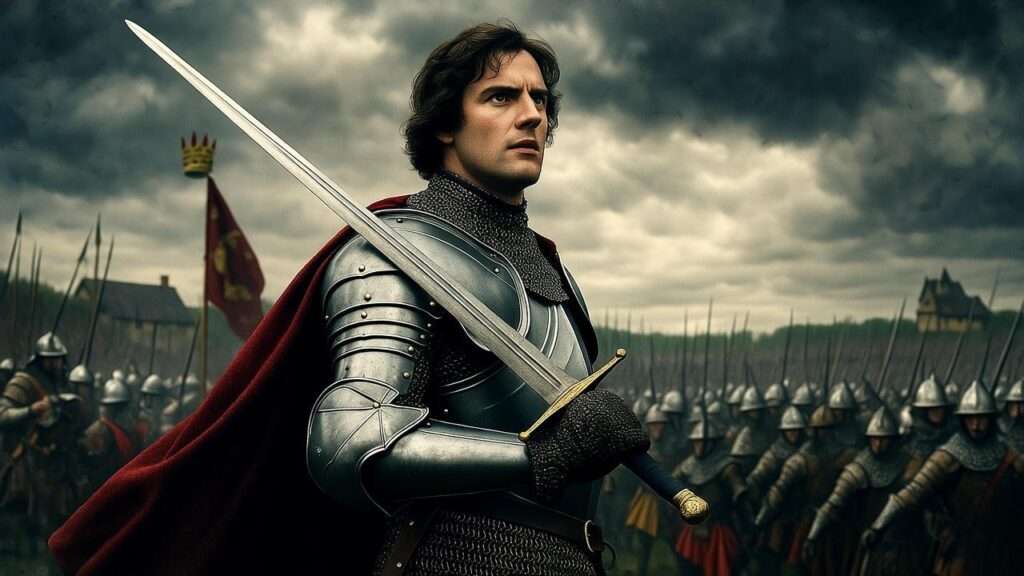
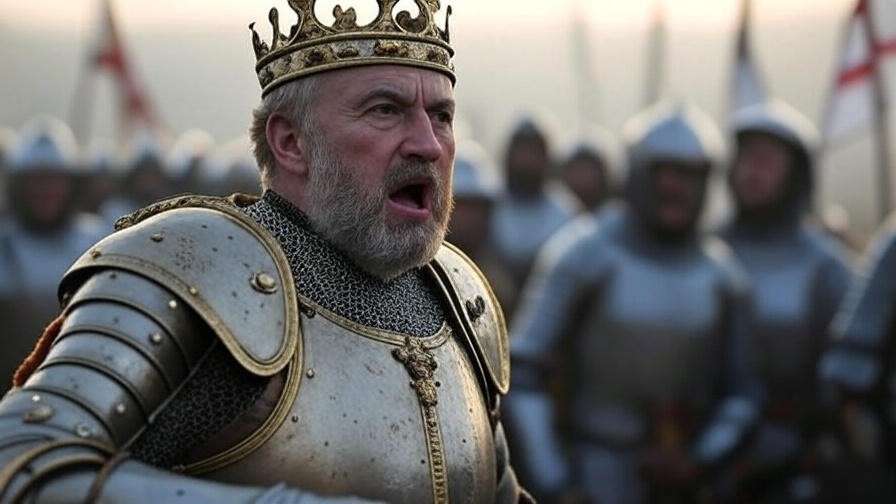
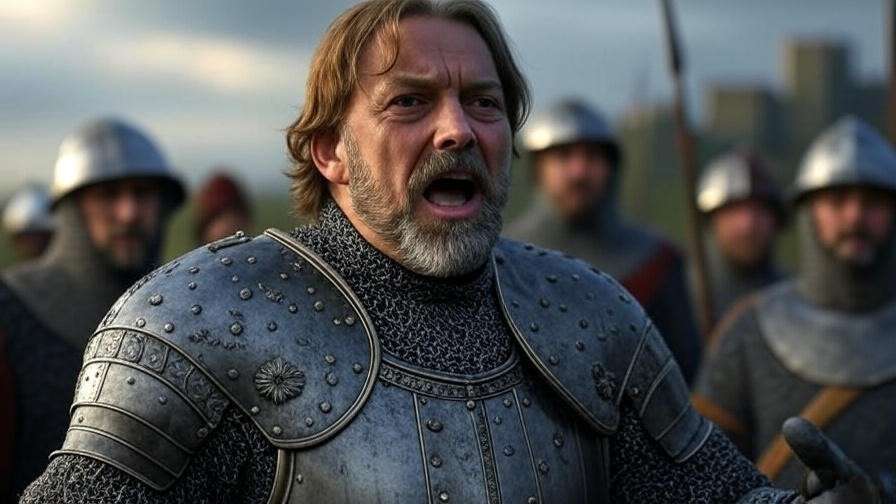
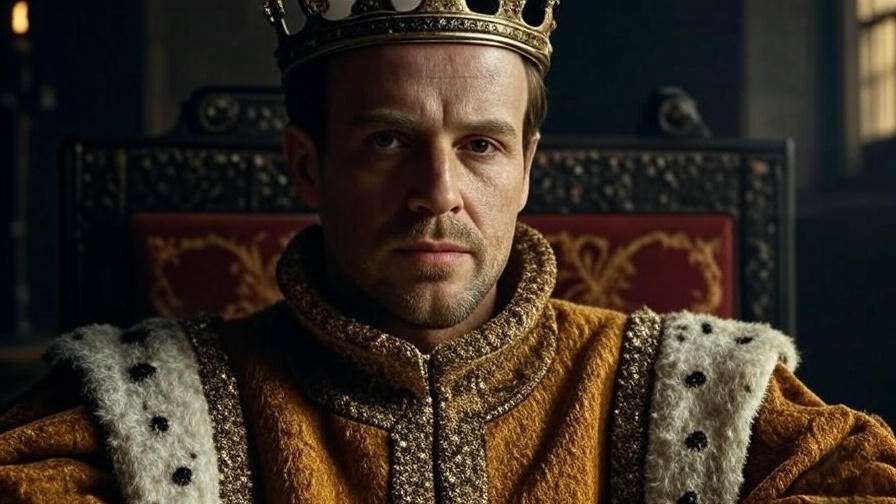
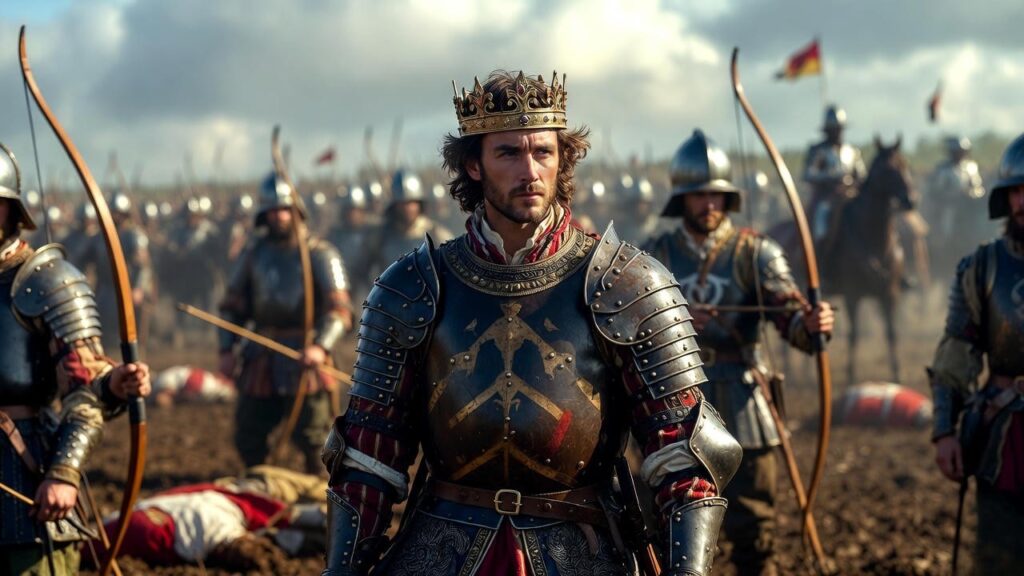
In the quiet aftermath of a raucous tavern life, Mistress Quickly delivers one of Shakespeare’s most heartbreaking lines: “The king has killed his heart.” This poignant description of Sir John Falstaff’s death in Henry V (Act 2, Scene 3) captures the emotional devastation at the core of the Henriad. Henry V Falstaff — a relationship that begins in joyful camaraderie across Henry IV, Part 1 and Part 2 — ends not with a dramatic onstage confrontation but with cold rejection and off-stage tragedy. Why does the newly crowned Henry V banish his old friend so mercilessly? Was this act of political necessity, or did it reveal a deeper betrayal? For readers seeking to understand the profound cost of kingship, the tension between personal loyalty and royal duty, and the enduring power of Shakespeare’s most vibrant character, this exploration reveals how Falstaff’s absence haunts the heroic surface of Henry V, transforming it into one of literature’s most poignant tragedies beneath its triumphs.
Shakespeare’s Henriad tetralogy — encompassing Richard II, Henry IV, Part 1, Henry IV, Part 2, and Henry V — chronicles the rise of Prince Hal to King Henry V, a journey marked by rebellion, war, and transformation. At its emotional heart stands Falstaff, the larger-than-life knight whose wit, appetite for life, and unapologetic humanity make him one of Shakespeare’s greatest creations. Though Falstaff never appears on stage in Henry V, his rejection in the final scene of Henry IV, Part 2 and his reported death cast the longest shadow over Henry’s victories. This dynamic explores timeless themes: the price of power, the loss of innocence, and the heartbreak when friendship yields to duty. As Harold Bloom argued, Falstaff embodies vitality itself; his banishment and demise underscore the isolation that accompanies greatness.
The Origins of an Unlikely Bond – Falstaff and Prince Hal in Henry IV, Part 1
Falstaff first bursts onto the scene as Prince Hal’s tavern companion in Henry IV, Part 1, a world of Eastcheap revelry contrasting sharply with the courtly intrigue of King Henry IV. Here, Falstaff serves as mentor, father figure, and comic foil — teaching the young prince the ways of the “low” life while exposing the absurdities of honor and heroism.
Falstaff as Mentor, Father Figure, and Comic Foil
Falstaff’s influence on Hal is profound. In the Gad’s Hill robbery, he feigns cowardice yet spins tales of valor, delighting in exaggeration. The famous play-extempore scene (Act 2, Scene 4) sees Hal and Falstaff swapping roles — Falstaff as king, Hal as prince — in a mock rehearsal that foreshadows the real rejection. Hal’s soliloquy at the end of Act 1, Scene 2 reveals his calculated plan to “throw off” his loose behavior, yet he indulges Falstaff’s company, gaining insight into every stratum of society essential for a wise ruler.
The Joy and Education of Friendship
This bond is joyous and educational. Falstaff humanizes Hal, offering lessons in folly, resilience, and the pleasures of life. As Bloom notes in his celebration of Falstaff, he represents “the invention of the human” — a character of boundless vitality who speaks only in prose, finding fresh delight in play. Without Falstaff, Hal’s transformation would lack depth; the tavern world provides the counterpoint to royal duty.
The Inevitable Rift – The Rejection Scene in Henry IV, Part 2
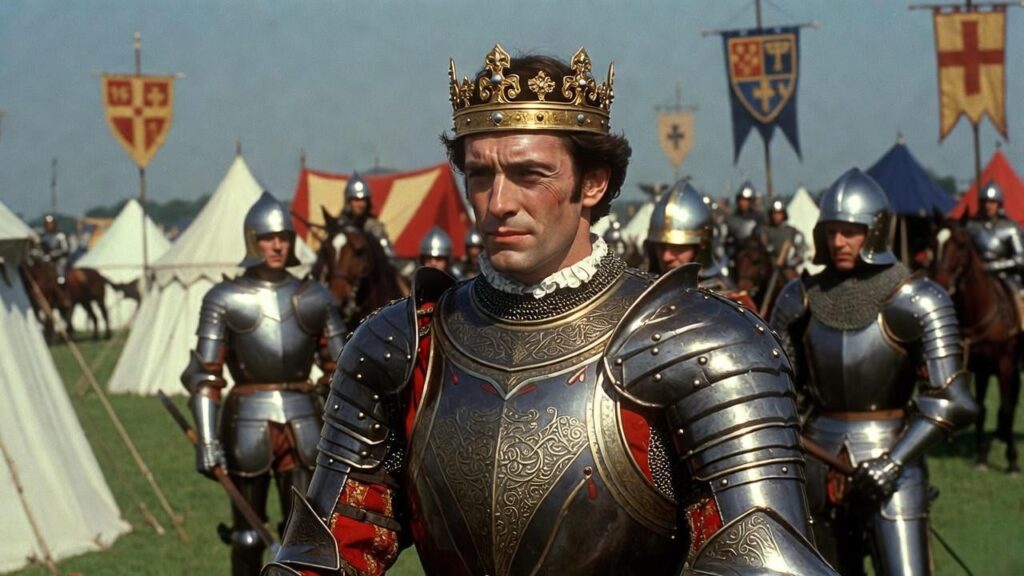
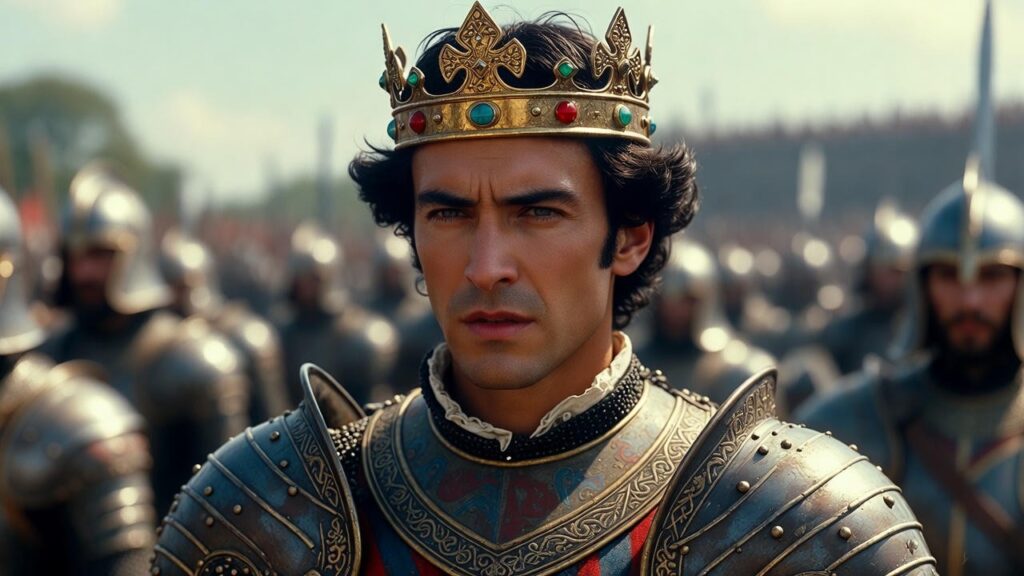
The rift culminates in Henry IV, Part 2‘s coronation procession, where the newly crowned Henry V delivers the devastating line: “I know thee not, old man.”
The Coronation Procession – “I Know Thee Not, Old Man”
In Act 5, Scene 5, Falstaff rushes to greet his “sweet boy” Harry, expecting rewards. Henry responds coldly: “Presume not that I am the thing I was.” The language echoes biblical denial (Peter’s of Christ), leaving Falstaff stunned. A.C. Bradley, in his seminal 1902 essay “The Rejection of Falstaff,” describes this as a catastrophe Falstaff’s humor cannot surmount, eliciting sympathy for the knight despite his flaws.
Why Henry Had to Reject Falstaff
Politically, a king cannot consort with thieves and reprobates — Falstaff’s crimes (theft, cowardice, corruption) threaten legitimacy. Thematically, rejection marks the price of the crown: maturity demands sacrifice of pleasure for duty. Bradley sees it as necessary yet tragic; modern views highlight Hal’s Machiavellian growth.
The Heartbreaking Absence – Falstaff in Henry V
Falstaff’s physical absence in Henry V amplifies tragedy — Shakespeare kills him off-stage, heightening emotional impact.
Off-Stage Death and Mistress Quickly’s Eulogy
In Act 2, Scene 3, Mistress Quickly recounts Falstaff’s death: feverish, calling for sack, lamenting betrayal. “The king has killed his heart,” she declares — a broken heart from rejection. This eulogy, delivered in malapropism-laced prose, is profoundly moving, contrasting tavern warmth with royal coldness.
The Shadow Over Henry’s Triumphs
Falstaff haunts Henry’s journey — his disguise among soldiers echoes tavern disguises; reflections on leadership recall lost joys. The vitality of Eastcheap contrasts with war’s burdens, underscoring kingship’s isolation.
Deeper Themes – What the Rejection and Death Reveal About Kingship and Friendship
The rejection and death illuminate profound truths.
The Cost of Power – Personal Sacrifice for Public Good
Henry chooses order over carnival; Falstaff represents life-affirmation, Henry duty. Bloom laments this as the death of “Merrie England.”
Is Henry’s Rejection Justified? A Balanced Debate
Justified? Yes — for effective rule, preventing corruption. Cruel? Yes — betraying genuine affection. Modern parallels abound in leadership dilemmas.
Falstaff’s Enduring Legacy in the Henriad
Without Falstaff, Henry V lacks emotional depth. He defines the tetralogy’s human cost.
Critical Perspectives and Scholarly Insights
From Bradley to Bloom – Evolving Views on the Rejection
Bradley sympathizes with Falstaff’s tragedy; Bloom celebrates his vitality, calling the Henriad (plus Quickly’s eulogy) Shakespeare’s pinnacle.
Stage and Screen Adaptations
Orson Welles’ Chimes at Midnight (1965) condenses the Henriad around Falstaff, featuring a legendary battle and poignant rejection. Kenneth Branagh’s Henry V (1989) inserts flashbacks; Netflix’s The King (2019) reimagines the bond.
FAQs – Common Questions About Henry V and Falstaff
Why doesn’t Falstaff appear in Henry V? Shakespeare removes him to emphasize Henry’s transformation; his presence would disrupt the heroic tone.
Did Falstaff really die of a broken heart? Quickly claims so, blending heartbreak from rejection with physical illness — a poignant metaphor.
Was Prince Hal ever truly friends with Falstaff? Yes — affection shines through banter, but Hal always plans reformation.
How does this relationship reflect Shakespeare’s views on power? It shows power’s isolating cost: greatness demands sacrificing human connections.
The rejection and tragic death of Falstaff are not mere footnotes — they form the emotional core of Henry V, revealing the profound cost of kingship. Shakespeare’s genius lies in balancing heroism with humanity: Henry conquers France but loses his most vital friend. Falstaff’s absence reminds us that true greatness often comes at the price of the connections that make life worth living.
Revisit the plays — the Henriad rewards deep reading. What do you think: Was Henry’s choice necessary cruelty or tragic necessity? Share your thoughts below, and explore more insights on Shakespearean friendships and power here on williamshakespeareinsights.