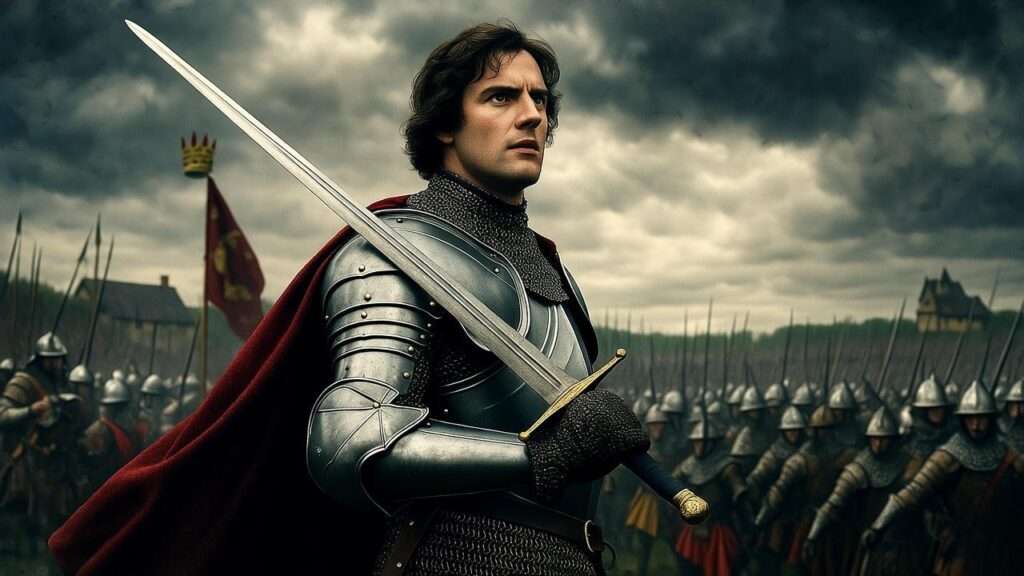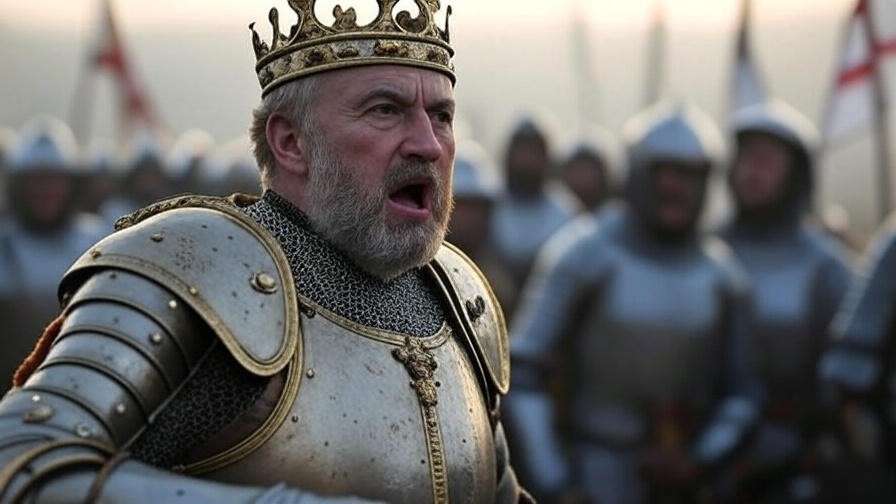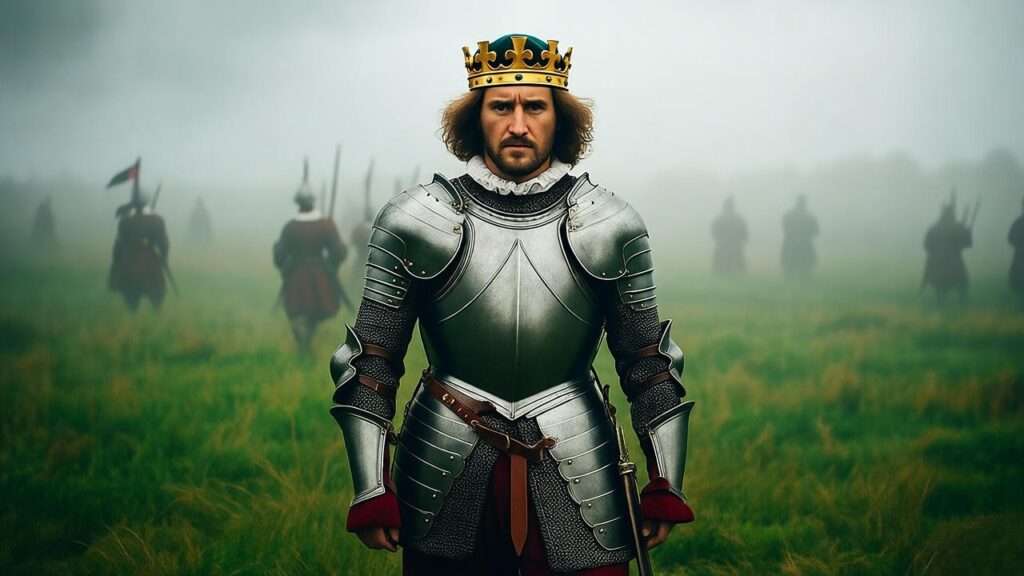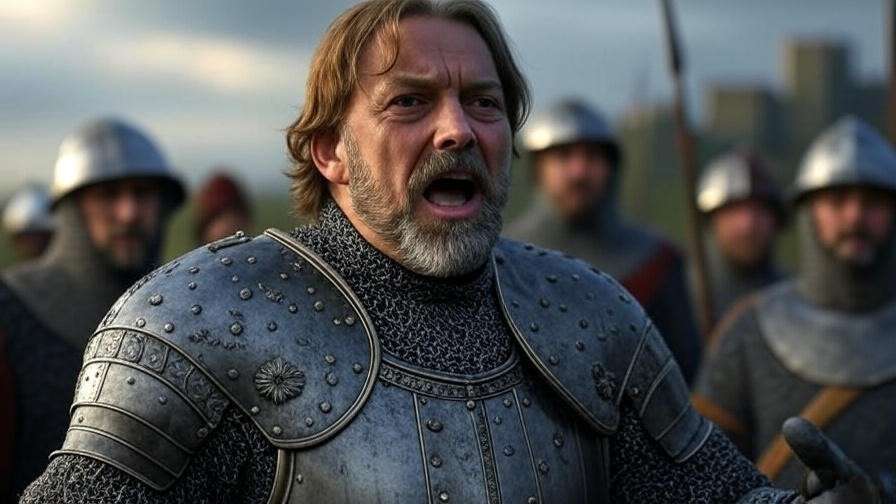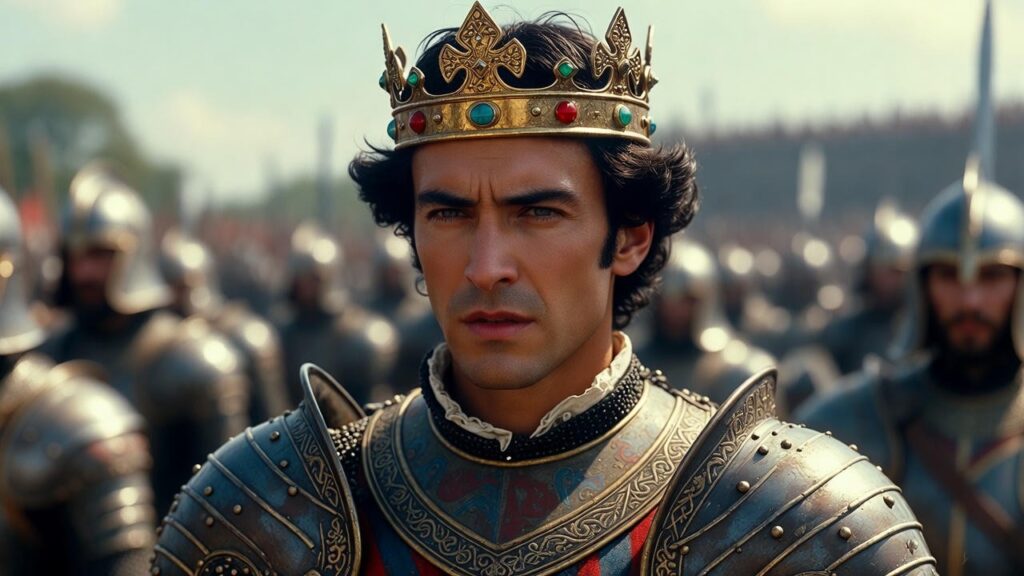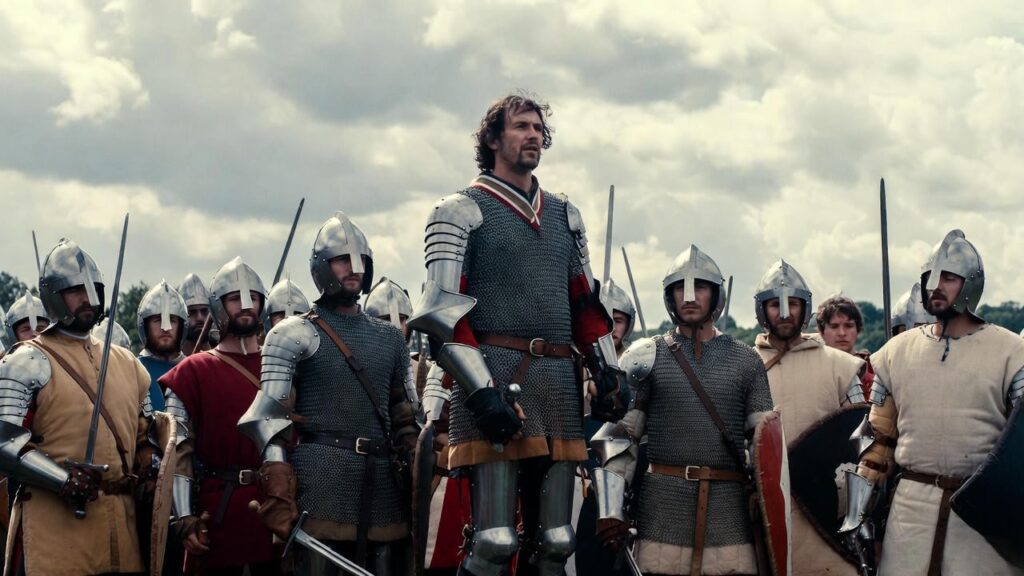
Imagine a young king, once dismissed as a wayward prince, stepping onto the battlefield to deliver one of literature’s most stirring calls to arms: “We few, we happy few, we band of brothers.” This moment from Shakespeare’s Henry V captures the essence of leadership, valor, and the human cost of war. Yet the true power of the play lies not just in its heroic king, but in the vibrant array of characters Henry V surrounds himself with—from loyal captains and comic rogues to arrogant French nobles and ordinary soldiers. These figures bring depth, humor, tension, and moral complexity to Shakespeare’s exploration of kingship, national unity, and the brutal realities of conflict.
In this complete guide, we delve into every major and memorable character in Henry V (c. 1599), providing detailed profiles, key quotes, thematic significance, and scholarly insights. Whether you’re a student preparing for exams, a teacher seeking classroom resources, or a literature enthusiast wanting deeper appreciation, this comprehensive analysis offers more than standard summaries: it uncovers the nuances, historical context, and enduring relevance of Shakespeare’s characters. By understanding these figures, readers can better grasp how Shakespeare transforms a historical victory at Agincourt into a timeless meditation on power and humanity.
The Chorus – The Play’s Narrative Voice and Guide
The Chorus stands apart as one of Shakespeare’s most innovative devices—a single speaker who addresses the audience directly in prologues to each act and the epilogue. Far from a mere narrator, the Chorus serves as a meta-theatrical guide, acknowledging the limitations of the Elizabethan stage while urging viewers to use their imagination to envision epic events.
In the opening lines, the Chorus famously laments: “O for a Muse of fire, that would ascend / The brightest heaven of invention, / A kingdom for a stage, princes to act / And monarchs to behold the swelling scene!” This plea highlights the gap between theatrical reality and historical grandeur, inviting the audience to “piece out our imperfections” with their minds.
The Chorus shapes audience perception of Henry as an almost mythical hero, describing his transformation and the army’s journey in glowing terms. Yet it also introduces subtle irony, reminding us that what we see is a dramatized version of history. In the epilogue, the Chorus reflects on Henry’s short reign and the loss of France under his son, foreshadowing the tragedies in the Henry VI plays and adding a layer of tragic inevitability.
Scholars view the Chorus as a bridge between past and present, evoking Elizabethan patriotism while critiquing the glorification of war. It enhances the play’s themes of illusion versus reality, making it essential for understanding Shakespeare’s commentary on history and theater.
King Henry V – The Transformed Leader at the Center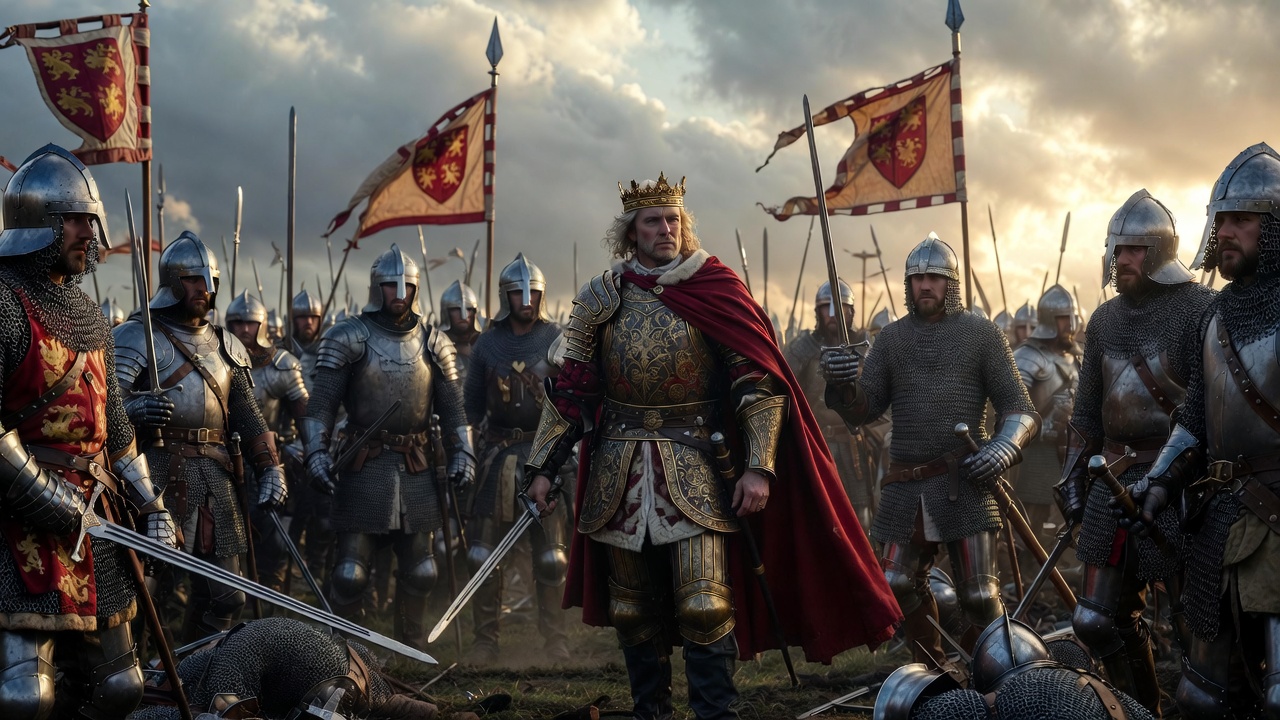
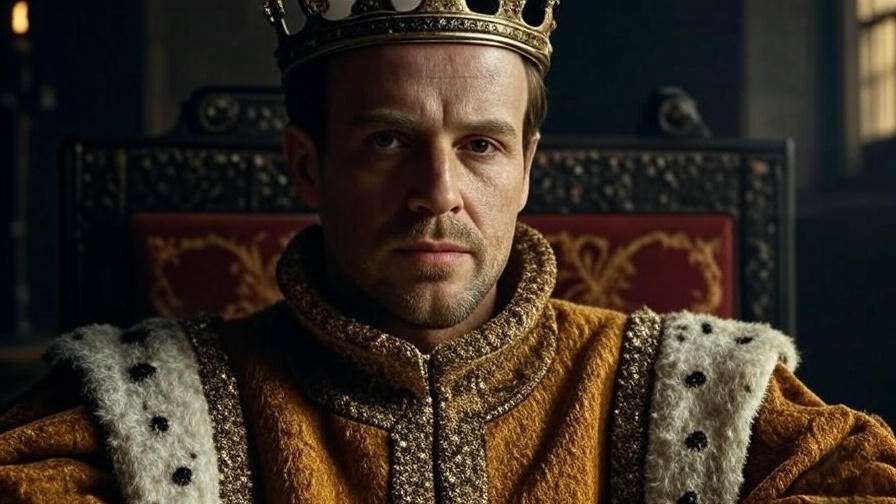
At the heart of the play is King Henry V, the former Prince Hal of the Henry IV plays, who has undergone a dramatic metamorphosis. No longer the tavern-haunting youth, Henry emerges as a mature, eloquent monarch burdened by the crown.
Henry’s key traits include rhetorical brilliance, strategic piety, and moral complexity. He justifies his invasion of France through the Salic Law (delivered via the Archbishop of Canterbury) and responds to the Dauphin’s mocking gift of tennis balls with defiance: “When we have match’d our rackets to these balls, / We will in France, by God’s grace, play a set / Shall strike his father’s crown into the hazard.”
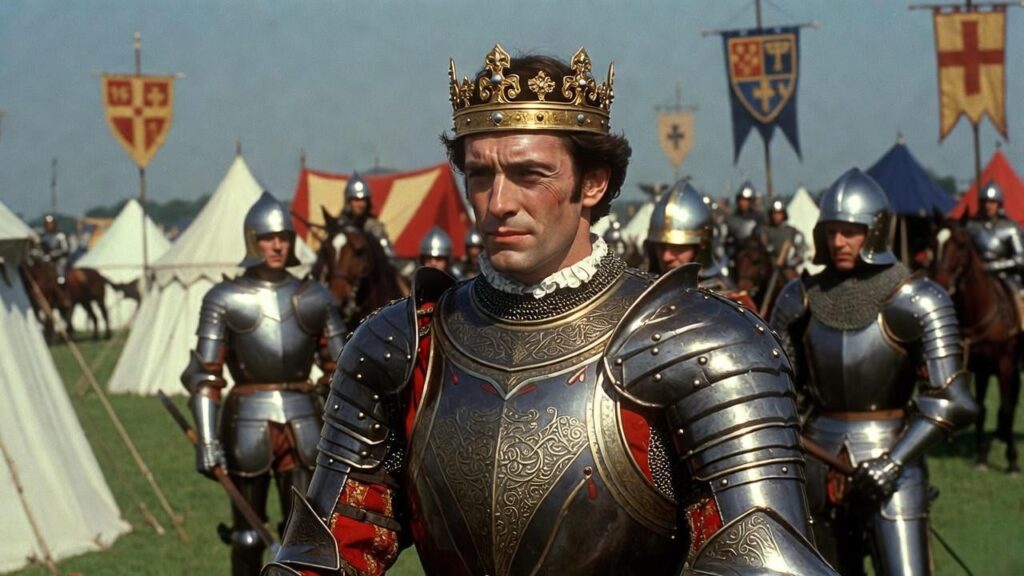
Major moments define him: the rousing “Once more unto the breach” speech at Harfleur, his disguised debate with soldiers the night before Agincourt (revealing his empathy and the weight of kingship), the famous St. Crispin’s Day oration (“We few, we happy few, we band of brothers”), and the ruthless order to kill French prisoners.
Is Henry the ideal Christian king or a pragmatic, even ruthless, ruler? Traditional views celebrate his heroism, while modern critics (e.g., Harold Bloom calling him an “amiable monster”) highlight moral ambiguity—such as executing old friend Bardolph for looting or threatening Harfleur with atrocities. This duality reflects the burdens of leadership: Henry subordinates personal feelings to the crown’s needs, as seen in his reflection, “Upon the king! / Let us our lives, our souls, / Our debts, our careful wives, / Our children, and our sins lay on the king!”
Henry’s arc ties into themes of kingship, justice versus mercy, and the personal toll of power, making him one of Shakespeare’s most debated protagonists.
English Nobles and Military Leaders – Loyalty and Brotherhood
Supporting Henry are a host of nobles who embody familial and national loyalty.
Dukes of Exeter, Gloucester, Bedford, Clarence — Henry’s uncle and brothers — provide steadfast support, illustrating royal unity.
Earl of Westmoreland, Sir Thomas Erpingham — Wise veterans offering counsel; Erpingham lends Henry his cloak for the disguise scene, symbolizing shared burdens.
The conspirators (Cambridge, Scroop, Grey) contrast this loyalty with betrayal. Bribed by France, their plot is uncovered, and Henry executes them with measured justice, declaring, “The mercy that was quick in us but late / By your own counsel is suppress’d and kill’d.”
The Comic Low-Life Characters – Humor, Contrast, and Social Commentary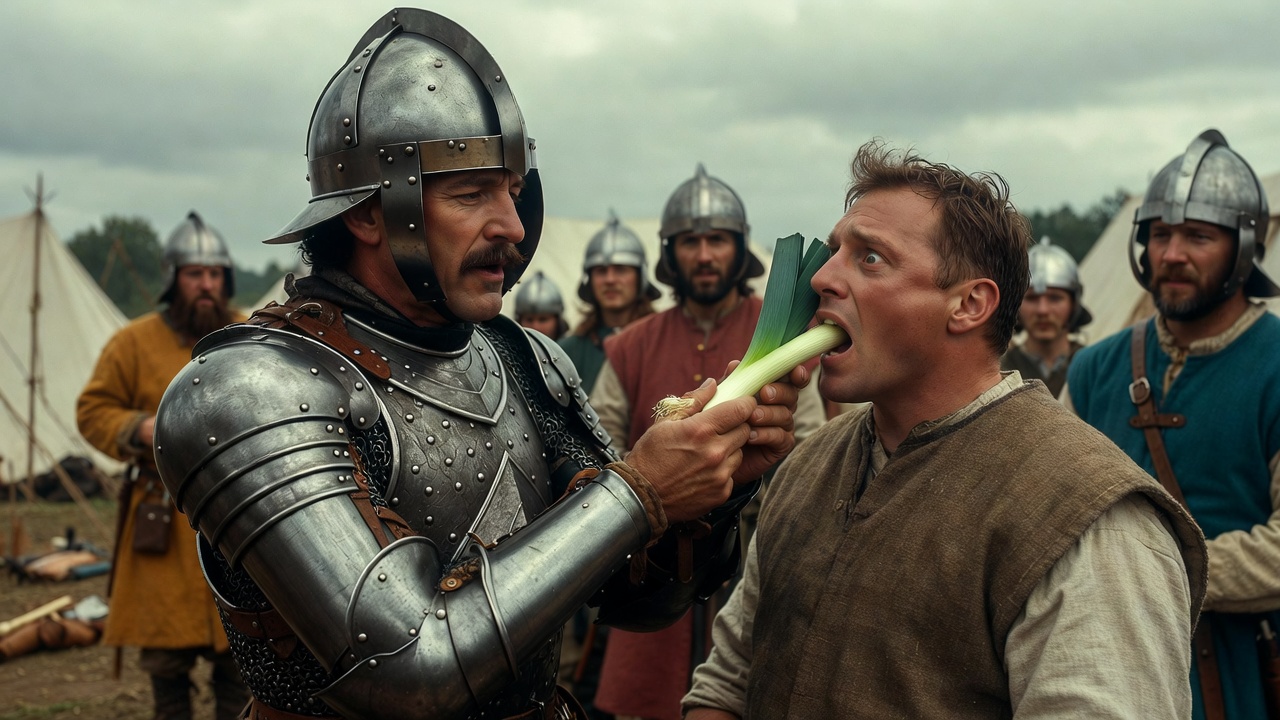
Shakespeare balances the play’s lofty rhetoric and battlefield heroism with a vivid gallery of low-life characters—remnants of Falstaff’s tavern world from the Henry IV plays. These figures provide essential comic relief, but they also offer sharp social commentary on war, opportunism, and the human cost of conflict.
Ancient Pistol, Bardolph, Nym, and the Boy form a ragtag band of camp followers who join the army for plunder rather than patriotism. Pistol, the boastful, bombastic ensign, speaks in over-the-top, mock-heroic language laced with misquotations and malapropisms. His famous line, “The world’s mine oyster, / Which I with sword will open,” perfectly captures his delusional swagger. Yet his bravado crumbles under pressure: he is eventually humiliated, forced to eat a leek by Fluellen, and reduced to begging.
Bardolph, recognizable by his flaming red nose, meets a grim end when he is hanged for stealing a pax (a sacred object) from a French church. His execution is ordered by Henry himself, who declares, “We would have all such offenders so cut off.” This moment underscores the king’s commitment to discipline, even when it means sacrificing an old companion.
Nym, the laconic, proverb-spouting soldier, and the anonymous Boy (who serves as a sharp-witted page) add further layers of cynicism. The Boy’s poignant observation—“Three such antics do not amount to a man”—highlights the futility and moral bankruptcy of their enterprise.
Mistress Quickly (the Hostess) appears briefly but memorably in Act II, delivering a touching, malapropism-filled eulogy for Falstaff’s offstage death: “’A parted ev’n just between twelve and one, ev’n at the turning o’ th’ tide.” Her account humanizes Falstaff’s passing and reminds the audience of the personal losses behind the grand historical narrative.
Captain Fluellen stands out as the most fully realized comic figure. A proud Welsh captain, Fluellen is pedantic, obsessed with military discipline and “the disciplines of the pristine wars of the Romans.” His thick Welsh accent and frequent references to “Alexander the Pig” (Pompey) provide humor, yet he is also fiercely loyal, brave, and deeply honorable. His confrontation with Pistol (forcing him to eat the leek on St. David’s Day) is both comic and poignant, celebrating Welsh identity while reinforcing the theme of British unity.
The other captains—Gower (English), Jamy (Scottish), and Macmorris (Irish)—represent the four nations of the British Isles. Their bickering and eventual cooperation mirror the play’s larger vision of unity forged in war.
These low-life characters serve multiple purposes: they provide comic contrast to the nobles’ elevated language, expose the greed and cynicism that accompany war, and humanize the army’s rank-and-file. Their presence prevents the play from becoming mere propaganda, reminding us that war affects every level of society.
Common Soldiers – The Voice of the People
One of the play’s most powerful scenes occurs the night before Agincourt, when Henry, disguised in Sir Thomas Erpingham’s cloak, moves among his men and engages in a candid debate with three common soldiers: Michael Williams, John Bates, and Alexander Court.
The soldiers voice the ordinary man’s perspective on war. Williams challenges the king’s responsibility: “If the cause be not good, the King himself hath a heavy reckoning to make… when all those legs and arms and heads, chopped off in a battle, shall join together at the latter day and cry all, ‘We died at such a place.’” Bates adds a pragmatic note: “If his cause be wrong, our obedience to the King wipes the crime of it out of us.”
This exchange reveals Henry’s inner turmoil. When the soldiers depart, he delivers a soliloquy on the loneliness of kingship: “Upon the King! / Let us our lives, our souls, / Our debts, our careful wives, / Our children, and our sins lay on the King!” The scene humanizes Henry, showing that even the king is troubled by the moral weight of his decisions.
The common soldiers ground the play in realism. They remind the audience that wars are fought by ordinary men, not just heroic leaders, and that obedience does not absolve the moral complexities of conflict.
French Characters – Arrogance, Defeat, and Diplomacy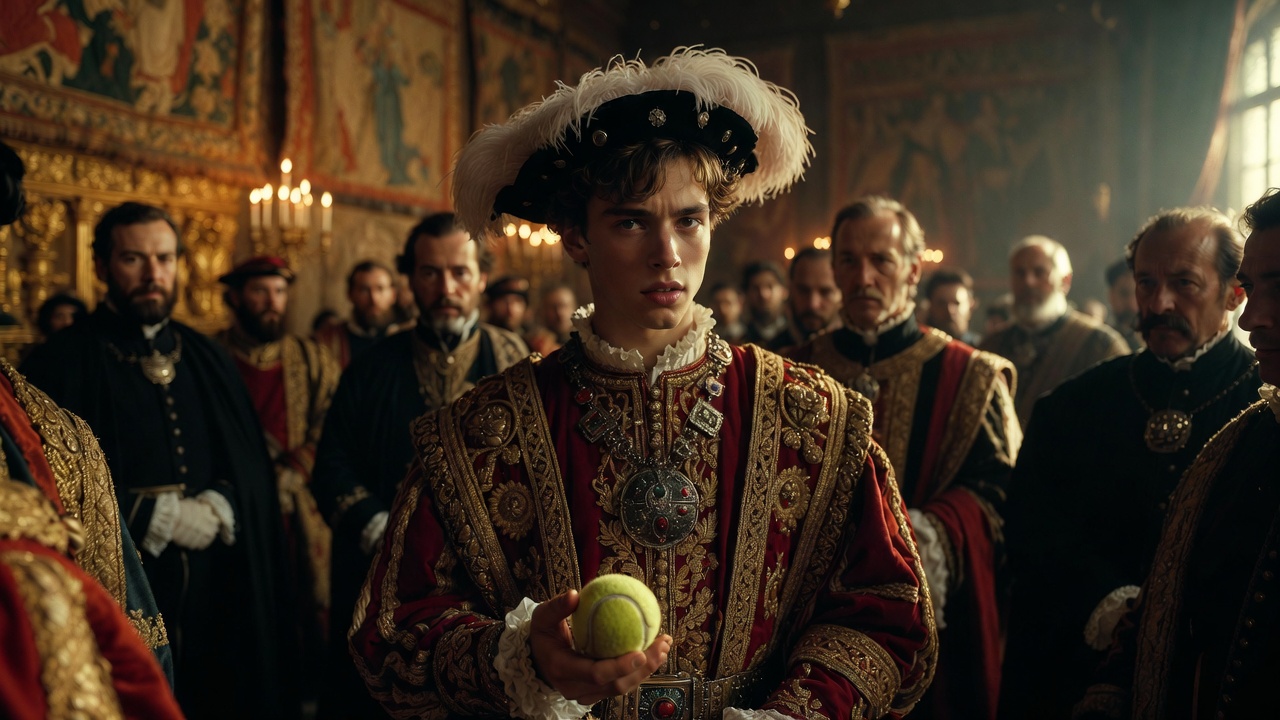
The French court provides a sharp contrast to the English. Their arrogance and disunity serve as a foil to the English cohesion.
King Charles VI and Queen Isabel are cautious and diplomatic, but they are overshadowed by the younger generation’s hubris. The Dauphin, in particular, embodies French overconfidence. His mocking gift of tennis balls to Henry provokes the invasion, and his boasts before Agincourt (“I will not be so much as a boy to them”) are swiftly proven hollow.
The Constable of France, along with the Dukes of Orléans and Bourbon, represent noble arrogance. Their refusal to take the English seriously leads to tactical errors and catastrophic defeat. The Montjoy the Herald serves as a dignified intermediary, delivering challenges and ultimately the news of French losses with reluctant respect.
Princess Catherine (Katherine) and her gentlewoman Alice offer a lighter, comic interlude in Act III, Scene IV, with the famous language lesson scene (“Comment appelez-vous les pieds et la robe?”). This scene humanizes Catherine and foreshadows the play’s romantic resolution: her marriage to Henry as the price of peace.
The French characters collectively illustrate the dangers of division and pride, contrasting sharply with the English “band of brothers.” Their defeat underscores Shakespeare’s exploration of national identity and the consequences of disunity.
Minor but Memorable Figures – Adding Depth and Texture
While the major characters dominate the stage, Shakespeare populates Henry V with a host of minor figures who contribute significantly to the play’s realism, scale, and emotional texture.
The Governor of Harfleur appears briefly in Act III, Scene III. Facing Henry’s terrifying threats of rape, pillage, and slaughter if the town does not surrender, he capitulates with dignity: “Our expectation hath this day an end.” His surrender highlights both the horror of medieval siege warfare and Henry’s willingness to use psychological terror as a weapon.
Monsieur le Fer, the French soldier captured by Pistol in Act IV, becomes the object of Pistol’s absurd ransom demands. The scene is pure farce, yet it poignantly illustrates the human face of the enemy and the absurdity of war profiteering.
Various unnamed French lords, messengers, and soldiers also appear throughout, helping to create the sense of a vast historical panorama. These minor characters, though they speak few lines, collectively reinforce the play’s epic scope and remind us that history is made up of countless individual lives.
How the Characters Drive Shakespeare’s Major Themes
Shakespeare’s genius in Henry V lies in how every character, major or minor, serves the play’s central thematic concerns.
- Leadership and the Burdens of the Crown Henry’s transformation from wayward prince to inspiring yet ruthless king is the play’s backbone. His soliloquies reveal the isolation of power (“What infinite heart’s-ease / Must kings neglect that private men enjoy!”), while his interactions with common soldiers and captains show both his empathy and his willingness to sacrifice personal relationships for the greater good.
- War: Glory vs. Brutality The juxtaposition of St. Crispin’s Day rhetoric with the hanging of Bardolph, the killing of prisoners, and the French corpses “like sacrifices” on the battlefield creates a complex portrait. Shakespeare refuses to let the play become simple jingoism; the comic characters and common soldiers constantly remind us of war’s human cost.
- National Identity and Unity The “band of brothers” speech and the cooperation of the four-nation captains (Fluellen, Jamy, Macmorris, Gower) celebrate a united Britain. Yet the play also subtly acknowledges the fragility of this unity—through the conspirators, the comic cynicism of Pistol’s crew, and the eventual loss of France mentioned in the epilogue.
- Moral Ambiguity Few Shakespearean protagonists are as debated as Henry V. Is he a model Christian king who fights a just war and unites his nation, or a calculating politician who uses religion and rhetoric to justify aggression? The text supports both readings, and the characters around him—loyal Fluellen, skeptical Williams, arrogant Dauphin—amplify this ambiguity.
Shakespeare uses the full spectrum of characters to explore these themes with extraordinary depth, making Henry V one of his richest historical plays.
Character Relationships and Dynamics – What They Reveal
The relationships between characters are as revealing as their individual speeches.
- Henry and his past — The shadow of Falstaff and the Eastcheap tavern world lingers, most painfully in Bardolph’s execution. Henry’s rejection of his former life symbolizes the necessary sacrifices of kingship.
- Henry and Fluellen — The king’s genuine affection for the pedantic Welsh captain (calling him “a most valiant man”) shows Henry’s ability to connect across class and cultural lines.
- Henry and Catherine — Their courtship, conducted in broken French and English, moves from conquest to romance, symbolizing the possibility of peace through union.
- The comic trio (Pistol, Nym, Bardolph) vs. the noble army — Their petty opportunism stands in stark contrast to the idealism of the nobles and the loyalty of captains like Fluellen, highlighting different responses to war.
These dynamics create a rich tapestry of human relationships that give emotional depth to the historical narrative.
Tips for Studying Henry V Characters (Student & Teacher Resources)
Here are practical tools for deeper engagement:
- Key quotes to memorize – Henry: “Once more unto the breach, dear friends…” (III.i) – Henry: “We few, we happy few, we band of brothers” (IV.iii) – Williams: “If the cause be not good, the King himself hath a heavy reckoning to make” (IV.i) – Chorus: “O for a Muse of fire…” (Prologue)
- Essay prompts
- To what extent is Henry V presented as an ideal king?
- How do the comic characters contribute to the play’s overall meaning?
- Discuss the role of the Chorus in shaping our perception of Henry.
- Is Henry V a hero, a hypocrite, or both? Support with evidence.
- Comparison table ideas
- Henry V vs. the Dauphin (leadership styles)
- English unity vs. French disunity
- Idealism (nobles) vs. cynicism (common soldiers & camp followers)
These resources can help students craft stronger essays and teachers design more engaging lessons.
The characters of Henry V are far more than historical figures or dramatic devices. They are the living, breathing heart of Shakespeare’s exploration of leadership, war, national identity, and moral complexity. From the inspiring yet burdened King Henry to the loyal Fluellen, the skeptical Michael Williams, the boastful Pistol, and the arrogant Dauphin, every figure contributes to a nuanced portrait of humanity in times of crisis.
Shakespeare’s refusal to offer easy answers—about heroism, justice, or the glory of war—gives the play its enduring power. The Chorus reminds us that we must “piece out” the imperfections of the stage with our own imaginations; in doing so, we discover that the true greatness of Henry V lies not only in its famous speeches but in the unforgettable gallery of characters who bring its world to life.
Whether you are studying the play for the first time, teaching it to a new generation, or revisiting it as a lifelong admirer, understanding these characters unlocks the full richness of Shakespeare’s masterpiece.
FAQs
Who are the main characters in Henry V? The central figure is King Henry V. Major supporting characters include the Chorus, Fluellen, Pistol, the Dauphin, Catherine, Exeter, Westmoreland, and common soldiers like Williams and Bates.
What is the role of the Chorus in Henry V? The Chorus serves as narrator, commentator, and meta-theatrical device, asking the audience to imagine grand scenes beyond the stage’s limitations and framing the play as a dramatized version of history.
Is King Henry V portrayed as a hero in the play? He is portrayed as both heroic and deeply complex. He inspires his men with magnificent speeches and shows personal courage, but he also orders ruthless acts (execution of prisoners, hanging of Bardolph), leading to ongoing debate about whether he is an ideal king or a pragmatic, morally ambiguous ruler.
Why does Shakespeare include comic characters like Pistol? They provide comic relief, offer social commentary on war profiteering, contrast with the nobles’ idealism, and remind the audience of the human cost of conflict at every social level.
How does Fluellen represent Welsh identity? Fluellen proudly embraces his Welsh heritage (especially on St. David’s Day), speaks with a distinctive accent, and shows fierce loyalty and bravery. His pedantry and courage make him a positive, dignified representation of Welsh character.
What happens to Bardolph and Nym? Bardolph is hanged for stealing from a church, on Henry’s orders. Nym is also executed (offstage) for looting. Their fates illustrate Henry’s commitment to military discipline, even against former companions.