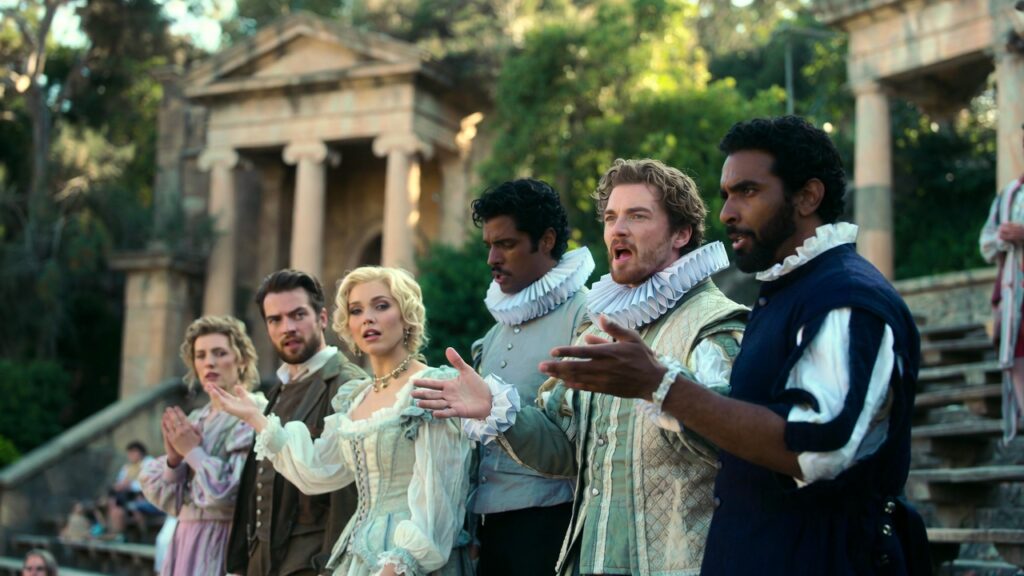
Imagine the roar of thousands under a starlit Los Angeles sky, the air thick with anticipation as Critical Role live at the Greek ignited the historic Greek Theatre on June 15, 2024. This wasn’t just a Dungeons & Dragons session—it was a theatrical spectacle, Campaign 3 Episode 98, “The Nox Engine,” where Bells Hells confronted demonic horrors and their own shattering inner demons in the frozen ruins of Aeor.
Game Master Matthew Mercer led the ensemble—Travis Willingham (Chetney), Laura Bailey (Imogen), Liam O’Brien (Orym), Sam Riegel (Braius Doomseed), Taliesin Jaffe (Ashton), Ashley Johnson (Fearne), Marisha Ray (Laudna), and Robbie Daymond (Dorian)—with Brennan Lee Mulligan as the electrifying Master of Ceremonies. Fans in elaborate cosplay cheered as the cast battled the unleashed demon Dominox, whose psychic assaults forced each hero to face guilt, betrayal, and loss. Visions haunted them: Ashton reliving FCG’s sacrificial death, Imogen accused by her mother Liliana, Chetney tormented by spectral children he couldn’t save.
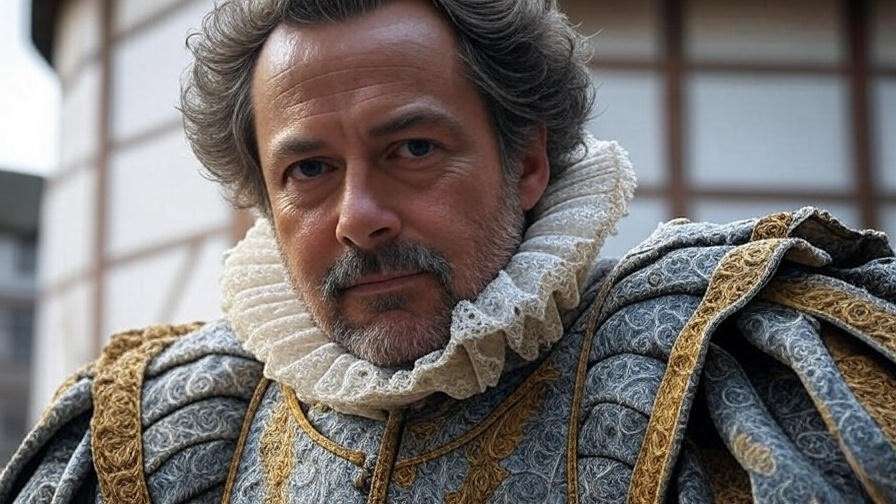
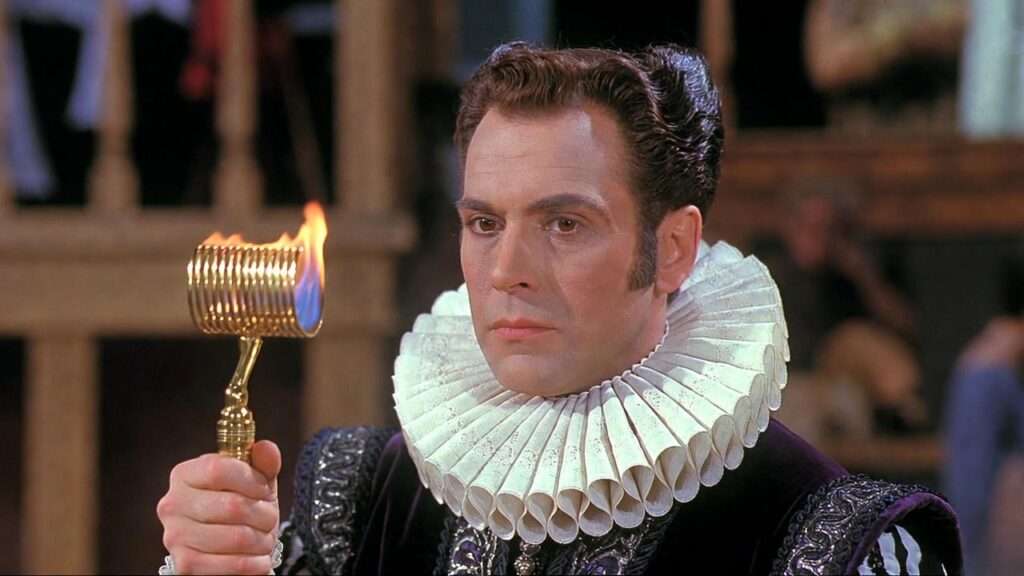
But here’s the revelation that elevates this beyond a mere recap: this live triumph mirrors the Bard’s own mastery. William Shakespeare, the Elizabethan playwright whose Globe Theatre thrived on open-air immediacy, ensemble improvisation, and psychological profundity, would recognize his dramatic DNA in Bells Hells’ performance. From tragic soliloquies echoing inner turmoil to comic relief piercing horror, “The Nox Engine” channels Hamlet‘s introspection, Macbeth‘s hallucinations, and Henry V‘s choral framing.
As a Shakespeare scholar with over two decades analyzing the First Folio and modern adaptations, I’ve long seen theater’s timeless threads. This article bridges that gap for Critical Role fans craving deeper insights into the live show’s magic and literature lovers discovering D&D’s literary roots. We’ll dissect ensemble dynamics, dramatic tension, live techniques, and actionable lessons—proving how Shakespeare’s principles amplify actual-play storytelling. Whether rewatching the VOD or pondering Aeor’s echoes, you’ll gain fresh appreciation for both worlds.
The Historical Stage Meets the Modern Arena: Why the Greek Theatre Was Perfect for Bells Hells
The Greek Theatre, carved into Griffith Park’s hills since 1930, evokes ancient amphitheaters where epics resounded under the gods’ gaze. Its 5,900 seats, stellar acoustics, and open sky created a portal to antiquity—much like Shakespeare’s Globe, rebuilt in 1599 as a polygonal thrust stage for 3,000 spectators, blending groundlings’ roars with lords’ whispers.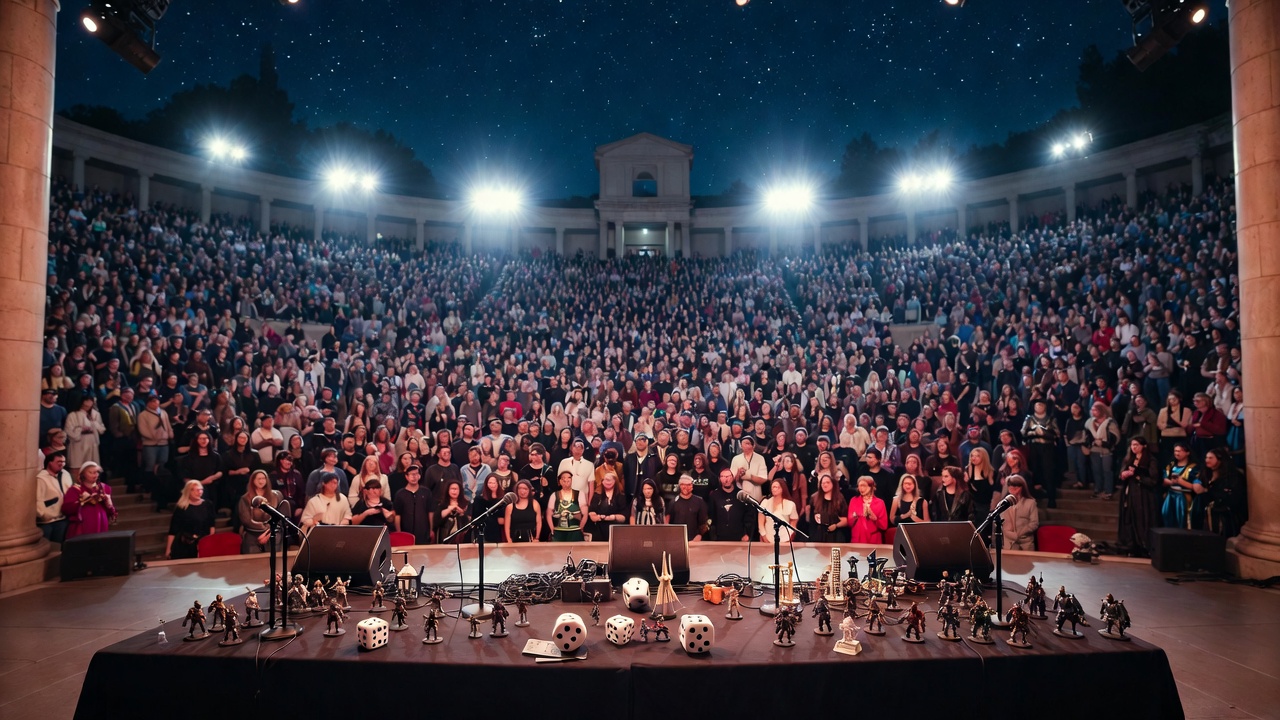
The Legacy of Outdoor Amphitheaters – From Ancient Greece to Shakespeare’s Globe to LA’s Greek Theatre
Greek tragedies by Aeschylus and Sophocles demanded communal catharsis; Shakespeare’s histories and tragedies thrived similarly. In Henry V, the Chorus invokes “O for a Muse of fire” to transport audiences to Agincourt—mirroring Mercer’s vivid Aeor descriptions, amplified by the venue’s natural reverb. The Greek’s design, inspired by Epidaurus, ensured every die roll and scream carried, fostering the “shared sky” intimacy Shakespeare exploited. No proscenium barrier: actors and audience breathe the same air, heightening vulnerability as Dominox’s influence crept in.
Historians like Andrew Gurr note the Globe’s “thrust” forced performers to engage all quadrants, much as Critical Role’s table faced a sea of cosplayed Critters waving banners. This legacy made the live show a pilgrimage, not a broadcast.
The Event Atmosphere – Fan Reactions, Cosplay, and Live Energy
Cosplay was rampant: Fearne’s horns, Laudna’s Delilah wisps, Imogen’s purple auras flooded the arena. Official promos urged “fantasy attire,” turning attendees into extensions of Exandria. VIPs enjoyed a Brennan-moderated Q&A; general admission erupted as the cast emerged. Fan clips capture Travis’s Chetney entrance—bald wig, bare-chested bravado—sparking howls akin to groundlings hailing Falstaff.
Post-show reactions? Ecstatic: “Screaming like rabid dogs,” one attendee tweeted; another hailed it “epic” for hugs, tears, and curtain calls. This energy fueled Mercer’s pacing, echoing Shakespeare’s reliance on audience vibe to cue ad-libs or tragedies.
Expert Insight: Theater scholar Tiffany Stern highlights how Elizabethan crowds influenced plots—jeers prompting asides, cheers swelling heroism. At the Greek, roars during Braius’s paladin oaths or Dorian’s illusions mirrored this, making “The Nox Engine” a living organism.
Ensemble Acting Mastery – Bells Hells as Shakespeare’s Troupe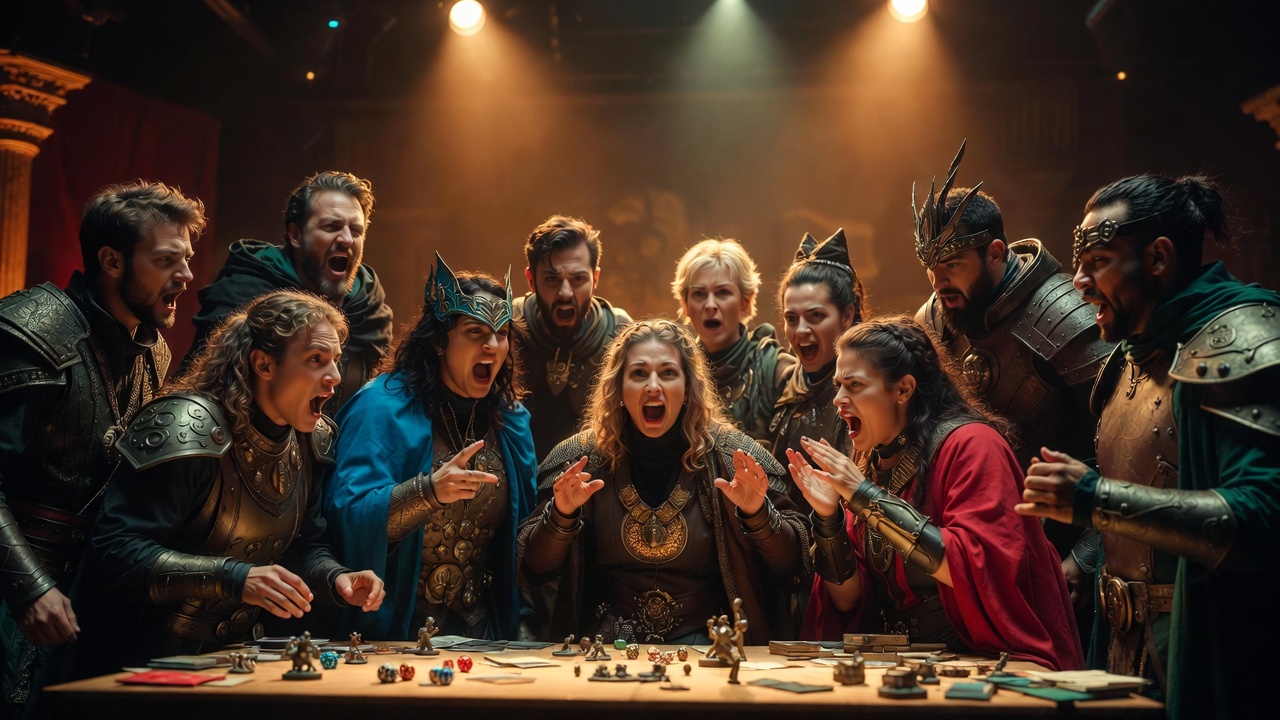
Critical Role’s cast, voice actors honed by animation and games, embodies the repertory versatility of Shakespeare’s Lord Chamberlain’s Men—Richard Burbage doubling Hamlet and Othello, Will Kempe juggling Falstaff’s mirth.
The Cast as a Repertory Company
Bells Hells’ eight players juggled backstories amid chaos: Robbie’s Dorian grieving Cyrus, Sam’s Braius flirting through fiends. Like Shakespeare’s eight-man troupe sharing 20+ roles per play, they adapted—Ashley voicing Fearne’s fey chaos while reacting live. This chemistry peaked in group decisions: ally with Dominox or shatter the Pinion of Service?
Key Parallels in Character Dynamics
- Laudna’s Tragic Duality vs. Hamlet’s Inner Conflict: Marisha’s warlock, haunted by Delilah Briarwood, confronts abandonment visions—echoing Hamlet’s “What a piece of work is a man!” soliloquy amid indecision. Her banshee wail rehearsals (prompting Ashley’s iconic “UGH!”) built tension like Ophelia’s madness.
- Fearne’s Chaotic Whimsy Echoing Puck or Falstaff: Ashley’s faun thief provided levity, polymorphing foes into absurdity—Puck’s “Lord, what fools these mortals be!” in A Midsummer Night’s Dream, or Falstaff’s bluster lightening Henry IV‘s wars.
- Dorian’s Grief and Illusion (Cyrus Vision) Mirroring Macbeth/Lear: Robbie’s bard hallucinates his brother, akin to Macbeth’s “dagger of the mind” or Lear’s storm-raged delusions. High-stakes Locate Person fails amplified tragic isolation.
Imogen’s maternal accusations parallel Lady Macbeth’s unraveling guilt; Chetney’s child-ghosts evoke Macbeth‘s Banquo banquet.
Improvisation as Shakespearean Extempore
Shakespeare’s “plots” were outlines; actors extemporized “plattes” (cue scripts). Dice rolls drove Bells Hells’ choices—failed saves spawning visions—like Burbage riffing on cues. Live stakes? No retakes, pure Elizabethan peril.
Dramatic Tension and Psychological Depth – Shakespearean Tragedy in “The Nox Engine”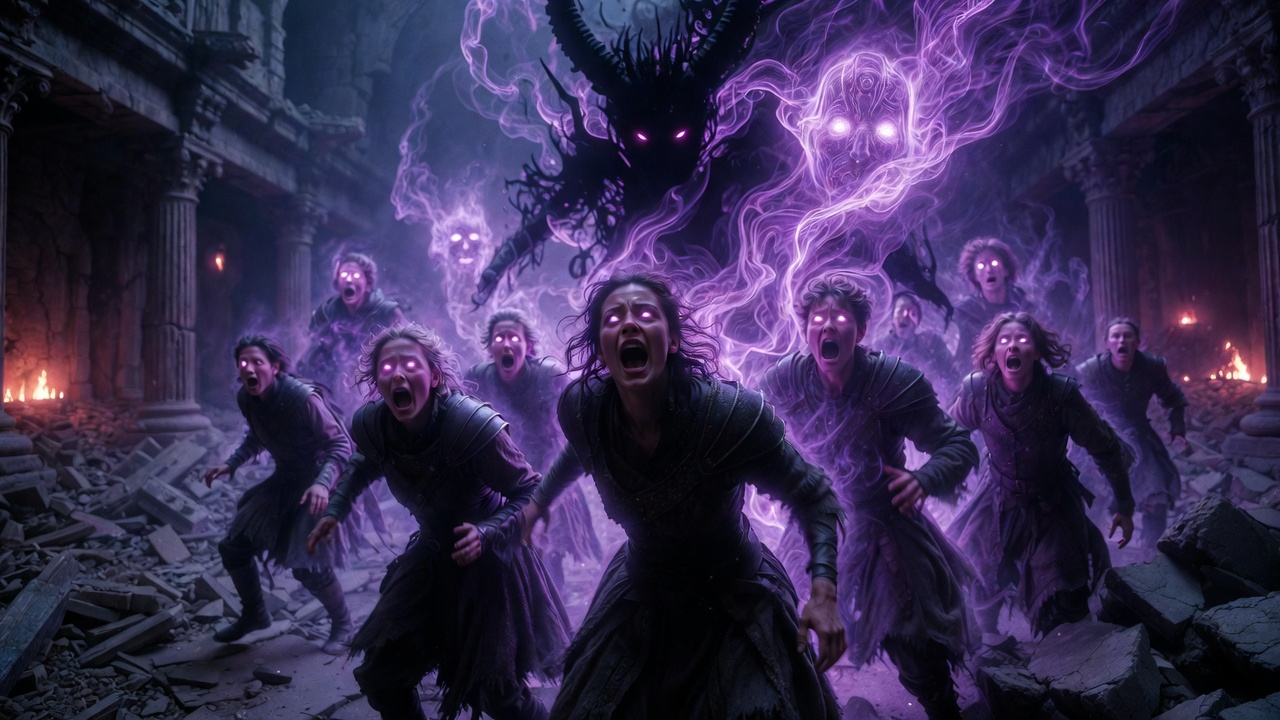
Dominox’s release unbound psychic dread, pitting external fiends against internal foes—the Pinion crystal anchoring his soul amid Aeor’s chains and glyphs.
The Demon Dominox and Inner Demons – Echoes of Macbeth and Hamlet
Visions assaulted: Ashton yelling at phantom FCG (“You wanted this!”), Imogen’s Liliana urging crystal destruction. This “dagger of the mind” (Macbeth II.i) manifests guilt—Hamlet’s “conscience doth make cowards” (III.i). Mercer’s descriptions layered horror: crumbling skins, accusatory whispers, blurring reality like Hamlet’s ghost.
Braius’s evasive Platinum Dragon past added intrigue, Teven’s threats sealing alliances uneasily.
Fate, Free Will, and High Stakes
Ludinus Da’leth’s god-slaying looms as Julius Caesar’s omens—inevitable betrayal? Bells Hells’ destroy-or-free dilemma evokes Romeo and Juliet‘s star-crossed doom, moral quandaries forcing tragic agency.
Comic Relief Amid Horror
Chetney/Ashton’s banter, Braius’s bardic flirts—Porter’s drunken gatekeeping in Macbeth, gravediggers’ wit in Hamlet. Sam’s Otto’s Irresistible Dance on foes? Pure Falstaffian farce piercing dread.
Live Performance Techniques – What Made the Greek Show Unforgettable
Brennan Lee Mulligan’s Role as Master of Ceremonies
Brennan’s emcee—face “cosplaying” Aeor’s Occultus Thalamus camera—framed like Henry V‘s Chorus: “Piece out our imperfections with your thoughts.” His intros built hype, transitions smoothed chaos, culminating in Ludinus’s gate-escape reveal.
Audience Interaction and Immersion
Crowd cheers influenced rolls—Orym’s pushes, Fearne’s spells—Shakespearean groundlings swaying pace. No “silent audience” pleas; raw energy amplified immersion.
Visual and Theatrical Elements
Lighting cued visions (purple Nox glow), minis projected on screens. Beacon’s “Live Show Experience” VOD mimics cinematic cuts, echoing Globe pageantry—torches, heraldry, visceral props.
Lessons from Shakespeare That Elevate Modern Storytelling Like Critical Role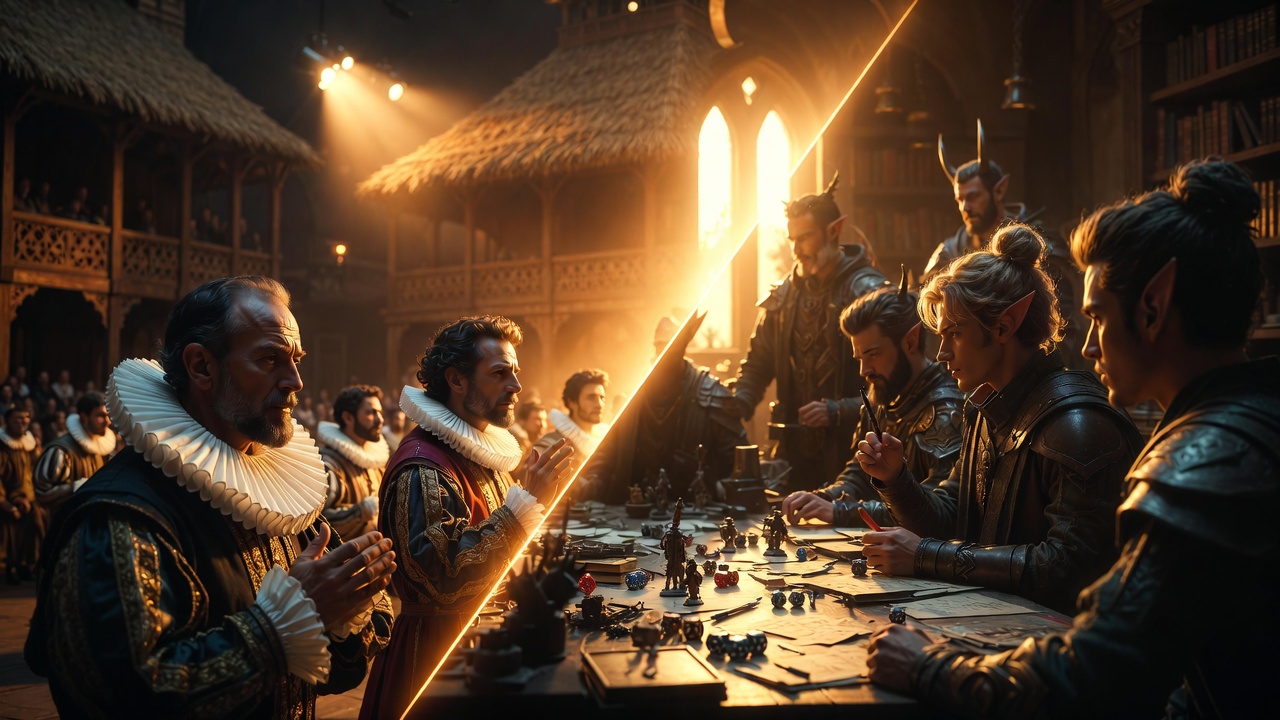
Shakespeare’s toolkit supercharges D&D campaigns and actual-plays:
- Build Ensemble Trust for Authentic Emotion: Repertory intimacy yields vulnerable moments—like Laura/Ashley’s tear-wipes.
- Layer Soliloquy-Like Monologues for Depth: Use visions for “to be or not to be” introspection.
- Balance Tragedy with Comic Relief: Banter prevents fatigue—Chetney’s werewolf howls.
- Harness Audience Energy: Live shows thrive on feedback loops.
- Embrace Improv Unpredictability: Dice as “extempore” spice.
- Frame with Choral Narration: Brennan’s MC for epic scope.
- Explore Fate vs. Free Will: Moral dilemmas drive catharsis.
DMs: Study Hamlet for psychology; players, emulate Burbage’s range. Critters: Rewatch with Bardian eyes.
Why This Crossover Matters – Bridging Centuries of Theater
Critical Role revives Shakespeare’s oral, collaborative ethos—troupes weaving tales live. In a digital age, it democratizes theater, sparking Shakespeare curiosity (e.g., Macbeth streams spike post-D&D parallels). Culturally, it proves drama’s endurance: Aeor’s fall foreshadows Exandria’s gods-war, like Troy’s in Troilus and Cressida.
Critical Role live at the Greek fused D&D improv with Shakespearean grandeur: ensemble mastery, psychic tragedies, live alchemy. Bells Hells’ Nox Engine battle—visions shattering psyches, alliances teetering—embodies the Bard’s catharsis.
Rewatch “The Nox Engine” on Beacon/YouTube, spotting Hamlet in Laudna, Macbeth in Ashton. Dive Shakespeare’s tragedies for deeper resonance. Share parallels below—what Shakespearean echo struck you?
As theater evolves, Shakespeare’s spirit endures in unexpected arenas like the Greek.
FAQs
What happened in Critical Role Episode 98 “The Nox Engine”?
Bells Hells, with Braius and Teven, faced Dominox in Aeor’s Nox Engine chamber. Visions tormented them; they allied temporarily against Ludinus, who escaped via gate, teasing the Occultus Thalamus.
Why was the Greek Theatre event so special for Bells Hells?
First live show for Campaign 3, 5,900 fans, Brennan MC, cinematic VOD—pure theatrical immersion.
How does Critical Role compare to Shakespeare’s plays?
Ensemble improv, psychological depth, live energy—tragic heroes, comic foils, fate dilemmas.
Where can I watch Critical Role live at the Greek?
YouTube (standard), Beacon (Live Show Experience ad-free).
Who is Dominox, and how does he tie to Shakespeare?
Sealed demon inducing guilt-visions—like Macbeth’s witches/banquo, inner demons as true foes.
Did the audience affect the live show?
Yes—cheers, cosplay fueled energy; no silence rules, raw interaction.
What’s next after “The Nox Engine”?
Downfall miniseries explores Calamity via Ludinus’s recording.
How can Shakespeare improve my D&D game?
Use soliloquies for RP, choruses for recaps, balanced tones.
Key Takeaways
- Greek Theatre Echoed Globe: Outdoor venues amplify communal drama.
- Bells Hells = Shakespeare’s Troupe: Versatile acting drives authenticity.
- Visions as Soliloquies: Psychological horror via Hamlet/Macbeth.
- Brennan’s Chorus Role: Frames epic stakes.
- Improv = Extempore: Dice fuel unpredictability.
- Comic Relief Saves Tension: Banter amid doom.
- Timeless Bridge: Pop D&D revives classical theater.