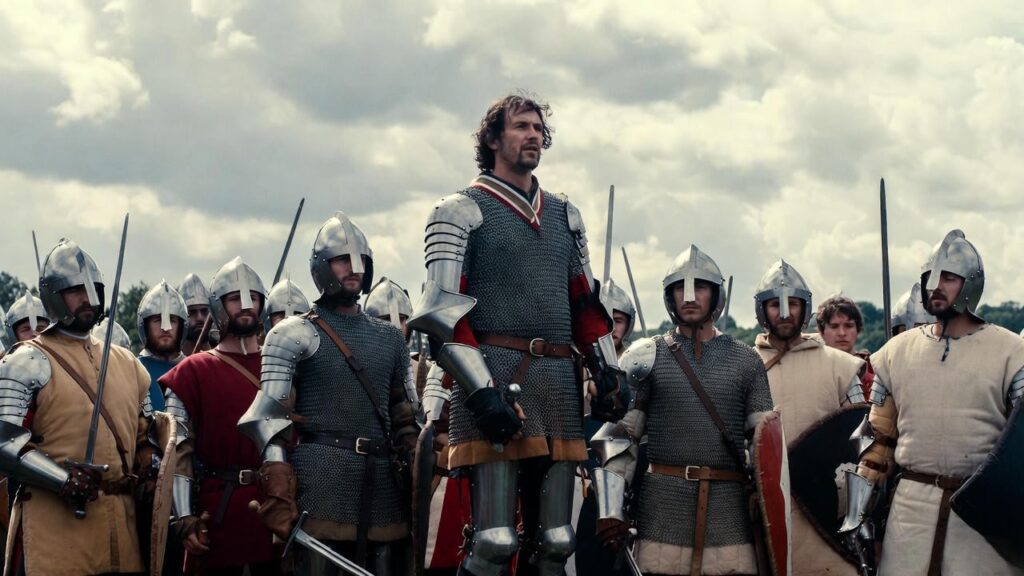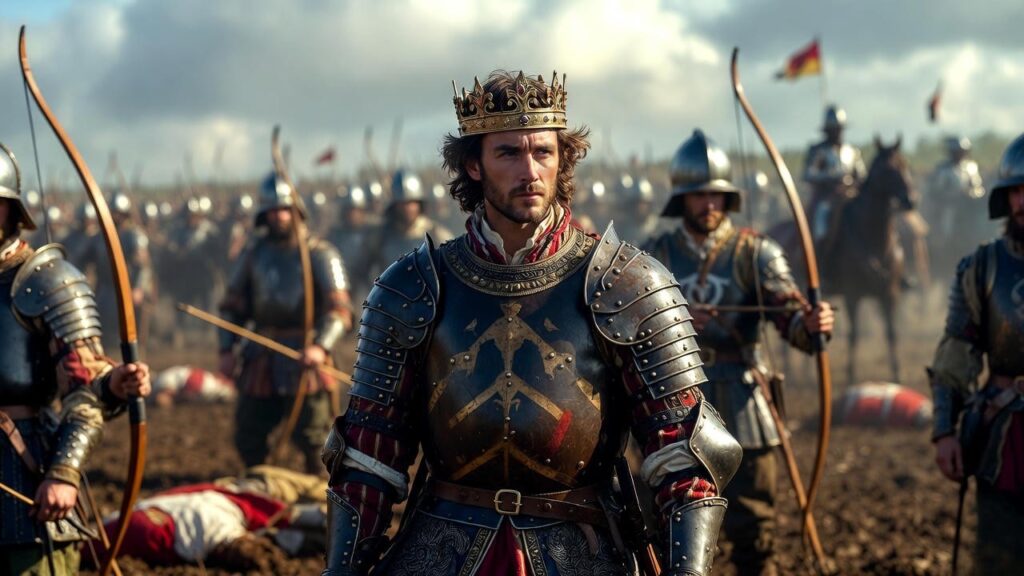
Imagine standing on a muddy field in northern France, outnumbered five to one, with rain-soaked soldiers shivering around you. Your king steps forward and delivers words that transform despair into unbreakable resolve: “We few, we happy few, we band of brothers.” This is the famous St. Crispin’s Day speech from Henry V, one of William Shakespeare’s most stirring moments. In the Folger Shakespeare Library edition of Henry V, this passage appears in freshly edited glory, with facing-page notes that unpack every archaic phrase and historical allusion, making the king’s rhetorical genius immediately accessible.
The henry v folger edition stands as the trusted choice for students, teachers, theater lovers, and anyone seeking to engage deeply with Shakespeare’s exploration of kingship and conflict. Published by the world-renowned Folger Shakespeare Library in Washington, D.C.—home to the largest collection of Shakespeare’s works—the edition draws directly from the 1623 First Folio, Shakespeare’s most authoritative printed text for this play. It features modernized spelling for readability, clear explanatory notes opposite the text, scene-by-scene summaries, a guide to Shakespeare’s language, rare images from historical books and performances, and a modern scholarly essay that contextualizes the play’s ambiguities. Whether you’re tackling the play for class, preparing for a production, or simply wanting to understand why Henry V continues to captivate audiences centuries later, this edition bridges the gap between Elizabethan English and contemporary insight.
Shakespeare wrote Henry V around 1599, during a time of national tension with wars in Ireland and lingering memories of the Spanish Armada. The play chronicles the young King Henry’s invasion of France, his victory at Agincorp in 1415, and the personal toll of power. Yet it is far from simple propaganda. Through Henry’s transformation from wayward prince to warrior king, Shakespeare probes the nature of leadership, the dual face of war as both glorious and horrific, and the seductive, corrosive pull of power. These themes remain strikingly relevant today—from political rhetoric that unites or divides nations to the ethical dilemmas leaders face in times of crisis.
In this comprehensive guide, we’ll explore why the Folger edition is the best companion for reading Henry V, provide a detailed plot overview enhanced by its unique features, dive deeply into the play’s core themes of leadership, war, and power, highlight iconic passages with Folger-specific clarifications, examine modern adaptations, and offer practical tips for study and appreciation. By the end, you’ll not only grasp the play’s complexities but also see how Shakespeare’s insights illuminate timeless questions about authority, conflict, and human ambition.
Why the Folger Edition Is the Best Way to Read and Study Henry V
The Folger Shakespeare Library editions have earned their reputation as the go-to series for both academic and casual readers. Unlike more heavily footnoted scholarly editions (such as the Arden or Oxford), the Folger strikes an ideal balance: rigorous editing without overwhelming the text.
Features That Set the Folger Edition Apart
- Freshly edited text based on the best early printed version — Primarily the 1623 First Folio, with judicious corrections from earlier quartos where needed. Editors Barbara A. Mowat and Paul Werstine provide a reliable yet readable version, modernizing spelling while preserving Shakespeare’s rhythm and wordplay.
- Facing-page explanatory notes — These appear directly opposite the text, offering instant help on difficult vocabulary (e.g., “crispian” as the saint’s feast day), puns, historical references (like the Salic Law debate), and stage directions. This format keeps you immersed rather than flipping to the back.
- Scene-by-scene plot summaries and key lines/phrases guide — Perfect for quick reference or review, these help clarify the play’s episodic structure and the Chorus’s narrative interventions.
- Introduction to Shakespeare’s language — A dedicated section explains meter, syntax, and common Elizabethan expressions, making the text approachable even for first-time readers.
- Modern perspective essay — A leading scholar (in recent printings) examines the play’s ambiguities, such as how Henry’s heroic speeches contrast with soldiers’ cynicism and the Chorus’s ironic framing.
- Fresh images from the Folger’s holdings — Rare engravings, photographs from productions (like Laurence Olivier’s 1944 film), and illustrations bring historical and theatrical context to life.
These elements make the Folger edition particularly valuable for understanding Henry V‘s blend of patriotism and critique.
Who Benefits Most from This Edition?
High school and college students appreciate the clarity for essays and exams. Teachers find it ideal for classroom discussions, with notes sparking debates on Henry’s morality. General readers and theatergoers gain confidence in tackling the original language without simplified paraphrases (unlike No Fear Shakespeare). Compared to other editions:
- Arden: Deeper scholarly apparatus but denser notes.
- Oxford: Strong introductions but less visual aids.
- Folger: Best overall for accessibility + authority.
How to Get the Most from Your Folger Copy
Read the Chorus speeches aloud—they set the imaginative tone. Use notes actively: pause when a gloss appears. Note stage directions, as Henry V relies heavily on them for battle scenes. Pair reading with audio performances or viewings to hear the rhetoric come alive.
Overview of Henry V: Plot Summary with Folger Insights
Henry V is structured as a history play with a strong epic sweep, yet Shakespeare deliberately undercuts simple heroism through the Chorus, the common soldiers, and the king’s own private moments of doubt. The Folger edition’s scene summaries and facing notes make following this structure effortless, especially when the action jumps between royal councils, camp life, and battlefield chaos.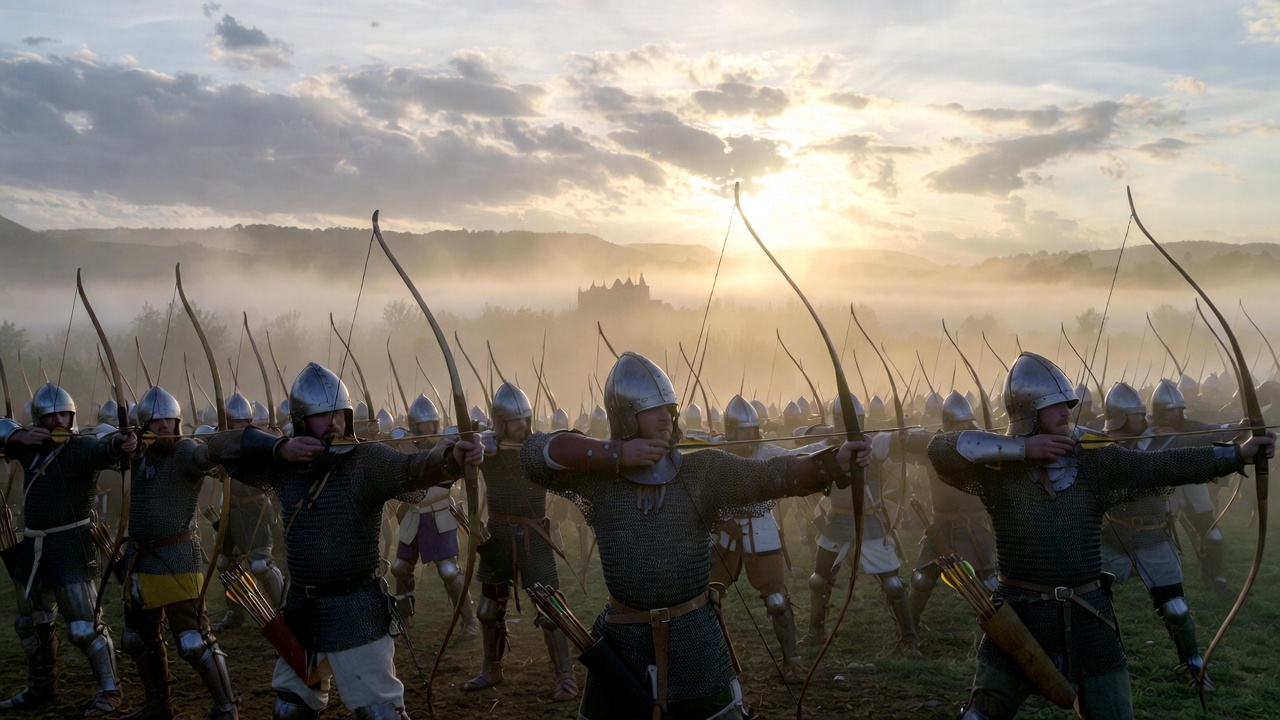
Act 1 opens in England. The young King Henry V (formerly the wild Prince Hal of the Henry IV plays) receives a provocative gift from the French Dauphin: a chest of tennis balls, mocking his youth and inexperience. This insult, clarified in Folger notes as a deliberate diplomatic slight, becomes the pretext for war. The Archbishop of Canterbury delivers a lengthy justification for Henry’s claim to the French throne, debating the Salic Law (a supposed French custom barring inheritance through the female line). The Folger notes help untangle this notoriously dense legal speech, revealing it as both a justification and a piece of political theater orchestrated by the clergy to divert Henry from taxing church lands.
Act 2 introduces betrayal and low-life comedy. Three English nobles—Cambridge, Scrope, and Grey—are exposed as traitors bribed by France. Henry’s calm, devastating unmasking of them showcases his political ruthlessness. Meanwhile, Falstaff’s old tavern companions (Pistol, Nym, Bardolph, and the Hostess) bicker and prepare to follow the army to France, providing a cynical counterpoint to the court’s grandeur. The Chorus laments the traitors but also reminds the audience that the stage cannot contain the real scale of events—prompting readers to use imagination.
Act 3 brings the siege of Harfleur. Henry’s famous “Once more unto the breach, dear friends” speech rallies his troops, but the Folger notes highlight the grim reality: the town surrenders only after Henry threatens rape, pillage, and massacre if resistance continues. This chilling ultimatum, often softened in performance, reveals the brutal pragmatism beneath the heroic rhetoric. The act ends with the death of Bardolph for theft, a small but poignant reminder that military discipline applies even to the king’s former friends.
Act 4 contains the heart of the play: the night before Agincourt. Henry, disguised, walks among his soldiers and hears their doubts and fears. His soliloquy on the burdens of kingship (“Upon the king!”) is one of Shakespeare’s most introspective moments, and the Folger notes gloss key terms like “ceremony” to reveal Henry’s private torment. The next morning, vastly outnumbered, Henry delivers the St. Crispin’s Day oration, turning impending defeat into mythic brotherhood. The battle itself is famously off-stage; the Chorus describes it briefly, and the English victory is reported with astonishing casualties (French: ten thousand; English: fewer than thirty, including famous nobles). Shakespeare’s restraint here—relying on words rather than spectacle—amplifies the play’s ambiguity.
Act 5 shifts to diplomacy and romance. Henry woos the French princess Katherine in a charming, halting scene that mixes comedy and genuine affection. The play ends with a treaty, marriage, and the Chorus’s sobering epilogue: all Henry’s gains will be lost under his infant son, Henry VI, foreshadowing the Wars of the Roses.
The Folger edition’s summaries and notes make these tonal shifts crystal clear, helping readers appreciate how Shakespeare balances triumph with irony.
Leadership in Henry V: From Prince Hal to Warrior King
Shakespeare’s portrayal of Henry V is one of the most complex studies of leadership in all of literature. The Folger text, with its precise lineation and glosses, allows us to trace this evolution with precision.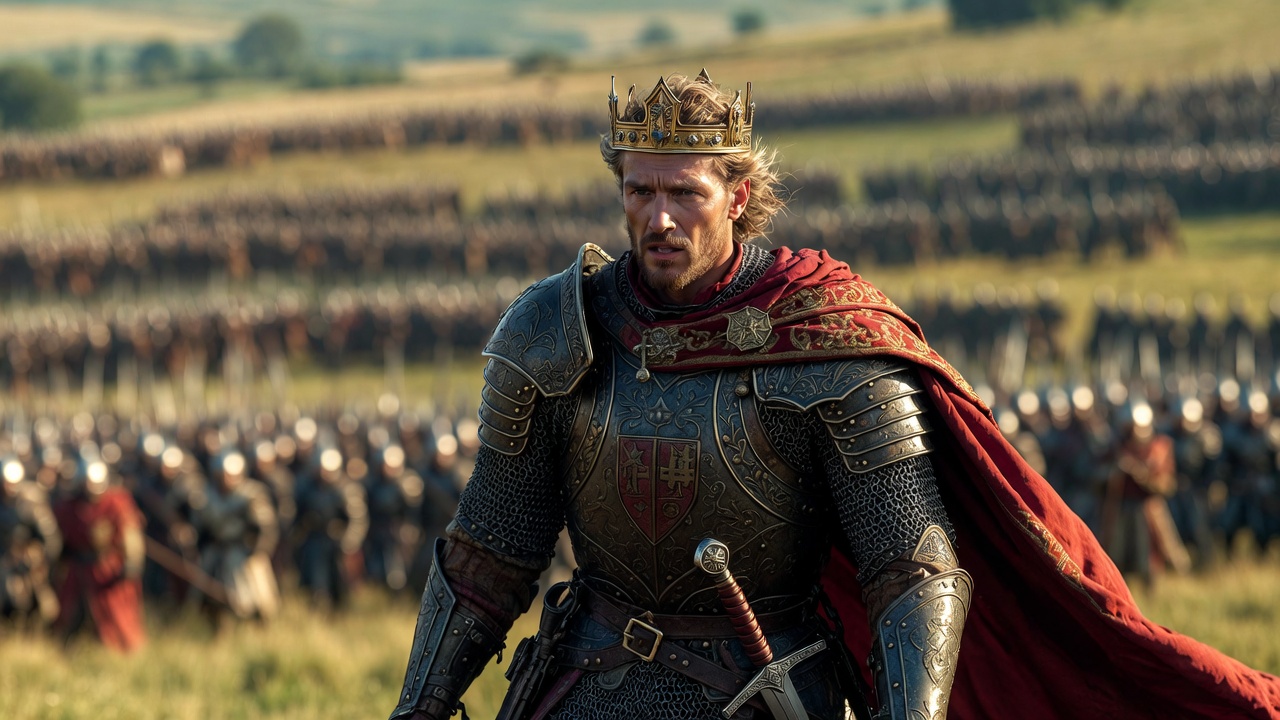
Henry’s Transformation and Rhetorical Mastery
Henry begins the play as a newly crowned king who must prove himself. His response to the tennis balls insult is measured yet devastating—he turns mockery into a casus belli. His greatest gift is oratory. Two speeches stand out:
- “Once more unto the breach, dear friends, once more” (3.1) transforms exhausted, fearful soldiers into a unified fighting force through vivid imagery (“bend up every spirit to his full height”) and shared purpose.
- The St. Crispin’s Day speech (4.3) is even more powerful. Henry reframes overwhelming odds as a badge of honor: “We few, we happy few, we band of brothers.” The Folger notes explain how “Crispin Crispianus” evokes a saint associated with shoemakers—humble craftsmen—making the speech inclusive rather than elitist.
These moments show leadership as performance: Henry knows exactly which words will inspire loyalty and courage.
The Burden of Kingship and Moral Ambiguity
Yet Shakespeare never lets us forget the cost. In his disguised encounter with the common soldiers (4.1), Henry hears Williams argue that the king bears responsibility for every soldier’s death. Henry’s response—“Every subject’s duty is the king’s, but every subject’s soul is his own”—is logically sound but emotionally evasive. His later soliloquy on ceremony reveals profound isolation: the crown brings sleepless nights and constant vigilance, not glory.
Henry’s decisions are often ruthless. He executes the traitors without hesitation, approves Bardolph’s hanging despite personal history, and threatens Harfleur with atrocities to force surrender. These choices are politically effective, but they raise questions: Is this admirable pragmatism or moral compromise?
Expert Insight: What Shakespeare Reveals About Effective (and Flawed) Leadership
Scholars featured in Folger editions and related scholarship (e.g., Mowat’s introductions, Norman Rabkin’s work on the play’s “complementarities”) argue that Shakespeare presents leadership as inherently theatrical. Henry excels at projecting unity and divine right, yet the play constantly reminds us of the manipulation involved. Modern parallels abound: leaders who use stirring rhetoric to rally support for controversial wars, or who must balance public image with private conscience.
The Folger edition’s modern perspective essay often emphasizes this duality—Henry is both inspiring and troubling, a mirror for any era’s power figures.
War in Henry V: Glory, Horror, and the Human Cost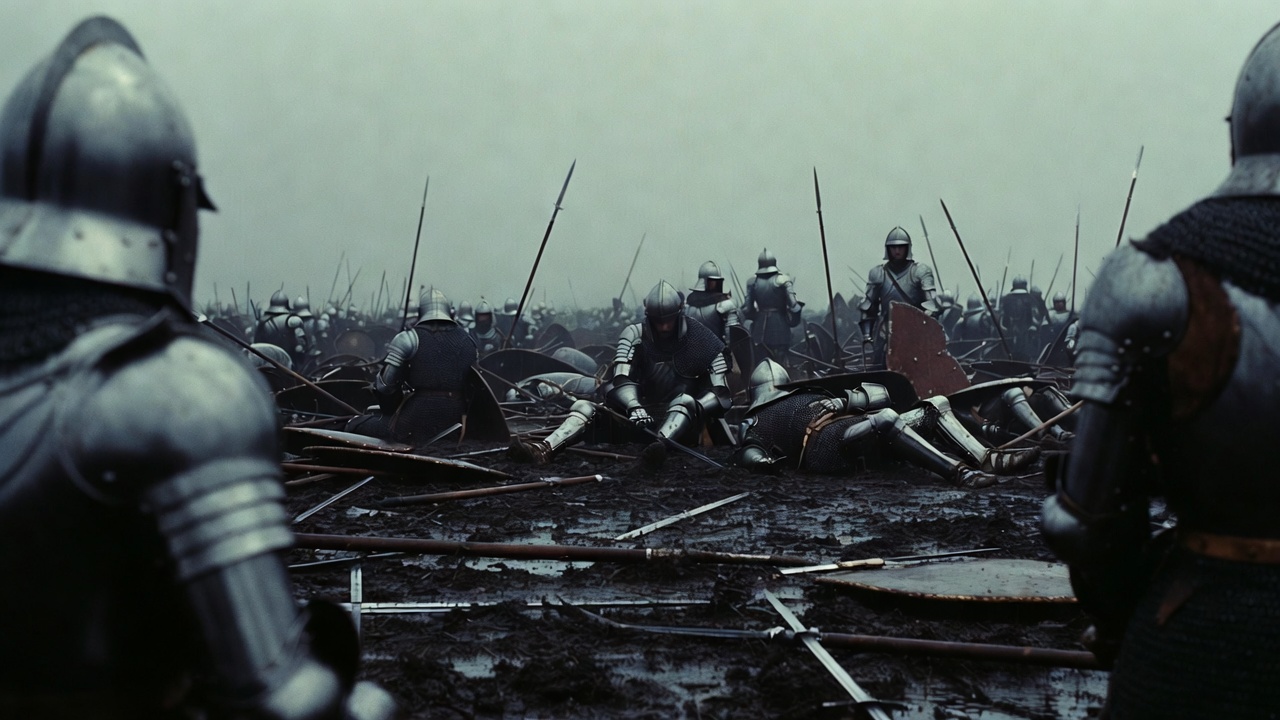
One of the most remarkable achievements of Henry V is Shakespeare’s refusal to present war as either wholly glorious or wholly evil. Instead, he holds both perspectives in tension, forcing the audience—and modern readers—to confront the contradiction. The Folger edition’s notes and introductory materials are especially helpful here, pointing out how the Chorus’s grand, cinematic language contrasts sharply with the gritty, human details that follow.
The Glorification of Battle
The play contains some of the most stirring calls to arms in English literature. Henry’s speeches transform the prospect of slaughter into something almost sacred:
- “Once more unto the breach” (3.1) equates military assault with masculine honor and national destiny.
- The St. Crispin’s Day oration (4.3) turns a hopeless military situation into a legendary moment of fellowship. Lines such as “This day is called the feast of Crispian” and “We few, we happy few, we band of brothers” have been quoted by generals, politicians, and sports coaches for centuries because they so powerfully convert fear into pride and isolation into belonging.
The Chorus reinforces this epic tone, asking the audience to “piece out our imperfections with your thoughts” and imagine vast armies, thundering horses, and the clash of steel. In performance and in the Folger text, these passages create an undeniable rush of patriotic and heroic feeling.
The Dark Side of War
Yet Shakespeare immediately undercuts the grandeur. The common soldiers—Pistol, Nym, Bardolph—follow the army not for glory but for plunder and profit. Their gallows humor and petty quarrels remind us that most participants in war are ordinary people caught in extraordinary violence. Bardolph’s execution for stealing a pax (a sacred object) from a church underscores the brutal discipline required to maintain an army.
Henry’s own words often carry a chilling edge. At Harfleur he warns the governor:
The gates of mercy shall be all shut up, And the fleshed soldier, rough and hard of heart, In liberty of bloody hand shall range With conscience wide as hell…
The Folger notes make clear that this is not mere hyperbole: medieval sieges frequently ended in rape and massacre when towns resisted. Henry uses terror as a calculated weapon to avoid prolonged fighting—a pragmatic but morally disturbing choice.
Even the famous victory at Agincourt is presented with grim statistics. The French losses are catastrophic; the English, astonishingly low. Yet the play lingers on individual deaths—Suffolk and York dying in each other’s arms, the boy killed by the French camp followers—reminding us that every number represents a human life.
Shakespeare’s Balanced View
Scholars have long debated whether Henry V is a pro-war or anti-war play. The most convincing answer is that it is neither and both. Shakespeare gives full voice to the exhilaration of victory and the bonding power of shared danger, but he also exposes the manipulation, cynicism, suffering, and waste that war entails. The Chorus’s epilogue drives this home: Henry’s triumph is temporary; his son will lose everything in the chaos of civil war.
This ambivalence makes Henry V especially resonant today. Readers using the Folger edition can trace these contradictions line by line, seeing how Shakespeare refuses easy answers about the morality of armed conflict—whether in the fifteenth century, the Elizabethan era, or our own time.
Power and Its Seductions: Politics, Manipulation, and Legacy
At its core, Henry V is a study of power: how it is claimed, exercised, justified, and lost.
The Justification of Conquest
The play opens with a carefully stage-managed justification for war. The Archbishop’s long speech on the Salic Law is both a legal argument and political maneuvering—the church hopes to deflect Henry’s plan to tax ecclesiastical lands by redirecting his ambition abroad. The Dauphin’s tennis balls provide the perfect casus belli. Henry seizes the opportunity, but the Folger notes remind us that the historical Henry V’s claim to France was tenuous at best. Shakespeare shows power being constructed through rhetoric and opportunism.
Power as Performance
Henry is a master performer. He knows when to play the pious king, the inspiring commander, the stern judge, and the charming suitor. His soliloquy on ceremony (4.1) reveals how exhausting this constant role-playing can be:
And what have kings that privates have not too, Save ceremony, save general ceremony?
Yet he never abandons the performance. Even his moments of apparent vulnerability—walking among the troops in disguise—are strategic: he gathers intelligence and tests loyalty. The Folger text’s glosses on words like “ceremony” and “twin-born” help readers appreciate the depth of this introspection.
The Epilogue’s Sobering Truth
The final Chorus speech is devastating in its brevity:
Henry the Sixth, in infant bands crowned King Whose state so many had the managing That they lost France and made his England bleed…
All of Henry’s conquests, marriages, and rhetoric come to nothing. Power, Shakespeare suggests, is fragile and often illusory. The son pays for the father’s ambition.
Timeless Insights: Leadership, War, and Power Today
Henry V remains urgently relevant because it dramatizes perennial questions:
- How do leaders justify war to their people?
- When does inspiring rhetoric cross into manipulation?
- Can a ruler be both heroic and morally compromised?
- What is the true cost of national greatness?
Modern readers—whether studying political science, military history, ethics, or leadership—find in the Folger edition a text that speaks directly to contemporary crises of authority and conflict.
Key Passages and Famous Lines from the Folger Edition
Here are several passages that have endured for their rhetorical brilliance and emotional depth, with brief Folger-aided insights:
- “Once more unto the breach…” (3.1.1–34) A masterclass in motivational oratory. Folger notes clarify metaphors (“gallèd eyes,” “hard-favored rage”) and the way Henry equates siege warfare with masculine virtue.
- St. Crispin’s Day speech (4.3.18–67) The emotional climax. The progression from “He that hath no stomach to this fight” to “we band of brothers” creates an arc of inclusion and transcendence.
- “Upon the king!” soliloquy (4.1.242–278) Henry’s most private moment. Folger glosses show how “ceremony” carries both religious and theatrical connotations, underscoring the artificiality of kingship.
- Wooing scene with Katherine (5.2) A delightful shift to comedy and courtship. Henry’s halting French and Katherine’s witty replies humanize the conqueror.
These passages reward close reading with the Folger notes, which unpack wordplay, meter, and historical context.
Adaptations and Performances: How the Folger Text Informs Modern Interpretations
The Folger edition has been the basis for countless classroom discussions and theatrical productions. Two landmark film versions illustrate how directors interpret the play’s ambiguities:
- Laurence Olivier (1944) — Filmed during World War II, this version emphasizes patriotic heroism. The Chorus speaks directly to a modern audience, and the battle is glorious. Olivier used the Folger-like clarity of the text to make speeches ring out clearly.
- Kenneth Branagh (1989) — A grittier, more realistic take. The rain, mud, and exhaustion of Agincourt are foregrounded, and Henry’s threats at Harfleur are delivered with chilling menace. Branagh’s performance captures both the inspiration and the moral cost.
Stage productions continue to explore the play’s darker undertones, often highlighting the common soldiers or the Chorus’s ironic commentary.
Why Henry V Folger Remains Essential Reading
The Folger Shakespeare Library edition of Henry V is more than a convenient text—it is a gateway to one of Shakespeare’s richest and most challenging plays. Through its clear notes, reliable text, and scholarly framing, it allows readers to experience the full complexity of Henry’s character, the exhilaration and horror of war, and the seductive dangers of power.
In an age still wrestling with questions of leadership, national identity, and the ethics of conflict, Shakespeare’s insights—carefully illuminated by the Folger edition—remain as piercing and necessary as ever. If you have not yet read Henry V with this edition, now is the time. Open its pages, listen to the king’s voice, and let Shakespeare’s genius speak directly to you.
FAQs
What makes the Folger Henry V different from other editions? It combines scholarly accuracy (based on the First Folio) with exceptional readability: facing-page notes, modern spelling, scene summaries, and visual aids—all without overwhelming the text.
Is Henry V pro-war or anti-war? Neither exclusively. Shakespeare gives powerful voice to both the glory and the horror, refusing to resolve the tension.
How does the Folger edition help with Shakespeare’s language? Immediate, opposite-page explanations of difficult words, puns, and allusions keep readers immersed rather than frustrated.
Best way to study Henry V for school or college? Read actively with the Folger notes, annotate key speeches, compare public vs. private moments, and watch at least one film adaptation (Branagh recommended for balance).
Where can I buy the Folger Henry V edition? Available from major booksellers, the Folger Shakespeare Library website, and many online retailers. Look for the latest printing for the most up-to-date introductory essay.