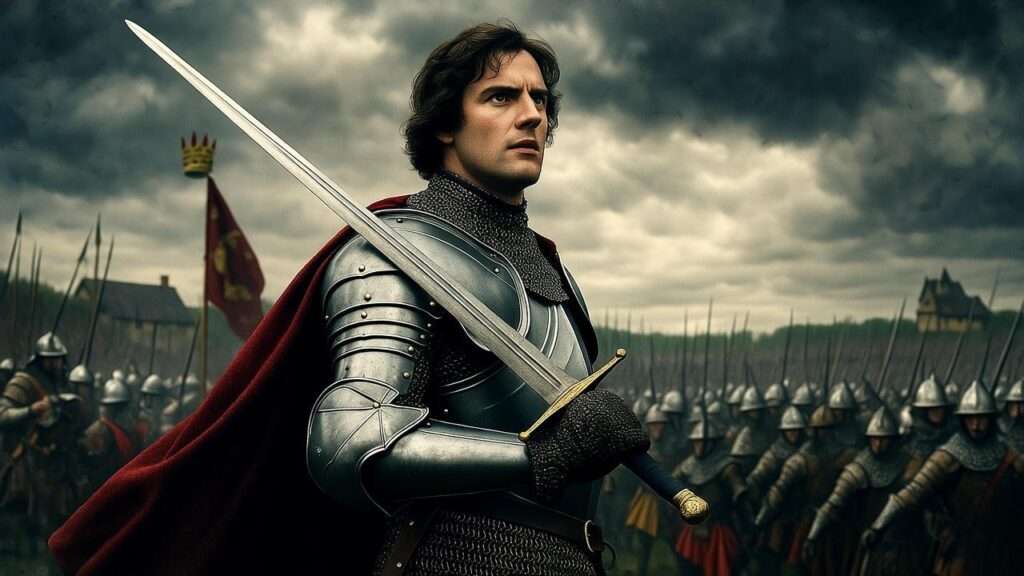
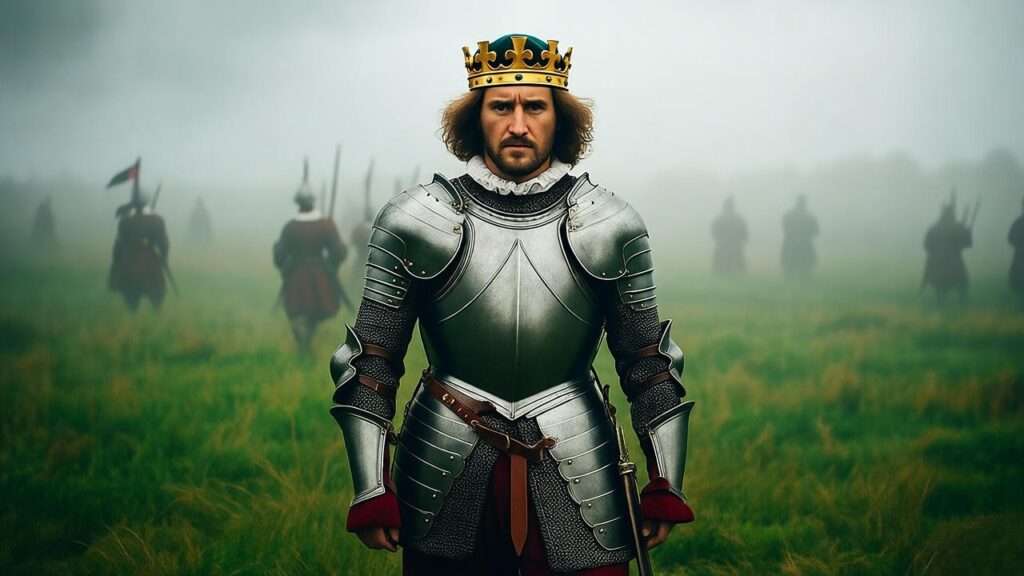
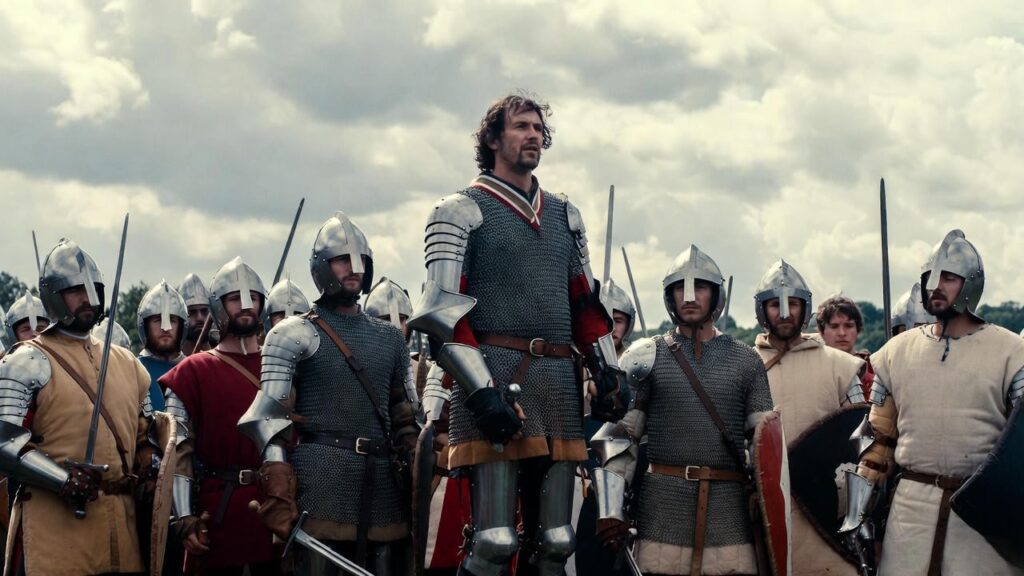
Imagine a young king, fresh from a wayward youth, standing before his troops on the eve of an impossible battle. His voice cracks with resolve yet carries the weight of doubt: “Once more unto the breach, dear friends, once more…” In the RSC Live Henry V film (2015), Alex Hassell’s delivery of this iconic line isn’t bombastic propaganda—it’s raw, urgent, almost desperate. This captured live performance from the Royal Shakespeare Theatre transforms Shakespeare’s most debated history play into a nuanced exploration of leadership under pressure, making it essential viewing for anyone grappling with what true authority looks like in times of conflict.
Directed by Gregory Doran and filmed during the 600th anniversary of the Battle of Agincourt, this production stands out among Shakespeare adaptations for its restraint, psychological depth, and fidelity to the text’s ambiguities. Whether you’re a literature student analyzing themes of war and kingship, a theater enthusiast comparing filmed stagings, or simply curious about where to watch this acclaimed RSC version, this comprehensive guide and review delivers the insights you need. We’ll cover availability, performance breakdowns, thematic analysis, comparisons to other adaptations like Laurence Olivier’s 1944 film and Kenneth Branagh’s 1989 version, and practical tips for studying or teaching with it—offering more depth than typical summaries or basic reviews.
Overview of the RSC Live Henry V Film
Gregory Doran’s 2015 production marked the culmination of the RSC’s exploration of Shakespeare’s Henriad cycle (Henry IV Parts I and II leading into Henry V). Performed at the Royal Shakespeare Theatre in Stratford-upon-Avon, it was captured live for cinema broadcast on October 21, 2015—coinciding precisely with the Agincourt anniversary—and later released as a high-quality filmed version. Directed for screen by Robin Lough, the result preserves the electric energy of live theater while using close-ups to reveal subtle facial expressions and emotional undercurrents that stage audiences might miss.
The runtime clocks in at approximately 162 minutes (2 hours 42 minutes), rated PG for mild violence and thematic intensity. The style blends traditional Elizabethan elements with modern clarity: no elaborate sets overwhelm the language, allowing Shakespeare’s verse to shine. Stephen Brimson Lewis’s design features a simple, versatile wooden thrust stage that evokes both court and battlefield, enhanced by lighting that shifts from intimate candlelit introspection to the harsh glare of war.
Key cast highlights include Alex Hassell reprising his role as Henry V after portraying Prince Hal in the preceding Henry IV plays—a continuity that adds profound depth to the character’s arc. Supporting performances bring vitality: Jane Lapotaire as the dignified Queen Isabel, Sarah Parks as the earthy Mistress Quickly, and Leigh Quinn as the charming Alice in the French scenes. Oliver Ford Davies (in related cycle roles) and others provide strong ensemble support.
This filmed production isn’t just a record—it’s a thoughtfully crafted cinematic experience that makes Shakespeare’s complex portrait of a warrior-king accessible and compelling for modern viewers.
Where to Watch the RSC Live Henry V Film Today
As of 2026, the RSC Live Henry V film remains readily available through major digital platforms, ensuring easy access for global audiences. You can rent or buy it on Amazon Prime Video (often around $2.99 to rent in HD or $9.99 to own), where it’s part of the RSC’s extensive filmed Shakespeare collection. Marquee TV also streams it in select regions, offering a dedicated theater-focused platform with high-quality playback.
Check tools like JustWatch for your specific location to confirm current options, as availability can vary by country. Physical copies (DVD/Blu-ray from Opus Arte) are still obtainable through retailers or second-hand markets if you prefer a tangible edition with extras like director commentary.
For the best experience, watch on a larger screen to capture the stage scale and ensemble dynamics. Enable subtitles—they’re invaluable for navigating Shakespeare’s language, especially in rapid exchanges or the French scenes. If you’re new to filmed Shakespeare, start with short clips (trailers or the famous “St. Crispin’s Day” speech are widely available on YouTube) to preview the tone before diving in.
This accessibility solves a common frustration: many crave high-caliber RSC performances but lack theater proximity. The filmed version bridges that gap, delivering authentic Royal Shakespeare Company energy without travel.
In-Depth Review: Strengths and Standout Elements
The RSC Live Henry V film excels precisely because it refuses easy categorization. Gregory Doran’s direction strikes a delicate balance: it honors the play’s stirring rhetoric without descending into jingoism, and it probes the moral complexities of conquest without imposing heavy-handed modern commentary. Critics widely praised this restraint. The Guardian described Hassell’s Henry as “neither schoolboy hero nor war criminal but a guilt-ridden king with enough humanity to receive a blow in the face with good grace,” capturing the production’s nuanced portrait of leadership.
What elevates this version above many filmed Shakespeare productions is its commitment to theatrical intimacy preserved on screen. Robin Lough’s direction for cinema uses close-ups masterfully during soliloquies—such as Henry’s anguished prayer before Agincourt (“O God of battles!”)—allowing viewers to see the flicker of doubt in Hassell’s eyes. The thrust stage at the Royal Shakespeare Theatre naturally lends itself to this; the audience encircles the action, and the camera exploits that encirclement to make us feel complicit in the king’s decisions.
The ensemble work shines throughout. The Chorus, delivered by Oliver Ford Davies with wry, modern detachment (dressed in casual trousers and scarf), acts as our guide, reminding us constantly that we’re watching a constructed performance. This meta-theatrical layer—reinforced in the filmed version—adds intellectual depth without alienating casual viewers. Ford Davies’s warm, authoritative delivery turns potentially dry exposition into compelling commentary, earning particular acclaim in reviews for outshining even the lead in some moments.
Battle sequences, often a challenge in filmed theater, are handled with economy and impact. Rather than CGI spectacle, Doran relies on choreographed ensemble movement, clashing weapons, and stark lighting shifts to evoke chaos. The result feels visceral yet controlled—mirroring Henry’s own disciplined command.
Overall, this production’s greatest strength is its refusal to resolve the play’s ambiguities. Henry emerges as a complex figure: inspiring yet calculating, merciful yet ruthless. That complexity makes the film endlessly rewatchable and discussable.
Alex Hassell’s Transformative Performance as Henry V
Alex Hassell’s Henry V is the production’s beating heart—and arguably its greatest achievement. Having played Prince Hal across the full Henriad cycle (Henry IV Parts I and II, then Henry V), Hassell brings unparalleled continuity. We see the exact same man who once caroused in Eastcheap taverns now shouldering the crown’s weight. This backstory infuses every decision with resonance.
Hassell’s Henry begins cautious and introspective. In the tennis balls scene, he doesn’t explode in rage; he absorbs the insult, then responds with chilling precision. His “once more unto the breach” speech is delivered mid-stride, almost conversationally—not as grand oratory but as desperate motivation. This choice underscores the king’s vulnerability: he’s rallying men while privately wrestling with the cost of war.
The St. Crispin’s Day speech (“We few, we happy few, we band of brothers”) gains power from understatement. Hassell speaks it intimately to his inner circle, not to the heavens, making the camaraderie feel genuine rather than propagandistic.
In quieter moments, Hassell’s subtlety shines brightest. His disguised visit to the troops on the eve of battle reveals genuine empathy—he listens, debates, and absorbs criticism without defensiveness. The famous wooing scene with Katherine (Jennifer Kirby) is charmingly awkward: Henry skids on his knees toward her, blending regal poise with boyish earnestness. It’s one of the few genuinely romantic moments in Shakespeare’s histories, and Hassell sells it completely.
Critics noted Hassell’s restraint: he avoids bombast, letting the verse do the work. As one review put it, his Henry is “restrained, cautious… not easily given to rhetoric.” That restraint makes his rare bursts of passion all the more effective.
Directorial Choices and Staging Innovations
Gregory Doran, then RSC Artistic Director, approached Henry V as the capstone of his histories cycle. He emphasized psychological realism over spectacle. Stephen Brimson Lewis’s set—a bare wooden platform with rising ecclesiastical arches—evokes both church and battlefield, reminding us that war is often justified in religious terms.
Doran avoids triumphalism. The invasion of France is presented as a calculated political move, not divine destiny. Henry’s justification speech (“We must… upon the King”) is delivered with visible unease, highlighting the play’s interrogation of just war theory.
Comic relief—Pistol, Nym, Bardolph, Fluellen—gains tragic undertones. Their fates underscore war’s indiscriminate cruelty. Fluellen’s obsession with military “disciplines” becomes poignant when juxtaposed with actual slaughter.
The filmed version benefits from subtle enhancements: amplified sound design brings the clash of swords and distant cries into sharp focus, while lighting shifts (Tim Mitchell) create mood without overwhelming the text.
Critical Reception and Audience Impact
Upon release, the production earned widespread praise. The Guardian called it “robust and clear,” noting its avoidance of both patriotic excess and overt pacifism. Audience scores on platforms like IMDb hover around 8.1/10 (based on viewer ratings for the filmed version), with comments highlighting its clarity and emotional depth.
Many consider it one of the strongest filmed RSC history plays, thanks to the cycle continuity and Hassell’s performance. It appeals to both scholars (for its textual fidelity) and general audiences (for its accessibility and energy). In an era of polarized views on leadership and conflict, this Henry V feels urgently relevant—without forcing contemporary parallels.
Key Themes in Shakespeare’s Henry V Explored in This Production
Shakespeare’s Henry V is rarely performed as straightforward patriotic pageantry anymore, and Gregory Doran’s RSC staging deliberately leans into the text’s internal contradictions. This filmed version makes those tensions vivid and accessible, inviting viewers to wrestle with the same questions that have troubled readers for centuries: Is this a celebration of heroic kingship or a subtle critique of militarism? The production refuses to give a single answer, and that ambiguity is its greatest strength.
Leadership and the Burden of Kingship
At the center of the play—and this production—is the transformation of a once-reckless prince into a responsible monarch. Doran and Hassell show us a Henry who is acutely aware of the crown’s isolating weight. The soliloquy “Upon the king!” (Act 4, Scene 1) becomes a quiet, devastating confession: “What infinite heart’s-ease / Must kings neglect that private men enjoy!” Hassell’s delivery is hushed, almost confessional, revealing a man who envies the sleep of the common soldier he has just debated in disguise.
This version emphasizes Henry’s moral self-awareness. When he orders the execution of his old drinking companion Bardolph for looting a church, the moment is played with visible pain rather than cold authority. The camera lingers on Hassell’s face as he turns away—proof that personal loyalty must yield to public duty. It’s a stark illustration of the burdens of leadership that resonate powerfully in any era of political polarization.
War, Patriotism, and the Cost of Victory
The production never lets us forget that Agincourt, though a legendary English victory, came at enormous human cost. Doran stages the battle scenes with disciplined minimalism: no massed extras, just tight choreography and stark sound design. The famous “band of brothers” speech is intimate rather than bombastic—Henry speaks it quietly to a small circle of exhausted men, making the promise of shared glory feel like a desperate act of morale-building rather than triumphal certainty.
The play’s darker undertones are given full weight. The hanging of Bardolph, the deaths of Pistol’s companions, and the French herald’s grim tally of casualties all receive careful attention. By refusing to glorify slaughter, the RSC production aligns with modern readings that see Henry V as Shakespeare’s most ambivalent war play—celebrating English unity while quietly cataloguing its price.
Language and Rhetoric: Shakespeare’s Mastery
One of the film’s greatest pleasures is hearing Shakespeare’s language delivered with clarity and emotional truth. Hassell’s verse speaking is crisp yet natural; he avoids the trap of over-emphatic “poetic” delivery. The result is that famous speeches feel freshly urgent:
- “Once more unto the breach” becomes a practical, almost panicked exhortation.
- The St. Crispin’s Day oration gains intimacy when spoken to a handful of weary soldiers rather than shouted to the horizon.
- The wooing scene with Katherine sparkles with comic awkwardness and genuine tenderness, thanks to Hassell’s playful physicality and Kirby’s sharp timing.
The Chorus speeches, delivered by Oliver Ford Davies with wry self-awareness, constantly remind us that we are watching theater—yet the reminder never breaks immersion; it deepens it.
Gender and Comedy in the Play
The French scenes provide necessary relief and contrast. Jennifer Kirby’s Katherine is intelligent and quick-witted, not merely a passive prize. The language lesson with Alice (Leigh Quinn) is played for genuine laughs, while the final wooing scene balances humor with real romantic tension. Pistol, Nym, and Bardolph’s low-life comedy is handled with affection rather than caricature, making their eventual fates all the more poignant.
Comparison to Other Henry V Adaptations
To appreciate what makes the RSC Live film distinctive, it helps to place it alongside the two most influential screen versions and a few recent ones.
- Laurence Olivier (1944): Filmed during World War II, Olivier’s version is unabashedly patriotic. It opens with a theatrical curtain rising on the Globe stage before transitioning to cinematic realism, emphasizing national unity and heroic destiny. The tone is triumphant; moral ambiguities are minimized. The RSC production, by contrast, foregrounds doubt and cost—more reflective than rousing.
- Kenneth Branagh (1989): Branagh, himself an RSC alumnus, delivers a grittier, more emotionally raw take. His rain-soaked Agincourt and weary troops evoke the mud of the Western Front. While both versions explore Henry’s inner conflict, Branagh’s is more cinematic in scope (sweeping tracking shots, swelling music), whereas the RSC film remains rooted in theatrical intimacy. Branagh’s St. Crispin’s Day speech is grand and stirring; Hassell’s is quieter and more personal.
- Modern adaptations — David Michôd’s The King (2019) with Timothée Chalamet reimagines the story in a darker, more psychologically modern key, while the National Theatre’s 2022 production with Kit Harington (available via NT at Home) emphasizes political machination. The RSC Live version stands apart for its fidelity to Shakespeare’s language and its refusal to impose a single ideological lens.
In short, if you want spectacle and cinematic sweep, choose Branagh or Olivier. If you want textual depth, psychological nuance, and the living energy of an RSC ensemble, the 2015 filmed production is unmatched.
Behind the Scenes and Expert Insights
Gregory Doran conceived the Henriad cycle as a continuous exploration of power and succession. Alex Hassell spent over a year immersed in the role of Hal/Henry, allowing him to portray the king’s growth with rare authenticity. In interviews, Hassell has spoken about the challenge of balancing Henry’s charisma with his moral uncertainty: “He’s not a saint, but he’s not a monster either—he’s trying to do the right thing in impossible circumstances.”
Doran has noted that the 600th anniversary of Agincourt gave the production added resonance without dictating its tone. The decision to film live (rather than in a studio) preserved the spontaneous interaction between actors and audience, which Robin Lough’s camera direction captures beautifully.
Practical Tips for Studying or Teaching with This Film
This version is particularly valuable in educational settings because of its clarity and emotional accessibility.
- Scene-by-scene pairing with text: Use the Amazon Prime timestamps to jump to key speeches (e.g., St. Crispin’s Day at ~1:48:00). Pause after soliloquies to discuss Henry’s state of mind.
- Discussion prompts:
- Is Henry V a hero, a Machiavellian politician, or both?
- How does the Chorus function as both narrator and commentator on the limits of theater?
- Compare the treatment of war in this production to contemporary conflicts.
- Language exercises: Have students transcribe and perform short passages, then watch Hassell’s delivery for comparison.
The film’s availability on digital platforms makes it ideal for remote or hybrid classrooms.
FAQs About RSC Live Henry V Film
Is it the same as the live stage production? Yes—filmed during a regular performance with a live audience. The presence of spectators adds energy that studio recordings often lack.
How does it compare to Branagh’s film? Branagh’s is more cinematic and emotionally intense; the RSC version is more intimate, textually faithful, and ensemble-driven.
Where can I find the full script with timestamps? Many study editions (Arden, Folger) include scene breakdowns. Cross-reference with the film’s runtime on streaming platforms.
Is it suitable for beginners? Absolutely. Clear speaking, helpful subtitles, and strong visual storytelling make it more accessible than many Shakespeare films.
The RSC Live Henry V film remains one of the most thoughtful and compelling screen interpretations of Shakespeare’s complex history play. Alex Hassell’s layered performance, Gregory Doran’s balanced direction, and the RSC ensemble’s precision combine to create a production that neither glorifies nor condemns its protagonist—it simply lets us watch a young king try to reconcile personal conscience with public duty.
In an age still wrestling with questions of leadership, justified war, and the seductive power of rhetoric, this filmed version feels urgently alive. It reminds us why Shakespeare endures: not because he provides easy answers, but because he forces us to confront difficult ones.
Watch it. Listen closely. Then ask yourself: would you follow this Henry into battle? The play—and this powerful RSC capture—leaves that question deliberately, hauntingly, open.