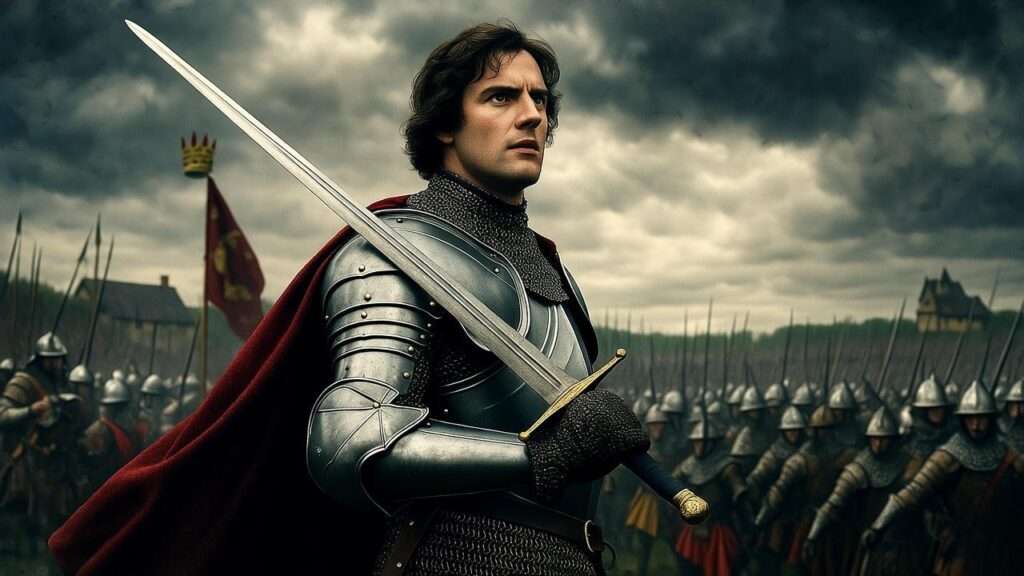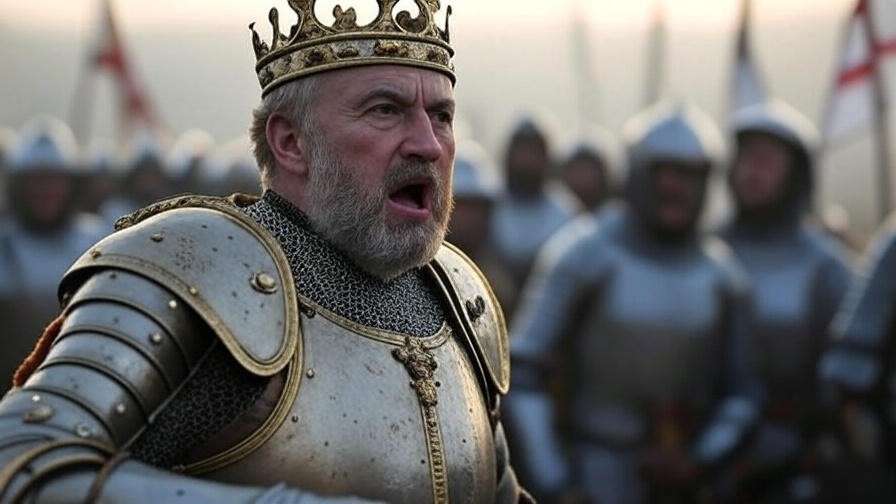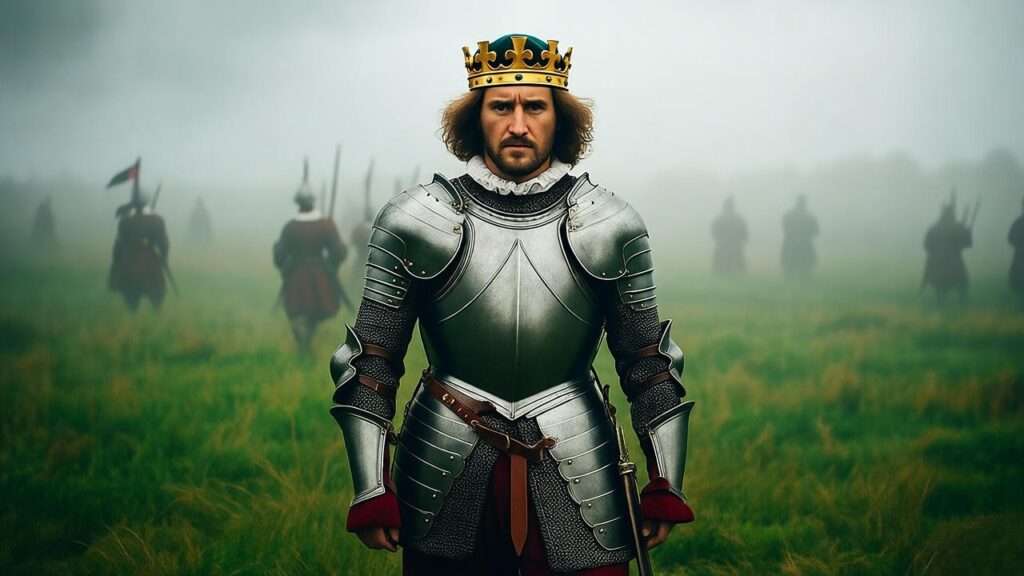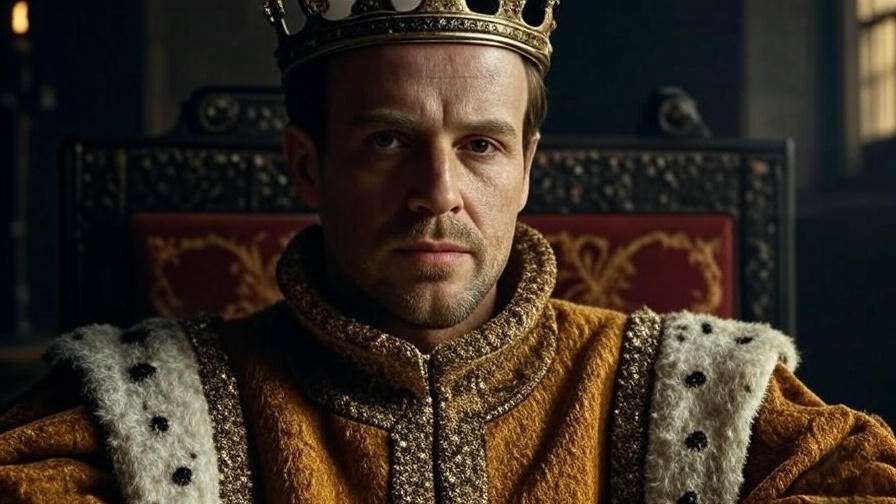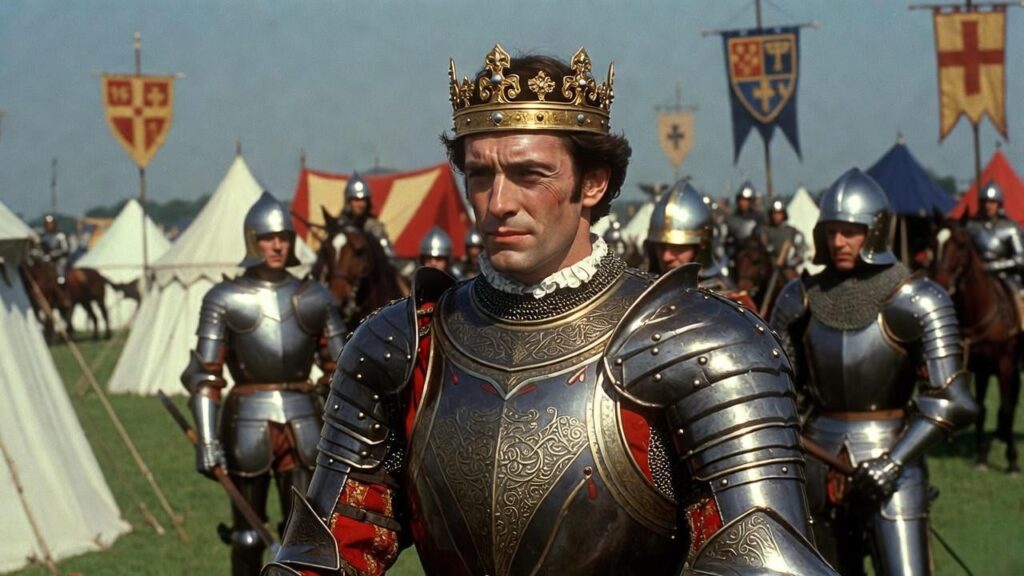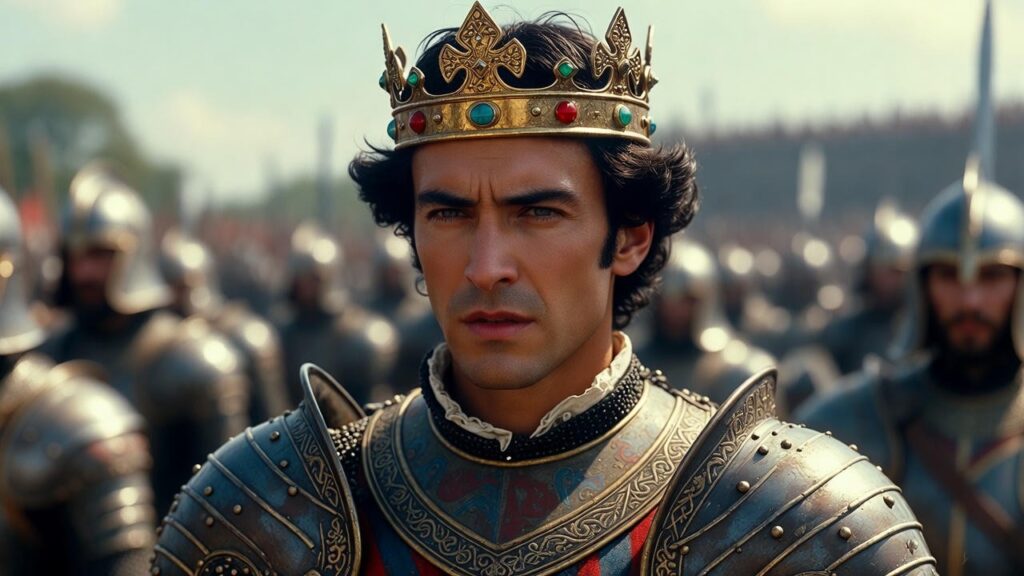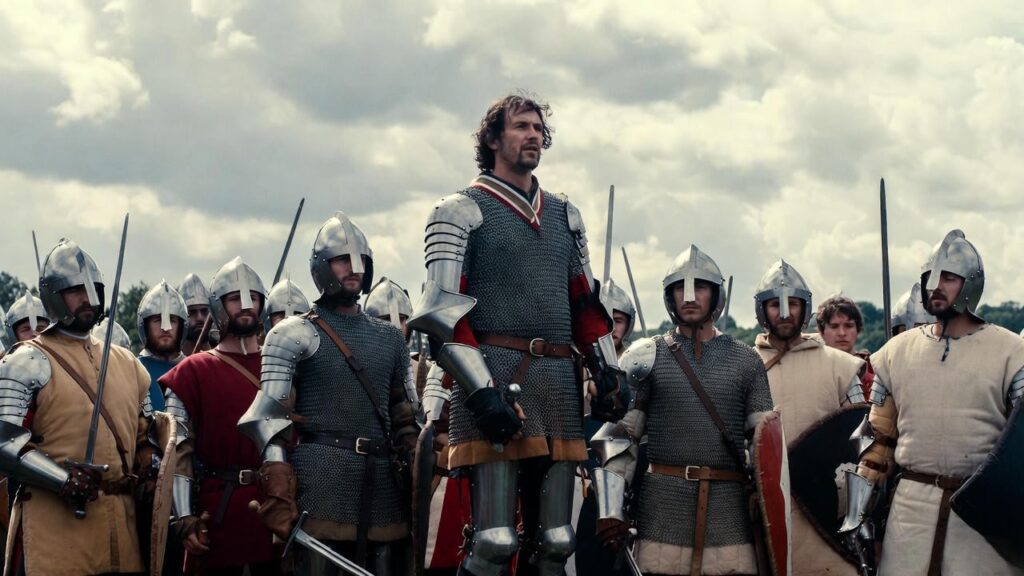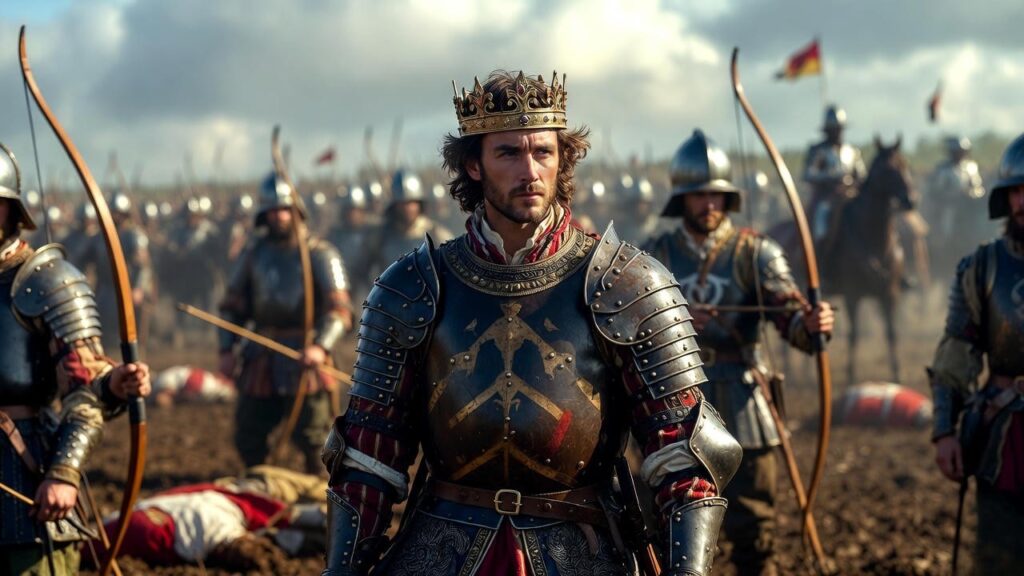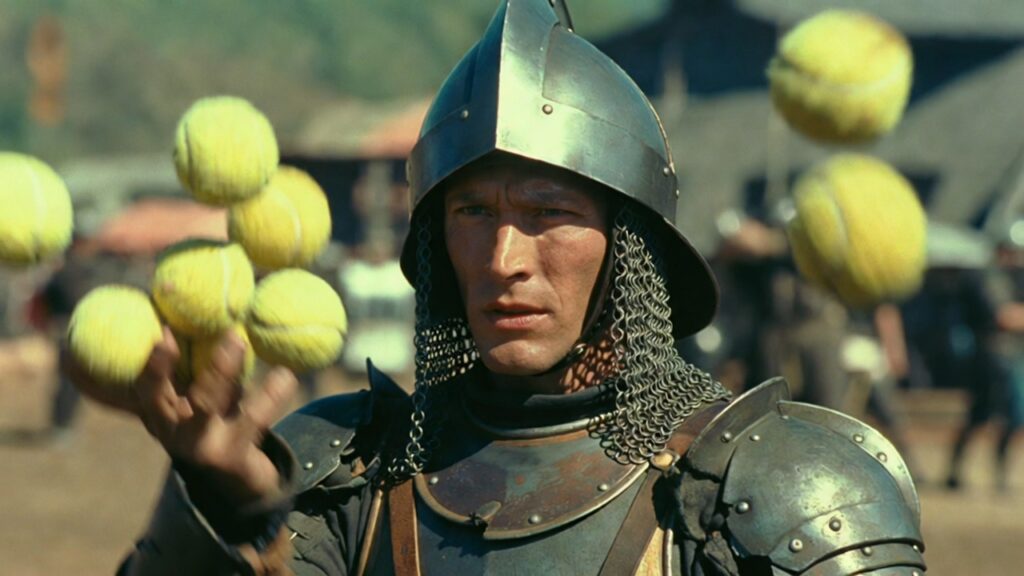
Imagine a tense moment in the English court. A French ambassador steps forward and presents a chest of tennis balls with a mocking message from the Dauphin: the young King Henry V is better suited to childish games than to claiming the French throne. Instead of rage or retreat, the king delivers one of the most electrifying speeches in Shakespeare’s entire canon. He promises to turn those playful balls into “gun-stones” — deadly cannonballs that will shatter France’s cities and crown.
If you’re searching for the gunstones the king meaning in Shakespeare’s Henry V, you have found the definitive guide. This phrase captures the precise instant when Henry V stops “plodding like a man” and rises as a warrior-king. The Dauphin’s insult becomes the spark that ignites the invasion of France and leads straight to the miracle of Agincourt.
In Act 1, Scene 2, the Dauphin’s gift is not merely a joke — it is a calculated diplomatic slap. Henry’s reply transforms mockery into a vow of war. The line “Hath turn’d his balls to gun-stones” is the dramatic hinge on which the entire play turns. Far from a throwaway insult, it reveals themes of kingship, transformation, divine right, and the terrible cost of underestimating an opponent.
This article goes far beyond quick summaries you’ll find on SparkNotes or Wikipedia. Drawing directly from the 1623 First Folio text, Raphael Holinshed’s Chronicles, Edward Hall’s histories, and modern scholarship (including Stephen Greenblatt’s Will in the World and Phyllis Rackin’s feminist readings), we unpack every layer of meaning. You will receive:
- Word-for-word analysis of the original language
- Historical accuracy versus Shakespeare’s dramatic genius
- Symbolism that still applies to leadership and geopolitics in 2026
- Practical tips for students, actors, and teachers
Whether you are writing an essay, preparing an audition, teaching the play, or simply satisfying your curiosity about one of Shakespeare’s most quoted history-play moments, this skyscraper guide solves the real problem: confusion over what “gunstones the king” actually signifies and why it matters so deeply. Let’s begin at the beginning — the real 1415 world that Shakespeare dramatized so brilliantly.
The Historical Backdrop – England vs. France in 1415
To understand the gunstones the king meaning, we must first step back into the political powder keg of early 15th-century Europe.
Who Was the Real Henry V? From “Prince Hal” to Victor of Agincourt Henry of Monmouth (1386–1422) was no overnight hero. Shakespeare had already shown us the wild Prince Hal in Henry IV Parts 1 and 2 — drinking, gambling, and keeping company with Falstaff. When his father died in 1413, the 26-year-old Henry surprised everyone. He immediately banished his old tavern friends, restored order, and turned his gaze across the Channel. He revived the ancient English claim to the French throne through the female line (the Salic Law debate that Shakespeare stages so carefully in Act 1, Scene 2). By 1415 he had assembled one of the largest English invasion fleets in generations.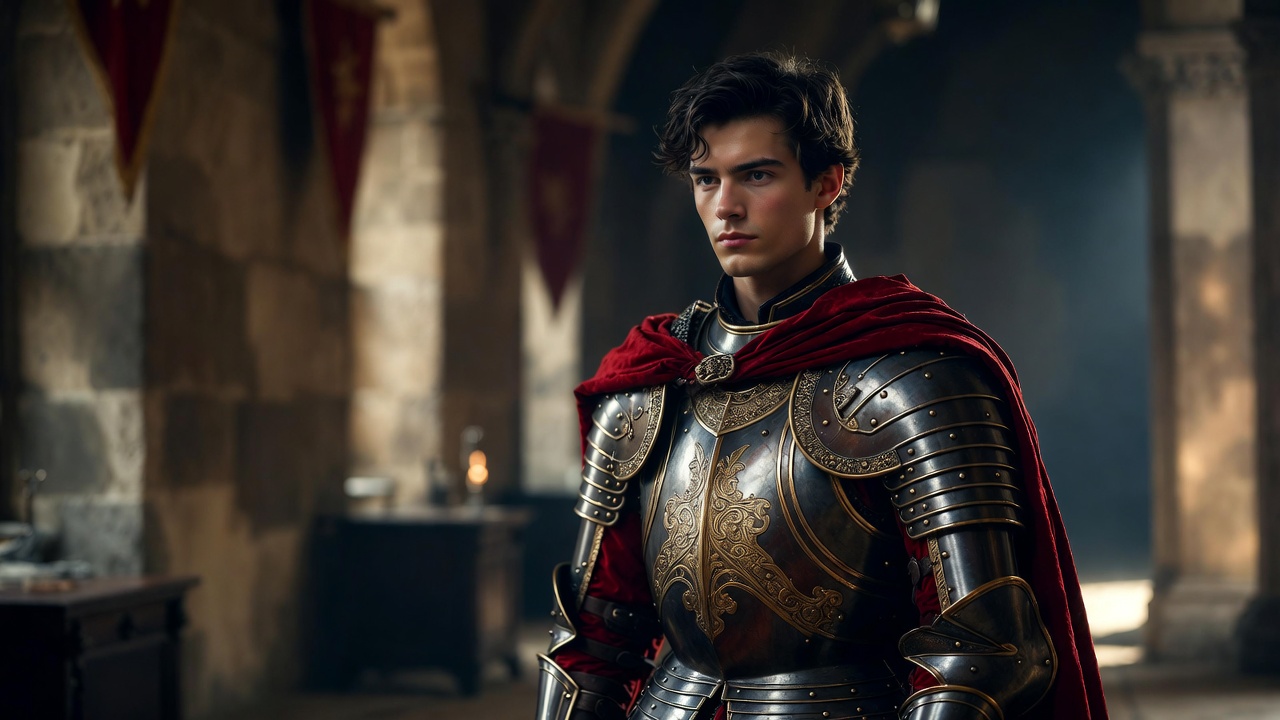
The Arrogant Dauphin: Louis de Guyenne and French Court Politics On the French side sat the Dauphin Louis de Guyenne, eldest son of the mad King Charles VI. France was fractured by civil war between the Armagnac and Burgundian factions. The Dauphin, only 18 in 1415, was surrounded by advisors who believed the English king was still the dissolute youth they remembered. Sending tennis balls was their way of saying, “Go play — you are no threat to us.” Shakespeare heightens this arrogance to create perfect dramatic contrast.
Shakespeare’s Sources – Holinshed, Hall, and the Salic Law Debate The tennis-ball story is not Shakespeare’s invention. It appears in Raphael Holinshed’s Chronicles (1577) and earlier in Edward Hall’s Union (1548): the Dauphin sends “a tun of tennis balls” as a scornful gift. Shakespeare compresses and intensifies the moment, turning a historical anecdote into the emotional core of the play. He also weaves in the legal debate over the Salic Law — the French argument that no woman could transmit a claim to the throne — which Henry’s bishops neatly dismantle.
Here is a quick timeline to anchor the scene:
- 1413 – Henry V ascends the throne
- 1414 – English ambassadors demand French territories and marriage to Princess Katherine
- Early 1415 – Dauphin sends tennis balls (according to the chronicles)
- August 1415 – English fleet sails for Harfleur
- 25 October 1415 – Battle of Agincourt
This backdrop makes the gunstones the king meaning crystal clear: the Dauphin’s childish insult arrives at the exact moment Henry has decided to become the medieval equivalent of a conqueror-king.
The Iconic Scene – Act 1, Scene 2 in Full Detail
We now reach the heart of the gunstones the king meaning — the scene itself. Shakespeare sets it inside the royal palace at Westminster. Henry has just consulted his bishops on the legality of his French claim when the French ambassadors are announced.
Complete Scene Summary with Key Excerpts The ambassadors deliver the Dauphin’s message with elaborate courtesy that barely masks contempt. Henry remains outwardly calm — a masterclass in royal self-control. He thanks them for the “pleasant” gift and promises to answer soon. Once the ambassadors withdraw, the mask drops.
Here is the exact First Folio language (modernised slightly for readability, with original phrasing preserved where it matters most):
“We are glad the Dauphin is so pleasant with us; His present and your pains we thank you for. … And tell the pleasant prince this mock of his Hath turn’d his balls to gun-stones, and his soul Shall stand sore charged for the wasteful vengeance That shall fly with them…”
This is the precise moment the gunstones the king meaning crystallises. The Dauphin’s tennis balls — symbols of leisure and youth — are transformed by Henry’s rhetoric into gun-stones, the heavy stone cannonballs used by medieval artillery. The “king” (Henry) is no longer the prodigal prince; he is now the avenging monarch whose “wasteful vengeance” will rain literal fire on France.
The Ambassador’s Delivery – Visual Insult and Diplomatic Breach Stage directions and contemporary accounts suggest the ambassadors present an actual chest or “tun” of balls. The visual is devastating: the English court sees its young king being treated like a schoolboy. Shakespeare uses this physical prop to make the insult visceral for the audience.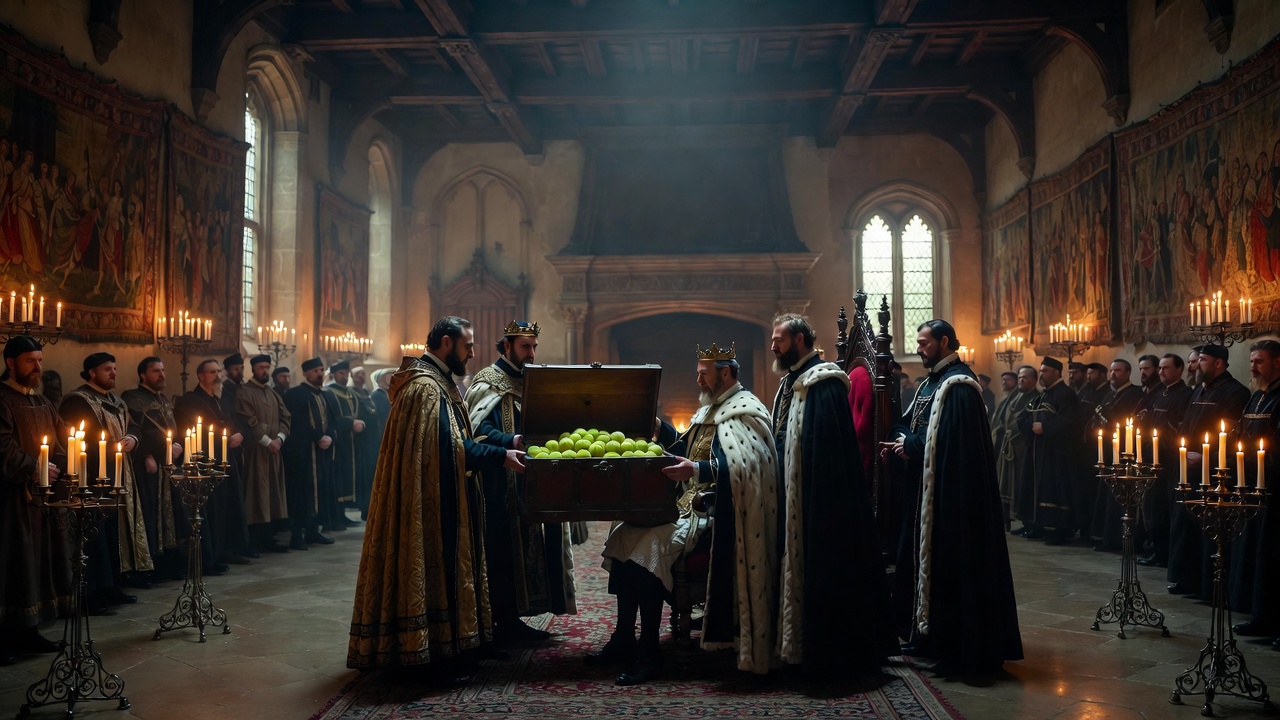
Henry’s Calm-to-Fierce Transformation – The Moment “the King” Awakens Notice the structure. Henry begins with measured courtesy (“we thank you for”), then pivots to divine justification (“This lies all within the will of God”), and finally unleashes the thunderous imagery of gun-stones. The speech moves from personal grievance to national destiny to apocalyptic warning. In performance, actors often start quietly and build to a roar on “gun-stones.” The transformation is complete: the king who once “plodded like a man” now promises to “dazzle all the eyes of France.”
Breaking Down “Gunstones the King Meaning” Word by Word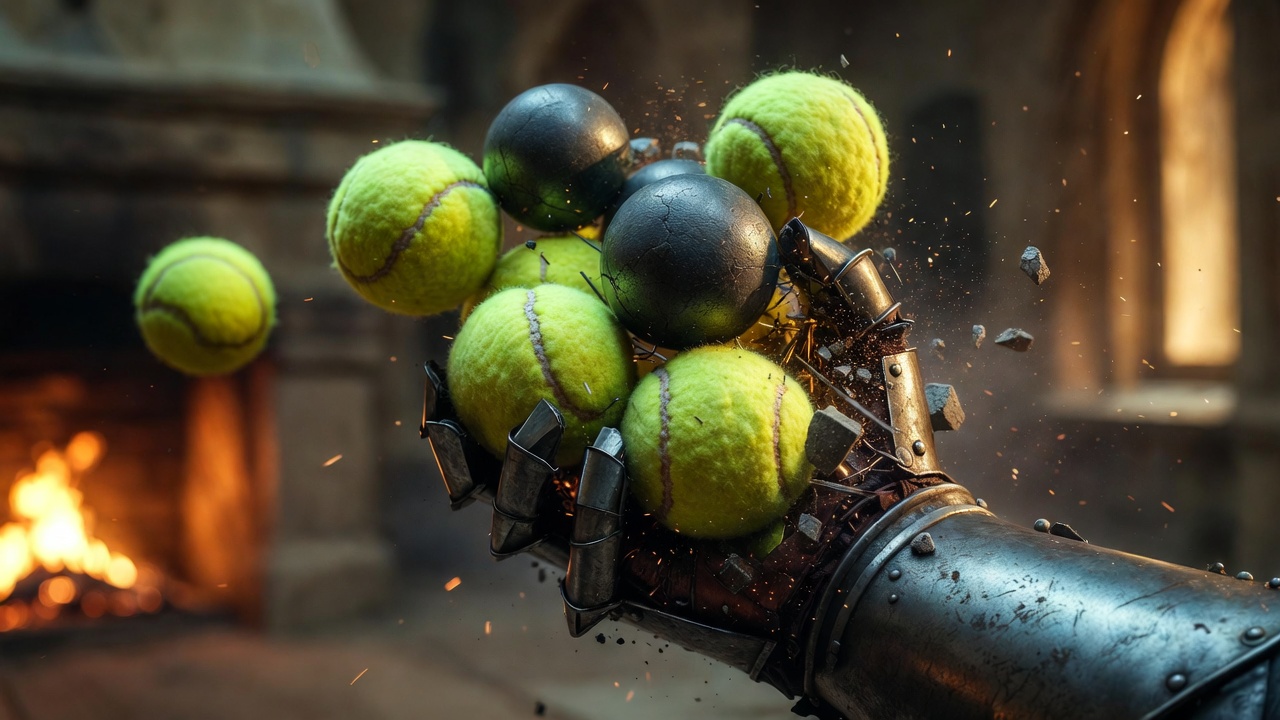
At its core, the phrase gunstones the king meaning revolves around one pivotal line from Henry’s speech in the First Folio text of Henry V (Act 1, Scene 2):
“And tell the pleasant prince this mock of his Hath turn’d his balls to gun-stones; and his soul Shall stand sore chargèd for the wasteful vengeance That shall fly with them…”
Shakespeare’s original spelling uses “gun-stones” (hyphenated), but modern editions standardize it to “gunstones.” The word “gunstones” is not a typo or archaic quirk — it is deliberate Elizabethan terminology for cannon projectiles.
What Are Gunstones? Elizabethan Cannonballs Explained In the late medieval and early Renaissance periods, artillery primarily fired gunstones — large, roughly spherical projectiles carved from stone (often granite or limestone) rather than cast iron. Iron cannonballs became more common later in the 15th and 16th centuries, but during the historical Agincourt campaign (1415), French and English siege guns frequently used stone shot because stone was cheaper, locally available, and sufficient for battering castle walls.
Gunstones were heavy (often 20–100+ pounds depending on the cannon caliber), irregular in shape, and devastating when propelled by gunpowder. They could shatter masonry, splinter wood, and kill or maim dozens at a time. Shakespeare’s audience in 1599 would instantly recognize “gun-stones” as symbols of destructive power — the opposite of the light, bouncy tennis balls the Dauphin sent.
Why Shakespeare Implied (and Audiences Understood) Tennis Balls Becoming Gunstones The transformation is rhetorical genius. The Dauphin’s “balls” (tennis balls) are playful, spherical, and associated with courtly leisure. Henry metaphorically alchemizes them into gunstones: same shape, utterly different purpose. This wordplay hinges on:
- Visual similarity — both are round
- Dramatic contrast — sport vs. slaughter
- Phonetic echo — “balls” to “gun-stones” carries a menacing weight
Audiences laughed at the initial insult but gasped at Henry’s reply. The pun also carries a subtle phallic edge (tennis balls mocking Henry’s “manhood” or maturity), which some scholars (like those in JSTOR articles on testicular masculinity in the play) note as intentional Elizabethan bawdy humor turned deadly serious.
The King’s Promise – From Playful Rackets to Deadly Artillery Henry does not merely threaten; he prophesies. The gunstones will “fly” with “wasteful vengeance,” creating widows, orphans, and ruined castles. The “king” in our focus keyword refers to Henry himself — the man who receives the insult and redefines his identity through it.
To visualize the contrast clearly:
| Aspect | Tennis Balls (Dauphin’s Gift) | Gunstones (Henry’s Response) |
|---|---|---|
| Material/Weight | Light, stuffed leather/felt | Heavy stone, 20–100+ lbs |
| Purpose | Sport, entertainment, courtly play | Siege warfare, destruction of cities |
| Symbolism | Youth, frivolity, immaturity | Maturity, vengeance, royal power |
| Effect on Recipient | Mockery and belittlement | Transformation into warrior-king |
| Outcome in Play | Insult delivered | Invasion launched, Agincourt won |
This table alone captures why the gunstones the king meaning is one of Shakespeare’s most efficient dramatic devices — a single metaphor encapsulates personal growth, national destiny, and the horrors of war.
Deep Symbolism – Sport, War, and Kingship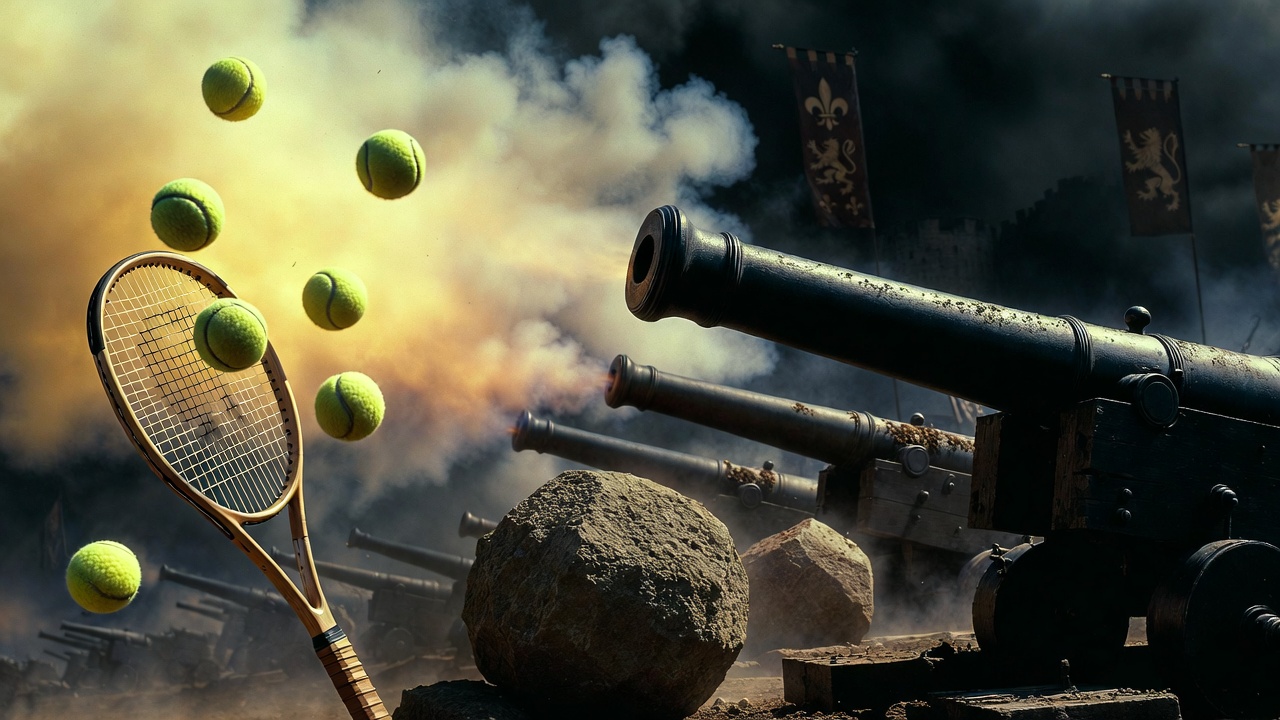
The tennis balls transcend a mere plot device; they become one of the richest symbols in all of Shakespeare’s history plays.
The Tennis Ball as Perfect Insult to Henry’s Wild Youth Shakespeare’s audience knew the legend of Prince Hal from the earlier plays. The Dauphin’s gift says: “You are still the tavern boy, not a king.” Henry’s reply reclaims that past: his wildness was a deliberate disguise (“a veil of wildness” he mentions later), hiding a calculating mind. The balls symbolize the last vestige of that youth — and Henry discards it violently.
Themes of Divine Right, Just War, and the Horrors of Conflict Henry frames his response in providential terms: “this lies all within the will of God.” Yet the imagery of “wasteful vengeance” and thousands of widows foreshadows the play’s ambivalence about war. Is this a righteous crusade or bloody ambition? The gunstones symbolize both divine justice and human destruction — a tension that runs through the entire drama.
Foreshadowing Agincourt – One Gift Sets an Entire Campaign in Motion The tennis balls literally propel the plot. Without this insult, Henry might have hesitated. Instead, the mock gift becomes the casus belli. By Act 4, the “gun-stones” have flown: English cannon batter Harfleur, and at Agincourt, the longbow (not artillery) wins the day — ironic proof that Henry’s threat was prophetic even if the weapons shifted.
Literary Mastery – Shakespeare’s Rhetorical Brilliance
Metaphor, Irony, and Wordplay in Henry’s Speech The speech is a masterclass in escalation. Henry begins polite (“we thank you for”), shifts to legal justification, then unleashes apocalyptic imagery. The metaphor of balls-to-gunstones is sustained across lines: the balls “fly,” become “vengeance,” create widows and orphans. Irony abounds — the Dauphin’s jest becomes his nation’s doom.
Rhetorical Structure That Turns Mockery into Majesty The speech follows classical oratorical form: exordium (courtesy), narratio (legal claim), confirmatio (threat), peroratio (divine appeal). Henry’s language shifts from iambic calm to trochaic fury, mirroring his inner transformation.
Comparison to Other Shakespearean Insult-to-Action Moments Similar reversals appear in Richard III (the “winter of our discontent” turning to “glorious summer”) and Coriolanus (insults fueling vengeance). But Henry V’s is the most triumphant — mockery fuels conquest rather than tragedy.
Character Study – Henry V vs. the Dauphin
Henry’s Evolution: The King Who “Plodded Like a Man” Now Rises in Glory This scene is the pivot. Earlier Hal “plodded”; now he soars. The gunstones speech shows calculated restraint exploding into righteous fury.
The Dauphin as Foil – Arrogance That Dooms France The Dauphin (never seen onstage) is defined by this single act of hubris. His youth and privilege blind him to Henry’s change — a fatal miscalculation.
Expert Insight As Shakespeare scholar Stephen Greenblatt notes in Will in the World, this moment contains “the entire arc of Henry’s kingship”: from rejected youth to divine warrior. Phyllis Rackin adds a feminist layer — the “mock mothers from their sons” line reveals war’s gendered cost.
Historical Accuracy vs. Shakespeare’s Dramatic Genius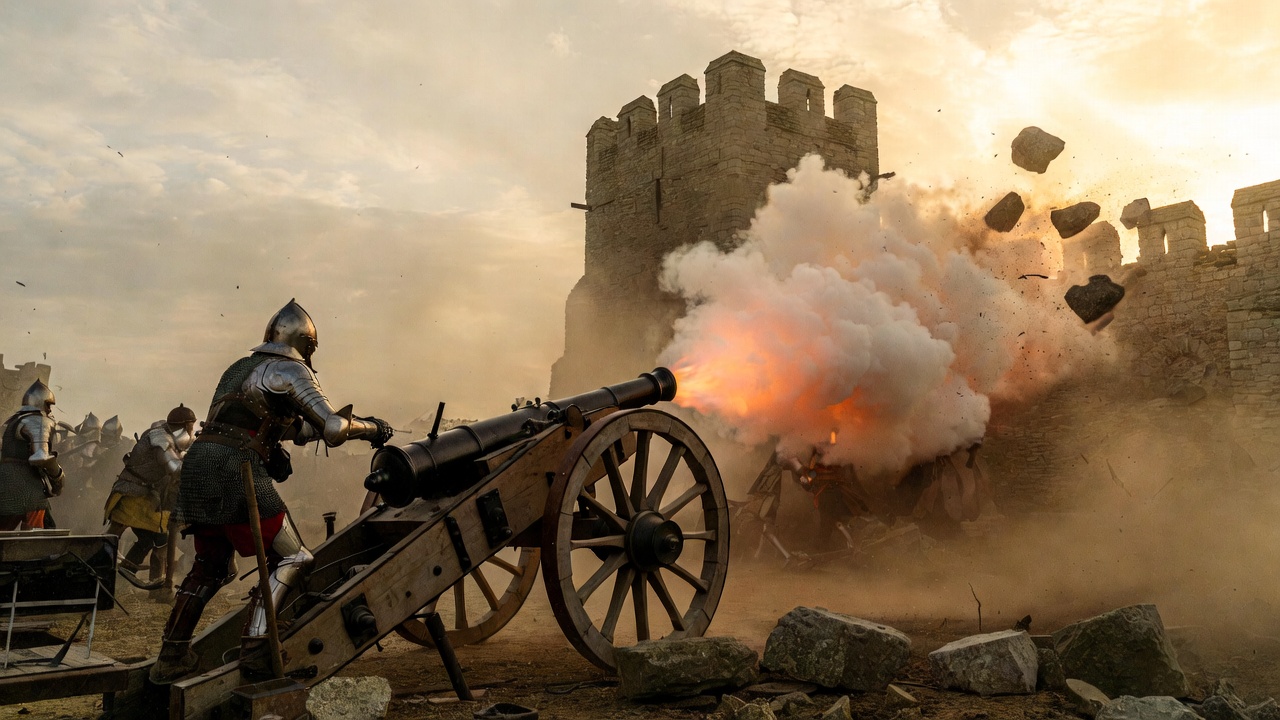
One of the most frequent questions surrounding the gunstones the king meaning is simple: Did this tennis-ball incident actually happen?
Did the Tennis-Ball Incident Really Happen? Yes — but with important caveats. The story appears in the two major chronicle sources Shakespeare consulted:
- Edward Hall’s The Union of the Two Noble and Illustre Families of Lancaster and York (1548)
- Raphael Holinshed’s Chronicles of England, Scotland, and Ireland (1577/1587 edition)
Both describe the Dauphin (or his representatives) sending “a tun full of tennis balls” to Henry V as a scornful gift, implying he should stick to games rather than pursue the French crown. Holinshed writes: “the Dolphyn… sent to the kyng a tonne of tennis balles for a token, signifiyng that he was more apt for suche play than for warre.”
Shakespeare condenses and dramatizes this anecdote into a single, electrifying embassy scene. The real diplomatic exchange was likely more drawn-out and less theatrical, but the core insult — tennis balls as mockery — is historically attested.
Real Cannon Technology in 1415 (gunstones confirmed in historical records) The term “gunstones” is perfectly accurate for the period. Surviving records from the English siege train in 1415 list payments for “gonnestones” and “petra pro gunnes” (stones for guns). Harfleur was bombarded with stone shot from bombards and other early cannon. Shakespeare’s audience in the late 1590s would still associate gunstones with the destructive power of artillery — a technology that had only recently transformed European warfare.
Why Shakespeare Changed Details for Maximum Theatrical Impact Shakespeare makes several artistic choices:
- He places the gift in the mouth of ambassadors rather than a written message.
- He gives Henry the immediate, eloquent reply rather than a delayed formal response.
- He ties the insult directly to Henry’s personal transformation, amplifying the psychological stakes.
These changes turn a footnote in the chronicles into the dramatic engine of the entire play. The result is far more compelling onstage and on the page than the drier historical version.
Stage and Screen Legacy – Famous Performances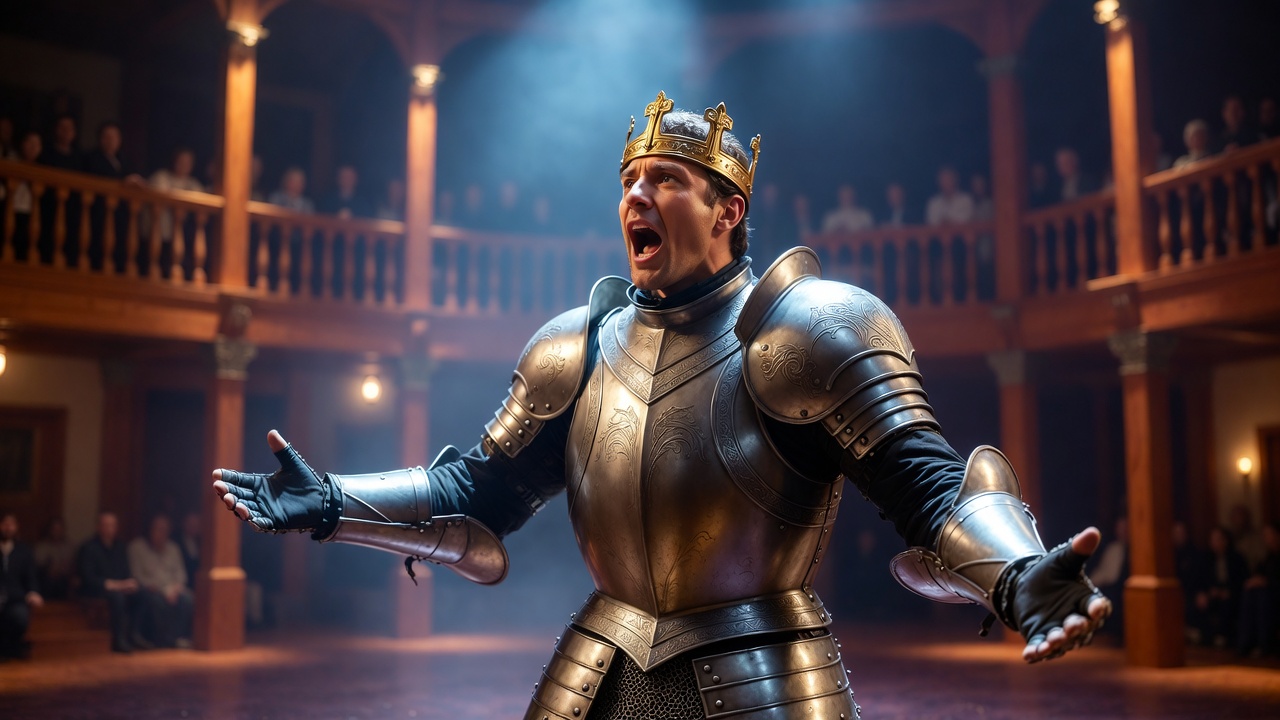
The “gunstones” speech has become one of the signature moments for any actor playing Henry V.
Laurence Olivier (1944), Kenneth Branagh (1989), and Modern Adaptations
- Laurence Olivier (1944 film): Olivier delivers the speech with crisp, patriotic fervor. The camera lingers on the tennis balls, then cuts to Henry’s steely gaze as he promises vengeance. The wartime context (released during WWII) made the line resonate powerfully.
- Kenneth Branagh (1989 film): Branagh’s version is darker and more intimate. He starts the speech quietly, almost conversationally, then builds to a thunderous crescendo. The “gun-stones” line is spat with controlled fury, emphasizing Henry’s inner fire.
- The Hollow Crown (2012, Tom Hiddleston): Hiddleston plays a younger, more introspective Henry. The speech is delivered in a candlelit chamber, turning the threat into a private vow before it becomes public policy.
- Royal Shakespeare Company and Globe productions (various): Modern stagings often use minimal props — sometimes just a handful of tennis balls tossed onto the stage — forcing the audience to imagine the gunstones through Henry’s words alone.
How Directors Visualize the “Gunstones” Threat Some productions project images of cannon fire or crumbling walls behind Henry during the speech. Others keep it stark, letting the language do the work. The best performances make the transformation palpable: the moment the king ceases to be mocked and begins to terrify.
Why This Scene Still Matters in 2026 – Modern Leadership Lessons
More than 400 years later, the gunstones the king meaning remains strikingly relevant.
Turning Public Insults into Strategic Action Leaders today — whether CEOs, politicians, or even ordinary professionals — still face public belittling. Henry’s response models composure under pressure followed by decisive action. He doesn’t lash out emotionally; he channels the insult into a calculated campaign.
Diplomacy, Reputation, and the Cost of Underestimating an Opponent The Dauphin’s fatal error was assuming Henry was still the wastrel prince. Modern parallels abound: underestimating a rival nation, company, or individual because of outdated perceptions can lead to disaster.
Relevance to Today’s Geopolitics and Workplace Dynamics In an age of social-media pile-ons, diplomatic brinkmanship, and rapid reputational shifts, the tennis-balls-to-gunstones pivot reminds us that apparent weakness can mask strength — and that underestimating resolve often carries a heavy price.
Practical Tips for Readers, Students, and Actors
- For general readers: Read the speech aloud (Act 1, Scene 2, lines 259–300 in most editions). Feel the escalation from courtesy → justification → threat.
- For students writing essays: Focus on the metaphor as a microcosm of the play’s themes (transformation, divine right, war’s cost). Use the contrast table earlier in this article as evidence.
- For actors: Practice the build. Start at a low volume and restrained posture; explode on “gun-stones.” Record yourself — the shift in energy should be audible and visible.
- Pronunciation note: Elizabethan audiences would have heard “gun-stones” with a hard “g” and equal stress on both syllables — almost like “GUN-stones” for emphasis.
- Quick classroom activity: Have half the class read the ambassadors’ lines, the other half Henry’s reply. Discuss how the power dynamic flips in under two minutes.
FAQ Section
What does “gunstones the king” mean in Shakespeare? It refers to Henry V’s promise to transform the Dauphin’s mocking tennis balls into “gun-stones” (cannonballs), symbolizing his shift from mocked youth to conquering king.
Why did the Dauphin send tennis balls to Henry V? To belittle him — implying Henry was fit only for childish games, not serious warfare or royal claims.
Are the words “gunstones the king” actually spoken in Henry V? Not exactly as a phrase. The key line is: “this mock of his / Hath turn’d his balls to gun-stones.” The article title condenses the idea for search clarity.
What happens after this scene in the play? Henry orders preparations for the invasion of France, leading to the siege of Harfleur, the march to Agincourt, and the famous St. Crispin’s Day speech.
How does this moment connect to the Battle of Agincourt? It sets the entire campaign in motion. The “gun-stones” threat foreshadows English artillery at Harfleur and the broader military resolve that wins at Agincourt.
Is the tennis-ball story historically true? Yes, it appears in Holinshed and Hall’s chronicles, though Shakespeare dramatizes and condenses it for theatrical effect.
Where can I read the full original text? The First Folio version is freely available at sites like folger.edu, shakespeare.mit.edu, or the Internet Shakespeare Editions.
Does Shakespeare use “gun-stones” anywhere else? No — this is its only appearance in the canon, making the moment uniquely powerful.
Why do some editions spell it “gunstones” and others “gun-stones”? Early modern spelling was inconsistent. Modern editors usually prefer “gunstones” without the hyphen for readability.
The gunstones the king meaning is far more than clever wordplay. It marks the precise instant when Henry V sheds the last shadow of Prince Hal and claims his destiny as warrior-king. A chest of tennis balls — meant to humiliate — becomes the catalyst for one of Shakespeare’s greatest triumphs of rhetoric, character, and dramatic structure.
In a single speech, Shakespeare gives us transformation, vengeance, divine justification, and the grim cost of war — all wrapped in one unforgettable metaphor. The king who received mockery answered with gunstones. That reply still echoes: true leadership doesn’t shrink from insult; it turns the insult into momentum.
If this deep dive has renewed your interest in Henry V, I invite you to explore more on William Shakespeare Insights: read our full summary of the play, compare Olivier and Branagh’s performances, or dive into the St. Crispin’s Day speech next. Share your thoughts in the comments — how do you interpret Henry’s transformation in this scene?
Thank you for reading. The next time someone asks about “gunstones the king,” you’ll know exactly where to send them.