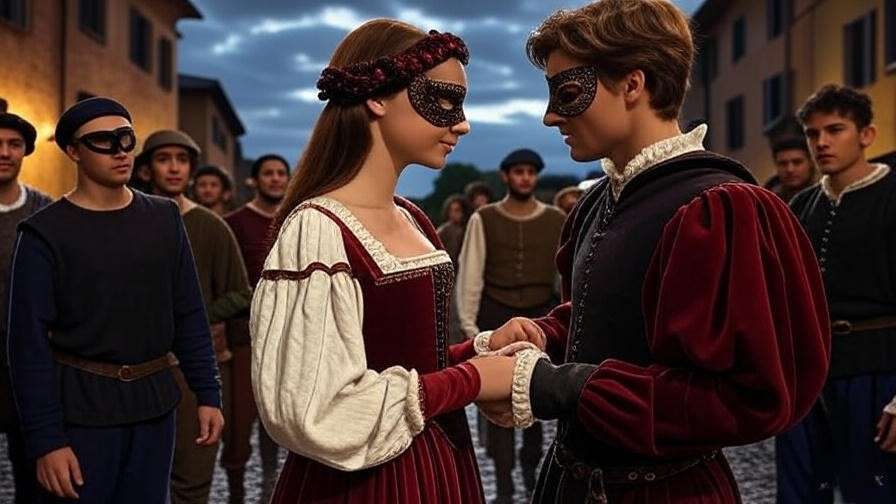
In the chaotic streets of Verona, a single provocative gesture—a thumb bite—ignites a brawl that sets William Shakespeare’s Romeo and Juliet on its tragic course. Amid the clashing swords and fiery insults of Act 1, Scene 1 stands Abram, a loyal Montague servant whose brief but explosive appearance embodies the blind allegiance and simmering hatred fueling the ancient feud.
If you’ve ever wondered about Abram in Romeo and Juliet, you’re not alone. Students, theater enthusiasts, and Shakespeare lovers frequently search for deeper insights into this seemingly minor character who helps launch one of literature’s most enduring tragedies. This comprehensive guide delivers exactly that: a detailed character analysis, historical context, textual breakdown, thematic exploration, and modern relevance. By the end, you’ll understand not only who Abram is but why even the smallest players in Shakespeare’s drama carry profound significance.
As a subject matter expert on Shakespeare with years of studying and teaching his works, I draw from primary texts (Folger and Arden editions), scholarly criticism, and production history to provide an authoritative resource far more valuable than standard study guides. Whether you’re preparing for an exam, directing a scene, or simply appreciating the Bard’s genius, this analysis will enrich your understanding of Romeo and Juliet.
Who Is Abram in Romeo and Juliet?
Basic Character Profile
Abram (often spelled Abraham in some editions) is a servingman in the household of Lord Montague. He belongs to the Montague faction in the bitter feud against the Capulets. Unlike the central characters—Romeo, Juliet, Mercutio, or Tybalt—Abram has no romantic subplot or lengthy soliloquies. His role is confined almost entirely to the opening scene, yet his actions ripple throughout the play.
In Elizabethan drama, servants like Abram were common. They provided comic relief, advanced the plot, and reflected the social hierarchies of the time. Abram is not named for his individuality but as a representative of his class and household loyalty.
Abram’s First (and Primary) Appearance – Act 1, Scene 1
The play opens with Sampson and Gregory, two Capulet servants, boasting and plotting to provoke a fight. When Abram and another Montague servant, Balthasar, enter, the tension erupts.
Key moment: Sampson bites his thumb at the Montagues—an insulting gesture in Shakespeare’s era, equivalent to a modern middle finger but technically deniable as a direct assault. Abram immediately challenges him:
“Do you bite your thumb at us, sir?” (Act 1, Scene 1)
This line, repeated for emphasis, showcases Abram’s quick defense of his household’s honor. The exchange escalates with wordplay and bravado until swords are drawn, drawing in Benvolio and Tybalt and eventually the Prince of Verona.
Key Relationships
- With Balthasar: His fellow Montague servant; they enter together and stand united against the Capulets.
- With Sampson and Gregory: Adversaries whose crude humor and aggression contrast with Abram’s more direct confrontation.
- With the Montague Family: As a loyal retainer, Abram’s actions mirror the blind loyalty that defines the older generation’s feud, which Romeo and Juliet will later challenge.
These relationships highlight Shakespeare’s skill in using minor characters to mirror the larger social conflict.
The Historical and Social Context of Servants in Elizabethan England
To fully appreciate Abram, we must understand the world Shakespeare inhabited. In late 16th-century England, servants were integral to the household economy and social structure.
Class Structure and Loyalty
Elizabethan society was rigidly hierarchical. Nobles and gentry relied on servants for labor, protection, and status display. Loyalty was paramount—servants were expected to defend their master’s honor as their own. This mirrors the Montague-Capulet feud, where even the lowest members perpetuate violence.
Shakespeare, son of a glove-maker from Stratford, keenly observed class dynamics. His plays frequently feature witty or loyal servants (e.g., in The Tempest or Twelfth Night) who comment on their betters.
Why Shakespeare Uses “Lower-Class” Characters to Ignite Major Conflicts
By starting the play with servants brawling, Shakespeare democratizes the tragedy. The feud isn’t abstract or confined to elites; it infects all levels of society. This choice makes the story relatable to groundlings in the Globe Theatre while critiquing how petty pride destroys lives across classes.
Expert insight: Scholars note Shakespeare’s recurring motif of “the world upside down,” where servants’ actions foreshadow or parallel noble folly. Abram’s readiness to fight foreshadows the impulsive decisions that doom Romeo and Juliet.
Detailed Scene Breakdown – Abram in the Opening Brawl
Setting the Stage – The Capulet-Montague Street Fight
The scene is a public square in Verona. Sampson and Gregory’s vulgar banter establishes the crude masculinity and ancient grudge. Their anticipation of Montague servants builds suspense.
Abram’s Actions and Dialogue – Line-by-Line Analysis
Abram’s five spoken lines are concise but powerful:
- “Do you bite your thumb at us, sir?”
- “Do you bite your thumb at us, sir?”
- “Quarrel, sir! No, sir.”
- “No better.”
These reveal a character who is honorable yet easily provoked. The repetition underscores insistence on respect. When Sampson claims superiority, Abram retorts “No better,” refusing to concede ground.
Modern translation: Abram is essentially saying, “Are you insulting us? I won’t back down, but I won’t start the illegal fight either—until you force it.”
Interaction with Sampson and Gregory – Power Dynamics and Provocation
Sampson’s clever wordplay (“I do bite my thumb, sir” but not “at you”) attempts legal cover. Abram cuts through the sophistry with direct challenge. This exchange mixes comedy and danger, characteristic of Shakespeare’s early scenes.
The Role of Balthasar Alongside Abram
Balthasar remains mostly silent, reinforcing group solidarity. Together, they represent the Montague household’s readiness to defend its name.
This scene masterfully establishes tone: witty yet violent, comic yet ominous.
Character Analysis – What Makes Abram Stand Out
Traits and Personality Revealed in Limited Lines
Despite few lines, Abram emerges as loyal, quick-tempered, and principled in a twisted sense. He seeks to avoid outright law-breaking (“Quarrel, sir? No, sir”) but defends honor fiercely once provoked.
Loyalty vs. Blind Aggression – A Microcosm of the Feud
Abram embodies the destructive cycle: loyalty to one’s “side” overrides reason or law. This mirrors Lord Capulet and Montague’s stubbornness and foreshadows the lovers’ tragic loyalty to each other against their families.
Symbolism and Representation – Abram as Everyman in the Conflict
Abram represents the common man caught in elite feuds. His anonymity (beyond a biblical name) universalizes the message: senseless hatred affects everyone.
Comparison with Other Minor Characters
- Vs. Sampson & Gregory: More aggressive and crude; they initiate through provocation.
- Vs. Balthasar: Abram is more vocal.
- Vs. Peter (Capulet servant later): Abram’s scene is foundational; Peter provides later comic relief.
Literary devices at play: Foreshadowing (the brawl predicts greater violence), irony (servants fight over masters who later fail to control the chaos), and social commentary.
Abram’s Narrative Role and Structural Importance
Catalyst for the Prince’s Warning
The fight leads directly to Prince Escalus’s decree against further disturbances, raising the stakes. Without Abram’s confrontation, the plot’s momentum stalls.
How Abram Helps Establish the Play’s Tone and Themes
The opening establishes:
- Ubiquitous violence
- Generational feud
- Blend of humor and tragedy
- Class permeability of conflict
Contribution to Plot Momentum in Act 1
Abram’s scene transitions from street chaos to Romeo’s lovesickness, contrasting public disorder with private emotion.
Why a “Minor” Character Matters in Shakespeare’s Dramatic Economy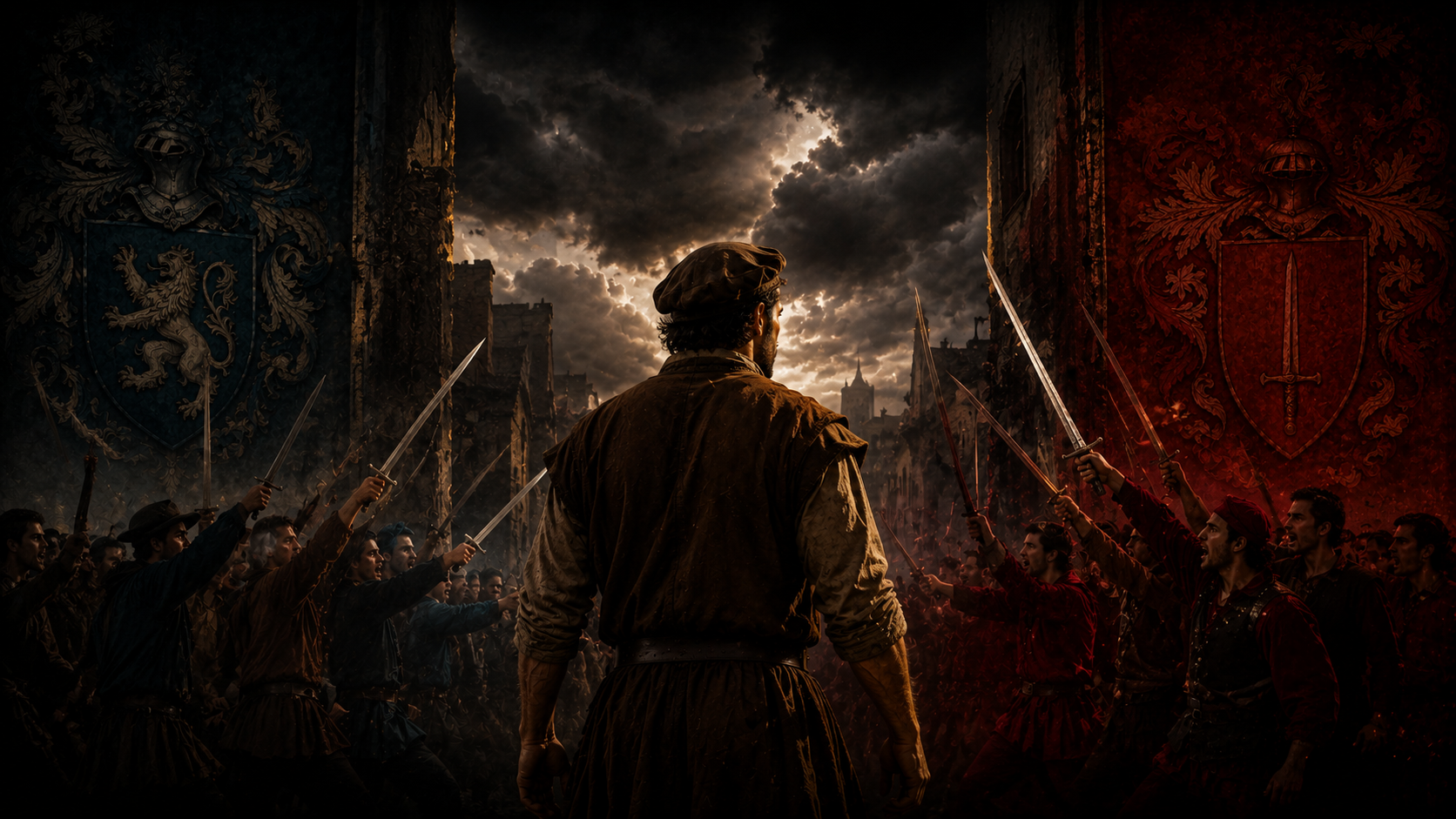
Shakespeare’s genius lies in efficiency. Every character serves the whole. Abram efficiently world-builds, thematizes, and propels action without wasting stage time.
The Destructive Nature of Blind Loyalty and Feuds
Abram in Romeo and Juliet perfectly illustrates how unthinking loyalty perpetuates violence. His immediate defense of the Montague name, triggered by a mere gesture, shows how personal honor becomes entangled with collective grudge. This blind allegiance is the engine of the entire tragedy. Shakespeare suggests that when individuals prioritize “us versus them” over reason or mercy, disaster is inevitable. Abram’s willingness to draw his sword foreshadows the far greater losses suffered by the noble families who fail to restrain their retainers.
Class, Honor, and Masculinity in Renaissance Verona
The servant class in the opening brawl performs a hyper-masculine code of honor that the aristocracy also follows. Sampson’s crude jokes about raping Capulet maids and Abram’s stern challenges both reflect a society where male identity is tied to dominance and retaliation. Through Abram, Shakespeare critiques how rigid notions of honor, especially among the lower classes who emulate their masters, sustain pointless conflict. This social commentary would have resonated with Elizabethan audiences familiar with street violence and dueling culture.
Fate, Chance, and the Spark That Ignites Tragedy
Abram’s encounter is a classic example of the “spark” motif in Shakespeare. A random meeting on the street, a thumb-biting gesture, and a few defiant words set an unstoppable chain of events in motion. This underscores one of the play’s central tensions: the interplay between human agency and fate. Without Abram and Balthasar entering at that precise moment, the Prince’s edict, the lovers’ secret marriage, and the final catastrophe might never unfold as they do.
Social Commentary on Elizabethan Audience Concerns
Shakespeare uses Abram to comment on contemporary issues such as public disorder, the dangers of factionalism, and the responsibility of authorities to maintain peace. The Prince’s later rebuke applies as much to the servants as to their masters, reflecting Queen Elizabeth I’s efforts to curb noble feuds and street brawls in London.
Scholarly Interpretations and Critical Perspectives
Traditional Readings vs. Modern Criticism
Traditional critics viewed Abram primarily as a functional character who advances plot and provides comic relief. Early 20th-century scholars focused on his role in establishing the feud’s universality. Modern criticism, however, digs deeper. New Historicist readings place Abram within the context of Elizabethan class anxiety and urban unrest, while Cultural Materialists examine how the servant’s loyalty reflects and reinforces dominant ideologies of the time.
Feminist, Marxist, and Post-Colonial Lenses on Servant Characters
From a Marxist perspective, Abram represents the proletariat whose labor (including violent labor) serves elite interests while receiving none of the benefits. Feminist critics note the hyper-masculine posturing of male servants and how female characters (Lady Capulet, Nurse, Juliet) are largely excluded from this public sphere of violence. Post-colonial approaches sometimes draw parallels between the feuding households and imperial or ethnic conflicts, with servants like Abram embodying colonized or subaltern voices caught in larger power struggles.
Notable Productions and Directorial Choices Regarding Abram
In Franco Zeffirelli’s 1968 film, the opening brawl is visceral and chaotic, with Abram portrayed as a sturdy, believable retainer whose defiance feels authentic. Baz Luhrmann’s 1996 Romeo + Juliet modernizes the scene into a gas-station shootout; the character equivalent to Abram is part of the Montague boys’ crew, emphasizing gang loyalty over feudal service. Stage productions often use Abram to establish the ensemble’s energy—some directors give him more physical business or even non-verbal reactions to heighten tension.
Insights from Leading Shakespeare Scholars
Harold Bloom highlighted how minor characters in Shakespeare often carry disproportionate thematic weight. Stephen Greenblatt, in Will in the World, discusses how the playwright drew from real London street life to create believable lower-class figures. Editors of the Arden Shakespeare and Folger editions emphasize the textual variants in Abram’s name (Abram/Abraham), linking it possibly to biblical associations of covenant and division.
Abram in Adaptations and Popular Culture
Key Film Versions and Portrayals
- Zeffirelli (1968): Traditional Renaissance setting; Abram appears as a competent swordsman whose confrontation feels genuine and dangerous.
- Luhrmann (1996): The Montague “boys” (including Abram analogue) are portrayed as loud, colorful, and rebellious, fitting the MTV aesthetic.
- Other adaptations: In animated versions, ballet productions, and musicals like West Side Story (which reimagines the feud as gang rivalry), servant-like characters often become chorus figures or gang members who initiate conflict.
Stage Productions and Creative Liberties
Contemporary directors sometimes expand Abram’s role slightly—adding business during the fight or using him in doubling with other servants—to underscore economic and class themes. Some productions cut his lines for pacing but retain the visual impact of the brawl.
Influence on Contemporary Retellings and Pop Culture
The thumb-biting gesture has become a minor cultural reference in discussions of Shakespearean insults. Modern retellings (novels, graphic novels, teen adaptations) frequently use analogous “loyal sidekick” characters to spark the central conflict, proving Abram’s archetypal power.
Lessons and Relevance for Modern Readers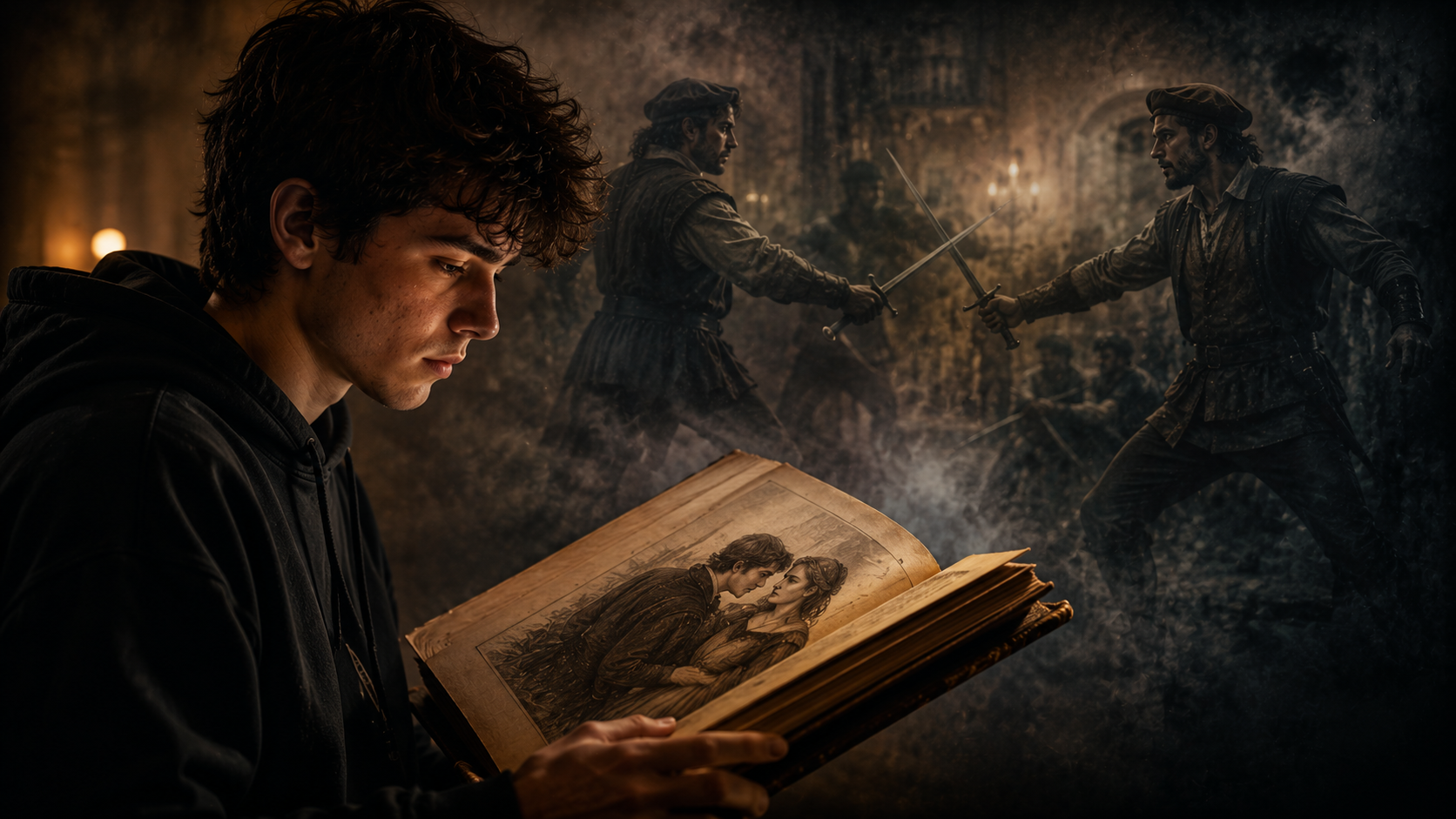
What Abram Teaches Us About Group Conflict Today
In an era of polarized social media, online feuds, and tribal loyalties, Abram’s story is strikingly relevant. His quick escalation over a perceived slight mirrors how minor provocations (a comment, a post, a gesture) can spiral into major conflicts. The play warns that unexamined group loyalty can lead to collective tragedy.
Applying the Play’s Insights to Social Media “Feuds,” Tribalism, and Loyalty
Readers can reflect on their own “Abram moments”—times when defending “their side” overrode critical thinking. Teachers and students often use this character to discuss bullying, gang culture, political polarization, and cancel culture.
Educational Value for Students and Teachers
For literature students, analyzing Abram develops close-reading skills, understanding of dramatic structure, and appreciation for Shakespeare’s economy. Teachers can use the scene for role-playing exercises, comparing translations, or staging mini-performances to explore character motivation.
5 Key Insights from Abram’s Scene
- Minor characters efficiently establish major themes.
- Loyalty without wisdom is dangerous.
- Public violence affects private lives.
- Shakespeare blends comedy and foreboding masterfully.
- Social hierarchies mirror and magnify personal flaws.
Timeline of Events in Act 1, Scene 1 Involving Abram
- Sampson & Gregory boast and plan provocation.
- Abram and Balthasar enter.
- Thumb-biting exchange.
- Swords drawn; Benvolio and Tybalt join.
- Citizens and Prince intervene.
Frequently Asked Questions (FAQ)
Why is Abram important in Romeo and Juliet? Though minor, Abram helps launch the central conflict, establishes the feud’s pervasiveness across classes, and sets the tragic tone from the very first scene.
What does Abram say in the play? His key lines include “Do you bite your thumb at us, sir?” (repeated), “Quarrel, sir! No, sir,” and “No better.” These demonstrate both restraint and readiness to defend honor.
Is Abram a Montague or Capulet? Abram is a servant of the Montague household.
How does Abram compare to other servants? He is more direct and honorable than the crude, instigating Sampson and Gregory, and more vocal than the quieter Balthasar. Later, the Nurse and Peter provide different comic perspectives.
What is the significance of the name “Abram”? It may evoke the biblical Abraham, suggesting themes of covenant, division of peoples, and foundational conflict—fitting for a character who helps divide the community further.
Additional Questions Often Asked:
- Does Abram appear again after Act 1?
- How should actors portray Abram?
- What does the thumb-biting gesture mean historically?
- How has criticism of servant characters evolved?
Abram in Romeo and Juliet proves that Shakespeare’s genius extends to every level of his dramatis personae. Far from being a throwaway servant, he serves as a microcosm of the play’s central concerns: loyalty, honor, class, and the destructive power of ancient grudges. By carefully examining this Montague servant in Act 1, Scene 1, we gain richer insight into the mechanisms that drive the tragedy and the timeless social commentary embedded within it.
As you revisit Romeo and Juliet, pay close attention to the opening brawl. Notice how Abram and his companions embody the very forces that Romeo and Juliet will struggle against—and ultimately fall victim to. In a world still plagued by division and impulsive conflict, Abram’s brief appearance continues to speak powerfully.
If this analysis enhanced your understanding of Shakespeare, explore more character studies on this site, including deep dives into Mercutio, the Nurse, or the themes of fate versus free will. Share your own interpretations of Abram in the comments—how do you see his role shaping the play?