The opening act of Hamlet sets a claustrophobic, paranoid stage. Denmark is on the brink of war, a ghost haunts the battlements, and the young prince is drowning in a sea of grief and betrayal. The lines from this act establish the core motifs of the entire play: decay, false appearances, and existential dread.
1. “O, that this too, too solid flesh would melt…” (Act 1, Scene 2)
The Context
We first meet Prince Hamlet not as a tragic hero, but as a deeply depressed young man dressed in mourning black. The rest of the court is celebrating the hasty marriage of Hamlet’s mother, Gertrude, to his uncle, Claudius—who has just seized the Danish throne. Left alone on stage, Hamlet delivers his very first soliloquy, unleashing a torrent of suppressed grief and self-loathing.
Modern Translation
“Oh, I wish my physical body could just dissolve, thaw, and turn into water. Or that God hadn’t made suicide a sin against divine law.”
Expert Insight & Literary Analysis
For centuries, textual scholars have fiercely debated a single word in this line. In the First Folio (1623), the text reads “solid” flesh. However, in the First and Second Quartos (1603, 1604), the word appears as “sallied” or “sullied”.
If Shakespeare intended “sullied,” it completely alters our psychological understanding of Hamlet. It means he doesn’t just feel heavy or weary; he feels morally stained and contaminated by his mother’s incestuous marriage to his uncle. This distinction shows that Hamlet’s pain is not merely emotional—it is deeply spiritual and physical.
2. “Frailty, thy name is woman!” (Act 1, Scene 2)
The Context
Still within his opening soliloquy, Hamlet turns his rage away from his dead father and directly toward his living mother. He laments that within a single month of his father’s death—before the shoes she wore to the funeral were even broken in—Gertrude remarried.
Modern Translation
“Women are inherently weak of spirit, character, and moral loyalty.”
Expert Insight & Literary Analysis
While this line is often cited as a historical example of Shakespearean misogyny, an expert viewing requires looking at Hamlet’s psychological projection. Hamlet generalizes his mother’s perceived moral failure across the entire female gender.
This line is a crucial turning point because this specific bias later poisons his relationship with Ophelia. He projects Gertrude’s “frailty” onto an innocent young woman, setting off a chain reaction of emotional abuse that ultimately drives Ophelia to madness.
3. “To thine own self be true…” (Act 1, Scene 3)
The Context
Laertes, the son of the king’s chief advisor Polonius, is about to board a ship for France. Before he can leave, his father stops him to deliver a long, tedious speech filled with moral platitudes and advice on how to behave abroad. This famous line serves as the grand finale of Polonius’s lecture.
Modern Translation
“Above all else, look out for your own self-interest and reputation, so you won’t be false to anyone else.”
The Great Dramatic Irony
This is perhaps the most misunderstood quote in all of literature. Modern self-help books, graduation speeches, and tattoos use “To thine own self be true” as an inspiring anthem for authenticity and personal integrity.
However, in the context of the play, it is a joke. Polonius is the ultimate hypocrite, a manipulative politician, and an inveterate spy who relies on deceit to maintain his power. He doesn’t mean “be an authentic person.” He means “make sure you look out for Number One.” Shakespeare intended for the audience to recognize the irony of a deeply dishonest man giving advice on truth.
4. “Something is rotten in the state of Denmark.” (Act 1, Scene 4)
The Context
Hamlet, Horatio, and a palace guard named Marcellus are standing on the freezing castle battlements at midnight. The ghost of the late King Hamlet appears and motions for the prince to follow him into the darkness alone. As Hamlet pursues the apparition, Marcellus utters this ominous line to Horatio.
Modern Translation
“There is political corruption and moral decay rotting our country from the very top down.”
Cultural Legacy
Marcellus is not a politician; he is a regular soldier, which makes his observation incredibly powerful. It introduces the Elizabethan concept of the “body politic”—the belief that if the ruler of a nation is corrupt, that corruption physically infects the land and its people like a disease.
Today, this line remains a universal idiom used by journalists and political analysts worldwide to describe systemic corruption within an institution, government, or corporation.
Act II: The Logic of Lunacy
By Act II, Hamlet has learned from the Ghost that Claudius murdered his father. To mask his intentions and investigate the claim, Hamlet adopts an “antic disposition”—feigning madness. The quotes in this act highlight the thin line between brilliant strategy and genuine mental unraveling.
5. “There are more things in heaven and earth, Horatio, than are dreamt of in your philosophy.” (Act 1, Scene 5 / Transition to Act 2)
The Context
Immediately after the Ghost vanishes, having revealed the murder and demanded revenge, Horatio is terrified and bewildered by the supernatural encounter. Hamlet uses this line to ground his intellectual friend.
Modern Translation
“Human knowledge, science, and rational philosophy are incredibly limited compared to the vast, unexplained mysteries of the universe.”
Expert Insight & Literary Analysis
Horatio represents the quintessential Renaissance scholar—rational, skeptical, and educated at the university in Wittenberg. By contrasting Horatio’s “philosophy” with the reality of a talking spirit, Shakespeare forces a confrontation between the rational, modern world and the ancient, spiritual world. It serves as a warning to the audience that logic alone will not be enough to solve the mystery of Elsinore.
6. “Brevity is the soul of wit.” (Act 2, Scene 2)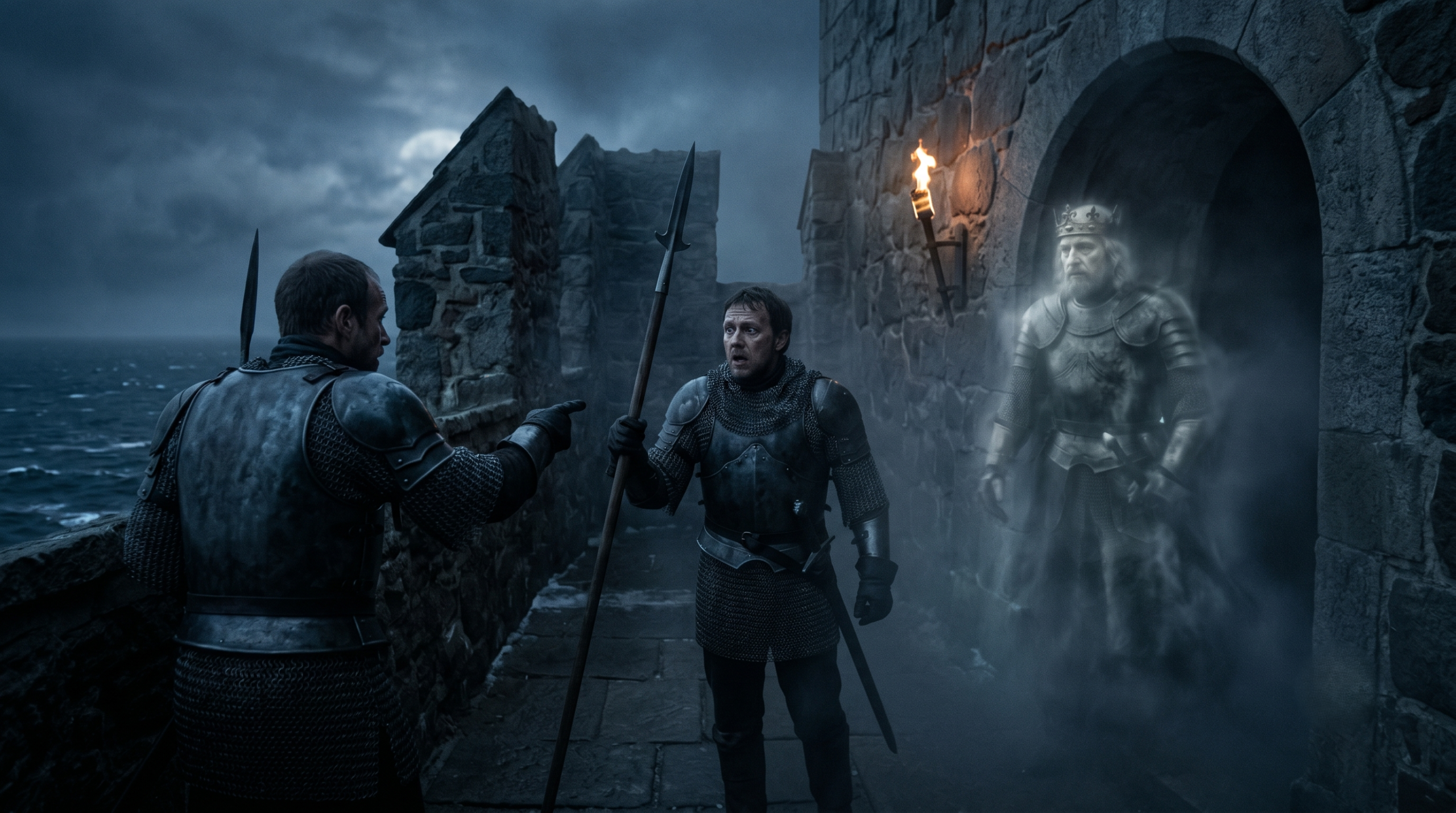
The Context
Polonius enters the royal chambers to inform King Claudius and Queen Gertrude that he has discovered the root cause of Hamlet’s apparent madness. Before delivering his diagnosis, he launches into a pompous, repetitive speech about duty, majesty, and day and night.
Modern Translation
“Intelligent speech should be short, concise, and to the point.”
The Comedy Element
The profound irony here provides a moment of dark comedy. Polonius states that “brevity is the soul of wit,” yet he is the most long-winded, rambling character in the entire play. In fact, Gertrude gets so tired of his talking that she cuts him off in the very next line, demanding: “More matter, with less art.” Today, people use this quote in professional writing and public speaking to praise concise communication, completely unaware that it was originally written to mock a boring, arrogant bureaucrat.
7. “Though this be madness, yet there is method in’t.” (Act 2, Scene 2)
The Context
Polonius attempts to converse with Hamlet, who is pacing the lobby reading a book. Hamlet uses this opportunity to mock Polonius ruthlessly, calling him a fishmonger and joking that old men have “plentiful lack of wit, together with most weak hams.” Polonius, confused but sensing a sharp edge to the insults, mutters this line aside to himself.
Modern Translation
“He seems completely crazy, but his riddles and insults have a precise, calculated purpose behind them.”
The Common Misquote
This line evolved into the modern idiom, “There is a method to my madness.” What makes Shakespeare’s original line superior is that it highlights Hamlet’s tactical brilliance. Hamlet uses his fake insanity as a weapon, allowing him to say devastating truths to powerful people under the guise of mental illness. Polonius recognizes that Hamlet’s words are too sharp to be purely random, identifying the underlying strategy at play.
Act III: The Crisis of Existence
Act III is the structural and emotional heart of the tragedy. It features the famous play-within-a-play, a botched chance at revenge, a mistaken murder, and the most celebrated soliloquy in Western literature.
8. “To be, or not to be, that is the question…” (Act 3, Scene 1)
                       [ THE EXISTENTIAL DILEMMA ]
                                    |
          +-------------------------+-------------------------+
          |                                                   |
       "TO BE"                                           "NOT TO BE"
  (To live & suffer)                                   (To die & escape)
          |                                                   |
   - Endure bad fortune                                 - Sleep, end heartache
   - Face "outrageous fortune"                          - The catch: What dreams
   - Bear the "mortal coil"                               come in death's sleep?
The Context
Hamlet paces through a quiet corridor of Elsinore Castle. Unknown to him, King Claudius and Polonius are hiding behind a tapestry, using Ophelia as bait to spy on his behavior. Deep in thought, Hamlet delivers a meditation on life, death, and human suffering.
Modern Translation
“Is it better to remain alive and endure the misery of existence, or is it better to end it all through suicide?”
Deep-Dive Skyscraper Analysis
This is indisputably the most famous line from the play, yet it is frequently misunderstood as a simple contemplation of suicide. Viewed through an expert lens, it is actually an analytical debate comparing two different types of courage:
-
Passive Endurance: Is it more noble to quietly suffer the “slings and arrows of outrageous fortune”?
-
Active Resistance: Is it more noble to take up arms against a sea of troubles and end them by destroying oneself?
Hamlet notes that death would be a welcome relief—a permanent sleep that ends the heartaches and natural shocks that flesh is heir to. But there is a catch. The “dread of something after death,” that “undiscovered country from whose bourn no traveler returns,” paralyses our will.
Ultimately, Hamlet concludes that human consciousness and overthinking make cowards of us all, preventing us from taking decisive action.
9. “Get thee to a nunnery!” (Act 3, Scene 1)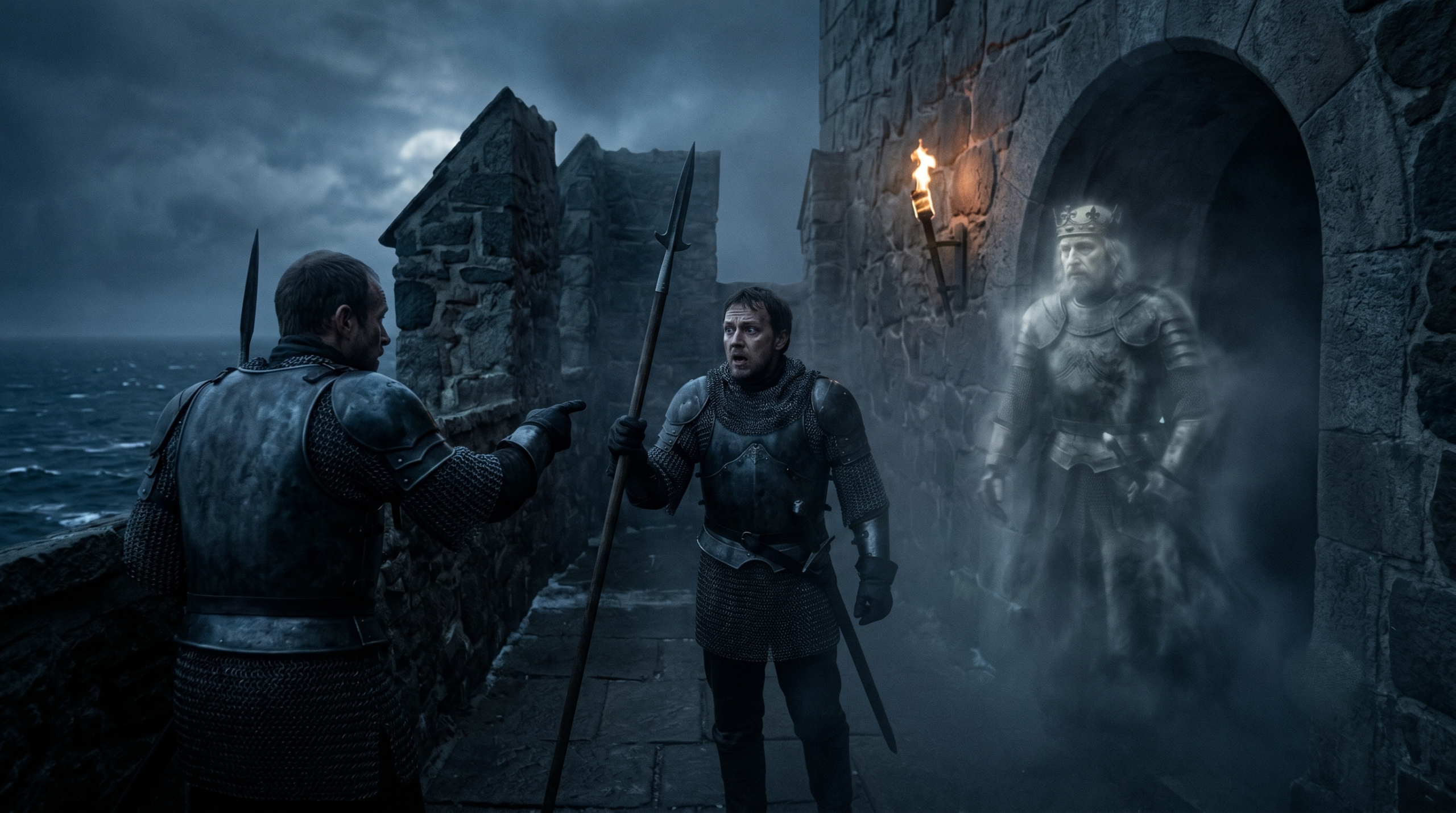
The Context
Immediately following his “To be, or not to be” soliloquy, Hamlet notices Ophelia. She attempts to return some gifts and love letters he had previously given her. Realizing that they are being watched by spies, Hamlet flies into a volatile rage, turning on the woman he once loved.
Modern Translation
“Go isolate yourself in a convent so you can never marry and breed more human sinners.”
The Historic Double Entendre
To a modern audience, this line sounds harsh but straightforward—Hamlet is telling her to go live a chaste life among nuns. However, an expert understanding of Elizabethan slang reveals a much darker, more devastating meaning.
In late 16th-century London, “nunnery” was a common slang term for a brothel. By weaponizing this double meaning, Hamlet intentionally insults Ophelia on two levels at once. If he means a convent, he is telling her she is unfit for society; if he means a brothel, he is accusing her of being a dishonest temptress who sells her loyalty to her father and Claudius. It is a brilliant example of Shakespeare’s ability to layer tragic cruelty into a single phrase.
10. “The lady doth protest too much, methinks.” (Act 3, Scene 2)
The Context
Hamlet has hired a troupe of traveling actors to perform a play called The Mousetrap, which mimics the exact method Claudius used to murder the late King. During the performance, the fictional “Player Queen” makes grand, exaggerated vows on stage, swearing over and over that she will never remarry if her husband dies. Sitting in the audience, Hamlet turns to his mother and asks her how she likes the play. Gertrude calmly offers this iconic critique.
Modern Translation
“The actress is being way too over-the-top with her vows of loyalty; it makes her look insincere and guilty.”
The Evolution of Meaning
In modern culture, people use this line to suggest that if someone denies something too passionately, they are probably guilty of the very thing they are denying (e.g., “He keeps saying he hates drama, but the gentleman doth protest too much”).
However, in the 1600s, the word “protest” meant “to vow,” “to promise,” or “to declare solemnly.” Gertrude isn’t saying the character is complaining or denying guilt. She is pointing out that the character’s over-the-top promises of eternal fidelity are unrealistic and melodramatic—subtly defending her own choice to remarry quickly.
11. “I must be cruel only to be kind…” (Act 3, Scene 4)
The Context
In Gertrude’s private chamber, Hamlet confronts his mother about her sins. Hearing a noise behind a tapestry, Hamlet draws his sword and stabs through the fabric, believing he is killing King Claudius. Instead, he pulls back the curtain to find the dead body of Polonius. Looking down at the corpse, and then back to his weeping mother, Hamlet delivers this chilling justification.
Modern Translation
“I have to inflict pain and harsh truths right now to prevent a much worse spiritual disaster from happening to you later.”
Literary Analysis
This quote perfectly captures Hamlet’s internal moral paradox. He views himself not as a common murderer, but as heaven’s “scourge and minister”—a tool of divine justice. In his mind, breaking his mother’s heart with brutal truths and purging the court of corrupt spies like Polonius is an act of spiritual love designed to save her soul from damnation.
Acts IV & V: Mortality, Grief, and Silence
The final acts of the play move away from political scheming and look directly at the physical and philosophical realities of death. The language shifts from sharp, anxious wit to a calm, fatalistic acceptance of destiny.
12. “When sorrows come, they come not single spies, but in battalions.” (Act 4, Scene 5)
The Context
Polonius is dead, Hamlet has been banished to England, and Ophelia, shattered by grief, has completely lost her mind, wandering the castle singing frantic songs. King Claudius watches her exit and turns to his wife, overwhelmed by the chaos engulfing his court.
Modern Translation
“Tragedies and bad luck never arrive one at a time; when it rains, it pours.”
Expert Insight & Literary Analysis
Shakespeare uses a vivid military metaphor here. “Spies” refers to individual scouts sent out ahead of an army, while “battalions” refers to an overwhelming force of infantry. Claudius realizes that his original sin—the murder of his brother—has triggered an unstoppable chain reaction of crises that are now invading his kingdom all at once.
13. “Alas, poor Yorick! I knew him, Horatio…” (Act 5, Scene 1)
The Context
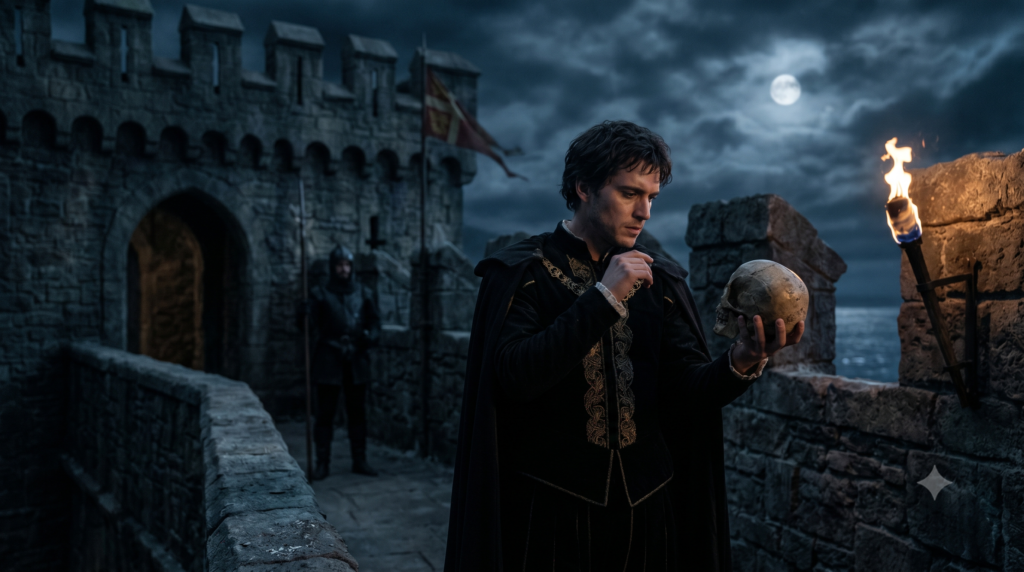
Having escaped his banishment, Hamlet returns to Denmark and encounters a pair of rustic gravediggers clearing out old graves. One of the gravediggers unearths a skull and reveals it belonged to Yorick, the old King’s royal jester. Hamlet takes the bone into his hand, staring directly into its empty eye sockets.
       [ THE VISUAL ICONOGRAPHY OF HAMLET ]
  _______________________________________________
 |                                               |
 |   POP CULTURE MYTH:                           |
 |   Hamlet holds a skull while saying:          |
 |   "To be, or not to be..." [INCORRECT]        |
 |_______________________________________________|
 |                                               |
 |   THE LITERARY REALITY:                       |
 |   Hamlet holds the skull in Act 5 while       |
 |   remembering his childhood jester, Yorick.   |
 |   "Alas, poor Yorick! I knew him..." [CORRECT]|
 |_______________________________________________|
Modern Translation
“This breaks my heart, Horatio. This man used to carry me on his back and make me laugh, and now he is just decaying bone.”
The Great Visual Misconception
This scene is the ultimate visual symbol of Shakespearean theater, but it is routinely distorted by pop culture. Countless movies, cartoons, and advertisements show Hamlet holding a skull while reciting the “To be, or not to be” speech.
This never happens in the play. The skull appears two acts after that speech. Its purpose is to force Hamlet to confront the democracy of death. He realizes that no matter how funny Yorick was, or how beautiful Alexander the Great was, every human being eventually ends up as dust in the dirt.
14. “The readiness is all.” (Act 5, Scene 2)
The Context
Hamlet is about to participate in a fencing match with Laertes, which has been rigged by Claudius with a poisoned blade and wine cup. Horatio begs Hamlet to pull out of the match, warning him that he has a bad feeling about it. Hamlet gently refuses, explaining his new perspective on life.
Modern Translation
“We can’t control or predict when death will find us. The only thing that matters is being spiritually prepared for it when it arrives.”
Character Arc Pivot
This line marks the resolution of Hamlet’s psychological journey. For four acts, he has been paralyzed by overthinking, anxiety, and doubt. By the end of the play, he abandons his need to control every variable. He accepts that a divine providence guides human destiny, transitioning from a neurotic philosopher into a calm, stoic hero ready to face whatever comes.
15. “The rest is silence.” (Act 5, Scene 2)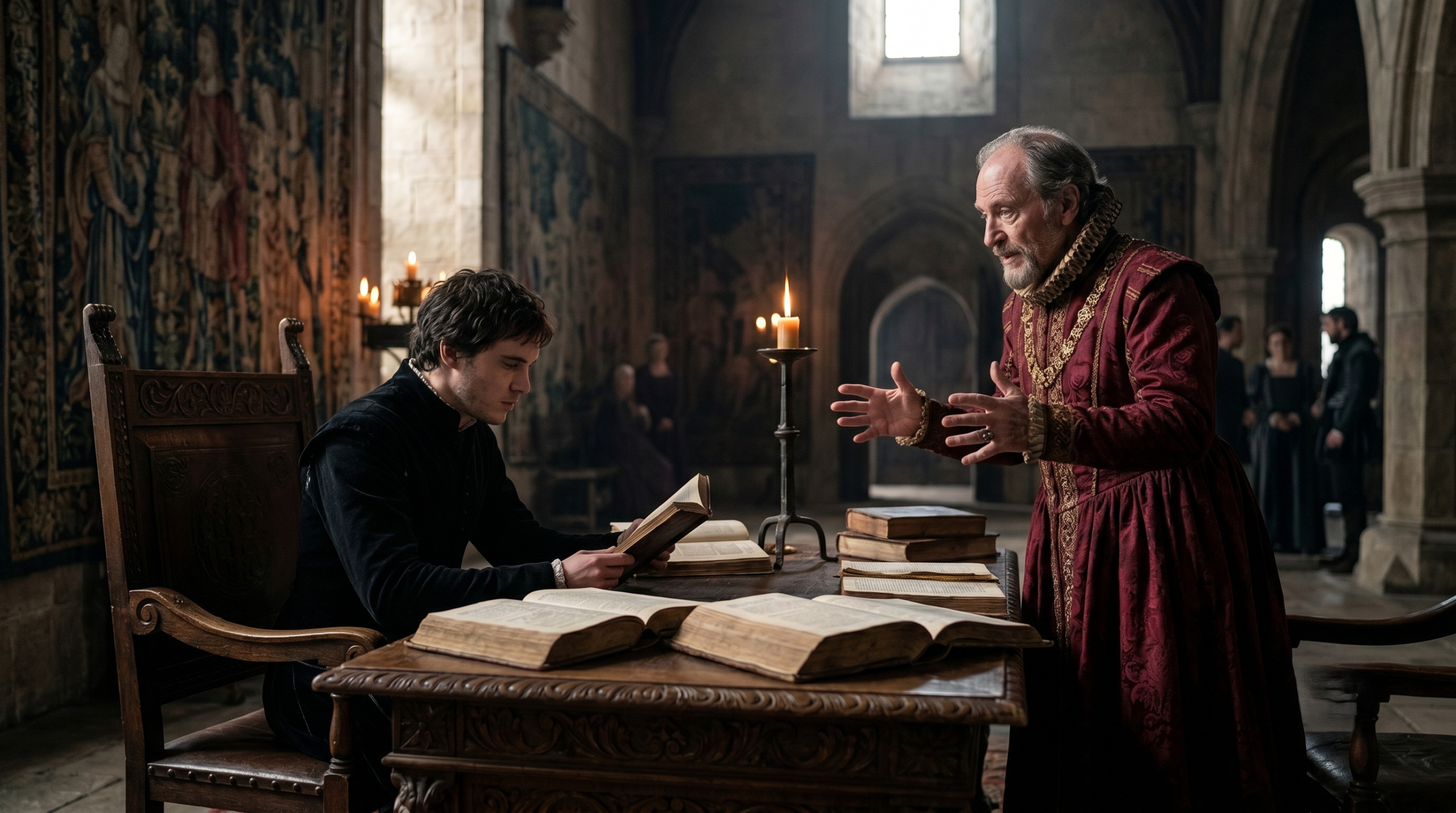
The Context
The fencing match has ended in disaster. Gertrude has drunk the poison, Claudius has been executed by Hamlet, Laertes is dead, and Hamlet is dying in Horatio’s arms from a scratch from the poisoned sword. With his final breath, the Prince of Denmark utters his last four words.
Modern Translation
“My story is over, my voice is gone, and the afterlife is a mystery of quiet.”
Literary Analysis
For a character who spoke more lines than any other figure in theater history, Hamlet’s final words are profoundly simple. Throughout the play, language was his primary shield, weapon, and tool for processing existence. By stating that “the rest is silence,” he acknowledges that words have finally reached their limit, leaving his legacy to be told by his surviving friend, Horatio.
Quick Reference Guide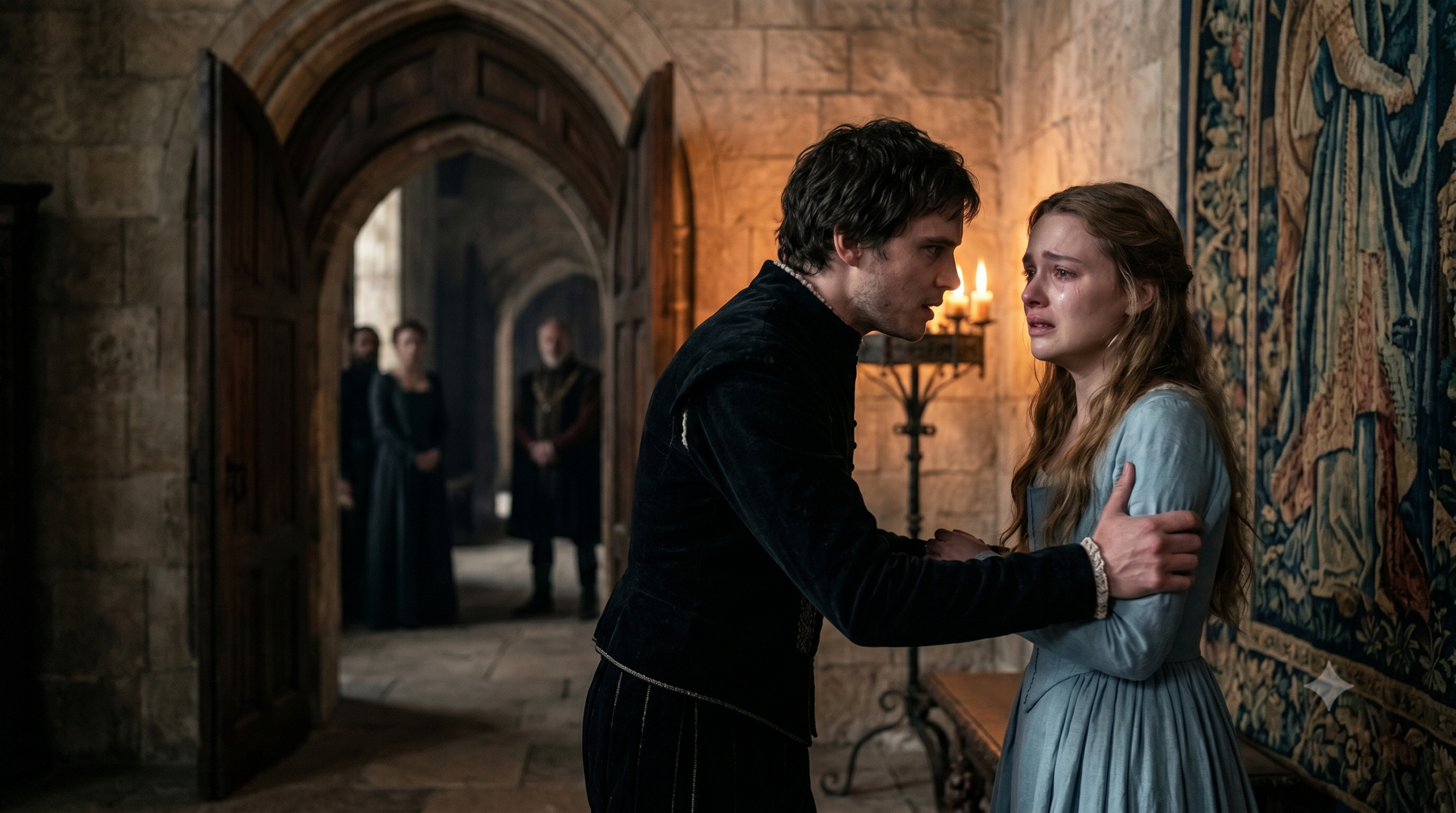
For quick study, reference, or review, here is a breakdown of the play’s core quotes:
| Quote | Speaker | Act/Scene | Core Theme | Modern Meaning |
| “To thine own self be true” | Polonius | Act 1, Scene 3 | Irony / Self-Interest | Look out for your own reputation. |
| “Something is rotten…” | Marcellus | Act 1, Scene 4 | Systemic Corruption | Moral decay at the top of a government. |
| “Method in’t” | Polonius | Act 2, Scene 2 | Strategy / Sanity | There is a hidden purpose behind crazy behavior. |
| “To be, or not to be” | Hamlet | Act 3, Scene 1 | Existentialism | The choice between life and death. |
| “The lady doth protest…” | Gertrude | Act 3, Scene 2 | Guilt / Inauthenticity | Making over-the-top vows looks fake. |
| “Alas, poor Yorick!” | Hamlet | Act 5, Scene 1 | Mortality | Death reduces everyone to the same state. |
Frequently Asked Questions
What is the most famous line from Hamlet?
The most famous line is indisputably “To be, or not to be, that is the question” from Act 3, Scene 1. It is widely considered the iconic quote of Western literature, summarizing the human struggle with existence and mortality.
Did Shakespeare invent the phrase “method to my madness”?
Not exactly. Shakespeare wrote, “Though this be madness, yet there is method in’t.” Over centuries of performance and casual conversation, the public condensed and rearranged the phrase into the modern idiom we use today.
What does “shuffle off this mortal coil” mean?
Found within the “To be, or not to be” soliloquy, this phrase means to die. In Elizabethan English, a “mortal coil” referred to the messy, complicated turmoil of daily life. “Shuffling it off” means casting aside that daily struggle, much like a snake sheds its skin.
The Enduring Power of Elsinore
William Shakespeare did not write Hamlet to be studied under high-powered academic microscopes or memorized for standardized tests. He wrote it to reflect the messy, anxious, and deeply complicated realities of human consciousness.
The reason these quotes remain so popular four centuries later is because they capture feelings we still experience today: the weight of grief, the paralysis of overthinking, the pain of betrayal, and the quiet search for peace in a chaotic world. By understanding what these lines actually mean, we don’t just understand Shakespeare better—we understand ourselves better, too.