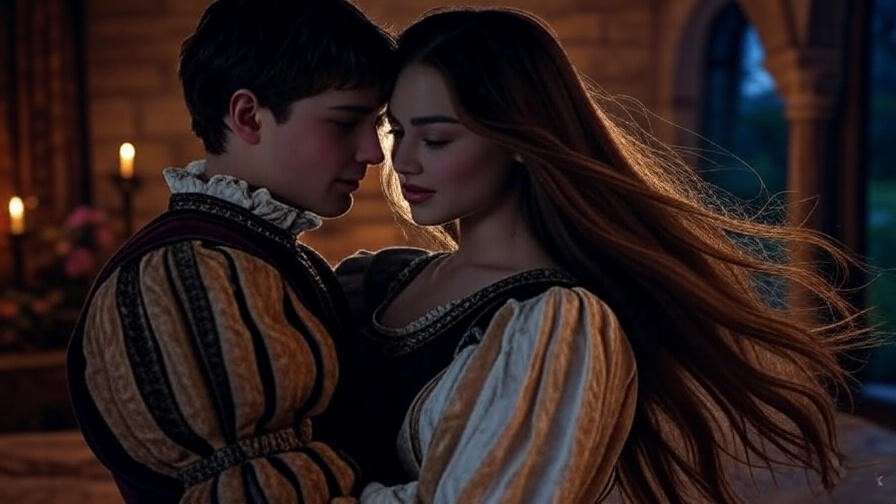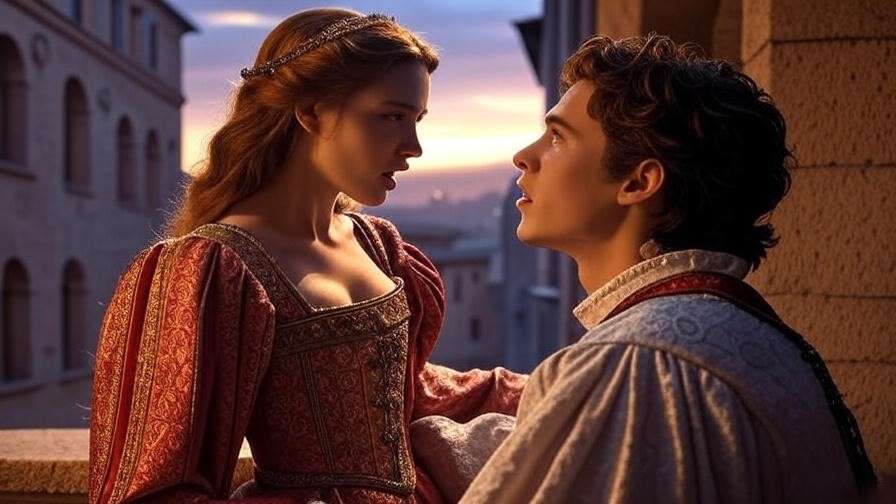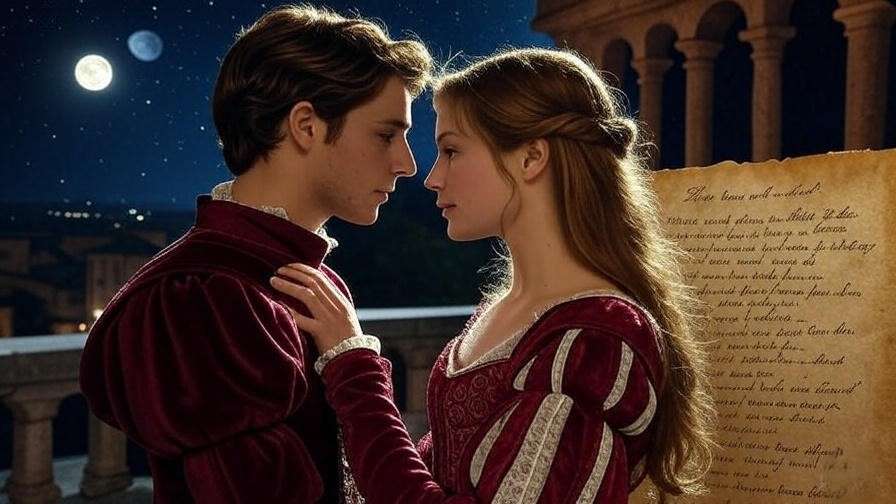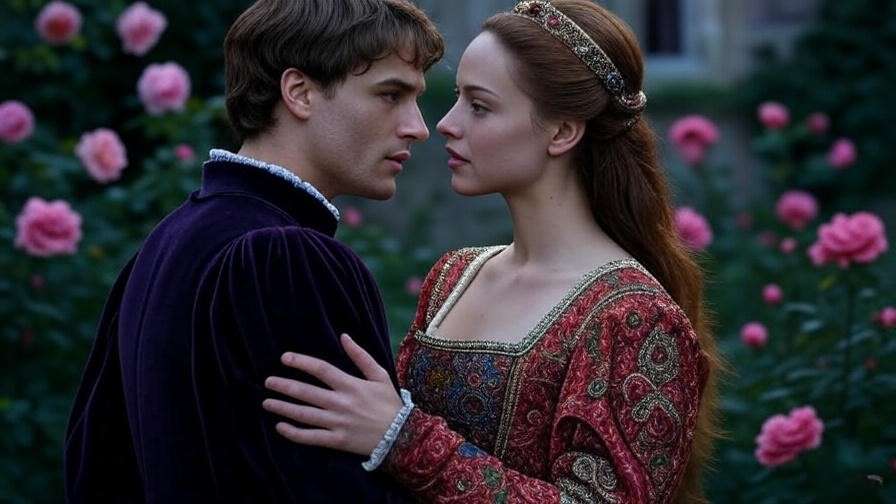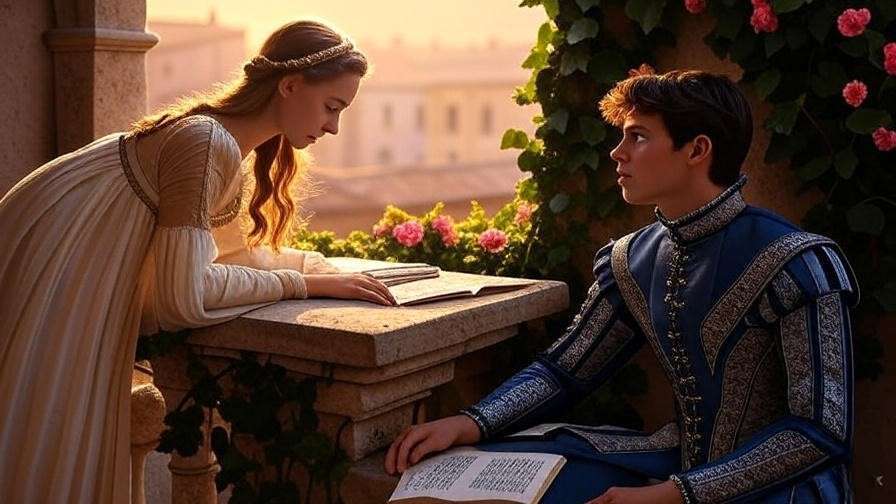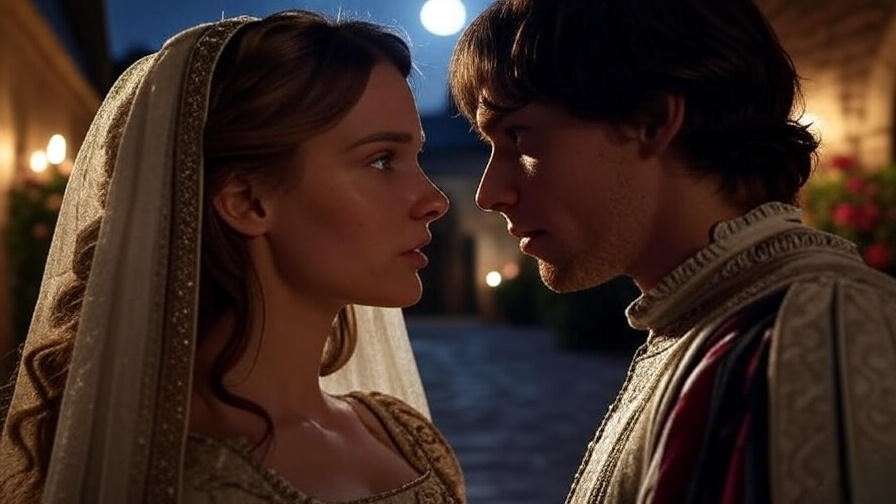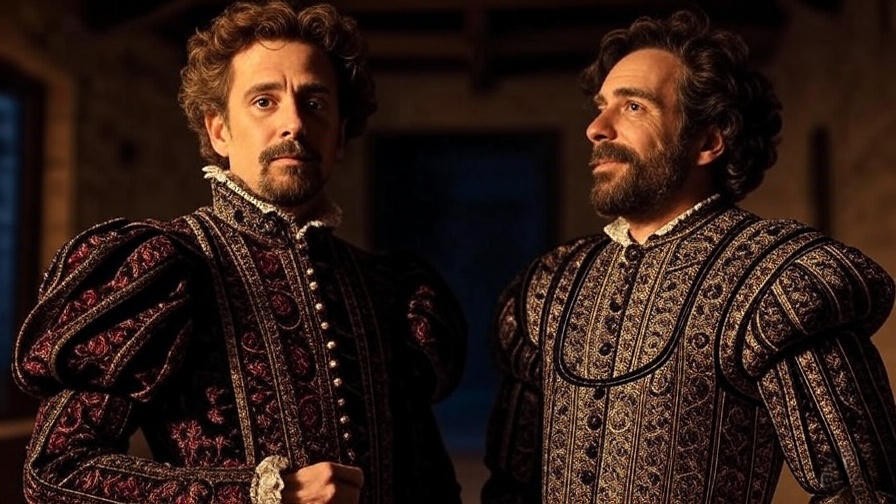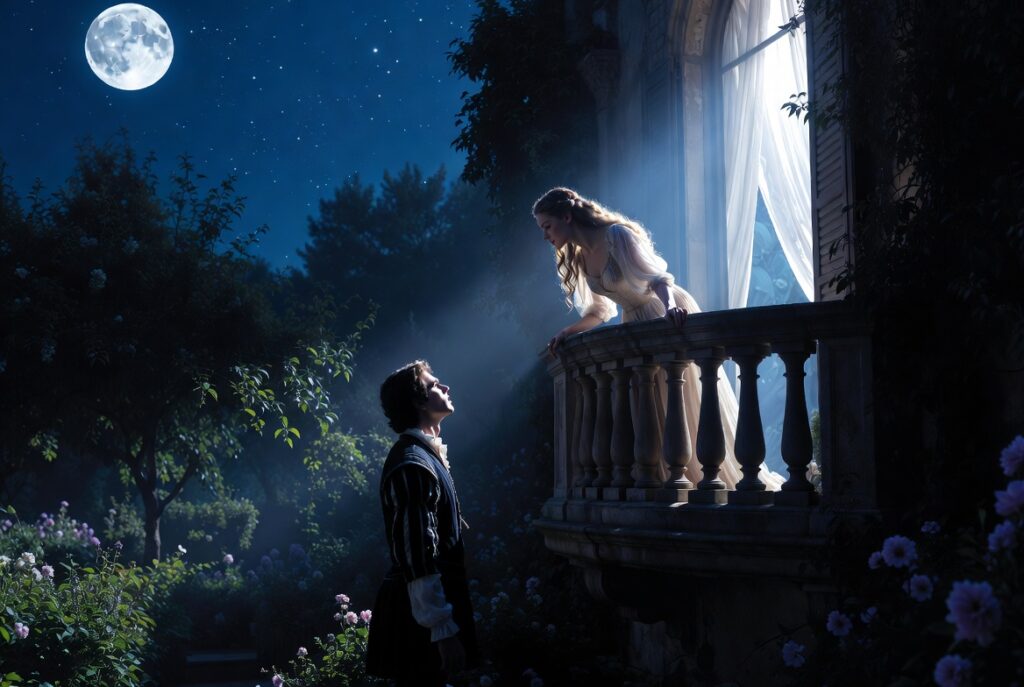
In the silvery glow of moonlight, a young man stands hidden in the shadows of an orchard, his heart pounding as he gazes upward. “But soft, what light through yonder window breaks?” These immortal words mark the beginning of one of the most famous Romeo and Juliet monologues in literary history—the balcony scene that has captivated audiences for over four centuries.
If you’re searching for the Romeo and Juliet monologue, whether for a school assignment, acting audition, deeper appreciation of Shakespeare, or simply to understand why this moment continues to define romantic literature, you’ve come to the right place. This comprehensive guide delivers the full text of Act 2, Scene 2, a meticulous line-by-line analysis, rich thematic exploration, historical context, performance insights, and modern interpretations. Far more than a simple recap, this resource aims to illuminate Shakespeare’s genius and help you connect with the emotional and intellectual power of these star-crossed lovers.
As a dedicated resource for Shakespeare enthusiasts on a site devoted to the Bard’s works, this article draws on authoritative editions (such as the Folger Shakespeare Library and Arden Shakespeare) and scholarly insights to provide trustworthy, in-depth analysis. Whether you’re a student writing an essay, an actor preparing for the stage, a teacher crafting lessons, or a reader seeking to rediscover timeless poetry, this guide solves the common frustrations of fragmented online resources by offering everything in one authoritative, engaging place.
Historical and Literary Context of the Balcony Scene
Placement in Romeo and Juliet (Act 2, Scene 2)
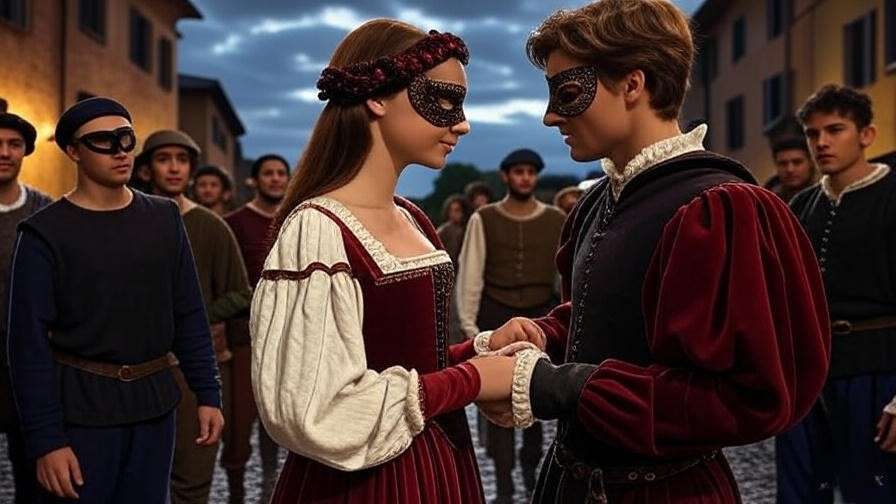
The balcony scene occurs immediately after the Capulet feast where Romeo and Juliet first meet and fall instantly in love, despite their families’ bitter feud. Romeo, having escaped his friends Mercutio and Benvolio, slips into the Capulet orchard. There, he overhears Juliet on her balcony (or upper window in the original staging) pouring out her private thoughts.
This scene is structurally pivotal. It transforms fleeting attraction into a profound, life-altering commitment. Before this moment, their love is the spark of a masked ball; afterward, they are secretly betrothed. The monologue elevates their passion from youthful infatuation to something almost sacred, while simultaneously foreshadowing the tragedy born of impulsive decisions amid familial hatred.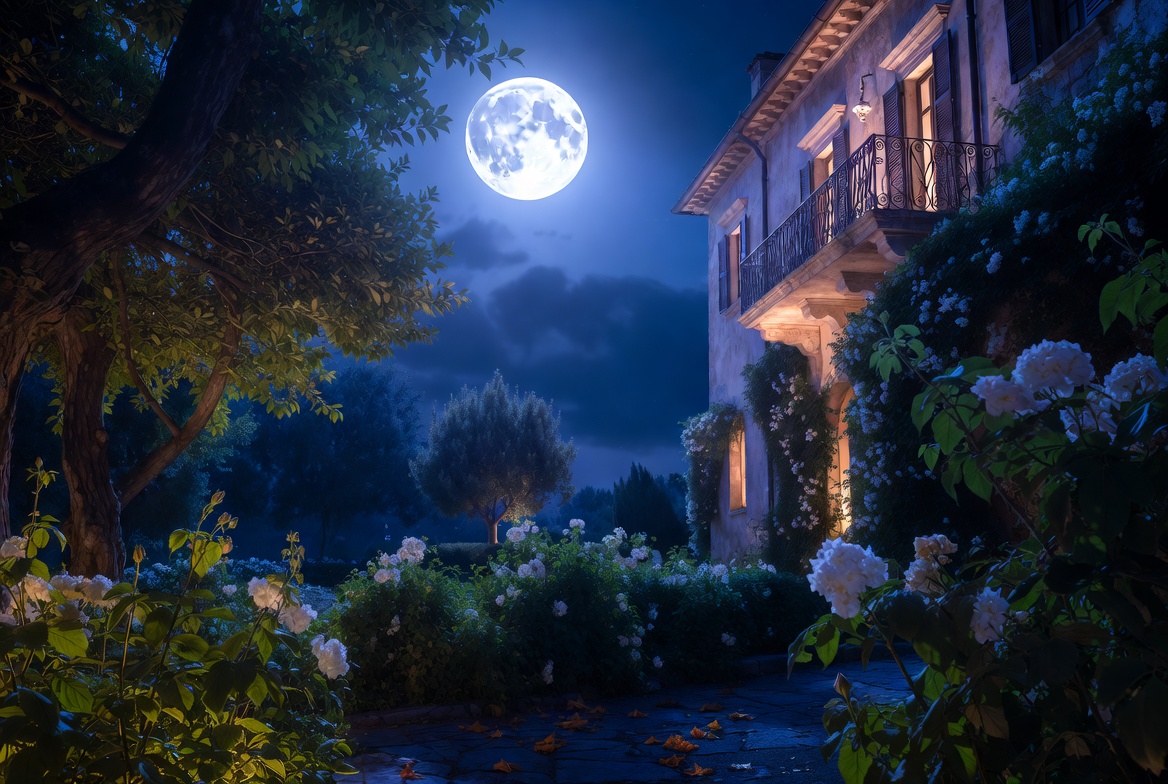
Shakespeare’s Sources and Innovations
Shakespeare based Romeo and Juliet primarily on Arthur Brooke’s 1562 poem The Tragical History of Romeus and Juliet, itself drawn from Italian novellas. Brooke’s version features a more moralistic tone with lovers who are somewhat older. Shakespeare compresses the timeline, deepens the characters’ psychology, and introduces the iconic balcony setting—though the word “balcony” never appears in the play.
His innovations shine in the poetic language. The scene bursts with fresh metaphors of light, astronomy, and nature that were groundbreaking for Elizabethan drama. Shakespeare turns a simple orchard rendezvous into a luminous exploration of love’s transformative power.
Elizabethan Staging and Original Performance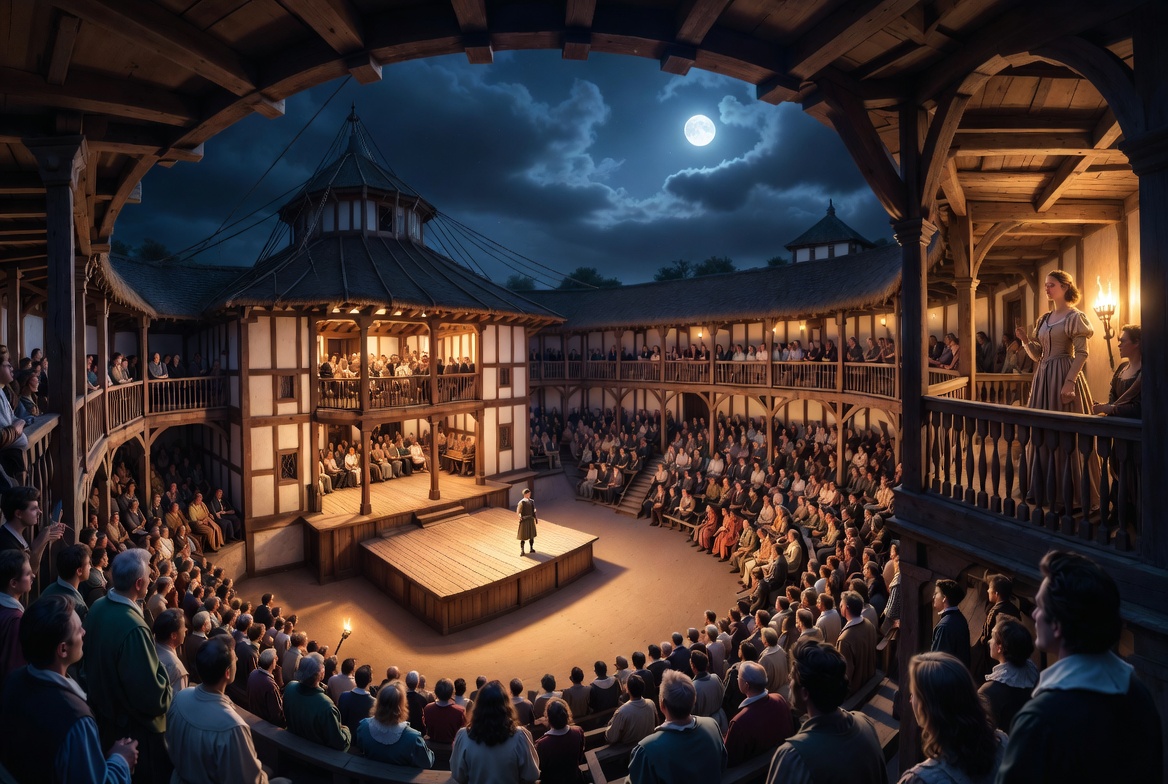
In the late 1590s, the scene was performed on the open-air Globe Theatre stage without a physical balcony. Juliet would appear on the upper playing level, while Romeo remained below. This vertical staging reinforced themes of separation and longing. Audiences, familiar with poetic conventions, would appreciate the layered meanings—sexual undertones, religious imagery, and social commentary—woven into the dialogue.
Full Text of the Romeo and Juliet Balcony Monologue
Here is the complete text of Act 2, Scene 2 from a reliable, modernized edition based on the Folger Shakespeare Library. Line numbers are included for easy reference.
Capulet’s Orchard. Enter Romeo.
Romeo He jests at scars that never felt a wound. [Juliet appears above at a window.] But soft, what light through yonder window breaks? It is the East, and Juliet is the sun. Arise, fair sun, and kill the envious moon, Who is already sick and pale with grief That thou, her maid, art far more fair than she. Be not her maid, since she is envious. Her vestal livery is but sick and green, And none but fools do wear it. Cast it off. It is my lady. O, it is my love! O, that she knew she were! She speaks, yet she says nothing. What of that? Her eye discourses. I will answer it.— I am too bold. ’Tis not to me she speaks. Two of the fairest stars in all the heaven, Having some business, do entreat her eyes To twinkle in their spheres till they return. What if her eyes were there, they in her head? The brightness of her cheek would shame those stars As daylight doth a lamp. Her eye in heaven Would through the airy region stream so bright That birds would sing and think it were not night. See how she leans her cheek upon her hand. O, that I were a glove upon that hand, That I might touch that cheek!
Juliet Ay me!
Romeo She speaks. O, speak again, bright angel, for thou art As glorious to this night, being o’er my head, As is a wingèd messenger of heaven Unto the white-upturnèd wond’ring eyes Of mortals that fall back to gaze on him When he bestrides the lazy-passing clouds And sails upon the bosom of the air.
Juliet O Romeo, Romeo! Wherefore art thou Romeo? Deny thy father and refuse thy name. Or, if thou wilt not, be but sworn my love, And I’ll no longer be a Capulet.
Romeo [Aside.] Shall I hear more, or shall I speak at this?
Juliet ’Tis but thy name that is my enemy. Thou art thyself, though not a Montague. What’s Montague? It is nor hand, nor foot, Nor arm, nor face, nor any other part Belonging to a man. O, be some other name! What’s in a name? That which we call a rose By any other word would smell as sweet. So Romeo would, were he not Romeo called, Retain that dear perfection which he owes Without that title. Romeo, doff thy name, And for thy name, which is no part of thee, Take all myself.
This text captures the essence of the Romeo and Juliet monologue—Romeo’s opening speech and the ensuing poetic dialogue. Note the blend of elevated poetry and natural emotion that makes it eternally performable.
Line-by-Line Analysis of Romeo’s Monologue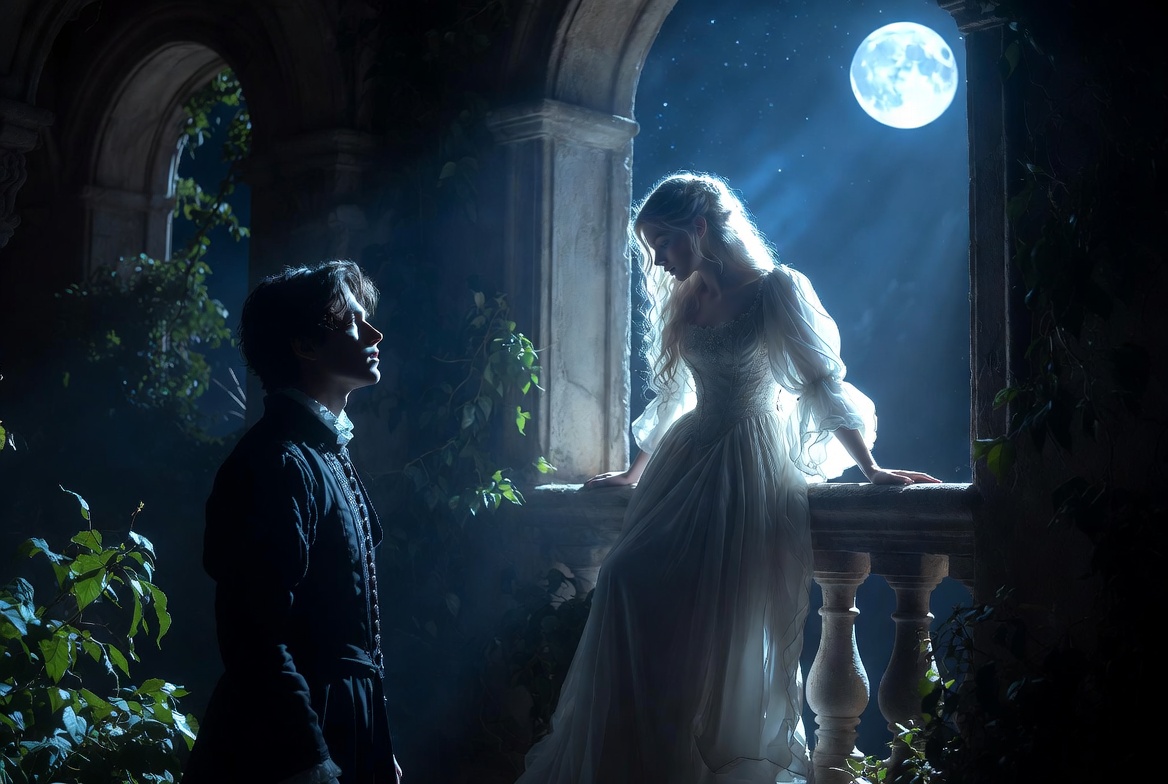
Imagery of Light and Darkness
Romeo’s opening lines establish a powerful contrast: “But soft, what light through yonder window breaks? It is the East, and Juliet is the sun.” Light symbolizes hope, beauty, and revelation, while darkness represents the surrounding feud and secrecy. This imagery permeates the entire play, framing their love as a fragile illumination in a world of shadows.
Astronomical and Mythological Allusions
“Arise, fair sun, and kill the envious moon, / Who is already sick and pale with grief…” Here, Romeo invokes Diana (the moon goddess associated with chastity). He urges Juliet to abandon her “vestal livery” (virgin’s uniform), blending romantic longing with subtle erotic invitation. The celestial metaphors elevate Juliet to divine status while revealing Romeo’s passionate impatience.
Metaphor and Personification
Romeo personifies the stars, imagining Juliet’s eyes replacing them in the sky. The famous glove line—“O, that I were a glove upon that hand”—shifts from grand cosmic imagery to intimate, tactile desire. This progression mirrors his emotional journey from awe to physical yearning.
Juliet’s responses ground Romeo’s idealism. Her “What’s in a name?” speech offers one of literature’s clearest explorations of identity, arguing that names are arbitrary labels that should not define essence. Together, their exchange creates a balanced duet of passion and practicality.
Thematic Exploration: Love, Identity, and Fate
The balcony scene is a masterclass in Shakespearean themes, weaving together the ecstasy of young love with the inexorable pull of fate. At its core is the tension between individual desire and societal constraints. Juliet’s famous question—“O Romeo, Romeo! Wherefore art thou Romeo?”—is not a literal inquiry about his location but a philosophical lament: “Why must you be a Montague?” This encapsulates the play’s critique of inherited enmity. Names, families, and feuds are artificial constructs; true love transcends them.
Light vs. Darkness: Romeo’s solar metaphors position Juliet as a source of life and renewal, contrasting the “envious moon” (symbolizing the restrictive older generation and chastity) and the pervasive darkness of Verona’s streets. Their love is luminous yet vulnerable—doomed to be eclipsed by the feud.
Identity and Essence: Juliet’s “What’s in a name? That which we call a rose / By any other word would smell as sweet” is a proto-existentialist argument. It challenges the rigid social hierarchies of Elizabethan England, where lineage determined worth. Shakespeare suggests that personal identity (“thou art thyself”) exists independently of labels, a radical idea for the time.
Religion and Sacrilege: The scene is steeped in religious imagery. Romeo calls Juliet a “bright angel” and “wingèd messenger of heaven,” likening himself to a pilgrim at the shrine of a saint (echoing their earlier sonnet exchange at the feast). Their vows mimic a marriage rite, blending sacred and profane love. This elevates their passion while hinting at its transgressive nature—defying both family and, implicitly, divine order.
Foreshadowing Tragedy: Even in this rapturous moment, dark undertones emerge. Romeo’s impulsiveness (“I am too bold”) and Juliet’s awareness of risk (“If they do see thee, they will murder thee”) plant seeds of the coming catastrophe. The “star-crossed” lovers are illuminated by celestial imagery that also evokes uncontrollable fate.
Performance Insights and Staging Traditions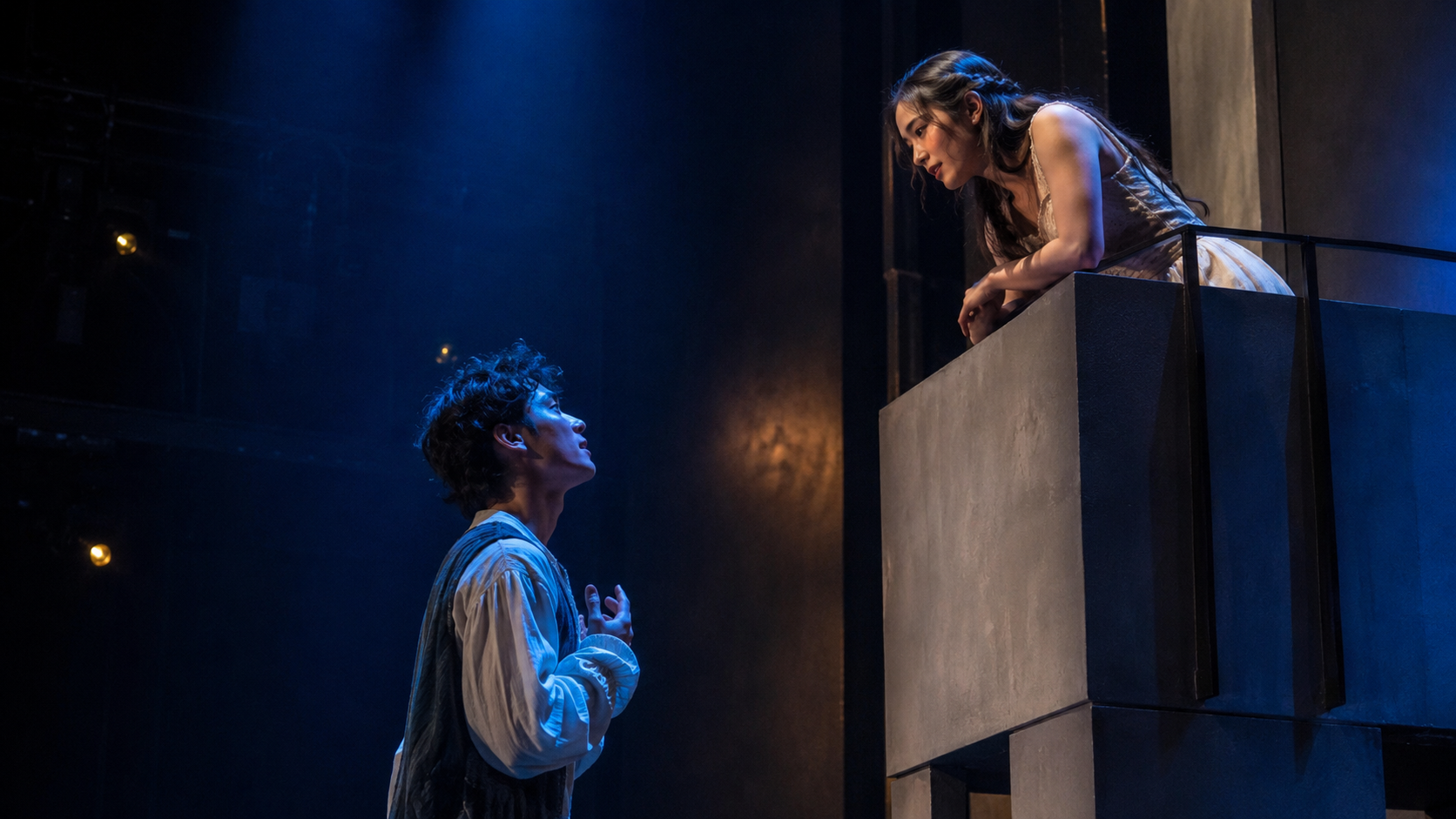
The balcony scene is a litmus test for actors. Romeo requires a balance of poetic rapture and youthful vulnerability—too bombastic and he becomes ridiculous; too restrained and the magic fades. Juliet’s soliloquy demands innocence mixed with intellectual maturity, as she grapples with profound questions while believing herself alone.
Famous Interpretations:
- Franco Zeffirelli’s 1968 film: Olivia Hussey and Leonard Whiting delivered youthful, naturalistic performances emphasizing physical chemistry and the orchard’s lush visuals.
- Baz Luhrmann’s 1996 adaptation: Leonardo DiCaprio’s Romeo brings modern intensity to the poolside “balcony” equivalent, highlighting the scene’s timeless romanticism amid chaos.
- Stage traditions: Modern productions often use minimal sets to focus on language, while others incorporate diverse casting to underscore themes of division.
Directors must navigate the scene’s length (one of Shakespeare’s longest dialogues) to maintain pacing. The aside structure allows Romeo’s voyeurism to create dramatic irony, heightening audience intimacy with the lovers’ private world.
Modern Interpretations and Cultural Impact
In contemporary readings, the monologue resonates with discussions of identity politics, toxic family dynamics, and forbidden love. Feminist critics highlight Juliet’s agency—she initiates the marriage proposal and shows greater pragmatism than Romeo. Queer and postcolonial interpretations see parallels in marginalized romances challenging dominant power structures.
The scene has inspired countless adaptations: West Side Story, songs by Dire Straits (“Romeo and Juliet”), and references in everything from The Simpsons to Taylor Swift lyrics. It embodies the archetype of instantaneous, all-consuming passion, for better or worse—celebrated in romance novels and critiqued in discussions of “love at first sight” realism.
Psychologically, it captures adolescent intensity: the idealization of the beloved, the willingness to renounce everything, and the illusion of invincibility against external forces.
Key Quotes and Their Enduring Wisdom
- “But soft, what light through yonder window breaks?” – The perfect opener for romantic revelation.
- “What’s in a name?” – A timeless meditation on language and identity.
- “O, that I were a glove upon that hand” – Raw physical longing amid ethereal poetry.
- “My bounty is as boundless as the sea, / My love as deep” (Juliet later) – The reciprocal depth of their commitment.
Study Tips and Essay Prompts
For students: Compare Romeo’s celestial imagery with Mercutio’s Queen Mab speech. Analyze how the scene subverts Petrarchan love conventions. Discuss whether their love is genuine or merely infatuation.
Essay prompt example: “To what extent does the balcony scene suggest that Romeo and Juliet’s tragedy is inevitable due to fate, or the result of their own impulsive choices?”
Further Reading and Resources
- Folger Shakespeare Library edition (highly recommended for annotations).
- Arden Shakespeare for scholarly depth.
- Harold Bloom’s Shakespeare: The Invention of the Human for character analysis.
- Film versions for visual interpretation.
This balcony scene remains Shakespeare’s most potent expression of love’s power to illuminate, transform, and ultimately challenge a hostile world. Its poetry doesn’t just describe romance—it enacts it, inviting every new generation to fall under its spell.