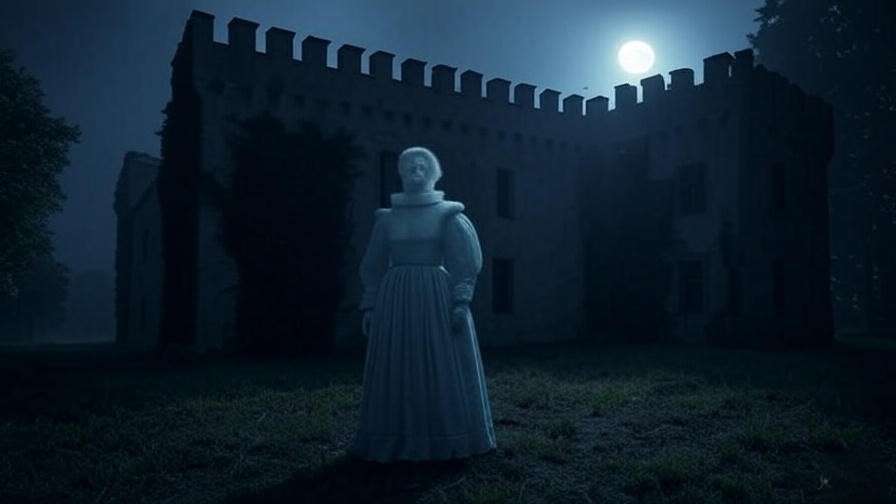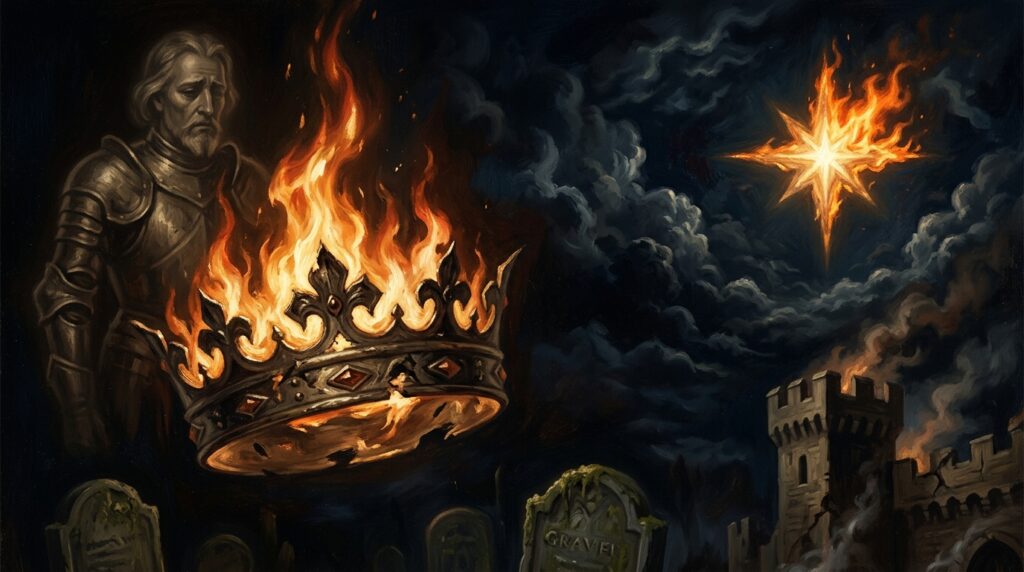
When the Ghost of King Hamlet emerges from the mist on the battlements of Elsinore in Act I, Scene 5, he does not merely bring a tale of foul murder—he brings the searing heat of the underworld. Demanding that young Hamlet avenge his death, the apparition reveals that he is doomed to walk the night and spend his days confined to “sulphurous and tormenting flames” until the sins of his natural life are purged away.
This terrifying visual is one of the most vital uses of hamlet fire imagery in all of William Shakespeare’s works.
While scholars and students frequently focus on motifs of disease, madness, poison, and physical decay when analyzing Denmark’s rotten state, Shakespeare’s deliberate deployment of fire imagery provides the emotional and spiritual combustion that drives the entire tragedy. Fire in Hamlet is never a static background element. It is a dynamic, volatile symbol that encompasses:
-
Purgative Torment & Divine Justice: The cleansing yet agonizing fires of Purgatory.
-
Unchecked Youthful Lust & Passion: The dangerous “blazes” of physical attraction that blind reason.
-
Destructive Fury & Revenge: The infernal heat that consumes Troy during the Trojan War parallel.
-
Cosmic Truth: The immutable, burning light of the stars used to anchor emotional reality.
For literature students preparing critical essays, educators seeking deeper analytical frameworks, and theater practitioners looking to understand character motivation, decoding this motif is essential. This comprehensive analysis breaks down every key instance of fire imagery in Hamlet, providing historical context, textual breakdowns, and thematic connections to elevate your understanding of Shakespeare’s masterpiece.
II. The Dual Nature of Fire in Shakespearean Drama
To fully appreciate how fire functions in Hamlet, one must step into the mind of an early modern playgoer. In Elizabethan and Jacobean England, fire was understood not merely as a chemical process, but as one of the four classical elements (alongside earth, air, and water) that governed both the universe and human physiology.
       [ Classical Element: FIRE ]
                /        \
               /          \
      (Purification)    (Destruction)
           /                  \
   Cleansing Souls      Consuming Reason
   (The Ghost's Fire)   (Lust, Revenge, Fury)
Fire as Creation and Destruction in the Elizabethan Mindset
In 16th-century natural philosophy, fire was unique among the elements because it was inherently transformational. It possessed a dual identity:
-
The Purifying Force: Fire was the ultimate agent of sanitation and spiritual cleansing. It refined gold, burned away pestilence, and purified the sinful soul.
-
The Destructive Catalyst: Uncontrolled, fire was an terrifying force of chaos. A single stray ember could consume whole wooden neighborhoods in Elizabethan London. Psychologically, an excess of fiery “choler” (yellow bile) was believed to induce sudden rage, rash actions, and madness.
Shakespeare masterfully exploits this dualism throughout Hamlet. Fire is simultaneously the holy instrument of divine justice and the unholy inferno of human vengeance. It represents both the eternal brilliance of the heavens and the subterranean suffering of damnation.
III. Purgatory and Divine Judgment: The Ghost’s Fiery Torment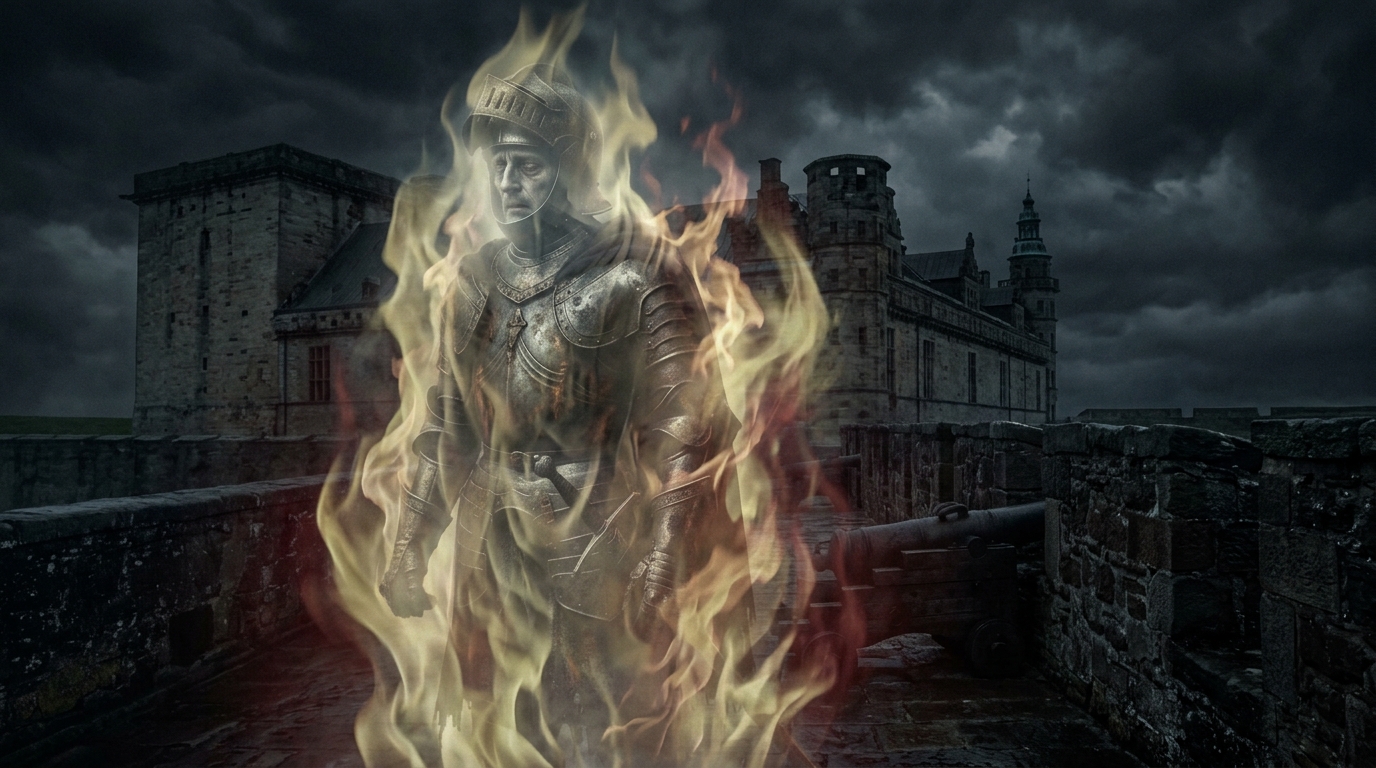
The most spiritually charged instance of fire imagery appears when the Ghost describes his afterlife condition to Hamlet. This scene establishes the moral and theological crisis that stalls Hamlet’s revenge throughout the play.
Textual Breakdown: Act I, Scene 5
When the Ghost reveals his identity, he offers a horrifying glimpse into his post-mortem existence:
“I am thy father’s spirit,
Doomed for a certain term to walk the night,
And for the day confined to fast in fires,
Till the foul crimes done in my days of nature
Are burnt and purged away.”
— Ghost, Act I, Scene 5 (lines 9–13)
Notice Shakespeare’s specific choice of verbs: burnt and purged. The fire here is explicitly purgative. The King died without receiving the Last Rites (Extreme Unction), leaving his earthly transgressions unconfessed. Consequently, he must endure a literal baptism of fire to burn away his moral impurities before he can enter Heaven.
  Unconfessed Sins (Earth)
          │
          ▼
 [ Purgatorial Fires ] ──► "Burnt and Purged"
          │
          ▼
   Spiritual Cleansing (Heaven)
Historical & Religious Context: The Protestant-Catholic Divide
This passage carried immense, potentially dangerous weight for Elizabethan audiences. Under Queen Elizabeth I, England was strictly Protestant. Official Anglican doctrine rejected the Catholic concept of Purgatory as a “fond thing vainly invented” (Article XXII of the Thirty-Nine Articles).
By placing a Catholic Ghost suffering in Purgatory’s fires on a Protestant stage, Shakespeare creates an intentional ideological tension:
-
If the Ghost is telling the truth: Purgatory exists, and King Hamlet is suffering in real, physical flames until his death is avenged.
-
If the Ghost is a demonic illusion: The fire is not purgative, but hellish—a bait sent by the Devil to tempt Hamlet into committing a damnable murder.
Impact on Character Psychology and Action
This theological ambiguity surrounding fire directly explains Hamlet’s agonizing hesitation. The fear of hellfire and eternal damnation dictates his choices, most notably in Act III, Scene 3.
When Hamlet discovers Claudius praying alone, he draws his sword to strike. However, he pauses, realizing that if he kills Claudius while he is asking for forgiveness, Claudius’s soul might go straight to Heaven—whereas his father was sent to be “confined to fast in fires.”
“He took my father grossly, full of bread,
With all his crimes broad blown, as flush as May;
And how his audit stands who knows save heaven?
But in our circumstance and course of thought
‘Tis heavy with him. And am I then revenged,
To take him in the purging of his soul…?”
— Hamlet, Act III, Scene 3 (lines 80–85)
Hamlet chooses to stay his blade because he wants Claudius to suffer the exact same fiery fate as his father. The memory of the Ghost’s “sulphurous and tormenting flames” prevents immediate action, transforming a simple revenge plot into a complex philosophical debate over eternal damnation.
IV. Passion, Lust, and Unchecked Desire: Fire in the Blood
Beyond spiritual judgment, fire in Hamlet frequently symbolizes bodily warmth, sexual passion, and the reckless impetuosity of youth. Shakespeare uses fiery metaphors to highlight the conflict between cool, rational intellect and hot, emotional impulse.
Polonius’s Warning to Ophelia: Fleeting Blazes vs. Lasting Heat
In Act I, Scene 3, Polonius scolds his daughter Ophelia for believing Hamlet’s declarations of affection. He dismisses the Prince’s vows as mere temporary outbursts of youthful lust, contrasting flash-in-the-pan sparks with true, sustained fire:
“I do know,
When the blood burns, how prodigal the soul
Lends the tongue vows. These blazes, daughter,
Giving more light than heat, extinct in both
Even in their promise, as it is a-making,
You must not take for fire.”
— Polonius, Act I, Scene 3 (lines 115–120)
Here, Polonius constructs a sophisticated visual metaphor:
| Image Component | Represented Concept | Moral Meaning |
| “When the blood burns” | Physical arousal / Lust | Emotion overwhelming rational judgment. |
| “These blazes” | Flash fires / Sparks | Short-lived, insincere romantic promises. |
| “More light than heat” | Flashy display without substance | Surface attraction devoid of deep, lasting love. |
| “Extinct in both” | Sudden burnout | The quick demise of passion once satisfied. |
Polonius warns that a passion that burns too fast consumes itself instantly. His cynical assessment reduces romantic devotion to a biological blaze, setting up the tragic misunderstanding between Hamlet and Ophelia.
   FLASH FIRE ("Blazes")             TRUE FIRE
  ┌───────────────────────┐   vs.   ┌───────────────────────┐
  │ High Light / Low Heat │         │ Low Light / High Heat │
  │ Quick Burnout (Lust)  │         │ Sustained Devotion    │
  └───────────────────────┘         └───────────────────────┘
Hamlet Confronting Gertrude: The Fire of Corrupted Virtue
Shakespeare returns to this metaphor during the famous Closet Scene (Act III, Scene 4), where Hamlet furiously confronts his mother, Queen Gertrude, for her hasty marriage to Claudius. Hamlet argues that at her age, physical passion should be governed by cool reason, yet her actions prove that lust still burns uncontrollably within her:
“Rebellious hell,
If thou canst mutine in a matron’s bones,
To flaming youth let virtue be as wax
And melt in her own fire. Proclaim no shame
When the compulsive ardour gives the charge,
Since frost itself doth actively burn,
And reason panders will.”
— Hamlet, Act III, Scene 4 (lines 82–88)
Hamlet’s imagery is vivid and visceral:
-
“To flaming youth let virtue be as wax”: If an older woman cannot control her physical desires, then young people cannot be blamed when their moral principles melt away under the heat of youth’s natural passion.
-
“Frost itself doth actively burn”: A striking oxymoron illustrating how Gertrude’s age (the “frost” of life) has inverted the laws of nature by burning with unnatural, shameless lust.
Through this fiery critique, Shakespeare demonstrates how unchecked desire breaks down moral order, destabilizing both individual character and the state of Denmark.
V. Cosmic Doubt and Unshakable Truth: “Doubt Thou the Stars Are Fire”
Perhaps the most famous and widely quoted reference to fire in the entire play occurs in Hamlet’s letter to Ophelia, read aloud by Polonius in Act II, Scene 2.
Textual Analysis of the Famous Verse
“Doubt thou the stars are fire;
Doubt that the sun doth move;
Doubt truth to be a liar;
But never doubt I love.”
— Hamlet (read by Polonius), Act II, Scene 2 (lines 116–119)
  INDISPUTABLE PHYSICAL TRUTHS             EMOTIONAL CONSTANT
┌────────────────────────────────┐       ┌────────────────────┐
│ • Stars are burning fire       │ ──►   │ "Never doubt I love"│
│ • Sun moves across the sky     │       └────────────────────┘
│ • Truth is not deceptive       │
└────────────────────────────────┘
To break down this famous stanza, one must examine how Shakespeare uses the word “doubt”. In Elizabethan English, “doubt” could mean either to suspect/question or to hesitate to believe. Here, Hamlet constructs a rhetorical scale using physical laws:
-
You may question whether the stars in the night sky are made of real fire.
-
You may question the rotation and movement of the sun across the heavens.
-
You may question whether absolute truth itself has become a lie.
-
However, you can never question the certainty of my love for you.
By linking his affection for Ophelia to the elemental, burning nature of the stars, Hamlet elevates his devotion above the treacherous political intrigues of Elsinore. The fire of the stars represents an eternal, fixed physical reality—a stark contrast to the shifting lies and deception surrounding the court.
The Renaissance Astronomy Connection
This quote carries extra resonance when viewed through the historical context of early modern science. During the late 16th century, the traditional Aristotelian-Ptolemaic view of the universe (which posited that stars were immutable, perfect celestial spheres) was being challenged by Copernicus and emerging astronomical observations.
When Hamlet writes “Doubt thou the stars are fire,” Shakespeare touches upon a contemporary scientific debate: Are the distant stars actual burning balls of physical fire, or are they heavenly quintessence?
By inviting Ophelia to question even the fundamental, scientific reality of starry fire, Hamlet underlines the pervasive atmosphere of epistemological uncertainty that defines the play. In a world where no one knows what is real—where ghosts walk, friends act as spies, and kings are murderers—the burning light of the stars remains one of the few anchors of truth.
VI. Fire, Fury, and Revenge: The Trojan War Parallel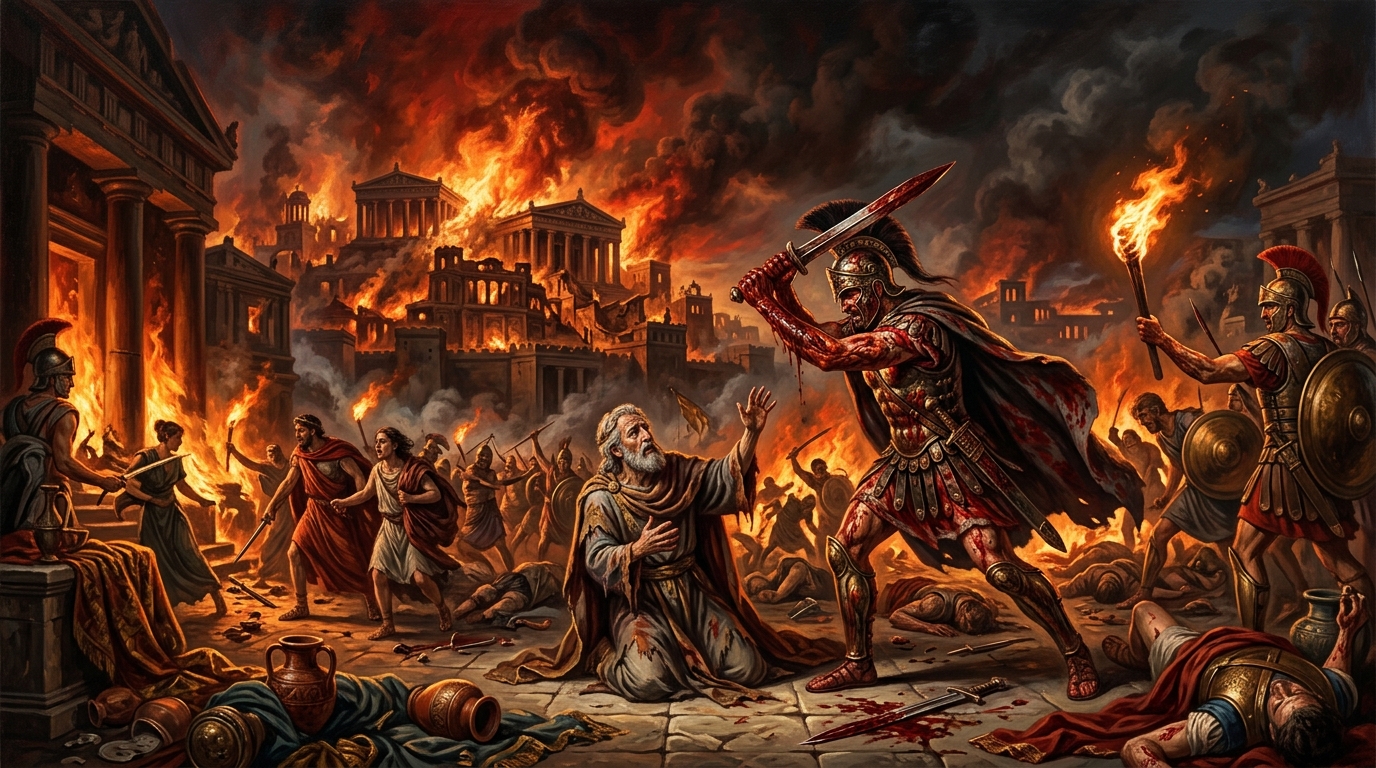
In Act II, Scene 2, a troupe of travelling actors arrives at Elsinore. Hamlet asks the First Player to recite a specific, dramatic speech detailing the brutal fall of Troy and the murder of King Priam by Pyrrhus.
This embedded performance—often called the “Pyrrhus Speech”—is saturated with hellish fire imagery that mirrors Hamlet’s own internal struggles and foreshadows the bloodbath of Act V.
The First Player’s Speech: Analyzing the Infernal City
The First Player paints a nightmare landscape of a city engulfed in flames and slaughter:
“The rugged Pyrrhus, he whose sable arms,
Black as his purpose, did the night resemble…
Head to foot
Now is he total gules, horridly tricked
With blood of fathers, mothers, daughters, sons,
Baked and impasted with the parching streets,
That lend a tyrannous and damned light
To their lord’s murder. Roasted in wrath and fire,
And thus o’ersized with coagulate gore…
The hellish Pyrrhus making malicious sport,
In general damnation strikes at Priam.”
— First Player, Act II, Scene 2 (lines 450–480)
  TROJAN WAR PARALLEL                  ELSINORE REALITY
  ┌───────────────────────┐           ┌───────────────────────┐
  │ Pyrrhus (Wrath/Fire)  │ ──Mirrors─► Hamlet (Sought Fury)  │
  │ Burning of Troy       │ ──Mirrors─► Downfall of Denmark   │
  │ Murder of Priam       │ ──Mirrors─► Revenge on Claudius   │
  └───────────────────────┘           └───────────────────────┘
Notice the intense sensory concentration of fire terminology in this passage:
-
“Baked and impasted with the parching streets”: The intense heat of burning Troy bakes the spilled blood onto Pyrrhus’s armor like an oven, turning him into a terrifying monster of crusty gore.
-
“Tyrannous and damned light”: The city’s fire provides the very illumination Pyrrhus needs to execute the old King Priam. The light itself is described as “damned”—an agent of unholy destruction rather than enlightenment.
-
“Roasted in wrath and fire”: Pyrrhus is literally and metaphorically cooked in his own murderous fury.
Literary Mirroring: Pyrrhus as Hamlet’s Dark Double
Shakespeare uses this literary reference to construct a subtle mirror for Hamlet’s psyche:
-
The Parallel: Pyrrhus is a son seeking revenge for his father’s (Achilles’) death. Like Hamlet, Pyrrhus pauses for a brief moment before striking Priam down (“So as a painted tyrant Pyrrhus stood / And like a neutral to his will and matter / Did nothing”).
-
The Contrast: Unlike Hamlet, who is crippled by moral deliberation, Pyrrhus quickly overcomes his pause, unleashing fiery, indiscriminate slaughter upon Troy.
The infernal fire surrounding Pyrrhus represents the terrifying consequences of pure, unbridled revenge. It serves as a haunting warning: if Hamlet surrenders completely to the “fire and wrath” needed to kill Claudius, he risks turning Elsinore into a burning, blood-soaked wasteland—which is precisely what occurs in the tragic final scene.
VII. Comparative Guide: Key Fire Passages in Hamlet
For quick reference and study, the following table summarizes every major instance of fire imagery across the play, detailing its speaker, exact context, and thematic significance.
| Act & Scene | Speaker | Exact / Key Quote | Core Symbolism | Thematic Impact |
| Act I, Scene 3 | Polonius | “When the blood burns… these blazes, daughter… you must not take for fire.” | Lust vs. True Love | Warns against impulsive, fleeting passion; establishes Polonius’s cynical worldview. |
| Act I, Scene 5 | Ghost | “Confined to fast in fires / Till the foul crimes… are burnt and purged away.” | Purgatory & Divine Justice | Fuels Hamlet’s spiritual conflict regarding the afterlife and eternal damnation. |
| Act II, Scene 2 | Hamlet (Letter) | “Doubt thou the stars are fire / Doubt that the sun doth move…” | Cosmic Truth & Certainty | Uses physical constants of the universe to prove emotional sincerity in a dishonest court. |
| Act II, Scene 2 | First Player | “Baked and impasted with the parching streets… roasted in wrath and fire.” | Hellish Destruction & Fury | Acts as a literary parallel for the blinding, destructive nature of absolute revenge. |
| Act III, Scene 3 | Hamlet | “To take him in the purging of his soul / When he is fit and seasoned for his passage?” | Hellfire vs. Heavenly Mercy | Prevents Hamlet from killing Claudius during prayer, delaying the revenge plot. |
| Act III, Scene 4 | Hamlet | “To flaming youth let virtue be as wax / And melt in her own fire.” | Moral Decay & Uncontrolled Lust | Critiques Gertrude’s marriage, illustrating how uncontrolled desire corrupts reason. |
VIII. How to Analyze Fire Imagery in Literature Essays
If you are a student writing an essay or preparing for an exam on Hamlet, integrating a clear analysis of fire imagery can significantly elevate your arguments. Here are three thematic frameworks and high-scoring thesis statements you can adapt for your academic writing.
1. Connecting Fire to Action vs. Inaction
-
Framework: Analyze how fire represents the hot, impulsive energy required to take action, contrasted with the cool, analytical thought that causes Hamlet’s inaction.
-
Sample Thesis Statement:
“While Hamlet’s intellectual hesitation stems from a cool, analytical temperament, Shakespeare uses volatile fire imagery—from the Ghost’s purgatorial torment to Pyrrhus’s infernal rampage—to demonstrate that revenge requires a destructive, irrational heat that ultimately destabilizes both the revenger and the state.”
2. Spiritual Damnation vs. Purification
-
Framework: Focus on the theological conflict between Catholic Purgatory and Protestant views on salvation, showing how fire serves as a moral testing ground.
-
Sample Thesis Statement:
“In Hamlet, fire operates not merely as a dramatic metaphor, but as a complex theological boundary; by contrasting the purifying flames of the Ghost’s Purgatory with the corrupting heat of earthly lust, Shakespeare illustrates the tragic impossibility of achieving spiritual purity within a politically rotten world.”
3. Passion vs. Rational Reason
-
Framework: Compare how different characters (Polonius, Hamlet, Gertrude) manage their internal “fire” or emotional impulses.
-
Sample Thesis Statement:
“Across the play, Shakespeare constructs a clear moral hierarchy based on thermal imagery: while Polonius reductively dismisses love as a temporary ‘blaze’ of the blood, Hamlet uses the eternal fire of the stars to define truth, proving that emotional passion can both degrade human nature and elevate it toward the divine.”
IX. Frequently Asked Questions (FAQ)
What does fire symbolize in Hamlet?
In Hamlet, fire is a multi-layered symbol representing purgative spiritual punishment (the Ghost’s suffering), uncontrolled passion and lust (youthful impulse and Gertrude’s moral decay), destructive revenge (the burning of Troy in the Player’s speech), and immutable cosmic truth (“Doubt thou the stars are fire”).
What does “Doubt thou the stars are fire” mean in Hamlet?
This famous quote from Hamlet’s letter to Ophelia (Act II, Scene 2) means that she may question fundamental physical facts of the universe—such as whether the stars are made of burning light or whether the sun moves—but she should never question the absolute certainty of his love.
Is the Ghost in Hamlet in Purgatory or Hell?
The Ghost explicitly states he is “confined to fast in fires” until his sins are “burnt and purged away,” which directly describes the Catholic concept of Purgatory. However, because Elizabethan England was Protestant (a religion that rejected Purgatory), audiences and Hamlet himself worry that the Ghost might actually be a demon from Hell sent to tempt Hamlet into sin.
How does fire imagery in Hamlet compare to Macbeth?
In Macbeth, fire is primarily associated with witchcraft, destruction, and hellfire (“Double, double toil and trouble; Fire burn and cauldron bubble” and “Hell is murky”). In Hamlet, however, fire is far more nuanced—functioning as an agent of spiritual purification, philosophical truth, and romantic passion alongside its destructive qualities.