Shakespeare’s Macbeth is an unmatched masterclass in the psychological disintegration of human ambition. Whether you are an actor searching for a transformative audition piece, a drama student dissecting verse, or a literary scholar analyzing Shakespearean tragedy, finding the right macbeth monologue requires more than just reading the raw text. It demands a clear understanding of character motivation, classical scansion, and theatrical delivery.
Most online resources present two extremes: unformatted, archaic text lacking context, or dense academic essays that ignore the realities of live performance. This guide bridges that gap. Combining rigorous literary analysis with practical, director-led acting tips, here is the definitive breakdown of the top 10 monologues and soliloquies from Macbeth—complete with context, translations, scansion insights, and audition guidelines.
Understanding Shakespeare’s Monologues vs. Soliloquies in Macbeth
Before selecting a passage to perform or analyze, it is essential to understand the structural tools Shakespeare uses to reveal inner consciousness. Macbeth relies heavily on private speech to draw the audience into complicity with horrific acts.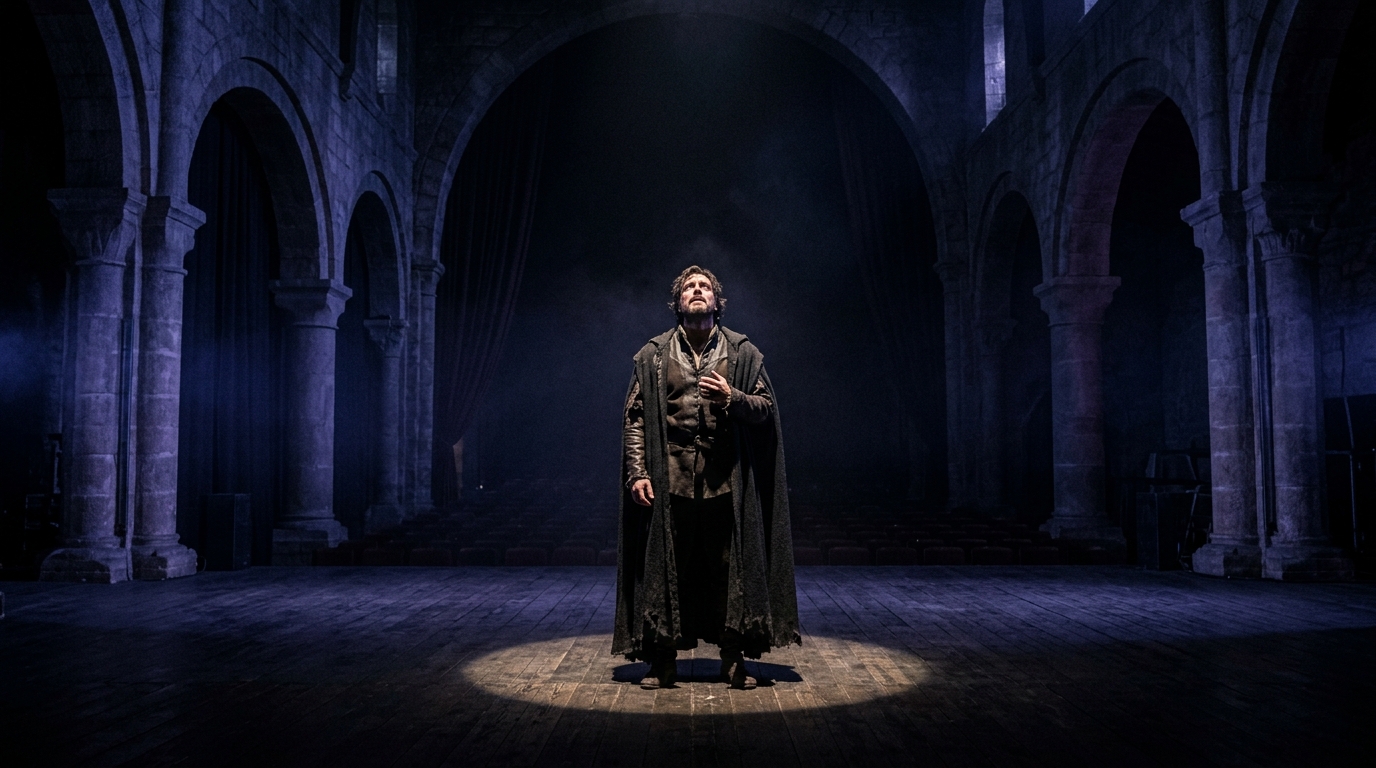
Soliloquy vs. Monologue vs. Aside: Key Differences
| Feature | Soliloquy | Monologue | Aside |
| Target Audience | Self / The Audience | Other characters on stage | Direct to audience (others unaware) |
| Stage Presence | Speaker is alone on stage | Speaker is with other characters | Speaker is amidst a group |
| Primary Function | Direct exposure of internal truth | Persuasion, narrative, or debate | Immediate commentary or reaction |
| Dramatic Effect | Creates intense intimacy and suspense | Drives plot forward through interaction | Establishes secret alignment with viewers |
Decoding Shakespeare’s Meter: Verse, Prose, and Scansion
Shakespeare writes Macbeth predominantly in unrhymed iambic pentameter (blank verse)—a ten-syllable line with five alternating unstressed and stressed beats ($da-DUM\ da-DUM\ da-DUM\ da-DUM\ da-DUM$).
However, pay close attention to where the meter breaks:
-
Feminine Endings: An extra 11th unstressed syllable at the end of a line indicates hesitation, vulnerability, or self-doubt.
-
Short Lines: A line missing beats forces a theatrical pause. Silence on stage is written directly into the meter.
-
Prose: When noble characters switch from verse to prose (regular sentence structure), it signals a collapse of mental stability, loss of control, or profound psychological trauma (as seen in Lady Macbeth’s sleepwalking scene).
Top 10 Famous Monologues from Macbeth
1. “If it were done when ’tis done…” (Macbeth — Act 1, Scene 7)
Context & Scene Overview
Macbeth has left King Duncan’s banquet to pace alone. He deliberates whether to commit regicide, weighing the spiritual, political, and personal fallout.
Audition Suitability
-
Gender/Age: Male or Non-Binary | Age 30–50
-
Tone: Introspective, Tortured, Intellectual
-
Best For: Classical theater auditions, drama school entry, showcases.
Original Text
“If it were done when ’tis done, then ’twere well
It were done quickly: if the assassination
Could trammel up the consequence, and catch
With his surcease success; that but this blow
Might be the be-all and the end-all here,
But here, upon this bank and shoal of time,
We’d jump the life to come. But in these cases
We still have judgment here; that we but teach
Bloody instructions, which, being taught, return
To plague the inventor: this even-handed justice
Commends the ingredients of our poisoned chalice
To our own lips. He’s here in double trust;
First, as I am his kinsman and his subject,
Strong both against the deed; then, as his host,
Who should against his murderer shut the door,
Not bear the knife myself. Besides, this Duncan
Hath borne his faculties so meek, hath been
So clear in his great office, that his virtues
Will plead like angels, trumpet-tongued, against
The deep damnation of his taking-off;
And pity, like a naked new-born babe,
Striding the blast, or heaven’s cherubim, horsed
Upon the sightless couriers of the air,
Shall blow the horrid deed in every eye,
That tears shall drown the wind. I have no spur
To prick the sides of my intent, but only
Vaulting ambition, which o’erleaps itself
And falls on the other.”
Modern Translation Summary
If killing Duncan could guarantee instant success without negative consequences in this lifetime, I would risk eternal damnation. But karma exists on Earth. Violence returns to destroy the violent. Furthermore, Duncan is my King, my relative, and my guest; my duty is to protect him, not murder him. He is a noble leader whose death will provoke cosmic mourning. I have no moral justification—only blind ambition driving me toward self-destruction.
Literary Analysis
This speech relies on vivid imagery of moral order and religious judgment. Shakespeare uses legal and medical metaphors (“judgment,” “poisoned chalice”) alongside vulnerable cosmic images (“naked new-born babe”) to contrast Macbeth’s brutal intentions with Duncan’s moral purity.
Performance & Acting Advice
-
The Tactic: Do not play the murderer—play the philosopher fighting his conscience.
-
Vocal Pace: Accelerate through the opening tongue-twisters (“surcease success”) to mirror Macbeth’s racing pulse, then slow down dramatically on “He’s here in double trust.”
-
Physicalization: Keep the physical movements small. Let the struggle occur in your eyes and breath; the audience must feel the crushing weight of his moral conflict.
2. “Is this a dagger which I see before me…” (Macbeth — Act 2, Scene 1)
Context & Scene Overview
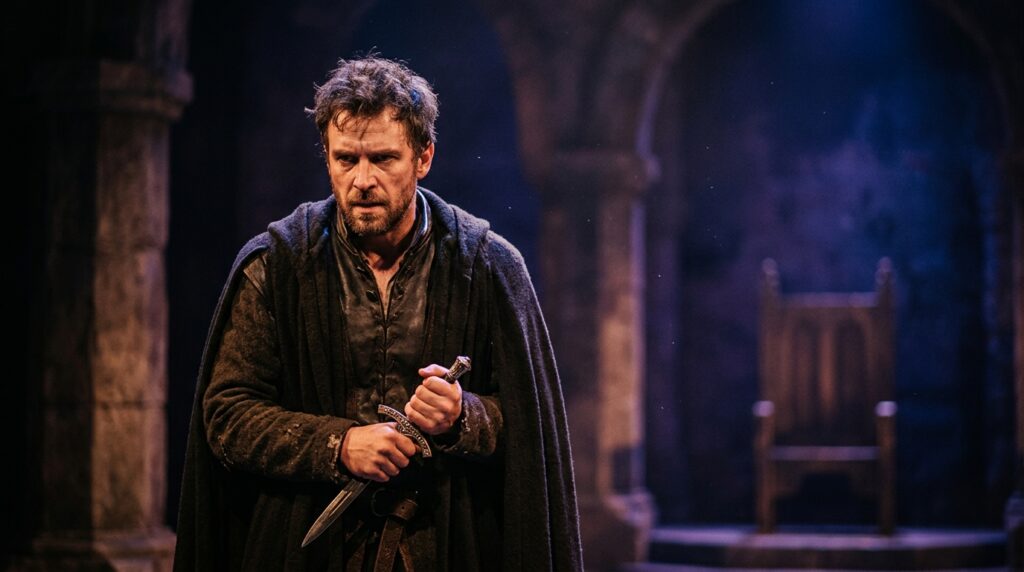
Waiting for Lady Macbeth’s signal bell to strike, Macbeth stands alone in the dark courtyard. As tension peaks, his mind manifests a vision of a floating, bloody dagger guiding him to Duncan’s room.
Audition Suitability
-
Gender/Age: Male or Non-Binary | Age 25–50
-
Tone: Psychological Thriller, Suspenseful, Hallucinatory
-
Best For: Demonstrating high emotional stakes, physical acting, and vocal control.
Original Text
“Is this a dagger which I see before me,
The handle toward my hand? Come, let me clutch thee.
I have thee not, and yet I see thee still.
Art thou not, fatal vision, sensible
To feeling as to sight? or art thou but
A dagger of the mind, a false creation,
Proceeding from the heat-oppressed brain?
I see thee yet, in form as palpable
As this which now I draw.
Thou marshal’st me the way that I was going;
And such an instrument I was to use.
Mine eyes are made the fools o’ the other senses,
Or else worth all the rest; I see thee still,
And on thy blade and dudgeon gouts of blood,
Which was not so before. There’s no such thing:
It is the bloody business which informs
Thus to mine eyes. Now o’er the one halfworld
Nature seems dead, and wicked dreams abuse
The curtain’d sleep; witchcraft celebrates
Pale Hecate’s offerings, and wither’d murder,
Alarum’d by his sentinel, the wolf,
Whose howl’s his watch, thus with his stealthy pace,
With Tarquin’s ravishing strides, towards his design
Moves like a ghost.”
Modern Translation Summary
Is that a dagger floating in front of me? Let me grab it. I can’t touch it, but I can still see it. Is it a hallucination caused by my feverish, stressed brain? I see it clearly, pointing toward Duncan’s chamber—the exact path I meant to take. Now blood appears on the blade. It’s not real; it’s my murderous intent tricking my eyes. Night has fallen, evil takes over the world, and like a ghost or predator, I move toward my victim.
Literary Analysis
This soliloquy marks Macbeth’s descent into active psychosis. The dagger acts as an externalized representation of his guilt and ambition. Shakespeare uses gothic imagery—Hecate, wolves, ghosts, Tarquin’s violent stride—to symbolize how Macbeth is surrendering his humanity to darkness.
Performance & Acting Advice
-
Focal Point: Choose an exact point downstage/above the audience’s heads for the floating dagger. Never take your eyes off it until the text forces you to realize “There’s no such thing.”
-
Sensory Shift: Physicalize the transition when drawing your real blade. Contrast the soft, whispered confusion of the beginning with the cold, deliberate terror of the final lines.
-
Textual Key: Emphasize the word “gouts”—the harsh consonant helps ground the violent reality of the hallucination.
3. “The raven himself is hoarse…” (Lady Macbeth — Act 1, Scene 5)
Context & Scene Overview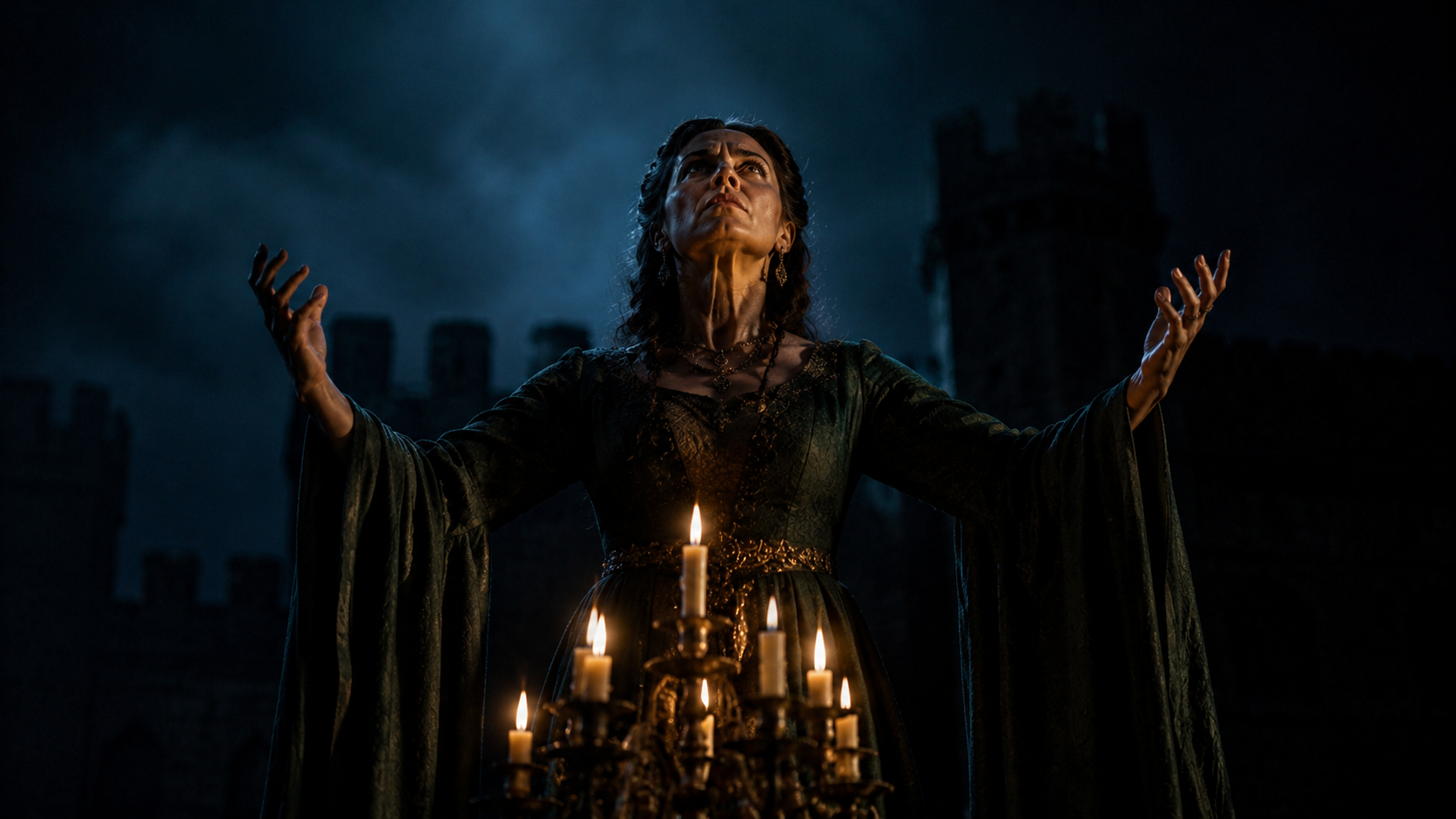
After receiving Macbeth’s letter reporting the Witches’ prophecy, Lady Macbeth learns King Duncan will sleep at her castle tonight. She prepares to strip away her empathy so she can drive Macbeth to murder.
Audition Suitability
-
Gender/Age: Female or Non-Binary | Age 25–45
-
Tone: Dark, Command, Incantatory, Intense
-
Best For: Strong dramatic classical auditions requiring commanding stage presence and intensity.
Original Text
“The raven himself is hoarse
That croaks the fatal entrance of Duncan
Under my battlements. Come, you spirits
That tend on mortal thoughts, unsex me here,
And fill me from the crown to the toe top-full
Of direst cruelty! make thick my blood;
Stop up the access and passage to remorse,
That no compunctious visitings of nature
Shake my fell purpose, nor keep peace between
The effect and it! Come to my woman’s breasts,
And take my milk for gall, you murdering ministers,
Wherever in your sightless substances
You wait on nature’s mischief! Come, thick night,
And pall thee in the dunnest smoke of hell,
That my keen knife see not the wound it makes,
Nor heaven peep through the blanket of the dark,
To cry ‘Hold, hold!'”
Modern Translation Summary
Even the raven croaking Duncan’s arrival sounds hoarse with death. Spirits of evil, remove my female compassion and fill me from head to toe with absolute cruelty. Thickened my blood so I feel no guilt or hesitation. Transform my mother’s milk into poison, unseen spirits of murder! Dark night, cover everything in hellish smoke so neither my knife nor Heaven can see the crime and stop me.
Literary Analysis
Known as the “Unsex Me Here” monologue, this passage explores gender roles, power, and the supernatural. Lady Macbeth views her femininity—symbolized by nurture and milk—as an obstacle to power. She calls upon invisible demonic forces (“murdering ministers”) to suppress her natural empathy.
Performance & Acting Advice
-
Avoid Shouting: Resist the urge to scream or play rage. Channel the invocation into controlled, grounded power. Quiet, dark intensity is far more chilling than loudness.
-
Sensory Words: Bite into words like “croaks,” “thick,” “gall,” and “dunnest.” Shakespeare chose these harsh phonetic sounds to build atmosphere.
-
Postural Anchor: Keep your stance firm and rooted. She is commanding cosmic forces to alter her physical body; use your breath to show that transformation taking place.
4. “Tomorrow, and tomorrow, and tomorrow…” (Macbeth — Act 5, Scene 5)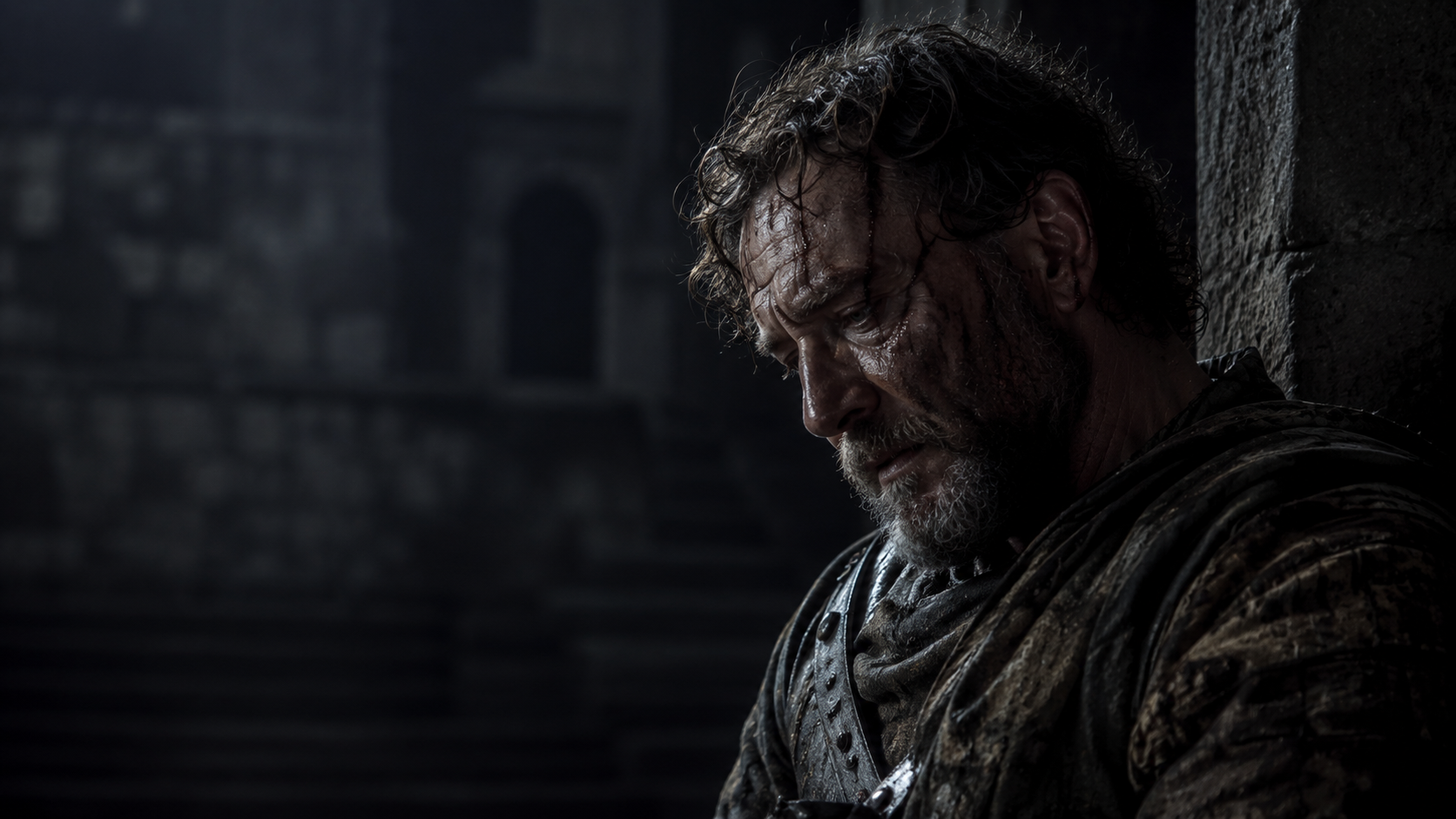
Context & Scene Overview
Besieged at Dunsinane Castle, Macbeth receives news that Lady Macbeth is dead. Worn down by guilt, war, and isolation, he delivers a profound reflection on the futility of human existence.
Audition Suitability
-
Gender/Age: Male or Non-Binary | Age 30–60
-
Tone: Melancholic, Existential, Exhausted
-
Best For: Demonstrating subtle, deep emotional range and poetic rhythm control.
Original Text
“Tomorrow, and tomorrow, and tomorrow,
Creeps in this petty pace from day to day
To the last syllable of recorded time,
And all our yesterdays have lighted fools
The way to dusty death. Out, out, brief candle!
Life’s but a walking shadow, a poor player
That struts and frets his hour upon the stage
And then is heard no more: it is a tale
Told by an idiot, full of sound and fury,
Signifying nothing.”
Modern Translation Summary
Time moves forward endlessly, day after monotonous day, until the end of history. Everything we have done in the past has merely guided foolish humans toward death. Extinguish the short light of life! Human life is nothing more than an illusion—a bad actor who panics and performs for an hour on stage before vanishing forever. Life is a story told by an insane person: loud, chaotic, and completely meaningless.
Literary Analysis
This speech represents the absolute peak of Shakespearean nihilism. Macbeth uses theatrical metaphors (“walking shadow,” “poor player”) to deconstruct his own tragedy. Having lost his morality, his wife, and his peace, he realizes that his pursuit of power resulted in utter emptiness.
Performance & Acting Advice
-
Resist Melodrama: Avoid weeping or sudden bursts of anger. The terror of this monologue comes from Macbeth’s profound emotional numbness.
-
Rhythmic Precision: Emphasize the relentless, mechanical repetition of “Tomorrow, and tomorrow, and tomorrow.”
-
The Turn: Let “Out, out, brief candle!” act as an intimate realization rather than a theatrical flourish—he is speaking to the fragility of his own soul.
5. “To be thus is nothing, but to be safely thus…” (Macbeth — Act 3, Scene 1)
Context & Scene Overview
Now crowned King, Macbeth finds no peace. He is haunted by the Witches’ prophecy that Banquo’s descendants—not his own—will inherit the throne. He prepares to hire assassins to murder Banquo and Fleance.
Audition Suitability
-
Gender/Age: Male or Non-Binary | Age 30–50
-
Tone: Paranoid, Bitter, Calculating, Aggressive
-
Best For: Showing a character shifting from fear to tactical brutality.
Original Text
“To be thus is nothing;
But to be safely thus. Our fears in Banquo
Stick deep; and in his royalty of nature
Reigns that which would be feared: ’tis much he dares;
And, to that dauntless temper of his mind,
He hath a wisdom that doth guide his valor
To act in safety. There is none but he
Whose being I do fear: and, under him,
My Genius is rebuked; as, it is said,
Mark Antony’s was by Caesar. He chid the sisters
When first they put the name of king upon me,
And bade them speak to him: then prophet-like
They hailed him father to a line of kings:
Upon my head they placed a fruitless crown,
And put a barren scepter in my gripe,
Thence to be wrenched with an unlineal hand,
No son of mine succeeding. If ‘t be so,
For Banquo’s issue have I filed my mind;
For them the gracious Duncan have I murdered;
Put rancors in the vessel of my peace
Only for them; and mine eternal jewel
Given to the common enemy of man,
To make them kings, the seed of Banquo kings!
Rather than so, come fate into the list,
And champion me to the utterance!”
Modern Translation Summary
Being King means nothing if I am constantly living in fear. My fear of Banquo runs deep because he has a noble nature, courage, and wisdom. He is the only man I fear; around him, my own spirit feels diminished. When the Witches called me King, he demanded they speak to him, and they promised his descendants would rule. They gave me a useless crown and a empty scepter that will be ripped away by someone outside my family. If this is true, I tormented my mind, murdered Duncan, and gave my soul to the Devil just to make Banquo’s children kings! I refuse to accept it. I will challenge Fate itself to a duel to the death!
Literary Analysis
This speech tracks the transformation of Macbeth’s paranoia into active defiance. Shakespeare uses symbols of sterile royalty (“fruitless crown,” “barren scepter”) to highlight Macbeth’s insecurity over his legacy. His reference to Mark Antony and Octavius Caesar adds historical weight to his inferiority complex regarding Banquo.
Performance & Acting Advice
-
Build the Arc: Start with quiet, cold calculation. Allow the frustration about the “fruitless crown” to build into an explosion of rage by “To make them kings!”
-
Tactical Focus: The objective of this speech is self-justification. Macbeth must convince himself that murdering Banquo is not just necessary, but a heroic battle against Fate.
6. “Out, damned spot! Out, I say!” (Lady Macbeth — Act 5, Scene 1)
Context & Scene Overview
Obsessed with the blood she cannot wash from her hands, a sleepwalking Lady Macbeth wanders her chambers at night, observed by a Gentlewoman and a Royal Doctor.
Audition Suitability
-
Gender/Age: Female or Non-Binary | Age 25–45
-
Tone: Tragic, Fragmented, Disturbed
-
Best For: Physical theater, demonstrating psychological depth, handling prose breaks.
Original Text
“Out, damned spot! out, I say!—One: two: why, then, ’tis time to do’t.—Hell is murky!—Fie, my lord, fie! a soldier, and afeard? What need we fear who knows it, when none can call our power to account?—Yet who would have thought the old man to have had so much blood in him.
…The thane of Fife had a wife: where is she now?—What, will these hands ne’er be clean?—No more o’ that, my lord, no more o’ that: you mar all with this starting.
…Here’s the smell of the blood still: all the perfumes of Arabia will not sweeten this little hand. Oh, oh, oh!”
Modern Translation Summary
Get out, cursed bloodstain! One, two o’clock—it’s time to murder Duncan. Hell is dark! Shame on you, my lord, a soldier scared? Who can hold us accountable when we have all the power? But who could have predicted the old King had so much blood? The Thane of Fife had a wife (Lady Macduff)—where is she now? Will my hands ever be clean? Stop jumping at shadows, you’ll ruin everything. I still smell blood—all the perfumes of Arabia couldn’t clean this hand.
Literary Analysis
This scene provides a stark structural contrast to earlier acts. Shakespeare shifts Lady Macbeth from elegant blank verse to broken, fractured prose. Her mind cycles rapidly through past events: Duncan’s murder, reassuring Macbeth, and the massacre of Macduff’s family. The invisible blood spot represents inescapable moral guilt.
Performance & Acting Advice
-
Avoid Caricature Madness: Do not play “crazy.” Play a woman frantically trying to complete a simple task (washing her hands) while overwhelmed by traumatic memories.
-
Vocal Rhythm: Jump sharply between thoughts. Connect “Hell is murky!” to an argument she previously had with Macbeth, not just a random exclamation.
-
Sensory Anchor: Lean into the smell. The realization that she can smell blood brings a visceral, physical reality to the performance.
7. “O, never shall sun that morrow see!” (Lady Macbeth — Act 1, Scene 5)
Context & Scene Overview
Fresh from reading Macbeth’s letter about the witches, Lady Macbeth greets her husband as he arrives back at Inverness. Learning that King Duncan plans to stay overnight and depart the following morning, she takes immediate control of the plot, declaring that Duncan will never live to see that morning sun.
Audition Suitability
-
Gender/Age: Female or Non-Binary | Age 25–45
-
Tone: Persuasive, Intimidating, Direct, Command
-
Best For: Showcasing tactical manipulation, status play, and intense personal intimacy on stage.
Original Text
“O, never
Shall sun that morrow see!
Your face, my thane, is as a book where men
May read strange matters. To beguile the time,
Look like the time; bear welcome in your eye,
Your hand, your tongue: look like the innocent flower,
But be the serpent under’t. He that’s coming
Must be provided for: and you shall put
This night’s great business into my dispatch;
Which shall to all our nights and days to come
Give sole sovereign sway and masterdom.”
Modern Translation Summary
Duncan will never live to see tomorrow’s sunrise! Your face gives away your internal panic like an open book, my Lord. To deceive the world, you must match its expectations: project warm welcome through your eyes, hands, and words. Look like a harmless, sweet flower, but hide the dangerous snake underneath it. Leave tonight’s murder in my hands—it will secure absolute power and royalty for us for the rest of our lives.
Literary Analysis
This speech establishes Lady Macbeth as the initial strategist of the regicide. Shakespeare makes heavy use of biblical and classical motifs, most notably the imagery of the “serpent under the innocent flower” (referencing both the Edenic fall and Virgil’s Eclogues). Her use of euphemisms—calling assassination “this night’s great business” and “providing for” Duncan—highlights her tactical attempt to sanitize murder into a necessary political maneuver.
Performance & Acting Advice
-
The Tactic: Play this as intimate, magnetic persuasion rather than an aggressive attack. She is coaching her husband, drawing him into an irresistible shared ambition.
-
Physical Proximity: Use physical closeness to mirror the text. Get close enough to “read” his face as a book, using touch to anchor his focus.
-
Emphasis on Imagery: Bite into the contrast between “innocent flower” and “serpent.” Let the transition in tone show her swift adaptability.
8. “Glamis thou art, and Cawdor; and shalt be…” (Lady Macbeth — Act 1, Scene 5)
Context & Scene Overview
Standing alone after reading Macbeth’s letter reporting his new title and the prophecy of royalty, Lady Macbeth evaluates her husband’s psychological makeup. She realizes that while he possesses grand ambitions, he lacks the ruthless edge necessary to seize the throne by force.
Audition Suitability
-
Gender/Age: Female or Non-Binary | Age 25–45
-
Tone: Analytical, Passionate, Strategic
-
Best For: Auditions requiring rapid shifts in thought, clear text analysis, and high-energy classical delivery.
Original Text
“Glamis thou art, and Cawdor; and shalt be
What thou art promised: yet do I fear thy nature;
It is too full o’ the milk of human kindness
To catch the nearest way: thou wouldst be great;
Art not without ambition, but without
The illness should attend it: what thou wouldst highly,
That wouldst thou holily; wouldst not play false,
And yet wouldst wrongly win: thou’d’st have, great Glamis,
That which cries ‘Thus thou must do, if thou have it;’
And constraint ’tis which thou dost fear to do
Than wishest should be undone. Hie thee hither,
That I may pour my spirits in thine ear;
And chastise with the valor of my tongue
All that impedes thee from the golden round,
Which fate and metaphysical aid doth seem
To have thee crowned withal.”
Modern Translation Summary
You are Thane of Glamis and Cawdor, and you will be King as promised! But I worry about your character: you are too soft and compassionate to take the fastest route to power. You want greatness and have ambition, but you lack the ruthless drive that must accompany it. You want to achieve high position through clean means; you don’t want to cheat, yet you desire what can only be won dishonestly. Hurry home so I can fill your ears with my drive and use my words to sweep away every hesitation keeping you from the crown that fate has offered you.
Literary Analysis
Lady Macbeth’s critique offers a sharp psychological portrait of her husband. By describing his morality as “the milk of human kindness,” she frames empathy as a weakness to be eliminated. Her vocabulary balances moral paradoxes (“holily” vs. “wrongly win”) to expose Macbeth’s hypocritical desire for power without moral consequence.
Performance & Acting Advice
-
Active Soliloquy: Treat this speech as an active conversation with an absent partner. Speak directly to Macbeth as if he were standing before you.
-
Vocal Pace: Match the text’s acceleration. The speech builds momentum as her resolve hardens, climaxing in the urgent command “Hie thee hither!”
-
Physicalizing the Metaphor: When delivering “pour my spirits in thine ear,” use vocal pitch and resonance to make the spoken words feel almost venomous and physical.
9. “Thou hast it now: King, Cawdor, Glamis, all…” (Banquo — Act 3, Scene 1)
Context & Scene Overview
At the royal palace in Forres, Banquo stands alone before the coronation banquet. He reflects on how every prophecy delivered by the Witches to Macbeth has come true, voicing his deep suspicion regarding Duncan’s death while weighing what those same prophecies mean for his own descendants.
Audition Suitability
-
Gender/Age: Male or Non-Binary | Age 30–50
-
Tone: Suspicious, Restrained, Calculating, Hopeful
-
Best For: Showcasing subtle interior monologue, moral tension, and composed authority.
Original Text
“Thou hast it now: King, Cawdor, Glamis, all,
As the weird women promised, and I fear
Thou played’st most foully for’t: yet it was said
It should not stand in his posterity,
But that myself should be the root and father
Of many kings. If there come truth from them—
As their speeches shine on may, Macbeth, their speeches shine—
Why, by the verities on thee made good,
May they not be my oracles as well,
And set me up in hope? But hush, no more.”
Modern Translation Summary
You have everything now: King, Thane of Cawdor, and Thane of Glamis, exactly as those strange women promised. But I suspect you committed a terrible crime to get it. Yet they also prophesied that your line wouldn’t hold power, and that I would be the ancestor of a dynasty of kings. If truth comes from them—as their fulfilled promises to you seem to prove—can’t their words be trusted for my future as well, giving me hope? But quiet now, say no more.
Literary Analysis
Banquo serves as Macbeth’s moral foil throughout the play. Both men receive prophecies of greatness, but where Macbeth turns to treason to force his outcome, Banquo relies on moral restraint. However, this soliloquy reveals that Banquo is not entirely immune to ambition; he harbors quiet hope for his lineage, making his immediate suppression of those thoughts (“But hush, no more”) a pivotal test of character.
Performance & Acting Advice
-
Understated Power: Keep the delivery grounded and inward. Banquo is a soldier processing high-stakes political treason in a dangerous room; every word must be guarded.
-
The Sudden Stop: Treat the final line (“But hush, no more”) as a dramatic shift. He hears someone approaching (or catches himself indulging in dangerous thoughts) and instantly locks away his inner mind behind a disciplined exterior.
-
Vocal Contrast: Let your tone soften on “father of many kings” to show personal warmth, then instantly harden into icy military composure at the end.
10. “Doubtful it stood, as two spent swimmers…” (The Captain — Act 1, Scene 2)
Context & Scene Overview
A bleeding, battle-worn Captain arrives from the front lines to report to King Duncan. He provides an eyewitness account of the battle against the rebel Macdonwald, detailing Macbeth’s fierce, heroic defense of the realm.
Audition Suitability
-
Gender/Age: Any Gender / Non-Binary | Any Age
-
Tone: High Energy, Urgent, Dramatic, Heroic
-
Best For: Demonstrating raw physical engagement, high-stakes storytelling, and vocal stamina.
Original Text
“Doubtful it stood;
As two spent swimmers, that do cling together
And choke their art. The merciless Macdonwald—
Worthy to be a rebel, for to that
The multiplying villainies of nature
Do swarm upon him—from the western isles
Of kerns and gallowglasses is supplied;
And fortune, on his damned quarrel smiling,
Showed like a rebel’s whore: but all’s too weak:
For brave Macbeth—well he deserves that name—
Disdaining fortune, with his brandished steel,
Which smoked with bloody execution,
Like valor’s minion carved out his passage
Till he faced the slave;
Which ne’er shook hands, nor bade farewell to him,
Till he unseamed him from the nave to the chops,
And fixed his head upon our battlements.”
Modern Translation Summary
The outcome of the battle hung in the balance, like two exhausted swimmers pulling each other down. The ruthless rebel Macdonwald, backed by foot soldiers and armored infantry from the Western Isles, seemed favored by chance. But everything proved too weak against brave Macbeth—and he truly deserves that title! Ignoring bad odds, his sword smoking with blood, he carved his path through the enemy until he faced the traitor. He didn’t bother with words or greetings; he sliced Macdonwald open from his belly to his jaw and mounted his head on our fort walls.
Literary Analysis
The Captain’s report establishes Macbeth’s character before he ever steps onto the stage. Shakespeare deliberately builds Macbeth’s initial reputation as a fierce, loyal warrior whose violence is celebrated when directed toward protecting the state. The bloody imagery (“smoked with bloody execution,” “unseamed him from the nave to the chops”) foreshadows the visceral, unchecked violence that later destroys Macbeth’s soul.
Performance & Acting Advice
-
Physical Urgency: Incorporate bodily strain and heavy breath work into the performance. The character has just run from a battlefield while bleeding from open wounds.
-
Vivid Storytelling: Use expansive arm gestures and distinct eye placements to recreate the battle scene for King Duncan.
-
Rhythmic Drive: Drive through the long sentence structures without dropping vocal energy at the line breaks. Build momentum toward the violent climax of the killing blow.
Quick Reference Matrix: Choosing the Best Macbeth Audition Monologue
Use this breakdown to select the passage best suited to your gender identity, playing age, emotional range, and audition needs.
| Monologue Title | Character | Act / Scene | Primary Tone / Emotion | Key Audition Feature |
| “If it were done when ’tis done…” | Macbeth | Act 1, Sc. 7 | Introspective, Tortured | Internal debate, complex verse scansion |
| “Is this a dagger which I see before me…” | Macbeth | Act 2, Sc. 1 | Suspenseful, Hallucinatory | Physical acting, eye-line work, vocal control |
| “The raven himself is hoarse…” | Lady Macbeth | Act 1, Sc. 5 | Dark, Command, Incantatory | High drama, powerful stage presence |
| “Tomorrow, and tomorrow, and tomorrow…” | Macbeth | Act 5, Sc. 5 | Melancholic, Existential | Subtle emotional range, poetic rhythm |
| “To be thus is nothing…” | Macbeth | Act 3, Sc. 1 | Paranoid, Bitter, Tactical | Shift from cold logic to violent rage |
| “Out, damned spot! Out, I say!” | Lady Macbeth | Act 5, Sc. 1 | Tragic, Fragmented | Prose delivery, emotional volatility |
| “O, never shall sun that morrow see!” | Lady Macbeth | Act 1, Sc. 5 | Persuasive, Intimidating | Tactical manipulation, high status |
| “Glamis thou art, and Cawdor…” | Lady Macbeth | Act 1, Sc. 5 | Strategic, Analytical | Rapid thought shifts, active text delivery |
| “Thou hast it now: King, Cawdor…” | Banquo | Act 3, Sc. 1 | Suspicious, Guarded | Understated power, moral restraint |
| “Doubtful it stood…” | The Captain | Act 1, Sc. 2 | Urgent, High Energy, Heroic | Physical stamina, vivid dramatic narrative |
How to Master a Macbeth Monologue for Auditions: 5 Expert Steps
Navigating Shakespearean verse requires a blend of text breakdown and physical preparation. Follow this five-step guide to prepare your monologue for audition panels or classical performances.
+-------------------------------------------------------+
|  STEP 1: SCAN THE IAMBIC PENTAMETER & METRICAL BREAKS |
|  Map the 10-syllable lines; note irregular rhythms.   |
+-------------------------------------------------------+
                           |
                           v
+-------------------------------------------------------+
|  STEP 2: DEFINE THE OBJECTIVE & OBSTACLE              |
|  Identify what your character wants and what blocks it|
+-------------------------------------------------------+
                           |
                           v
+-------------------------------------------------------+
|  STEP 3: CHART THE BEATS AND TURNS ("THIRD BEAT")     |
|  Mark key shifts in thought, strategy, or emotion.    |
+-------------------------------------------------------+
                           |
                           v
+-------------------------------------------------------+
|  STEP 4: MASTER VERSE PAUSES AND ENJAMBMENT           |
|  Drive through open lines; honor end-stopped punctuation|
+-------------------------------------------------------+
                           |
                           v
+-------------------------------------------------------+
|  STEP 5: ANCHOR EYE LINES AND PHYSICALIZATION         |
|  Set clear focal points for imagined partners or sights|
+-------------------------------------------------------+
Step 1: Scan the Iambic Pentameter and Metrical Breaks
Read your text aloud while tapping out the iambic rhythm ($da-DUM\ da-DUM$). Locate any line that strays from ten syllables. An extra syllable at the end of a line (a feminine ending) signals emotional instability, hesitation, or vulnerability. Missing beats mark forced pauses where your character is processing new thoughts or taking in a reaction.
Step 2: Define the Objective and Obstacle
Every classical monologue must be driven by an active goal. Ask yourself two questions:
-
What do I want from the person I am addressing (or from myself/the universe)? (e.g., I want to purge my compassion, I want to talk myself into murder).
-
What obstacle stands in my way? (e.g., My moral conscience, My husband’s cowardice).
Step 3: Chart the Beats and Turns (“The Third Beat”)
Break your monologue down into small thought units (beats). Look for the exact moment where your character shifts strategy or reaches an epiphany—often referred to as the “turn” or “third beat.” Mark these transitions clearly in your text; your vocal tone, physical stance, or pace must change at each boundary.
Step 4: Master Verse Pauses and Enjambment
Avoid stopping at the end of a line simply because it is printed that way on the page:
-
Enjambed Lines (No punctuation at the end): Do not pause. Drive your breath straight through to the next line to keep the thought moving forward.
-
End-Stopped Lines (Period, comma, colon, or dash): Honor the punctuation mark. Use it as a moment to draw breath or take in a new idea.
Step 5: Anchor Eye Lines and Physicalization
Audition panels need to clearly track where your character is looking. Choose fixed, specific focal points slightly above the panel’s head:
-
For Soliloquies: Address the audience or universe directly, keeping your eye lines open and accessible.
-
For Monologues with Imagined On-Stage Partners: Pick a specific spot in space where your scene partner stands. Keep that location fixed throughout the performance so your physical choices remain clear.
Frequently Asked Questions (FAQ)
What is the most famous monologue in Macbeth?
The most famous soliloquy in Macbeth is Macbeth’s “Tomorrow, and tomorrow, and tomorrow” (Act 5, Scene 5), widely celebrated for its poetic reflection on existence. Close behind in popularity is his hallucinatory “Is this a dagger which I see before me” (Act 2, Scene 1) and Lady Macbeth’s chilling “Unsex me here” speech (“The raven himself is hoarse,” Act 1, Scene 5).
Is “Tomorrow, and tomorrow, and tomorrow” a monologue or a soliloquy?
It is technically a soliloquy. Although Seyton and other soldiers are present in the castle nearby, Macbeth delivers these lines inwardly, directly expressing his personal despair and philosophical realization to himself and the audience.
How long should a classical audition monologue be?
Most professional theater auditions and drama school panels expect classical monologues to run between 60 and 90 seconds (and rarely exceed two minutes). When cutting a longer Macbeth passage for an audition, select a continuous 12-to-20 line section that features a clear emotional arc and a decisive shift in thought.
Can women perform Macbeth’s monologues in classical auditions?
Yes. Modern theater practices frequently embrace gender-inclusive and gender-blind casting for Shakespearean roles. Audition panels prioritize text comprehension, vocal range, verse scansion, and emotional honesty over rigid gender casting.
Final Insights for Performers and Scholars
Mastering a macbeth monologue comes down to balancing the technical demands of classical verse with authentic emotional truth. Shakespeare’s language is built with internal directions: every meter change, imagery shift, and poetic line break gives you clues about the character’s state of mind.
Whether analyzing these passages for study or preparing them for the stage, trust the text. Allow the rhythm to drive your breath, embrace the heightened stakes of the tragedy, and let the poetry reveal the deep human complexities within Shakespeare’s darkest play.