When director Rupert Goold set out to adapt Shakespeare’s darkest tragedy for the screen, he brought a chilling, cold-war aesthetic that transformed the Scottish play into a psychological horror masterpiece. At the heart of this acclaimed BBC and PBS Great Performances production is the stellar macbeth 2010 cast, anchored by Sir Patrick Stewart and Kate Fleetwood in career-defining roles. Originally conceived at the Chichester Festival Theatre in 2007 before taking London’s West End and Broadway by storm, this version reimagines the bloody rise and fall of a tyrant inside a bleak, subterranean 1960s totalitarian state.
Whether you are a literature student analyzing performance choices, a theatre lover exploring Shakespearean screen adaptations, or a viewer seeking a definitive guide to who played who, this complete breakdown details every major role, supporting character, and directorial casting innovation in Rupert Goold’s Macbeth.
Complete Macbeth (2010) Cast & Character Directory
To help you quickly identify actors, their roles, and their narrative significance within this production, the table below provides a comprehensive directory of the entire ensemble.
| Character | Actor | Production Role & Key Narrative Significance |
| Macbeth | Sir Patrick Stewart | General turned paranoid dictator; central figure of political and psychological decay. |
| Lady Macbeth | Kate Fleetwood | Ruthless co-conspirator whose cold ambition crumbles into haunting madness. |
| Banquo | Martin Turner | Noble general, Macbeth’s trusted comrade, and ghost whose specter dismantles Macbeth’s sanity. |
| Macduff | Michael Feast | Thane of Fife; the moral heart of the resistance who eventually avenges his murdered family. |
| Lady Macduff | Suzanne Burden | Devoted mother whose brutal murder underscores the cruelty of Macbeth’s regime. |
| Malcolm | Scott Handy | Elder son of King Duncan; clever political strategist who claims the throne. |
| Donalbain | Ben Carpenter | Younger son of King Duncan; flees to Ireland following his father’s assassination. |
| King Duncan / Doctor | Paul Shelley | Benevolent monarch whose murder destabilizes Scotland / Physician witnessing Lady Macbeth’s breakdown. |
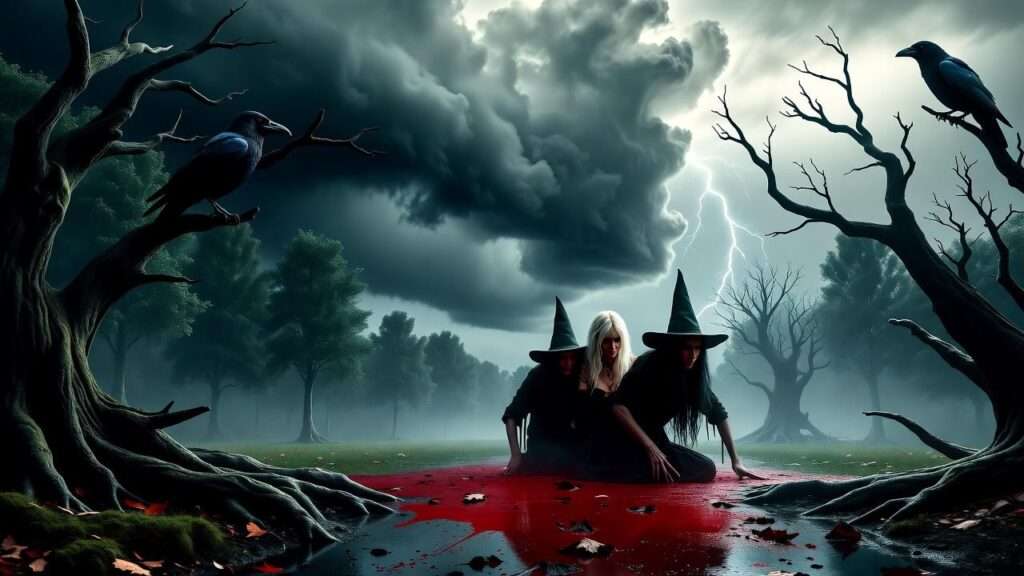
| The Three Witches | Sophie Hunter, Pollyanna McIntosh, Niamh McGrady | Reimagined as sinister, omnipresent military hospital nurses driving the narrative fate. |
| The Porter | Christopher Patrick Nolan | Eerie, comedic custodian guarding the gates of Macbeth’s underground bunker. |
| Fleance | Bertie Gilbert | Young son of Banquo who escapes the assassins to fulfill the witches’ prophecy. |
| Lennox | Mark Rawlings | Young noble who carefully navigates the dangerous politics of Macbeth’s court. |
| Ross | Tim Treloar | Nobleman who carries heavy tidings, including the massacre of Macduff’s family. |
| Seyton | Bill Nash | Macbeth’s unwavering, sinister chief attendant during his final stand. |
| Murderers | Michael Wiggins, Hywel John | Ruthless operatives hired by Macbeth to eliminate Banquo and Macduff’s household. |
Deep-Dive into the Lead Performances
The success of the 2010 film lies in its intimate, terrifying lead performances. Rather than leaning into medieval spectacle, Stewart and Fleetwood treat the verse with quiet, realistic terror that fits the cinematic close-ups of the underground bunker setting.
Sir Patrick Stewart as Macbeth: From Military Hero to Ruthless Dictator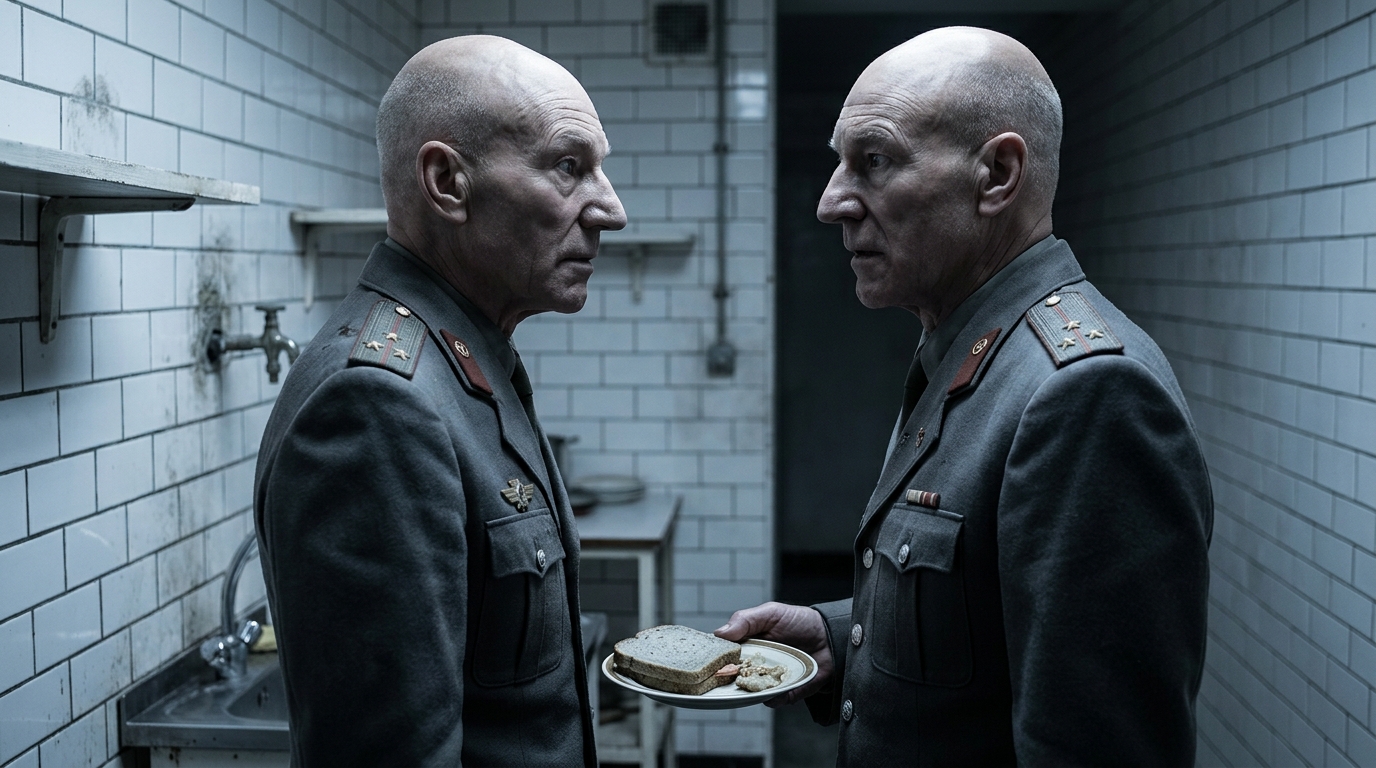
Sir Patrick Stewart’s portrayal of Macbeth stands out as one of the most compelling evaluations of absolute power in modern media. Having spent decades with the Royal Shakespeare Company, Stewart brings deep vocal authority to the role, yet his performance is marked by subtle, unsettling restraint.
In Goold’s adaptation, Stewart presents Macbeth not as a grand tragic warrior, but as an aging military commander consumed by paranoia. His transition from a decorated hero celebrating victory in a brutal war to an unhinged tyrant making a sandwich in a clinical kitchen while ordering political executions highlights the terrifying banality of evil. Stewart earned a Tony Award nomination for his stage run in this role, and his screen performance captures every nuance of Macbeth’s internal collapse:
-
The Visionary Horror: His rendering of the “Is this a dagger which I see before me” soliloquy takes place in dark, echoing corridors, treating the weapon as a psychological hallucination born of intense stress.
-
The Banquet Scene: During the royal feast where Banquo’s bloody ghost appears, Stewart eschews grand melodrama for frantic, breathless terror, physically throwing himself across tables to convey a mind snapping under guilt.
-
The Final Stand: Dressed in a stark military uniform inside his fortress, Stewart portrays Macbeth’s final hours with a quiet, nihilistic resignation, delivering “Tomorrow, and tomorrow, and tomorrow” with chilling emotional numbness.
Kate Fleetwood as Lady Macbeth: Cold Ambition and Descent into Horror
Kate Fleetwood’s Tony-nominated performance as Lady Macbeth provides a fierce, magnetic counterweight to Stewart. Dressed in sharp 1960s attire, Fleetwood plays Lady Macbeth with a calculating, sharp intellect that makes her manipulation of her husband deeply convincing.
Rather than portraying her as purely evil, Fleetwood explores the tragic human cost of unnatural ambition. Her chemistry with Stewart builds an intimate portrait of a childless couple using political conquest to fill a profound emotional void.
-
The Unsex Me Here Soliloquy: Filmed in stark, low-lit conditions, Fleetwood delivers this invocation not as a theatrical declaration, but as a desperate, dark pact made in the quiet corners of her home.
-
The Sleepwalking Scene (“Out, Damned Spot!”): One of the undisputed highlights of the 2010 production. Set in a clinical, tiled bathroom, Fleetwood’s raw, breathless panic conveys a physical manifestation of guilt that cannot be washed clean, creating an agonizing contrast to her earlier composure.
Supporting Cast: Allies, Rivals, and Victims
The strength of Rupert Goold’s Macbeth extends well beyond its leads. The supporting cast populates this totalitarian nightmare with believable, deeply human figures whose terror makes Macbeth’s tyranny feel immediate and dangerous.
Martin Turner as Banquo
Martin Turner plays Banquo as a pragmatic, deeply moral soldier. His camaraderie with Stewart’s Macbeth in early scenes establishes a genuine bond of brotherhood, making his ultimate betrayal all the more painful. Turner’s spectral return during the banquet scene—dripping with blood and silently confronting his murderer—serves as the emotional turning point of the entire film.
Michael Feast as Macduff
Michael Feast delivers a raw, deeply moving performance as Macduff, the Thane of Fife. Feast plays Macduff as an intuitive man of action who quickly senses the rot at the heart of Macbeth’s court. His reaction upon learning that his wife and children have been slaughtered (“All my pretty ones? Did you say all?”) is a masterclass in quiet, devastating grief, providing the moral catalyst for the final reckoning.
Scott Handy as Malcolm & Ben Carpenter as Donalbain
Scott Handy portrays Prince Malcolm as a cautious, highly intelligent young leader who learns quickly from his father’s murder. Instead of an inexperienced boy, Handy gives us a tactical thinker who tests Macduff’s loyalty before launching an invasion. Ben Carpenter’s Donalbain highlights the pervasive fear of the court, fleeing rapidly as suspicion spreads.
Suzanne Burden as Lady Macduff & Bertie Gilbert as Fleance
Suzanne Burden brings vulnerability and dignity to Lady Macduff. Her brief home scene offers a rare glimpse of domestic warmth before it is violently shattered by Macbeth’s death squads. Young Bertie Gilbert plays Fleance, Banquo’s son, whose narrow escape during the night ambush leaves the thread of prophecy hanging over Macbeth’s stolen crown.
How Rupert Goold’s Directorial Choices Reshaped the Cast
Rupert Goold’s direction does not merely present Shakespeare’s text; it actively uses casting, doubling, and set design to reframe how the characters interact.
The Three Witches as Hospital Nurses
Perhaps the most striking innovation in the 2010 production is the reinterpretation of the Three Witches (played by Sophie Hunter, Pollyanna McIntosh, and Niamh McGrady). Moving away from traditional hag tropes, Goold casts them as eerie, silent military hospital nurses who double as morgue attendants and cooks.
-
Omnipresence: They move through the background of major scenes, shifting body bags, serving food, or tending to wounded soldiers.
-
Psychological Impact: By making the Witches part of the everyday infrastructure of war, Goold suggests that evil is not an external magical force, but an internal infection woven into the fabric of a decaying society.
[ Traditional Witches ] ---> [ Supernatural Magic & External Fate ]
[ Goold's Nurse-Witches ] ---> [ Institutional Decay & Psychological Terror ]
Dual Roles and Symbolic Doubling
A fascinating element of this adaptation is the deliberate double-casting of key roles, a technique rooted in classical theatre that serves a powerful thematic purpose on screen:
-
Paul Shelley as King Duncan and the Doctor: Paul Shelley first appears as the regal, elderly King Duncan whose murder initiates the bloody tragedy. Later in the film, Shelley reappears as the Doctor attending to Lady Macbeth’s mental collapse. This intentional doubling creates a haunting psychological link: the face of the murdered king returns to oversee the madness of the queen who helped plot his death.
Production Concept & Setting: The Underground Labyrinth
The atmospheric weight of the 2010 adaptation stems from its unique filming location. shot primarily in the subterranean tunnels of Welbeck Abbey in Nottinghamshire, England, the production forces the cast into tight, damp, brick-lined corridors.
This environment directly influenced the actors’ choices:
-
Claustrophobic Realism: Patrick Stewart and Kate Fleetwood frequently deliver soliloquies in narrow hallways, converting soliloquies into hushed, desperate whispers rather than projected stage speeches.
-
Cold War Aesthetic: The presence of vintage elevators, manual typewriters, meat lockers, and harsh incandescent lighting transforms the traditional Scottish castles of Inverness and Dunsinane into an inescapable, militarized underground bunker.
Audience & Student Study Guide
For students and educators analyzing this adaptation alongside the text, understanding how Goold’s casting choices alter character dynamics provides valuable critical insight.
How the 2010 Cast Compares to Other Film Adaptations
| Production | Macbeth | Lady Macbeth | Setting / Era | Key Directorial Choice |
| Rupert Goold (2010) | Patrick Stewart | Kate Fleetwood | 1960s Totalitarian State | Witches as hospital nurses; subterranean horror tone. |
| Roman Polanski (1971) | Jon Finch | Francesca Annis | 11th-Century Scotland | Gritty, visceral medieval realism post-Manson murders. |
| Justin Kurzel (2015) | Michael Fassbender | Marion Cotillard | Medieval Scottish Highlands | Visually poetic, grief-driven narrative focusing on lost children. |
| Joel Coen (2021) | Denzel Washington | Frances McDormand | Expressionist Stage-Style | Stark, black-and-white minimalist German Expressionism. |
Key Soliloquies & Scene Timestamps (2010 Film)
When referencing the 2010 television film for analytical essays or classroom presentations, use these key performance markers:
-
“Unsex me here” (Act 1, Scene 5): ~18:15 — Kate Fleetwood delivers this monologue in a dimly lit pantry, establishing her cold resolve.
-
“Is this a dagger which I see before me” (Act 2, Scene 1): ~32:40 — Patrick Stewart wanders through shadowed brick arches, hallucinating a bayonet-like blade.
-
The Banquet & Banquo’s Ghost (Act 3, Scene 4): ~1:08:30 — A masterclass in horror staging as Martin Turner’s bloodied specter confronts a unraveling Stewart.
-
“Out, damned spot!” (Act 5, Scene 1): ~1:42:10 — Set in a sterile tiled washroom, Fleetwood’s panicked scrub down illustrates her irreversible psychological fracture.
-
“Tomorrow, and tomorrow, and tomorrow” (Act 5, Scene 5): ~1:58:00 — Stewart sits quietly in his underground quarters, delivering a flat, numb contemplation of mortality.
Frequently Asked Questions About the Macbeth 2010 Cast
Who played Macbeth in the 2010 film version?
Sir Patrick Stewart played Macbeth. His acclaimed performance earned him a Tony Award nomination during the stage production’s Broadway run before it was filmed for television by the BBC and PBS.
Who played Lady Macbeth opposite Patrick Stewart?
Kate Fleetwood played Lady Macbeth. Her chilling, intense portrayal earned critical praise and a Tony Award nomination for Best Actress in a Play.
Why are the Three Witches dressed as nurses in the 2010 adaptation?
Director Rupert Goold reimagined the Witches as military hospital nurses to ground them in the film’s 20th-century warfare aesthetic. This creative choice frames the Witches as internal, institutional presences during times of war rather than external fairy-tale figures.
Is the 2010 Macbeth film faithful to Shakespeare’s text?
Yes. While the setting is modernized to a mid-20th-century Eastern Bloc style and minor edits were made for pacing, the production uses Shakespeare’s original Early Modern English dialogue without modern translation.
Where was Rupert Goold’s Macbeth filmed?
The production was filmed inside the underground tunnels and service passages of Welbeck Abbey in Nottinghamshire, England, giving the setting its distinctive, claustrophobic atmosphere.