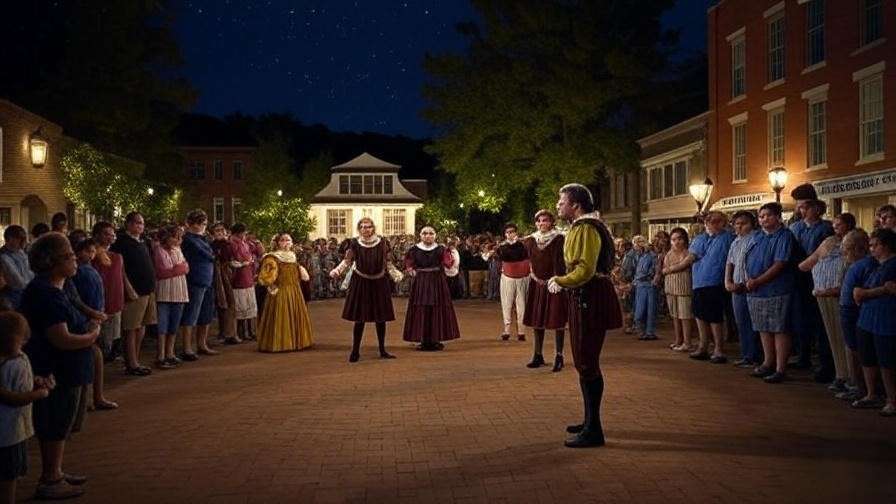
We live in a world obsessed with soundbites, status updates, and fleeting digital ephemera, yet four centuries after its composition, a single tragedy by William Shakespeare continues to command our cultural vocabulary. When people search for a memorable hamlet quote, they are rarely looking for mere decoration; they are hunting for a mirror. Shakespeare’s longest play is a psychological labyrinth filled with grief, betrayal, political corruption, and the terrifying weight of human consciousness.
Deciphering Elizabethan verse can feel like reading a foreign language. The archaic pronouns, inverted syntax, and layered metaphors often obscure the sheer visceral power of the writing. This comprehensive guide moves past dry academic abstraction to examine 10 profound Hamlet quotes, breaking down their original theatrical context, linguistic mechanics, and the tangible life lessons they offer today.
1. “To be, or not to be, that is the question” (Act 3, Scene 1)
Context and Setting
Hamlet stands in a drafty stone corridor of Elsinore Castle, ostensibly waiting for Ophelia. Unbeknownst to him, King Claudius and Polonius are hiding behind an arras, spying on the encounter. Hamlet is isolated, profoundly depressed following his father’s murder, and grappling with the unbearable suffering of a corrupt world.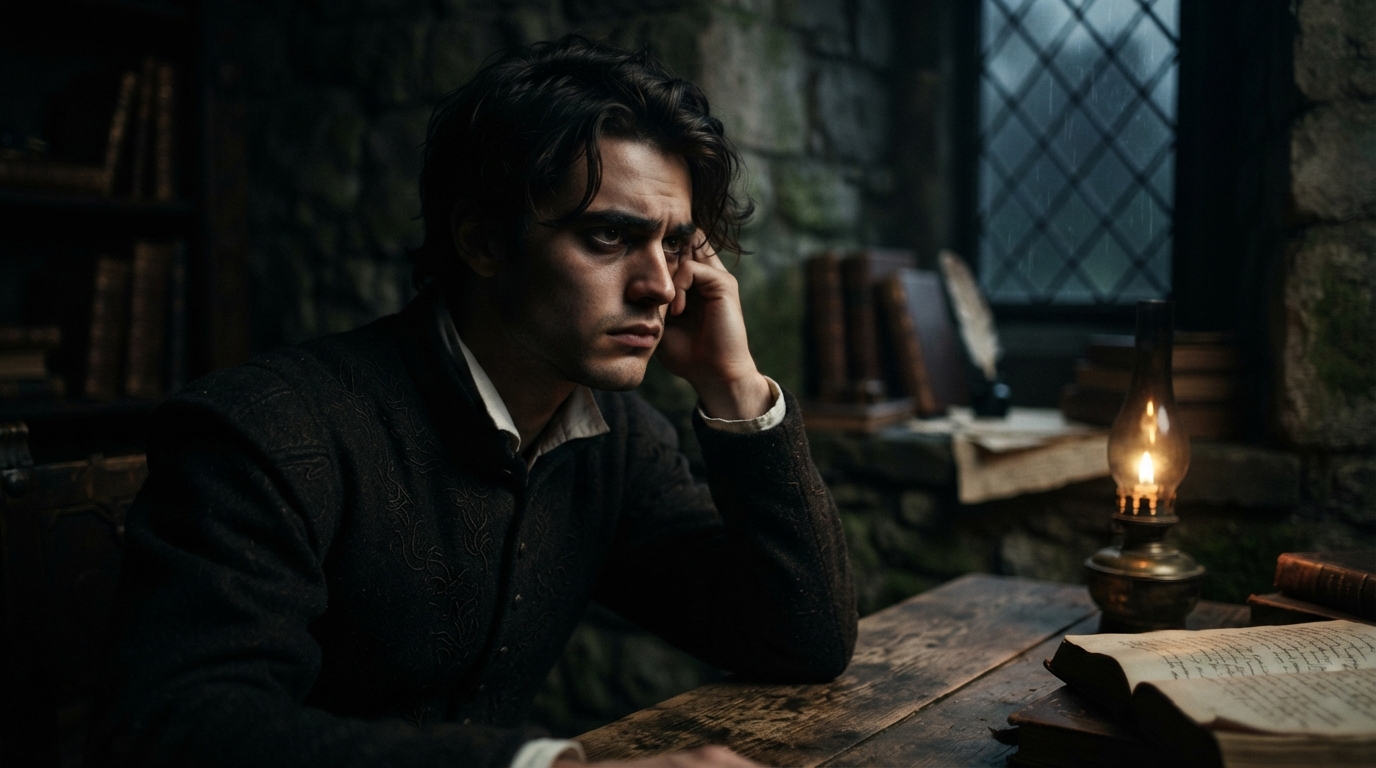
Linguistic and Thematic Breakdown
This soliloquy is a masterclass in antithesis. Hamlet weighs two distinct forms of suffering: passive endurance (“Whether ’tis nobler in the mind to suffer / The slings and arrows of outrageous fortune”) versus active resistance (“Or to take arms against a sea of troubles, / And by opposing end them”). The phrase “to be” encompasses existence, action, and consciousness, while “not to be” signifies cessation, oblivion, and death. The hesitation that follows—”For in that sleep of death what dreams may come”—reveals that fear of the unknown afterlife is the ultimate deterrent against suicide.
Modern Life Application
Far from being a cliché, this line remains the ultimate meditation on clinical depression, burnout, and existential decision-making. It addresses the universal human threshold where the pain of continuing a struggle outweighs the terrifying uncertainty of change. It reminds us that questioning one’s place in the universe is not a sign of weakness, but the heavy tax of self-awareness.
2. “Though this be madness, yet there is method in ‘t” (Act 2, Scene 2)
Context and Setting
Lord Polonius has cornered Hamlet in the castle lobby to interrogate him about his erratic behavior. Hamlet, employing his “antic disposition” (feigned madness), verbally dances rings around the pompous counselor, dropping biting insults disguised as nonsensical wordplay. Polonius steps back, aside from the conversation, utterly bewildered yet sensing a terrifying intelligence beneath the chaos.
Linguistic and Thematic Breakdown
The word “method” in Renaissance English implied a systematic, logical approach. Polonius recognizes that Hamlet’s erratic exterior follows a precise, albeit hidden, architecture. Shakespeare uses this dynamic to explore the thin, permeable membrane separating true psychological breakdown from strategic subversion. Hamlet acts insane precisely because an open declaration of political rebellion would mean immediate execution by Claudius; madness serves as armor.
Modern Life Application
In professional and creative spaces, this quote captures the essence of calculated disruption. True innovation often looks chaotic to traditionalists. When individuals break conventional rules to solve complex problems, institutional gatekeepers frequently label the approach “madness” before realizing there is a disciplined, highly effective method driving the results.
3. “Brevity is the soul of wit” (Act 2, Scene 2)
Context and Setting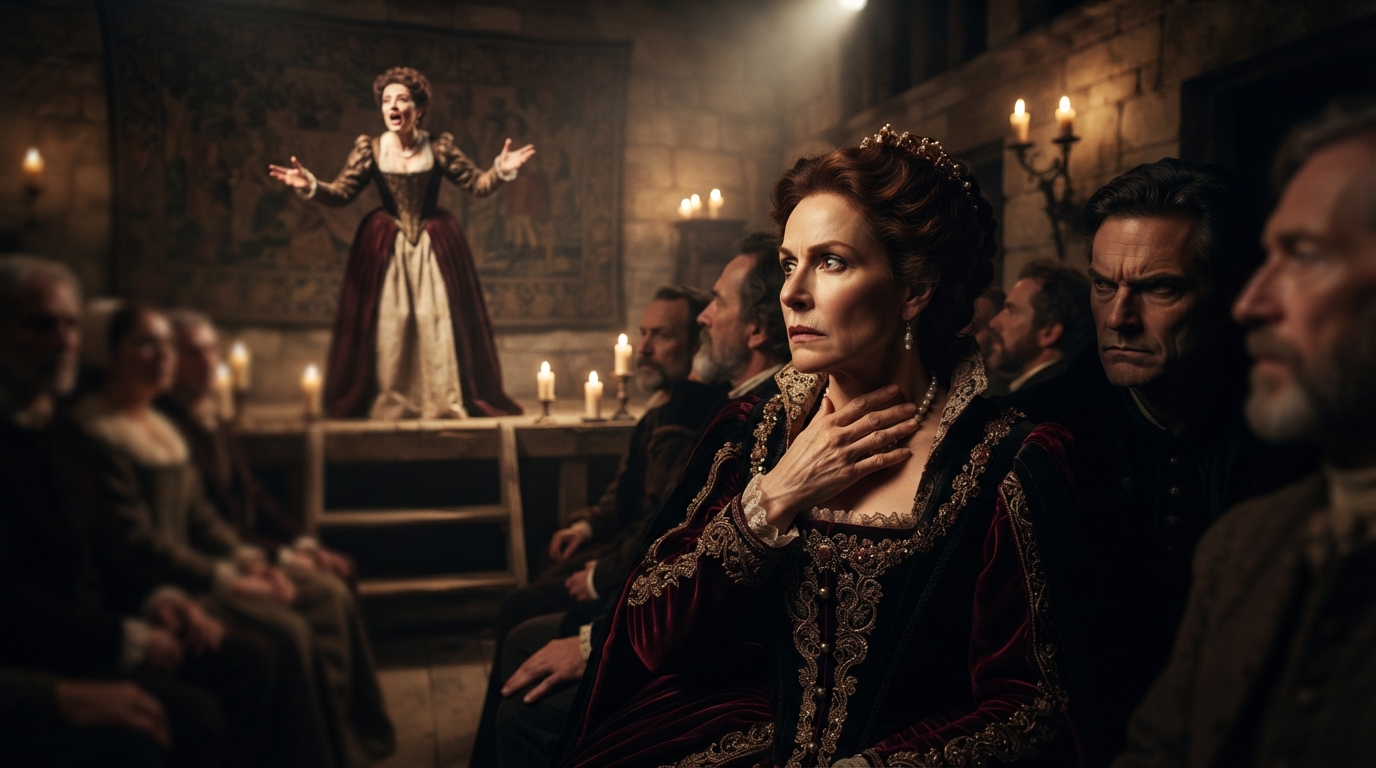
Polonius—a man renowned for his staggering verbosity—proclaims this maxim to King Claudius and Queen Gertrude as he launches into a convoluted, windy explanation regarding the root cause of Hamlet’s apparent insanity.
Linguistic and Thematic Breakdown
The supreme irony of this line lies entirely in its speaker. Polonius takes three minutes of stage time and dozens of filler words just to state that he is going to be concise. In Elizabethan terms, “wit” meant wisdom, intelligence, and understanding, rather than merely making people laugh. The line suggests that true intellectual depth requires the discipline of distillation.
Modern Life Application
In our hyper-connected era of information overload, this remains a vital professional guiding principle. Whether you are drafting an executive summary, pitching a venture capitalist, or writing code, the ability to strip away clutter and communicate complex ideas concisely is the ultimate marker of mastery.
4. “There are more things in heaven and earth, Horatio, than are dreamt of in your philosophy” (Act 1, Scene 5)
Context and Setting
Immediately following his harrowing nocturnal encounter with the Ghost of King Hamlet, a trembling Hamlet swears his university friend Horatio to absolute secrecy. Horatio, grounded in empirical logic and the rationalist philosophy of their shared school in Wittenberg, struggles to process the supernatural manifestation.
Linguistic and Thematic Breakdown
Hamlet challenges the intellectual arrogance of institutional academia. The word “philosophy” here refers to natural philosophy—what we now call science. Hamlet gently upbraids Horatio for assuming that human reason and current knowledge encompass the entire scope of reality.
Modern Life Application
This quote is an antidote to dogmatic scientism and close-mindedness. It encourages intellectual humility, reminding us that every generation discovers phenomena that previous eras deemed impossible. Maintaining an open mind toward unexplained psychological, physical, or cosmic realities is essential for personal growth.
5. “Doubt thou the stars are fire; Doubt that the sun doth move; Doubt truth to be a liar; But never doubt I love” (Act 2, Scene 2)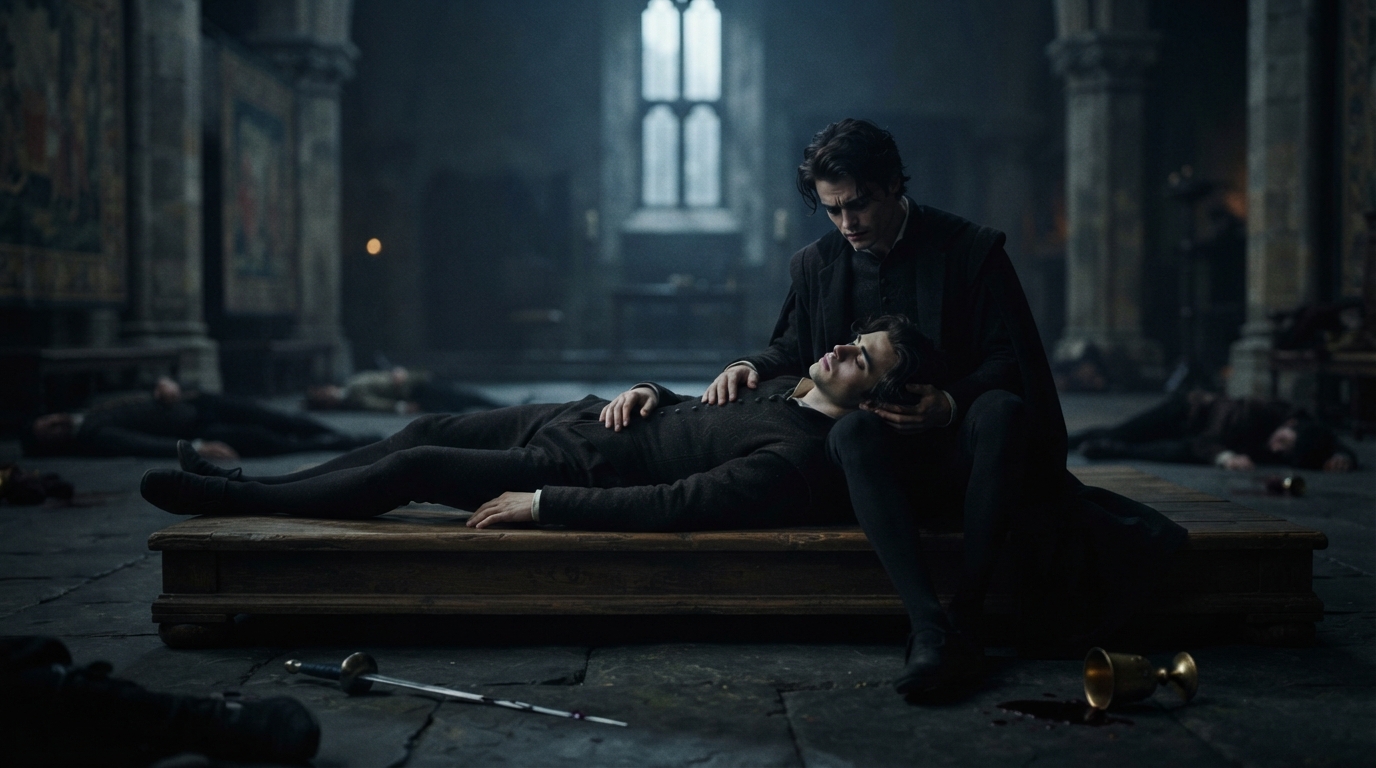
Context and Setting
Polonius stands before the royal court, dramatically reading aloud a love letter that Hamlet previously wrote to Ophelia. Polonius presents it as proof that Hamlet has gone mad from unrequited romantic obsession.
Linguistic and Thematic Breakdown
This excerpt showcases Elizabethan hyperbolic poetry. Hamlet uses cosmic constants—burning stars, the movement of the sun, and the very nature of truth—as benchmarks of certainty, only to place his love for Ophelia above them all. Ironically, contemporary audiences know the heliocentric model means the sun does not move in the way Renaissance physics assumed, lending a tragic, unstable irony to the vows.
Modern Life Application
The lines highlight the vulnerability inherent in romantic expression. When we articulate deep affection, we often rely on absolute language. It serves as a reminder of how human beings use grand romantic gestures to anchor themselves amidst turbulent emotional environments.
6. “The lady doth protest too much, methinks” (Act 3, Scene 2)
Context and Setting
The royal court is gathered to watch “The Mousetrap,” a play-within-a-play staged by visiting actors to mirror King Claudius’s suspected fratricide. On stage, the Player Queen dramatically vows eternal fidelity to her husband, swearing she will never remarry if he dies. Queen Gertrude, watching from the audience, delivers this famous critique.
Linguistic and Thematic Breakdown
In modern parlance, “protest” means to object or complain. In Elizabethan English, however, to “protest” meant to vow, promise, or make a solemn declaration. Gertrude isn’t saying the character is complaining too much; she is observing that the character’s excessive, performative vows of loyalty ring hollow and suspicious. Gertrude, who hurriedly married her dead husband’s brother, feels defensive because her own conscience is pricked.
Modern Life Application
This quote remains the quintessential psychological diagnostic for overcompensation. When individuals make excessive, unsolicited declarations of innocence, loyalty, or moral purity, it frequently signals deep-seated insecurity, guilt, or hidden hypocrisy.
7. “What a piece of work is a man!” (Act 2, Scene 2)
Context and Setting
Hamlet is speaking with Rosencrantz and Guildenstern, his former university companions who have been sent by the King and Queen to spy on him. Stripped of his illusions about human nobility, Hamlet delivers a sweeping meditation on human potential contrasted against his own stagnant inaction.
Linguistic and Thematic Breakdown
This passage is the ultimate literary expression of Renaissance humanism. Hamlet marvels at humanity’s capacity for reason, infinite faculty, and physical grace, comparing man to angels and gods. Yet, in the very same breath, he subverts his own praise by adding: “And yet, to me, what is this quintessence of dust? Man delights not me—no, nor woman neither.” It is a stunning oscillation between existential awe and crushing misanthropy.
Modern Life Application
The monologue reflects the dual nature of modern existence. Humanity can build global digital networks, map the human genome, and create breathtaking art, yet simultaneously engage in systemic cruelty and ecological destruction. It captures the bittersweet realization of being conscious creatures trapped in fragile, mortal bodies.
8. “Conscience does make cowards of us all” (Act 3, Scene 1)
Context and Setting
Toward the end of his famous soliloquy, Hamlet realizes that the human capacity for moral reflection acts as a psychological brake on impulsive action.
Linguistic and Thematic Breakdown
In this context, “conscience” does not simply mean moral guilt; it means deep consciousness, reflection, and intellectual forethought. Hamlet argues that when we stop to think about the long-term consequences of our actions—anticipating failure, punishment, or moral fallout—our native hue of resolution gets “sicklied o’er with the pale cast of thought.” Overthinking paralyzes execution.
Modern Life Application
This is the psychological blueprint for analysis paralysis. Many modern professionals and creators fail to launch projects, have difficult conversations, or take calculated risks not out of laziness, but because their internal risk-assessment framework overcomplicates the outcome.
9. “Rich gifts wax poor when givers prove unkind” (Act 3, Scene 1)
Context and Setting
Ophelia approaches Hamlet in the hall, attempting to return love tokens and letters he previously gave her. Realizing she is being used as bait by her father and the King, Hamlet turns cold and hostile, prompting Ophelia to deliver this heartbreaking line.
Linguistic and Thematic Breakdown
The word “wax” means to grow or increase, creating a poignant linguistic paradox: material wealth or romantic tokens lose all intrinsic value the moment the character of the giver is revealed to be malicious or deceitful. The external object cannot outshine the internal toxicity of the betrayal.
Modern Life Application
This captures the emotional mechanics of heartbreak and betrayal. Expensive gifts, sentimental memorabilia, and shared memories lose their luster the moment trust is shattered. It serves as a stark reminder that human kindness and integrity outweigh material gestures in any relationship.
10. “The rest is silence” (Act 5, Scene 2)
Context and Setting
The tragedy reaches its bloody climax. The poisoned rapier wounds and tainted wine have claimed the lives of Queen Gertrude, King Claudius, and Laertes. As poison overtakes Hamlet’s veins, he stops his loyal friend Horatio from committing suicide, urging him to live and tell his story, before breathing his last words.
Linguistic and Thematic Breakdown
For a play characterized by verbal gymnastics, philosophical debate, theatrical performance, and political posturing, this final phrase is an absolute surrender to reality. Hamlet, who spent five acts manipulating language, staging plays, and debating existence, acknowledges that death strips away all human artifice. The noise of court intrigue, grief, and revenge dissolves into absolute stillness.
Modern Life Application
As a meditation on mortality, this line reminds us that life’s noise eventually yields to quiet. It encourages us to worry less about public performance, petty conflicts, and external validation, focusing instead on living authentically before our own final curtain falls.
Mastering the Bard: Expert Insights and Historical Context
Performing Hamlet on Stage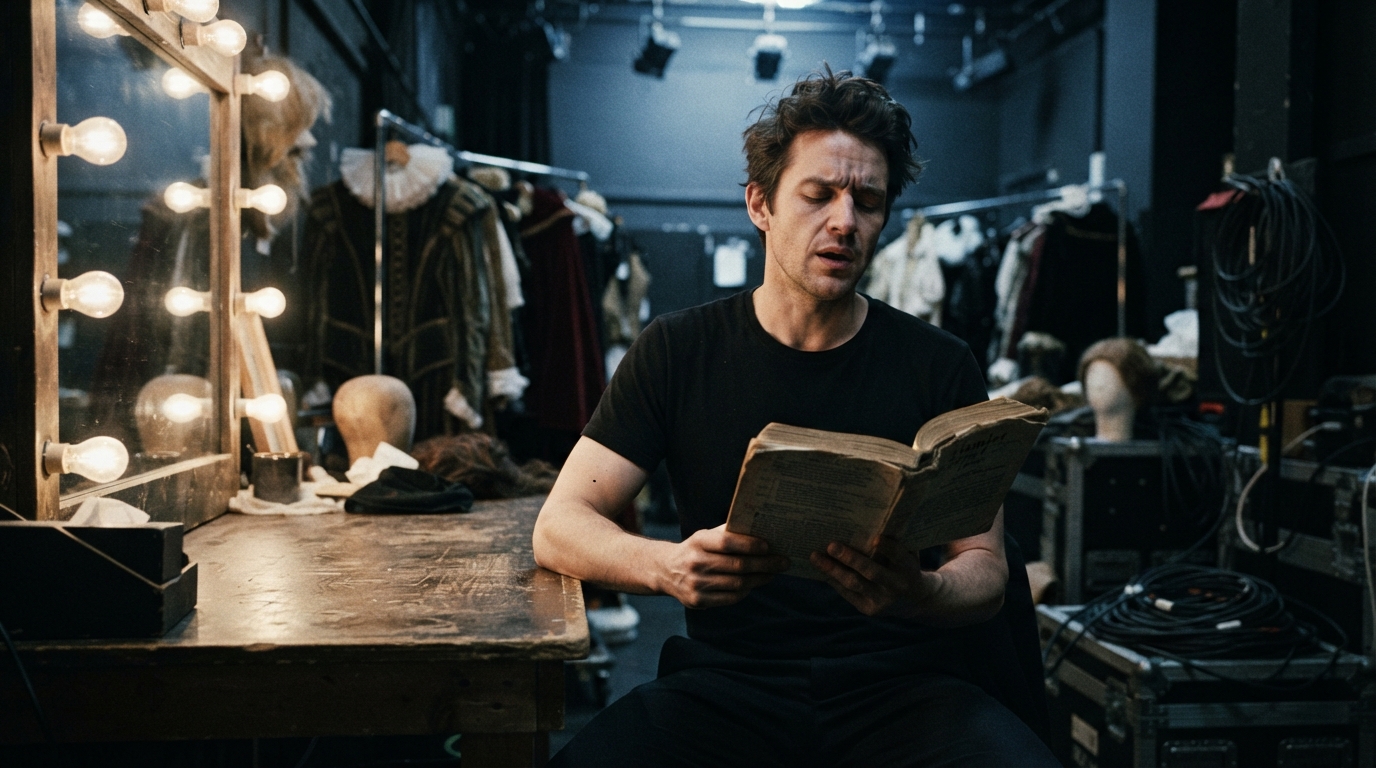
Professional theater directors and classical actors approach these famous lines not as static museum pieces, but as active weapons of psychological warfare. Vocal cadence, subtext, and physical blocking entirely alter the meaning of a passage. For instance, delivering “To be, or not to be” as a quiet internal meditation yields an entirely different emotional resonance than treating it as an aggressive, outward confrontation with fate. Actors must navigate the iambic pentameter rhythm—unstressed followed by stressed syllables ($da\text{-}\text{DUM}, da\text{-}\text{DUM}$)—which mimics the natural heartbeat of human anxiety.
Textual Variations: Quarto vs. Folio
Scholars studying Hamlet must contend with three distinct early texts: the First Quarto (1603), the Second Quarto (1604), and the First Folio (1623). The First Quarto is often termed a “bad quarto” because it appears to be a memorial reconstruction by actors who forgot lines, yet it offers fascinating clues into early performance practices. Comparing the Second Quarto’s sprawling philosophical depth with the tighter theatrical cuts in the First Folio reveals how Shakespeare himself refined his exploration of human consciousness throughout his career.
Frequently Asked Questions
What is the most famous quote in Hamlet?
Undoubtedly, “To be, or not to be, that is the question” (Act 3, Scene 1) remains the most recognizable line in English literature. Its cultural footprint spans centuries, serving as the ultimate literary shorthand for existential crisis and human introspection.
Why are Hamlet quotes so difficult to interpret?
Shakespeare wrote in Elizabethan English, utilizing dense metaphors, double meanings, and historical idioms that differ significantly from modern syntax. Furthermore, characters like Hamlet frequently use irony, feigned madness, and rhetorical ambiguity, forcing readers to look beneath the surface text to find the true intent.
How does Shakespeare use prose vs. verse for Hamlet’s character?
Shakespeare strategically shifts Hamlet’s speech patterns to reflect his psychological state. When Hamlet speaks in formal blank verse (unrhymed iambic pentameter), he is composed, regal, and philosophically focused. When he adopts prose, it signals social degradation, feigned madness, emotional instability, or informal intimacy with commoners and actors.
The Evolution of Hamlet’s Melancholy: A Deeper Psychoanalytical and Historical Examination
To truly understand why a quintessential hamlet quote resonates so deeply across generations, we must look beyond isolated snippets and examine the architectural design of Shakespeare’s greatest tragedy. Written around 1600–1602, Hamlet captures a profound cultural anxiety at the turn of the seventeenth century. The Elizabethan era was giving way to the Jacobean era, marked by political uncertainty over Queen Elizabeth’s aging succession, shifting religious paradigms, and the collision between medieval scholasticism and nascent scientific rationalism.
In this environment, Hamlet emerges not merely as a dramatic character, but as the archetype of modern human consciousness. He is a university student from Wittenberg—the very crucible of the Protestant Reformation—suddenly thrust into the bloody, archaic blood-feud mechanics of a corrupt Danish court.
The Architecture of Grief: Melancholy vs. Clinical Depression
In Renaissance medical theory, melancholy was categorized into distinct types, famously cataloghed decades later by Robert Burton in The Anatomy of Melancholy. However, Shakespeare anticipated these clinical observations with startling accuracy. Hamlet’s grief over his father’s unnatural death is compounded by his mother’s hasty, incestuous marriage to Claudius.
When Hamlet declares in Act 1, Scene 2, that “all the uses of this world / Are weary, stale, flat and unprofitable,” he is describing anhedonia—the inability to feel pleasure—which is a primary symptom of modern clinical depression. Unlike classical revenge heroes who plunge directly into bloodshed (like Laertes or Pyrrhus), Hamlet pauses. That pause is the birth of psychological interiority in Western drama. Every major quote he utters is an attempt to map the terrain of his own unraveling mind.
Rhetorical Mastery: How Shakespeare Weaponizes Language
Shakespeare utilizes several distinct rhetorical devices to give Hamlet’s quotes their enduring emotional and mnemonic power:
-
Hendiadys: The expression of a single idea by two independent words connected by “and” (e.g., “in my mind’s eye”). This stylistic choice creates a sense of duplication and psychological doubling.
-
Stichomythia: Rapid-fire, alternating line dialogue (frequently seen in Hamlet’s confrontations with Gertrude and Polonius) that mimics verbal fencing, showcasing intellectual agility under pressure.
-
Paronomasia: Puns and wordplay that reveal the fracturing of meaning. Even in his deepest despair, Hamlet’s mind operates on multiple linguistic levels at once (“A little more than kin, and less than kind”).
Advanced Frequently Asked Questions (FAQ)
How does Hamlet’s view of women evolve throughout the play? Hamlet’s relationship with Gertrude and Ophelia undergoes a corrosive transformation driven by his mother’s betrayal. Initially viewing women through the Elizabethan lens of courtly devotion, his worldview shatters when Gertrude marries Claudius. This projection of guilt leads to his harsh misogynistic outburst, “Get thee to a nunnery,” where he views all women as deceitful purveyors of artifice and original sin.
Is Hamlet actually mad, or is it entirely an act? Literary critics and psychiatrists have debated this for centuries. Shakespeare presents Hamlet as adopting an “antic disposition” as a tactical shield. However, the immense stress of grief, isolation, and moral duty pushes Hamlet to the precipice of genuine psychological trauma, blurring the boundary between performance and reality.
What role does the Ghost play in driving Hamlet’s psychological crisis? The Ghost of King Hamlet acts as a catalyst that disrupts the natural and political order. By demanding revenge—an act that violates both Christian ethics and state law—the Ghost forces Hamlet into an impossible ethical dilemma, pitting filial piety against spiritual damnation.
The Timeless Mirror of Elsinore
The enduring power of any memorable hamlet quote lies in its refusal to offer easy answers. Shakespeare did not write propaganda or moral fables; he constructed complex, contradictory human beings grappling with the same fundamental terrors that haunt us today: mortality, betrayal, the burden of consciousness, and the search for meaning in a chaotic universe. Four hundred years later, when we quote Hamlet, we are speaking the universal language of the human condition.