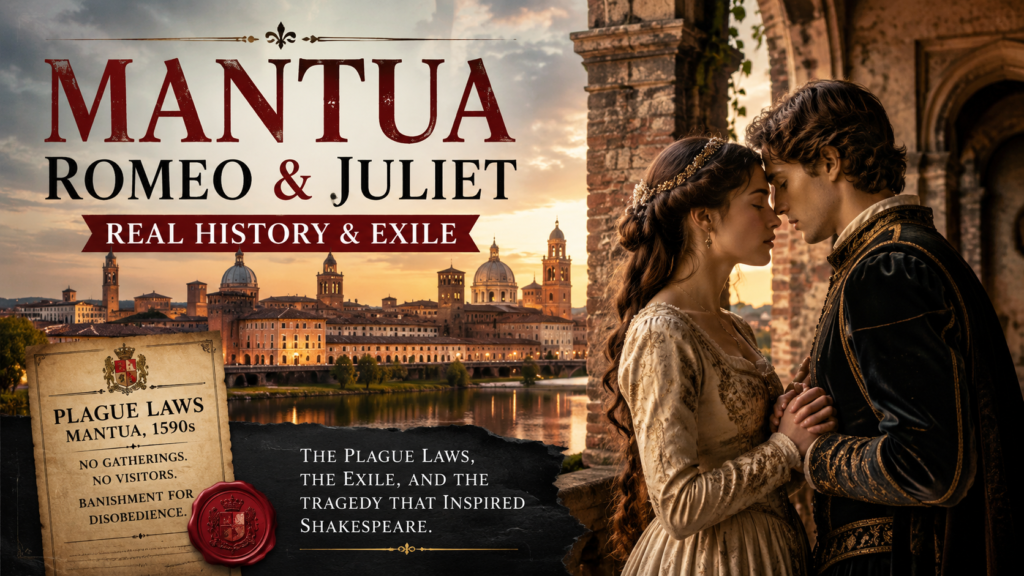
When we think of William Shakespeare’s Romeo and Juliet, our minds instantly conjure the sun-drenched, blood-soaked streets of Verona, the clandestine balcony trysts, and the heartbreaking finality of the Capulet family tomb. Yet, the emotional and narrative fulcrum of the entire second half of the play hinges on a sudden, wrenching geographical shift: mantua romeo and juliet. Banished by Prince Escalus for slaying Tybalt, Romeo is forced to leave his newlywed bride behind and take refuge in a neighboring Italian city-state.
Far from being a mere map coordinate or a convenient plot device to separate the lovers, Mantua is a loaded literary, political, and historical symbol. Why did Shakespeare choose Mantua out of all the Renaissance city-states available in contemporary Italian novellas? What did this specific location signify to an Elizabethan audience living in the shadow of plague and political exile?
In this comprehensive examination, we will peel back the layers of Shakespearean geography, source material, and Renaissance history to reveal how Mantua acts not just as a place of banishment, but as an active agent of doom that seals the fate of star-crossed lovers.
Geopolitical Realities: What Was Mantua in Shakespeare’s Time?
To fully grasp why Romeo’s exile to Mantua carries such profound weight, we must first understand what Mantua represented in the late 16th-century European imagination. Located roughly 35 miles northwest of Verona in the Po Valley, Mantua was far from a lawless frontier town; it was a prestigious, highly cultured Renaissance court ruled by the illustrious House of Gonzaga.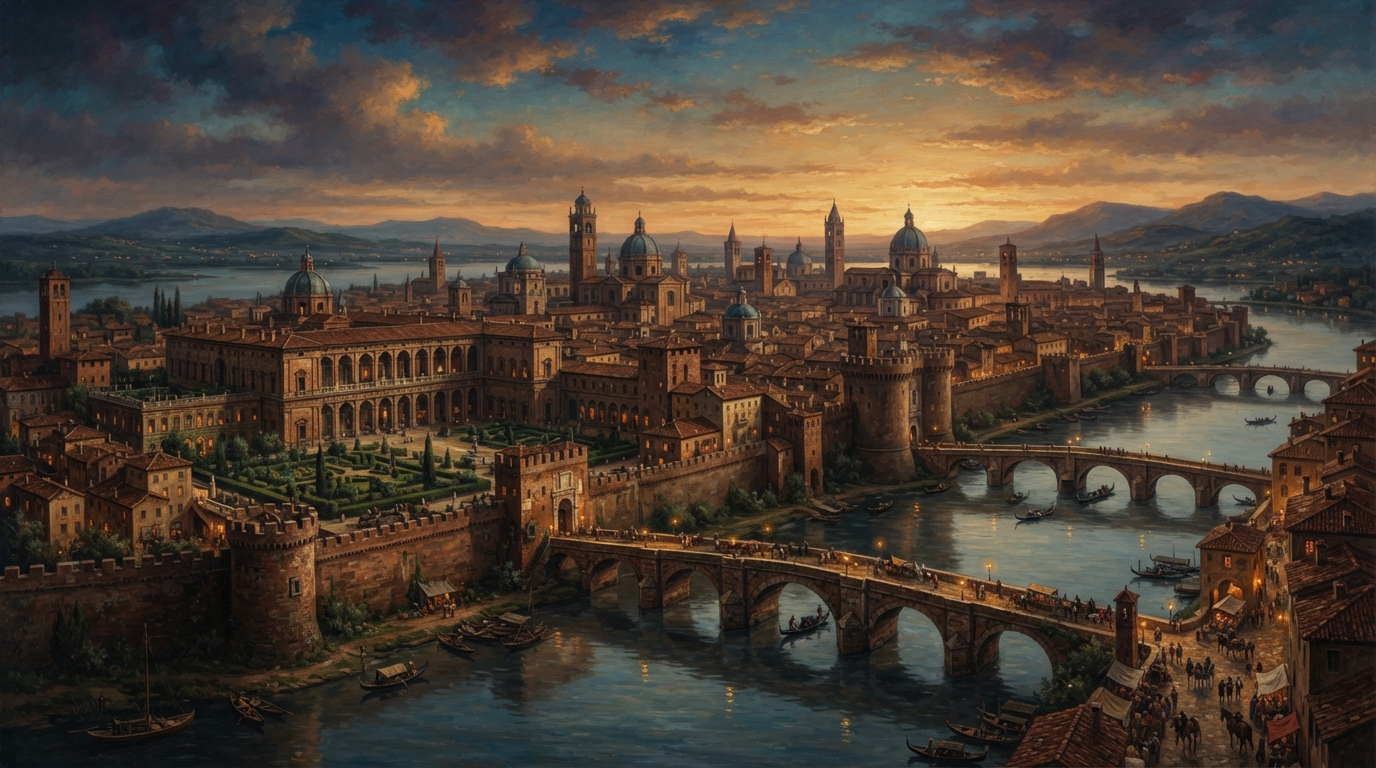
The Court of the Gonzagas
During the Renaissance, Mantua was renowned across Europe as a powerhouse of art, music, and architecture. Under the patronage of the Gonzaga family, masters like Andrea Mantegna and Giulio Romano transformed the city into a marvel of Mannerist design, highlighted by the magnificent Palazzo Te. For an Elizabethan theatergoer—who would likely never leave England, let alone visit Italy—Mantua was synonymous with Italian luxury, courtly intrigue, and exotic sophistication.
However, this sophisticated facade masked a harsh geopolitical reality. Verona and Mantua belonged to different spheres of influence within northern Italy. Verona was a key mainland territory under the strict, powerful control of the Republic of Venice, while Mantua was an independent duchy. Crossing from Verona to Mantua meant stepping outside the immediate jurisdiction of Prince Escalus, but it also meant entering a foreign territory where Romeo was utterly stripped of his social safety net, family protection, and local status.
The Geography of Isolation
In an era without instant communication, railways, or modern highways, a 35-mile journey on horseback or on foot was a daunting barrier. More importantly, the geopolitical boundaries between Venetian Verona and the Mantuan duchy represented an insurmountable chasm for young lovers. For Juliet, left behind in Verona, Mantua was practically the end of the earth—a place of absolute silence where letters could be delayed, messengers could be intercepted, and isolation could breed fatal misunderstandings.
Literary Roots: Tracing Mantua from Arthur Brooke to Shakespeare
Shakespeare did not invent the exile to Mantua; rather, he inherited it from a well-established literary tradition of Italian novellas that had captured the Elizabethan imagination.
The Source Material: Arthur Brooke and Matteo Bandello
The direct narrative blueprint for Shakespeare’s play was Arthur Brooke’s lengthy 1562 narrative poem, The Tragical History of Romeus and Juliet, which in turn derived from Matteo Bandello’s Italian novella and Luigi Da Porto’s earlier versions. In these source texts, Mantua is consistently featured as the destination of refuge.
However, where Brooke’s poem spans months of lingering exile, allowing Romeus to find relative stability and even temporary consolation in Mantua, Shakespeare dramatically compresses the timeline. By accelerating the sequence of events, Shakespeare turns Mantua from a place of refuge into a pressure cooker. Romeo barely has time to settle into his lodgings before the devastating news of Juliet’s “death” reaches him, transforming Mantua from a safe haven into a crucible of despair.
The Motif of Exile in Elizabethan Drama
To an Elizabethan audience, banishment was viewed as a fate worse than death. In Renaissance England, an individual’s identity, honor, and legal protection were entirely bound up in their community, family, and social rank. To be cast out—to become an exul—was to be stripped of civil rights, social standing, and emotional support.
When Romeo laments that banishment is “more honor wall’d, more exile than death: / Do not say banishment,” Shakespeare is tapping into deep-seated contemporary anxieties about political banishment and displacement. Mantua represents this living death: a place where Romeo is physically alive, yet socially and spiritually obliterated.
The Mantuan Apothecary: Poverty, Law, and Fatal Choices (Act V, Scene 1)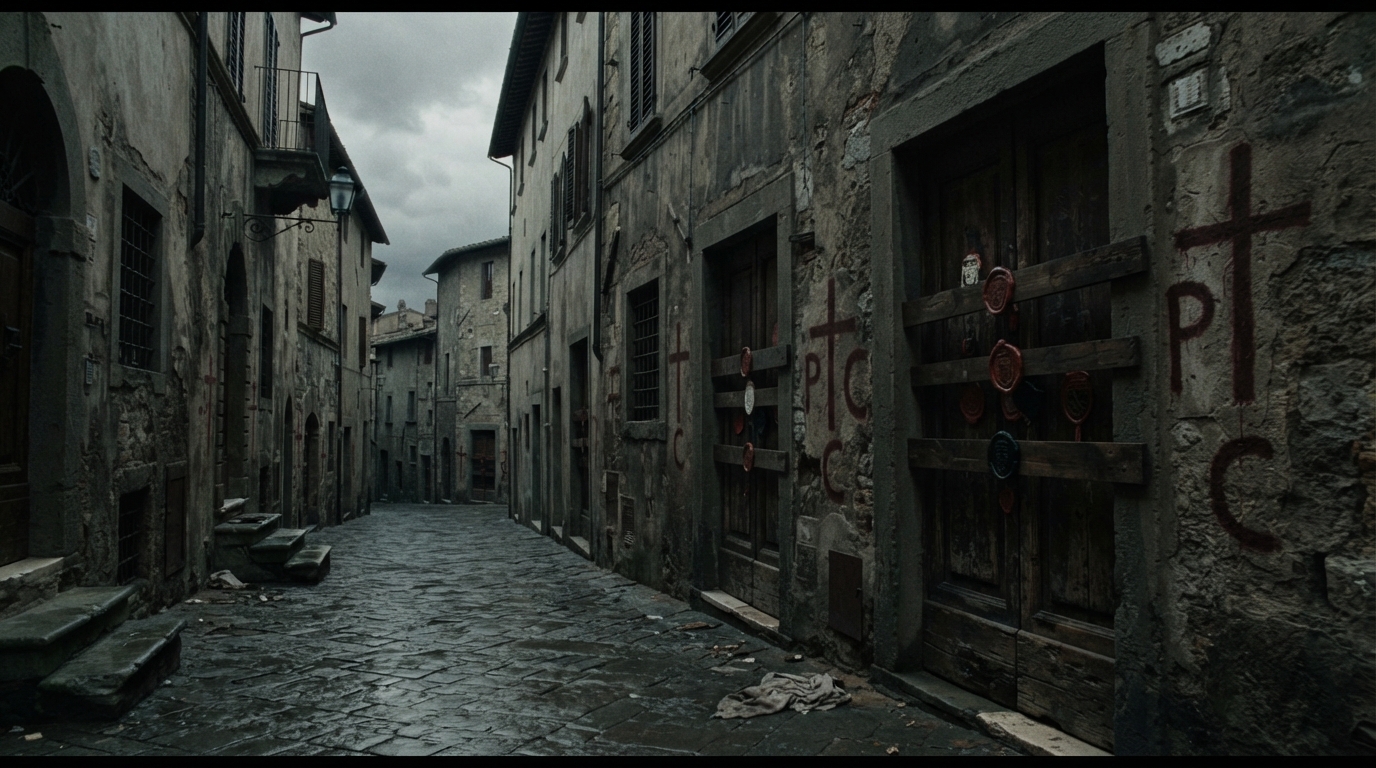
One of the most memorable and atmospheric sequences in the entire play takes place in Mantua, specifically within the bleak, impoverished confines of an apothecary’s shop (Act V, Scene 1). This scene serves as a brilliant counterpoint to the wealthy opulence associated with the Gonzaga court.
+-------------------------------------------------------------------------+
|                  VERONA vs. MANTUA: A THEMATIC CONTRAST                 |
+-------------------+-----------------------------------------------------+
| VERONA            | Public honor, feuding families, masked balls,       |
|                   | passionate love, and societal structure.            |
+-------------------+-----------------------------------------------------+
| MANTUA            | Desolation, strict poison laws, economic poverty,   |
|                   | and transactional desperation.                      |
+-------------------+-----------------------------------------------------+
The Seedy Underside of a Renaissance City
When Romeo enters the apothecary, Shakespeare exposes the gritty, unglamorous economic reality beneath the glittering surface of Italian city-states. The apothecary’s shop is famously described as a place of desperate want:
“And in his needy shop a tortoise hung, / An alligator stuff’ud, and other skins / Of ill-shaped fishes; and about his shelves / A beggarly account of empty boxes…”
The Law of Mantua and Capital Punishment
Why does the apothecary agree to sell Romeo illegal, instantly lethal poison, despite knowing the local law? Mantua enforced draconian statutes regarding the sale of lethal substances. The penalty for selling poisons that could cause immediate death was execution:
“Such mortal drugs I have; but Mantua’s law / Is death to any he that utters them.”
The tragedy here is deeply economic and structural. The apothecary does not sell the poison out of malice toward Romeo or the Capulets; he sells it because he is starving (“My poverty, but not my will, consents”). Mantua thus acts as a corrupting mirror to Verona. In Verona, people kill for family honor and pride; in Mantua, a man breaks the law and aids a suicide simply because he lacks the coins to buy bread. This transactional desperation underscores how Romeo’s exile exposes him to the raw, unfiltered harshness of the wider world.
The Communication Breakdown: Why Friar John’s Quarantine Failed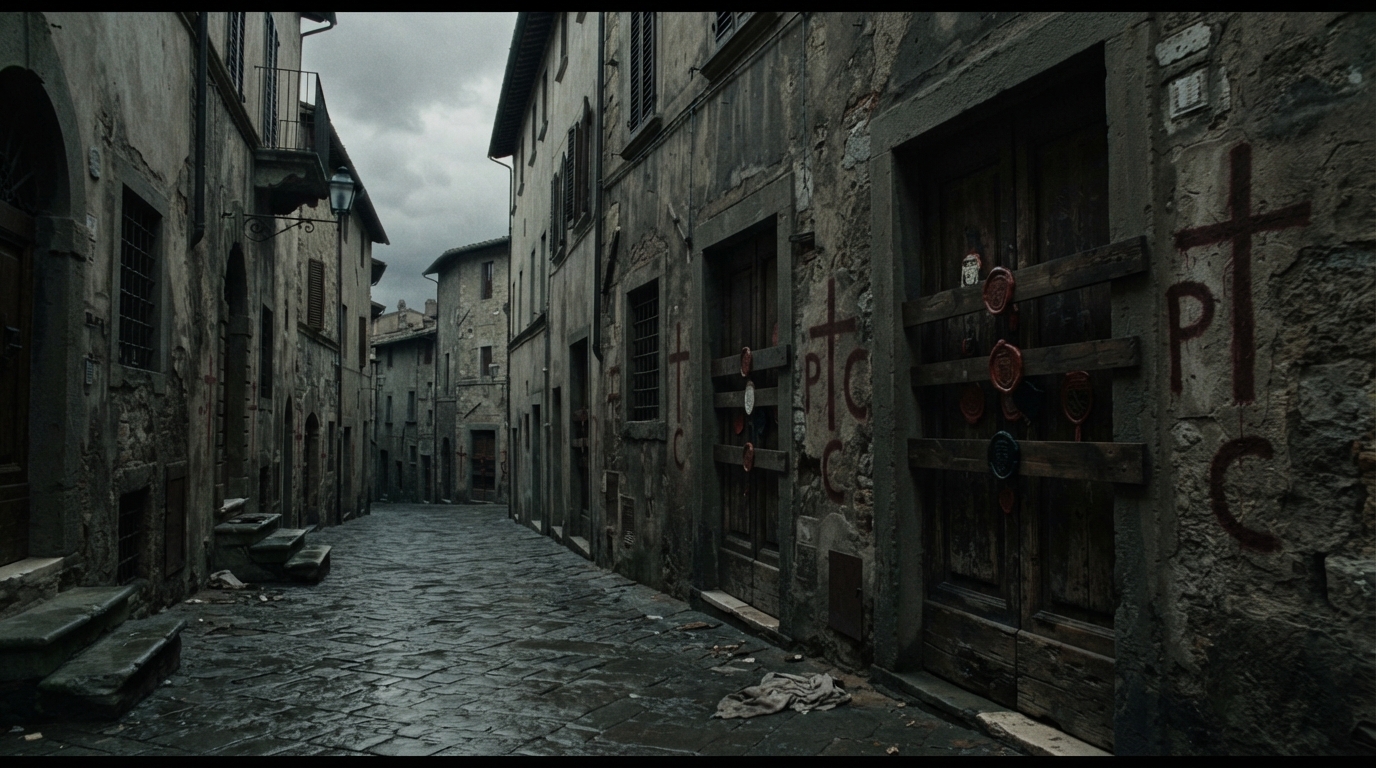
Perhaps the most tragic mechanical consequence of Romeo’s exile to Mantua is the failure of communication that directly triggers the double suicide at the tomb. Why couldn’t Friar Lawrence simply send a swift message to Mantua explaining the plan of the fake potion?
The Specter of Renaissance Plague Regulations
The answer lies in the strict quarantine laws of Renaissance Italy, which would have been intimately understood by an Elizabethan audience frequently terrorized by outbreaks of the bubonic plague in London.
In Act V, Scene 2, Friar John explains to Friar Lawrence why he failed to deliver the crucial letter:
“Going to find a barefoot brother out, / One of our order, to associate me, / Here in this city visiting the sick, / And finding him, the searchers of the town, / Suspecting that we both were in a house / Where the infectious pestilence did reign, / Seal’d up the doors, and would not let us go…”
Historical Accuracy of Health Protocols
Italian city-states like Mantua and Verona maintained aggressive, militarized public health protocols to contain outbreaks. Suspected contact with the plague meant immediate, mandatory lockdown (quaranta giorni). Friar John was trapped not by human malice or forgetfulness, but by the rigid sanitary bureaucracy of Mantuan public health officials.
This historical detail elevates the tragedy from a simple coincidence to an inevitable collision between human design and systemic bureaucracy. Mantua’s plague regulations act as an invisible wall, insulating Romeo in ignorance while Juliet lies unconscious in Verona.
Visiting Shakespeare’s Mantua: Literary Tourism & Geography
For the modern literary traveler, tracing the path from Verona to Mantua offers a tangible connection to Shakespeare’s geography. While Shakespeare himself likely never crossed the Alps to visit Italy—remaining firmly rooted in the London theater scene—his brilliant synthesis of contemporary travel guides, Italian novellas, and geopolitical maps created an enduring mental landscape.
Key Landmarks for the Literary Traveler
-
The Palazzo Te: Serving as a monument to Mannerist architecture, it captures the artistic grandeur of the Gonzaga court that would have defined Mantua’s reputation in Renaissance Europe.
-
The Ancient Streets of the Ghetto and Market Squares: Walking through the old quarters of Mantua evokes the dense, shadowed atmosphere where Romeo might have sought out his impoverished apothecary.
-
The Mincio River: The water systems surrounding Mantua created natural moats and defensive barriers that reinforced the city’s isolation during periods of plague and political tension.
Frequently Asked Questions (FAQs)
Did Shakespeare ever actually visit Mantua or Italy?
There is no historical evidence that William Shakespeare ever traveled outside of England. His vivid depictions of Italian cities like Verona, Mantua, Venice, and Padua were constructed from contemporary travel literature, translations of Italian novellas, and his own peerless imaginative genius.
How long was Romeo supposed to stay in Mantua?
Romeo’s banishment was open-ended under the decree of Prince Escalus, who stated that if Romeo were found in Verona, that hour would be his last. However, Friar Lawrence intended for Romeo to stay in Mantua only temporarily until the marriage could be publicized, the feud reconciled, and a pardon obtained from the Prince.
Why couldn’t Juliet just flee to Mantua with him?
In 16th-century patriarchal society, an unmarried or newly wed young noblewoman of high status could not simply travel unchaperoned across state lines without destroying her reputation, family standing, and personal safety. Furthermore, Juliet was heavily monitored by her parents and forcibly betrothed to Paris, making escape impossible without detection.
Expert Synthesis: Why Mantua Matters
Mantua is much more than a geographical safe harbor on the periphery of Verona. It is the narrative crucible where isolation turns a dramatic misunderstanding into an inescapable catastrophe.
By banishing Romeo to Mantua, Shakespeare establishes a geography of separation that tests the limits of loyalty, exposes the economic desperation of the Renaissance underworld, and exposes the tragic vulnerability of human communication against the backdrop of state quarantine laws. Ultimately, Mantua stands as a masterclass in dramatic setting—proving that in Shakespeare’s hands, geography is never just a background, but an active, ruthless participant in human destiny.