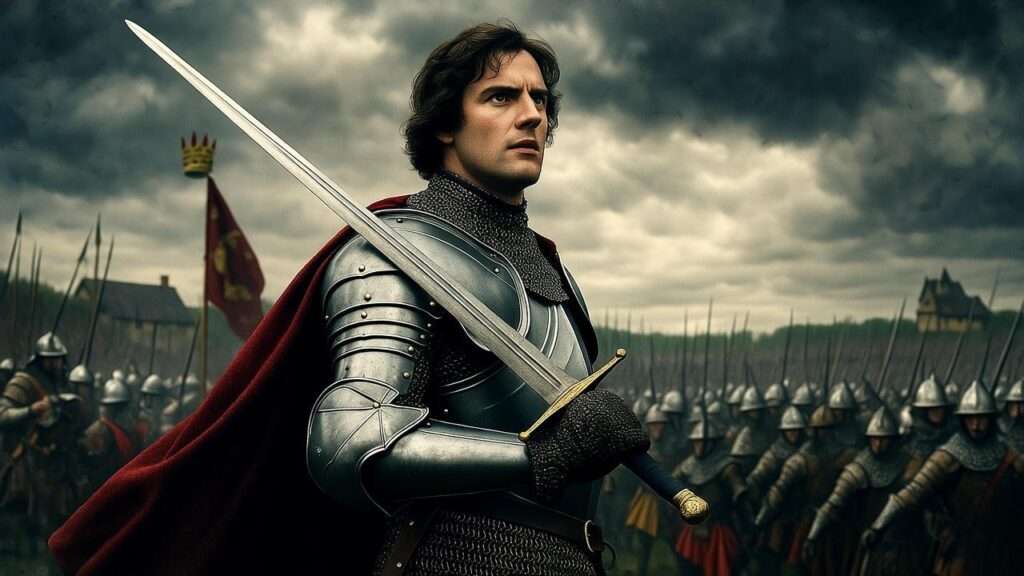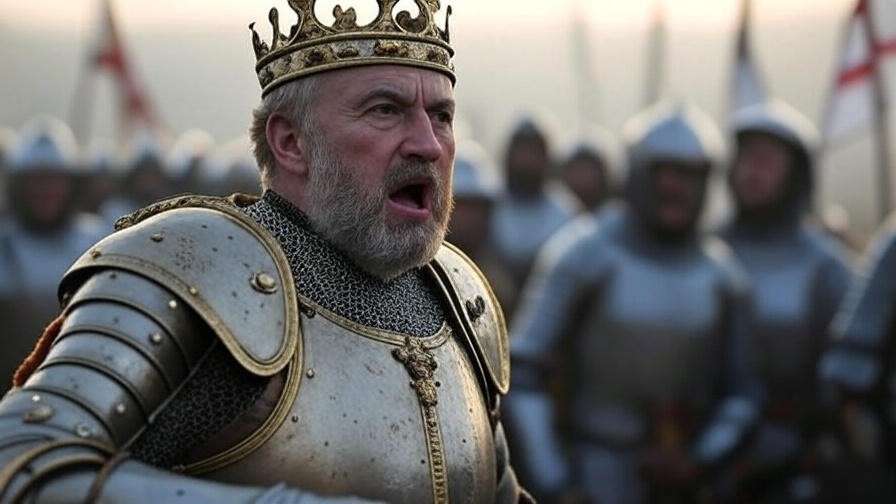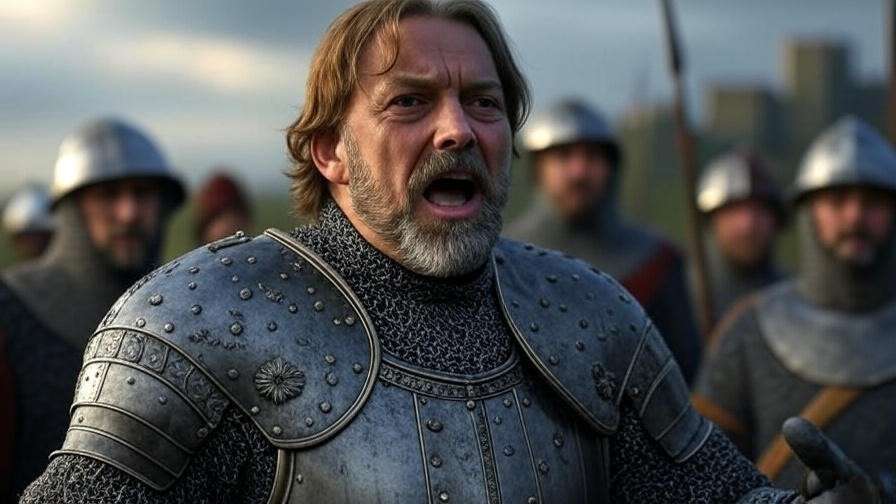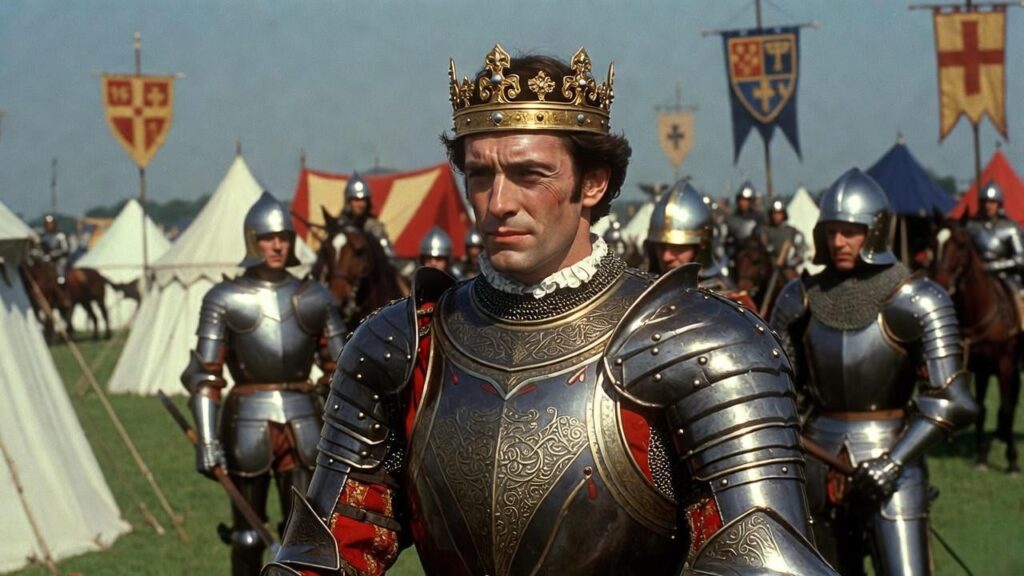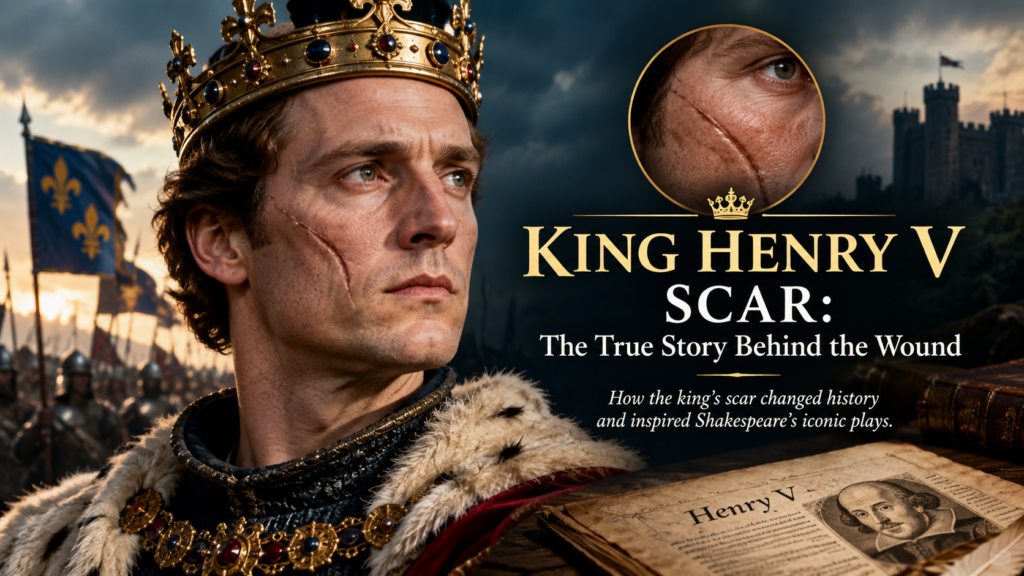
History often remembers its greatest monarchs through idealized marble busts, pristine oil portraits, and the romanticized lines of dramatic verse. Yet, the physical reality of medieval kingship was frequently bloodier, more brutal, and inscribed directly onto the flesh. When we look past the conventional mythos of England’s legendary warrior-king, one striking physical detail captivates historians, literary scholars, and theater enthusiasts alike: the king henry v scar. This permanent mark of violence—inflicted by a battlefield arrow during his youth—bridges the gap between the historical Prince Hal and William Shakespeare’s immortalized dramatic creation.
Understanding this scar requires stepping onto the chaotic, smoke-filled fields of 15th-century warfare, examining the ingenious medieval surgery that saved a future king’s life, and exploring how physical trauma came to define royal authority both in historical chronicles and on the Elizabethan stage.
The Historical Reality: How Prince Hal Got His Famous Facial Scar
Long before he famously united his exhausted troops at Agincourt, a teenage Prince Henry faced the ultimate test of survival during a rebellion that threatened to tear England apart. The summer of 1403 brought the explosive Battle of Shrewsbury, where the royal army clashed with the forces of the rebellious Percy family, led by the fierce northern commander Henry “Hotspur” Percy.
The Battle of Shrewsbury (1403): The Arrow to the Face
On the morning of July 21, 1403, the two armies met outside Shrewsbury. The air quickly filled with a devastating storm of heavy broadhead arrows unleashed by skilled Welsh and Cheshire archers fighting alongside the rebels. Prince Henry, only sixteen years old at the time but already serving as nominal commander of the royal forces in Wales, stood bravely at the front lines.
Amidst the fierce hand-to-hand combat, an incoming arrow struck the young prince squarely in the face. The projectile penetrated deep into the tissue beside his nose, lodging firmly near the base of his skull. Contemporary accounts note that the wound was catastrophic: the shaft broke off, leaving the barbed iron head embedded deep within the bone and muscle of his facial cavity. By all accounts of medieval military medicine, the injury should have proved fatal, either through immediate trauma or the agonizing, inevitable onset of infection.
John Bradmore’s Ingenious Medieval Surgery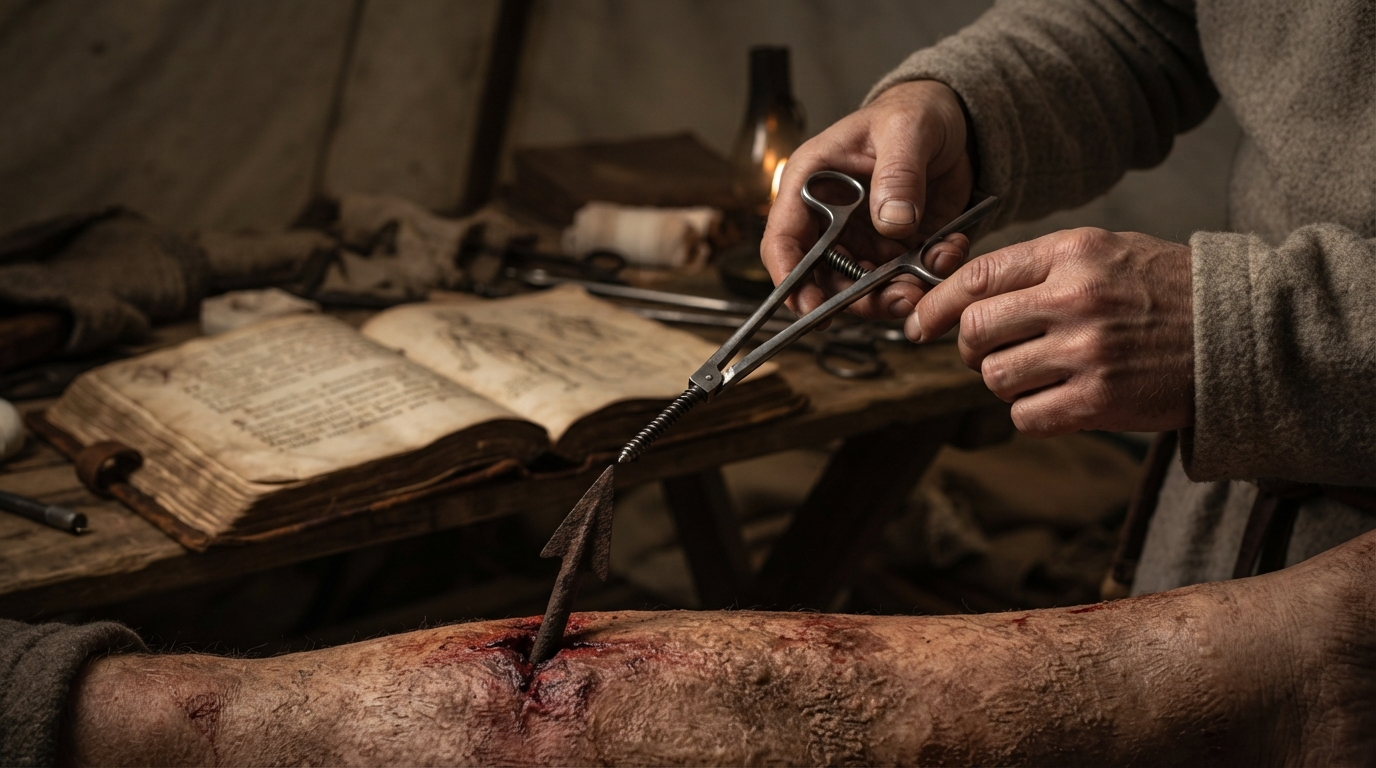
The survival of Prince Hal is largely credited to the brilliance of a royal physician and metalworker named John Bradmore. Recognizing the severity of the wound, Bradmore rushed to the prince’s side and devised a surgical instrument and technique far ahead of its time.
Because standard forceps could not grip the deeply embedded, barbed arrowhead without causing further tissue destruction, Bradmore engineered a specialized tool. He crafted small, threaded tongs made of refined iron and steel. First, he sterilized the wound using honey—an ancient antiseptic known for its antibacterial properties. Next, he carefully inserted his custom instrument into the narrow entry wound, clamped it securely onto the protruding barbs of the arrowhead, and gently screwed the central axis to lock the grip.
By applying precise, calculated leverage, Bradmore extracted the iron head without shattering the surrounding facial bones or causing fatal hemorrhaging. He then flushed the deep cavity with white wine and an antibacterial herbal honey salve. This pioneering procedure not only saved the prince’s life but also prevented widespread necrosis, leaving behind a stark, puckered facial scar that would forever mark his transition from a reckless youth to a hardened warrior.
Healing and Physical Evidence
While medieval chroniclers marveled at the royal recovery, the physical aftermath left an indelible mark. The wound healed over several months, but it left a thick, visible scar that distorted the left side of his face.
Chroniclers such as Thomas Walsingham and the anonymous author of the Gesta Henrici Quinti noted how the physical mark served as an open testament to his survival. In an era where divine right was frequently questioned, surviving a point-blank arrow wound to the braincase was interpreted by contemporaries as a sign of divine favor. The king henry v scar became an unshakeable physical receipt of his battlefield baptism by fire.
From Wound to Legend: How the Scar Shaped Henry’s Kingship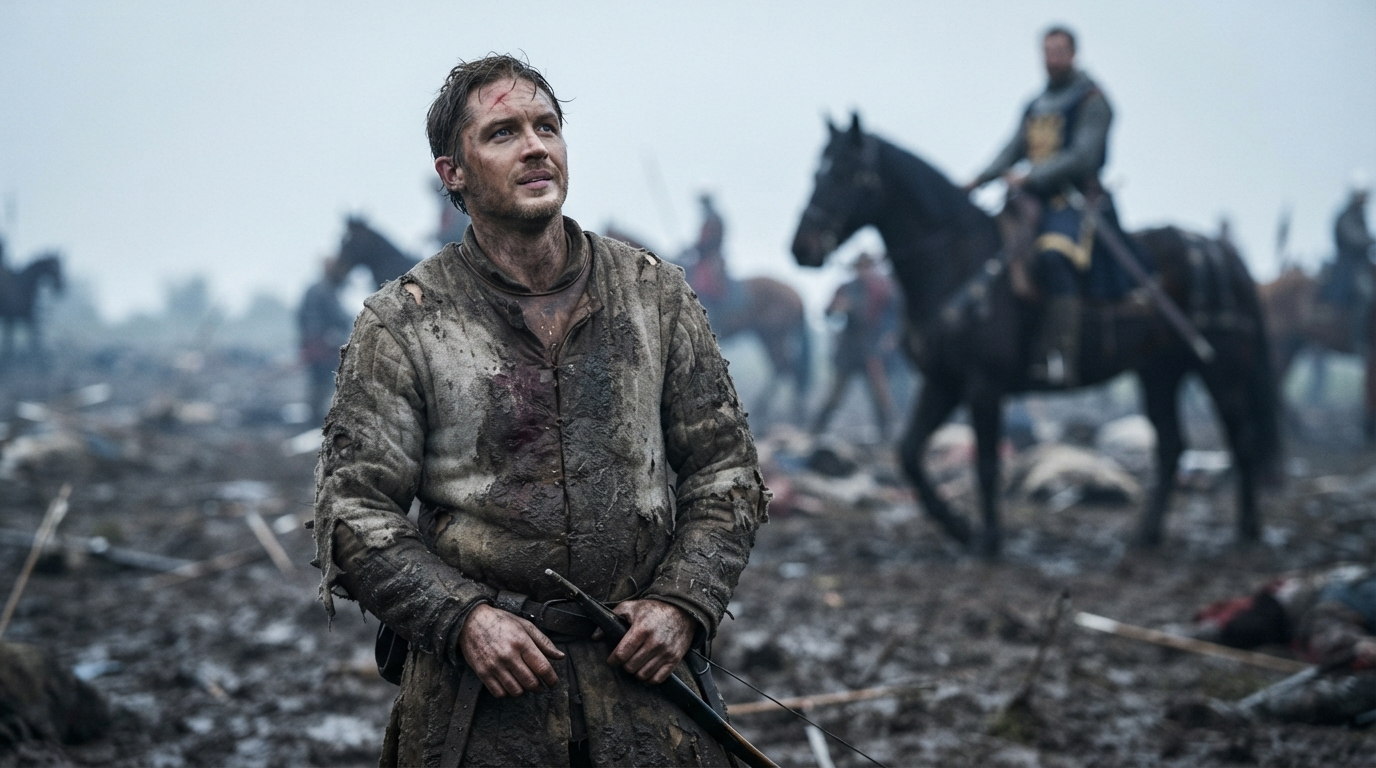
A physical disfigurement of this magnitude in the 15th century carried profound psychological and political weight. Kingship was a performance of physical dominance and martial prowess; a monarch bearing visible scars of combat commanded a unique form of loyalty from his soldiers.
Transforming from the “Wild Prince Hal” to a Battle-Tested Monarch
Popular tradition and theatrical convention paint Prince Hal’s youth as a dissolute period spent in Eastcheap taverns with Falstaff, far removed from the burdens of statecraft. However, historical reality paints a different picture: a youth spent in continuous, grueling military campaigns in the Welsh marches.
The scar sustained at Shrewsbury served as a permanent physical anchor for his transformation. It was impossible for his detractors, rebellious nobles, or foreign enemies to dismiss him as a pampered royal heir when he bore the literal shrapnel of civil war on his face. The wound accelerated his maturity, forcing a teenage prince to grapple with mortality, tactical command, and the heavy responsibilities of leadership years before his coronation.
Psychological Impact and Authority
Ruling medieval England required projecting absolute strength. Kings with physical infirmities—such as Richard III’s scoliosis or Henry VI’s periodic catatonia—were often politically vulnerable. Conversely, a battle-scarred visage reinforced the archetype of the warrior-king.
Every time Henry turned his head in council chambers or addressed Parliament, the scar silently communicated his sacrifice. It bridged the gap between the crown and the common soldier. When common archers and men-at-arms looked upon their sovereign, they saw a commander who had bled beside them, facing the exact same lethal hazards of medieval warfare.
The Shakespearean Treatment: Scars and Wounds in Henry V
When William Shakespeare turned his attention to the Lancaster tetralogy, particularly in the history play Henry V, physical wounds and blood take on profound metaphorical and thematic resonance. While Shakespeare does not explicitly detail the 1403 Shrewsbury arrow extraction in the dialogue, the psychological weight of physical sacrifice permeates the drama.
Textual Analysis: References to Wounds, Blood, and Honor
Throughout Henry V, blood and physical endurance are currency. From the opening acts, where the young king casts off his wild reputation to claim his ancestral French rights, to the mud-soaked trenches of Harfleur and Agincourt, the play examines what it means to pay the physical toll of war.
Shakespeare’s characters frequently invoke scars, limps, and missing limbs as badges of ultimate loyalty. The king himself acknowledges that war is an unforgiving enterprise, yet he reframes physical destruction into a shared communal identity.
“We Few, We Happy Few”: Physical Sacrifice as Brotherhood
In one of the most famous passages in English literature—the St. Crispin’s Day speech—Shakespeare has King Henry articulate the value of bearing physical witness to battle:
“He that shall see this day, and live old age,
Will yearly on the vigil feast his neighbours,
And say ‘Tomorrow is Saint Crispian.’
Then will he strip his sleeve and show his scars,
And say ‘These wounds I had on Crispin’s day.’ “
Here, the concept of the scar is elevated from a mere medical injury to a sacred democratic equalizer. In Shakespeare’s vision, the king unites the nobility and the common peasantry (“Be he no ease, this day shall gentle his condition”) under a shared banner of physical endurance. Though Henry bears his own prominent facial mark from Shrewsbury, on the fields of Agincourt, every surviving soldier becomes marked by history. The scars worn by the common soldier mirror the invisible and visible markers worn by the king, dissolving social hierarchies in the crucible of war.
Historical Accuracy vs. Dramatic License: Shakespeare vs. Chroniclers
To fully appreciate how the king henry v scar functions in cultural memory, we must examine how Shakespeare utilized—and occasionally altered—the historical accounts available to him, primarily Raphael Holinshed’s Chronicles of England, Scotland, and Ireland.
What Holinshed’s Chronicles Say About the Injury
Holinshed’s Chronicles provided Shakespeare with a rich narrative framework detailing the Battle of Shrewsbury. The primary sources carefully documented how the young prince refused to leave the field despite his severe facial wound, urging his commanders forward until the rebel line collapsed.
Shakespeare read these accounts closely, recognizing that the dramatic arc of Prince Hal required a protagonist forged in extreme adversity. However, the Elizabethan playwright chose to focus heavily on the moral and political evolution of the prince rather than lingering on graphic surgical procedures. In the theater, a visible prosthetic scar or subtle makeup could hint at the historical reality, allowing the audience’s imagination to fill in the backstory of the Shrewsbury arrow.
Cinematic Portrayals: How Modern Film Adaptations Handle the Scar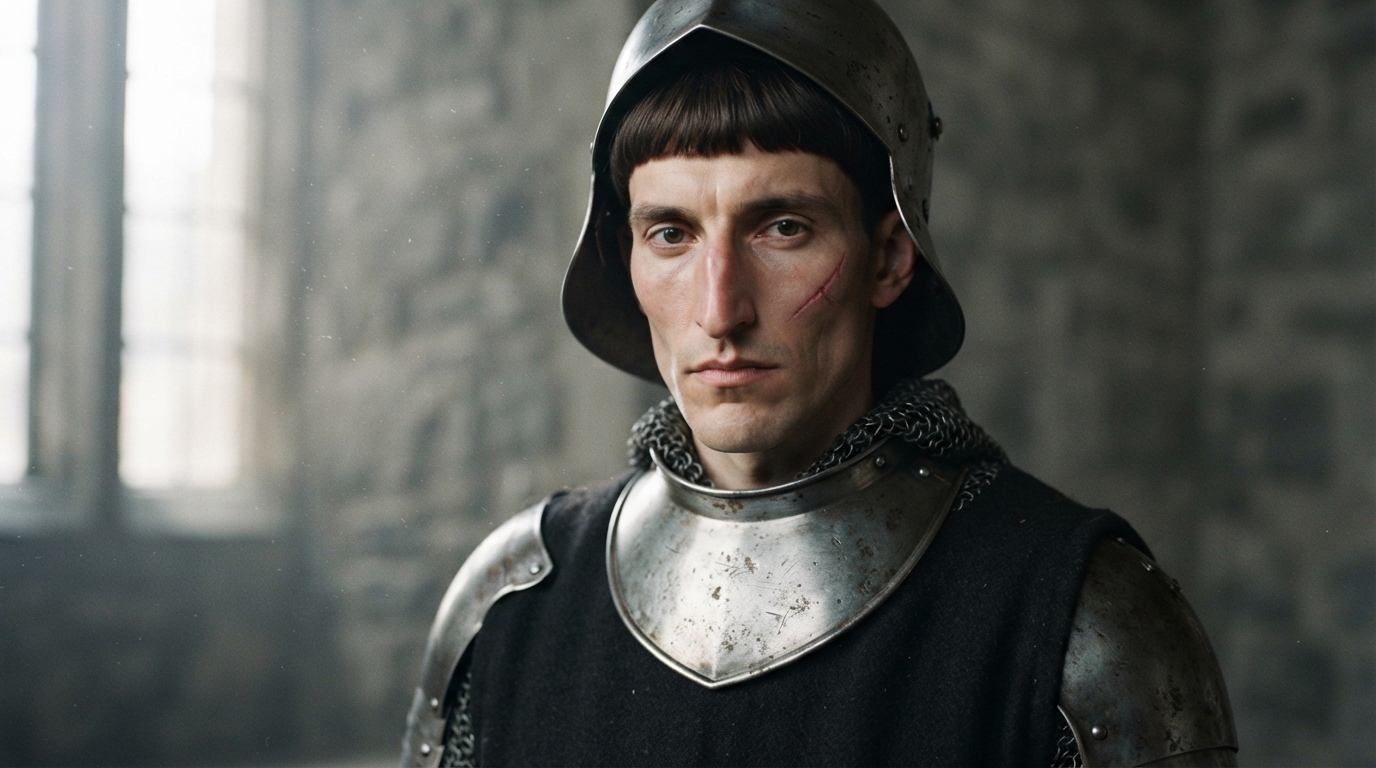
Modern cinematic interpretations of Shakespeare’s play have grappled directly with the visual reality of Henry’s combat trauma.
-
Laurence Olivier’s 1944 film presented a patriotic, Technicolor epic designed to rally British morale during World War II, presenting a cleaner, more heroic visage that glossed over harsh physical disfigurements.
-
Kenneth Branagh’s 1989 masterpiece, by contrast, leaned heavily into the mud, blood, and visceral realism of medieval combat. Branagh’s Henry is gritty, exhausted, and visibly battered, capturing the gritty atmosphere of campaign life.
-
David Michôd’s The King (2019), starring Timothée Chalamet, reimagined the Lancastrian history plays with a grim, modern aesthetic, explicitly highlighting the physical weight, armor fatigue, and brutal reality of medieval violence.
Across these adaptations, directors continually return to the same core intuition that guided Shakespeare: a true leader’s legitimacy is written upon his body.
Medical Marvels of the 15th Century: The Science Behind Survival
The survival of King Henry V is as much a triumph of medieval science as it is a testament to royal resilience. Modern readers frequently labor under the misconception that medieval medicine was entirely superstitious and devoid of rational practice. John Bradmore’s surgical intervention shatters that myth.
Understanding Battlefield Medicine and Infection Control
In an era before the discovery of germ theory or synthesized antibiotics, battlefield wounds were terrifyingly lethal primarily due to sepsis and tetanus. The human mouth, unwashed clothing, and dirty iron arrowheads carried millions of anaerobic bacteria straight into the bloodstream.
Bradmore’s use of honey was scientifically sound; honey possesses natural osmotic properties that draw moisture away from bacteria, inhibiting microbial growth while providing a protective physical barrier against airborne pathogens. Furthermore, flushing the wound with white wine introduced alcohol and mild acids that helped sanitize the deep tissue pocket before herbal salves were applied.
Why Bradmore’s Technique Preceded Modern Surgery
Bradmore documented his procedures in a Latin medical treatise titled Philomena. His custom-built extractor tool anticipated modern surgical extraction devices by centuries. By designing an instrument that could expand inside a foreign body to grip it securely without crushing surrounding bone, Bradmore solved a mechanical engineering problem that baffled surgeons for generations. Without this sophisticated level of medieval medical innovation, the history of England—and the dramatic canon of William Shakespeare—would look entirely different.
Frequently Asked Questions About King Henry V’s Scar
Did Shakespeare explicitly mention the scar in Henry V?
While Shakespeare’s text does not include a line explicitly saying “Look at my Shrewsbury facial scar,” the entire thematic framework of the play relies on physical sacrifice, battlefield scars, and the earned authority of a monarch who has bled for his realm.
How deep was the arrow wound, and did it leave permanent disfigurement?
Historical records indicate the arrow penetrated several inches into the facial tissue near the nose, coming dangerously close to the braincase. It left a thick, puckered scar that remained visible for the rest of his life, distinguishing him in every diplomatic and military encounter.
Who was John Bradmore, and how did he save the prince?
John Bradmore was a prominent royal surgeon, physician, and goldsmith/metalworker. He saved Prince Hal’s life at the Battle of Shrewsbury by crafting a custom, threaded iron extraction tool that successfully removed the barbed arrowhead without causing fatal trauma or infection.
Did the scar affect Henry V’s speech or royal duties?
Despite the severity of the wound and the delicate nature of facial surgery in 1403, historical accounts show that Henry recovered full functionality, continuing to lead troops in battle and deliver powerful, resonant public addresses throughout his reign.
The Enduring Legacy of a Warrior’s Mark
The convergence of history, medieval surgery, and dramatic literature reveals why the king henry v scar continues to fascinate audiences over six centuries later. It is far more than a gruesome historical footnote; it is a profound symbol of endurance.
Whether analyzed through the lens of John Bradmore’s groundbreaking surgical ledger, the stirring rhetoric of Shakespeare’s historical drama, or the relentless realities of 15th-century warfare, physical trauma transformed a rebellious youth into an iconic English sovereign. Ultimately, the scar reminds us that behind every grand myth of empire and every immortal line of verse lies the fragile, bleeding, and remarkably resilient human body.