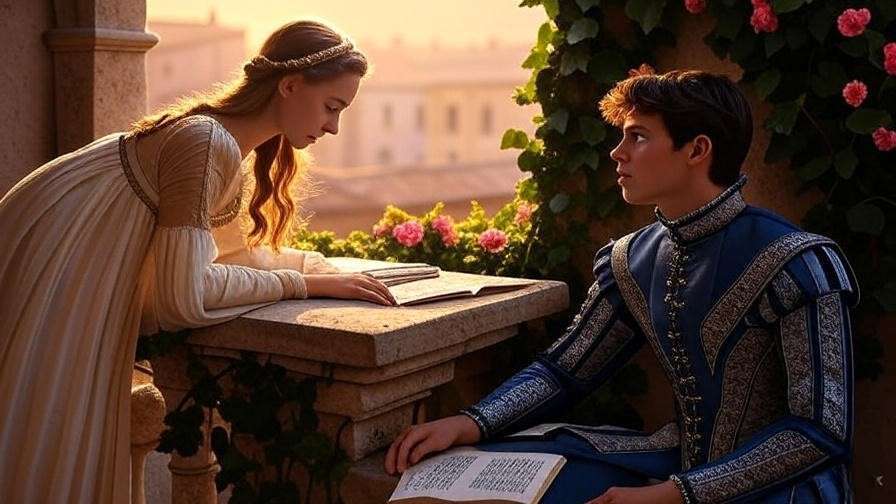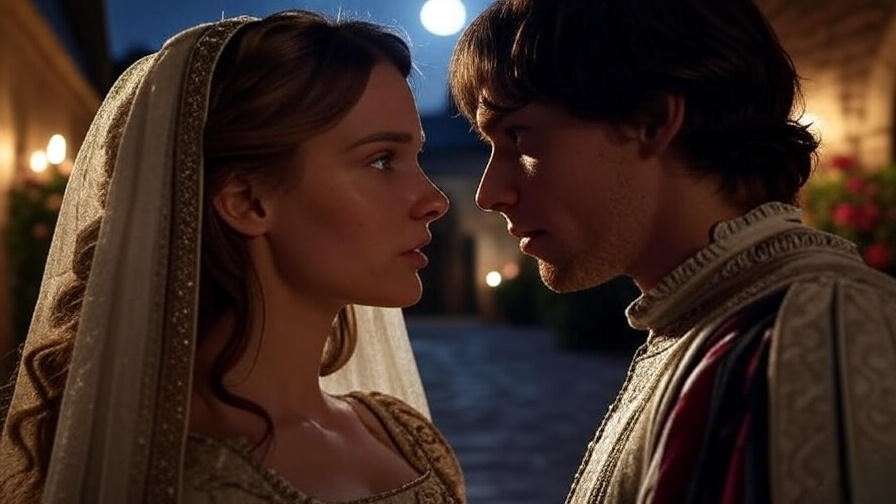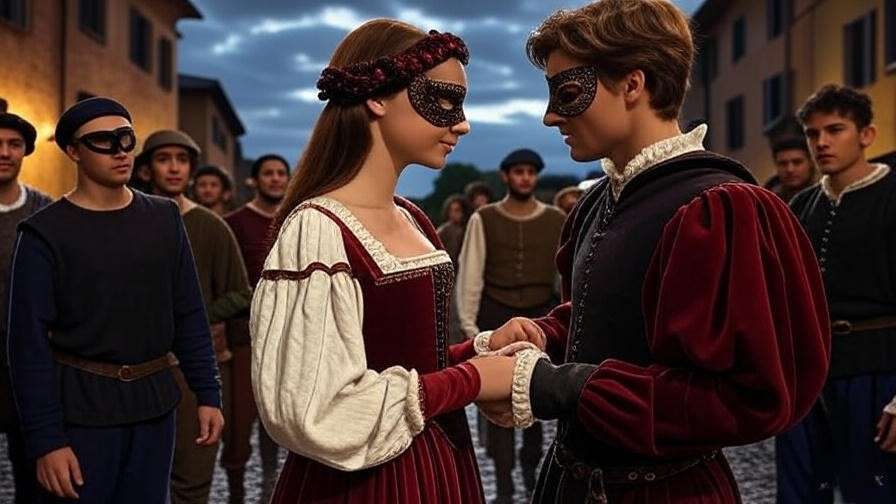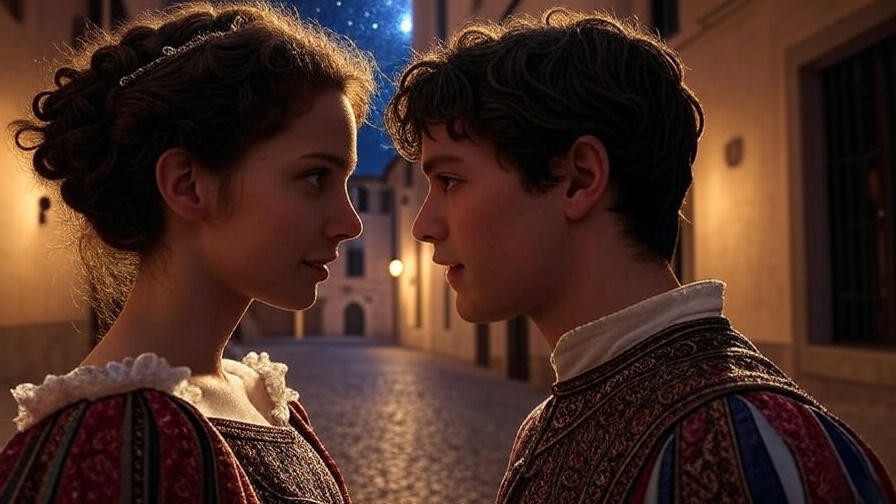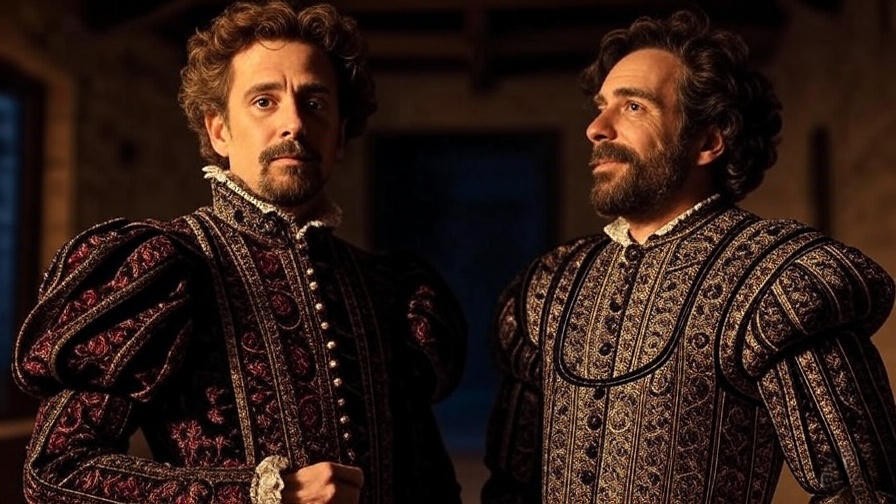
Few stories have shaped narrative art as profoundly as William Shakespeare’s Romeo and Juliet. Written in the late 16th century, this legendary tragedy set the ultimate template for doomed passion, societal divide, and high-stakes romantic conflict. When film enthusiasts search for movies similar to romeo and juliet, they are rarely looking for literal, line-by-line recitations of Elizabethan verse. Instead, they are seeking stories that capture the raw, electrifying energy of two people fighting against a world determined to keep them apart.
Whether it is a turf war on the streets of New York, a dystopian boundary between the living and the dead, or a clash of social classes aboard an ocean liner, the “star-crossed” archetype continues to evolve. Below, we break down the narrative mechanics of Shakespeare’s masterpiece and analyze ten exceptional films that capture its timeless spirit.
Decoding the “Star-Crossed” Archetype in Cinema
To understand why certain films resonate with fans of Romeo and Juliet, we must look past superficial plot points and analyze the structural pillars that define Shakespearean tragic romance.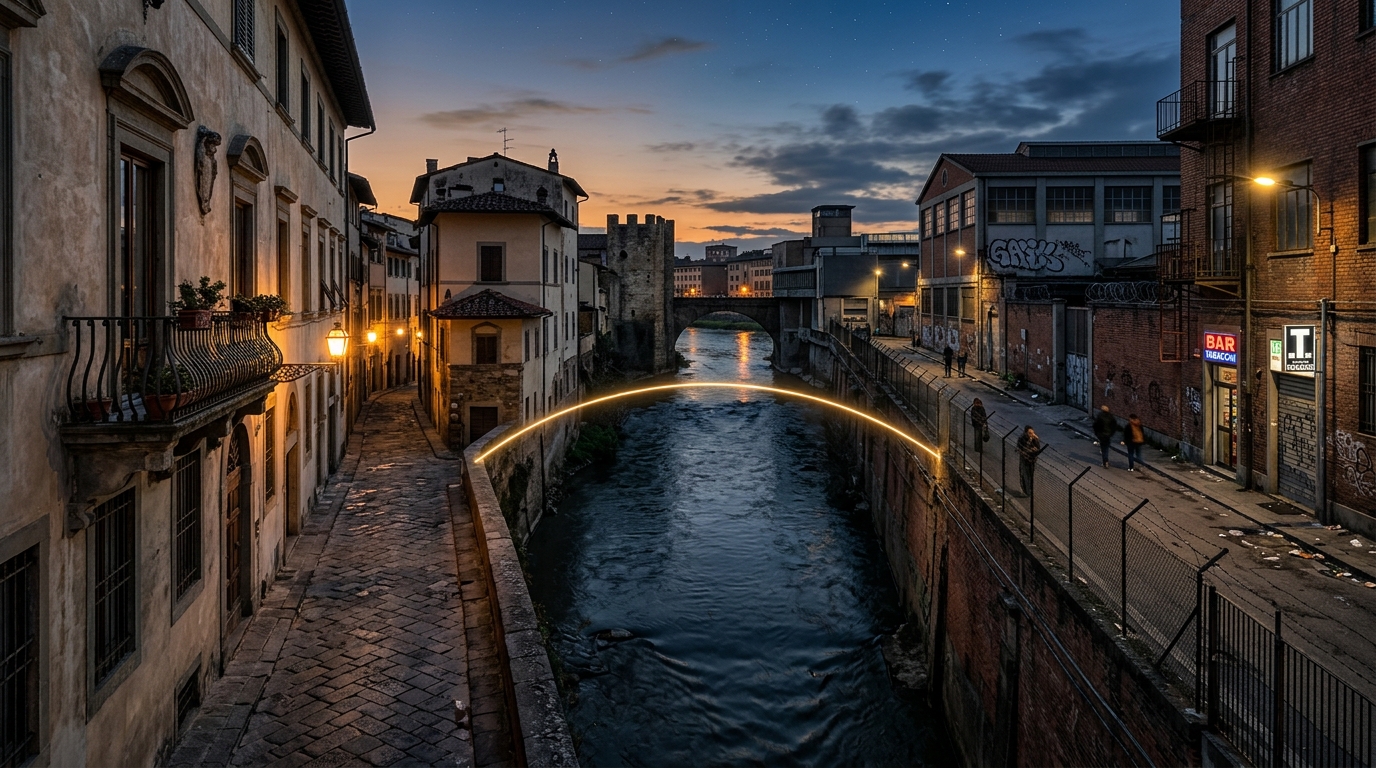
The Divided Worlds
At the heart of any true Romeo and Juliet narrative is an unbridgeable divide. In Shakespeare’s Verona, the feud between the Capulets and Montagues is ancient, irrational, and systemic. Modern cinematic interpretations replace bloodlines with modern equivalents: racial prejudice, economic disparity, political ideology, or even supernatural warfare. The friction between these two opposing worlds creates immediate dramatic tension.
Love at First Sight vs. Societal Taboo
The romance in Romeo and Juliet is defined by sudden, incandescent obsession. The characters do not ease into affection over months; they lock eyes across a crowded room and instantly reorder their entire realities. However, this private ecstasy immediately collides with public prohibition. The excitement—and eventual tragedy—stems from the constant threat of discovery.
Urgent Stakes and Secret Alliances
Shakespeare’s play unfolds over a mere four days. This blistering pace drives the characters to desperate measures: clandestine night meetings, secret marriages, and risky escape schemes orchestrated by well-meaning confidants (like Friar Laurence and the Nurse). Movies that replicate this atmosphere rely on ticking clocks, secret communication, and high emotional stakes.
10 Essential Movies Similar to Romeo and Juliet
1. West Side Story (1961 / 2021)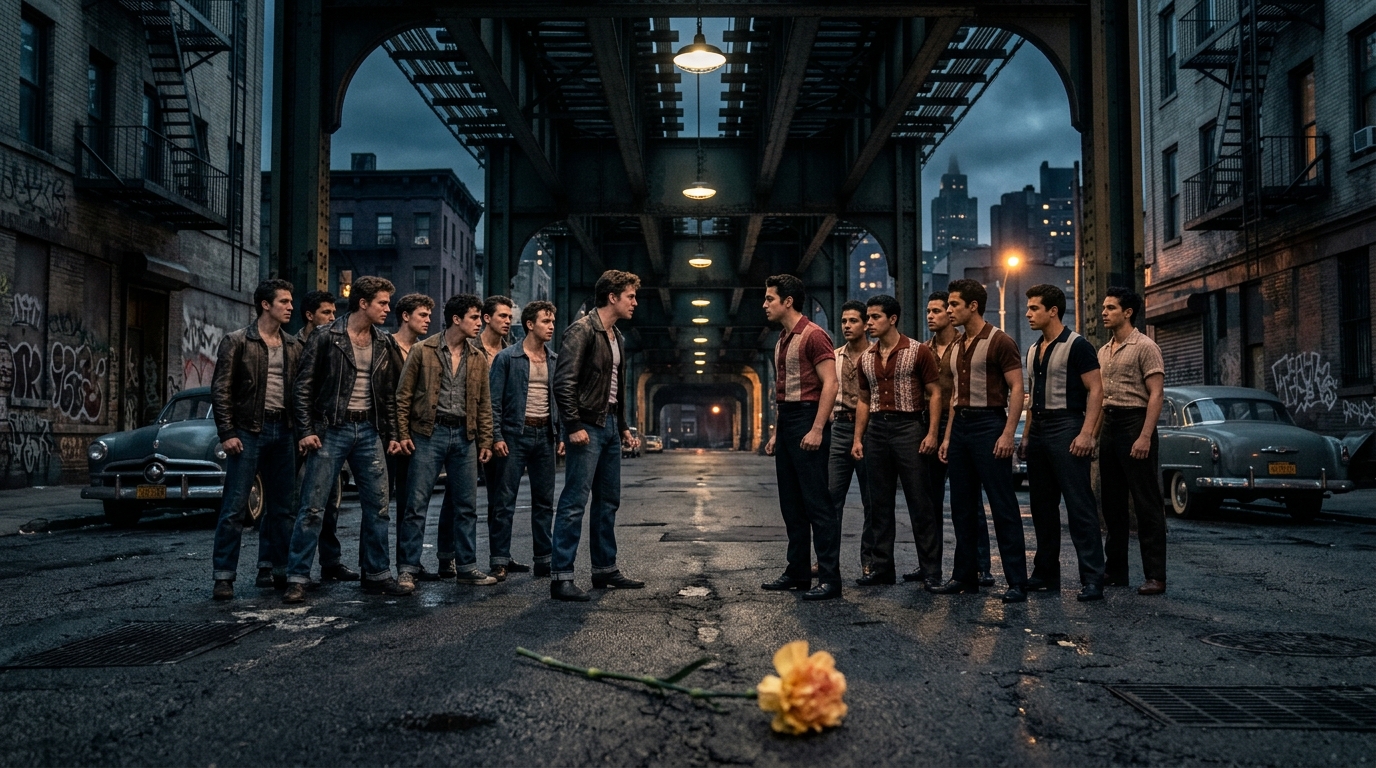
West Side Story stands as the quintessential modern adaptation of Shakespeare’s tragedy. Conceived by Arthur Laurents, Leonard Bernstein, and Stephen Sondheim, and later adapted for the screen by Jerome Robbins and Robert Wise (1961) and Steven Spielberg (2021), this musical drama translates Elizabethan Verona to 1950s Manhattan.
Verona Nobility (Capulets vs. Montagues) ➔ Manhattan Street Gangs (Sharks vs. Jets)
Tybalt ➔ Bernardo | Mercutio ➔ Riff | Friar Laurence ➔ Doc
The feud shifts to systemic racism and territorial hostility between the White-American Jets and the Puerto Rican immigrant Sharks. Tony (Romeo) and Maria (Juliet) fall in love at a neighborhood dance, setting off a sequence of secret rendezvous, deadly brawls, and devastating miscommunications.
Spielberg’s 2021 film, in particular, leans into historical authenticity and linguistic realism, offering a deeper look at the socio-economic conditions driving the violence. Bernstein’s dynamic score mirrors the poetic intensity of Shakespeare’s original iambic pentameter, making both film versions essential viewing for literary purists.
2. Warm Bodies (2013)
Directed by Jonathan Levine, Warm Bodies proves that the core themes of Romeo and Juliet can be adapted into unexpected genres without losing their emotional heart. Set in a post-apocalyptic world where humanity is walled off from a wasteland of zombies, the story follows “R” (a mindless corpse) and Julie (a human scavenger).
Character Parallels in Warm Bodies:
• "R" = Romeo (A living dead youth trapped in an empty existence)
• Julie = Juliet (Daughter of the human military leader, General Grigio)
• Marcus = Mercutio (R's cynical undead best friend)
• Nora = The Nurse (Julie's supportive, practical confidante)
The movie explicitly winks at its source material—most notably during an iconic balcony scene where R tries to communicate with Julie while hiding below her window. Beyond the humor, the film captures Shakespeare’s core theme: love as a transformative force capable of healing broken, hostile environments. R’s heart literally starts beating again through his connection with Julie, offering a hopeful, subverting twist on the traditional tragedy.
3. The Lion King II: Simba’s Pride (1998)
While the original The Lion King famously drew inspiration from Hamlet, its direct-to-video sequel turns to Romeo and Juliet to explore generational conflict and forgiveness.
Following the events of the first film, the Pride Lands are divided between Simba’s pride and the “Outlanders”—loyalists to the defeated villain Scar. Simba’s adventurous daughter, Kiara, strikes up a childhood friendship with Kovu, an Outlander raised by his bitter mother, Zira, to assassinate Simba. As adults, Kovu and Kiara fall in love, caught between their loyalty to their respective families and their desire for peace.
       [ Pride Lands Division ]
 Simba's Pride        Outlander Rebels
(King Simba/Kiara)    (Zira/Kovu)
        \                  /
         \                /
        Secret Union: Kiara & Kovu
                  |
     [ Structural Reconciliation ]
Simba’s Pride strips away the lethal tragedy of the original play, framing the story as a lesson on breaking cycles of hatred. Songs like “Love Will Find a Way” mirror the quiet urgency of Shakespeare’s orchard scenes, making it an accessible introduction to star-crossed narrative structures for younger audiences.
4. Moulin Rouge! (2001)
Director Baz Luhrmann—who previously brought Romeo + Juliet to the screen in 1996—returned to the theme of forbidden love with his maximalist musical Moulin Rouge!.
Set in Montmartre at the turn of the 20th century, the film follows Christian, an idealistic English poet, who falls for Satine, the star courtesan of the Moulin Rouge cabaret. Their romance must remain secret, as Satine has been promised to the cold, possessive Duke of Monroth in exchange for financing the theater’s transformation into a legitimate playhouse.
Luhrmann uses pop music mashups, hyper-stylized camera movement, and theatrical set design to replicate the intoxicating, overwhelming passion of Shakespearean tragedy. Satine and Christian’s secret anthem, “Come What May,” serves the same narrative function as Romeo and Juliet’s wedding vows—a desperate pledge of devotion in the face of impending doom.
5. Gnomeo & Juliet (2011)
For a lighthearted interpretation that preserves the iconic character names, Gnomeo & Juliet shifts the action to neighboring suburban backyards in Stratford-upon-Avon. The feud here is between the Red Gnomes of 262 Verona Drive and the Blue Gnomes of 264.
| Feature Element | Shakespeare’s Original Play | Gnomeo & Juliet (2011) |
| Setting | Renaissance Verona, Italy | Modern Stratford-upon-Avon Suburbs |
| Faction Divide | Capulets vs. Montagues | Red Garden Gnomes vs. Blue Garden Gnomes |
| Tone & Ending | Tragic Death & Mutual Grief | Animated Comedy & Subverted Happy Ending |
| Key Catalyst | Tybalt’s Aggression & Duel | Lawn Mower Races & Backyard Sabotage |
Featuring a soundtrack of classic Elton John hits, the film delivers clever references to Shakespeare’s body of work (including a cameo by a statue of William Shakespeare himself). It addresses the absurdity of inherited hatred, showing how trivial disputes between elders can ruin the lives of the young if left unchecked.
6. Titanic (1997)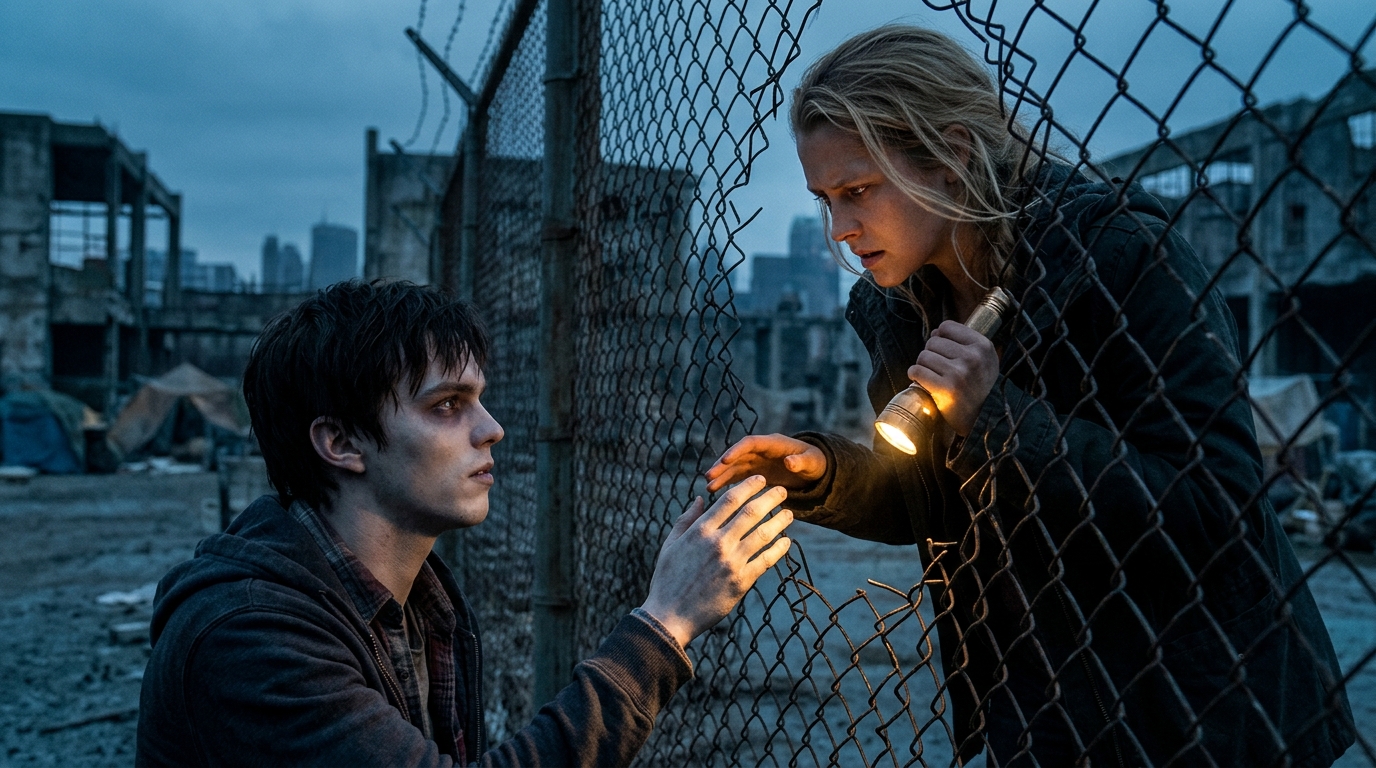
James Cameron’s historical epic Titanic is one of the most commercially successful film adaptations of the star-crossed lover archetype. Set against the maiden voyage of the RMS Titanic in 1912, the film contrasts the rigid constraints of Edwardian high society with the uninhibited freedom of the working class.
       [ Class Stratification Aboard Titanic ]
 First Class (Rose / Cal)    ➔ Strict Social Rules, Wealth, Duty
 Third Class (Jack Dawson)   ➔ Artistic Freedom, Survival, Passion
                  \          /
                   \        /
            Clandestine Encounters
                      |
        [ Fate as the Final Arbitran ]
Rose DeWitt Bukater represents Juliet: a young woman trapped by her family’s financial ruin and engaged to the arrogant Cal Hockley. Jack Dawson represents Romeo: a penniless artist who wins his ticket in a poker game and lives entirely in the moment. Their rapid, passionate courtship—unfolding over a matter of days—mirrors the swift timeline of Shakespeare’s play.
Rather than a family feud, social class and economic expectation serve as the primary obstacles keeping them apart, with the sinking ship acting as an unstoppable force of fate.
7. Tristan + Isolde (2006)
Directed by Kevin Reynolds and produced by Ridley and Tony Scott, Tristan + Isolde explores the Celtic legend that originally inspired much of Western Europe’s star-crossed romance tradition—including Shakespeare’s work.
Set during the Dark Ages following the fall of the Roman Empire, the narrative centers on Tristan, a Cornish warrior, and Isolde, an Irish princess. After being wounded in battle, Tristan is nursed back to health in secret by Isolde, neither knowing the other’s true identity. When Isolde is later promised in marriage to Tristan’s lord and father figure, King Mark, to secure a political alliance, the lovers are trapped between personal devotion and political loyalty.
• Political Rivalry: Britain vs. Ireland during the post-Roman Dark Ages
• Moral Dilemma: Personal passion vs. Feudal duty and familial loyalty
• Literary Lineage: Medieval Arthurian legend that directly influenced Renaissance tragic literature
The film captures the somber tone of Shakespearean tragedy, emphasizing how personal happiness is often crushed under the weight of geopolitical power struggles.
8. 10 Things I Hate About You (1999)
While 10 Things I Hate About You is a direct modernization of Shakespeare’s The Taming of the Shrew, its cultural footprint and stylistic execution make it essential viewing for fans of 1990s Shakespeare adaptations—particularly those who love Baz Luhrmann’s Romeo + Juliet (1996).
Set at Padua High School, the story follows Cameron James, who falls for Bianca Stratford. However, Bianca’s strict father forbids her from dating until her antisocial elder sister, Kat, gets a boyfriend. Cameron hires bad-boy Patrick Verona to woo Kat, leading to a complex web of deception, secret arrangements, and genuine romantic discovery.
[ Padua High School Ecosystem ]
  Bianca Stratford  <--- (Forbidden to Date) ---  Strict House Rules
         |                                             |
  Cameron James (Calculated Plan) ----> Hires Patrick Verona to Woo Kat
The film mirrors the witty banter, rapid linguistic pacing, and youth-culture energy that defined Elizabethan comedy and tragedy alike, offering a lighter look at adolescent romance.
9. Love, Simon (2018)
Directed by Greg Berlanti, Love, Simon modernizes the “forbidden love” trope by framing it around identity, secrecy, and societal pressure in a contemporary suburban high school.
Simon Spier is a closeted teenager navigating his senior year while exchanging anonymous, deeply personal emails with a classmate using the pseudonym “Blue.” As their emotional connection grows, Simon must navigate the fear of exposure, blackmail from a classmate, and the threat of rejection from his family and peers.
    [ The Secrecy Paradigm ]
 Real World Identity     ➔  Suppression, Social Fear, Conformity
 Anonymous Emails ("Blue") ➔  Raw Authenticity, Passion, Vulnerability
             \                  /
              \                /
        Risk of Public Exposure & Ostracization
By substituting external family feuds with internal identity struggles and social stigma, Love, Simon captures the emotional core of Shakespeare’s work: the desperate urge to build a private sanctuary of love in a public world that feels hostile to your existence.
10. Brokeback Mountain (2005)
Ang Lee’s masterpiece Brokeback Mountain offers a devastating exploration of forbidden love set against the backdrop of the American West from the 1960s through the 1980s.
Ennis Del Mar and Jack Twist are two sheep herders who develop a deep emotional and physical bond while working on Brokeback Mountain over a single summer. Bound by rigid social expectations, homophobia, and fear of violence, they spend the next two decades living lie-filled lives—marrying women and raising families while meeting for brief, clandestine camping trips.
   [ Dual Existence Spectrum ]
 Public Persona: Conventional Marriage, Rural Working-Class Norms
 Private Persona: Clandestine Meetings on Brokeback Mountain
       |
 Tragic Outcome: Long-Term Psychological Trauma & Sudden Violence
Like Romeo and Juliet, Brokeback Mountain shows the tragic consequences of a society that refuses to accommodate love outside its rigid boundaries. The film’s quiet, tragic climax echoes the melancholy of Shakespeare’s final act.
Comparative Analysis & Viewer’s Guide
To help you decide which film to watch next, the table below categorizes these titles based on their narrative barriers, primary genres, tone, and ideal viewer profiles.
| Film Title | Core Feud / Barrier | Primary Genre | Narrative Tone | Best For Readers Who Want… |
| West Side Story | Ethnic & Gang Rivalry | Musical Drama | Tragic / Dramatic | Faithful structural adaptation with iconic music. |
| Warm Bodies | Humans vs. Zombies | Sci-Fi Rom-Com | Hopeful / Satirical | A humorous, genre-bending twist on the classic story. |
| The Lion King II | Tribal Feud / Exiles | Animated Drama | Reconciliatory | A family-friendly story about breaking generational cycles. |
| Moulin Rouge! | Class & Wealth Disparity | Stylized Musical | Melodramatic | Visually stunning, high-energy cinema. |
| Gnomeo & Juliet | Backyard Turf War | Animated Comedy | Lighthearted | A fun, clever entry point for younger audiences. |
| Titanic | Social Class Stratification | Historical Epic | Tragic / Romantic | Epic scale, grand romance, and historical drama. |
| Tristan + Isolde | Warring Kingdoms | Medieval Action | Melancholic | Dark Ages history and classic legendary lore. |
| 10 Things I Hate About You | High School Social Hierarchy | Teen Rom-Com | Witty / Upbeat | High-energy 90s nostalgia with sharp banter. |
| Love, Simon | Social Stigma & Identity | Coming-of-Age Drama | Warm / Reflective | Modern, identity-focused romantic drama. |
| Brokeback Mountain | Homophobia & Social Conformity | Neo-Western Drama | Tragic / Heartbreaking | Deep emotional weight and realistic character study. |
Why Do We Keep Retelling Romeo and Juliet?
The enduring popularity of Romeo and Juliet lies in its universal emotional themes. Shakespeare did not invent the story of star-crossed lovers; he adapted it from Arthur Brooke’s 1562 poem The Tragical History of Romeus and Juliet, which derived from older Italian novellas and ancient Roman tales like Ovid’s Pyramus and Thisbe.
Ovid's "Pyramus and Thisbe" (Metamorphoses)
       │
       ▼
Italian Novellas (Masuccio Salernitano & Matteo Bandello)
       │
       ▼
Arthur Brooke's "The Tragical History of Romeus and Juliet" (1562)
       │
       ▼
William Shakespeare's "Romeo and Juliet" (c. 1595)
       │
       ▼
Modern Cinematic Adaptations (20th–21st Century)
Storytellers continue to return to this framework because it creates instant dramatic stakes:
-
High Emotional Contrast: The extreme light of new love appears brighter when set against the darkness of prejudice, war, or societal disapproval.
-
Universal Applicability: Every generation faces its own systemic boundaries—whether based on religion, race, economic status, or culture.
-
The Catharsis of Loss: Tragic romances remind audiences of the precious, fragile nature of human connection.
Frequently Asked Questions
What is the most accurate film adaptation of Romeo and Juliet?
Franco Zeffirelli’s 1968 film Romeo and Juliet is widely considered the most faithful screen adaptation. Shot on location in Italy with age-appropriate actors (Leonard Whiting and Olivia Hussey), it retains Shakespeare’s original language, period setting, and narrative pacing while translating the play’s visual imagery onto cinema.
Are there any sci-fi or fantasy movies based on Romeo and Juliet?
Yes. Aside from Warm Bodies (2013), films like Starcross’d and the animated feature Strange Magic (2015) apply the star-crossed template to sci-fi and fantasy worlds. Additionally, Equals (2015) portrays a utopian future where human emotion is eradicated, forcing two lovers to keep their growing feelings a secret.
What does “star-crossed” mean in Shakespearean context?
The term “star-crossed” comes directly from the Prologue of Shakespeare’s play (“A pair of star-cross’d lovers take their life”). In Elizabethan astrology, it was believed that the positions of the stars at a person’s birth dictated their destiny. “Star-crossed” means their love is opposed by fate itself, making a tragic outcome inevitable regardless of their personal choices.
Which Disney movies are based on Shakespeare plays?
-
The Lion King (1994) is famously influenced by Hamlet.
-
The Lion King II: Simba’s Pride (1998) is based on Romeo and Juliet.
-
Treasure Planet (2002) incorporates structural elements of The Tempest alongside Robert Louis Stevenson’s novel.
Finding the Star-Crossed Story That Speaks to You
Whether you prefer the sweeping musical score of West Side Story, the comedic subversions of Warm Bodies, or the historic drama of Titanic, the legacy of Shakespeare’s tragic romance continues to thrive in modern cinema. These films prove that while societal barriers and cinematic settings change across eras, the human desire to choose love over division remains timeless.