What happens when a man stands on the edge of murder—and sees the weapon before he even touches it? In act 2 scene 1 macbeth, Shakespeare takes the audience directly into Macbeth’s troubled mind as he prepares to murder King Duncan. The scene is short, but it contains one of the play’s most famous soliloquies: “Is this a dagger which I see before me?”
This scene is essential for understanding Macbeth’s ambition, guilt, supernatural experiences, moral conflict, and transformation from a hesitant conspirator into a murderer. It also provides an important contrast between Macbeth and Banquo, who both encounter the influence of the witches but respond to temptation differently.
In this complete guide, you’ll find a clear Macbeth Act 2 Scene 1 summary, detailed analysis, key quotes, themes, literary devices, character insights, and exam-focused explanations.
Table of Contents
ToggleMacbeth Act 2 Scene 1 Summary
Act 2 Scene 1 takes place at Macbeth’s castle during the night. Banquo enters with his son Fleance and admits that he is struggling to sleep because of disturbing thoughts connected to the witches. Macbeth then appears and speaks with Banquo, pretending that he has not been thinking about the Weird Sisters.
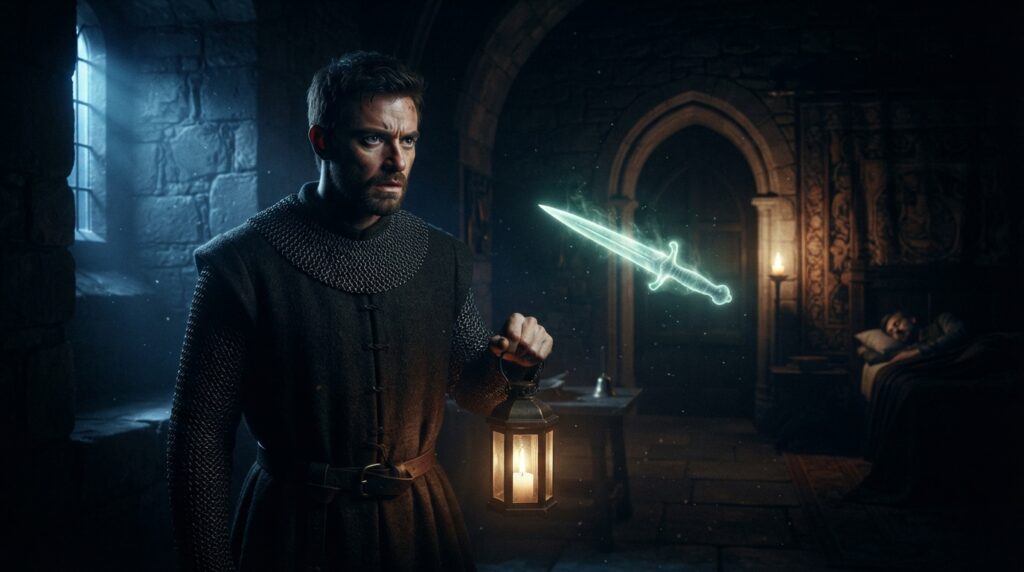
After Banquo and Fleance leave, Macbeth is alone. He sees what appears to be a dagger floating before him. The vision seems to point toward Duncan’s room, where Macbeth intends to commit murder.
As Macbeth considers the dagger, he becomes increasingly absorbed in thoughts of violence and darkness. He imagines blood on the weapon and connects the coming murder with supernatural forces and the silent nighttime world.
Then Lady Macbeth rings a bell.
The bell is the agreed signal that everything is ready. Macbeth finally stops debating and declares that he will go forward with the murder. He exits toward Duncan’s chamber.
In simple terms
The scene shows Macbeth moving from thought to action.
He has already decided to kill Duncan, but his mind is still struggling with fear, guilt, uncertainty, and supernatural imagery. The dagger becomes a powerful representation of this psychological conflict.
What Happens Before Act 2 Scene 1?
To understand the scene fully, it helps to remember what Shakespeare has already established.
In Act 1, the three witches tell Macbeth that he will become Thane of Cawdor and eventually king. The first prophecy quickly comes true, making Macbeth take the witches seriously.
Banquo also receives a prophecy: although he will not become king himself, his descendants will become kings.
Macbeth begins imagining the possibility of becoming king. However, becoming king naturally through succession is not possible while Duncan remains alive.
By Act 1 Scene 7, Macbeth has seriously considered murdering Duncan. He understands that Duncan is his king, relative, guest, and a respected ruler. Nevertheless, Lady Macbeth challenges his hesitation and presents a plan for killing Duncan.
Macbeth eventually agrees.
Therefore, Act 2 Scene 1 does not show the beginning of Macbeth’s desire to murder Duncan. Instead, it shows the moment immediately before that desire becomes physical action.
The Folger Shakespeare Library describes Act 2 Scene 1 as the point where Macbeth, after Banquo leaves, sees a bloody dagger apparently leading him toward Duncan’s room before leaving to carry out the murder.
Where Does Act 2 Scene 1 Take Place?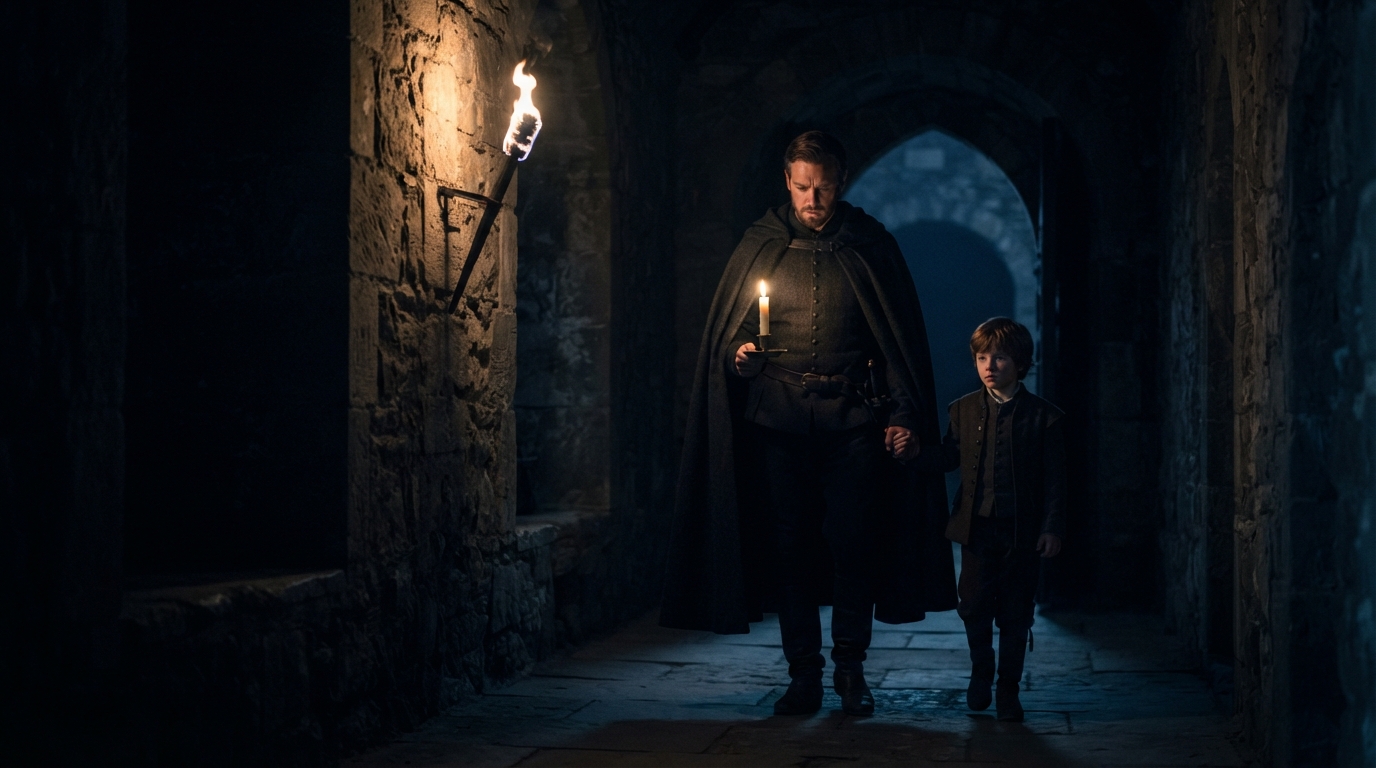
The scene takes place at Macbeth’s castle at Inverness, late at night.
The setting is extremely important.
There is:
- Darkness
- Silence
- Sleep
- Suspicion
- Isolation
- Supernatural imagery
- Anticipation of violence
Shakespeare creates a world in which ordinary boundaries seem to weaken.
The moon has gone down. The stars are hidden. Duncan is asleep. Banquo cannot sleep. Macbeth is awake and preparing for murder.
This contrast between sleep and wakefulness becomes especially significant.
Duncan is vulnerable because he sleeps peacefully.
Banquo is awake because his conscience is troubled.
Macbeth is awake because he is preparing to commit a terrible act.
Who Appears in Macbeth Act 2 Scene 1?
Banquo
Banquo begins the scene with Fleance.
He is uneasy because the witches’ prophecies continue to occupy his thoughts. However, Shakespeare makes an important distinction between Banquo and Macbeth.
Banquo experiences temptation, but he tries to resist it.
Macbeth experiences temptation and eventually chooses to pursue it.
This makes Banquo an important contrast to Macbeth.
Fleance
Fleance is Banquo’s son.
His presence matters because the witches predicted that Banquo’s descendants would become kings. Fleance therefore has significance beyond this individual scene.
At this stage, however, Fleance primarily helps establish the nighttime atmosphere and accompanies his father.
Macbeth
Macbeth is the central character of the scene.
He is:
- Secretive
- Ambitious
- Frightened
- Deceptive
- Psychologically conflicted
- Increasingly determined
His famous dagger soliloquy gives the audience direct access to his thoughts.
Lady Macbeth
Lady Macbeth does not physically appear in the scene, but her influence is crucial.
Her role is represented through the bell.
She has prepared the circumstances for Duncan’s murder and uses the bell as the signal for Macbeth to proceed.
Detailed Analysis of Macbeth Act 2 Scene 1
Banquo and Fleance Begin in Darkness
Banquo asks Fleance about the night.
The moon has disappeared, and Banquo observes that the heavenly “candles” have gone out. Shakespeare immediately creates an atmosphere of darkness.
Banquo then says:
“A heavy summons lies like lead upon me”
The comparison of his tiredness to lead suggests something heavy and burdensome.
But Banquo does not simply feel physically tired. His mind is troubled.
He asks the “merciful powers” to restrain the “cursed thoughts” that arise naturally during sleep.
Why is this important?
Banquo is affected by the supernatural predictions, but he does not immediately surrender to them.
This creates an important comparison:
Banquo thinks about temptation but attempts to resist it. Macbeth thinks about temptation and increasingly allows it to control his actions.
Shakespeare therefore presents the witches as influential, but not necessarily as the sole cause of Macbeth’s choices.
Macbeth and Banquo: A Conversation Full of Deception
Macbeth enters and Banquo is surprised that he is still awake.
Banquo explains that Duncan has gone to bed happily and has even given gifts to Macbeth’s household.
This creates dramatic irony.
Duncan believes Macbeth is a trustworthy host.
The audience knows Macbeth is preparing to kill him.
Macbeth responds politely, maintaining the appearance of an honorable host.
This is an important example of appearance versus reality.
Macbeth appears friendly.
Macbeth is secretly planning murder.
“I Think Not of Them”
Banquo tells Macbeth that he dreamed about the three Weird Sisters.
Macbeth responds:
“I think not of them.”
This statement is deeply ironic.
The audience knows that Macbeth is thinking about much more than the witches. Their prophecy has helped create the circumstances that have brought him to this moment.
Macbeth’s response is therefore deceptive.
He is not merely hiding information from Banquo. He is beginning to separate his public identity from his private intentions.
That separation becomes increasingly important throughout the tragedy.
Macbeth Attempts to Test Banquo
Macbeth suggests that they should discuss the witches at another time.
He then hints that Banquo might benefit if he supports Macbeth.
Banquo responds carefully.
He says he will listen as long as he does not compromise his honor or loyalty.
This is one of the most important moments for understanding Banquo.
Banquo is not presented as completely free from temptation. Instead, he is presented as someone who recognizes temptation but establishes a moral boundary.
That makes his contrast with Macbeth much stronger.
Macbeth is willing to sacrifice morality for power.
Banquo wants to preserve his integrity even while considering possible opportunities.
The Dagger Soliloquy: “Is This a Dagger Which I See Before Me?”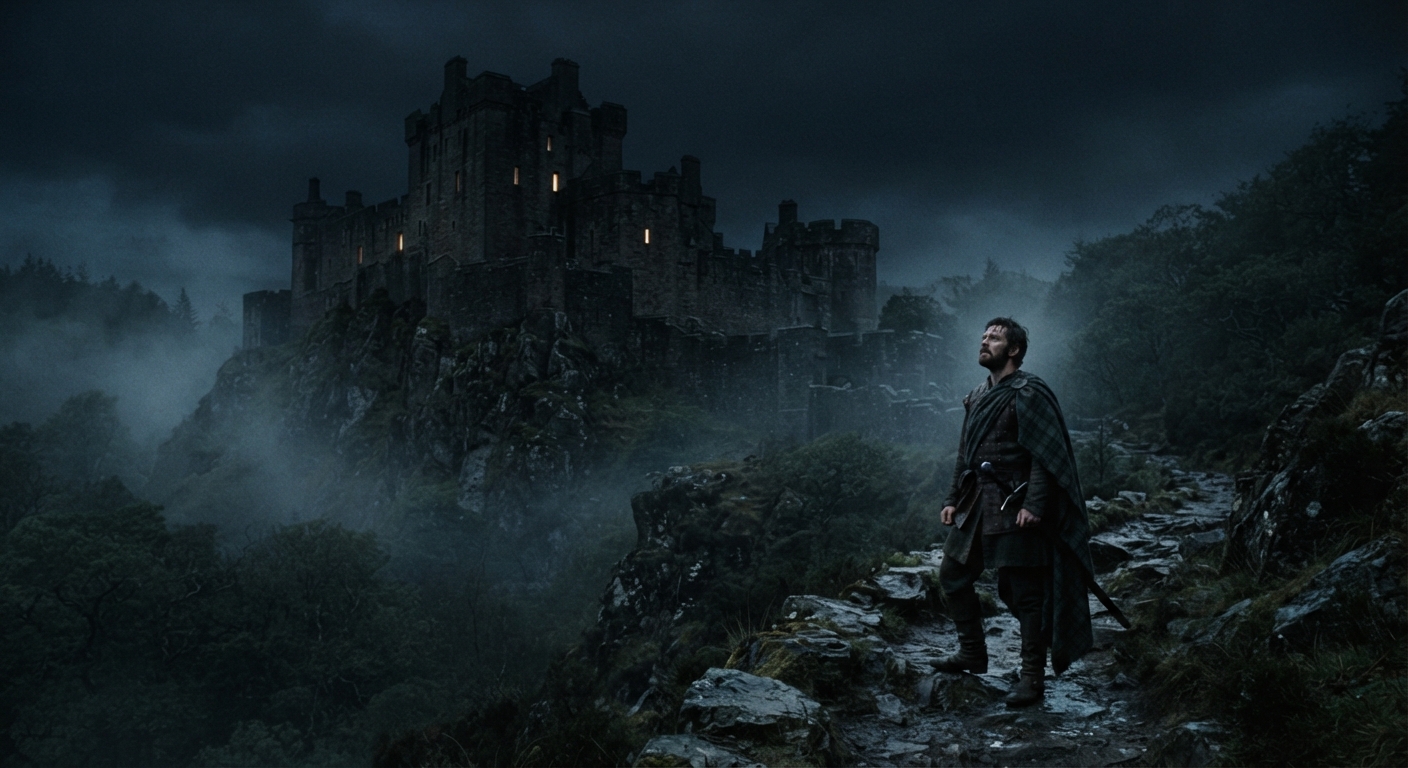
After Banquo and Fleance leave, Macbeth is alone.
The dramatic structure now changes.
Instead of speaking carefully to another character, Macbeth speaks directly to himself.
This is a soliloquy.
The audience can therefore hear thoughts that Macbeth cannot reveal to Banquo or Duncan.
The soliloquy begins with one of Shakespeare’s most famous questions:
“Is this a dagger which I see before me”
Macbeth sees a dagger apparently suspended in the air.
He tries to grasp it, but cannot.
The vision remains visible to him.
The complete scene shows Macbeth questioning whether the dagger is physically real or merely an image produced by his troubled mind.
Is the Dagger Real or Imaginary?
Shakespeare deliberately leaves the answer uncertain.
There are several useful ways to interpret the vision.
Psychological Interpretation
The dagger may be a hallucination created by Macbeth’s intense emotional state.
He is exhausted, frightened, obsessed with murder, and under enormous psychological pressure.
The dagger could therefore be the physical manifestation of his murderous thoughts.
Supernatural Interpretation
The play contains witches, prophecies, spirits, and supernatural imagery.
Macbeth therefore exists in a world where supernatural explanations are possible.
The dagger could be interpreted as another supernatural sign directing Macbeth toward Duncan.
However, Shakespeare does not explicitly confirm this.
Symbolic Interpretation
Whether the dagger is physically real or not, its dramatic function is clear.
It represents Macbeth’s movement toward murder.
The dagger appears before him because murder already exists in his imagination.
In this sense, the vision externalizes an internal conflict.
“A Dagger of the Mind”
One of the most revealing phrases in the soliloquy is:
“A dagger of the mind”
Macbeth himself questions whether the weapon is a “false creation” produced by his overheated brain.
This phrase is extremely important for literary analysis.
The dagger may not be an external force at all.
It may be the product of Macbeth’s own thoughts.
That creates an important question:
Is Macbeth being led toward murder, or is he creating the path himself?
The scene never gives the audience a simple answer.
That ambiguity makes the dagger one of the most effective symbols in the play.
The Dagger as a Symbol of Ambition
The dagger points Macbeth toward Duncan’s chamber.
In symbolic terms, it represents the direction Macbeth has already chosen.
His ambition has given him a destination.
The dagger does not need to create Macbeth’s desire. Instead, it seems to make that desire visible.
This distinction is important:
Macbeth is not simply a passive victim of prophecy. He makes decisions in response to prophecy.
The witches predict.
Macbeth interprets.
Macbeth chooses.
That relationship between prophecy and personal responsibility becomes one of the central questions of Macbeth.
Blood Imagery and Foreshadowing
Macbeth eventually imagines blood on the dagger.
The weapon becomes increasingly connected with the murder that is about to happen.
This is an example of foreshadowing.
The audience knows that blood will soon become physically present.
The imagined blood therefore anticipates the actual violence of Duncan’s murder.
Blood also becomes one of the most important recurring images in the tragedy.
After Duncan’s murder, blood will symbolize:
- Guilt
- Violence
- Responsibility
- Psychological consequences
- The lasting effects of crime
The dagger therefore introduces a motif that will continue throughout the play.
Darkness, Sleep, and the Supernatural
Macbeth’s soliloquy expands the dark atmosphere established by Banquo.
He imagines the natural world as strangely quiet.
He refers to:
- Night
- Sleep
- Witchcraft
- Hecate
- Murder
- The wolf
- Ghostlike movement
The world seems to participate in the coming crime.
This creates a disturbing impression that nature itself has become unnatural.
Yet Macbeth’s language also reveals that much of this atmosphere exists inside his own imagination.
That duality is essential.
The audience sees both the external darkness and the internal darkness of Macbeth’s mind.
“Thou Marshal’st Me the Way That I Was Going”
Macbeth describes the dagger as guiding him toward the murder.
The word “marshal’st” suggests leadership or direction.
This gives the dagger an almost human role.
It seems to lead Macbeth.
But the irony is that Macbeth was already going in that direction.
The dagger therefore appears to guide him toward a destination he has already chosen.
This is one reason the scene is so important to the theme of free will versus fate.
Fate vs. Free Will in Act 2 Scene 1
The witches have predicted Macbeth’s future.
But prophecy does not explicitly tell Macbeth:
“Kill Duncan.”
Macbeth decides that murder is the means through which he can reach the crown.
This distinction allows Shakespeare to explore an important question:
Does Macbeth become king because fate demands it, or because his choices help create the future?
Act 2 Scene 1 strongly supports the importance of personal choice.
Macbeth recognizes the moral danger.
He knows Duncan is sleeping.
He understands what he is about to do.
He even experiences psychological resistance.
Yet he proceeds.
Macbeth and Banquo: A Powerful Contrast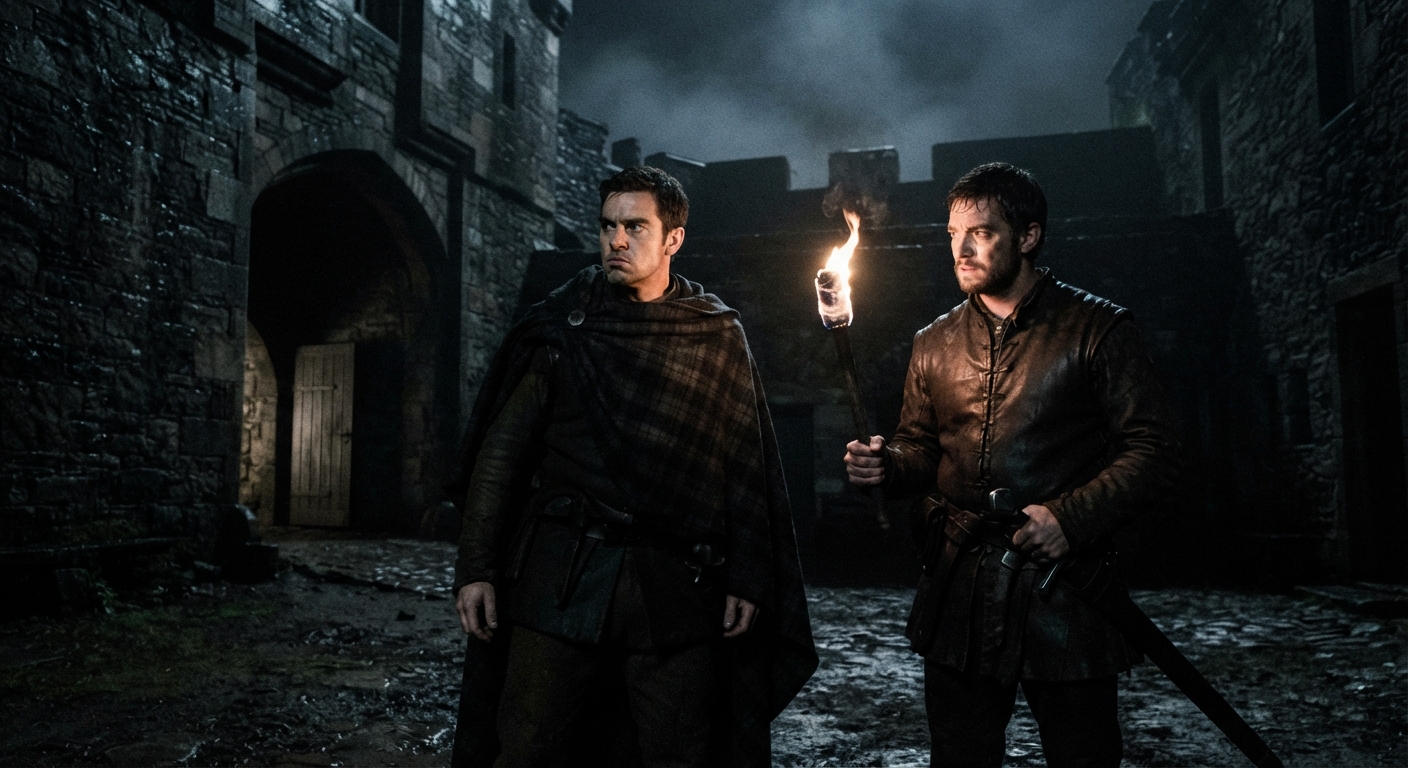
The scene becomes even more meaningful when Macbeth and Banquo are compared directly.
| Macbeth | Banquo |
|---|---|
| Is influenced by the witches | Is also affected by the witches |
| Thinks about the prophecy | Dreams about the prophecy |
| Hides his intentions | Speaks cautiously |
| Considers personal advancement | Protects his honor |
| Experiences disturbing thoughts | Experiences disturbing thoughts |
| Chooses murder | Resists immoral action |
| Pursues power | Prioritizes integrity |
The contrast demonstrates that supernatural temptation does not automatically produce evil behavior.
Two men can encounter similar influences and make different choices.
This is central to Shakespeare’s presentation of responsibility.
Major Themes in Macbeth Act 2 Scene 1
1. Ambition
Ambition is one of the dominant themes.
Macbeth wants the crown, and Duncan’s continued existence stands between Macbeth and his imagined future.
The dagger symbolizes the violent route Macbeth has chosen.
His ambition has moved beyond desire.
It has become action.
2. Appearance vs. Reality
The scene repeatedly contrasts what characters appear to be with what they actually think.
Macbeth tells Banquo he is a friend.
But he is secretly planning murder.
Duncan believes Macbeth is a loyal host.
But Macbeth intends to kill him.
The dagger appears real but may be imaginary.
Therefore, Shakespeare creates uncertainty at both the social and psychological levels.
3. Guilt and Conscience
Macbeth has not yet murdered Duncan, but his conscience is already active.
The dagger vision suggests that his mind is struggling with what he is about to do.
Banquo also experiences disturbing thoughts.
The difference is that Banquo attempts to resist them while Macbeth increasingly embraces them.
4. The Supernatural
The supernatural remains present throughout the scene.
The witches are discussed.
Macbeth sees a mysterious dagger.
He refers to witchcraft and Hecate.
The audience is therefore encouraged to question where ordinary reality ends and supernatural influence begins.
Yet Shakespeare deliberately avoids giving a definitive explanation for Macbeth’s vision.
5. Fate and Free Will
The witches’ prophecies establish a possible future.
Macbeth’s choices help turn that possibility into reality.
Act 2 Scene 1 is therefore an important moment in the debate over whether Macbeth is controlled by fate or responsible for his own actions.
6. Violence
There is no murder shown directly in this scene.
Nevertheless, violence dominates Macbeth’s imagination.
The dagger, blood, murder, and Duncan’s approaching death are all present through language and imagery.
Shakespeare creates suspense by making the audience anticipate violence before witnessing it.
7. Sleep and Darkness
Sleep represents vulnerability and innocence, while nighttime provides a cover for Macbeth’s secret actions.
Banquo cannot sleep because his mind is troubled.
Duncan sleeps because he feels safe.
Macbeth remains awake because he is preparing to destroy that safety.
Key Quotes from Macbeth Act 2 Scene 1
| Quote | Speaker | Meaning |
|---|---|---|
| “A heavy summons lies like lead upon me” | Banquo | Shows Banquo’s psychological burden |
| “Cursed thoughts” | Banquo | Reveals his awareness of disturbing temptation |
| “I think not of them” | Macbeth | Shows Macbeth’s deception |
| “Is this a dagger which I see before me” | Macbeth | Introduces the central vision |
| “A dagger of the mind” | Macbeth | Suggests the vision may come from his imagination |
| “Thou marshal’st me the way that I was going” | Macbeth | Connects the dagger with Macbeth’s chosen path |
| “There’s no such thing” | Macbeth | Suggests the dagger may be an illusion |
| “I go, and it is done” | Macbeth | Marks his transition from thought to action |
| “The bell invites me” | Macbeth | Shows the signal that triggers the murder |
| “Hear it not, Duncan” | Macbeth | Foreshadows Duncan’s imminent death |
The Folger text confirms the wording and sequence of these key moments, including Macbeth’s dagger vision and his final response to the bell.
Literary Devices in Act 2 Scene 1
Soliloquy
The dagger speech is a soliloquy.
It gives the audience direct access to Macbeth’s thoughts and allows Shakespeare to dramatize his internal conflict.
Imagery
Shakespeare uses vivid imagery involving:
- Blood
- Darkness
- Weapons
- Sleep
- Night
- Ghosts
- Nature
This creates a frightening atmosphere and reveals Macbeth’s psychological condition.
Personification
The dagger appears to guide Macbeth.
Later, the bell appears to “invite” him.
Both objects are given qualities associated with human agency.
Simile
Banquo’s comparison of his psychological burden to lead communicates the heaviness of his thoughts.
Rhetorical Questions
Macbeth repeatedly questions what he sees and whether the dagger exists.
These questions demonstrate uncertainty and psychological tension.
Foreshadowing
The dagger and blood imagery anticipate Duncan’s murder.
The audience knows that Macbeth is moving toward an act that will permanently change the story.
Dramatic Irony
Duncan believes Macbeth is trustworthy.
The audience knows otherwise.
This difference between audience knowledge and character knowledge creates suspense.
The Importance of the Bell
The bell at the end of the scene is more than a practical signal.
It marks a dramatic threshold.
Before the bell:
Macbeth is thinking.
After the bell:
Macbeth acts.
Macbeth says:
“The bell invites me.”
This personification makes the bell seem like an active participant in the murder.
But there is also an important irony.
The bell does not truly make Macbeth murder Duncan.
Macbeth chooses to follow it.
That makes the moment particularly significant in the debate about free will.
Why Does Macbeth Say the Bell Is a “Knell”?
Macbeth describes the bell as a “knell” for Duncan.
A knell is associated with a funeral or death.
Therefore, the bell functions on two levels.
Literal level
It is a signal telling Macbeth that the plan is ready.
Symbolic level
It is effectively announcing Duncan’s death.
The audience therefore hears the sound of death before Duncan actually dies.
This is an excellent example of Shakespeare using sound as dramatic foreshadowing.
How Macbeth Changes in Act 2 Scene 1
Macbeth’s development can be traced through three stages.
Before the scene
Macbeth is uncertain.
He understands the moral and political consequences of killing Duncan.
During the scene
Macbeth becomes increasingly isolated.
He lies to Banquo, sees the dagger, and struggles with his own imagination.
At the end
Macbeth commits himself to the murder.
The movement is therefore:
Ambition → Imagination → Decision → Action
This progression is central to Macbeth’s tragedy.
Why Is Act 2 Scene 1 Important to the Whole Play?
Act 2 Scene 1 is one of the major turning points in Macbeth.
It Marks the Point of No Return
Macbeth has already agreed to the murder, but this scene shows him physically and psychologically approaching it.
Once Duncan is murdered, Macbeth cannot return to his former life.
It Deepens the Psychological Tragedy
Instead of showing Macbeth as a simple villain, Shakespeare lets us witness his fear and conflict.
The audience sees a man who understands the horror of his intended action but continues toward it.
It Establishes Important Motifs
The scene develops recurring motifs involving:
- Blood
- Darkness
- Sleep
- Dreams
- Supernatural forces
- Weapons
- Guilt
These ideas continue throughout the tragedy.
It Connects Directly to Act 2 Scene 2
The next scene begins with Lady Macbeth waiting for Macbeth to return after killing Duncan. Macbeth arrives horrified by what he has done, while Lady Macbeth attempts to manage the aftermath.
Act 2 Scene 1 is therefore the psychological preparation for the crime, while Act 2 Scene 2 presents its immediate consequences.
Common Misunderstandings About Macbeth Act 2 Scene 1
“The Witches Make Macbeth Kill Duncan”
This is too simplistic.
The witches influence Macbeth through their prophecies, but they do not directly instruct him in Act 2 Scene 1 to murder Duncan.
Macbeth makes the decision himself.
“The Dagger Is Definitely Supernatural”
The text does not provide a definitive answer.
The dagger can be interpreted psychologically, symbolically, supernaturally, or through a combination of these approaches.
“Banquo Is Completely Unaffected by the Witches”
Banquo clearly is affected.
He admits that he has dreamed about the Weird Sisters and asks for protection from disturbing thoughts.
His significance comes from how he responds to that influence.
“Macbeth Has No Guilt Before Duncan Dies”
The dagger soliloquy strongly complicates this interpretation.
Macbeth is already psychologically disturbed before the murder.
His fear and uncertainty reveal that he understands the seriousness of his intended crime.
Act 2 Scene 1 Macbeth Exam Analysis
For an essay, avoid simply retelling the scene.
Instead, use this structure:
Point → Evidence → Technique → Analysis → Theme → Wider Play
For example, if the question asks how Shakespeare presents Macbeth’s ambition, you could argue that the dagger represents the way Macbeth’s ambition has transformed an abstract desire for kingship into a concrete intention to murder.
Then analyze:
- The dagger imagery
- The soliloquy
- The blood imagery
- The movement toward Duncan’s chamber
- The final bell
This produces much stronger literary analysis than simply saying, “Macbeth wants to be king.”
Possible Exam Questions
Question 1
How does Shakespeare present Macbeth’s ambition in Act 2 Scene 1?
Focus on:
- Dagger imagery
- Murder imagery
- Soliloquy
- Macbeth’s decision
Question 2
How does Shakespeare use the dagger to reveal Macbeth’s state of mind?
Focus on:
- Psychological conflict
- Illusion
- Blood
- Ambition
- Fear
Question 3
How is Banquo presented as different from Macbeth?
Focus on:
- Temptation
- Honor
- The witches
- Moral restraint
Question 4
How does Shakespeare present appearance and reality?
Focus on:
- Macbeth’s deception
- Duncan’s trust
- The dagger
- The contrast between public and private identity
Question 5
How does Shakespeare create tension before Duncan’s murder?
Focus on:
- Darkness
- Silence
- Sleep
- The dagger
- The bell
- Dramatic irony
Act 2 Scene 1 in Simple English
If you need a quick explanation, here is the scene in straightforward language:
- Banquo and Fleance are awake late at night.
- Banquo admits that he is troubled by thoughts about the witches.
- Macbeth appears and pretends he is not thinking about the witches.
- Macbeth hints that Banquo might benefit from supporting him.
- Banquo says he will listen only if he can maintain his honor.
- Banquo and Fleance leave.
- Macbeth is alone.
- Macbeth sees an imaginary or supernatural dagger.
- The dagger seems to lead him toward Duncan’s room.
- Macbeth imagines blood on the weapon.
- Lady Macbeth rings the bell.
- Macbeth interprets the bell as the signal to proceed.
- He leaves to murder Duncan.
The sequence is important because Shakespeare moves Macbeth from private thought to irreversible action.
Quick Revision Guide: Macbeth Act 2 Scene 1
Setting: Macbeth’s castle at night
Characters: Macbeth, Banquo, Fleance, Lady Macbeth indirectly
Main event: Macbeth sees the dagger before Duncan’s murder
Central symbol: The dagger
Important themes:
- Ambition
- Guilt
- Appearance vs. reality
- Supernatural influence
- Fate vs. free will
- Violence
- Sleep and darkness
Main literary technique: Soliloquy
Major turning point: Macbeth commits himself to Duncan’s murder.
Frequently Asked Questions About Macbeth Act 2 Scene 1
What happens in Macbeth Act 2 Scene 1?
Banquo is troubled by thoughts about the witches, while Macbeth secretly prepares to murder Duncan. After Banquo leaves, Macbeth sees a mysterious dagger leading him toward Duncan’s room. Lady Macbeth’s bell then signals that he should proceed with the murder.
What is the main idea of Act 2 Scene 1?
The central idea is the transition from intention to action. Macbeth has already decided to murder Duncan, and the dagger soliloquy reveals his psychological struggle immediately before the crime.
What does the dagger symbolize in Macbeth?
The dagger can symbolize Macbeth’s ambition, murderous intention, psychological conflict, guilt, and the uncertain boundary between reality and imagination.
Is the dagger in Macbeth real?
Shakespeare leaves this deliberately uncertain. Macbeth himself questions whether it is a physical dagger or a “false creation” produced by his mind.
Why is Banquo important in Act 2 Scene 1?
Banquo provides a contrast to Macbeth. Although he is affected by the witches and experiences disturbing thoughts, he emphasizes his honor and allegiance rather than immediately acting on temptation.
What does the bell symbolize in Macbeth?
The bell serves as the signal for Macbeth to proceed with Duncan’s murder. Symbolically, it marks the transition from thought to action and functions like a death knell for Duncan.
What themes are presented in Act 2 Scene 1?
The major themes include ambition, guilt, appearance versus reality, fate and free will, supernatural influence, violence, darkness, and sleep.
Why is Act 2 Scene 1 important?
It is the immediate dramatic preparation for Duncan’s murder. Shakespeare uses Macbeth’s soliloquy to expose his psychological conflict while the dagger and bell transform his private intention into action.
Final Takeaway: Why Act 2 Scene 1 Matters
Act 2 Scene 1 is the moment when Macbeth crosses the psychological boundary between wanting power and acting violently to obtain it.
The scene is much more than a famous dagger speech.
Banquo demonstrates that temptation can be resisted. Macbeth demonstrates what can happen when ambition is allowed to overcome moral judgment. The dagger transforms Macbeth’s private thoughts into a visible image, while the bell turns intention into action.
Most importantly, Shakespeare refuses to make the supernatural explanation completely simple.
Did the dagger come from Macbeth’s imagination? Was it supernatural? Was it a symbol of his ambition? The play allows multiple interpretations.
What is less ambiguous is Macbeth’s responsibility for his decision.
The witches may predict a future. They may influence Macbeth. But Macbeth chooses how to respond to what he hears.
That is why the scene remains so powerful.
Macbeth has not yet murdered Duncan when Act 2 Scene 1 begins. But by the time the bell rings, the murder has already happened in his imagination.
And when Macbeth says, “I go, and it is done,” Shakespeare transforms the scene from psychological conflict into irreversible action.
For students, the most useful way to remember the entire scene is:
Banquo resists temptation → Macbeth hides his intentions → the dagger externalizes his conflict → the bell signals action → Macbeth moves toward murder.
That sequence captures the dramatic purpose of Macbeth Act 2 Scene 1 and explains why this short scene is one of the most important moments in Shakespeare’s tragedy.