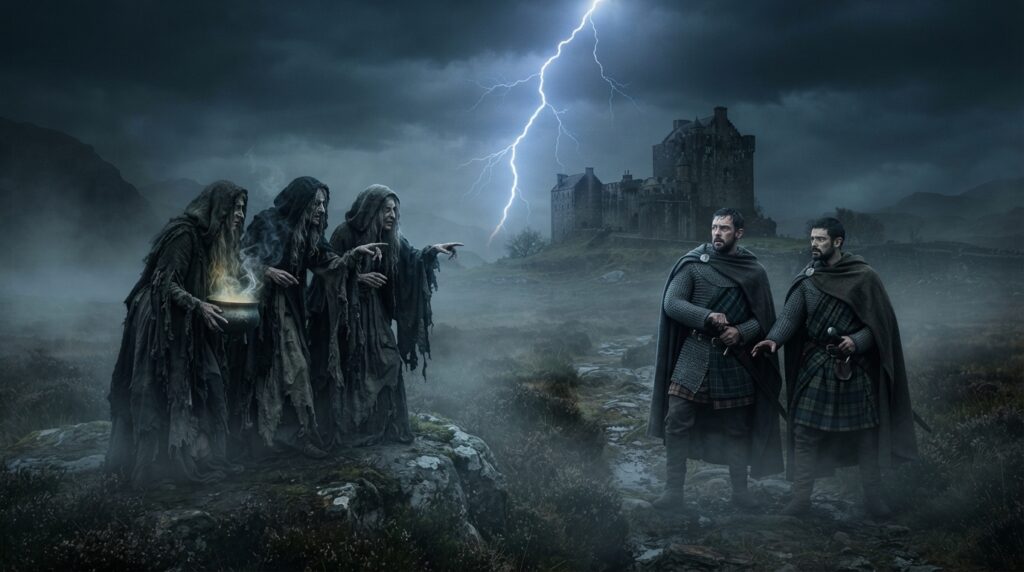
When the lightning splits the brooding Scottish sky and three ragged, unearthly figures chant, “Fair is foul, and foul is fair,” William Shakespeare sets in motion one of the most psychologically gripping tragedies ever written. Whether you are studying for a high school literature exam, prepping for a university seminar, or simply revisiting the dark brilliance of the Scottish Play, navigating the opening movement can be intimidating. That is why having reliable macbeth act 1 scene summaries is essential to unlocking the play’s deeper layers of ambition, manipulation, and fate.
In this comprehensive, skyscraper-level guide, we will break down Act 1 scene by scene, analyze the pivotal character arcs, unpack the major motifs, and explore why Shakespeare’s opening act remains an enduring masterpiece of dramatic tension.
Setting the Stage: Context and Themes of Act 1
Written around 1606 during the reign of King James I, Macbeth reflects the political anxieties of its era. King James had a deep fascination with witchcraft—even authoring a book on the subject called Daemonologie—and was heavily preoccupied with legitimate royal succession, treason, and the divine right of kings. Shakespeare wove these elements into a tight, relentless thriller. In fact, Act 1 is a masterclass in economy, laying out the inciting incidents, moral dilemmas, and fatal ambitions in the span of just seven brief scenes.
Major Motifs Introduced in Act 1
-
Appearance vs. Reality: Encapsulated by the famous paradox “Fair is foul, and foul is fair,” this theme highlights how things (and people) are rarely what they seem on the surface.
-
Ambition vs. Morality: The slippery slope where natural loyalty gives way to corrupted desire.
-
Gender and Power: The subversion of traditional Elizabethan gender roles, most vividly demonstrated through Lady Macbeth’s famous plea to “unsex” her.
Scene-by-Scene Breakdown
Act 1, Scene 1: The Witches on the Heath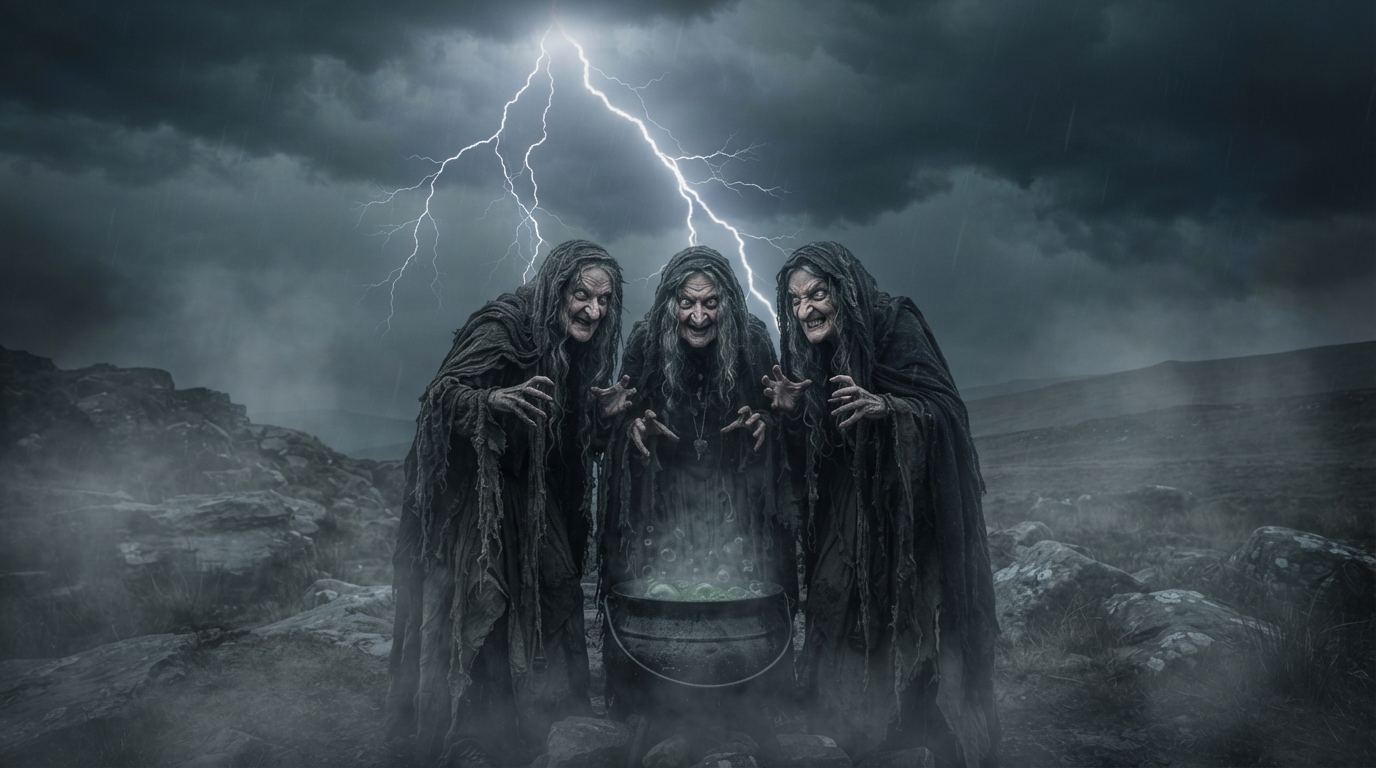
-
Setting: A desolate, thunder-struck open place.
-
Characters Present: The Three Witches (Weird Sisters).
Scene Summary
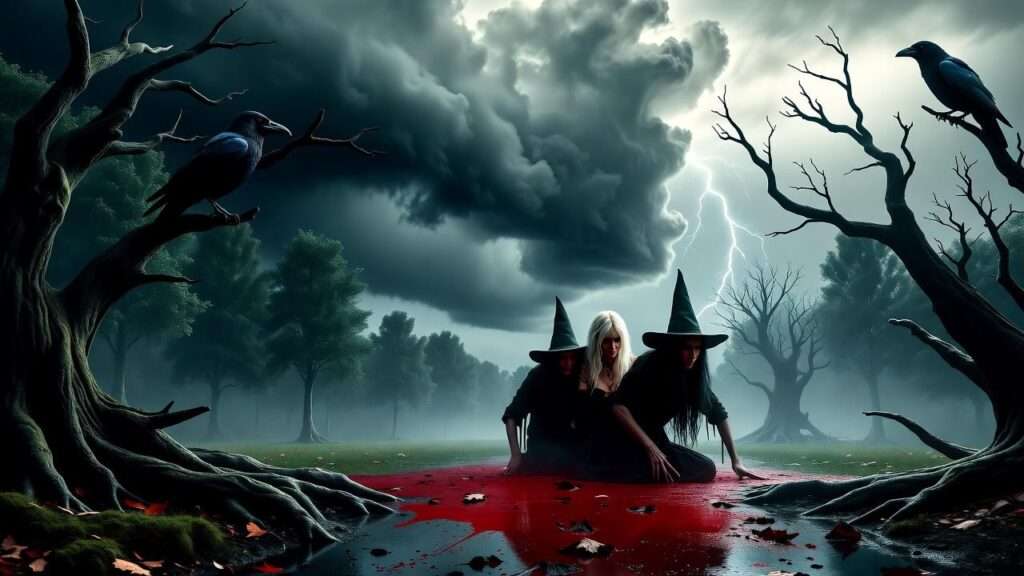
The play opens with a violent storm. Amidst thunder, lightning, and the howling wind, three mysterious witches assemble. They speak in cryptic riddles, planning their next rendezvous when the ongoing battle has concluded. They agree to meet upon the heath “to meet with Macbeth.” As they vanish into the foggy air, they leave behind the chilling paradox that dictates the moral universe of the play: “Fair is foul, and foul is fair / Hover through the fog and filthy air.”
Expert Analysis & Significance
Shakespeare immediately disorients the audience. By placing supernatural beings in a chaotic, storm-battered landscape, he establishes a sense of disorder that permeates the entire plot. The witches do not force Macbeth to commit murder; rather, they exploit the darkness already lurking within him. Their opening chant establishes that moral boundaries are about to dissolve.
Act 1, Scene 2: The Camp Near Forres
-
Setting: King Duncan’s military camp.
-
Characters Present: King Duncan, Malcolm, Donalbain, Lennox, a bleeding Sergeant, and Ross.
Scene Summary
King Duncan of Scotland receives reports on the progress of a dual war: a rebellion led by the traitor Macdonwald, and an invasion by the King of Norway aided by the traitorous Thane of Cawdor. A bloodied captain reports on the fierce loyalty and terrifying prowess of Macbeth, who fought through the chaotic battlefield, ignored danger, and ultimately carved open Macdonwald from the navel to the jaw before fixing his head on the battlements.
Shortly after, Ross arrives to report that the Norwegian forces have been decisively beaten, and the King of Norway begs for terms of surrender. Impressed by Macbeth’s valor, Duncan decrees that the traitorous Thane of Cawdor will be executed, and his title and lands will be immediately transferred to Macbeth.
Expert Analysis & Significance
Before we ever meet Macbeth, we hear him described through the eyes of others as an invincible, heroic defender of the crown. This establishes a high baseline for his character: he is noble, trusted, and deeply respected. However, the bloody imagery associated with his victory (“Bellona’s bridegroom”) subtly foreshadows the violent bloodshed he will later unleash for personal gain.
Act 1, Scene 3: The Witches’ Prophecies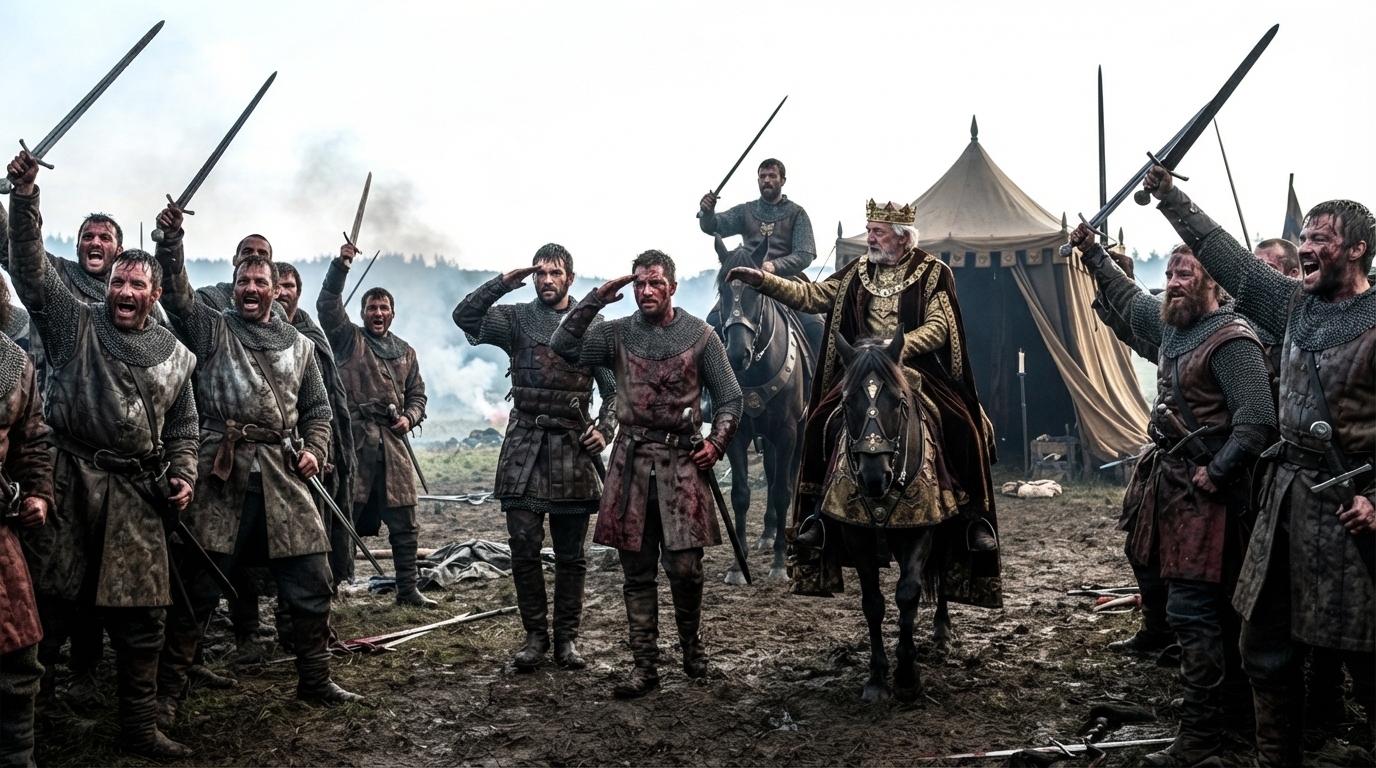
-
Setting: A desolate heath.
-
Characters Present: Macbeth, Banquo, and the Three Witches.
Scene Summary
The witches return, recounting petty acts of malice they have committed against local mortals. A drum beats, signaling Macbeth’s approach alongside his fellow commander, Banquo. The witches dance and chant, greeting Macbeth with three distinct titles:
-
Thane of Glamis (his current title)
-
Thane of Cawdor (a title he does not yet know he has been awarded)
-
King hereafter
Startled and seemingly entranced, Macbeth stands silent. Banquo steps forward, demanding to know what the future holds for him. The witches tell Banquo that he will be “Lesser than Macbeth, and greater,” and “Not so happy, yet much happier.” Most importantly, they prophesy that though Banquo will never wear a crown, his descendants will be kings.
As Macbeth demands answers, the witches vanish into thin air. Moments later, Ross and Angus arrive with startling news: King Duncan has granted Macbeth the title of Thane of Cawdor.
Psychological Shift & Analysis
The immediate fulfillment of the second prophecy shocks Macbeth into a state of profound psychological turmoil. While Banquo warns that agents of darkness often “tell us truths… To win us to our harm,” Macbeth’s mind races. He experiences terrifying “horrible imaginings,” contemplating regicide for the very first time. The seed of ambition has officially taken root.
Act 1, Scene 4: The Palace at Forres & Duncan’s Mistake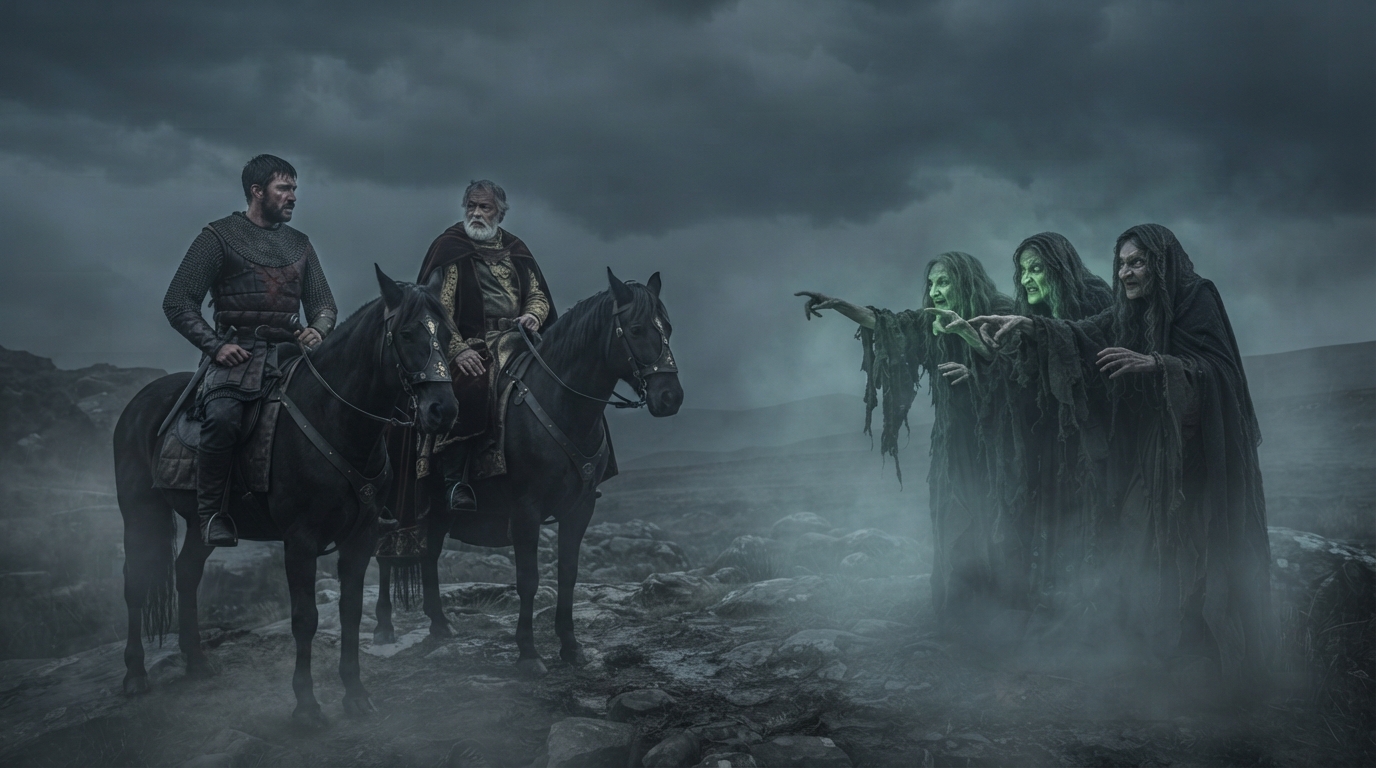
-
Setting: The royal palace.
-
Characters Present: King Duncan, Macbeth, Banquo, Malcolm, and attendants.
Scene Summary
King Duncan receives the formal execution of the former Thane of Cawdor, noting that “there’s no art / To find the mind’s construction in the face.” Macbeth and Banquo enter, and Duncan showers them with gratitude, embracing Macbeth as a peerless savior.
However, Duncan makes a critical political misstep. He formally announces that his eldest son, Malcolm, will henceforth be named the Prince of Cumberland—making Malcolm the official heir to the Scottish throne.
In a private aside, Macbeth realizes that Malcolm now stands as a physical barrier between his soaring ambition and the crown: “The Prince of Cumberland! that is a step / On which I must fall down, or else o’erleap, / For in my way it lies.” He pleads with the universe to hide his dark intentions, calling upon the stars to conceal his “black and deep desires.”
Expert Analysis & Significance
This scene highlights the fatal flaw of King Duncan: his absolute inability to read human character. Just as he trusted the previous Thane of Cawdor, he blindly trusts Macbeth while missing the predatory ambition burning beneath Macbeth’s polite exterior. Malcolm’s elevation forces Macbeth to contemplate active intervention rather than passive fate.
Act 1, Scene 5: Lady Macbeth and the Call to Cruelty
-
Setting: Macbeth’s castle at Inverness.
-
Characters Present: Lady Macbeth and a messenger.
Scene Summary
At Inverness, Lady Macbeth reads a letter from her husband detailing the witches’ prophecies and his promotion to Thane of Cawdor. Rather than celebrating, she immediately evaluates her husband’s psychological makeup. She fears he is “too full o’ the milk of human kindness / To catch the nearest way” to greatness. She knows he is ambitious, but lacks the ruthless cruelty required to seize power.
When a messenger arrives with news that King Duncan is traveling to their castle that very night, Lady Macbeth experiences a surge of dark inspiration. Alone on stage, she delivers one of the most famous soliloquies in English literature, calling upon demonic spirits to “unsex” her:
“Come, you spirits / That tend on mortal thoughts, unsex me here, / And fill me from the crown to the toe top-full / Of direst cruelty!”
When Macbeth arrives, Lady Macbeth wastes no time. She instructs him on how to manage his facial expressions and demeanor to hide their murderous plot, advising him to “look like the innocent flower, / But be the serpent under’t.”
Expert Analysis & Significance
Lady Macbeth emerges as the primary psychological engine of Act 1. Her rejection of traditional femininity, maternal instincts, and moral restraint highlights the subversion of natural order. Her strategic intellect complements Macbeth’s physical prowess, forming a formidable, destructive partnership.
Act 1, Scene 6: Arrival at Inverness
-
Setting: Outside Macbeth’s castle.
-
Characters Present: King Duncan, Banquo, Malcolm, Donalbain, Lennox, Macduff, Ross, Angus, and Lady Macbeth.
Scene Summary
King Duncan and his entourage arrive at Inverness. Banquo and Duncan remark on the pleasant, welcoming atmosphere of the castle, noting how the sweet air delicately recommends itself to their senses. Lady Macbeth greets them with elaborate, obsequious hospitality, thanking the King for the dual honors bestowed upon her household and playing the part of the gracious, loyal hostess.
Expert Analysis & Significance
This scene relies heavily on dramatic irony. The audience knows that inside this seemingly peaceful, sunlit castle, a murderous conspiracy is actively being plotted. Duncan’s misplaced trust and appreciation heighten the dramatic tension, emphasizing the theme of appearance versus reality.
Act 1, Scene 7: The Great Debate and the Decision to Murder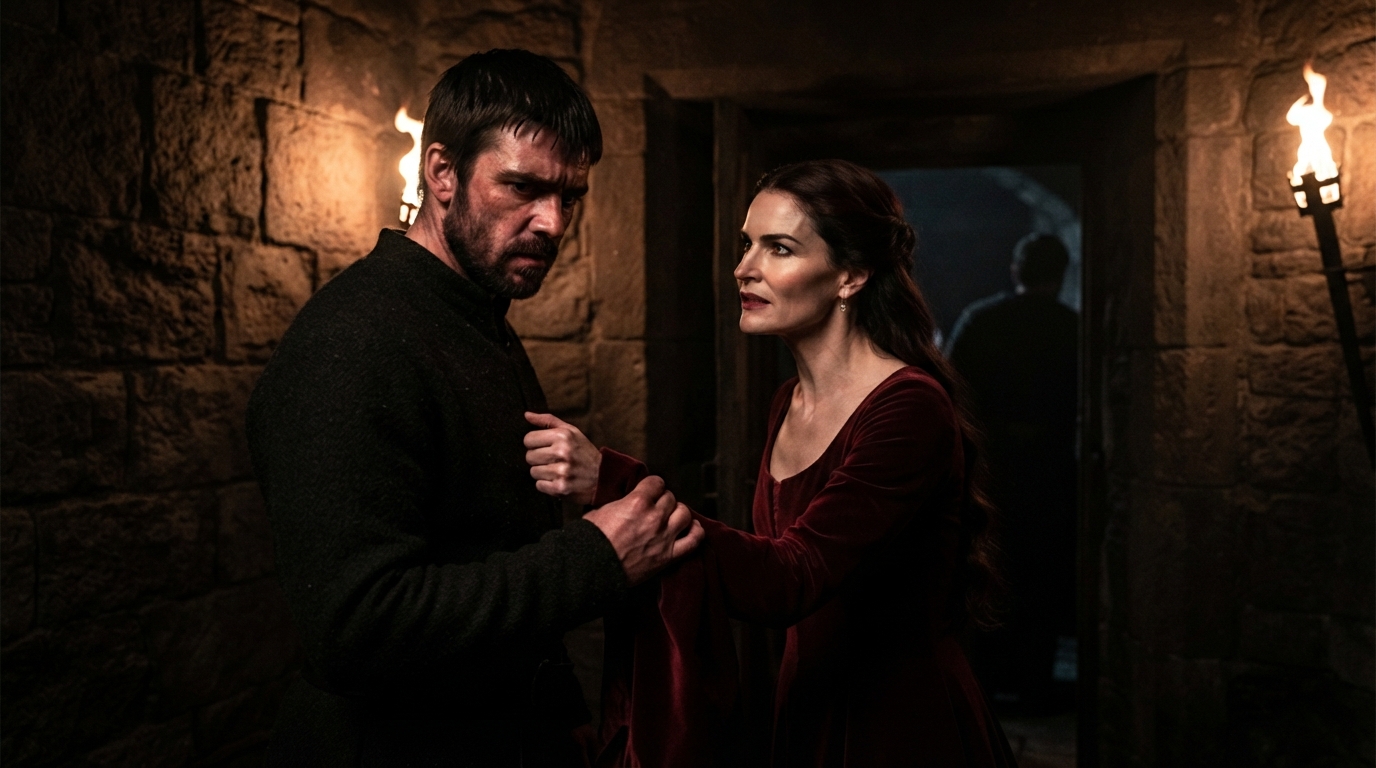
-
Setting: Inside Macbeth’s castle (during the banquet).
-
Characters Present: Macbeth and Lady Macbeth.
Scene Summary
While the feast continues outside, Macbeth slips away, wrestling with his conscience in a profound internal monologue. He weighs the consequences of assassinating Duncan:
-
The earthly consequences: Murder begets violence, and “instructions, being taught, return / To plague the inventor.”
-
Moral and social duties: Duncan is his kinsman, his guest, and a virtuous, humble king beloved by his subjects. Pity like a “naked newborn babe” cries out against the deed.
Macbeth ultimately admits to his wife that he has decided to call off the murder: “We will proceed no further in this business.” He notes that Duncan has recently honored him, and he wants to enjoy his new public esteem rather than risk it all.
Furious, Lady Macbeth unleashes a devastating verbal assault. She attacks his manhood, questioning his courage, mocking his hesitation, and declaring that she would have dashed the brains out of her own nursing infant rather than break a promise the way Macbeth is breaking his. Subduing his moral objections with fierce psychological manipulation, she outlines a simple plan: while Duncan sleeps, they will intoxicate his two chamberlains with wine, murder the King with the guards’ own daggers, and smear the sleeping guards with blood to frame them for the crime.
Conquered by her resolve, Macbeth is re-converted, resolving to “screw [his] courage to the sticking-place” and carry out the assassination.
Expert Analysis & Significance
Scene 7 is the emotional and structural climax of Act 1. It demonstrates that Macbeth’s hesitation is rooted not in moral goodness, but in fear of earthly retribution and social judgment. Lady Macbeth’s manipulation exploits his pride, proving that the real battle in the play is fought within the human mind long before any blood is spilled.
Comprehensive Character Arc Tracking in Act 1
To truly master Act 1, it is vital to track how the principal characters evolve from the opening scene to the closing curtain:
| Character | Initial State at Start of Act 1 | Psychological Shift / Development by End of Act 1 |
| Macbeth | Celebrated, loyal national hero and fierce warrior. | Tempted by ambition, tormented by doubt, and ultimately bullied/persuaded into committing regicide. |
| Lady Macbeth | Ambitious, ruthless, and deeply perceptive of her husband’s weaknesses. | Transforms into a calculated conspirator willing to abandon her humanity and gender norms to gain power. |
| Banquo | Brave, loyal co-commander and cautious realist. | Remains skeptical of the supernatural, acting as an ethical foil to Macbeth’s moral collapse. |
| King Duncan | Trusting, gracious, and politically generous monarch. | Tragically blind to human deceit, setting the stage for his own downfall through misplaced trust. |
Key Literary Devices and Symbols in Act 1
-
Pathetic Fallacy: Shakespeare uses violent weather (thunder, lightning, fog in Scene 1) to mirror the moral corruption and political instability entering Scotland.
-
Paradox: Phrases like “Fair is foul, and foul is fair” destabilize the audience’s sense of moral clarity, signaling a world turned upside down.
-
Aside and Soliloquy: Macbeth and Lady Macbeth frequently speak directly to the audience or themselves, exposing their secret, wicked desires and humanizing their internal battles.
Frequently Asked Questions (FAQs)
Why are the witches so important in Act 1?
The witches serve as the catalyst for the tragedy. While they do not physically force Macbeth to kill Duncan, they tap into his latent ambitions and provide the external validation he needs to voice his dark desires.
Why does King Duncan name Malcolm heir instead of Macbeth?
In medieval Scotland, the crown did not always pass strictly from father to son; selection processes involved noble consensus or royal nomination. By naming his son Malcolm Prince of Cumberland, Duncan disrupts expected political mobility, creating a direct obstacle