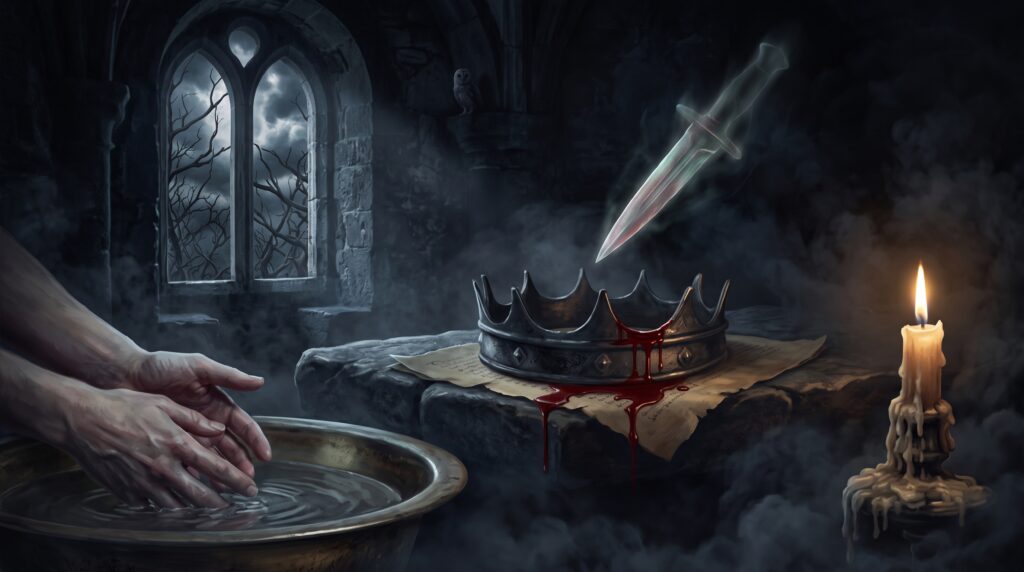
Beneath the brutal, blood-soaked surface of Scotland’s most infamous theatrical tragedy lies a complex psychological architecture. While audiences are easily captivated by witches, battles, and spectral visions, the true genius of the play rests in its underlying imagery. Understanding Macbeth symbols is the definitive key to unlocking the psychological disintegration of a tyrant and his ambitious wife. Shakespeare deliberately relies on recurring motifs rather than direct exposition to map out the moral decay of his characters, showing us their internal ruin long before their physical defeat.
For students, educators, and literary enthusiasts, moving beyond cliché classroom summaries to perform rigorous textual analysis is essential. This guide breaks down the core literary devices, textual shifts, and thematic significance of the play’s most vital imagery, providing you with everything you need for high-level essays and deep literary comprehension.
Quick Reference: What are the primary Macbeth symbols?
Blood: Represents the irreversible stain of guilt and the transition from honorable battlefield violence to treacherous murder.
Sleep (and Sleeplessness): Symbolizes innocence, divine protection, and the spiritual peace that is permanently destroyed by treason.
Light and Darkness: Illustrates the cosmic battle between moral goodness and concealing evil, reflecting the characters’ desires to hide their sins from heaven.
Weather and Nature: Acts as a mirror to the human world; unnatural cosmic disruptions reflect the unnatural act of killing an anointed king.
Clothing and Garments: Represents stolen authority and illegitimate power, highlighting the gap between Macbeth’s natural rank and his usurped crown
Blood: From Chivalric Honor to Irremovable Guilt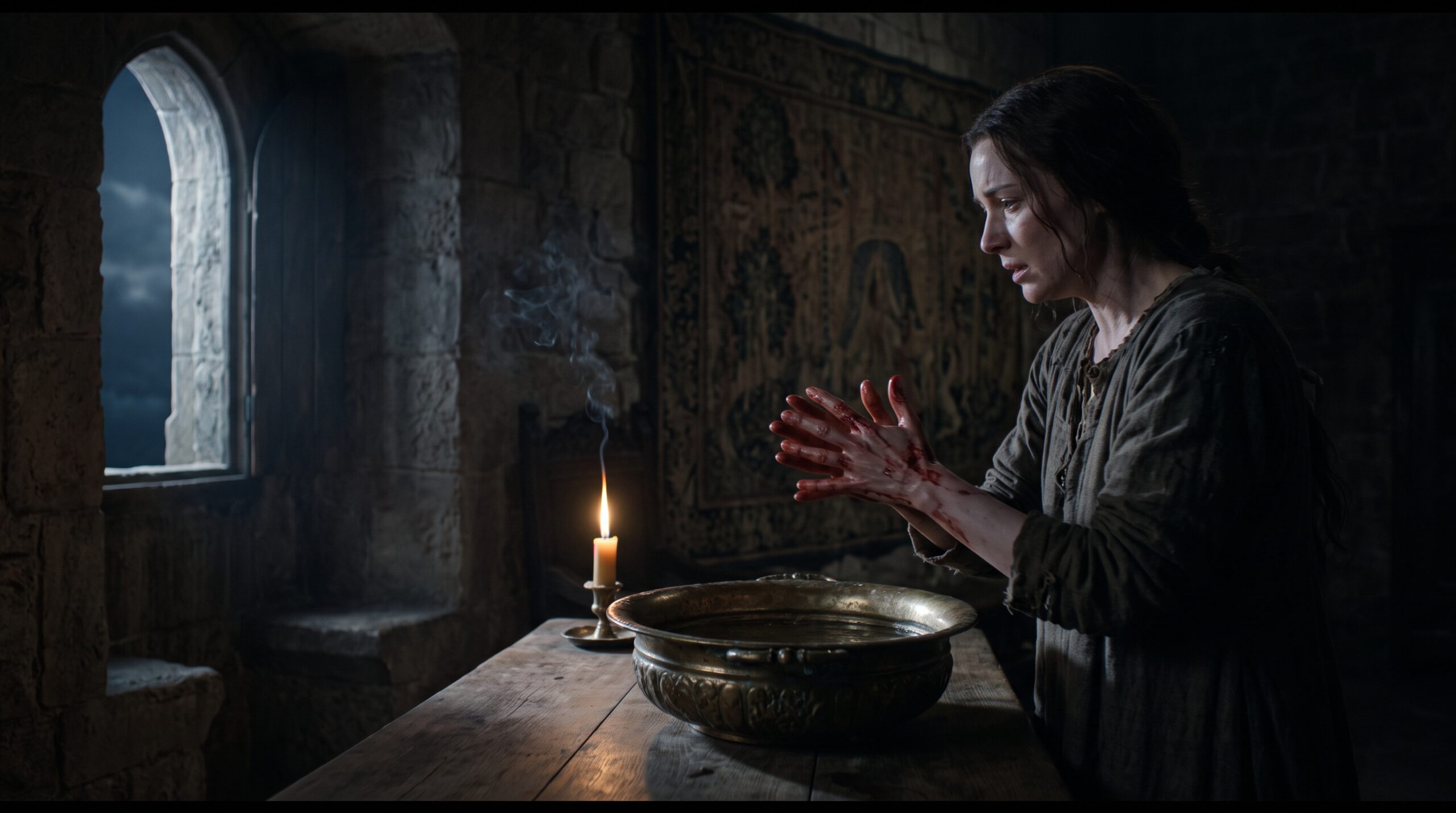
No visual element dominates the Scottish play more than blood. However, the brilliance of this motif lies in its dramatic trajectory. Shakespeare transforms this imagery from a badge of patriotic pride into a manifestation of inescapable psychological torment.
The Honorable Wound
Early in the narrative, before the protagonist’s fall from grace, gore is equated with loyalty and heroism. When a wounded captain delivers the battlefield report to King Duncan, his severe injuries are treated as undeniable proof of his devotion to the crown. The monarch praises the bleeding soldier, linking his physical wounds directly to honor. The dramatic irony here is profound: the very bloodshed that establishes the protagonist as a savior of the state foreshadows the treacherous bloodshed he will soon inflict upon it.
The Invisible, Permanent Stain
Following the assassination of the King, the symbolism of blood shifts from public glory to private horror. In the immediate aftermath of the regicide, the new King looks at his crimson hands and experiences a moment of cosmic dread, believing that not even the entirety of the world’s oceans could wash them clean. Instead, he fears his bloody hands would turn the green seas red. At this stage, his wife dismisses his panic, pragmatically claiming that a small amount of water will easily cleanse them of the deed.
The ultimate reversal occurs during the famous somnambulism scene late in the play. The Queen, previously so pragmatic, is reduced to compulsively washing her hands in her sleep, hallucinating a permanent crimson spot. The sensory shift here is critical: she moves from merely seeing the hallucination to smelling it, complaining that all the perfumes of Arabia could not mask the scent. This shift from visual to olfactory hallucination marks the precise boundary where guilt entirely defeats human sanity.
Light and Darkness: The Battle for the Moral Cosmos
In the world of this tragedy, darkness is not simply the absence of daylight; it is an active, malevolent force that characters invoke to conceal their sins. The interplay between illumination and shadow serves as a moral canvas for the unfolding treachery.
Concealing Deep Desires
Long before any physical violence occurs, the usurper explicitly asks the celestial bodies to dim their fires so that the heavens cannot witness his dark, ambitious thoughts. His wife makes a similar spiritual plea, commanding the thickest, smokiest darkness of the underworld to blanket the night. Both characters recognize that their intended actions violate the natural order, and they rely on complete physical obscurity to shield them from moral consequence and divine judgment.
The Dying Torch and the Taper of Despair
The motif of light being forcibly extinguished reaches its peak during the ambush of the King’s former friend and his son. During this chaotic nighttime murder, the assassins strike out the victims’ torch. The extinguishing of the flame represents the temporary triumph of tyranny. However, the son escapes into the night, carrying with him the figurative light of a future, legitimate dynasty.
By the final act, the Queen’s relationship with darkness has entirely inverted. Having previously summoned the night to hide her cruelty, she is now terrified of it, demanding that a candle be kept by her bedside at all times. The protagonist’s final commentary on illumination is equally grim. Upon hearing of his wife’s demise, he compares human existence to a brief, easily extinguished candle—a poignant metaphor that reduces all human ambition and struggle to a meaningless, fleeting flicker in the dark.
The Sleep Motif: The Murder of Peace and Spiritual Rest
In the Elizabethan worldview, restful slumber was considered a divine reward, a restorative gift reserved strictly for those with a clear conscience. By committing regicide, the couple does not just end a human life; they sever their own connection to spiritual tranquility.
The Death of Restoration
Immediately after the assassination, the new King is plagued by an auditory hallucination. He hears a voice declaring that he has murdered sleep itself, and therefore, he will never rest again. He desperately lists the virtues of rest, describing it as the soothing end to a hard day’s labor, a healing bath for the weary, and the chief nourisher in life’s feast. By destroying the King in his bed, the protagonist realizes he has destroyed the very sanctuary of vulnerability and peace.
The Somnambulism of Guilt
This curse of sleeplessness fully manifests in his wife’s eventual mental collapse. She is denied the healing oblivion of true rest. Instead, she is trapped in a horrific liminal state between waking and sleeping, doomed to endlessly reenact the night of the murder. Her sleepwalking demonstrates that while the conscious mind might attempt to suppress trauma, the subconscious will relentlessly force the body to confess its crimes when the defenses of wakefulness are lowered.
Ill-Fitting Garments: Borrowed Robes and Stolen Sovereignty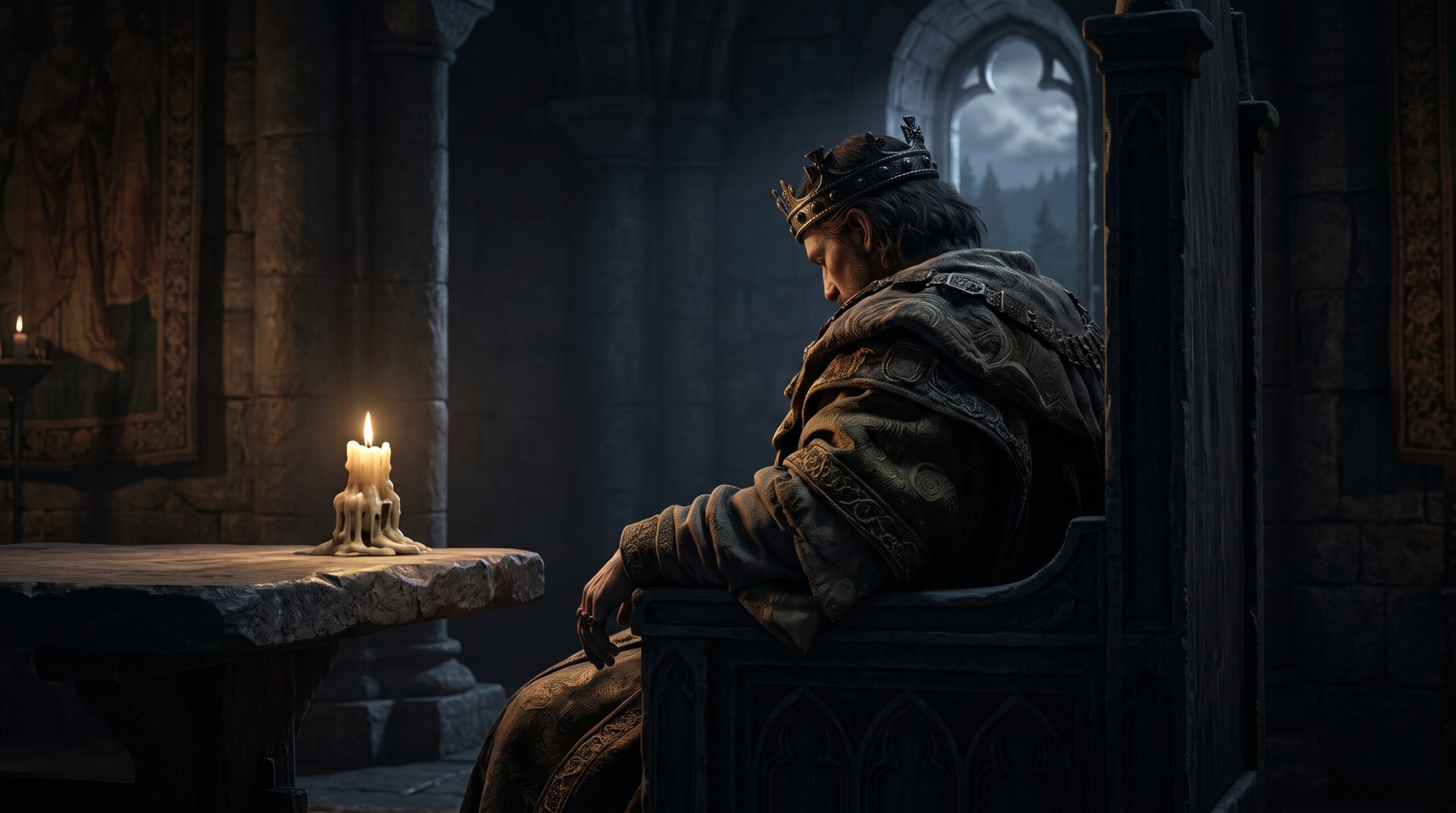
Throughout the text, clothing serves as a powerful metaphor for identity, rank, and the legitimacy of power. The recurrent imagery of garments that do not fit properly underscores the unnaturalness of the protagonist’s reign.
The Instinctive Wariness of Borrowed Titles
The clothing motif is introduced early on, when the protagonist is unexpectedly granted the title of a traitorous nobleman. His immediate reaction is one of suspicion; he asks the messengers why they are dressing him in “borrowed” garments, knowing the previous titleholder is still alive. This initial discomfort with wearing a title that does not naturally belong to him sets the thematic stage for his later, far more egregious theft of the royal crown.
The Giant’s Robe on a Dwarfish Thief
As the tyrant’s grip on Scotland begins to fail and his paranoia alienates his allies, his enemies mock the illegitimacy of his rule using sartorial terms. A rebel lord notes that the usurper’s new royal title hangs loosely upon him, comparing him to an undersized thief attempting to wear the massive robes of a giant. This brilliant metaphor illustrates a core thematic truth of the play: stealing a crown does not grant the thief the moral stature or majesty required to be a true king. The clothing highlights his inadequacy rather than masking it.
Distorted Nature and the Unruly Elements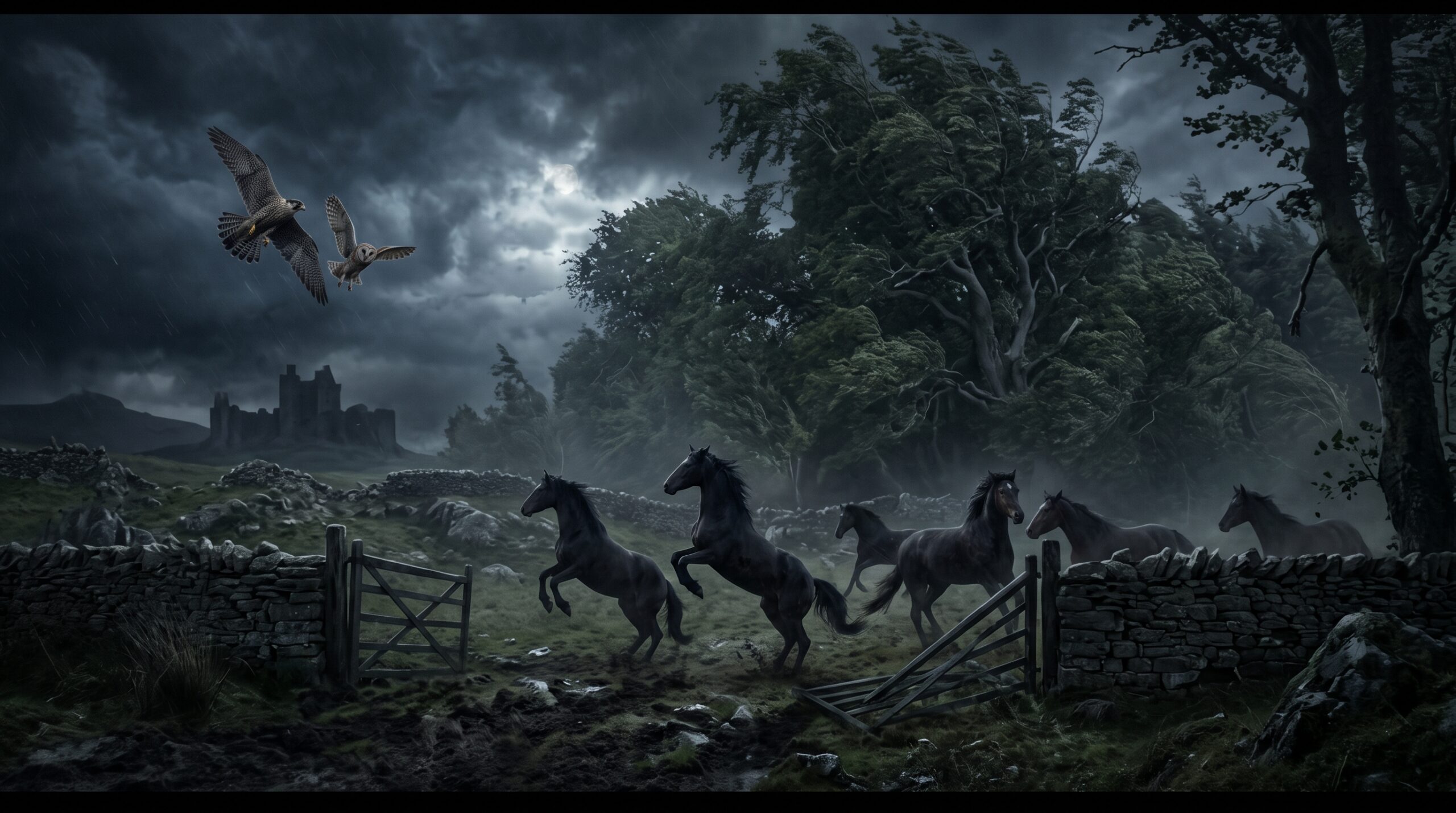
To fully grasp the tragedy, one must understand the Elizabethan concept of the Great Chain of Being. In this worldview, the monarch was considered God’s divine representative on earth. Therefore, regicide was not just a political crime; it was an act of cosmic treason that fractured the very fabric of nature. Shakespeare uses weather and animal behavior as a macrocosmic mirror reflecting the microcosmic chaos of the human world.
Unnatural Prodigies on the Night of the Murder
On the night the King is slaughtered, the physical world rebels. Characters report terrifying and bizarre phenomena that defy natural law. The skies are described as being violently troubled, but the animal kingdom provides the most striking symbolism. A majestic falcon, soaring at its highest pitch, is hunted and killed by a lowly mousing owl—a direct allegory for a lesser nobleman striking down a supreme king. Even more disturbingly, the King’s prized horses, renowned for their beauty and obedience, break out of their stalls and turn completely wild, reportedly eating each other. This grotesque reversal of the natural order underscores that when human beings violate moral laws, the universe itself descends into predatory madness.
The Moving Forest: Nature Mobilizes
The ultimate symbol of nature reacting to tyranny occurs in the play’s climax. The Weird Sisters provide a seemingly impossible prophecy: the usurper will not be defeated until a local forest physically moves to his stronghold at Dunsinane. When the opposing army cuts down the branches of Birnam Wood to use as camouflage, the prophecy is fulfilled. Symbolically, this represents the natural world physically uprooting itself and marching forward to purge the unnatural disease of the tyrant’s rule from the land.
The Dagger and Hallucinations: Externalized Guilt and Free Will
Among the most heavily debated Macbeth literary devices is the use of supernatural visions. Shakespeare continually blurs the line between objective occult phenomena (like the Weird Sisters) and subjective, psychological hallucinations born of immense stress.
The Dagger of the Mind
The defining moment of the protagonist’s descent into evil is his encounter with a floating, ghostly weapon. Before he enters the King’s bedchamber, he sees a spectral blade pointing him toward his victim, the handle aimed at his hand. He acutely questions his own sanity, wondering if it is a “false creation” proceeding entirely from his feverish, heat-oppressed brain. Ultimately, the dagger scene meaning centers on the illusion of fate versus the reality of free will. The hallucination does not force him to commit the murder; rather, it externalizes his own overwhelming ambition. He chooses to draw his real weapon and follow the spectral guide, making a conscious leap into damnation.
The Empty Chair at the Feast
If the spectral blade represents the anxiety before the crime, the ghostly apparition of his murdered friend represents the inescapable paranoia after it. During a lavish state banquet—an event meant to solidify his royal legitimacy—the new King sees his slain comrade sitting in his designated chair. Crucially, the ghost is invisible to the rest of the court. This hallucination represents the public eruption of private guilt. The breakdown of social decorum during this feast symbolizes the broader breakdown of the Scottish state under a paranoid, guilt-ridden ruler.
Comparative Matrix: Macbeth Symbols, Context, and Thematic Links
To streamline your academic revision and essay planning, use this matrix to connect core symbols to their psychological and thematic resonance.
| Symbol | Primary Character(s) | Key Structural Placement | Primary Theme | Emotional/Psychological Resonance |
| Blood | Macbeth, Lady Macbeth | Act 2, Scene 2; Act 5, Scene 1 | Guilt, Inescapable Retribution | Visceral terror, the permanent stain of sin |
| Sleep | Macbeth, Lady Macbeth | Act 2, Scene 2; Act 5, Scene 1 | Innocence, Divine Protection | Exhaustion, chronic paranoia, spiritual death |
| Darkness | Lady Macbeth, Macbeth | Act 1, Scene 4; Act 3, Scene 3 | Moral Corruption, Secrecy | Dread, cowardice, cosmic alienation |
| Robes / Clothing | Macbeth | Act 1, Scene 3; Act 5, Scene 2 | Legitimacy, Stolen Identity | Severe inadequacy, the burden of usurped majesty |
| The Dagger | Macbeth | Act 2, Scene 1 | Ambition, Fate vs. Choice | Obsessive ambition, hallucinatory dread |
Academic Strategy Guide: How to Write About Macbeth Symbols in Essays
Transforming an understanding of these motifs into an A-grade literature paper requires a specific analytical approach. Avoid simply identifying the symbol; you must explore its mechanical function within the text.
Moving from Identification to Analysis
The most effective literary analysis follows a clear, escalating formula:
-
Quote the Text: Isolate the specific language (e.g., “borrowed robes”).
-
Identify the Symbolic Vehicle: Name the device (the clothing motif Macbeth).
-
Analyze Character Psychology: Explain what this reveals about the character’s internal state (his deep-seated insecurity and awareness of his treason).
-
Connect to a Universal Theme: Tie it back to the overarching message (the ultimate failure of illegitimate, usurped authority).
Avoiding Common Student Traps
A frequent mistake is treating Shakespearean symbols as static. For instance, asserting that “blood only means guilt” ignores the vital context of Act 1, where blood initially signifies bravery and chivalric duty. Always track how a symbol mutates over the course of the five acts. Furthermore, ensure you acknowledge dramatic irony when analyzing characters’ words.
Three Ready-to-Use Thesis Statements
-
On Blood and Water: “In Macbeth, Shakespeare subverts the purifying symbolism of water, demonstrating that while physical blood can be washed away, the psychological stain of regicide permanently alienates the perpetrators from spiritual redemption.”
-
On Clothing and Legitimacy: “Through the pervasive motif of ill-fitting garments, Shakespeare argues that political authority cannot be artificially constructed or stolen; a usurped crown will only expose the moral inadequacy of the thief.”
-
On Cosmic Disruption: “The violent manipulation of light and darkness throughout the tragedy functions not merely as atmospheric stagecraft, but as a moral battleground where the protagonists futilely attempt to hide their corruption from divine omniscience.”
Frequently Asked Questions
What is the main symbol in Macbeth?
While blood is the most visceral and frequently mentioned symbol (appearing over 40 times in the text), the most structurally important symbol is arguably the disruption of nature. Every other motif—sleeplessness, hallucinatory daggers, and darkness—stems from the unnatural act of killing the rightful king.
What does the weather symbolize in Macbeth?
The foul and chaotic weather mirrors the moral inversion of the human characters. Thunder, lightning, and unnatural storms consistently accompany the Weird Sisters and scenes of treachery, symbolizing a universe thrown into chaos by the disruption of the Great Chain of Being.
How does blood change meaning throughout the play?
It transitions from a mark of honor to a mark of damnation. In Act 1, a soldier’s blood proves his loyalty to the crown. By Act 2, the blood of the King on the assassins’ hands becomes a symbol of ultimate treason. By Act 5, it transitions entirely into the realm of the mind as a hallucinatory manifestation of incurable guilt.
Why is Lady Macbeth’s candle significant in Act 5?
Having boldly invoked the “dunnest smoke of hell” to conceal her crimes in Act 1, she is utterly broken by the reality of that darkness in Act 5. Her desperate need to have a candle continuously by her side highlights her intense fear of the spiritual darkness and damnation she originally invited.
What is the difference between an omen and a symbol in Macbeth?
An omen (like the owl screeching during the murder) is a narrative foreshadowing of impending doom. A symbol (like the inability to sleep) is a recurring literary device that represents a broader, abstract thematic concept, such as the loss of innocence.
The Architecture of Tragedy
Shakespeare’s reliance on deep, structural imagery is what elevates this play from a simple historical thriller into a masterpiece of psychological horror. The Macbeth symbols are far more than poetic ornaments; they constitute the play’s true moral ledger. By tracking the sleep motif Shakespeare weaves, or the shifting meanings of blood and darkness, we gain intimate access to the eroding minds of the perpetrators.
Understanding these hidden meanings allows us to see the tragedy not just as a story of a failed rebellion, but as a timeless exploration of what happens to the human soul when ambition violently overthrows morality.