
You likely quote the Prince of Denmark every single week without even realizing it. Whether you are noting the “method to the madness” of a chaotic coworker, or deciding that you must be “cruel to be kind” when delivering tough feedback, you are speaking the language of William Shakespeare’s greatest tragedy. For literature students, theater enthusiasts, and curious readers looking to decode the play, mastering the most famous quotations from hamlet is the ultimate key to unlocking its psychological depth.
However, Elizabethan English often acts as a frustrating barrier. Four centuries of linguistic evolution can obscure the raw emotion, biting sarcasm, and profound philosophy woven into these lines. This comprehensive guide strips away the archaic confusion. By examining the original context, the characters involved, and the deeper philosophical meanings behind the words, we will translate these iconic lines into clear, modern psychology. Welcome to the definitive breakdown of the phrases that built the modern English language.
II. Why Hamlet Dominates the English Lexicon
Before diving into the specific lines, it is crucial to understand why this particular play has left such an unprecedented mark on our everyday vocabulary.
Hamlet marks a watershed moment in the history of global literature. Prior to this masterpiece, theatrical drama was largely driven by external action—battles, betrayals, and physical revenge. Shakespeare shifted the focal point from the battlefield to the human mind. The play explores universal, timeless themes: the paralyzing fear of mortality, the agonizing weight of indecision, the sting of betrayal, and the fragile line between sanity and madness.
“Shakespeare’s characters… are not only the most fully realized in literature but also the most self-conscious. Hamlet is the supreme example of this; he is the most intelligent character in all of literature, and his restless mind continually questions the nature of existence itself.” — Harold Bloom, Literary Critic (The Invention of the Human)
Because Hamlet’s internal struggles are so fundamentally human, the language used to describe them remains universally applicable. We still use Shakespeare’s exact words today because, quite simply, no one has ever found a better way to express these complex human conditions.
III. The 10 Most Famous Quotations from Hamlet: A Deep Dive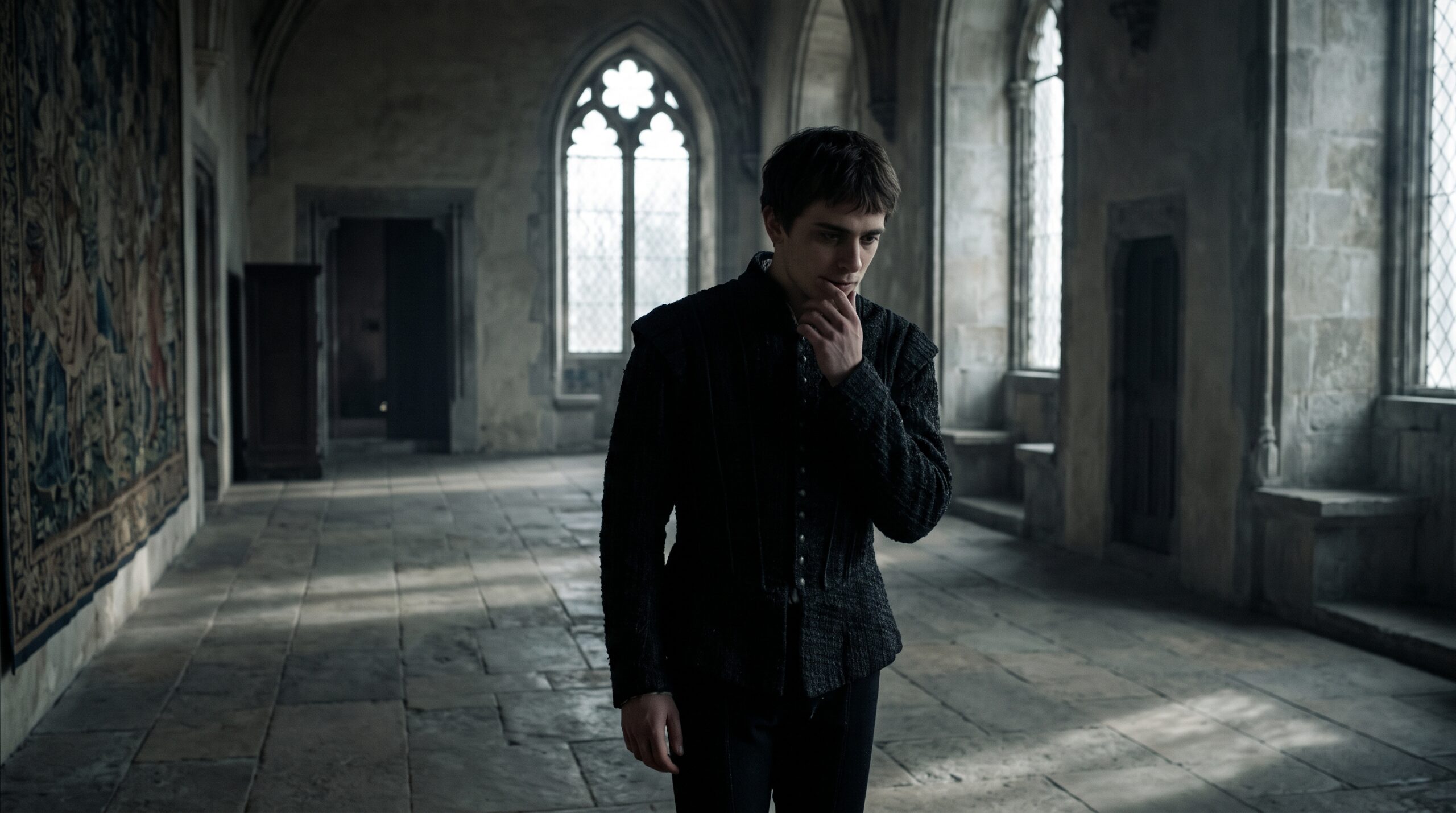
1. “To be, or not to be: that is the question” (Act 3, Scene 1, Line 55)
-
Speaker & Audience: Hamlet, speaking to himself (a soliloquy), though he is secretly being spied upon by King Claudius and Polonius.
-
Original Context: Hamlet is in a state of profound despair. He is contemplating whether it is better to endure the relentless suffering of human existence or to end his own life and face the unknown aftermath of death.
-
Modern Translation & Deeper Meaning: “Is it better to live or to die? That is the fundamental question.” The speech contrasts the “slings and arrows of outrageous fortune” (the painful, uncontrollable attacks of bad luck) with the “sleep” of death. Hamlet argues that the only reason people do not immediately choose the peace of death is the “dread of something after death”—the terrifying possibility that the afterlife might be even worse than the waking world.
-
Common Misinterpretations: Many believe this speech is a frantic, tearful breakdown. In reality, it is a cold, philosophical, and intensely rational debate about the mechanics of human suffering and the paralysis of overthinking.
2. “This above all: to thine own self be true” (Act 1, Scene 3, Line 78)
-
Speaker & Audience: Polonius, the King’s chief counselor, speaking to his son, Laertes.
-
Original Context: Laertes is packing to return to his studies in Paris. Before his son boards the ship, Polonius delivers a long, rambling list of unsolicited life advice, covering everything from how to dress to how to manage money. This line is his grand conclusion.
-
Modern Translation & Deeper Meaning: “Most importantly, be honest with yourself and protect your own interests.” If you look out for yourself, Polonius argues, you cannot be false to anyone else.
-
Common Misinterpretations: Today, this line is plastered across motivational posters, coffee mugs, and graduation speeches as a beautiful anthem for living authentically. The deep irony is that Shakespeare wrote this as a joke. Polonius is portrayed as a foolish, hypocritical, and sycophantic politician. His advice to “be true” to oneself is followed by him immediately hiring a spy to stalk his son in Paris. It is the Elizabethan equivalent of a corrupt corporate executive giving a TED Talk on integrity.
3. “Something is rotten in the state of Denmark” (Act 1, Scene 4, Line 90)
-
Speaker & Audience: Marcellus, a palace guard, speaking to Horatio.
-
Original Context: The ghost of the dead King Hamlet has just appeared on the castle battlements and beckoned young Prince Hamlet to follow it into the darkness. Overcome with dread about what this supernatural omen means for the country, Marcellus utters this famous observation.
-
Modern Translation & Deeper Meaning: “There is a deep, underlying corruption poisoning this country.”
-
Deeper Analysis: This quote perfectly encapsulates the Elizabethan concept of the “body politic.” In Shakespeare’s time, it was widely believed that a nation and its ruler were physically and spiritually connected. If the King was legitimate and moral, the land would prosper. Because King Claudius murdered his brother to steal the throne, he is a “disease” at the head of the country, and that moral rot is literally infecting the entire state of Denmark, manifesting as ghosts and looming war.
4. “Brevity is the soul of wit” (Act 2, Scene 2, Line 90)
-
Speaker & Audience: Polonius, speaking to King Claudius and Queen Gertrude.
-
Original Context: Polonius has come to the King and Queen claiming he has discovered the true cause of Prince Hamlet’s recent madness. Before revealing the reason, he spends an agonizing amount of time making bloated, unnecessary philosophical speeches about the nature of majesty and day and night.
-
Modern Translation & Deeper Meaning: “The essence of wisdom and intelligence is keeping your words short and to the point.”
-
Common Misinterpretations: Much like “to thine own self be true,” this is a brilliant piece of Shakespearean irony. The playwright forces his most long-winded, rambling, and tedious character to declare that keeping things brief is the ultimate sign of intelligence. Queen Gertrude even gets so annoyed by his meandering speech that she immediately snaps back, “More matter, with less art” (Get to the point).
5. “Though this be madness, yet there is method in’t” (Act 2, Scene 2, Line 207)
-
Speaker & Audience: Polonius, speaking as an aside (to himself and the audience) while talking to Hamlet.
-
Original Context: Hamlet is parading around the castle pretending to be insane—a strategy he calls his “antic disposition”—so he can investigate his father’s murder without arousing King Claudius’s suspicion. During a deeply sarcastic exchange, Hamlet relentlessly mocks the elderly Polonius, who fails to grasp the insults but senses a sharp intelligence beneath the rambling.
-
Modern Translation & Deeper Meaning: “He might be acting crazy, but there is a clear, calculated logic to his behavior.”
-
Modern Usage: This line birthed the highly popular modern idiom, “a method to the madness,” which we use today to describe a system, plan, or workflow that looks completely chaotic to an outsider but actually functions perfectly for the person executing it.
6. “Alas, poor Yorick! I knew him, Horatio” (Act 5, Scene 1, Line 184)
-
Speaker & Audience: Hamlet, speaking to his loyal friend Horatio, while a gravedigger looks on.
-
Original Context: Hamlet has just returned to Denmark and is walking through a cemetery. A gravedigger tosses up a skull, identifying it as Yorick, the former King’s jester who used to carry a young Hamlet on his back.
-
Visual Context: If you have ever seen an image of Hamlet holding a human skull, this is the specific scene. (It is a common literary faux pas to picture Hamlet holding a skull during the “To be, or not to be” soliloquy).
-
Modern Translation & Deeper Meaning: “Oh, poor Yorick! I actually knew this man, Horatio.”
-
Thematic Meaning: This is the play’s ultimate memento mori (a symbolic reminder of the inevitability of death). Looking at the dirt-filled skull of a man who once made the royal court roar with laughter forces Hamlet to confront the “great equalizer.” He realizes that no matter how funny, wealthy, or powerful we are—whether you are Alexander the Great or a humble jester—we all end up as dust in the earth.
7. “The lady doth protest too much, methinks” (Act 3, Scene 2, Line 222)
-
Speaker & Audience: Queen Gertrude, speaking to Hamlet.
-
Original Context: Hamlet has staged a play (he calls it “The Mousetrap”) that closely mimics the murder of his father and the subsequent quick marriage of his mother, Gertrude, to the murderer. While watching the play, Hamlet asks his mother how she likes it. Gertrude points out that the Player Queen is making too many dramatic, theatrical promises about never remarrying if her husband dies.
-
Modern Translation & Deeper Meaning: “This woman is making too many passionate denials, which makes me think she is lying.”
-
Psychological Angle: In modern psychology, this is known as overcompensation. By aggressively denying a motive or insisting on her loyalty, the Player Queen is drawing suspicion upon herself. Gertrude’s observation is dripping with dramatic irony, as her own hasty remarriage to Claudius is the very thing being criticized on stage. Today, we use the phrase anytime someone’s overly defensive reaction inadvertently exposes their hidden guilt.
8. “Get thee to a nunnery” (Act 3, Scene 1, Line 121)
-
Speaker & Audience: Hamlet, shouting at Ophelia, his former romantic interest.
-
Original Context: Immediately following the “To be, or not to be” speech, Hamlet encounters Ophelia. Realizing he is being spied upon by her father and King Claudius, Hamlet unleashes a torrent of verbal abuse upon her, aggressively commanding her to lock herself away in a convent.
-
Scholarly Debate (E-E-A-T Insight): Understanding this line requires delving into Elizabethan street slang. On a literal level, a “nunnery” is a convent. Hamlet is telling Ophelia to lock herself away in a chaste, religious life so she will not “breed sinners” (give birth to corrupt men like Claudius or Hamlet himself). However, in 16th-century London, “nunnery” was also a well-known slang term for a brothel. Thus, literary scholars argue Hamlet is delivering a dual-edged insult: simultaneously demanding she remain fiercely pure, while viciously calling her a prostitute who has sold out her affection to appease her plotting father.
9. “Frailty, thy name is woman!” (Act 1, Scene 2, Line 146)
-
Speaker & Audience: Hamlet, in his very first soliloquy, speaking to himself.
-
Original Context: The castle is celebrating the marriage of Claudius and Gertrude. Hamlet is left alone in utter despair, sickened by the fact that his mother married his uncle less than two months after his father’s sudden death.
-
Character Psychology: “Women are inherently weak.” This line is the origin point for Hamlet’s tragic descent. His mother’s inability to mourn his father and her quick jump into the bed of a lesser man completely shatters Hamlet’s worldview. His grief morphs into a toxic, generalized misogyny that destroys his relationship with Ophelia and poisons his view of humanity, setting the stage for the devastation to come.
10. “Goodnight, sweet prince” (Act 5, Scene 2, Line 359)
-
Speaker & Audience: Horatio, kneeling over the dead body of Hamlet.
-
Original Context: The stage is littered with bodies following the poisoned fencing match. Hamlet, having finally killed Claudius but having been struck by a poisoned blade himself, dies in the arms of his only true friend, Horatio.
-
Pop Culture Impact: “Goodnight, sweet prince, and flights of angels sing thee to thy rest.” This heartbreaking farewell has transcended the theater. It is frequently utilized in modern media, internet culture, eulogies, and film (most notably in The Big Lebowski) to signify a definitive, deeply tragic, yet affectionate final goodbye to a fallen comrade.
IV. Everyday Phrases You Didn’t Know Came From Hamlet
Beyond the major soliloquies, Hamlet injected a staggering number of idioms into everyday English. Here are four common phrases that originated in this single script:
-
“In my mind’s eye” (Act 1, Scene 2): When Horatio asks Hamlet if he has seen his father, Hamlet replies he sees him “in my mind’s eye,” inventing the modern concept of visualizing something using mental imagination.
-
“Cruel to be kind” (Act 3, Scene 4): Hamlet tells his mother, “I must be cruel only to be kind.” Today, we use this to describe an action that causes short-term emotional pain but is done for someone’s long-term benefit.
-
“Dog will have his day” (Act 5, Scene 1): Used by Hamlet to mean that no matter how low a person is, everyone eventually gets their moment of success, revenge, or recognition.
-
“Hoist with his own petard” (Act 3, Scene 4): A “petard” was a small medieval bomb used to blow open gates. Hamlet uses this phrase to describe someone being blown up by their own explosive. Today, it means being ruined by your own malicious trap.
V. How to Quote Shakespeare Correctly in Your Writing (Expert Tips)
For students and literary analysts incorporating these famous quotations from Hamlet into essays or search-optimized articles, proper citation is essential for maintaining academic integrity and E-E-A-T standards.
-
Formatting Rules (MLA/APA): Never cite Shakespeare using page numbers, as pagination changes dramatically across different publishing houses. Always use the standardized format of Act.Scene.Line. For example, the “To be, or not to be” quote should be cited as (Shakespeare 3.1.55-56).
-
Authoritative Texts: If you are analyzing linguistic nuances, avoid random quote aggregator websites. Rely on authoritative academic texts. The Folger Shakespeare Library and Oxford University Press editions are considered the gold standard for accurate historical text and properly numbered lines.
VI. Frequently Asked Questions (FAQs)
What is the most misquoted line in Hamlet? The most famous misquote is undoubtedly the Yorick scene. Pop culture frequently dictates the line as: “Alas, poor Yorick, I knew him well.” The actual line written by Shakespeare is: “Alas, poor Yorick! I knew him, Horatio.”
Why does Hamlet say “To be or not to be”? Hamlet delivers this line while overwhelmed by grief, betrayal, and the agonizing responsibility of avenging his father. He says it because he is weighing the agonizing pain of living against the terrifying, unknown consequences of dying, ultimately concluding that human beings only endure suffering out of a paralyzing fear of the afterlife.
Is “Method to the madness” a Shakespeare quote? Yes, though slightly adapted. The modern idiom derives directly from Polonius’s observation of Hamlet in Act 2: “Though this be madness, yet there is method in’t.”
What are Hamlet’s last words? After a long play defined by massive soliloquies and thousands of words of profound philosophical thought, Hamlet’s poetic final breath is simply: “The rest is silence.”
VII. The Mirror Up to Nature
In Act 3 of the play, Hamlet gives advice to a group of traveling actors, telling them that the purpose of playing is to “hold as ’twere the mirror up to nature.” That is precisely why the most famous quotations from Hamlet continue to dominate global literature and everyday conversation over 400 years later.
Shakespeare was not merely writing a story about a royal assassination in a gloomy Danish castle; he was capturing the very architecture of human consciousness. Every time we grapple with the unknown, stumble through paralyzing grief, detect the rot of political corruption, or try to find the method in the madness of our modern lives, we find that the Prince of Denmark has already been there, leaving us the exact words we need to make sense of the dark. To truly understand these quotes is to revisit the play not as an academic chore, but as a brilliantly honest reflection of the human condition.