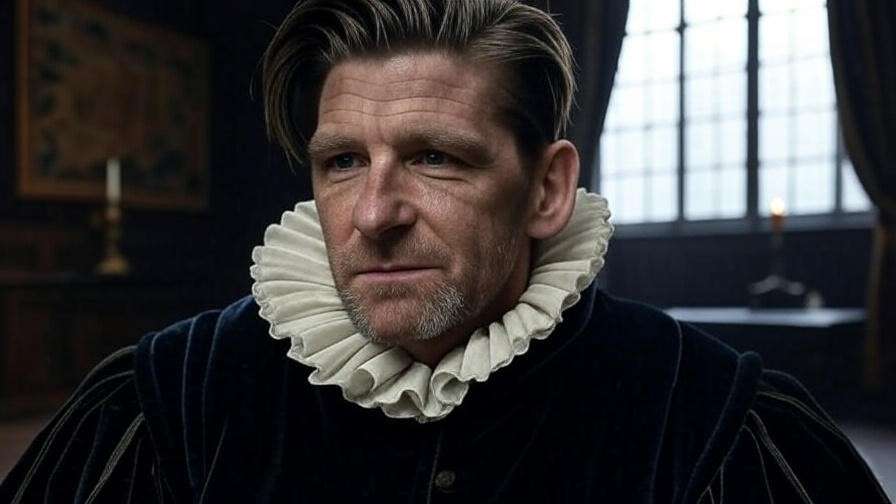

Elsinore is a suffocating world of espionage, surveillance, and fatal ambition. King Claudius plots in the shadows, Polonius spies from behind the arras, and even the seemingly innocent Ophelia is weaponized by the state. Within this toxic, morally bankrupt atmosphere, the bond between Hamlet and Horatio emerges as the singular anchor of truth and loyalty. While audiences and scholars often find themselves lost in the labyrinth of the Prince’s magnificent soliloquies and feigned madness, it is this profound friendship that keeps the narrative—and Hamlet himself—grounded.
For students, theater enthusiasts, and literary scholars seeking to unpack the complex mechanics of this Renaissance masterpiece, analyzing this relationship is not merely exploring a subplot. It is the key to unlocking the emotional and moral center of the play. The dynamic between the melancholy Prince of Denmark and the stoic scholar serves as William Shakespeare’s ultimate exploration of loyalty, humanism, and the devastating burden of memory. To understand Hamlet is to understand why, at the absolute climax of his tragic fall, the Prince’s final act is to ensure his friend survives to tell his story.
The Origins of the Bond: Fellow Scholars of Wittenberg
To comprehend the depth of their loyalty, one must look outside the corrupted walls of Denmark to the intellectual haven of Wittenberg University. This setting is not merely a biographical footnote in the text; it is the philosophical bedrock of their relationship.
The Renaissance Ideal of Friendship
In the context of the English Renaissance, male friendship was elevated to a supreme philosophical ideal, heavily influenced by classical thinkers like Cicero and contemporary essayists like Michel de Montaigne. True friendship was viewed as a merging of souls—a rational, pure love distinct from the tempestuous nature of romantic passion or the transactional obligations of court politics.
Wittenberg, historically famous as the epicenter of the Protestant Reformation, represents reason, logic, and humanist inquiry in the play. It is here that the Prince and the scholar forge their bond, away from the sycophancy of the Danish court. When Horatio arrives at Elsinore, he brings the rationalism of Wittenberg with him. He is the objective, academic lens through which the supernatural elements of the play are first filtered. His initial skepticism of the Ghost (“Tush, tush, ’twill not appear”) establishes him as an empirical thinker—a quality that makes his ultimate confirmation of the Ghost’s existence incredibly validating for Hamlet’s own sanity.
A Relationship Built on Equality, Not Status
Elizabethan society was rigidly structured by the Great Chain of Being, making cross-class intimacy highly unusual, especially for a royal heir. Yet, the egalitarian nature of their friendship is established immediately. When Horatio refers to himself as Hamlet’s “poor servant,” Hamlet instantly corrects him: “Sir, my good friend; I’ll change that name with you.”
This refusal to accept a hierarchy dictates their entire dynamic. Horatio speaks to Hamlet with a frankness that no other character in Elsinore dares to employ. He balances a deep respect for the Prince’s station with the intimacy required to challenge him when necessary. Because their relationship was forged in the halls of academia rather than the throne room, it remains wholly untainted by the political maneuvering that poisons Hamlet’s interactions with characters like Rosencrantz, Guildenstern, and Polonius.
Horatio as the Ultimate Foil to Hamlet
In dramatic literature, a foil is a character whose traits contrast with, and thereby highlight, the primary qualities of the protagonist. Horatio is the ultimate foil to Hamlet, standing as a pillar of classical stoicism against the tidal wave of Hamlet’s Renaissance melancholy.
The Stoic vs. The Passionate Prince
In Act 3, Scene 2, just before the staging of The Mousetrap, Hamlet delivers one of the most revealing speeches in the play regarding his admiration for Horatio. He praises his friend’s emotional regulation, describing him as a man who accepts “fortune’s buffets and rewards” with “equal thanks.”
Hamlet idolizes Horatio’s stoicism:
“Give me that man / That is not passion’s slave, and I will wear him / In my heart’s core, ay, in my heart of heart, / As I do thee.”
Hamlet is violently tossed by his passions—paralyzed by overthinking, consumed by grief, and prone to explosive outbursts. Horatio, by contrast, is governed by temperance. He is not a “pipe for fortune’s finger to sound what stop she please.” By placing Horatio constantly at Hamlet’s side, Shakespeare forces the audience to see the Prince’s volatility in sharp relief against his friend’s unwavering calm. Horatio represents the emotional discipline that Hamlet desperately craves but fundamentally lacks.
The Man of Action vs. The Man of Thought
While Hamlet famously delays his revenge, endlessly dissecting the moral and metaphysical consequences of murder, Horatio remains pragmatic. Though he is a man of thought—a scholar—he acts decisively when required. It is Horatio who rationally decides to inform Hamlet of the Ghost, and it is Horatio who physically attempts to restrain the Prince from following the apparition, warning him of the very real danger of madness.
This grounded nature makes Horatio the perfect confidant. He does not feed into Hamlet’s existential paralysis; rather, he anchors him to reality. Without Horatio serving as a sounding board, Hamlet’s philosophical musings would isolate him entirely from the world of the play, rendering him unreachable to the audience.
Key Moments of “Hamlet and Horatio” Throughout the Play
To truly grasp the significance of their bond, analyzing their interactions across the play’s most critical acts provides a chronological roadmap of Hamlet’s psychological descent and Horatio’s unwavering support. For students and essay writers, these specific scenes serve as the most potent textual evidence of their dynamic.
Act 1: The Ghost and the Vow of Silence
The foundation of their dramatic partnership is forged on the freezing battlements of Elsinore. After Horatio witnesses the Ghost of King Hamlet, he does not go to the authorities or to King Claudius; he goes directly to his friend. This decision instantly establishes Horatio’s primary allegiance.
Following Hamlet’s terrifying private encounter with the Ghost, the Prince is erratic, speaking in “wild and whirling words.” It is Horatio who attempts to ground him. More importantly, when Hamlet demands that Horatio and the guards swear upon his sword never to speak of what they have seen, Horatio takes the vow of silence. In a court where information is traded as a lethal currency, Horatio’s absolute discretion proves his loyalty from the very first act.
Act 3: “The Mousetrap” and The Trusted Observer
As Hamlet’s feigned “antic disposition” alienates him from everyone else in the castle, his reliance on Horatio becomes absolute. The most striking example of this occurs in Act 3, Scene 2, during the staging of the play-within-a-play, The Murder of Gonzago (or The Mousetrap).
Hamlet devises the play to “catch the conscience of the King,” but he knows his own mind is clouded by grief, hatred, and the potential deception of the Ghost. He needs an objective witness. He turns to Horatio, instructing him:
“Even with the very comment of thy soul / Observe mine uncle.”
Hamlet trusts Horatio’s empirical, rational judgment over his own subjective bias. When the King flees the theater, Hamlet does not trust his own eyes until he confirms it with Horatio. Their shared confirmation—”O good Horatio, I’ll take the ghost’s word for a thousand pound”—is the pivotal moment that catalyzes the tragedy’s second half.
Act 5: The Graveyard Scene
Following Hamlet’s exile and return, he is a changed man—more fatalistic and deeply obsessed with mortality. In the famous graveyard scene (Act 5, Scene 1), as Hamlet holds the skull of Yorick and spirals into morbid, sprawling philosophies about Alexander the Great turning into dust to stop a beer barrel, Horatio acts as the voice of reason.
Horatio gently attempts to pull Hamlet back from the brink of nihilism, warning him, “‘Twere to consider too curiously, to consider so.” Horatio recognizes the danger in Hamlet’s relentless intellectualizing of death. He remains the tether tying the Prince’s soaring, often dangerous intellect back to earthly realities.
Loyalty Tested: Why Hamlet Trusts Horatio Above All Others
Shakespeare heightens the purity of Horatio’s friendship by deliberately contrasting it with the betrayals Hamlet suffers at the hands of those who should have loved him most: his mother (Gertrude), his lover (Ophelia), and his childhood companions.
The Contrast with Rosencrantz and Guildenstern
The juxtaposition of Horatio with Rosencrantz and Guildenstern is a masterclass in character foil development. Like Horatio, Rosencrantz and Guildenstern are brought to Elsinore due to their history with the Prince. However, the similarities end there.
While Horatio comes to Elsinore of his own volition for King Hamlet’s funeral, Rosencrantz and Guildenstern are summoned by Claudius. They are immediately bought and paid for by the Crown, acting as spies. They represent the transactional, sycophantic nature of the court. Hamlet quickly sees through their facade, comparing them to “sponges” that soak up the King’s favors only to be squeezed dry. By throwing the betrayal of his childhood friends into sharp relief, Shakespeare amplifies the profound rarity of Horatio’s steadfastness.
The Absence of Agenda
In Hamlet, almost every character is driven by a hidden agenda. Claudius desires power; Polonius seeks social leverage; Laertes is driven by blind revenge. Even the Ghost has an agenda.
Horatio is the singular exception. He wants absolutely nothing from Hamlet—no wealth, no titles, no political advancement. His presence is entirely selfless. In a world defined by manipulation and deceit, Horatio’s lack of agenda makes him the only sanctuary Hamlet has left.
The Burden of the Survivor: Horatio’s Final Role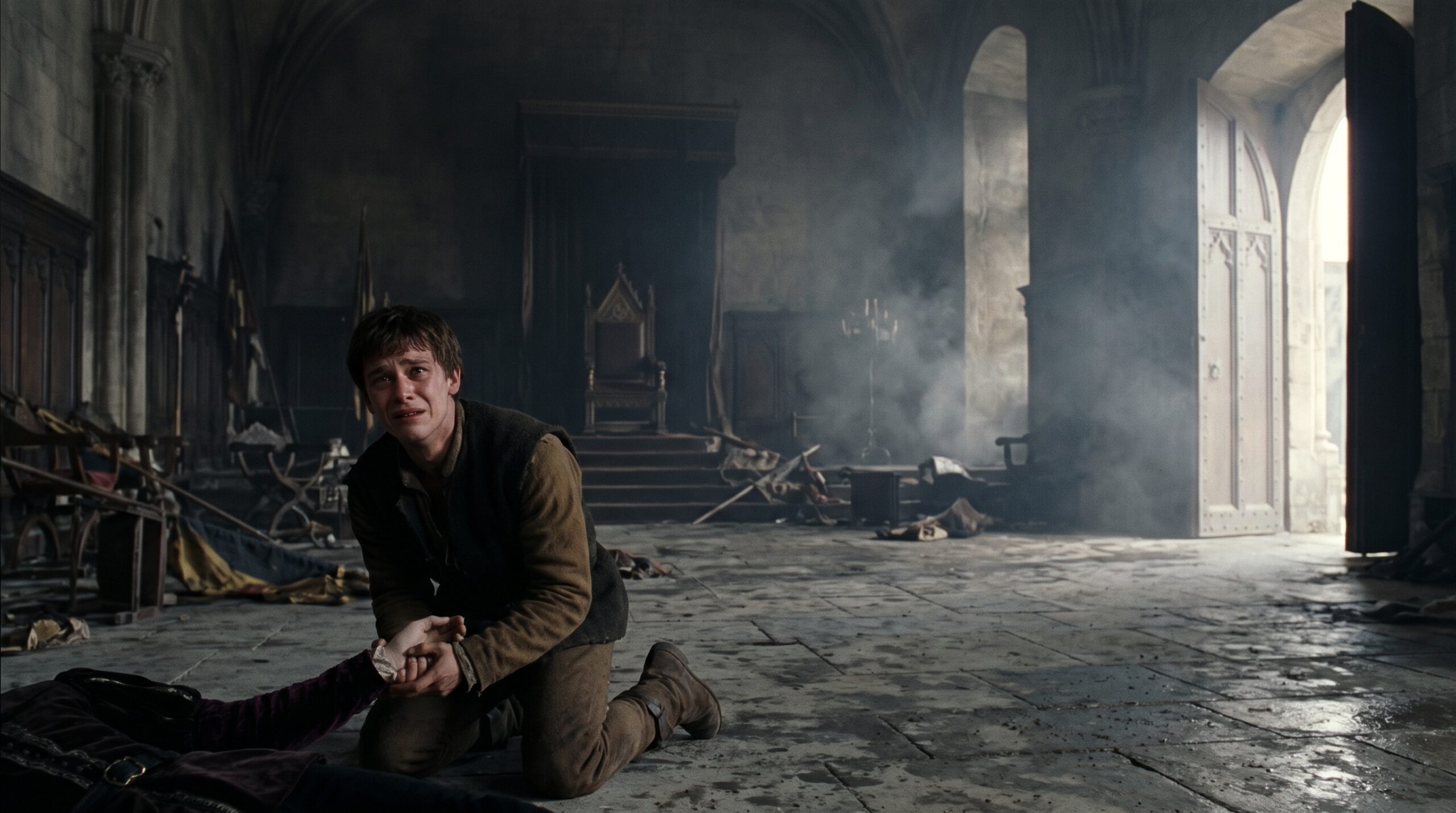
The climax of Hamlet in Act 5, Scene 2 is a bloodbath that leaves the Danish royal family decimated. As Hamlet lies dying from Laertes’ poisoned blade, the final, heart-wrenching exchange between the Prince and his friend solidifies the thematic weight of their relationship.
“Absent thee from felicity awhile”
Seeing that Hamlet is doomed, Horatio reaches for the poisoned chalice, declaring, “I am more an antique Roman than a Dane.” This is a reference to the classical Roman tradition where a loyal soldier or servant would commit suicide rather than outlive their defeated master. Horatio’s love for Hamlet is so profound that the prospect of living in a world without him is unbearable.
However, Hamlet wrestles the cup away from him. In his final moments, the Prince’s last concern is not his soul, nor the state of Denmark, but his legacy. He issues a desperate plea to his friend:
“If thou didst ever hold me in thy heart / Absent thee from felicity awhile, / And in this harsh world draw thy breath in pain, / To tell my story.”
Hamlet views death as “felicity” (happiness or peace), but he begs Horatio to endure the “harsh world” a little longer. He denies Horatio the comfort of death, tasking him with the ultimate burden of the survivor.
The Keeper of the Narrative
Horatio’s dramatic function reaches its zenith here. Without Horatio, the truth of Claudius’s fratricide, the Ghost’s appearance, and Hamlet’s feigned madness would die with them. Claudius’s lies would become the official history. Horatio is left behind to be the voice of truth, ensuring that Fortinbras and the world understand the tragedy that has unfolded. He is the bridge between the chaos of the play and the restoration of order in Denmark.
Expert Insights: What Literary Critics Say About Their Dynamic
For decades, literary critics have analyzed the Hamlet-Horatio dynamic as a cornerstone of Shakespearean tragic structure.
-
A.C. Bradley, one of the most prominent Shakespearean scholars, noted that Horatio is the only character in the play who commands the audience’s complete respect from start to finish, acting as the moral compass of the tragedy.
-
Harold Bloom, in his sweeping analyses of Shakespeare’s invention of the human, frequently pointed out that Horatio acts as the audience’s surrogate. Because we trust Horatio, and Horatio loves Hamlet, we are compelled to love the Prince despite his flaws and cruelties.
Pro Tip for Essay Writers: When writing a literary analysis or thesis statement, avoid merely stating that “Horatio is a good friend.” Instead, elevate your argument by focusing on function. Frame your thesis around how Horatio’s stoicism acts as a dramatic counterweight to Hamlet’s tragic flaw of over-intellectualization, or how Horatio functions as the vital keeper of Hamlet’s legacy.
The Enduring Legacy of True Friendship
While Hamlet is globally recognized as a definitive tragedy exploring themes of mortality, revenge, and existential dread, the relationship between Hamlet and Horatio provides the narrative with its essential humanity. Horatio is the anchor that prevents the Prince from entirely losing his mind to the abyss, the mirror that reflects Hamlet’s inner turmoil, and the vessel through which his truth survives.
In a play completely consumed by death, betrayal, and the collapse of a royal house, the bond between Hamlet and Horatio remains Shakespeare’s most beautiful, uncorrupted beacon of pure, enduring love. It reminds the audience that even in our darkest, most isolated moments of despair, the presence of one true confidant can make the unbearable weight of existence survivable.
Frequently Asked Questions (FAQs) About Hamlet and Horatio
Are Hamlet and Horatio the same age? This is a matter of scholarly debate. In Act 5, the Gravedigger notes he has been working since the day Hamlet was born, which was 30 years ago. This suggests Hamlet is 30. However, both he and Horatio are introduced as fellow students at Wittenberg University, which traditionally implies a younger, college-aged demographic. Regardless of the exact number, the text makes it clear they are contemporaries and intellectual peers.
Why did Horatio want to drink the poison? When Horatio attempts to drink the remaining poison, he compares himself to an “antique Roman.” In ancient Roman culture, it was considered deeply honorable to follow a defeated leader or beloved friend into death rather than live in a world without them (similar to Brutus and Cassius or Antony and Cleopatra). Horatio’s attempt is the ultimate display of absolute, self-sacrificing loyalty.
What is the main difference between Hamlet and Horatio? The core difference lies in their emotional and psychological temperaments. Hamlet is driven by passion, melancholy, and a tendency to over-analyze the existential meaning of every action, which paralyzes him. Horatio is a stoic—he is rational, emotionally regulated, grounded in reality, and accepts the circumstances of fortune without being destroyed by them.
Is Horatio in love with Hamlet? While the text explicitly frames their relationship within the Renaissance ideal of intense, platonic male friendship (which was often expressed with deep, passionate language), modern queer theory and contemporary theatrical adaptations frequently explore a romantic or unrequited love dynamic between the two. Given Horatio’s willingness to die for the Prince and Hamlet holding him in his “heart of heart,” reading their relationship through a queer lens offers a rich, tragic layer to their profound devotion.