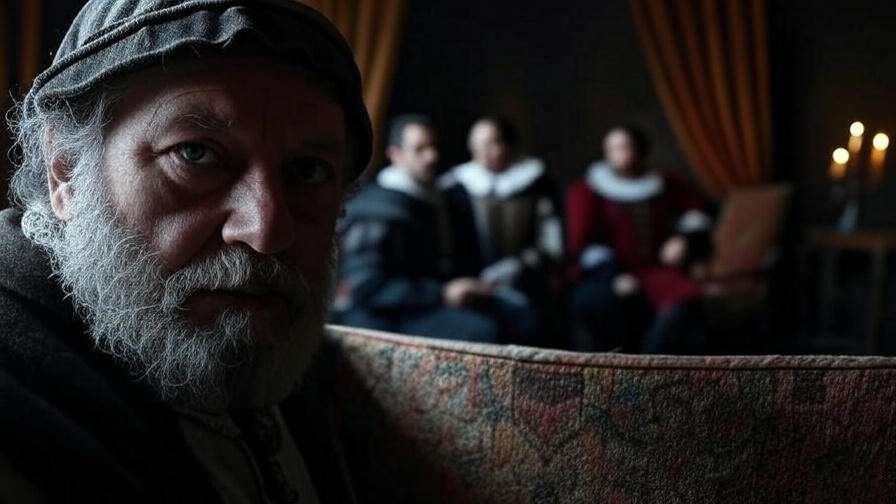
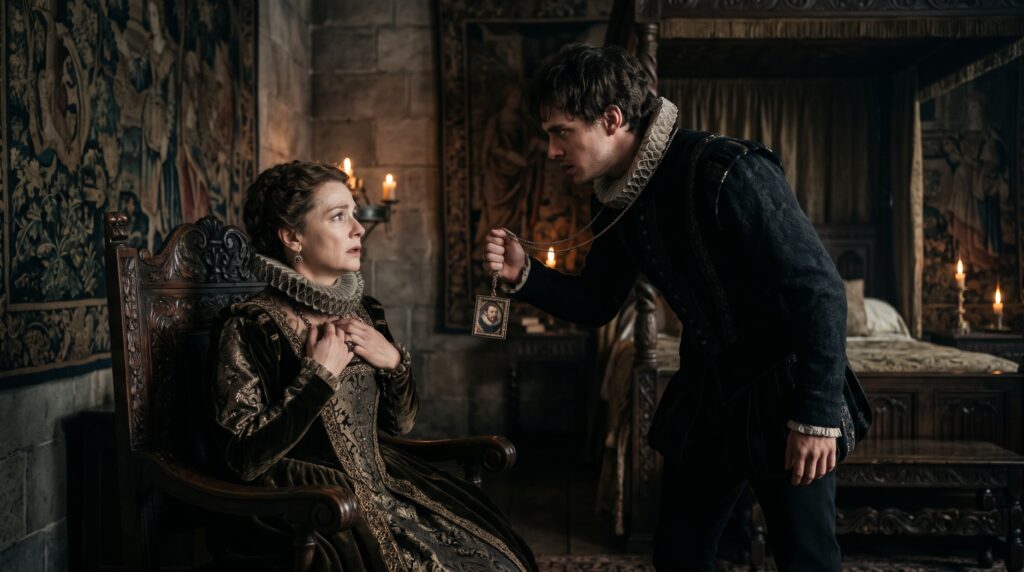
Imagine the visceral intensity of a son forcing his mother into a private room, physically barring her exit, and holding up a psychological mirror so devastating that it ends in the bloody murder of a hidden eavesdropper. This is Act 3, Scene 4 of William Shakespeare’s greatest tragedy. At the absolute center of this dramatic storm is the relationship between Hamlet and Gertrude. For centuries, actors, literary scholars, and students have struggled to unravel the exact nature of their bond. Is the Queen of Denmark a complicit villain, a tragic pawn, or a pragmatic survivor? And why does her behavior completely paralyze the Prince of Denmark, driving him toward feigned—and perhaps genuine—madness?
To understand Hamlet as a cohesive masterpiece, one must first decode the profound layers of betrayal, sexuality, and unresolved grief that define the dynamic between mother and son. Their relationship is not merely a subplot; it is the emotional fulcrum of the entire play. Every moment of Hamlet’s agonizing delay, his bitter misogyny, and his philosophical despair can be traced directly back to his mother’s royal bed. By peeling back the layers of text, historical context, and psychoanalytic theory, we can finally grasp how a mother’s hasty marriage shattered a son’s world and catalyzed the tragedy of Elsinore.
The Catalyst of Tragedy: The O’erhasty Marriage
The inciting incident of Hamlet’s internal crisis occurs before the play even begins. While the appearance of the Ghost provides the narrative drive for revenge, it is Gertrude’s marriage to her dead husband’s brother, Claudius, that provides the psychological poison.
The Timeline of Grief vs. Political Pragmatism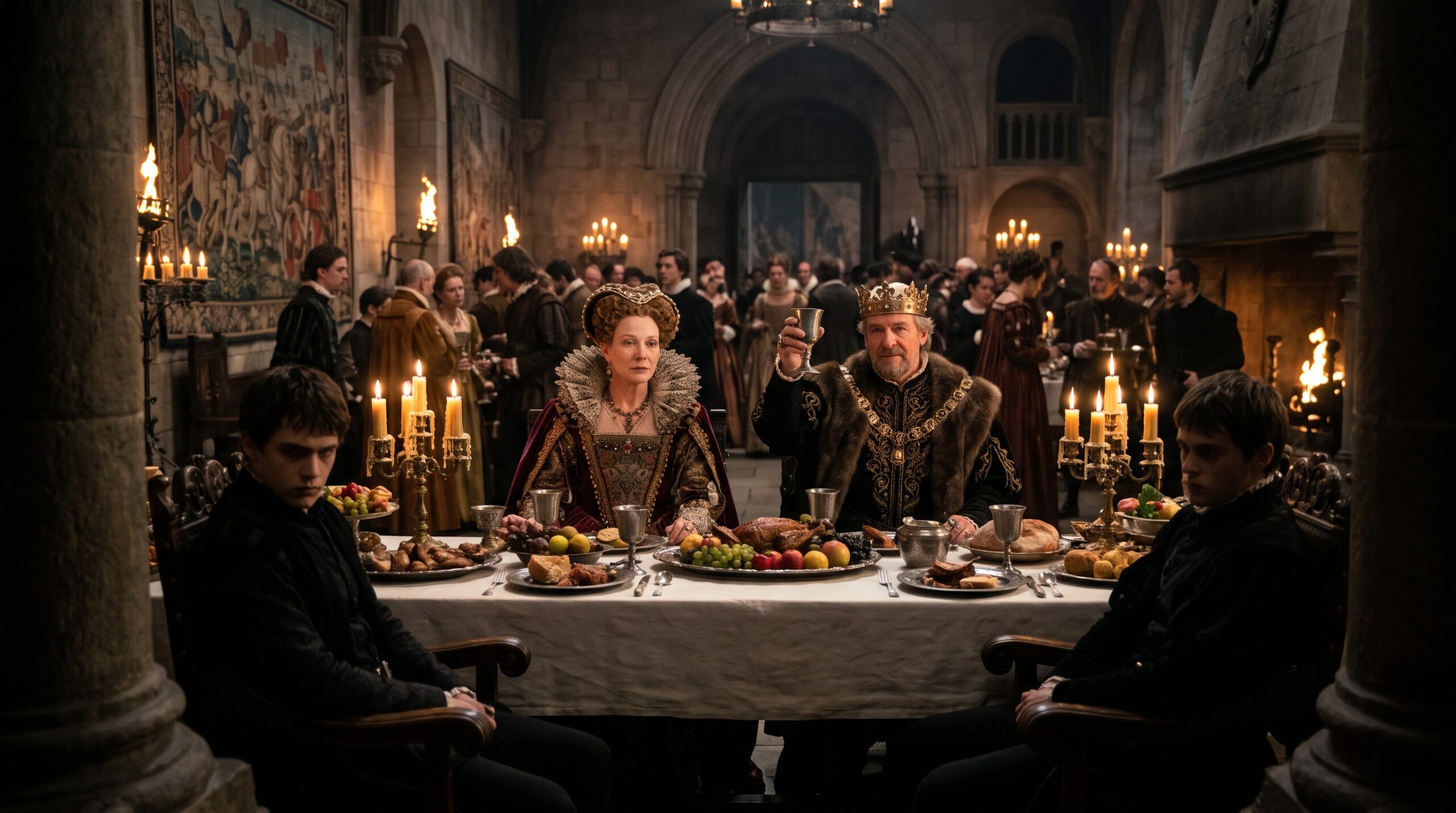
The timeline is a source of obsessive torment for the Prince. He famously laments that his mother married his uncle “but two months dead—nay, not so much, not two.” In Hamlet’s idealized view of the world, his mother should have served as a perpetual monument to his father’s greatness, mirroring his own deep, paralyzing mourning. He views her rapid transition from widow to bride as a grotesque moral failure.
However, stripping away Hamlet’s emotional bias reveals a different reality for women in the patriarchal society of Shakespeare’s era. As a dowager queen, Gertrude’s political and social survival was inherently tied to a male ruler. Denmark was in a precarious state, facing the looming military threat of young Fortinbras of Norway. By marrying Claudius, Gertrude maintained her status, secured the throne against external instability, and theoretically protected her son’s future succession. What Hamlet views as incestuous betrayal may have been, in Gertrude’s mind, an act of sheer political pragmatism.
“Frailty, thy name is woman” – Hamlet’s Disillusionment
Despite any political justification, Hamlet’s reaction to the marriage is apocalyptic. In his first major soliloquy in Act 1, Scene 2, the audience witnesses the terrifying scope of his disillusionment. When he cries, “Frailty, thy name is woman,” he is not just condemning Gertrude; he is weaponizing her actions against the entirety of the female sex.
This profound disgust with his mother’s sexuality taints every interaction he has for the rest of the play. It obliterates his relationship with Ophelia, whom he cruelly instructs to get to a “nunnery” (a contemporary slang term for a brothel) rather than become a “breeder of sinners.” Hamlet’s inability to separate his mother’s individual choices from the fundamental nature of women creates a toxic cynicism that isolates him from the very people who might have offered him solace.
Analyzing Queen Gertrude: Complicit Villain or Tragic Pawn?
The ambiguity of Shakespeare’s text leaves Gertrude as a blank canvas upon which centuries of critics have projected their own societal anxieties.
The Traditional Reading: A Weak and Passive Queen
For much of theatrical history, Gertrude was portrayed as shallow, sensual, and intellectually dim. Traditional literary criticism often framed her as a weak-willed woman easily manipulated by the cunning Claudius. In this view, she is entirely driven by her physical desires and a desperate need for comfort and luxury, oblivious to the political murder and moral decay surrounding her. She is a pawn on the chessboard of Elsinore, moved by the men around her until she is accidentally swept off the board.
Modern Feminist Interpretations
The late 20th century saw a radical shift in how scholars approached the Queen. In her groundbreaking 1957 essay “The Character of Hamlet’s Mother,” feminist critic Carolyn Heilbrun systematically dismantled the traditional view of a shallow Gertrude. Heilbrun argued that the text actually presents a shrewd, intelligent, and articulate woman.
In this modern interpretation, Gertrude is a peacemaker trying desperately to mend the fractured relationship between her new husband and her erratic son. She correctly identifies the source of Hamlet’s madness (“I doubt it is no other but the main: His father’s death, and our o’erhasty marriage”) long before Polonius fumbles through his theories. She is not weak; she is simply operating within a rigidly constrained female space, making impossible choices to keep her family and her country intact.
Did Gertrude Know About the Murder?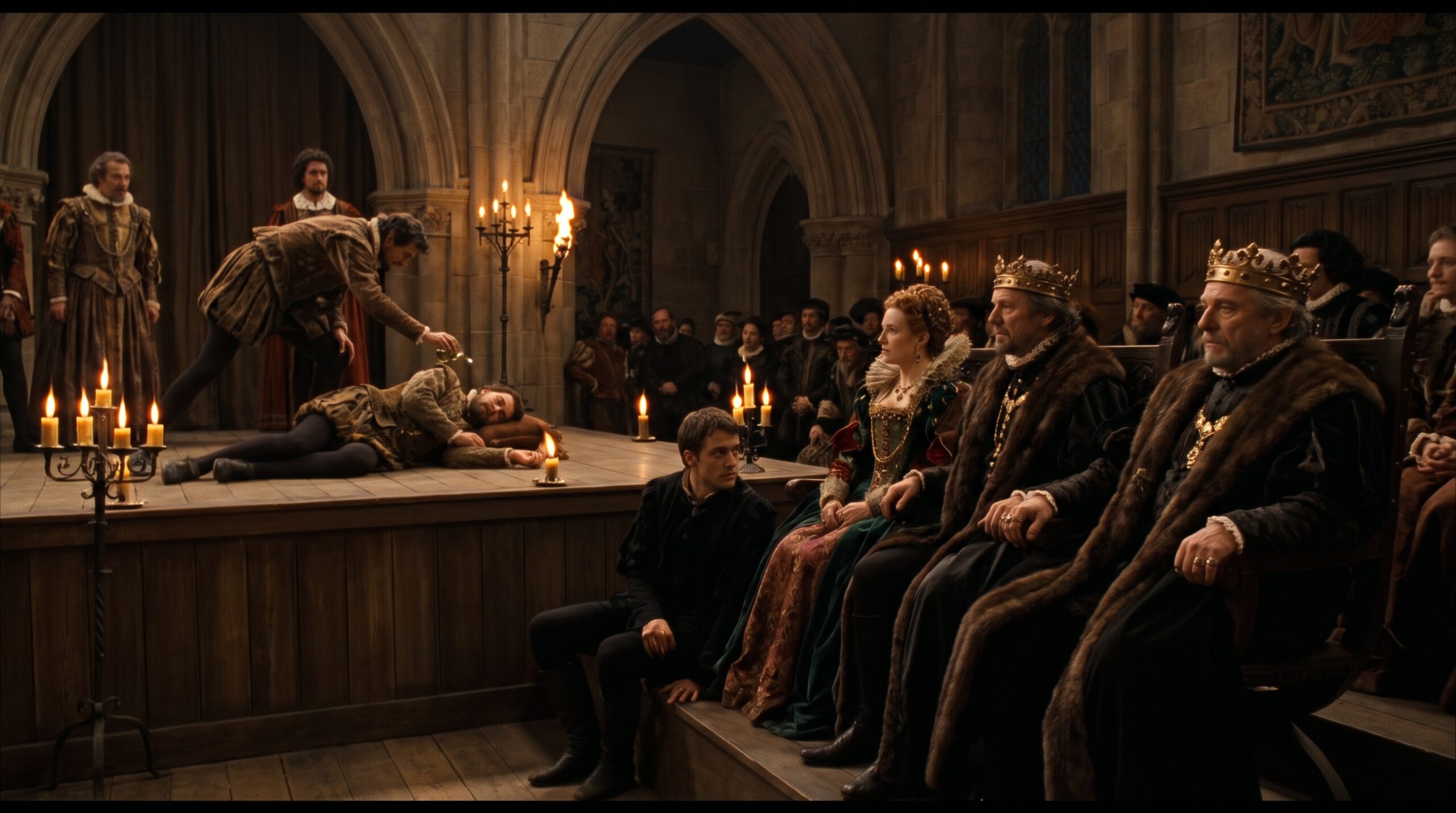
The ultimate test of Gertrude’s character is her level of complicity in King Hamlet’s death. Did she help Claudius pour the poison in the orchard? The text provides subtle but vital clues.
During the performance of “The Mousetrap”—the play Hamlet stages to catch the conscience of the King—Gertrude famously remarks of the Player Queen, “The lady doth protest too much, methinks.” She finds the theatrical queen’s vows of eternal fidelity unrealistic, but she shows absolutely no guilt or recognition when the theatrical king is murdered with poison in his ear. Unlike Claudius, who leaps to his feet in panic, Gertrude remains confused by the ensuing chaos. Her lack of a guilty start strongly suggests she was innocent of the murder, even if she was guilty of an opportunistic marriage.
The Psychoanalytic Lens: The Oedipus Complex in Hamlet
No exploration of this dynamic is complete without addressing the heavy shadow of psychoanalysis, which has permanently altered how the play is staged and understood.
Freud, Ernest Jones, and the Subconscious Desire
Sigmund Freud was deeply fascinated by Hamlet, and his colleague Ernest Jones published a famous treatise in 1949 applying the Oedipus complex to the play. The theory attempts to answer the central mystery of the text: Why does Hamlet delay killing Claudius when he has the motive, the weapon, and the opportunity?
Jones argued that Hamlet’s paralysis stems from a repressed, subconscious desire to commit the very crimes Claudius has achieved: killing his father and possessing his mother. To strike down Claudius would be to strike down a mirror of his own darkest psychological impulses. Claudius has lived out Hamlet’s repressed childhood fantasies, rendering the Prince crippled by subconscious guilt.
Textual Evidence of Sexual Obsession
Whether one fully accepts the Freudian reading or not, Shakespeare’s text undeniably gives Hamlet an uncomfortable fixation on his mother’s intimate life. He does not dwell on the loss of the crown; he dwells on the bedroom. He graphically tortures himself with images of Gertrude and Claudius in the “rank sweat of an enseamed bed,” “stewed in corruption,” and “honeying and making love.“
Director’s Note on Blocking the Subtext: In modern theatrical and film adaptations, directors frequently use physical blocking to emphasize this uncomfortable closeness. Actors playing Hamlet often invade Gertrude’s personal space, pinning her to beds or speaking lines inches from her face, transforming textual obsession into immediate, visible, and deeply uncomfortable physical tension.
The Turning Point: Act 3, Scene 4 (The Closet Scene)
The simmering tension boils over in the Queen’s private chambers, marking the emotional climax of their relationship and the turning point of the play.
The Mirror of Conscience
Hamlet arrives in his mother’s closet with a singular, cruel intention: “Let me be cruel, not unnatural. / I will speak daggers to her, but use none.” He intends to break her psychological defenses and force her to acknowledge the moral rot of her actions. By aggressively comparing the portraits of his god-like father and his “mildewed ear” of an uncle, he successfully wrings her heart, forcing her to see “black and grainèd spots” upon her soul.
The Ghost’s Intervention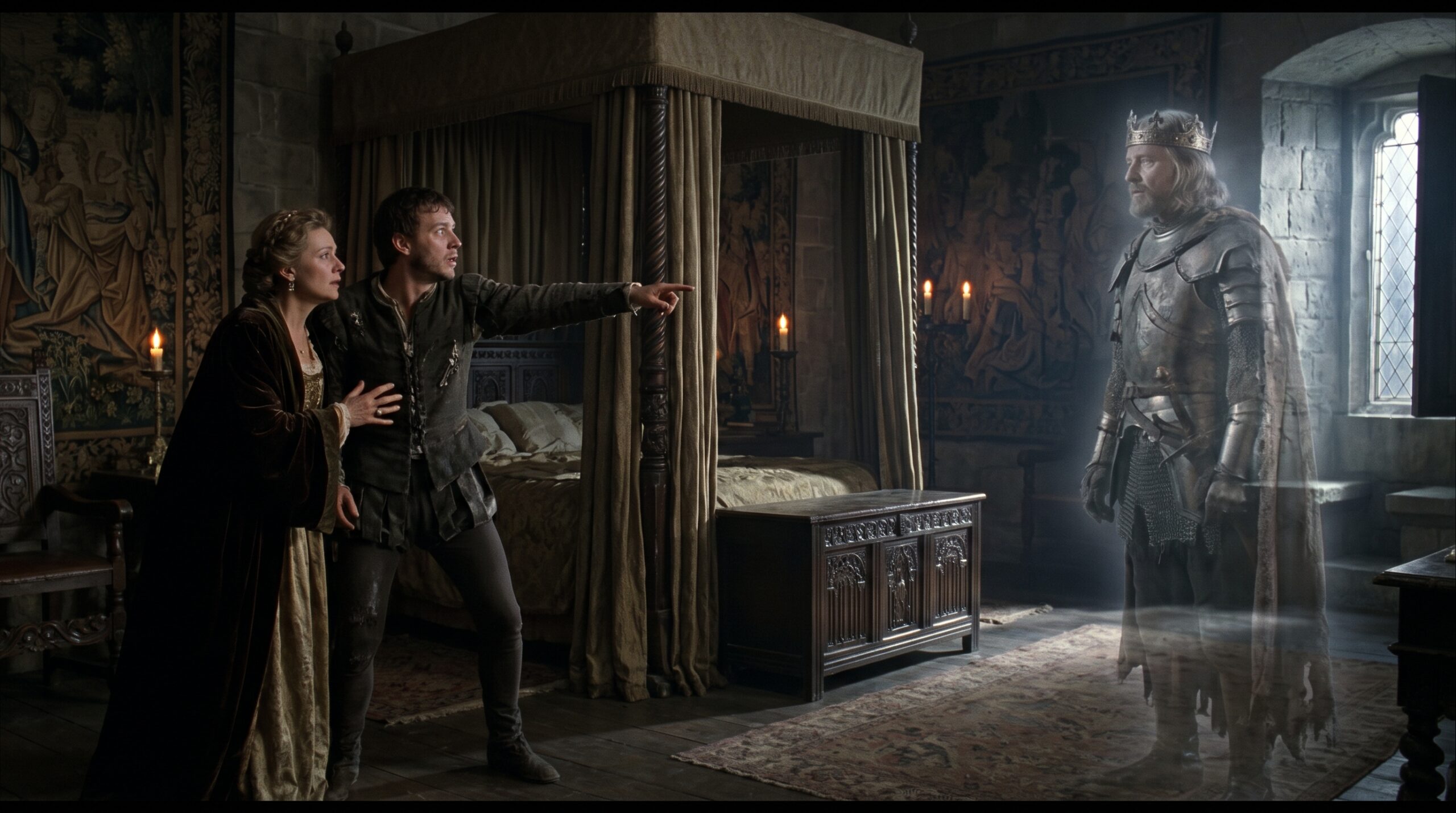
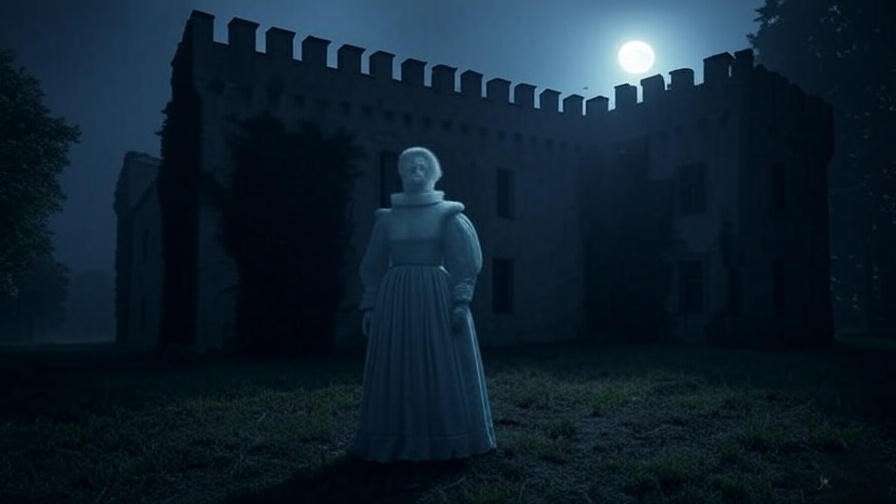
In the midst of his rage, the Ghost of King Hamlet appears in the bedroom. Crucially, while the Ghost was visible to the guards and Horatio in Act 1, it is now visible only to Hamlet. Gertrude looks at her son speaking to empty air and concludes he is completely insane (“This is the very coinage of your brain”).
Her blindness to the Ghost signifies the ultimate emotional and spiritual disconnect between her and her former husband, as well as her son. It highlights her exclusion from the masculine world of honor and revenge that is slowly destroying Hamlet.
The Shift in Allegiance
The closet scene ends with the bloody, accidental murder of Polonius, who was hiding behind the arras. In the aftermath of this violence, a subtle shift occurs. Hamlet demands that Gertrude stop sleeping with Claudius and asks her to keep his secret—that he is not truly mad, but “mad in craft.”
Gertrude promises, “If words be made of breath, and breath of life, / I have no life to breathe what thou hast said to me.” Does she truly repent and side with her son, or is she simply pacifying a dangerous, armed man who just slaughtered her counselor? The text leans toward a genuine, albeit quiet, shift in allegiance. When she reports Polonius’s death to Claudius, she lies to protect Hamlet, emphasizing his madness and claiming he wept for what he had done.
Stage and Screen: How Directors Interpret Hamlet and Gertrude
Because the text allows for such wildly varying interpretations, analyzing landmark performances provides invaluable insight into the elasticity of the characters.
Laurence Olivier (1948) vs. Kenneth Branagh (1996)
Laurence Olivier’s Academy Award-winning film adaptation leaned heavily into the Ernest Jones psychoanalytic theory. Olivier purposefully cast Eileen Herlie as Gertrude, an actress who was actually thirteen years younger than him. The age inversion, coupled with lingering, uncomfortably passionate kisses on the lips, made the Freudian subtext textually overt.
Conversely, Kenneth Branagh’s epic 1996 film took a deeply political and historical approach. Casting Julie Christie as Gertrude, Branagh portrayed her as an intelligent, vibrant woman caught in a Machiavellian nightmare. The dynamic here was less about sexual obsession and more about the tragic breakdown of a high-stakes political family facing the collapse of their dynasty.
Franco Zeffirelli (1990)
Franco Zeffirelli’s adaptation starring Mel Gibson and Glenn Close brought a visceral, almost animalistic intensity to the mother-son dynamic. Close played Gertrude as a fiercely maternal but highly sensual woman, while Gibson’s Hamlet was manic and volatile. Their Closet Scene is staged as a violent physical struggle that blurs the lines between rage, grief, and inappropriate intimacy, capturing the chaotic, messy reality of a family tearing itself apart.
The Tragic Climax: The Poisoned Chalice
The resolution of the Hamlet and Gertrude relationship arrives in the blood-soaked finale of Act 5, Scene 2.
Act 5, Scene 2 – A Mother’s Final Defiance?
During the fencing match between Hamlet and Laertes, Gertrude drinks from a cup of wine meant for Hamlet, which Claudius has secretly poisoned. Claudius warns her not to drink, but she defies him: “I will, my lord; I pray you pardon me.”
This moment sparks intense critical debate. Did Gertrude simply drink by accident, completely unaware of the poison, acting merely as a thirsty spectator? Or, having seen Claudius’s treachery unfold over the course of the play, did she suspect the cup was tainted? Some scholars and directors stage this moment as a deliberate act of maternal sacrifice. By drinking the poison, she intercepts the trap set for her son and finally breaks away from Claudius’s control.
The Impact of Her Death on Hamlet’s Final Action
Regardless of her intent, her death is the ultimate catalyst for the play’s resolution. Hamlet has spent five acts delaying, philosophizing, and finding excuses not to kill the King. It is only when Gertrude collapses, crying out, “The drink, the drink! I am poisoned,” that Hamlet’s paralysis shatters. He does not act to avenge his father’s ancient murder; he acts in an immediate, explosive rage to avenge his mother’s murder right in front of his eyes. He forces the remaining poison down Claudius’s throat, completing his tragic arc.
The Enduring Legacy of Elsinore’s Central Dynamic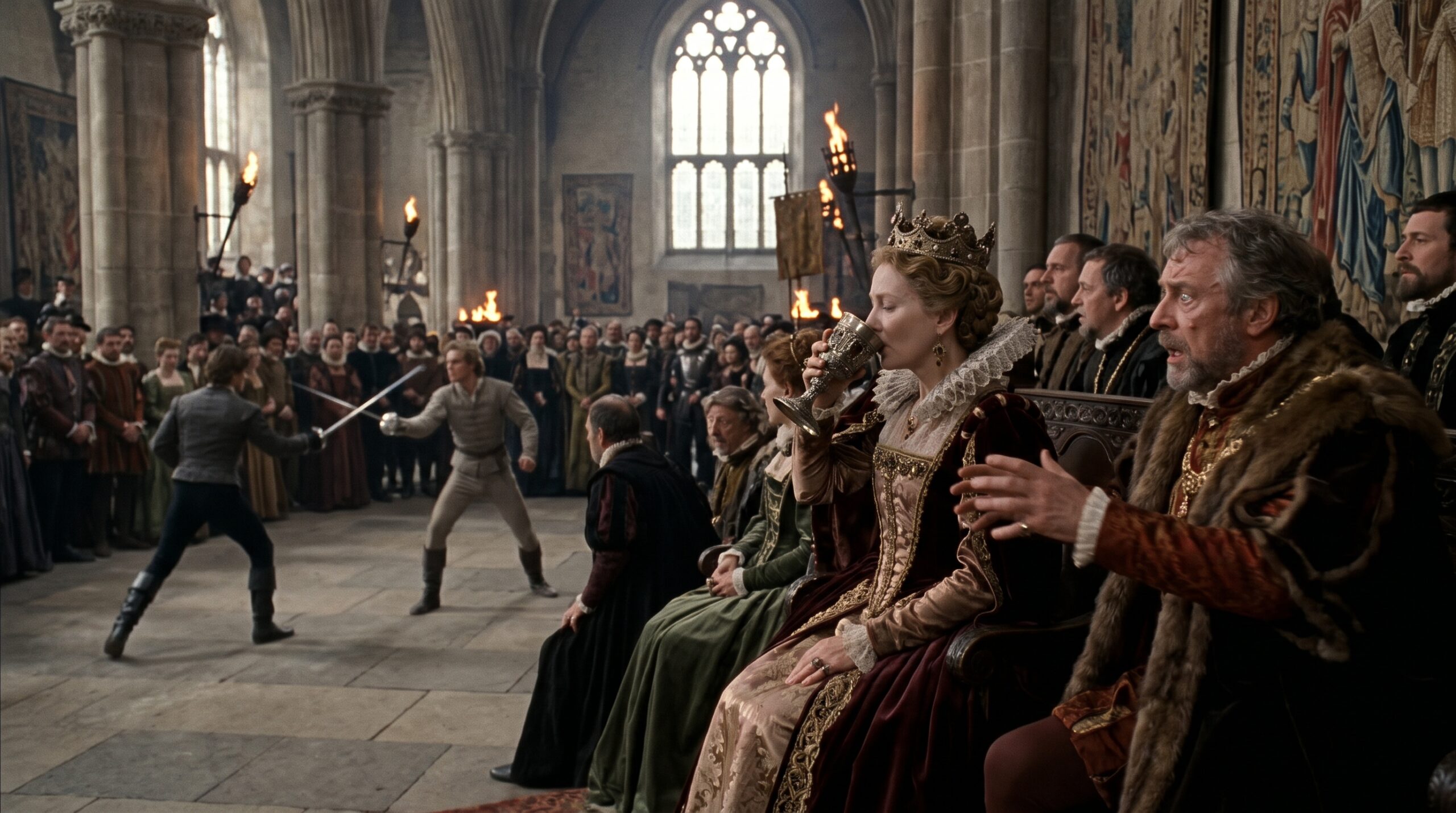
The dynamic between the Prince and the Queen remains the emotional engine that drives Shakespeare’s greatest masterpiece. Their bond is a masterclass in psychological complexity, touching on themes of female agency in a patriarchal world, the devastating effects of grief, and the destructive power of sexual obsession. Shakespeare’s ultimate genius lies in his refusal to give us an easy answer. He leaves Gertrude’s exact motives, guilt, and final thoughts deliberately ambiguous, ensuring that every new generation of readers and theatergoers must step into Elsinore and decode the shadows for themselves.
Frequently Asked Questions (FAQ)
Why is Hamlet so angry with Gertrude? Hamlet is enraged primarily by the speed of Gertrude’s marriage to Claudius, which took place less than two months after King Hamlet’s death. He views this haste as a profound betrayal of his father’s memory and a moral failing that corrupts his own view of the world and of women.
Did Gertrude love King Hamlet? The text is ambiguous. Hamlet idolizes his parents’ relationship, describing how Gertrude would hang on his father “as if increase of appetite had grown by what it fed on.” However, her rapid pivot to Claudius suggests she may have been motivated more by self-preservation and political necessity than by the idealized, eternal romance Hamlet remembers.
Does Hamlet suffer from the Oedipus complex? The idea that Hamlet suffers from an Oedipus complex was popularized in the 20th century by psychoanalyst Ernest Jones. While it is a highly influential lens through which many modern directors stage the play—explaining Hamlet’s delay and sexual fixation on his mother—it is a post-Freudian interpretation rather than an absolute, literal fact within Shakespeare’s original text.
Did Gertrude know the wine was poisoned in Act 5? This is one of the most debated moments in the play. Textually, it appears to be a tragic accident resulting from her desire to toast her son’s success. However, many modern interpretations and performances play this moment as a deliberate, sacrificial suicide, suggesting Gertrude realizes Claudius’s treachery and drinks the poison to save Hamlet’s life.