Killing King Duncan was supposed to be the final step toward supreme authority, yet for Scotland’s newly crowned monarch, victory immediately curdles into absolute terror. In act 3 scene 1 macbeth reaches its true structural, psychological, and dramatic turning point. Shakespeare moves the narrative away from the hesitant, guilt-ridden regicide of the opening acts and launches into the clinical paranoia of an established tyrant.
Whether you are an AP Literature student analyzing Shakespearean dramatic structure, a theater professional dissecting character motivations, or a reader seeking a comprehensive line-by-line breakdown, understanding this pivotal scene is essential to grasping the tragic trajectory of the play.
Act 3 Scene 1 At-a-Glance Fact Sheet
-
Setting: The Royal Palace at Forres.
-
Key Characters: Macbeth, Banquo, Lady Macbeth, Attendants, Two Murderers.
-
Central Plot Action: Macbeth publicly honors Banquo while secretly commissioning two assassins to execute him and his son, Fleance.
-
Key Soliloquies: Banquo’s opening reflection (“Thou hast it now…”) and Macbeth’s legacy crisis (“To be thus is nothing…”).
-
Primary Themes: The instability of usurped power, the illusion of free will, corrupted masculinity, and political paranoia.
The Dramatic Shift: From Regicide to Tyranny
In classic Shakespearean tragedy structured along Freytag’s Pyramid, Act 3 serves as the watershed moment where the protagonist’s fortunes begin their inevitable descent. Prior to this scene, Macbeth’s violence was reactive—driven by the prophecies of the Weird Sisters and the coercive rhetoric of Lady Macbeth.
In act 3 scene 1 macbeth takes full operational control of his downfall. He no longer needs his wife’s encouragement, nor does he express the visceral, bloody guilt that paralyzed him after murdering Duncan. Instead, he demonstrates cold, bureaucratic efficiency. By ordering the deaths of Banquo and Fleance, Macbeth attempts to murder the future itself, setting off a chain reaction that transforms his reign from a brief political coup into an unbearable reign of terror.
Act 3, Scene 1 Summary: Step-by-Step Breakdown
    [BANQUO]                 [MACBETH]               [MURDERERS]
Pondering Prophecy ──> Invited to Feast ──> Commissioned to Kill
(Suspects Foul Play)   (False Camaraderie)   (Manipulated by Macbeth)
Part 1: Banquo’s Internal Monologue & Rising Suspicion
The scene opens with Banquo alone on stage at the palace in Forres. He reflects upon the fulfillment of the witches’ predictions for Macbeth: Thane of Glamis, Thane of Cawdor, and now King of Scotland. However, Banquo openly voices the dark truth hanging over the court: “I fear / Thou play’dst most foully for ’t.”
Despite his acute awareness of Macbeth’s guilt, Banquo clings to the second half of the prophecy—that his own descendants will inherit the throne. Rather than exposing the king, Banquo chooses political silence, hoping that his line will indeed yield a dynasty of monarchs.
Part 2: The Royal Invitation & The False Display of Friendship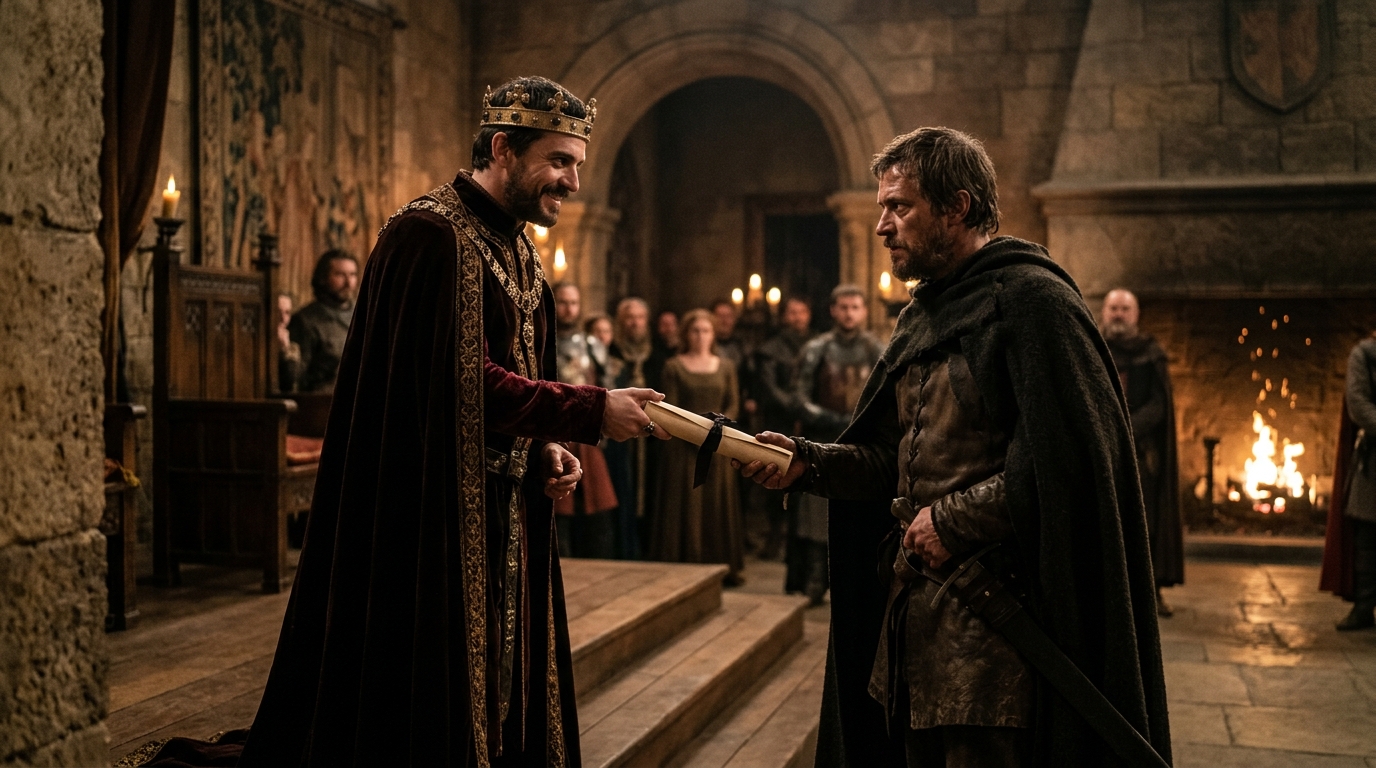
Macbeth and Lady Macbeth enter in full royal attire, accompanied by their court. Macbeth greets Banquo as his “chief guest,” inviting him to a solemn supper that evening. What follows is a masterclass in covert tactical interrogation. Macbeth casually asks Banquo three specific questions:
-
Are you riding out this afternoon?
-
How far are you traveling?
-
Is Fleance going with you?
Banquo innocently answers each query, revealing that he will be riding until nightfall and that his young son will accompany him. Macbeth bids him farewell with deceptive warmth, casually mentioning that the exiled princes, Malcolm and Donalbain, are hiding in England and Ireland without confessing to their father’s murder.
Part 3: Macbeth’s Soliloquy (“To be thus is nothing…”)
Once the court clears, Macbeth dismisses his servants and delivers one of the most critical soliloquies in the play. He admits that holding the crown is meaningless if his position is insecure: “To be thus is nothing, / But to be safely thus.”
His fear centers entirely on Banquo. Macbeth envies Banquo’s natural nobility, moral courage, and military wisdom. More agonizingly, Macbeth realizes that if the witches’ prophecy holds true, he has damned his own soul to secure a throne for Banquo’s sons. He reflects bitterly on having a “fruitless crown” and a “barren sceptre” placed in his hands, realizing he has surrendered his eternal soul to the devil (“mine eternal jewel / Given to the common enemy of man”) only to benefit another man’s lineage.
Part 4: The Manipulation of the Murderers
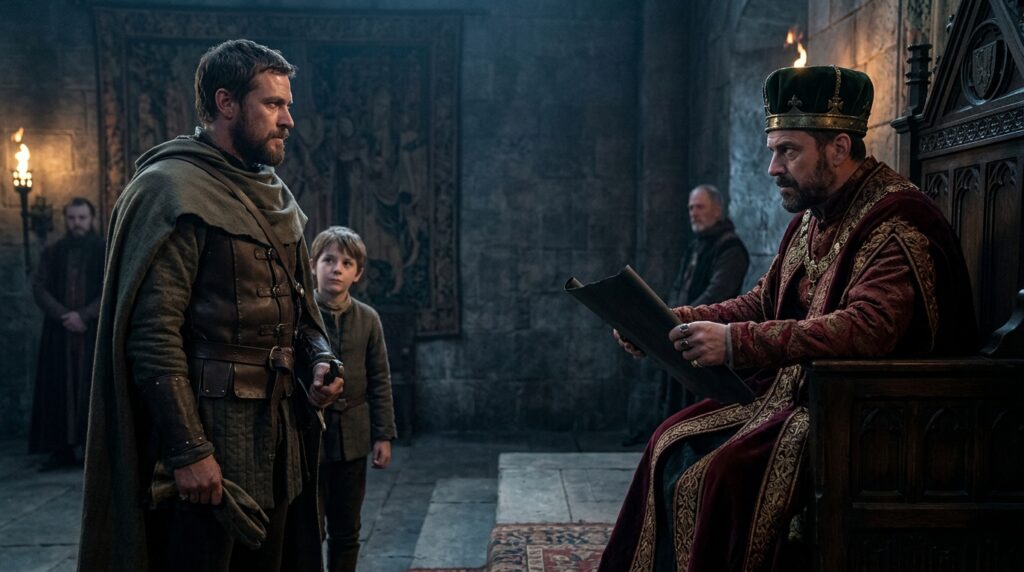
An attendant introduces two desperate men whom Macbeth previously interviewed. Macbeth executes a calculated psychological manipulation. Rather than ordering them as king, he convinces them that Banquo is the sole source of their financial ruin, poverty, and political oppression.
When the men express hesitation, Macbeth attacks their manhood, using the exact tactic Lady Macbeth used against him in Act 1. He compares men to different breeds of dogs, asserting that only ruthless men belong in the highest tier of masculinity. Broken and bitter, the murderers agree to execute Banquo and Fleance that night, clear of the palace walls.
Line-by-Line Scene Translation & Key Quotation Breakdown
Key Passage 1: Banquo’s Soliloquy (Lines 1–10)
| Original Shakespeare Text | Modern English Translation | Critical Literary Analysis |
| BANQUO: Thou hast it now: king, Cawdor, Glamis, all, / As the weird women promised, and I fear / Thou play’dst most foully for ’t. Yet it was said / It should not stand in thy posterity, / But that myself should be the root and father / Of many kings. | You have it all now: King, Thane of Cawdor, Thane of Glamis, exactly as the weird sisters promised. But I fear you used evil means to get it. Still, they said your title wouldn’t pass to your children, and that I would be the ancestor of a long line of kings. | Banquo acknowledges Macbeth’s treason but exhibits his own moral compromise. His ambition for his children keeps him silent when he should accuse the murderer of the king. |
Key Passage 2: Macbeth’s “Barren Sceptre” Soliloquy (Lines 48–72)
| Original Shakespeare Text | Modern English Translation | Critical Literary Analysis |
| MACBETH: To be thus is nothing, / But to be safely thus. Our fears in Banquo / Stick deep, and in his royalty of nature / Reigns that which would be feared… / Upon my head they placed a fruitless crown / And put a barren sceptre in my gripe… | Being king means nothing unless I am completely secure. My fears of Banquo run deep because his noble character intimidates me… On my head they placed a crown that yields no heirs, and put a useless staff in my hand. | Highlights Macbeth’s existential crisis. The regal metaphors (“fruitless crown,” “barren sceptre”) underscore his obsession with dynamic legacy over temporary political power. |
Key Passage 3: Weaponizing Manhood (Lines 92–103)
| Original Shakespeare Text | Modern English Translation | Critical Literary Analysis |
| MACBETH: Ay, in the catalogue ye go for men, / As hounds and greyhounds, mongrels, spaniels, curs, / Shoughs, water-rugs, and demi-wolves are clept / All by the name of dogs. The valued file / Distinguishes the swift, the slow, the subtle… | Yes, on paper you count as men, just as greyhounds, mongrels, spaniels, and mutts are all broadly called dogs. But a true list ranks them according to their specific qualities—the fast, the smart, the strong… | Macbeth projects his own insecurities about masculinity onto the assassins, using social hierarchy and animal imagery to provoke a violent response. |
In-Depth Analysis of Key Characters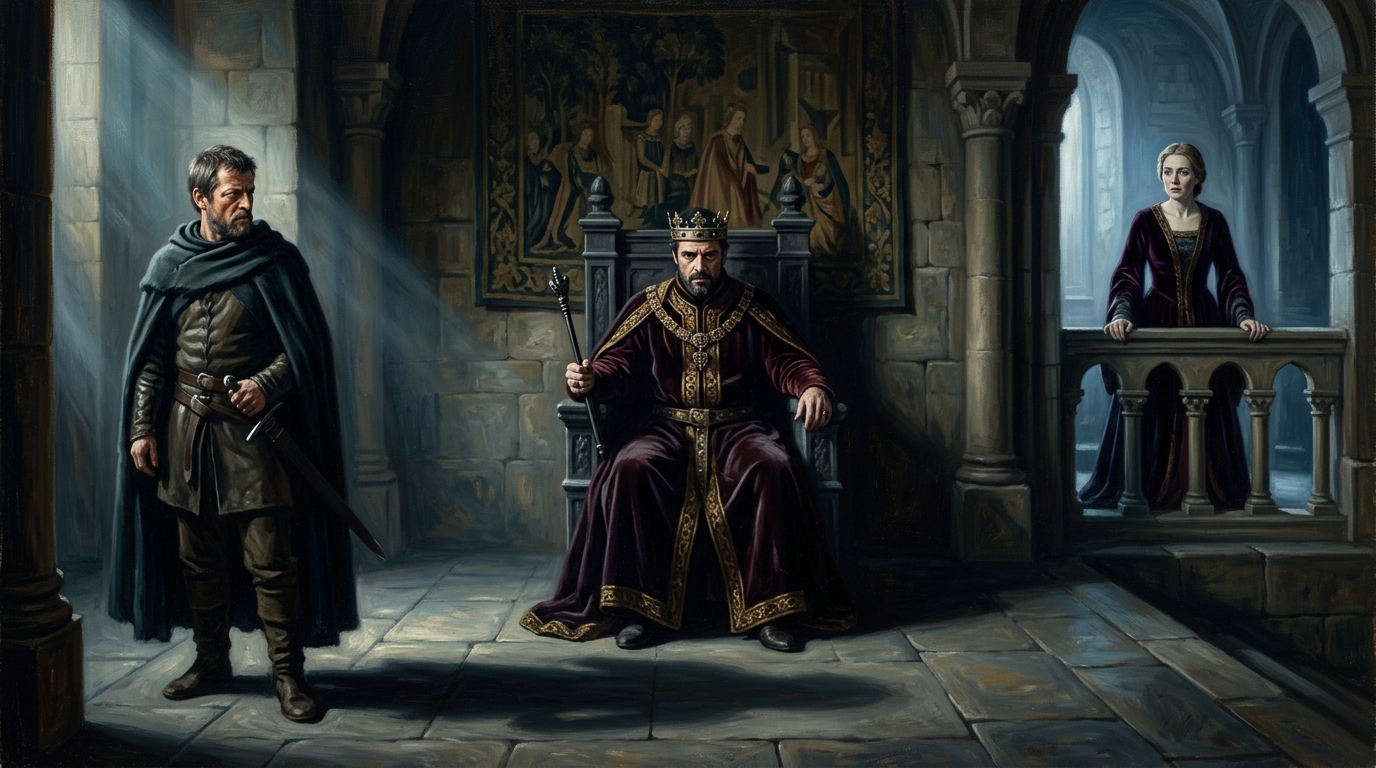
| Character | Psychological State in Act 3 Scene 1 | Primary Motivation / Conflict | Dramatic Evolution |
| Macbeth | Cold, paranoid, ruthlessly calculating. | Secure his lineage; eliminate threats; defy fate. | Transitions from a conflicted warrior into a detached, tyrannical mastermind. |
| Banquo | Suspicious, morally compromised, cautious. | Protect his son Fleance; preserve his family’s future. | Evolves from an active military leader into a passive, vulnerable observer. |
| Lady Macbeth | Excluded, anxious, losing control. | Maintain appearances; preserve her husband’s sanity. | Deposed from her role as the primary strategist; increasingly marginalized. |
Banquo: Tragic Blindness, Compromised Virtue, or Fatal Hesitation?
Banquo is often framed as the moral mirror to Macbeth—the noble soldier who heard the same demonic prophecies but refused to act on them. However, act 3 scene 1 macbeth reveals a far more complex character. Banquo’s opening lines expose his awareness that Macbeth murdered King Duncan.
Why doesn’t Banquo speak out? Why doesn’t he flee or rally the loyal Thanes?
Banquo is paralyzed by his own political self-interest. The witches promised that he would “get kings, though thou be none.” Exposing Macbeth might destabilize the kingdom or invalidate the very supernatural dynamic that guarantees his son’s future ascent. Banquo’s hesitation is his fatal hamartia (tragic flaw). His failure to act on moral duty leaves him isolated and easily targeted by Macbeth’s assassins.
Macbeth: The Shift from Hesitant Assassin to Cold-Blooded Manipulator
In Act 1 and Act 2, Macbeth required intense emotional priming from Lady Macbeth to commit regicide. He was haunted by hallucinations (“Is this a dagger which I see before me?”) and overcome by immediate grief and horror.
By Act 3, Scene 1, that conscience is rapidly cauterizing. Macbeth plans the murder of his closest friend, Banquo, without consulting his wife. He displays cold tactical foresight:
-
He isolates Banquo through casual questioning.
-
He hires external mercenaries to establish political distance and plausible deniability.
-
He applies psychological torture to the assassins to ensure their absolute commitment.
This marks Macbeth’s transformation from a tragic hero corrupted by temptation into an absolute tyrant whose rule depends on preemptive violence.
The Role of Lady Macbeth: The Beginning of Her Isolation
Though present on stage for part of the scene, Lady Macbeth’s authority is visibly fading. She function merely as a ceremonial queen, reinforcing royal protocol while remaining completely ignorant of Macbeth’s plot against Banquo.
When Macbeth tells her later in the act to be “innocent of the knowledge, dearest chuck,” the dynamic of their marriage is forever altered. In Act 1, they were equal partners in crime (“my dearest partner of greatness”). In Act 3, Macbeth operates in total psychological solitude, isolating himself from the only person who understood his burden.
Key Themes Explored in Act 3 Scene 1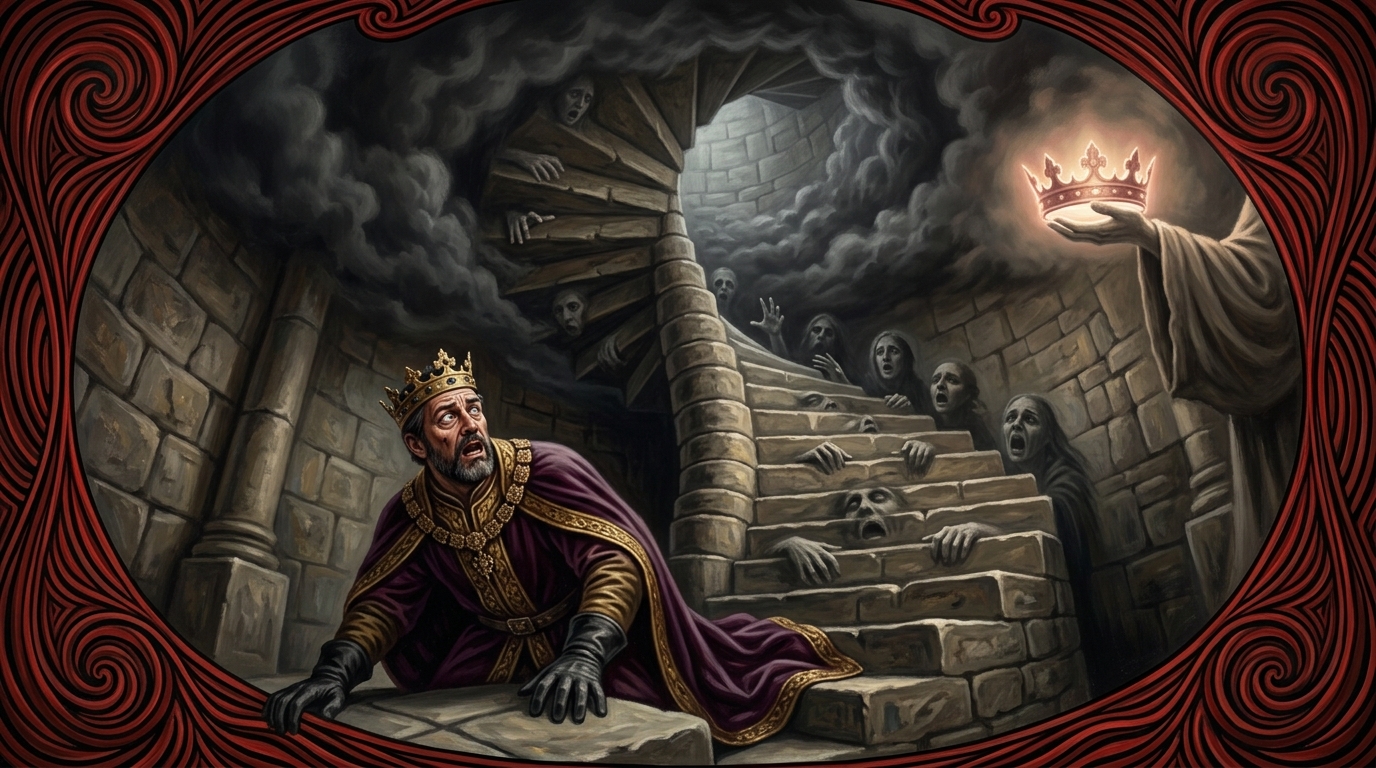
Paranoia & The Burden of Insecure Power
Usurpation creates an inescapable cycle of insecurity. Macbeth discovers that gaining power through violence means that power can only be maintained through continued violence. Every noble lord becomes a potential traitor; every former comrade becomes a threat. Macbeth’s line, “To be thus is nothing, / But to be safely thus,” sums up the core pathology of tyranny: illegitimately gained authority breeds perpetual fear.
Regicide (Duncan) ──> Insecurity & Guilt ──> Preemptive Murder (Banquo) ──> Total Tyranny
Fate vs. Free Will: Trying to Murder Prophecy
The ultimate paradox of Macbeth’s strategy in Act 3 Scene 1 lies in his relationship with fate. He believed the Weird Sisters when they foretold he would be king, and he acted to fulfill that destiny. Yet, when faced with the second part of their prophecy—that Banquo’s heirs would reign—Macbeth resolves to fight against fate itself:
“Come fate into the list, / And champion me to the utterance!”
He hires assassins to kill Fleance in a direct attempt to invalidate a supernatural decree. This logical contradiction defines his madness: he trusts prophecy enough to fear it, yet believes he can alter it through bloodshed.
Masculinity as a Weapon of Manipulation
Throughout the play, Shakespeare examines how toxic definitions of manhood drive destructive behavior. In Act 1, Lady Macbeth challenged Macbeth’s manhood to force him to kill Duncan (“When you durst do it, then you were a man”).
In Act 3 Scene 1, Macbeth adopts this exact tactic. When the hired murderers hesitate, Macbeth taunts them, claiming that if they do not strike back at Banquo, they are low-tier “dogs” rather than real men. By weaponizing masculinity, Macbeth passes the virus of violence down the social ladder.
Literary Devices & Dramatic Technique
┌────────────────────────────────────────────────────────┐
│                   DRAMATIC IRONY                       │
│ Macbeth calls Banquo "chief guest" while planning his  │
│ assassination for that exact night.                    │
└───────────────────────────┬────────────────────────────┘
                            │
                            ▼
┌────────────────────────────────────────────────────────┐
│               BARREN SCEPTRE IMAGERY                   │
│ Symbolizes the vanity of power without a lasting       │
│ legacy or dynasty.                                     │
└───────────────────────────┬────────────────────────────┘
                            │
                            ▼
┌────────────────────────────────────────────────────────┐
│                 CLASSICAL ALLUSION                     │
│ Macbeth references Mark Antony and Octavius Caesar to  │
│ illustrate his feelings of inferiority to Banquo.      │
└───────────────────────────┴────────────────────────────┘
-
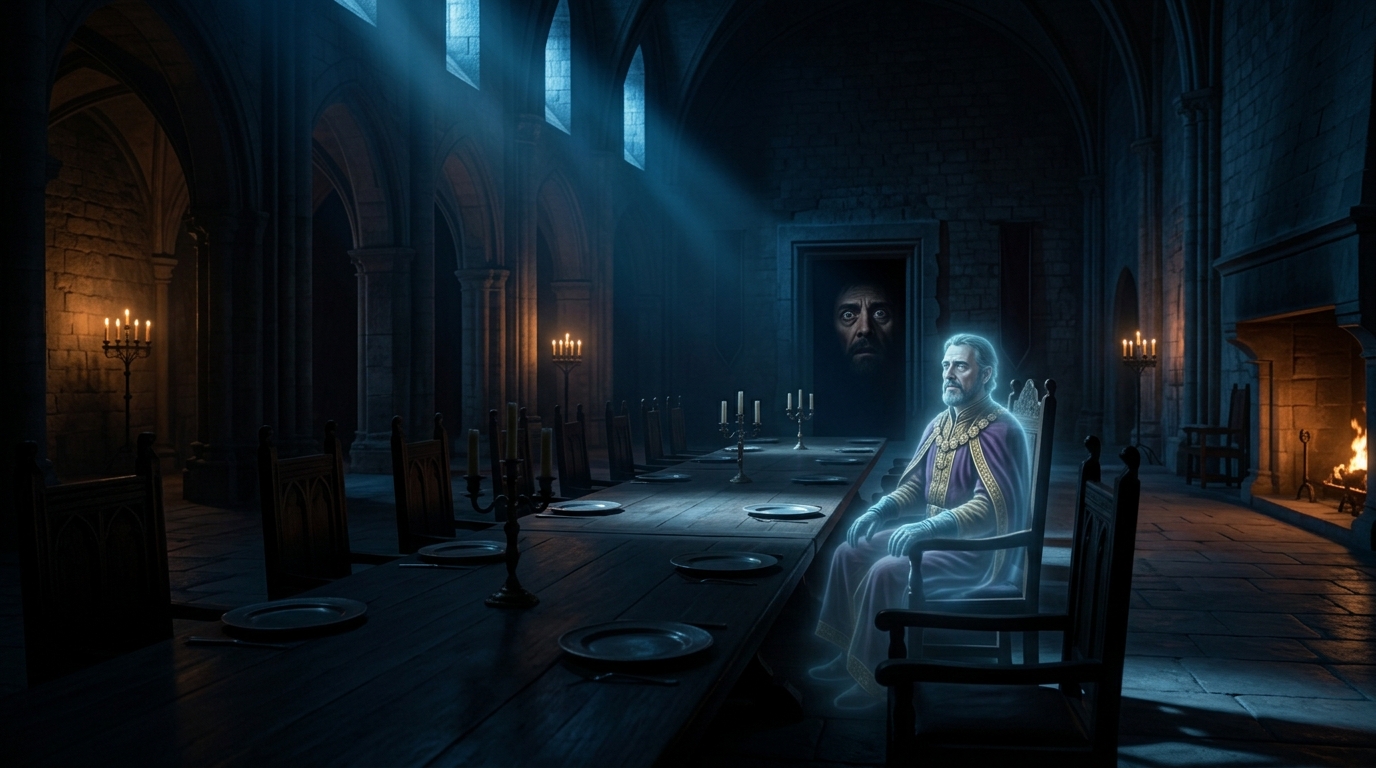
Dramatic Irony: The core interaction between Macbeth and Banquo is saturated with double meaning. Macbeth smiles, calls Banquo his “chief guest,” and says, “Fail not our feast.” Banquo answers, “My lord, I will not.” The audience knows Macbeth is planning Banquo’s murder, making Banquo’s promise deeply prophetic—his ghost will indeed attend the feast in Scene 4.
-
Symbolism of Legacy: Macbeth describes his reign using sterile, unyielding imagery: a “fruitless crown” and a “barren sceptre.” These objects represent the emptiness of his victory—he holds the symbols of power, but they carry no organic future or lasting lineage.
-
Classical Allusion: Macbeth compares his relationship with Banquo to that of Mark Antony and Octavius Caesar (“My genius is rebuked, as it is said / Mark Antony’s was by Caesar”). In Roman history, Octavius ultimately eclipsed Antony; Macbeth senses that Banquo possesses an innate, quiet superiority that will eventually destroy him.
Teacher & Student Resource: Exam Focus & Essay Prep
High-Yield AP / A-Level Literature Revision Points
-
Structural Function: Identify Act 3 Scene 1 as the initiation of the tragic turning point. Macbeth moves from being an accomplice of fate to trying to control it.
-
Character Comparison: Contrast Macbeth’s hesitations in Act 1 Scene 7 (“We will proceed no further in this business”) with his calculated execution of the plan in Act 3 Scene 1.
-
Imagery Analysis: Focus on how royal and agricultural imagery combine (e.g., “root and father of many kings” vs. “fruitless crown”) to highlight the contrast between Banquo’s fertile future and Macbeth’s sterile reign.
Sample Essay Prompts & Thesis Starters
-
Prompt 1: Analyze how Shakespeare presents the decay of friendship in Act 3 Scene 1.
-
Thesis Starter: Through dramatic irony and deceptive courtly rhetoric, Shakespeare presents the collapse of Macbeth and Banquo’s friendship as an inevitable casualty of political usurpation, transforming military brotherhood into paranoid hostility.
-
-
Prompt 2: To what extent is Banquo responsible for his own fate in Act 3 Scene 1?
-
Thesis Starter: While Banquo remains a morally upright figure compared to Macbeth, his failure to act on his justified suspicions of Duncan’s murder—driven by his own passive ambition for his sons—makes his silence a tragic flaw that seals his fate.
-
Frequently Asked Questions
Why does Macbeth fear Banquo so much in Act 3 Scene 1?
Macbeth fears Banquo for two primary reasons: moral superiority and the prophecy. Banquo witnessed the witches’ predictions and suspects Macbeth of regicide. Furthermore, the witches predicted Banquo’s descendants would be kings, making Banquo’s surviving lineage a direct threat to Macbeth’s political legacy.
Why doesn’t Macbeth kill Banquo himself?
Macbeth explains to the hired murderers that he and Banquo share mutual high-ranking friends whose political support he cannot afford to lose. Executing Banquo publicly would create civil war, forcing Macbeth to drop his mask of legitimate rule and mourn Banquo publicly while secretly ordering his death.
What does “To be thus is nothing, / But to be safely thus” mean?
This quote means that holding the title of king is completely meaningless unless one is secure in that position. Macbeth realizes that political power without safety, peace of mind, and an assured legacy is simply a state of perpetual agony.
How does Macbeth persuade the murderers to kill Banquo?
Macbeth manipulates the murderers by blaming Banquo for all their economic misery and political oppression. He then challenges their manhood, asking if they are willing to let their enemy ruin them without taking revenge, using animal analogies to push them into action.