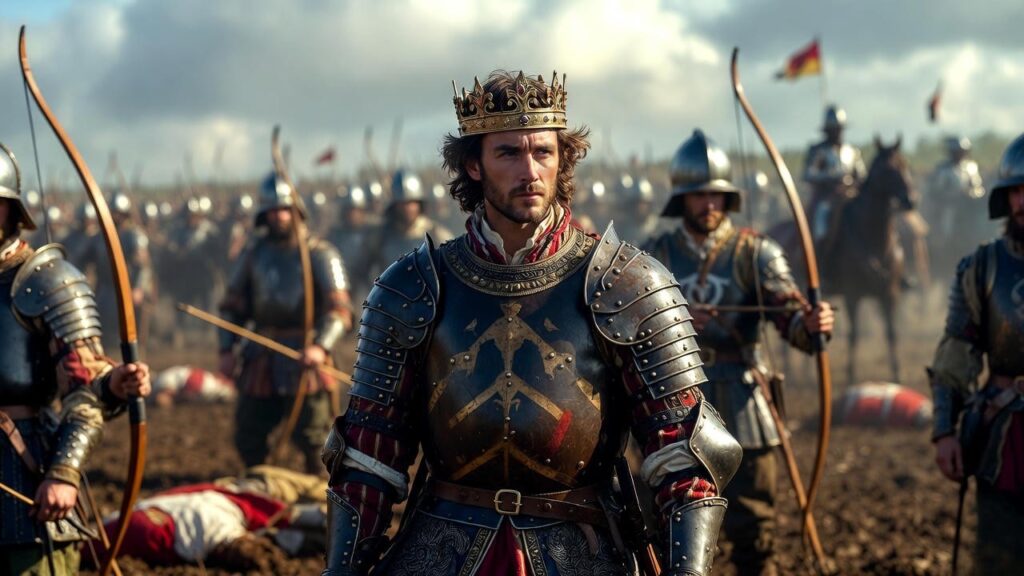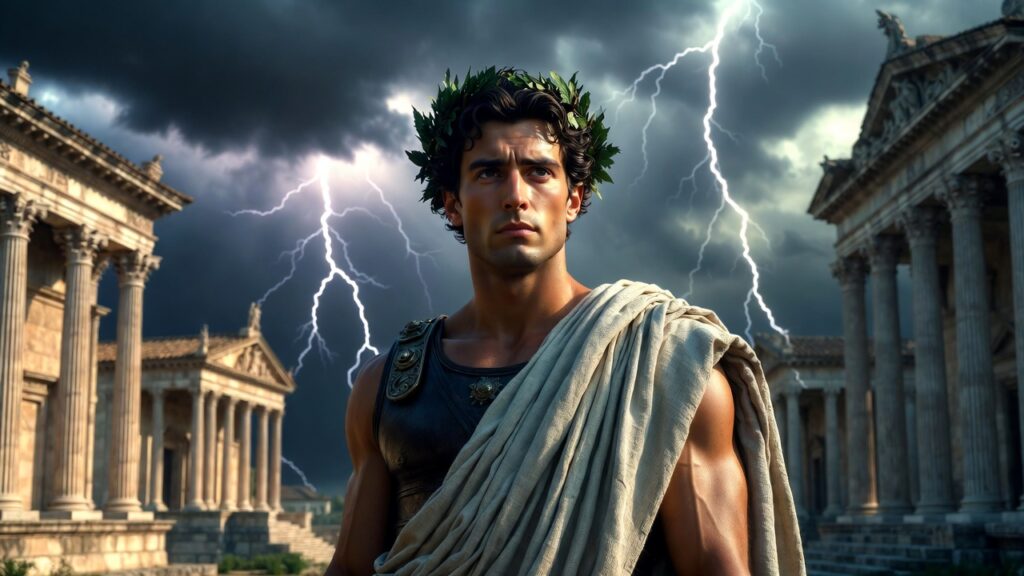
Imagine a leader whose rise inspires both adoration and terror—a figure whose every word and action sparks whispers of tyranny, rebellion, and inevitable downfall. Centuries before modern headlines about political ambition and betrayal, William Shakespeare captured this explosive tension in his tragedy Julius Caesar. For readers searching for “cecar” (a common variant or misspelling of Caesar), this play offers profound insights into the dangers of unchecked power, the fragility of loyalty, and the devastating consequences of political idealism.
Written around 1599 during the uncertain final years of Queen Elizabeth I’s reign, Julius Caesar draws from ancient Roman history but resonates deeply today. It explores how ambition can corrupt, how rhetoric can manipulate crowds, and how noble intentions can lead to chaos and civil war. Whether you’re a student preparing for exams, a literature enthusiast seeking deeper understanding, or someone reflecting on contemporary leadership crises, this comprehensive guide uncovers the play’s layers—far beyond basic summaries.
Shakespeare’s masterpiece isn’t just a historical reenactment; it’s a timeless warning about human nature. Through characters like the idealistic Brutus, the cunning Cassius, and the charismatic Antony, the Bard examines eternal questions: Can fate be defied? Does honor justify betrayal? And how do words alone topple empires? In the sections ahead, we’ll delve into historical context, detailed plot analysis, character breakdowns, major themes like ambition and fate, iconic quotes explained, the power of rhetoric, stage and screen adaptations, and why this play remains urgently relevant in our polarized world.
Historical Context – The Real Julius Caesar vs. Shakespeare’s Dramatic Version
To fully appreciate Shakespeare’s Julius Caesar, we must distinguish between the historical figure and the playwright’s artistic creation. The real Gaius Julius Caesar (100–44 BCE) was a brilliant military general, reformer, and statesman whose conquests expanded Rome’s empire and whose reforms modernized its administration. He crossed the Rubicon in 49 BCE, sparking civil war, and by 44 BCE had accumulated unprecedented power as dictator perpetuo (dictator for life). His assassination on the Ides of March (March 15) by senators fearing the end of the Republic led to further turmoil and the rise of the Roman Empire under Augustus.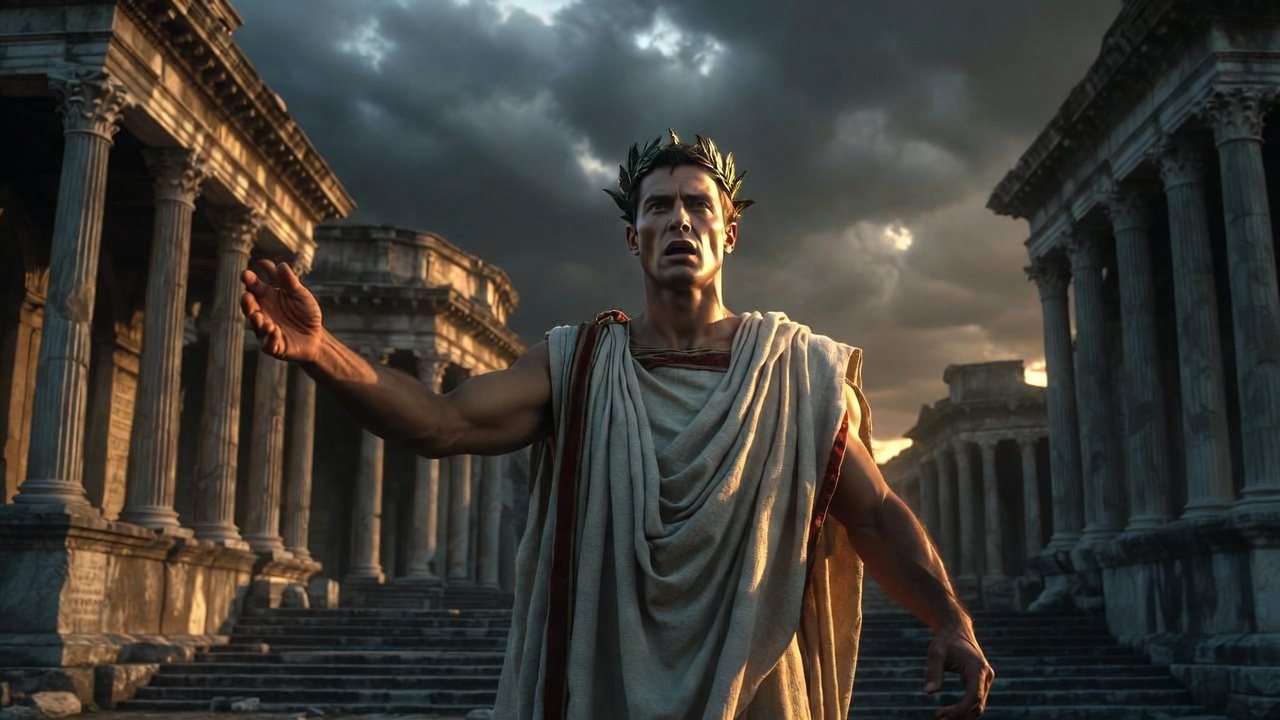
Shakespeare’s primary source was Sir Thomas North’s 1579 translation of Plutarch’s Lives of the Noble Grecians and Romans, supplemented by other classical accounts. While faithful to key events—the Lupercal celebrations, omens, the conspiracy, the assassination, Antony’s funeral oration, and the Battle of Philippi—Shakespeare compresses timelines, invents dialogues, and alters details for dramatic effect. For instance, the historical Caesar was a skilled orator and politician, but Shakespeare portrays him as arrogant and somewhat deaf (a metaphor for hubris). The conspirators’ motives are amplified: Brutus’s internal conflict becomes central, reflecting Elizabethan fears of succession crises and civil strife under a childless queen.
Shakespeare’s version reflects late-16th-century anxieties. With no clear heir to Elizabeth I, England worried about rebellion or foreign invasion—parallels to Rome’s post-assassination chaos. By focusing on the tragic consequences for the assassins rather than glorifying Caesar, Shakespeare navigated censorship while critiquing absolute power.
Complete Plot Summary – Act-by-Act Breakdown
Act I – The Rising Tide of Power and Unease The play opens with Roman citizens celebrating Caesar’s triumph over Pompey’s sons. Tribunes Flavius and Marullus rebuke them for fickleness, highlighting public volatility. Caesar ignores a soothsayer’s warning: “Beware the Ides of March.” Cassius plants seeds of doubt in Brutus, contrasting their equality with Caesar’s growing dominance. Casca reports Caesar refusing the crown thrice yet seeming to desire it. A storm rages with omens—lightning, lions in the Capitol—foreshadowing doom.
Act II – The Conspiracy Takes Shape Brutus wrestles with his conscience in soliloquy, fearing Caesar’s ambition will destroy the Republic. Cassius forges letters to sway him. The conspirators meet at Brutus’s home, deciding to assassinate Caesar but spare Antony. Portia, Brutus’s wife, proves her strength by wounding herself. Calpurnia begs Caesar to stay home after terrifying dreams; he initially agrees but is persuaded by Decius’s flattery that the Senate plans to crown him.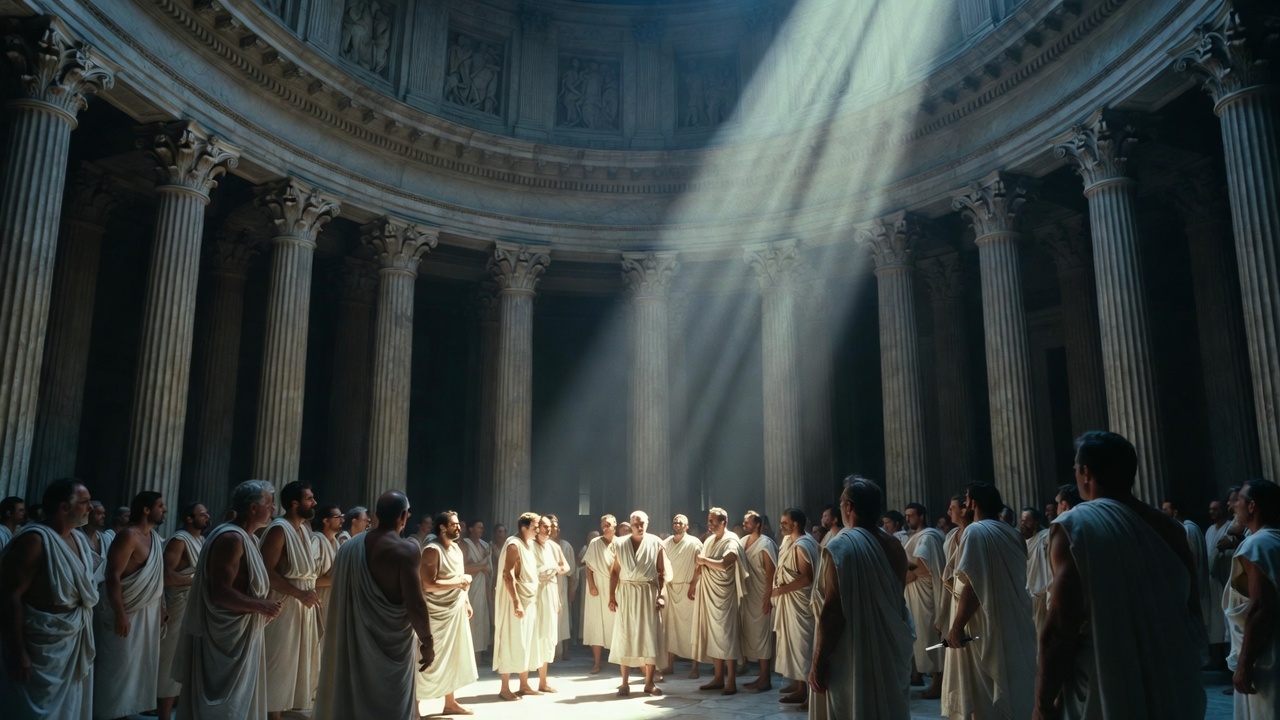
Act III – The Assassination and Its Immediate Aftermath Caesar dismisses more omens and enters the Capitol. The conspirators stab him; Caesar’s final words—”Et tu, Brute? Then fall, Caesar!”—mark ultimate betrayal. Antony feigns alliance, shakes bloody hands, and secures permission to speak at the funeral. Brutus addresses the crowd logically, justifying the act as anti-tyranny. Antony follows with a masterful oration, turning the mob against the conspirators through irony, emotion, and Caesar’s will.
Act IV – Fractures Among the Conspirators The triumvirate (Antony, Octavius, Lepidus) proscribes enemies, including relatives. Brutus and Cassius quarrel over strategy and honor but reconcile. Brutus learns of Portia’s suicide. Ghosts and omens haunt Brutus.
Act V – The Battle of Philippi and Tragic Closure Armies clash. Cassius misinterprets events and suicides. Brutus, defeated, runs on his sword, declaring himself more honorable than Caesar. Antony praises Brutus as “the noblest Roman of them all,” while Octavius claims victory—setting the stage for empire.
In-Depth Character Analysis – The Players in the Tragedy
Shakespeare’s Julius Caesar is driven by complex, psychologically rich characters whose inner conflicts and public personas create the play’s tragic momentum. Below is a detailed examination of the major figures, revealing how each embodies different facets of power, loyalty, and human frailty.
Julius Caesar – The Enigmatic Leader Caesar appears only briefly onstage before his death, yet his presence dominates the entire play. Shakespeare presents him as both formidable and flawed: a conqueror who has returned triumphant from battle, yet physically vulnerable (deaf in one ear) and increasingly arrogant. His repeated refusal of the crown during the Lupercal scene is ambiguous—is it genuine modesty or calculated theater? Lines like “I could be well moved if I were as you” reveal a man who believes himself above ordinary human weakness. His hubris reaches its peak when he dismisses omens and Calpurnia’s pleas, declaring, “The things that threatened me / Ne’er looked but on my back; when they shall see / The face of Caesar, they are vanishèd.” Caesar functions as both catalyst and symbol: his ambition threatens the Republic, but his assassination unleashes greater chaos. Modern readers often see echoes of charismatic yet authoritarian leaders who inspire both devotion and fear.
Marcus Brutus – The Tragic Hero Brutus is widely regarded as the play’s true protagonist. A man of impeccable honor and philosophical depth, he is torn between personal loyalty to Caesar (his friend and mentor) and public duty to preserve Rome’s liberty. His soliloquy in Act II, Scene 1—“It must be by his death: and for my part / I know no personal cause to spurn at him, / But for the general”—exposes the agonizing moral calculus that defines tragedy. Unlike Cassius, Brutus acts from principle rather than envy. Yet his idealism blinds him: he underestimates Antony’s rhetorical skill, overestimates the Roman mob’s rationality, and misjudges the political fallout of regicide. His suicide—“Caesar, now be still. / I killed not thee with half so good a will”—underscores the irony: in trying to save Rome, he destroys it and himself. Brutus’s tragedy lies in his noble intentions colliding with flawed execution.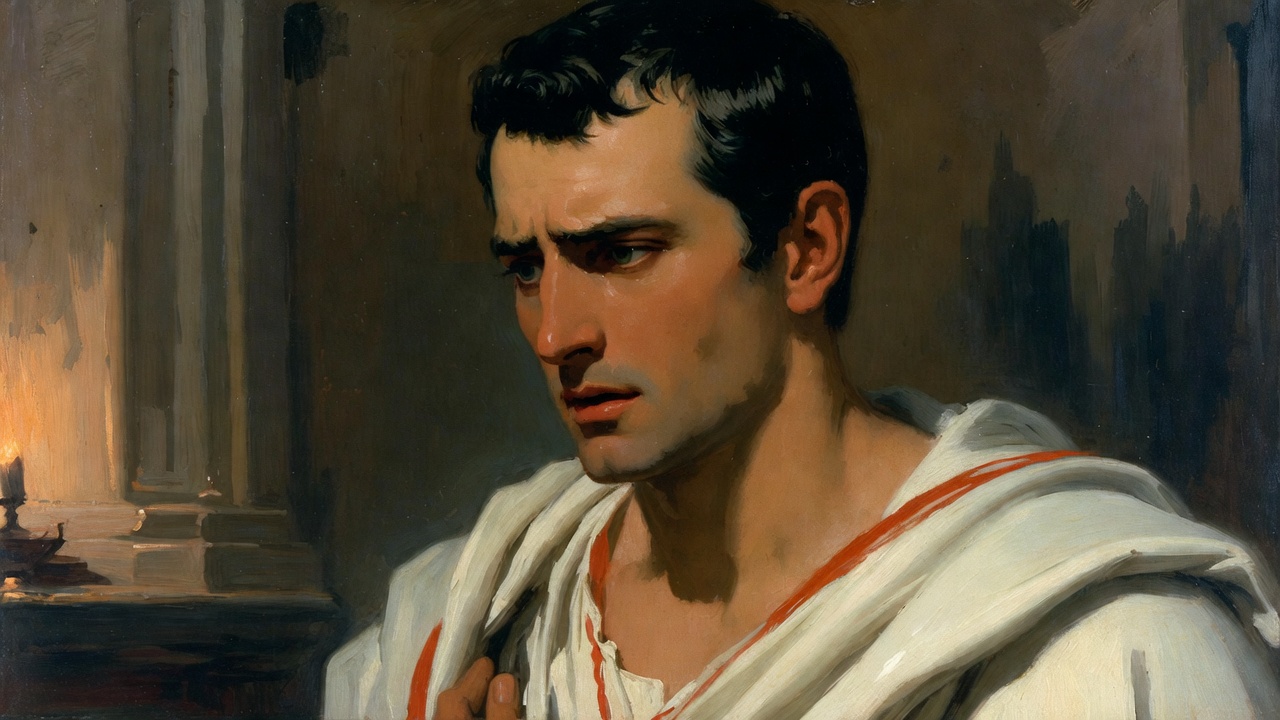
Caius Cassius – The Master Manipulator Cassius is the play’s chief architect of conspiracy and its most cynical voice. Driven by envy (“Why should Caesar be a tyrant then? / Poor man, I know him not”), he skillfully exploits Brutus’s sense of honor. His famous speech comparing Caesar to a “Colossus” while ordinary men walk “under his huge legs” is both poetic and dangerously persuasive. Cassius is pragmatic where Brutus is idealistic—he urges the conspirators to kill Antony too, correctly foreseeing the danger. His eventual despair and suicide after misreading military signals reveal a man undone by the same impulsiveness he once condemned in others.
Mark Antony – The Avenger Antony begins as Caesar’s loyal lieutenant and emerges as the play’s most effective political operator. His funeral oration—“Friends, Romans, countrymen, lend me your ears”—is Shakespeare’s greatest demonstration of rhetoric as weapon. Through calculated irony (“Brutus is an honourable man”), emotional appeals (displaying Caesar’s bloody mantle and reading the will), and masterful crowd manipulation, Antony turns public opinion in minutes. Yet Antony is no simple hero. His later cold-blooded proscription list (including his own nephew) and willingness to use Lepidus as a “barber’s chair” reveal ruthless ambition. By the play’s end, he praises Brutus as “the noblest Roman of them all,” but his words carry the weight of a victor writing history.
Supporting Characters: Calpurnia, Portia, Octavius Calpurnia and Portia serve as emotional anchors, humanizing the male protagonists. Calpurnia’s dream of Caesar’s statue spouting blood foreshadows doom and reveals Caesar’s rare moment of vulnerability. Portia’s self-inflicted wound to prove her strength (“I have made strong proof of my constancy”) is one of Shakespeare’s most powerful portraits of female resolve in a male-dominated world. Octavius, Caesar’s adopted heir, enters late but decisively. Cold, efficient, and authoritarian, he represents the new order that rises from the ashes of republican idealism.
Major Themes in Julius Caesar – Timeless Insights into Power and Humanity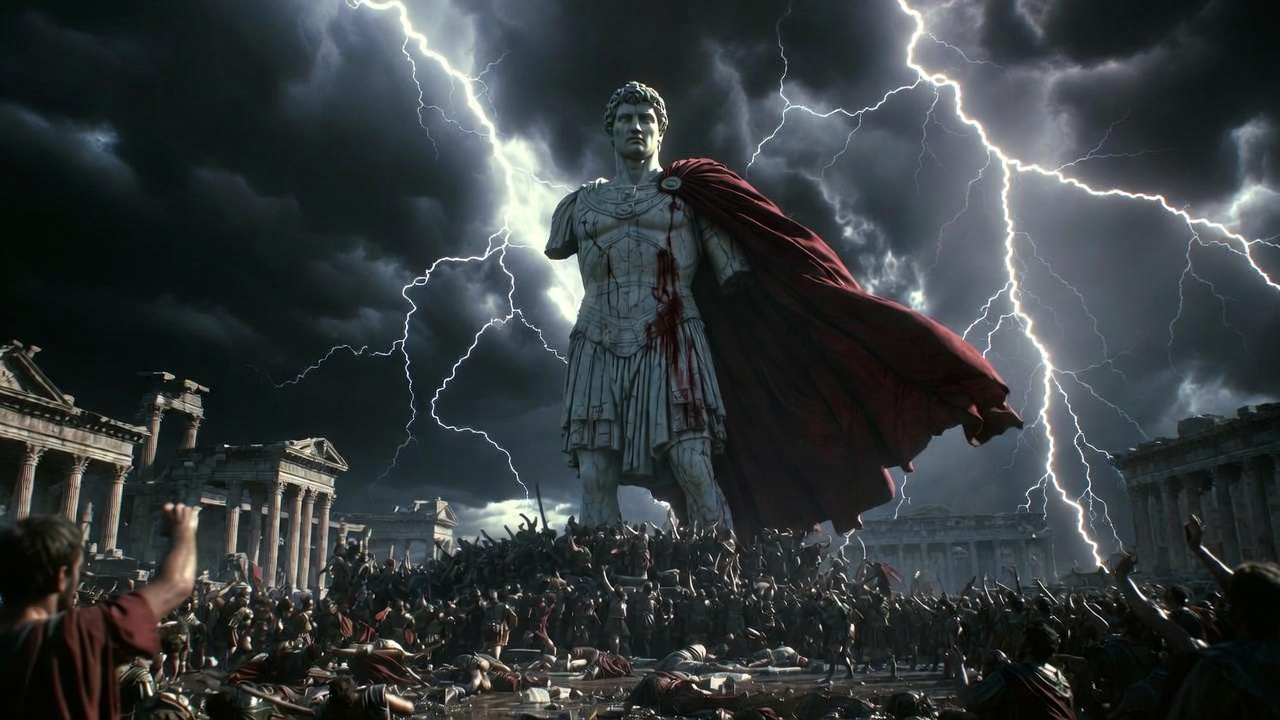
Shakespeare weaves several interlocking themes that give the play its enduring power.
Ambition vs. Honor The central tension: Caesar’s ambition threatens the Republic, yet the conspirators’ “honorable” act unleashes tyranny. Brutus believes he acts for honor, but Cassius’s envy and Antony’s vengeance reveal ambition’s many faces.
Fate vs. Free Will Omens, soothsayers, and storms abound, yet characters repeatedly choose their paths. Cassius’s line—“The fault, dear Brutus, is not in our stars, / But in ourselves, that we are underlings”—asserts human agency, but the play’s tragic outcome suggests fate may indeed be inescapable.
Public vs. Private Self Brutus sacrifices personal bonds for public duty; Caesar’s private fears contrast with his public bravado. The tension between inner truth and outward performance drives much of the drama.
Rhetoric and Persuasion Words are the true weapons. Brutus appeals to reason; Antony to emotion. Antony’s victory in the Forum scene proves that effective rhetoric can override facts and morality.
The Fragility of Democracy and the Rise of Tyranny The play warns that assassinating a potential tyrant can destroy the very republic one seeks to save. The mob’s fickleness and the triumvirate’s ruthless consolidation of power illustrate democracy’s vulnerability.
Key Quotes from Julius Caesar – Explained and Analyzed
Shakespeare’s language in Julius Caesar is famously quotable, with lines that have entered everyday speech and political discourse. Below are some of the most powerful quotations, presented with context, literal meaning, literary analysis, and cultural significance.
- “Beware the Ides of March.” (Soothsayer to Caesar, Act I, Scene II) A simple, ominous warning ignored by Caesar. The “Ides” refers to March 15 in the Roman calendar—the day of the assassination. Symbolically, it represents ignored fate and the blindness of power. This line has become shorthand for impending danger or betrayal.
- “Why, man, he doth bestride the narrow world / Like a Colossus…” (Cassius to Brutus, Act I, Scene II) Cassius’s vivid metaphor compares Caesar to the Colossus of Rhodes, towering over ordinary men. It reveals Cassius’s envy and plants the seed of conspiracy. The image underscores the theme of disproportionate power and how it distorts human relationships.
- “The fault, dear Brutus, is not in our stars, / But in ourselves, that we are underlings.” (Cassius to Brutus, Act I, Scene II) One of Shakespeare’s most famous philosophical statements. Cassius rejects astrological determinism, insisting that humans shape their own destinies. Ironically, the play’s tragic outcome suggests that personal choices can still lead to predetermined ruin.
- “It must be by his death: and for my part / I know no personal cause to spurn at him, / But for the general.” (Brutus in soliloquy, Act II, Scene I) The heart of Brutus’s tragedy. He admits he has no private grudge against Caesar—only fear for Rome’s future. This moment showcases Shakespeare’s psychological realism: Brutus rationalizes murder through abstract principle, blinding himself to its human cost.
- “Et tu, Brute? Then fall, Caesar!” (Caesar, Act III, Scene I) Perhaps the most iconic line in all of Shakespeare. Spoken in Latin (“And you, Brutus?”), it captures the moment of ultimate betrayal. The shock of seeing his trusted friend among the assassins breaks Caesar’s composure. The phrase has become synonymous with personal treachery.
- “Friends, Romans, countrymen, lend me your ears…” (Antony, Act III, Scene II) The opening of Antony’s funeral oration—the greatest rhetorical set-piece in the play. Antony begins humbly, then systematically dismantles Brutus’s justification through irony, emotion, and evidence (Caesar’s will). This speech demonstrates how persuasion can override logic and morality.
- “This was the noblest Roman of them all.” (Antony, Act V, Scene V) Antony’s final tribute to Brutus after his suicide. The praise is genuine yet layered with irony: Brutus’s nobility led directly to civil war and the rise of autocracy. It encapsulates the play’s tragic paradox—honor can be both admirable and destructive.
These lines are not mere decoration; they crystallize the play’s central conflicts and continue to echo in literature, politics, and popular culture.
The Role of Rhetoric – Shakespeare’s Masterclass in Persuasion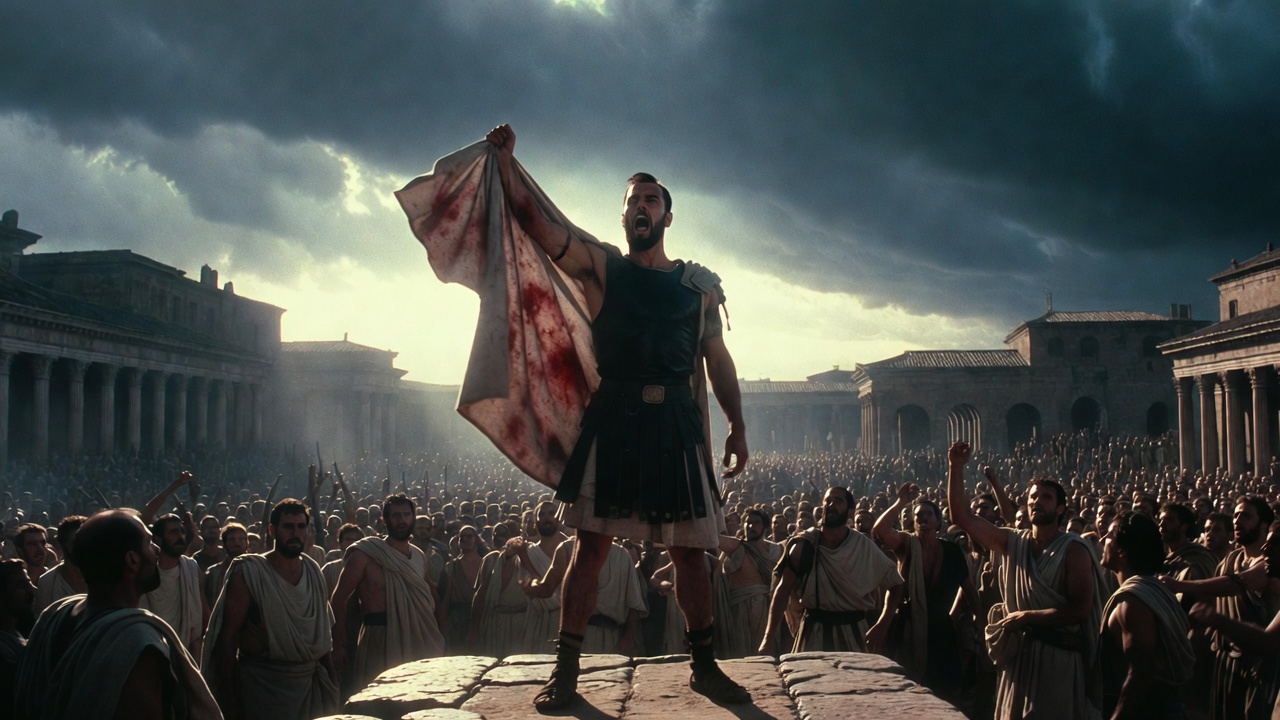
Julius Caesar is arguably Shakespeare’s most sustained exploration of the power of language. The Forum scene (Act III, Scene II) contrasts two speeches that shape the course of Roman history.
- Brutus’s speech is logical and measured. He appeals to ethos (his reputation for honor) and logos (Caesar would have become a tyrant). He speaks in prose, distancing himself emotionally from the crowd. While intellectually sound, it fails to move hearts.
- Antony’s speech is a masterpiece of manipulation. He begins with apparent agreement (“Brutus is an honourable man”), repeating the phrase until it becomes bitterly ironic. He uses pathos—displaying Caesar’s torn cloak, reading the will that benefits the citizens—and subtle ethos-building (presenting himself as Caesar’s grieving friend rather than a politician). By the end, the mob is ready to burn Rome.
This contrast illustrates Aristotle’s three modes of persuasion (ethos, pathos, logos) in action. Antony wins because he understands emotion trumps reason when addressing crowds. Modern parallels abound: political speeches, advertising, social media campaigns—all rely on the same techniques Shakespeare dramatized over 400 years ago.
Julius Caesar on Stage and Screen – Performance History and Adaptations
Shakespeare’s play has been reinterpreted countless times, each production reflecting its era’s anxieties.
- Orson Welles (1937) directed a landmark version set in fascist Italy, with Caesar resembling Mussolini. The production used modern dress and stark lighting to emphasize dictatorship’s dangers—highly relevant in the late 1930s.
- Joseph Mankiewicz’s 1953 film featured Marlon Brando as Antony in his first Shakespearean role. Brando’s Method-acting style brought raw emotion to the funeral oration, influencing later cinematic interpretations.
- The 1970 Charlton Heston version emphasized spectacle and battle scenes, staying closer to historical grandeur.
- Modern adaptations include the 2012 BBC film (set in a contemporary African dictatorship) and stage productions that cast women as Brutus or Caesar, exploring gender and power dynamics.
Why Julius Caesar Still Matters – Lessons for Today
More than four centuries after its first performance, Julius Caesar remains one of Shakespeare’s most politically urgent plays. Its exploration of ambition, betrayal, rhetoric, mob psychology, and the fragility of republican institutions speaks directly to contemporary challenges.
Political polarization and leadership cults find clear echoes in the play. Caesar’s supporters cheer him blindly during the Lupercal; the Roman crowd shifts allegiance within minutes based on the last compelling speech they hear. Today we see similar volatility in public opinion shaped by charismatic orators, viral media moments, and emotionally charged messaging.
The assassination scene itself raises timeless ethical questions: When is it justifiable to remove a leader perceived as dangerous to democracy? Brutus believes the act is noble and preemptive; history (and the play) shows it accelerates authoritarianism under Octavius (the future Augustus). Modern debates about “defending democracy by undemocratic means” — whether through impeachment attempts, emergency powers, or even coups in various countries — mirror this moral quandary.
Cassius’s manipulation of Brutus through forged letters and flattery parallels contemporary disinformation campaigns and targeted influence operations. Antony’s brilliant reversal of public sentiment through selective facts, emotional appeals, and repetition demonstrates techniques that remain central to political communication, advertising, and propaganda.
The play also warns about the seductive danger of idealism untethered from pragmatism. Brutus’s refusal to kill Antony and his trust in the crowd’s rationality prove catastrophically naive. In an age when principled politicians are sometimes outmaneuvered by more ruthless operators, this lesson remains painfully relevant.
Finally, Julius Caesar reminds us that republics are not indestructible. They require active, informed citizens, institutional safeguards, and leaders willing to place the common good above personal ambition. When any of these elements fail, the consequences can be swift and irreversible.
FAQs About Julius Caesar
Is Julius Caesar based on a true story? Yes, but with significant dramatic license. Shakespeare drew primarily from Plutarch’s biographies, preserving major events (the Lupercal, the conspiracy, the assassination on the Ides of March, Antony’s funeral oration, Philippi) while compressing timelines, inventing speeches, and reshaping characters for theatrical impact.
Who is the real tragic hero — Caesar or Brutus? Most critics consider Brutus the tragic hero. He possesses a fatal flaw (excessive idealism combined with political naivety), makes a grave moral error for what he believes are noble reasons, and suffers profound personal and public consequences. Caesar, while central, dies early and lacks the depth of internal conflict that defines classical tragedy.
What does “Et tu, Brute?” mean? “And you, Brutus?” — Caesar’s stunned realization that even his close friend has betrayed him. The Latin phrase has become a universal expression of personal treachery and shattered trust.
Why is the play called Julius Caesar if he’s killed in Act III? Shakespeare often names plays after the most historically significant or symbolically dominant figure, even if they do not appear throughout. Caesar’s ambition, death, and legacy drive every major action and decision in the play. His spirit figuratively haunts the stage long after his physical death (“Caesar’s spirit ranging for revenge”).
How does fate play a role in the tragedy? Fate is omnipresent through omens, soothsayers, dreams, and storms, yet characters repeatedly assert free will (most famously Cassius’s “The fault… is not in our stars”). The tension between predestination and choice remains unresolved — a hallmark of Shakespearean tragedy.
Was Shakespeare endorsing the assassination or condemning it? He does neither explicitly. The play presents both sides powerfully: Brutus’s republican idealism is noble yet disastrous; Caesar’s ambition is dangerous yet his murder unleashes worse tyranny. Shakespeare leaves moral judgment to the audience, a deliberate choice that has kept the work politically ambiguous and endlessly discussable.
Julius Caesar is far more than a historical costume drama or a classroom staple. It is a profound meditation on power, persuasion, loyalty, idealism, and the thin line between saving a republic and destroying it. Shakespeare gives us no easy answers — only deeply human characters whose choices reverberate through history.
Whether you first encountered “Cecar” as a typo in a search bar or as the towering figure of Roman legend, this play invites you to look beyond surface events to the motives, rhetoric, and moral compromises that shape political reality in every age.
If you haven’t recently read or watched Julius Caesar, now is the perfect time. Pay attention to how Brutus rationalizes, how Antony persuades, how crowds swing — and ask yourself: in our own time of polarized politics and powerful oratory, which lessons have we truly learned, and which are we still repeating?