“Alas, poor Yorick! I knew him, Horatio—a fellow of infinite jest, of most excellent fancy.”
These words, spoken as Hamlet cradles a gravedigger’s unearthed skull, mark one of the most haunting and unforgettable moments in all of Shakespeare’s works. In a single line, the prince confronts the levelling power of death: the court jester who once made him laugh is now reduced to a grinning bone, no different from kings or beggars. This moment arrives in Act 5 of Hamlet, the act that finally unleashes the long-delayed catastrophe after four acts of hesitation, plotting, and philosophical torment.
If you’ve been searching for a clear, detailed Hamlet Act 5 summary—whether you’re a high-school student preparing for an exam, a university literature major analysing themes of mortality and revenge, a teacher building lesson plans, or simply a reader who wants to understand why this final act feels both inevitable and shattering—this article is for you.
Here we provide more than a basic plot recap. We offer a scene-by-scene breakdown, close readings of the most famous lines, in-depth analysis of symbolism (the skull, the poisoned cup, the exchanged rapier), character arcs in their final form, thematic threads that tie the entire tragedy together, and insights into Elizabethan attitudes toward suicide, providence, and revenge. By the end, you’ll not only know what happens in Act 5 but why Shakespeare crafted its strange mixture of dark comedy, existential reflection, and sudden bloodshed to deliver one of the most powerful tragic conclusions in Western literature.
Overview of Hamlet Act 5 – The Structure and Pacing
Unlike the sprawling five-scene structure of Acts 3 and 4, Act 5 contains only two scenes. This deliberate compression creates a devastating contrast:
- Scene 1 (the graveyard) is slow, meditative, even darkly humorous at first. It gives Hamlet—and the audience—space to contemplate mortality before the storm breaks.
- Scene 2 (the castle hall) explodes into rapid, almost cinematic violence. Once the duel begins, deaths cascade in quick succession: Gertrude, Laertes, Claudius, and finally Hamlet himself.
The pacing mirrors the play’s central tension: prolonged philosophical paralysis followed by catastrophic action. Shakespeare uses this structural shift to heighten irony—Hamlet has spent the entire tragedy questioning “To be, or not to be,” yet when he finally acts decisively, almost everyone perishes.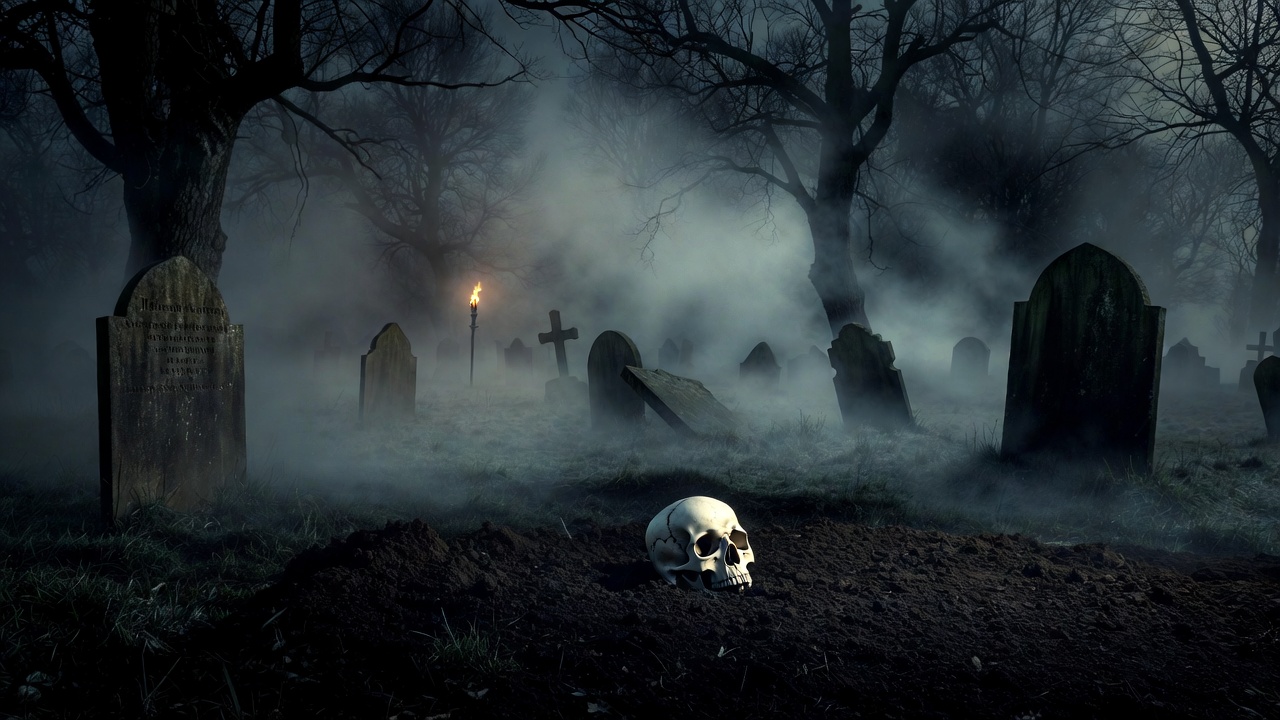
Act 5 is also the point where all major plot threads converge:
- The revenge command from the Ghost (Act 1)
- The accidental killing of Polonius (Act 3)
- Ophelia’s madness and death (Act 4)
- Claudius’s schemes to eliminate Hamlet
- Laertes’s desire for vengeance
- Fortinbras’s looming military threat from Norway
The result is a finale that feels both chaotic and meticulously orchestrated, a hallmark of Shakespeare’s mature tragic style.
Hamlet Act 5, Scene 1 – The Graveyard Scene: Revelations and Mortality
The act opens in a graveyard outside Elsinore, immediately establishing a tone of decay and equality in death.
The Gravediggers’ Dialogue – Comic Relief and Social Commentary
Two clowns (gravediggers) are preparing Ophelia’s grave while bantering about her death. Their conversation is deliberately coarse and funny, providing comic relief at the very moment the tragedy is about to peak.
First Gravedigger: “Is she to be buried in Christian burial when she wilfully seeks her own salvation?”
Second Gravedigger: “I tell thee she is; therefore make her grave straight. The crowner hath sat on her and finds it Christian burial.”
This exchange reveals several layers:
- Elizabethan attitudes toward suicide: Self-slaughter was considered a mortal sin, barring Christian burial. The gravediggers cynically note that Ophelia receives “maimed rites” only because her death is ruled accidental—thanks to her noble status. This highlights class privilege even in death.
- Social satire: The lower-class gravediggers speak truth to power, exposing the hypocrisy of the court. Their malapropisms (“crowner” for coroner, “seeks her own salvation” instead of damnation) add humour while underscoring their outsider perspective on aristocratic corruption.
Shakespeare uses this scene to remind us that beneath the pomp of royalty lies the same mortal clay—a theme Hamlet will soon confront directly.
Hamlet’s Encounter with Death – Yorick’s Skull and “Alas, Poor Yorick”
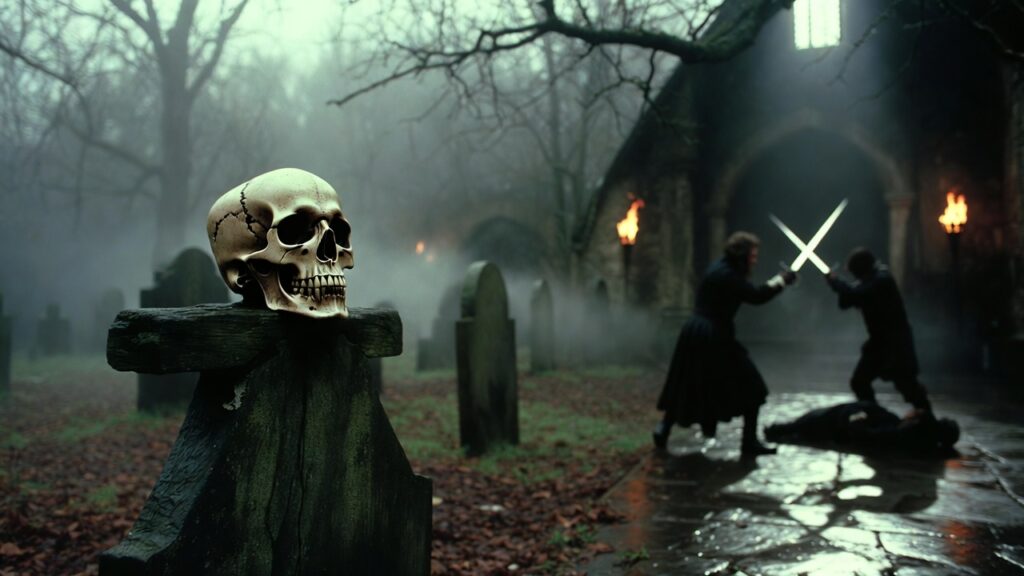
Hamlet and Horatio enter and watch the gravediggers at work. When a skull is tossed out, Hamlet picks it up and muses:
“Alas, poor Yorick! I knew him, Horatio—a fellow of most excellent fancy… He hath borne me on his back a thousand times… And now how abhorred in my imagination it is! … Where be your gibes now? your gambols? your songs?”
This is the famous “Alas, poor Yorick” speech, one of Shakespeare’s most quoted passages.
Key insights:
- Memento mori: The skull serves as a reminder of mortality. Hamlet traces the fate of great figures—Alexander the Great, Julius Caesar—reduced to dust that might plug a beer-barrel.
- Equality in death: Social hierarchies vanish. The court jester and the emperor end up indistinguishable.
- Psychological turning point: Earlier, Hamlet’s “To be, or not to be” soliloquy was paralysed by fear of the unknown. Here, holding the skull, he confronts the physical reality of death and begins to accept it. The tone shifts from dread to wry resignation.
Symbolically, the graveyard scene strips away illusion. Denmark’s rotten state is literalised in the exposed bones.
Ophelia’s Funeral – Grief, Rage, and Confrontation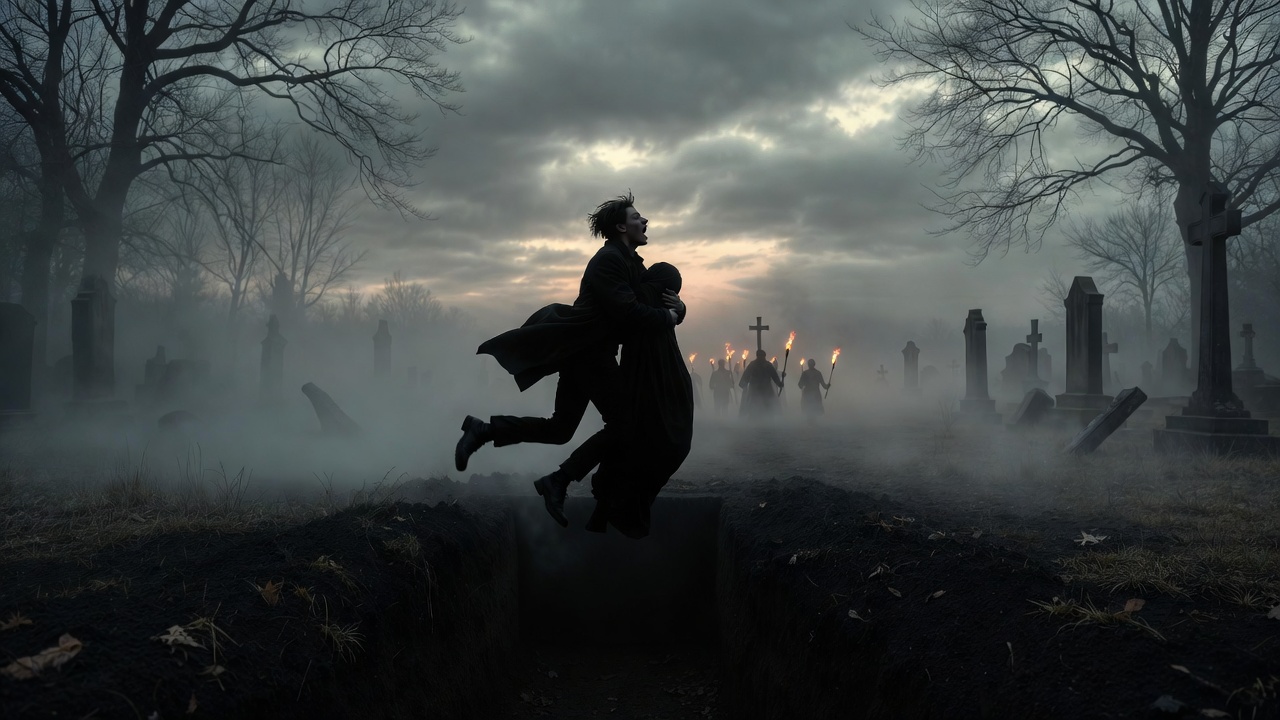
The funeral procession arrives: Laertes, Claudius, Gertrude, and the priest. The priest refuses full rites, calling Ophelia’s death “doubtful.” Laertes, furious, leaps into the grave to embrace his sister one last time.
Hamlet, watching from hiding, is overcome:
“What is he whose grief Bears such an emphasis, whose phrase of sorrow Conjures the wand’ring stars, and makes them stand Like wonder-wounded hearers? This is I, Hamlet the Dane.”
He leaps in after Laertes. The two men struggle in the grave—an extraordinary, almost surreal image of grief competing with grief.
Hamlet declares:
“I loved Ophelia. Forty thousand brothers Could not with all their quantity of love Make up my sum.”
Critics debate whether this is genuine love or a belated realisation, but the raw emotion is undeniable. The scene ends with Claudius privately urging Laertes to patience—the duel is coming.
This confrontation foreshadows the violence ahead while showing how personal loss fuels the final catastrophe.
Hamlet Act 5, Scene 2 – The Deadly Duel and Tragic Resolution
The second and final scene of the act—and of the play—takes place back inside the castle. After the reflective graveyard interlude, Shakespeare accelerates the pace dramatically, turning philosophical contemplation into a whirlwind of betrayal, poison, and death.
Hamlet’s Recounting to Horatio – Fate and Readiness
The scene opens with Hamlet alone with Horatio, recounting his escape from the ship bound for England. He explains how he discovered Claudius’s sealed commission ordering Rosencrantz and Guildenstern to deliver him to execution. Hamlet forged a new letter, instructing the bearers themselves to be killed upon arrival.
Hamlet reflects on this turn of events with newfound calm:
“Our indiscretion sometime serves us well When our deep plots do pall, and that should learn us There’s a divinity that shapes our ends, Rough-hew them how we will—”
This is one of the most important shifts in Hamlet’s character. Throughout the play he has agonised over action versus inaction, free will versus destiny. Now, he acknowledges a providential force guiding events. The line “There’s a divinity that shapes our ends” suggests he has moved beyond paralyzing doubt toward a form of acceptance.
Later, when Horatio warns him against the duel with Laertes, Hamlet responds with one of the play’s most famous philosophical statements:
“Not a whit. We defy augury. There is special providence in the fall of a sparrow. If it be now, ’tis not to come; if it be not to come, it will be now; if it be not now, yet it will come. The readiness is all. Since no man of aught he leaves knows what is’t to leave betimes, let be.”
“The readiness is all” encapsulates Hamlet’s final philosophical stance: one cannot outwit fate, but one can meet it prepared. The repeated “let be” echoes his earlier “let be” in the prayer scene (Act 3), but now it carries resignation rather than restraint.
The Duel Setup and Fatal Trap
Osric, a foppish courtier, arrives to deliver the challenge: Laertes has wagered on his skill against Hamlet’s in a fencing match. Claudius has sweetened the stakes with valuable prizes, including pearls for every hit Hamlet scores.
Hamlet accepts, despite a presentiment:
“But thou wouldst not think how ill all’s here about my heart—but it is no matter… It is but foolery, but it is such a kind of gain-giving as would perhaps trouble a woman.”
Horatio offers to delay, but Hamlet refuses. Dramatic irony is at its height: the audience knows Claudius and Laertes have rigged the match with a poisoned rapier (unblunted) and a poisoned chalice of wine meant for Hamlet.
Laertes’s motivation is complex. He has been manipulated by Claudius, yet he is genuinely grieving his father and sister. His conscience flickers:
“…yet here’s my exchange: let my disclaiming from a purposed evil Free me so far in your most generous thoughts That I have shot my arrow o’er the house And hurt my brother.”
This moment of near-reconciliation makes the tragedy even more painful.
The Climactic Duel and Cascade of Deaths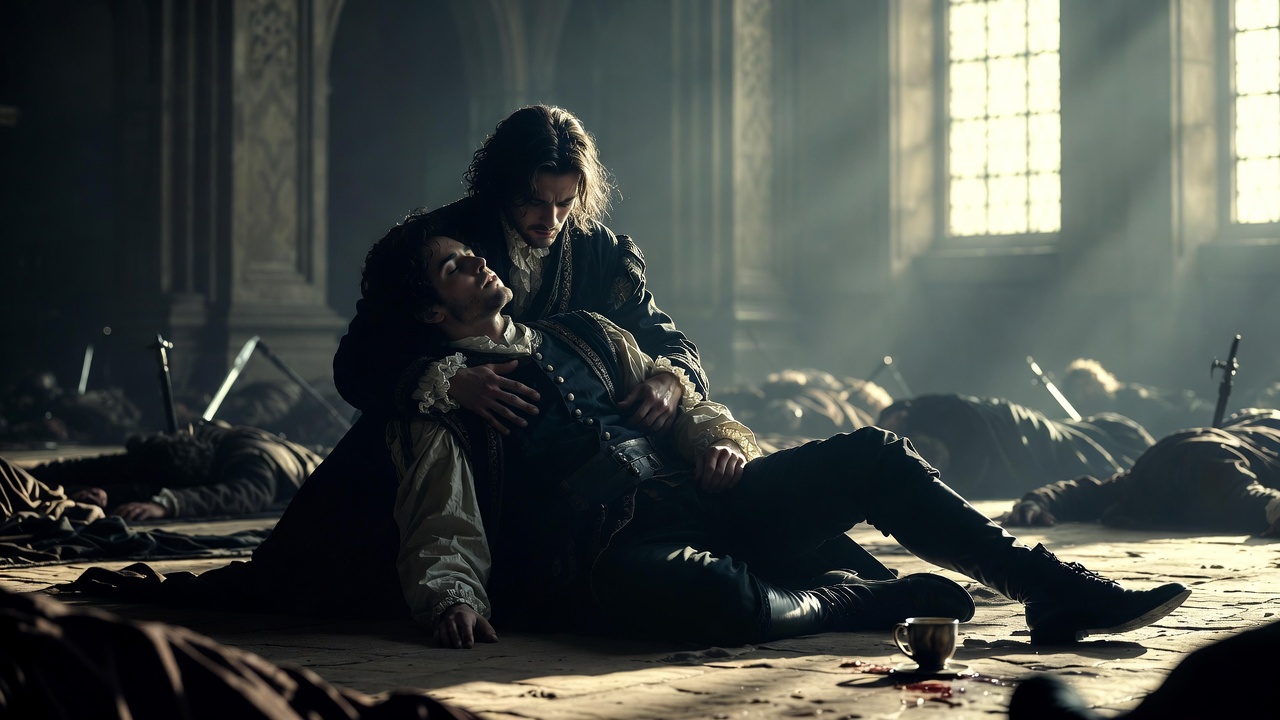
The court assembles. The duel begins with three rounds of fencing. Hamlet scores the first two hits fairly. Gertrude, moved by pride in her son, drinks from the poisoned cup despite Claudius’s warning (“Gertrude, do not drink”).
The turning point comes in the third round: Laertes wounds Hamlet with the poisoned blade. In the scuffle that follows, the rapiers are exchanged. Hamlet then wounds Laertes with the same poisoned weapon.
Gertrude collapses, crying out:
“The drink, the drink! I am poisoned.”
Laertes, realising the treachery, confesses:
“The foul practice Hath turn’d itself on me. Lo, here I lie, Never to rise again. Thy mother’s poison’d. I can no more. The King, the King’s to blame.”
Hamlet, now mortally wounded, seizes the poisoned rapier and forces Claudius to drink the remainder of the cup before stabbing him again for good measure. Claudius dies with the words “O yet defend me, friends; I am but hurt” — a pathetic final attempt to evade responsibility.
Laertes asks for and receives Hamlet’s forgiveness:
“Exchange forgiveness with me, noble Hamlet. Mine and my father’s death come not upon thee, Nor thine on me.”
Hamlet dies in Horatio’s arms, uttering one of the most famous closing lines in literature:
“The rest is silence.”
Ambassadors from England arrive to report the deaths of Rosencrantz and Guildenstern. Fortinbras enters with his army, claiming Denmark by conquest. Horatio promises to tell the full story:
“So shall you hear Of carnal, bloody, and unnatural acts, Of accidental judgments, casual slaughters, Of deaths put on by cunning and forced cause, And, in this upshot, purposes mistook Fall’n on th’ inventors’ heads.”
Fortinbras orders military honours for Hamlet:
“Go, bid the soldiers shoot.”
Major Themes in Hamlet Act 5 – Death, Revenge, and Fate
Act 5 crystallises the philosophical and moral questions that have haunted the tragedy from the beginning. Shakespeare weaves these themes so tightly into the action that the finale feels like an inevitable consequence rather than a contrived ending.
Mortality and the Human Condition The graveyard scene is the play’s most sustained meditation on death. Hamlet’s encounter with Yorick’s skull forces him (and us) to confront the physical reality of decay: “To what base uses we may return, Horatio!” The image of Alexander the Great stopping a bung-hole with his dust is both grotesque and equalising. Death erases ambition, rank, beauty, and wit. This theme reaches its culmination in the final scene, where four major characters die within minutes, reminding the audience that no one escapes mortality—not even the scheming king or the grieving prince.
Revenge and Its Cyclical Cost Hamlet is a revenge tragedy, but Shakespeare subverts the genre’s conventions. Traditional revenge plays (such as Thomas Kyd’s The Spanish Tragedy) deliver swift, satisfying retribution. Here, revenge is delayed, contaminated, and ultimately self-destructive. Claudius’s original murder sets off a chain reaction: Polonius dies accidentally, Ophelia drowns (whether by suicide or madness), Laertes seeks vengeance, and the duel becomes a massacre of almost everyone involved. The ending is not triumphant justice but mutual annihilation. Fortinbras’s arrival suggests the cycle may continue under new management.
Providence, Fate, and Free Will Hamlet’s early soliloquies are dominated by doubt and paralysis: “Thus conscience does make cowards of us all.” By Act 5 he has arrived at a different position: “There’s a divinity that shapes our ends” and “The readiness is all.” This is not passive fatalism but a mature acceptance that human plans are fallible and that events may be guided by a higher power. The poisoned sword and cup—meant to kill Hamlet—end up killing their plotters instead. Shakespeare leaves room for interpretation: is this divine justice, sheer accident, or both?
Appearance vs. Reality and Moral Corruption Poison remains the central metaphor. Claudius poisons the ear of old King Hamlet, poisons the wine, poisons the sword. Every major death in Act 5 is caused by poison—literal or figurative—underscoring the rottenness at the heart of Denmark. The “maimed rites” of Ophelia’s funeral mirror the corrupted ceremonies of the court: nothing is pure or honest.
Character Development in the Final Act
Hamlet The prince who once feigned madness and hesitated over killing Claudius now acts with decisiveness—though often impulsively. He forges the letter on the ship, accepts the duel despite foreboding, and kills Claudius only after being mortally wounded himself. His philosophical evolution is complete: from “What a piece of work is a man” cynicism to quiet readiness. Yet he remains tragic—his revenge is achieved, but at the cost of nearly every life he valued.
Laertes As Hamlet’s foil, Laertes has always been the man of swift action. His rashness leads him into Claudius’s trap, but in the end he redeems himself by confessing the plot and seeking forgiveness. His final lines—“Exchange forgiveness with me, noble Hamlet”—offer a moment of genuine humanity amid the carnage.
Claudius The arch-villain’s schemes collapse under their own weight. His final plea—“O yet defend me, friends; I am but hurt”—reveals cowardice beneath the regal façade. He dies unlamented, his poison turned against him.
Horatio The loyal friend survives to bear witness. His promise to tell Hamlet’s story ensures the prince’s memory will live on, fulfilling the Elizabethan need for a survivor to narrate the tragedy.
Gertrude Her death is accidental yet symbolically apt. She drinks the poisoned cup meant for her son, perhaps out of maternal pride or perhaps out of guilt. Her cry—“The drink, the drink! I am poisoned”—is one of the most poignant moments of realisation in the play.
Key Quotes from Hamlet Act 5 with Analysis and Context
Here are the most significant lines from Act 5, with explanations and Elizabethan context:
- “Alas, poor Yorick! I knew him, Horatio…” (5.1) → Iconic memento mori speech. Reflects Renaissance fascination with vanitas art (skulls, hourglasses) and the levelling power of death.
- “To what base uses we may return, Horatio!” (5.1) → Hamlet imagines great men reduced to menial purposes, echoing the biblical “dust to dust.”
- “I loved Ophelia. Forty thousand brothers / Could not… make up my sum.” (5.1) → Hyperbolic declaration of love; critics debate sincerity, but the emotion is raw and contrasts with his earlier cruelty toward her.
- “There’s a divinity that shapes our ends, / Rough-hew them how we will—” (5.2) → Echoes Proverbs 16:9 (“A man’s heart deviseth his way: but the Lord directeth his steps”).
- “The readiness is all.” (5.2) → Hamlet’s final philosophy: prepare oneself inwardly rather than try to control fate.
- “The rest is silence.” (5.2) → Hamlet’s last words. Suggests the ultimate unknowability of death; also a meta-commentary on the end of performance.
- “Good night, sweet prince, / And flights of angels sing thee to thy rest.” (5.2, Horatio) → One of the most moving epitaphs in literature; contrasts with the violent reality.
Why Hamlet Act 5 Remains One of Shakespeare’s Greatest Achievements
Shakespeare combines genres in a way few playwrights have matched: graveyard comedy, existential philosophy, revenge-tragedy conventions, and sudden carnage. The act balances intellectual depth with visceral drama. Its influence is vast—from Romantic poets who saw Hamlet as the modern consciousness to 20th-century existentialists who read the play as a portrait of the absurd.
In performance, Act 5 is electrifying: the slow, contemplative graveyard gives way to lightning-fast violence. The contrast creates emotional whiplash that mirrors the tragedy’s themes. Today, the act speaks powerfully to questions of mortality, justice delayed, and the consequences of revenge—issues as relevant in our era of endless cycles of conflict as they were in 1600.
FAQs About Hamlet Act 5
Is Ophelia’s death suicide? Shakespeare leaves it ambiguous. The gravediggers call it willful self-slaughter, but the coroner rules it accidental. This uncertainty reflects the play’s theme of doubtful appearances.
Why does Hamlet fight Laertes in the grave? It is an outburst of competitive grief and suppressed love for Ophelia. The physical struggle in the grave is grotesque and symbolic—two young men literally fighting over death.
What does “The readiness is all” mean? Hamlet accepts that death is inevitable. Rather than fearing the timing, one should be spiritually and morally prepared whenever it comes.
Who survives, and why does Fortinbras take over? Only Horatio, Fortinbras, and the English ambassadors survive. Fortinbras claims Denmark through conquest (his father’s old claim), restoring order through external force.
How does Act 5 resolve the central revenge plot? Revenge is achieved, but indirectly and at catastrophic cost. Hamlet kills Claudius only after being poisoned himself—poetic justice, but no heroic triumph.
Act 5 of Hamlet delivers one of the most devastating finales in dramatic literature. From the quiet horror of Yorick’s skull to the deafening silence after “The rest is silence,” Shakespeare forces us to confront mortality, the futility of revenge, and the fragile line between action and catastrophe. The tragedy does not offer easy answers—only profound questions that have haunted readers and theatregoers for over four centuries.