It is notoriously difficult to make a 400-year-old masterpiece feel dangerous again. When audiences sit down for William Shakespeare’s most famous tragedy, they already know the ending: the poisoned foils, the tragic drowning, the inevitable silence. Yet, every so often, a stage production manages to shatter those expectations. The highly anticipated staging of Hamlet at Wildlight does exactly that, transforming a familiar Elizabethan drama into a visceral, unpredictable experience.
For Shakespeare purists, modern adaptations can sometimes feel like a gimmick—sacrificing the poetic weight of the soliloquies for flashy contemporary aesthetics. Conversely, new theatergoers often find traditional proscenium performances rigid and inaccessible. Having analyzed dozens of classical theatre revivals across the globe, I can confidently say that the Wildlight production strikes a masterful balance. By leveraging an unconventional environment and a razor-sharp directorial vision, this immersive performance redefines the state of Denmark for a modern era.
Here is an expert breakdown of the staging, the creative choices, and exactly why this revival is a mandatory addition to your cultural calendar.
A Venue Like No Other: The Wildlight Atmosphere
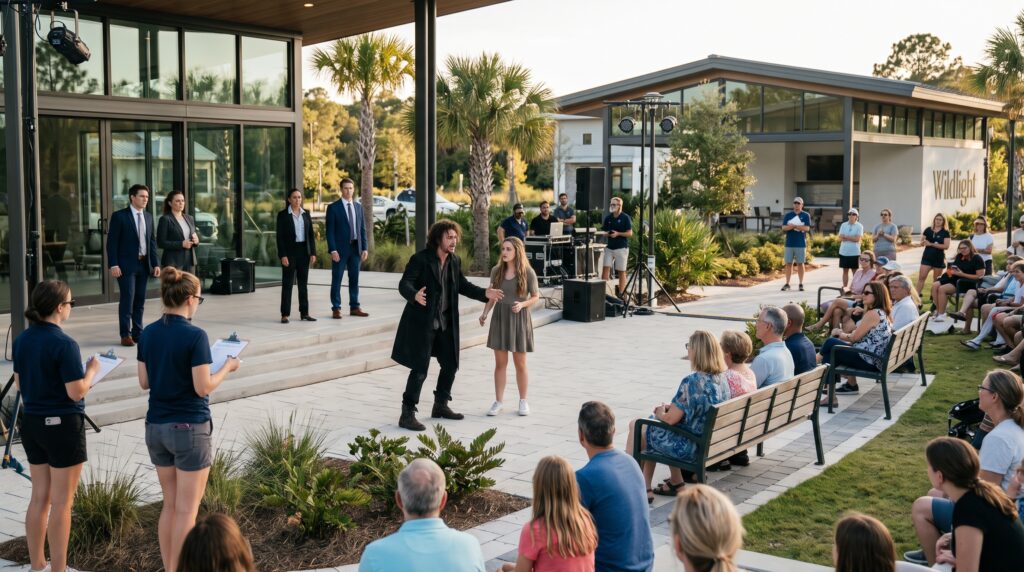
The success of any immersive performance hinges on its environment, and the backdrop of Wildlight provides a brilliant contrast to the rotting political landscape of Shakespeare’s Elsinore. Typically known for its modern, community-focused design and expansive open spaces, the Wildlight venue strips away the velvet curtains and ornate balconies of traditional theaters. Instead, it offers a stark, contemporary canvas that heightens the psychological isolation of the play’s protagonist.
Immersive Theatre vs. The Traditional Proscenium
Traditional productions of Hamlet usually trap the audience as passive observers behind the invisible fourth wall. The Wildlight staging shatters this barrier.
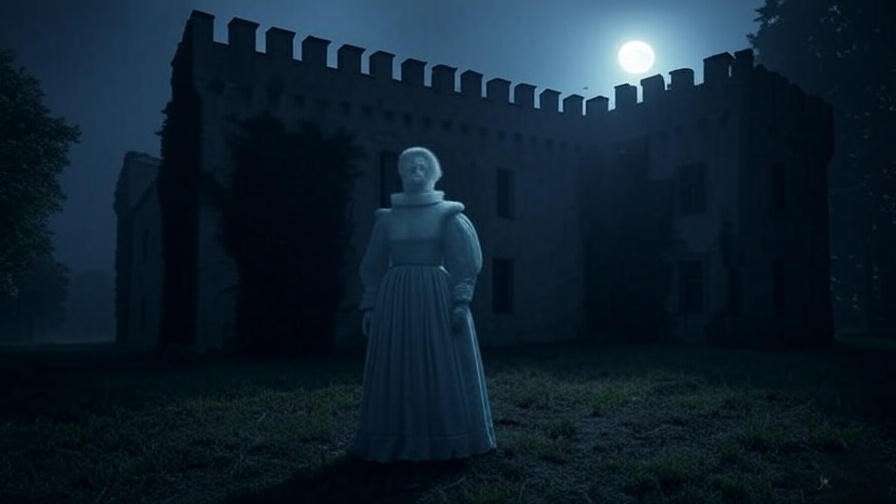
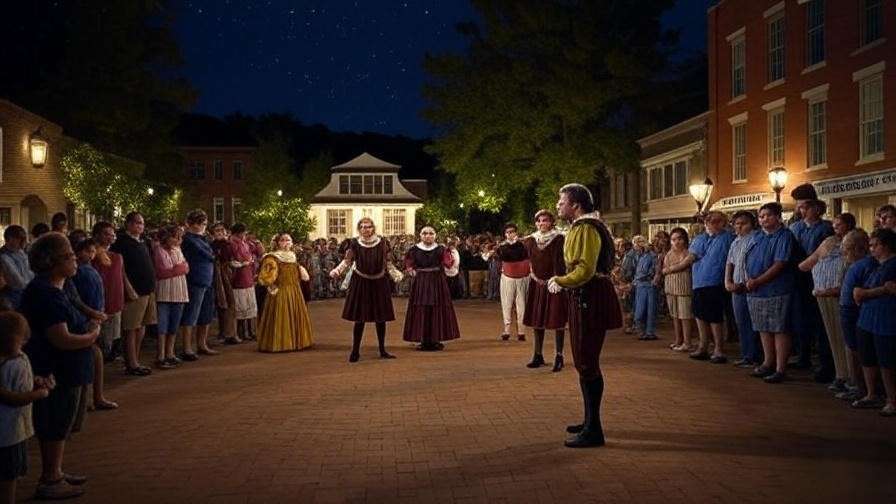
Actors move dynamically through the audience, delivering urgent dialogue from unexpected angles. When the ghost of King Hamlet appears, the chilling effect is amplified by the use of the surrounding environment—shadows cast against modern architectural elements make the supernatural visitation feel alarmingly real. This spatial fluidity forces the audience to become complicit in the surveillance and paranoia that define the Danish court. You are not just watching the tragedy unfold; you are in the room as the political conspiracy tightens.
Expert Insight: Environmental staging of this caliber actually brings us closer to the original spirit of the Globe Theatre. Shakespeare’s actors performed in broad daylight, surrounded by a raucous, standing crowd, making eye contact and directly engaging the “groundlings.” By removing the physical boundaries of a traditional stage, this production successfully recaptures that interactive, immediate energy.
Decoding the Director’s Vision for a 21st-Century Elsinore
Translating the dense, lyrical text of a classical tragedy into a contemporary setting requires more than just swapping broadswords for handguns. The directorial vision behind this revival reimagines Elsinore not as a medieval castle, but as a sleek, high-stakes corporate and political epicenter.
Themes of surveillance, espionage, and public manipulation are brought to the forefront. When Polonius plots to spy on his children, the concept is modernized through the subtle inclusion of digital technology and wiretapping motifs. This framing makes Hamlet’s famous “antic disposition”—his feigned madness—look less like a mystical curse and more like a desperate, calculated strategy to survive in a hyper-monitored state.
Costuming and Set Design
The aesthetic of the production leans heavily into minimalist, cold modernity. The royal court is dressed in sharp, monochromatic corporate suits and high-end evening wear, reflecting a society obsessed with outward appearances and structural hierarchy.
-
The Set: Stripped of heavy medieval furniture, the stage utilizes reflective surfaces, glass panels, and harsh, clinical lighting. This creates a literal hall of mirrors, emphasizing the theme of deception and the idea that no one in Elsinore can hide their true face.
-
The Costuming: Hamlet’s stark contrast to the court is immediately visible. While Claudius and Gertrude wear immaculate, structured garments, Hamlet is draped in loose, unkempt mourning attire that feels distinctly out of place in the polished environment—a visual manifestation of his grief and alienation.
This modernization does not overwarite the text; rather, it highlights the timelessness of Shakespeare’s commentary on corruption, mental health, and the toxic nature of absolute power. When compared to the iconic 2009 Royal Shakespeare Company adaptation starring David Tennant, the Wildlight revival feels similarly urgent but carves out its own distinct, environmental identity.
The Cast: Who Shines in the Wildlight Revival?
Even the most brilliant directorial concept falls flat without a cast capable of carrying the immense emotional and linguistic weight of a classical text. Fortunately, the ensemble assembled for this production is a masterclass in modern Shakespearean performance. They deliver the iambic pentameter not as a sacred, untouchable relic, but as a living, breathing language driven by genuine human urgency.
A Melancholy Dane for a New Generation
The role of the tragic hero is notoriously punishing. An actor must navigate a labyrinth of grief, philosophical paralysis, and explosive rage, all while maintaining the audience’s sympathy. In this iteration, our protagonist is entirely stripped of the romanticized, brooding melancholy that often plagues traditional performances.
Instead, we are presented with a Hamlet whose grief is raw, messy, and deeply uncomfortable. The delivery of the iconic soliloquies—particularly the pivotal “To be, or not to be”—is handled with astonishing intimacy. Rather than declaiming to the rafters, the actor delivers these lines as frantic, whispered confessions, blurring the line between profound existential dread and genuine psychological fracturing. The physical acting is equally demanding; this is a highly kinetic Prince of Denmark, constantly pacing, fidgeting, and using the environmental staging to corner both his enemies and the audience itself. It is a performance that beautifully captures the razor-thin margin between feigned madness and total collapse.
The Supporting Pillars: Claudius, Gertrude, and Ophelia
While the title character often monopolizes the spotlight, the strength of this revival lies in its robust supporting cast.
-
Claudius: Here, the usurping king is not a cartoonish villain, but a terrifyingly plausible modern politician. The actor plays Claudius with a chilling, charismatic veneer, masking his ruthless ambition behind rehearsed press-conference smiles and corporate diplomacy. His private moments of guilt, particularly during the prayer scene, are delivered with a haunting stillness that contrasts sharply with his public bravado.
-
Gertrude: Often relegated to a passive pawn in male-dominated adaptations, Gertrude is given remarkable agency in this production. The staging highlights her as a shrewd survivor navigating a patriarchal power structure. The infamous “closet scene” between her and her son is a masterclass in tension, portraying a complex, deeply fractured mother-son dynamic built on years of unspoken resentments.
-
Ophelia: Perhaps the most radical and successful reinterpretation is that of Ophelia. Moving away from the archetype of the fragile, wilting flower, this production frames her descent into madness as a direct, inevitable psychological response to the intense gaslighting and surveillance of the court. Her final scenes are profoundly unsettling, substituting the traditional romanticized tragedy for a visceral depiction of trauma.
Pro-Tip for Readers: Pay close attention during Act III, Scene II—the famous “Mousetrap” play-within-a-play. The director utilizes the venue’s unique layout to stage this sequence in the round. By forcing the real-life audience to sit directly across from the royal court, you are cast as silent witnesses to Claudius’s unraveling guilt. It is a breathtaking piece of dramatic irony and arguably the standout sequence of the evening.
Planning Your Visit to Hamlet at Wildlight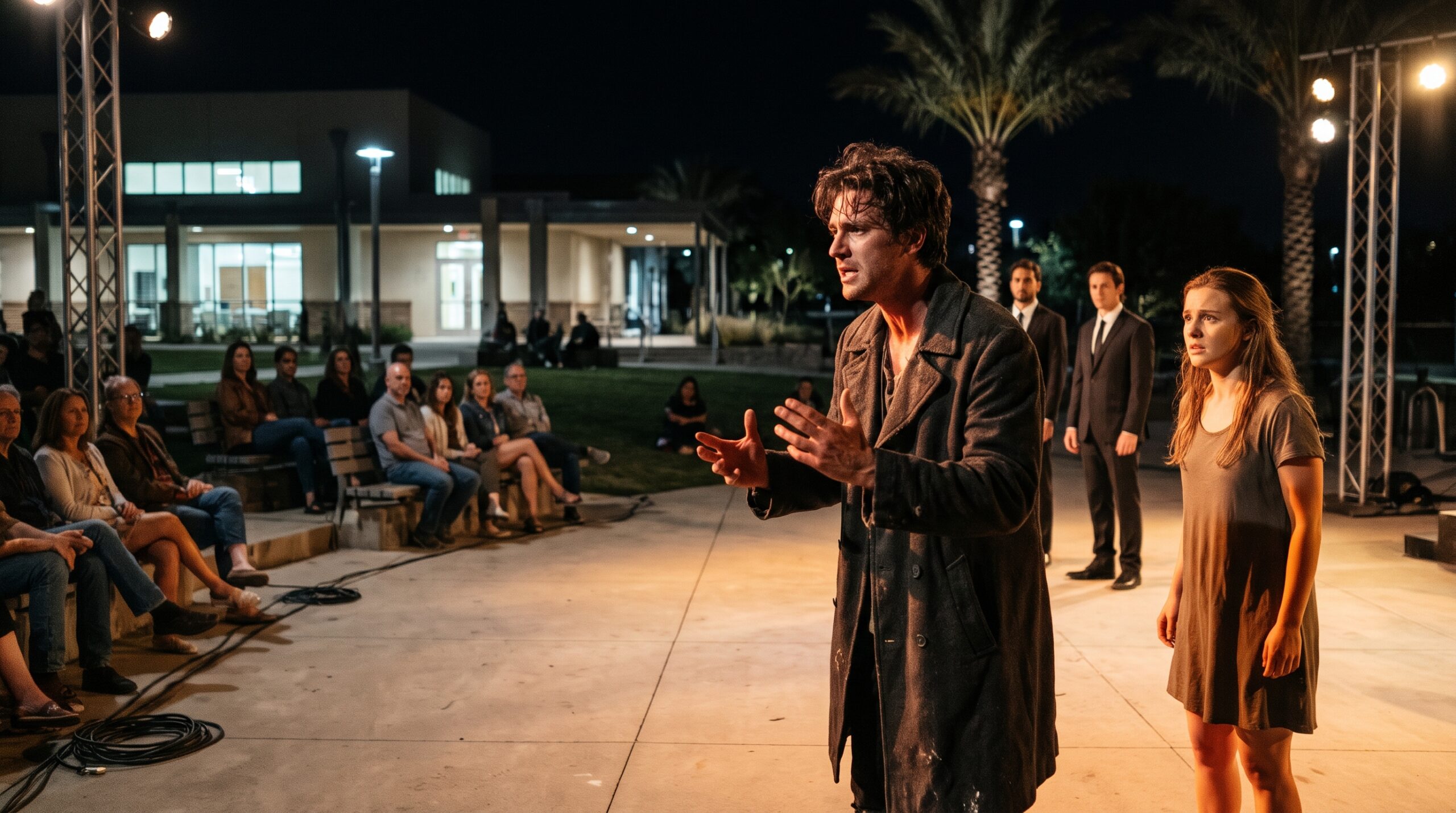
If you are planning to attend this immersive Shakespeare in Florida event, a little preparation will go a long way in ensuring you get the most out of the experience. Because this is not a standard sit-down theatre venue, logistics are slightly different.
Here is your essential guide to navigating the performance:
-
Arrival and Parking: The Wildlight community is designed for walkability, but event parking is clearly designated near the main commercial center. Arrive at least 45 minutes early. This allows you time to park, grab a refreshment, and secure a good vantage point before the promenade-style staging begins.
-
Seating and Mobility: Because the production uses environmental staging, be prepared to move. While there are designated seating areas for those who require them, much of the action happens dynamically around the space. Wear comfortable shoes and dress in breathable layers, especially given the unpredictable nature of Florida’s evening climate.
-
Ticketing Tiers: Opt for the “Groundling” or general admission tickets if you want to be directly in the path of the actors. If you prefer to watch the political maneuvering from a safe distance, VIP or reserved tiered seating offers excellent, unobstructed sightlines of the entire performance area.
-
Run Time: The production clocks in at a brisk two hours and forty-five minutes, including one fifteen-minute intermission. The director has expertly trimmed some of the more archaic political subplots (such as the Fortinbras storyline) to keep the narrative aggressively focused on the core family tragedy.
FAQs About the Wildlight Hamlet Production
Is this production suitable for children or young teens? Shakespeare’s text inherently deals with heavy themes, including murder, suicide, and psychological abuse. While this modern adaptation does not rely on gratuitous gore, the emotional intensity, realistic depictions of mental health struggles, and the immersive nature of the staging make it best suited for older teens (14+) and adults.
Do I need to understand Shakespearean English to enjoy the play? Not at all. One of the hallmarks of a truly great classical theatre company is their ability to make Elizabethan language sound natural and conversational. The actors use modern inflection, physical cues, and clear emotional intent to ensure that even if you miss a specific 16th-century vocabulary word, the meaning and the stakes of the scene are always crystal clear.
What happens if it rains during an outdoor sequence? The organizers have mapped out contingencies for inclement weather. While the primary design utilizes the open, architectural spaces of the venue, the production is designed to seamlessly transition into adjacent covered community structures without losing its immersive momentum should the weather turn.
Final Thoughts: Is Hamlet at Wildlight Worth Your Time?
Staging Hamlet in the 21st century is a high-wire act. It requires honoring a sacred text while ruthlessly interrogating it for modern relevance. The Hamlet at Wildlight production succeeds precisely because it refuses to play it safe. By merging an innovative, community-integrated venue with a piercingly intelligent directorial vision and a powerhouse cast, this revival breathes desperate, thrilling new life into the tragedy of the Prince of Denmark.
Whether you are a lifelong Shakespeare academic looking for a fresh analytical perspective, or a first-time theatregoer wanting to understand why this play has survived for four centuries, this production demands to be seen. It is a triumphant reminder that classical theatre, when executed with passion and precision, is never truly stuck in the past.
Have you experienced this immersive production yet? Does the modern corporate aesthetic change how you view the characters? Share your thoughts, or check out our other deep-dive reviews of contemporary Shakespeare adaptations to continue the conversation.