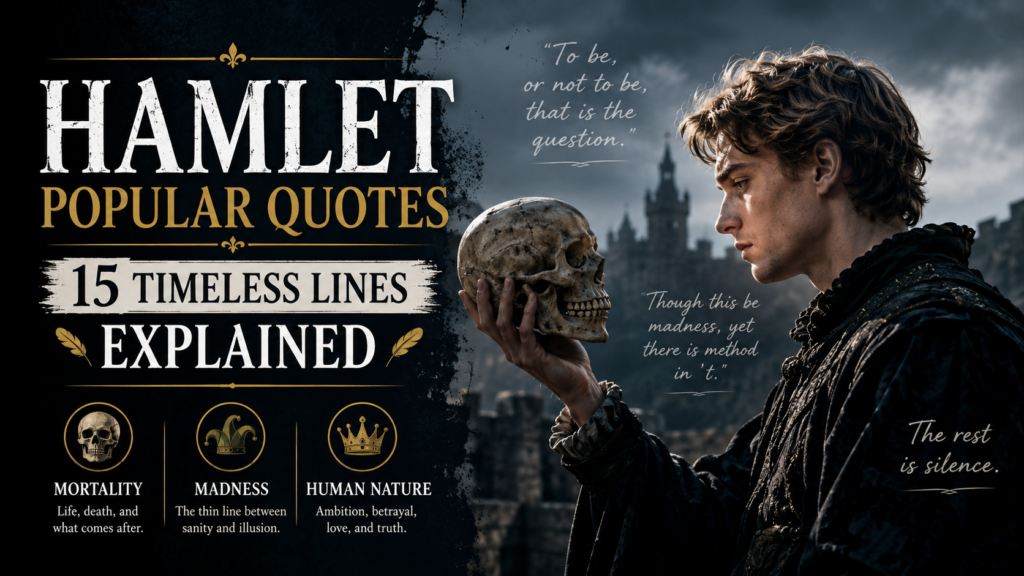
Few pieces of literature hold as much permanent cultural real estate as William Shakespeare’s tragedy of Denmark. When audiences and scholars search for hamlet popular quotes, they are rarely looking for simple greeting-card soundbites; they are hunting for the structural DNA of modern human consciousness. Long before psychoanalysis mapped the terrain of the mind, Shakespeare sketched its deepest trenches using prose and verse that still pierce our collective awareness.
From the existential paralyzed dread of indecision to the raw shock of mortality, the most profound utterances in this play do not merely describe the human condition—they interrogate it. Far beyond the ubiquitous “To be, or not to be,” exploring these lines requires looking past the surface to examine the historical theatricality, psychological complexity, and linguistic genius that make them timeless. The following deep-dive analyzes fifteen of the most powerful lines from the tragedy, offering historical context, textual analysis, and modern interpretations.
Confronting Mortality and the Mind
“To be, or not to be, that is the question” (Act 3, Scene 1)
Spoken by Prince Hamlet during the height of his internal turmoil, this line represents the ultimate crystallization of existential inquiry. The phrase translates the simple yet terrifying dilemma of whether it is more noble to suffer the slings and arrows of outrageous fortune or to take arms against a sea of troubles, and by opposing, end them. Shakespeare structures this as a strict cost-benefit analysis of life and death, weaponizing grammar against despair. The fear of what dreams may come in the sleep of death paralyzes action, turning thought into a disease. In the modern era, this line resonates with anyone navigating the paralysis of choice, chronic anxiety, and the universal dread of the unknown future.
“There are more things in heaven and earth, Horatio, than are dreamt of in your philosophy” (Act 1, Scene 5)
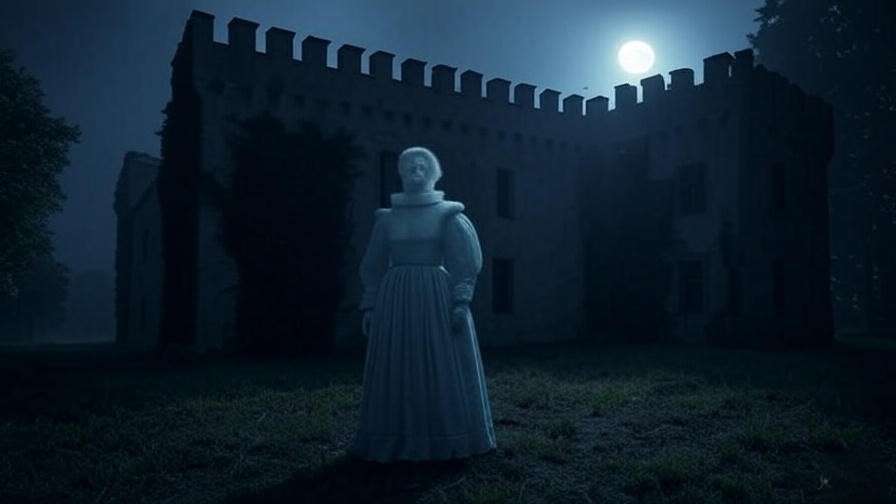
Following his harrowing encounter with the Ghost of his father, Hamlet checks the rigid, rationalist worldview of his university friend, Horatio. Elizabethan and Jacobean intellectual life was caught in a violent friction point between medieval scholasticism, emerging empirical science, and ancient superstition. By invoking this line, Hamlet punctures academic arrogance, reminding the intellectual elite that human knowledge represents a mere drop in a vast cosmic ocean. It remains an essential reminder for scholars and scientists alike that the universe operates on dimensions beyond current human instrumentation and imagination.
“What a piece of work is a man!” (Act 2, Scene 2)
This searing meditation on Renaissance humanism juxtaposes humanity’s highest idealized potential with its base reality. Hamlet praises man as noble in reason, infinite in faculty, and express and admirable in form, yet instantly pivots to declare humanity as nothing more than a “quintessence of dust.” This duality captures the psychological swing of severe melancholy: the capacity to see divine beauty in creation while simultaneously experiencing profound disillusionment with human corruption, deceit, and malice.
Navigating Appearance Versus Reality
“Though this be madness, yet there is method in ‘t” (Act 2, Scene 2)
Polonius speaks these words while attempting to decode Hamlet’s cryptic, erratic behavior, unintentionally stumbling upon a profound truth. Hamlet’s simulated madness is not a total detachment from reality, but a tactical camouflage. By adopting an antic disposition, the prince creates a safe space where he can speak uncomfortable truths to power without immediate execution. This line serves as a literary anchor for examining how art and feigned eccentricity often disguise hyper-rational critique, allowing the marginalized to speak truth to corrupt authorities.
“The play’s the thing wherein I’ll catch the conscience of the king” (Act 2, Scene 2)
At the end of Act 2, Hamlet conceives a metatheatrical intervention to test King Claudius’s guilt. By staging a murder mirroring the assassination of Old Hamlet, the prince leverages the psychological mirror of drama to bypass intellectual defenses. This line underscores Shakespeare’s lifelong fascination with theater as a moral instrument. It highlights how art possesses a unique investigative power, forcing perpetrators of hidden crimes to confront their own repressed guilt through simulated representation.
“I must be cruel only to be kind” (Act 3, Scene 4)
Confronting his mother, Queen Gertrude, in her bedchamber, Hamlet justifies his vicious verbal assault as a necessary medicinal shock. He believes that coddling her moral blindness will only damn her further, requiring a brutal disruption to force repentance. This paradox explores the tragic utilitarianism of human relationships: the painful realization that true love and protection sometimes require inflicting severe emotional wounds to prevent total moral destruction.
“Words without thoughts never to heaven go” (Act 3, Scene 3)
Overheard while trying to pray for forgiveness without surrendering his stolen crown and queen, Claudius realizes the tragic mechanics of spiritual hypocrisy. Mechanical recitation of religious formulas without internal contrition is completely meaningless. This line highlights the theological and moral tension of the play, demonstrating that the external performance of virtue holds zero currency in the ledger of absolute accountability.
The Burden of Retribution and Destiny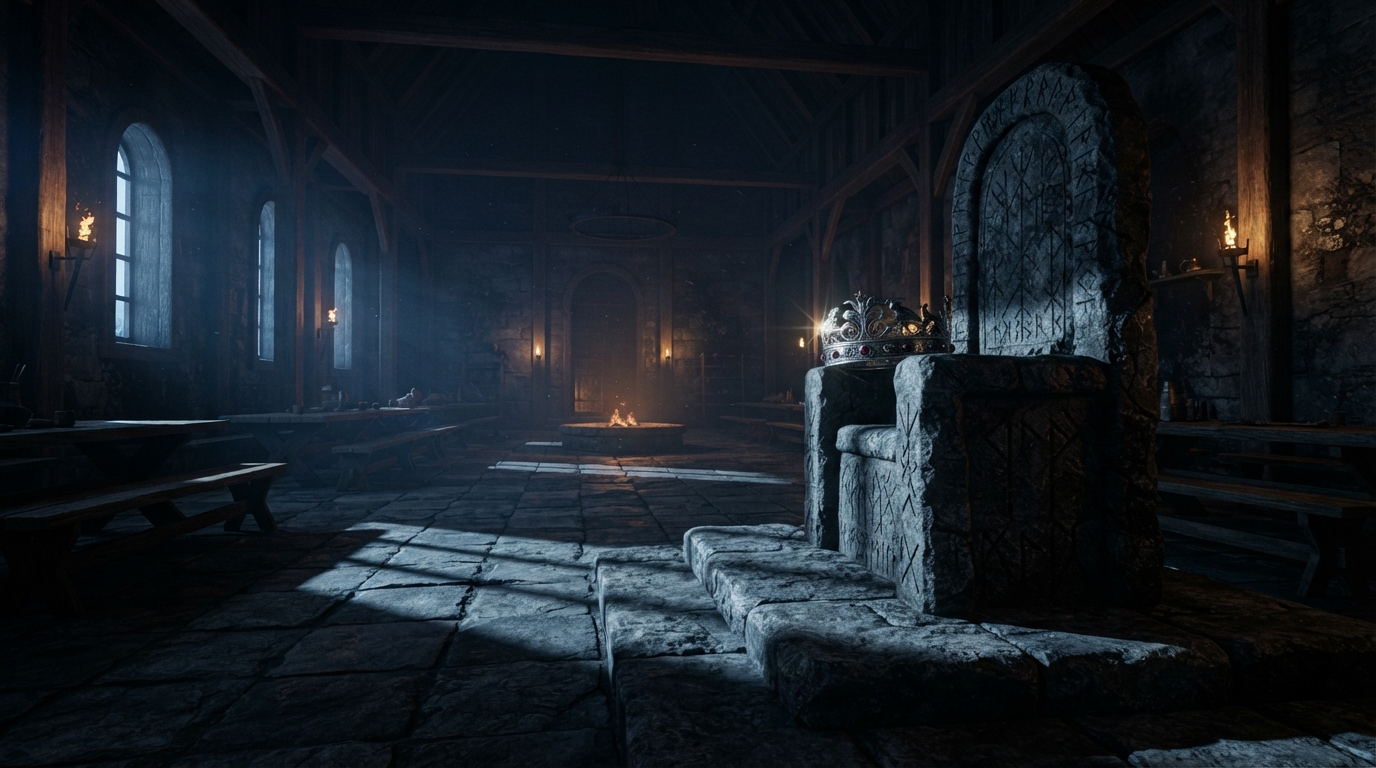
“The time is out of joint. O cursed spite, that ever I was born to set it right!” (Act 1, Scene 5)
Upon learning of his uncle’s regicide, Hamlet reacts not with righteous vengeance, but with an immense groan of cosmic burden. The metaphor of a dislocated joint implies that the entire political, moral, and natural order of Denmark has been violently thrown out of alignment. His cry captures the generational trauma inherited by youth who are forced to clean up the catastrophic institutional failures left behind by their elders.
“Brevity is the soul of wit” (Act 2, Scene 2)
Spoken by the notoriously long-winded counselor Polonius while he is actively delaying the delivery of his own message, this line has morphed into a foundational rule of communication and writing. The delicious irony lies in the speaker’s total lack of self-awareness. It teaches readers a timeless rhetorical lesson: the sharper and more concise the expression, the more effectively the underlying truth lands.
“There is a divinity that shapes our ends, rough-hew them how we will” (Act 5, Scene 2)
Returning from his aborted sea voyage to England, a noticeably transformed Hamlet sheds his obsessive, frantic need to micromanage his revenge. He realizes that human willpower has strict limitations and that a grander cosmic design steers human outcomes regardless of our clumsy interventions. This marks the philosophical maturation of the protagonist from bitter control freak to a figure of stoic acceptance.
“Custom hath made it in him a property of easiness” (Act 5, Scene 1)
Observing the gravedigger casually singing while tossing up the skulls of the forgotten, Hamlet notes how habit desensitizes human beings to grim realities. Familiarity with mortality breeds emotional numbness. This reflection serves as a stark commentary on professional alienation and how repetitive exposure to trauma strips away the sacred awe of existence.
Love, Betrayal, and Human Frailty
“Frailty, thy name is woman!” (Act 1, Scene 2)
Driven by intense grief over his father’s death and deep disgust at his mother’s hasty marriage to his uncle, Hamlet generalizes his bitterness into a sweeping indictment of femininity. This line acts as a psychological window into the protagonist’s fractured emotional state, demonstrating how personal betrayal distorts objective perception and breeds toxic cynicism toward relationships.
“Get thee to a nunnery” (Act 3, Scene 1)
During his brutal confrontation with Ophelia, Hamlet uses this famous command as both an insult and a desperate, distorted form of protection. In Elizabethan slang, a nunnery doubled as a convent and a brothel, charging Ophelia with escaping a corrupt, patriarchal world characterized by sin and reproduction. It captures the tragic communication breakdown between lovers caught in the gears of political conspiracy.
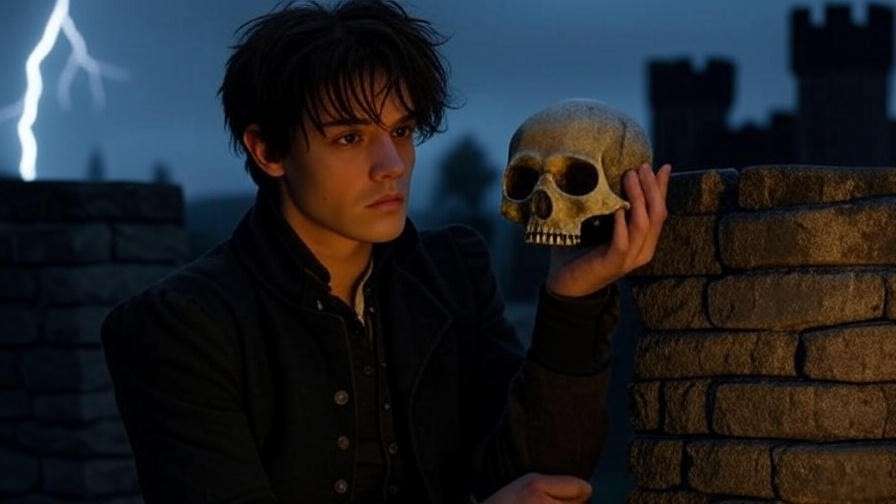
“Alas, poor Yorick! I knew him, Horatio” (Act 5, Scene 1)
Holding the skull of the court jester who once carried him on his back, Hamlet confronts the ultimate physical leveling of humanity. Alexander, Caesar, and a nameless court jester all end up as dust used to patch a wall. This visceral graveyard scene strips away royal pageantry, social status, and human vanity, leaving only the bare, undeniable reality of physical decomposition.
“The rest is silence” (Act 5, Scene 2)
With his dying breath, after securing the political future of Denmark and executing his revenge, Hamlet utters his final, minimalist punctuation mark. In a play characterized by hyper-verbal soliloquies, wordplay, and endless philosophical debate, the ultimate destination of human existence is quietude. It is a hauntingly peaceful exit from a violently noisy world.
Thematic Comparison and Stage Interpretation
| Quote | Act & Scene | Primary Theme | Emotional Tone |
| “To be, or not to be…” | Act 3, Scene 1 | Existentialism & Mortality | Pensive, paralyzed, fearful |
| “There are more things…” | Act 1, Scene 5 | Rationalism vs. Metaphysics | Awe-struck, humbling |
| “The play’s the thing…” | Act 2, Scene 2 | Metatheater & Guilt | Calculating, determined |
| “I must be cruel…” | Act 3, Scene 4 | Tough Love & Justice | Cold, utilitarian, desperate |
| “The rest is silence” | Act 5, Scene 2 | Mortality & Completion | Peaceful, final, quiet |
Historical staging choices dictate how these lines land in performance. Laurence Olivier played the prince as a man struggling with an Oedipal complex, while Kenneth Branagh delivered them with sweeping, cinematic clarity. More modern interpretations, such as Andrew Scott’s raw, minimalist staging or Paul Mescal’s visceral vulnerability, prove that these verses adapt infinitely to the psychological anxieties of each successive generation.
Frequently Asked Questions
-
What is the most famous quote in Hamlet?
“To be, or not to be, that is the question” remains globally recognized as the definitive line from the play, encapsulating the universal struggle between endurance and despair.
-
Why does Hamlet delay taking action throughout the play?
Literary scholars debate whether the delay stems from intellectual over-analysis, moral scruples regarding murder, or the physical constraints of navigating a heavily guarded surveillance state run by Claudius.
-
How many times is death referenced in the text?
Mortality serves as the central motif of the play, with variations of the word “death,” “ghost,” “grave,” or “blood” appearing hundreds of times, framing the entire drama as a prolonged meditation on the afterlife.
Mastering these famous lines offers more than just academic enrichment; it provides a vocabulary for navigating the complexities of modern doubt, grief, and political corruption. Shakespeare’s masterpiece endures because its characters do not merely speak—they think out loud, inviting every reader to join the interrogation of what it means to be human.